
Chapter Text
-•✦--✦--✦•-
October, 1997, River Dee, Chester, UK
On that morrow, sun shone brightly in the air and River Dee flowed as it did. Air was heavy with condensation, humid as a true English day. Three and a half mile away from the bank of the Welsh river stood the pride of Cheshire, the Chester Zoo. It was a famous spot for all of England, perhaps the most famous thing about Chester.
This day was special for many a children but perhaps it was the most special to primary school children from Woodfield Primary enjoyed their trip. Chester was not a big city and Woodfield certainly wasn’t the biggest school, so everyone except the Year 1’s had come. Ninety eight children from the age of eight to eleven. Unlike most places in the small city, zoo could handle the many children and their chaos. Right then, all the children and the flustered teachers were looking at a Mandrill, a large monkey with a very uniquely colored mug. Brave kids were making faces at the animal, while the shy ones looked ready to bolt. At the back of the crowd stood a boy, much like the other children, he was short and wearing the same uniform. Yet, anyone could see the difference in the way the boy carried himself.
For one, the boy had his hands in his pockets. His teachers had reprimanded him many times but at this point they had learned to ignore it. Next was his expression, it was as frozen as the Mandrill attempting to not rise up to the antics of children. Third was the eyes of the boy, it had a cast of deep sadness and wonder. But who in their right mind would point that out in the boy? It certainly wasn’t going to be Chris.
Chris Hale was a man in his mid forties, he had worked all his life in education. There were many things he worried about. Namely that of his pupils or lack thereof. At some point the school had two hundred and fifty children, now it only had hundred and thirty. Things did not look good for the school and Cheshire as a whole, but in terms of the more recent things he had worries too. Namely, it was the boy that he was staring at who himself was staring at the mandrill. Wilfred Price, he was bit of a headache. Boy had never acted his age, always knowing too much and reacting too little.
There was something wrong with his pupil, but he couldn’t find a reason to send him off somewhere else. Kid had perfect marks on everything, year four wasn’t difficult by any means but he had never asked a question on any topic. He would listen and complete his work and stare out to the window. Only thing the child displayed that was close to normal behavior of children was how he played with the chickens in the yard. He liked feeding them and that was the only thing that seemed innocent about the boy. Wilfred had not tried to talk to other children his age, nor even play with them outside the yard. Other children were like dirt to the boy. Whenever Chris saw the boy, he seemed to carry sadness for the world.
“Have you heard of Harambe?” Wilfred asked out of nowhere, having moved closer suddenly.
“Harambe? That Jamaican song? Harambe Harambe Rastaman?” Chris blurted out, that opened a load of embarrassing memories for his sixth form days.
“Oh, I’ve had no idea.” Wilfred seemed disappointed, “Thanks, mate.” He said idly before gazing over the lone monkey again.
“Listen ‘ere pupils, who wants to go and see some snakes?” Mrs Waine asked, her voice shrill and loud yet only half the children seemed to hear.
Once they were in front of the glass enclosure of a large python in a natural environment, Wilfred spoke up again suddenly.
“You reckon that glass will disappear?” The boy asked, seemingly puzzled.
“Uhh, listen Wilfred. If you have any problems back at home, you can speak to me.” Chris started, Wilfred didn’t respond so he continued, “If there are any inappropriate touching from your family or something, I can help you. I’ve seen children with anti-social behaviors like you, please let me help you.”
Wilfred’s expression finally changed, boy had a flush to his face, embarrassment and anger painting it red. It was the most emotion he had seen the boy show so far.
“There is no inappropriate touching. Ermm— Mr. Hale, I want to make it absolutely clear that my parents are upstanding and fair people… I’m taken aback by your accusation.” The boy spoke indignantly, his words far too grown-up for his age.
Chris flushed himself, “Of course, I just had to make sure because it’s not very easy to notice. Eh, thanks for letting me know. Ahem, good lad.” Chris finished awkwardly.
Wilfred cleared his throat, “No more of such accusations. Thank you and that will be all, Mr. Hale.” Boy said and stomped away.
This child had confounded him, but he was relieved to know that, at the very least, things were fine at home. Chris felt guilty for the accusations, even though they had been reasonable. Wilfred had shown an extraordinary mind, with speech and vocabulary far beyond his years. Chris promised himself he would help draw the boy out of his antisocial behaviour.
—✦—
Woodfield Primary School, October 20, 1997
Chris had spoken at length with his staff about Wilfred Price. It was fair to say that nothing about the boy made much sense. His homeroom teacher Mrs. Ramsdale had said that the boy was quick at any task but had attitude problems. Boy had thrown tantrums multiple times over tasks involving fill the blank, arts & crafts and some teamwork activities. Only other teacher who had anything to say about the boy was the music teacher Mrs. Moss. Her report informed that the boy had a good understanding of music and had the best voice in his class. However she had nothing to say on the boy’s behavior, having not spoken to the boy except to teach him.
PE teacher for this year was still Mrs. Ramsdale. It was difficult to replace a staff member or even pay for one to work full time for a subject that anyone could teach. With the way the world was shaping out to be, he doubted the role would be filled again for years to come—if the school itself endured at all.
“Could the two of you try challenging Wilfred with additional work? Give advanced tasks for his tests or in your case Mrs. Moss, try to encourage him to sing solo, play instruments. That sort of thing,” Chris had said, not being a big music person, “I think the boy is talented and we may be able to get the boy to compete in Olympiads. Start off with the UKMT, could be a good place to get a baseline.”
Or at least that was what Chris had suggested and now he was sitting in a conference room, listening to Mrs. Moss go on and on. Mrs. Ramsdale had nodded enthusiastically to most of what Moss was saying.
“Could we do that, do we have any budget for it?” Mrs. Moss asked.
Chris opened a drawer to pull out a budget list for curriculum materials for this year. “You have £75 for study aid and £150 for new instruments.”
Elwyn seemed incredibly happy to hear that. “I’ve always wanted to put on something for the children and make it more exciting.” Elwyn said in her Welsh accent that cut off at the end each word in a musical way.
“Putting on a play is frankly a genius idea.” Chris complimented her, “I think parents will be happy with it, we need more pupils. Nothing can top a word-of-mouth. If excellent schooling won’t get them to bring their kids, maybe more activities will.” Chris muttered.
“Wilfred is a dear in his tests, I’ve been giving him tests each morning. Boy already knows trigonometry! Chris, have you met Mr. Price? He must be an academic of some renown, being five years ahead in studies explains so much of the boy’s behavior.” Joanna gushed in a similar tone to Elwyn.
“Calm down, Mrs Ramsdale. But you’re right, of course. We need to speak to Mr and Mrs Price before we do anything with Wilfred.” Chris tried to reassure Joanna.
“It’s always exciting when we get the bright kids.” Joanna smiled.
“Too true. Always good to see children growing into their talent,” Chris said with a chuckle.
“I’ll need that budget released to me. My god, I’ve always wanted to do Oliver! Instead of those lazy Christmas ones we do!” Elwyn went on and on.
#
Notes:
Originally posted on WebNovel under my profile Kal_Sto. Currently a chapter is being released every single day. There is no money earned from this and it will never be put on Patreon or paywalled in any way.
Also on RR under Kalsto
On Webnovel under Kal_Sto
Chapter 2: Chapter 2 - Curious Case of Wilfred Price
Chapter Text
-•✦--✦--✦•-
I always knew I was different. In fact, I knew it when I first made memories. I remembered it so specifically — day close to the Christmas holidays because there was a Christmas song playing. I don’t remember the song specifically, but the vibes were familiar. My parents had a fight and were screaming at each other. For the life of me, I can’t remember what it was about. I only remembered the faces they made in anger; it played in slow motion. My mother had picked me up for some reason then put me down, all the while arguing with my father. The heightened emotions on both of my parents’ faces seemed as apt a moment as any for the world to grant me sentience. In that one moment where I was watching my mother grow red-faced, I was born.
Finally a person who could think.
When I first saw things, or rather could remember things, everything changed. No longer was I able to see things in quite the same light anymore. I am no neuroscientist, but I was sure that I had memories even before that moment. I even remembered thinking about remembering them, but for some reason, those memories seemed erased from my mind as I think back on it now. That was just how the human brain worked, how we went from a mindless, daring toddler into an individual. My brain vibrated — or at least my scalp seemed to vibrate — each time that happened I received what I later came to call “revelations”.
It all started when I had been baptised. And not long after I could retain memories — my memories — like a sentient being. I was almost three then. My scalp felt the buzzing sensation accompanied by this odd feeling of my hair follicles loosening, as if my hairs were about to fall off. Goose skin rose all over my body as I received the revelation that I initially assumed to be from God. In my toddler brain, I had received crystal-clear memories detailing the practice of baptism and information about the Protestant and Catholic churches. Of course, it didn’t quite make sense that the memories were God-given, because most of what I received in the revelation were about terrible things that organised religion had inflicted upon the world.
I didn’t, or couldn’t, think much on it at that time, as my first few years of life had been spent mostly following each line of revelation into the next branch until I found its roots. For example, I couldn’t tell what atheism was, despite having the word revealed to me in another vision. But learning the word itself triggered another revelation which told me what it was. Inevitably, learning new things would involve me having to learn an exponential amount of more things just to understand those concepts. You’d be surprised how many things are explained by other things that have to be explained, all the way down to the root. You’d be surprised at how much information the simplest person needed to inform their life’s perspective.
What was color green? Light. What was light made of, then you would have to backtrack and explain that green was only light reflecting off a surface in only certain wavelengths. But then you’d have to explain what light was, go into how green is only a concept from a human perspective. Other animals could see it as different colors depending on what kind of eyes they had. Usually, things started with a simple question then went into excruciating scientific details before finally giving way to a philosophical explanation. So it is no wonder that I made my parents worry as I stood unnaturally still browsing memories and learning new things.
Of course, it didn’t take long until I no longer believed that the revelations were given to me by God. Or if there was ever such a being, the revelation itself didn’t seem to believe it. Have you ever wondered if you were actually crazy? Worried your mind had fractured, or having some sort of false memories planted into you, someone evil torturing you by making you believe in crazy things? I had felt like that, but then my mind had spat out possible illnesses that could be affecting me. It never sat right with me, but it was clear that revelation had its limits. For one, illnesses given in the revelations had fragmentation — not the first I had encountered — but in this specific revelation, the memory had forgotten the word for schizophrenia, yet had minutes’ worth of knowledge for a word “Schizo” and its various uses.
I had started to have a theory about having lived this life before, but it was hard to prove given that I had never received revelation about myself. For some reason, whoever or whatever — if there even was one — that allowed me to see these memories didn’t want me to know about myself. Wilfred Ingrid Price — my name — hadn’t triggered any new revelation. Yet my eyes had seen a two-hour movie in my mind as I stared at that mandrill in Chester Zoo. With how recent the supposed film was, I asked my father to get me The Lion King, and we had watched the movie together. It was great to see it in its entirety and in real time, but the real-life experience was more limited than the revelations had been. A film that was in poorer quality because my revelations were from a farther future. It worried me how odd the revelations were — some things had too much information for me, yet some things had almost none. Some memories also triggered subsequent revelations while most didn’t. I felt that a glass in the zoo would disappear somehow but never received a revelation about what that memory was about. Revelations required a solid trigger, but at times revelations got excited about things. Sort of informing me that I was close to triggering it. That itself was a frustrating experience because trying to chase something I didn’t was frustrating at best and an impossibility at worst.
There also seemed to be something exceptionally sad about reliving a memory of the future or reminiscing about events that hadn’t happened yet. My memory revelation seemed to calm down as I stared into the test printed out on a sheet laying before me. This was a special test just for me. This particular test did not follow the national curriculum our school followed, and it was certainly out of the primary school range for the class I was in.
The paper itself had a simple triangle with notations showing angles from certain points. When I saw the triangle, I had a revelation about geometry, and specifically trigonometry, which told me how to solve for the missing side in mere moments. These new tests jogged my mind, and I just loved how fresh it all was to me. I had to look around; my gaze briefly lingered over at Mrs Ramsdale. She had changed in the last few weeks, hadn’t she? After our school trip to Chester Zoo, she started asking me to complete tests every day. At first, it was simple and easy for me — a slight bit of a brain tease — triggering almost no revelations. When the difficulty arose so did the amount of revelations.
My theory had finally settled on myself somehow repeating my life, so I was eager to remember everything I had forgotten. Could I ever be the person I was before? Or were these memories never mine? If God or whatever freak accident that made this possible wouldn’t let me remember my family or friends, I would have to remember everything else first.
“Are you done, sweet?” Mrs Ramsdale asked me sweetly — too sweet maybe.
“Yes, thank you,” I replied, handing her the paper.
Mrs Ramsdale hemmed and hawed over the paper until she smiled. Her green eyes set themselves on my own sea-green.
“Well done, Will,” Mrs Ramsdale said warmly.
But she sat there staring at my test with a thoughtful look for a long moment before shaking her head.
I just didn’t understand her — she seemed eager to tell me something but always held herself back at the last moment. I forgot about it almost as soon as she had left though. There was no point — I had to go feed the chickens. Not many schools had chickens, and I loved those little dinosaurs.
—✦—
“Wilfred is a special child,” Chris said to Mr Price.
“I know he is. What are you planning to do about it?” Oliver asked the balding man.
“Well, Woodfield has been letting standards slip in recent years. Our pupil numbers are dropping with every intake. To be honest, it’s declining day by day. Regardless, we can enter him for the UKMT — the United Kingdom Mathematics Trust challenge for children his age. Juniors, that is, primary-school pupils, can compete for medals, and the top scorers are invited to further Olympiads and competitions such as the Junior Kangaroo,” Chris continued. “Mrs Ramsdale will run extracurricular classes with Wilfred to ensure his knowledge is more comprehensive. There isn’t much time before the next UKMT, but, Mr Price, I’m confident Wilfred can win a medal.” Chris chuckled lightly, still looking for any flicker of reaction from Oliver’s blank expression.
“Don’t take me for a boastful man, Mr Hale, but I’ve been his father for eight years. I can see how special he is; I’ve known it for years. I’ve never needed to teach him anything. He’s always just known things — ‘What’s that?’ ‘That’s a car.’ ‘How do they move?’ ‘Because of the engine, obviously.’ And if he didn’t know something, he always worked it out quickly,” Oliver said, his pride evident.
“My point is, Mr Hale, he can excel at these things. I’m just not sure he’s motivated to. He’s never wanted for anything — trust me, I’ve tried,” Oliver finished, shaking his head.
“Ahem, that is how his form teacher described him too. But it’s changed recently — Mrs Ramsdale has been challenging him with extra material. Wilfred has responded with enthusiasm and seems genuinely keen to tackle advanced work.”
“Advanced work? How advanced are we talking?” Oliver asked.
“Mrs Ramsdale has set him tests from Years 5 and 6, then 7 and 8, and now even Year 9. Wilfred can grasp trigonometry and algebra instinctively. It’s quite alarming,” Chris chuckled nervously. “Of course, it would be tremendous if we can keep that spark alive. If he does well in the UKMT, we can begin the process to move him to King’s School. They’ll have better resources than Woodfield and, naturally, he could skip years and graduate early. He’ll end up at university at a young age — the law requires schooling even if he graduates early. But I believe he has the gift. Woodfield won’t stand in his way.”
Chris hated having to sell another school to parents of his own pupils, but he couldn’t pretend that resources didn’t make a difference. Private schools had advantages Woodfield simply couldn’t match.
Oliver rapped his knuckles on the desk, letting his rocking heels tap out a rhythm.
“Tell me more about this UKMT.”
“It’s an Olympiad — they introduced a junior version some years back for pupils below Year 8. It should suit your son perfectly, and the paper is short and relatively low-pressure…”
—✦—
Thursday, October 23rd, 1997, Woodfield Primary School — United Kingdom
It only took eight years, five if you really wanted to be technical. No longer did I spend days staring at the wall discovering the sanitised version of memories. Of the future. It hurt to not be able to tell my parents about it, but gifts always had a price, especially if they were free. I was eager to learn subjects just by looking at a new challenge given to me by Mrs Ramsdale.
It was addictive in a way. For example, learning a new topic and having to solve a new thing all within a time limit. It was like working out my brain and my revelations ability at the same time. After our school day, Mrs Ramsdale kept me behind for an extra half hour for extracurricular work. She was a chubby lady on the wrong side of forty; her most prominent features were the kindly face, green eyes, widow’s peak, hooked nose, and the long laugh lines. Ageing had hit her especially hard. Teaching children was no easy task. But for all that, she always matched the energy of the children in everything.
Today, she had gone through many examples of maths problems with trick questions. Some problems were more of an English test rather than a maths problem. I really enjoyed the dopamine from completing every problem on the first try. Fractions and multiplication were so simple, logic puzzles were childish, and multiple-choice questions made the challenge too easy. The only problem that my revelations didn’t help with were the visualisation problems — those that asked how many sides a very odd shape given an image would have. Revelations could be triggered by similar enough of a problem in a field but there clearly was a limit even to how broad it could get at times.
“Good job, Wilf. Let’s go over your answers,” Mrs Ramsdale said, picking up my paper to mark it.
“I’m flabbergasted,” she sighed. “You’re extraordinarily good at this. These are meant to be completely new to you, yet you sail through them without a hitch.”
“I’m not sure what to say, ma’am. It’s just simple logic, isn’t it?” I said, unsure what else to add.
“Right — never mind my ramblings. I’ve spoken to your father; turns out no one at home has an academic background, so all of your genius must be natural,” Mrs Ramsdale told me.
I began to wonder where this was heading. I had a few inklings from my revelations, but nothing was concrete. A school for geniuses? Skipping grades?
“UKMT,” Mrs Ramsdale finally announced, making sure to enunciate clearly in her northern accent.
I was stumped — no revelations, no visions.
“What’s the UKMT?” I asked.
“It’s an organisation founded by a mathematician. Erm… you could say a very clever man started a competition that every boy and girl can enter. A hundred thousand children compete in it each year. Isn’t that marvellous?” Mrs Ramsdale said.
“Yeah, that sounds brilliant. Why haven’t I been allowed to take it before?” I asked in connfusion.
“We usually have Years 5 and 6 sit it, but I think you’re sharp enough to do it now.”
“Let’s!” I said enthusiastically.
For hundreds of thousands of things that revelations had taught me, there were so many things that I hadn’t heard about. There was a saying that the more you knew, the more you realised that you knew nothing. It seemed true enough when it came to revelations. The ability was brilliant, of course. However, it was hard to attribute how much of this “genius” could even be attributed to my own talent. After all, it allowed me to cheat by condensing hours of learning into a moment of understanding. But more than all of that, I wanted to know what the limit was. Was I truly a genius-level child? Or had being given this ability simply falsely represented what a genius could do?
Too many questions and not enough answers — many revelations, yet I seem to have more questions the more I’ve learned.
Oh so many questions, few too many answers — revelations after revelations, but I found myself revolving around the same doubts again and again.
“I’ll give you the papers from previous years. There are some general knowledge questions that will be good to practise,” Mrs Ramsdale said.
My brain settled into a low hum of activity, thinking of all the things I would learn. I was a curious child; knowing that I knew nothing only made me want to know more things.
#
Chapter 3: Chapter 3 - Oliver with a Twist!
Chapter Text
-•✦--✦--✦•-
November 3rd, Woodfield Primary School, Chester
Almost as soon as I started practising the past papers for the math challenge and learning more by seeing new things and receiving further revelations, I was forced to stop. Half-term break was called, giving me a week's rest — but this Monday twisted my trajectory in life considerably. Not that I knew it at the time.
In the morning, I had sharpened my mind with Mrs. Ramsdale’s papers, and after our lunch, we had our last class — music.
Mrs Moss seemed unusually chipper that day, and I found out why very soon.
“Today, we will be doing an impromptu audition for Oliver! Not you, Ollie — Oliver! is just the name of a play, more specifically it’s a musical. We’ll be putting on a production. That means, children, you can act on stage and sing for your mums and dads!” Mrs Moss started her pitch.
Kids muttered, most acting their age. Some showed excitement, but most were drooling or not paying attention to the teacher. A few even looked ready to take a nap after the lunch we’d had.
“Do all of you want to sing?” Not hearing an answer, she changed tack, “Maggie, would you like to sing?” Mrs Moss tried to drum up enthusiasm. “Anyone want to dance? Who wants to dance — raise your hands!”
Half the kids raised their hands, but they always did that — even when they didn’t want to do something or knew an answer. Sometimes, I wondered if schools were more about discipline than actually teaching anything useful.
“Okay! We’ll all be dancing and singing. Who likes Christmas here?”
This time, all the kids shouted their approval and raised their hands. “Me! Me! I love Christmas!”
“We’re going to put on the best and most beautiful play! Your year and the older kids will all be able to act in it. But even if you’re not selected, you’ll still be able to watch and have fun, okay?”
At a few nods, she bulldozed on and pulled out a stack of papers to hand out, explaining as she went. It caused a bit of chaos — she had to fight to stop kids from fighting over what appeared to be printed lyrics.
“Let’s see if you all can read. This is a song from the play — a fun one! Come on, read with me!” Mrs Moss got everyone started by first orienting us on the line.
Revelations never came to mind — this was something I seemingly had never heard of in my past life. Odd, considering how often this was happening as I remembered more and more things. How much of the revelations had I already learned? How much, if any, remained?
[Food, Glorious Food] was the title of the song. Unfortunately, I couldn’t tell the tune, as there were no notations — just the lyrics. Mrs Moss did her best to get the children started reading, and it was rough going from there. Not all of my classmates had mastered reading, and unfamiliar words tripped them up. The result? Everyone reading and repeating the lines in discordant harmony of chants.
After reading through the first verse and repeating the chorus twice, Mrs Moss sat on a stool to play the piano. We began the vocal warm-ups we’d become used to since our first class with her. She played the major scale, and we repeated it back. We started quiet and short until our vocal cords were warm enough to sustain longer notes. She also used silly tricks — tongue trills and blowing raspberries. The other kids loved it; I hated it.
Mrs Moss picked up speed on the piano, shifting into the song. She told us to listen, sang the first verse, and quickly got us involved.
Is it worth the waiting for?
If we live 'til eighty-four
All we ever get is gru…el!
Ev’ry day we say our prayer—
Will they change the bill of fare?
Still, we get the same old gruel!
There’s not a crust, not a crumb can we find,
Can we beg, can we borrow, or cadge?
But there’s nothing to stop us from getting a thrill
When we all close our eyes and imagine…
I started to enjoy the verse, even with how awful we sounded. Mrs Moss wasn’t disappointed — she dove into each line and the notes we should hit. And when the children’s attention spans started to fade, she quickly moved on to the next line. Teachers had their methods, and Mrs Moss manipulated us brilliantly, keeping it all interesting.
The chorus was everyone’s favourite — it was fun to sing about food we loved. I mean, who didn’t like jelly and mustard? Who didn’t fancy pudding with a side of sausage? I almost laughed out loud when I realised why we were having this class after lunch.
Mrs Moss’s teaching method was enlightening. Each repetition of a line sounded better than the last, and she let us rest our voices in between. Soon, we were singing solo. One by one, kids sang as Mrs Moss took notes. Even though I knew she was scoring us, she seemed so genuine with her compliments and encouragement — especially toward the shy kids singing terribly.
“Wilf! Your turn. Which verse do you want to sing?”
“First verse,” I replied, and sang with Mrs Moss accompanying on the piano.
Kids looked at me jealously, but most were smiling — visibly excited in my place. I could only thank my revelations, and my mum for putting up with my singing practice at home. I think no one minded the singing itself, but vocal exercises? Those were quite insane — trills, humming, gliding notes. They sounded like tortured animals, my neighbours asked after me once or twice too. Still, it was the only way to get better, and I liked having a real talent. I felt like I owed it to my past self to develop what I had presumably been good at.
“Well in! Give Wilf a round of applause!” Mrs Moss said excitedly — the exact same words she’d used for every kid before me.
I felt a pang of envy and remorse wash over me. For some reason, I’d expected praise that would set me apart. Yet, Mrs Moss gave me the same comment as everyone else. My budding ego — something I hadn’t realised was there — made itself abundantly clear. A revelation echoed in my mind, warning me about ego. I understood the warning, but didn’t want to accept it. I had sung better than these other kids. My musical talents started with my ear, I was one of the only few who could keep a tune. I deserved some recognition.
The emotions caught in my throat, and I felt a tear coming as I returned to my seat.
Living a second life was weird. I’d received many revelations that helped me understand my problems. This time, it had something to do with hormones and brain chemistry. Children felt emotions more intensely — every chemical brought heightened responses. I’d experienced it the most as a toddler, crying and laughing in the same breath. Not having any control over my bladder, feeling fear when alone, immediate safety when held. These were not rational feelings but it was human feelings.
I recalled meditation methods I’d tried before. None had worked. This new method, another one from my past self, didn’t either. Maybe it would work when I was older. For now, meditation felt like a load of crock.
“Very well done, Abbey! Give her a cheer!” Mrs Moss said. I clenched my jaw. She wouldn’t… would she?
“That was everyone!” Mrs Moss announced. “How about we sing it one more time — all together now!”
That excited me enough to forget my little grudge. She had us stop and repeat a few lines, but we got through it with increased confidence. Mrs Moss complimented us as a group and gave individual praise to Ronnie and Maude, who no longer sounded like dying cats. I was really starting to like Mrs Moss. I knew what she was doing, but I couldn’t help but feel proud when she cheered us on — even when the compliments weren’t for me.
“That was amazing! Now, who wants to dance?”
The answer was a resounding yes.
I think it’s better I don’t mention how that went. For how bad we sounded, we were even worse as dancers. Mrs Moss — bless her heart — tried her best to organise us, but kids just wanted to dance silly and play to their heart’s content.
I wasn’t better than the other kids. Dancing was another skill my past self apparently knew, not too well but enough. Unfortunately, I hadn’t practised it before and muscle memory didn’t seem to be included in the revelations. Or if it did, it didn’t come back in one tiny session.
What I did have was a weird advantage: I never got embarrassed. I didn’t feel shy doing something stupid or looking like an idiot. Mostly because I knew how eight-year-olds behaved but also because revelations put me in awkward positions before. Scenarios that made people think I was special, but in the other way. So I practised.
I watched Mrs Moss intently and copied her moves. When it came time to perform a jig, she complimented me as she did a few others as well.
Pride. Human mind operated to maximise reward for favourable events. So my brain did what was necessary, it injected happiness into my underdeveloped brain. It was intense and made me flush and feel tireless. Being a child had its disadvantages and I really didn’t enjoy not being in control of myself. Revelations had a darker side to it too and I didn’t need my body to disobey me on top of it.
“Thank you, everyone! You all did an absolutely brilliant job! Now let’s rest our voices and feet — five-minute break!” Mrs Moss called out, her voice nearly swallowed by the rising chatter of excited kids.
They always dragged out their words, speaking in slow motion. They also always spoke over each other, which was one of the reasons I hadn’t made friends within my year. Was this how children behaved everywhere… or just children from my year?
“Come here, Wilfred,” Mrs Moss said.
She called six more from my year and had us line up.
“Seven of you were first-rate. Well done. You can all play characters in our production of Oliver! How do you like that?”
I’d been bored of school for ages, and the idea of being in a production — singing, performing — felt like exactly what the GP had ordered.
“Love it!” I said, joined by a chorus of eager noises from the others.
“Good. We’ll do one more exercise to test your vocal ranges. Meghan, you’re up first after the break.”
The rest of class passed routinely — songs, warm-ups, cool-downs. When we finished, Mrs Moss pulled me aside.
“Wilfred, I want to offer you one of two roles. You can be the lead — Oliver Twist, an orphan who sets out to find his family. Or, if you prefer, you can play the Artful Dodger. That means clever — really clever — and up to no good.” She spoke quickly, as though the words were tripping over each other.
She was laying it on thick. The main role? Was I actually good at this?
“Is the Artful Dodger the villain?” I asked.
“No, not at all! He’s a thief, yes, but a good person underneath. He teaches Oliver how to survive the streets of London. I think you’d be wonderful at playing him — you’re bright, and you’ve got those eyes. Dodger needs to sound clever for people to warm to him.”
“Right… but I can play the main character?” I asked.
Being the lead did sound tempting, even if she clearly favoured me as Dodger.
“Yes, you could play either. I’d prefer you as Dodger, but it might make more sense to cast a Year Six boy for that — he’s older than Oliver, you see?”
I mulled it over. My solution arrived quickly with the help of a revelation sent my way. A script!
“Could I read the script and then tell you my decision?”
Chapter 4: Chapter 4 - Oh the Drama
Chapter Text
-•✦--✦--✦•-
November, Woodfield Primary School, Chester, UK
My favourite classroom was the small auditorium where Mrs Moss taught us Music. One might imagine a large hall with tiered seating — stands, as we call them in England. But no, it was just a slightly wider and longer classroom, with cheap plastic chairs strewn around the place. Mrs Moss didn’t like desks in there because we were too small to be relied upon to move them aside, and I suppose she didn’t want to move them all by herself.
My classmates liked going to this auditorium because it meant we wouldn’t have to write any musical facts or notes. Going to this hall meant we could play and sing. Mrs Moss called it the “studio,” even though the school had officially named it the Primary Hall. There was only one hall bigger, and I had a sneaking suspicion that one would be used for our play — owing to the fact that it had the only stage in the school.
The Primary Hall had transformed during the month of November, and we were no longer even guaranteed seats or chairs. More often than not, we sat on the ground to practice if the seats were not placed inside already. Mrs Moss had conducted a fresh round of auditions, with all roles open to students from Year 4 and up. I hadn’t chosen my role yet at the time, so at least Mrs Moss wasn’t lying when she said everything was still up for grabs.
Throughout the month, our Music class turned into something closer to Art and Drama. Not all the children could be in the play, so they were given other tasks — crafting props and costumes while the rest of us practiced the musical numbers. Mrs Moss did her best to keep things balanced and everyone involved.
Most of the real activity happened after school. Normally, we’d leave at half past three, but now, those of us involved in the play stayed late. All the students from Year 4 to Year 6 who passed Mrs Moss’s audition were part of the production — 36 kids in total. Mrs Moss wanted as many participants as possible, so most had non-speaking roles and joined in for the group songs. I should refer to the “play” as a musical because these were two very different things. Or that’s what Mrs Moss kept insisting on.
In time, I would develop a true obsession with performing, but in November, I was mostly just curious about acting. I should clarify — there were no deep revelations about the industry. That’s not entirely true. I had a broad idea of acting, but I had never really practised it in my past life. Revelations had given me enough clues to reveal that I was a singer in my “past” life. Clearly not an actor — also, just as I suspected I hadn’t lived in England before either. I simply couldn’t believe that I’d know nothing about England other than London if that were the case. I had many theories, but at the time, I believed I was probably from Wales. I seemed to know a lot of random facts about Wales. I was continents off and didn’t know it.
—✦—
“Director says, sit down! Make a funny face! You’ve messed up — come here, Maude,” Mrs Moss called out.
We were playing Simon Says, though Mrs Moss customised Simon to a “Director,” altering the game. The goal was simple: a focus-based game to promote quick thinking. Whenever someone messed up, they had to reenact a scene that Mrs Moss would seemingly pull out of thin air.
“Maude, you’re a girl with a really bad boyfriend who hits you, but you can’t run. Henry, come up here too — you’re the bad boyfriend!” Mrs Moss directed the girl,
Everyone laughed and giggled, giving Henry the classic peer encouragement that children are all too well known for.
“Here are your lines,” she said, handing them both a copy of the same script. “This is an argument after Oliver gets caught, and Fagin — the master of thieves — is scared Oliver might reveal who they are. I’ll be Fagin.”
We laughed again — we still couldn’t believe Fagin was a real name.
“Line two. Fagin. Director says — action!” Mrs Moss said before her demeanour changed entirely.
She was no longer our kind music teacher. Her eyes widened manically, shoulders hunched over.
“You shut your trap, Dodger! You’ve caused enough trouble,” she snapped at an empty wall before turning sharply to Maude. “It’s got to be done quiet. We don’t want any fuss.” She grinned cruelly and added, “The very thing! Nancy, my dear — you’re so good with the boy!”
Maude wasn’t even looking at her. In my limited opinion, Mrs Moss had just delivered an amazing performance. However, Maude was still focused on reading her lines, her finger tracking the script to find her place. When Mrs Moss finished, Maude read her line in a quick clipped manner:
“It’s no good trying it on with me,” she read.
Henry followed her line by striding towards her. Maude flinched — there was genuine fear in her at the sudden movement from Henry.
“And just WHAT do you mean by that remark?” Henry asked menacingly, rising his voice in some parts.
Whoa, he’s good! I thought. For some reason, Henry was believable. He’d sold me that he was a bully.
Maude stumbled through her next line in the same stiff tone, which wasn’t helped by her rattling off the lines to end this embarrassing situation.
“What I say, Bill. I’m not going. Why can’t you leave the boy alone? He won’t do you no farm — I mean no harm.” She glanced at Mrs Moss, who simply nodded for her to continue. “Why can’t you leave him where he is — where he’ll get a chance at a decent life?”
Henry’s face darkened, his expression fierce, voice rising ever so.
“You’ll get him back ’ere, my girl! Unless you want to feel my hands on your throat!”
He pushed Maude away, who exaggerated her fall so dramatically it turned comical.
Mrs Moss then jumped back in with her next line, but Henry interrupted her delivery.
“—She’ll go! Fagin.” He said turning away,
Maude continued the contentious scene, this time more confidently, likely having read ahead.
“No, she won’t, Fagin!” She insisted,
“Yes, she will, Fagin!” Henry said, winding his arm back for a slap.
We all gasped at the sharp sound — it was believable and even violent. Then only we realised he hadn’t actually touched her.
“Bullseye!” Henry said with a cruel smile before rejoining the line of children.
Then something unexpected happened. Maude, still on the floor, jerked away from Mrs Moss’s helping hand and spat on the ground near her. This time, the gasp was louder.
For a moment she looked proud of her acting — then she glanced at the script again. Her face sunk, shoulders sagging.
“I’m so sorry, Mrs Moss. I read it wrong,” she cried out,
Mrs Moss burst out laughing, something we’d never seen her do before.
“No, that’s quite alright, Maude. Reckon, we’ll recite the lines first from now on. Then do the rehearsal after everyone’s on the same wavelength.”
Slapping the ground, Mrs Moss stood up to face her pupils.
“Well in, Maude. But you’ll need to get the mop. No spitting in the classroom, young lady,” she said in her Fagin voice.
“Yes, Miss.” Maude went off to fetch a mop.
“A round of applause for Maude and Henry. Amazing job!” Mrs Moss said.
We clapped, of course. Everyone got their applause — even if they were as terrible as Maude or as good as Henry. No one wanted to hear crickets when they were up.
“Henry, you seem properly natural at this. You can think on your feet and improvise. Also, good job on the fake slap. It was very convincing, it was.”
The kids nodded and murmured their surprise at how real it looked.
“Maude, we’ll try again with you. You struggled reading the script, but you were much better by the end. It seems an issue of confidence rather than talent. Good job.”
Maude frowned but was smiling by the end.
“Director says… make a face!”
We made stupid faces.
“Director says… make it even sillier!”
So we did, and laughed at each other.
“Director says… cry a tear!”
I saw kids squeezing their faces in strange ways, trying to make themselves cry but they only succeeded in making more silly faces. I couldn’t help but laugh at them. At us.
“Ah, what a shame. No one cried a tear,” Mrs Moss said in a sarcastic sigh.
She was a natural at manipulating people to do her bidding, she’d done it all throughout the day. Rewards and punishments but both served to accomplish her goals for the day. She was an evil genius, I had so many things to learn from her.
—✦—
“Here’s the script. We’ll sing that song.”
Mrs Moss then pointed to kids to assign roles.
“Wilf, you’re Oliver. Olivia is the strawberry seller. Maude, milkmaid. Joseph, knife-grinder.”
According to Mrs Moss, at this point in the musical, Oliver had just arrived at a rich family’s home and wandered out to a genteel market district. Mrs Moss sat in front of her piano and began to play notes.
“Joseph!” she called out,
“Who will buy?” he sang cleanly,
“Very good. Olivia.”
“Who will buy?” Olivia sang, slightly off-pitch.
“More like this,” Mrs Moss sang the line herself to demonstrate, “Try again.”
“Who will buy?”
“Brilliant.”
“Step forward, Maude.”
“Who will buy?” Maude sang,
“Mary!”
Mary sang her line at her name being called.
Then came the chorus, Mrs Moss encouraged us all to join.
Who will buy
This wonderful morning?
Such a sky you never did see!
Who will tie it up with a ribbon
And put it in a box for me?
There’ll never be a day so sunny
It could not happen twice
Where is the man with all the money?
It’s cheap at half the price!
Then came my solo. Mrs Moss softened the piano for my part. Changing the beat.
There must be someone…
“Olivia!”
“–Must be someone…”
Maude picked it up next,
“–Must be someone…”
Then Henry with his charming voice sang,
“–Must be someone…”
Finally, we all sang together again:
WHO WILL BUY?
I saw the last line and knew I’d have to sing it acappella.
There'll never be a day so sunny
It could not happen twice
Where is the man with all the money?
It's cheap at half the price!
Who will buy this wonderful feeling?
I'm so high I swear I could fly
Me, oh my! I don't want to lose it
“Good job, Wilf. Good job, everyone. Let’s give ourselves a round of applause!” Mrs Moss said standing up, sporting the widest smile known to mankind.
Our games continued. “Director Says” turned out to be far more fun than it had any right to be — mostly because Mrs Moss ran it like a mastermind. Somehow she had every scene memorised inside that enormous head of hers. Don’t tell her I said that, she had a perfectly normal sized head. Mrs Moss always handed the right script to the right person without glancing once at her pile to check. The pages never got mixed up even though the musical jumped from place to place constantly and kids messed up random orders.
Then it hit me.
She’d engineered the entire game from the beginning. Every “mistake” was planned. Every prompt was designed to trip the right person at the right time. She even threw in impossible Director Says commands just so we’d all fail together which prompted a chaotic group reenactment. When our energy dipped, she made us laugh with fun prompts. When we were less motivated, she made it silly to keep us engaged.
A chill ran down my spine as I shuddered.
Women are scary! I concluded.
And Mrs Moss — among the so-called fairer sex — was the scariest of all.
I thought back to my audition for Oliver! Had I ever truly had a choice? Maybe at the very start… but everything shifted the moment she auditioned Henry.
Seeing him now, I understood why.
Henry Harrison, eleven years old, dirty-blonde hair, glacier-blue eyes — and a smirk that seemed permanently carved onto his face. Smug yet charming on his face. Worse, he was an exceptional actor. He could read a scene instantly and understand exactly what emotion his character should feel. Then he performed it perfectly. He never needed direction from Mrs Moss, he did it all by instinct. And that charm of his… it made Dodger’s character likeable instead of insufferable.
Dodger needed someone clever, quick-witted, sharp.
I was some of those things but I was more reserved, more slower because I was afraid to slip up. So, I wasn’t any of those things — not naturally, not in the way that Henry was.
Revelations had made me arrogant. They’d shown me knowledge of the future and shortcuts to skill. It had made me think that no kid my age could compete with me. And then Henry appeared — a boy a couple years older and significantly better than me at most things. Someone I could learn from. Someone who genuinely challenged me.
My newly budding ego rebelled at the idea. It refused to accept that.
So I made myself a silent promise.
I would surpass Henry Harrison.
I swore it on my pride.
Chapter 5: Chapter 5 - Finding My Purpose (Part 1)
Chapter Text
-•✦--✦--✦•-
Thursday, December 18th, Brook Lane, Chester, UK
Things at school were getting hectic, but this day stood apart — it lit a fire under me and paved the first stone of the path I would end up walking. My mother had grand plans for the holiday. I was finally going to be introduced to her side of the family, the ones that lived too far away to make regular contact with. And before that happened, I suppose it was time to introduce my parents properly.
My mother, Erin Price, was what anyone would call a proper Welsh woman. Her name was pronounced simply as written. Which was the last simple thing about her. It was better to begin with her good qualities, and the most memorable of them was her voice. Every word she spoke carried the beautiful weight of her strong Welsh accent. A sing-songy tune that lifted me up.
Not everyone shared my affection for Welsh accents. Even Cestrians — the people of Chester — weren’t always as fond of it. But to explain that, I had to explain Chester itself and the culture around it. This whole thing was starting to feel like one of my revelations, one explanation always required another for understanding.
The beautiful River Dee cut between the cross-bearing Englishmen and the “unwashed Welsh peasants” across the water. Cross to the other side and the joke flipped on it’s head — proud Welshmen thanked the river for washing away the stink of the English. Despite such banter, the two sides got along well enough. Chester was English, Saltney Welsh, only a couple of miles apart. People crossed back and forth constantly. Kinship was inevitable.
In my mother’s case, she’d made such kinship in England when she met a lovely English chap — and my arrival was written in the stars as a result. She was kind and sweet, and I loved her more than simple words could do it justice. I’d need poetry, my voice and music to do feel equipped enough to describe my love for her.
My father was a mystery with as many layers as an onion. Only, I thought his secrets were as drab as an onion’s. He was as English as they came — a true blood from Trafford, a borough of Manchester. Oliver was a wiry dark haired man with looks that belied his strength. He had a past he never spoke much about. Whatever issues he had with his own family, they seemed to run deep. After all, how many Englishmen took their wife’s last name?
“Get onside now — we better get going!” Mum shouted down the hall.
That was a football term that had somehow become common lingo in England or maybe it was just my household.
“Coming!” I shouted back, scrambling into my coat.
We lived in a terraced home, much like any you’d see strewn all around England. Interestingly, my revelations offered almost no knowledge about such things. Architect, I was not. I loved my house because, while the front looked proper minging (ugly), we had a terrace (without a roof!) and a small backyard where Mum grew root vegetables and spices if the weather suited.
“Wilf, you’d better get down here!” Mum shouted again.
“Aye-aye!” I yelled back, yanking on my clothes. I’d put on double layers — typical English weather, couldn’t trust it for a moment.
Happy that I had put on everything Mum commanded me to wear, I left my room and went downstairs. Despite being a two-storey house, everything in the house felt cramped due to its narrow width, but it cosy enough. Mum stood in the kitchen frying some eggs on the stove.
“I’m here!” I called as I skidded into the kitchen.
“There you are,” she sang, sliding a plate toward me without even glancing. Egg, bread, and a stingy scoop of beans.
I devoured it quickly and drank my orange juice. My orange juice had more flavour than the butty (sandwich), but I still loved Mum for the love she’d added. My revelations revealed once that a child had more taste buds than an adult did, and so sweets were the only flavours we preferred. I understood, because I also had memories of eating butties, butties much better than this one — so don’t think of my Mum as a bad cook. Revelations’ memories were an odd thing, and in them I seemingly hated sweets. Only bad facts about them stood out.
“So, where are we off to?” I asked between bites.
“Manchester,” Mum said brightly.
I never understood it — my Welsh grandparents lived in Manchester instead of somewhere like Cardiff or Wrexham as the rest of her family.
“Can I put Blue Peter on?” I pleaded.
“You can, love, but we’re heading out the moment Oliver shows up.”
I absentmindedly nodded as I turned on the old CRT TV. Blue Peter was a children’s programme, and I enjoyed it like any other child would. It was a lovely show that parents could watch along without getting bored, so it had themes that I could appreciate. But my reason for enjoying the show was different from other children — it allowed me to learn new things by offering me revelations. The show ran barely thirty minutes an episode. I loved how the hosts and interviewers covered completely new topics each episode. Today’s episode was on BBC2 because it was a rerun of yesterday’s show that I’d missed.
It started with the host doing a silly challenge in a competition with a child before the screen dissolved into showing Konnie Huq, my newest crush. Though I’d not hit puberty yet, you could call it an longing for a kind and enthusiastic older sister. I was eight years old, and it was funny that I felt a kinship with Konnie for reasons I couldn’t explain.
—✦—
[Scene: Konnie in a woollen top, speaking to the screen.]
“Children have imaginations that can’t be matched by anyone, and I thought it would be brilliant to meet those who weave the books you end up reading. I found a woman who wrote a whole book in a café in Edinburgh. Her name is J.K. Rowling!” Konnie said.
Unknown to her, she had started a process for a boy in Chester. The boy had his head slumped, and spit dripped from the corner of his mouth.
Konnie continued brightly: “J.K. Rowling is actually called Joanne! And Harry Potter and the Philosopher’s Stone was her first book.”
Konnie, sitting in a random castle in Edinburgh, sat down on a bench with Joanne and asked the burning question in everyone’s mind.
Konnie: “Why put J.K. on the cover and not Joanne?”
Joanne: “That was the publisher’s choice rather than mine. I think they thought J.K. Rowling was a more memorable name. But also because they thought it was a book that boys would enjoy. They might’ve wanted to hoodwink a few boys into thinking a man wrote it.”
Konnie nodded in understanding but did not press the question further. She might have received something unique as unbeknown to her, Joanne was a huge feminist.
The author, Joanne then explained how she came up with Quidditch and crafted other names by observing her surroundings and collecting new words.
Joanne: “The headmaster of the school is called Dumbledore. That’s an old English word for bumblebee because I imagine him humming to himself all the time — because he’s fond of music.”
Konnie: “Oh…”
The scene shifted to a shot of Nicolson’s Café & Bar. Konnie sat with Joanne at the very table where the author had written her book.
Joanne: “It’s very lonely sitting at home all day, on your own with a computer. If you come out and are surrounded by other people, then you feel like you’ve seen other human beings all day.”
Konnie: “What was it like when you first saw your book in the shop?”
Joanne: “That was the best moment of all — better than anything that’s come since. It was a real book! In a proper, real bookshop. It was wonderful!”
Konnie (narrating): Harry Potter and the Philosopher’s Stone is the first of many books Joanne has planned.
Joanne: “There will be a second — I’ve finished number two, which will be published next summer. It’s called Harry Potter and the Chamber of Secrets, and Harry finds out that he has a certain power that sets him apart from other wizards. It’s got quite scary stuff in it as well! I’m writing three at the moment.”
Konnie: “Have you got any advice then for budding authors out there, who want to write their first book?”
Joanne: “The way I arrived at writing a book was that I’d been writing for years and years since I was very young, in and outside of school. You need to practise and work out what worked and what didn’t work. You have to keep going and start by writing about something you know about — your own feelings and subjects you know about.”
[Scene ends.]
—✦—
I opened my mouth and closed it, my eyes fixed on the screen as J.K. Rowling spoke to my TV presenter crush/on-screen sister. It was brilliant — I received so much information in a moment that I felt my brain actually hurt! Brain hurting? That was impossible, except I’d just had it happen to me. It was as if a nail had been driven right into my cerebral cortex and was leaking the orange juice I’d drunk earlier. It made me feel funny with how it made me close my eyes like the sour orange did too.
My revelations had come in many different lengths — sometimes a tiny memory defining a single small thing, or otherwise a full-length movie that lasted several hours. This time, I had possibly hundreds of hours of memories, movies, books, audio-books, general knowledge, and more that I could hardly understand without thinking it over for the days to come. It was safe to say this lady being interviewed by Konnie Huq was perhaps the biggest literary sensation of all time. Her books would go on to become one of the biggest cultural phenomena in the world. It was hard to imagine how the crazy children and massive crowds waiting outside shops could even be real. But my eyes didn’t lie, nor did my revelations — and I became more sure of myself as Joanne Rowling kept on speaking on the screen.
For the first time in my life, a revelation arrived without everything being played instantly in my mind. The packet was so big that my tiny head couldn’t contain it all. I found that I could think about it and start to receive a portion of the knowledge if I focused on it. It hurt the more I tried to absorb but seemingly retreated if I kept it off. I was in shock — revelation could actually give me time to absorb knowledge over time instead of popping instantly into my head. Seemingly the only catch was that it had to be a massive revelation.
I started to cry ugly tears because it was a form of entertainment I wasn’t about to be spoiled by in an instant. Revelation shown all at once in my head robbed me of new experiences and great twists. Those that didn’t have such revelation were not good enough media for me to truly appropriate. I prayed that other new revelations wouldn’t be immediately absorbed again. As I saw J.K. Rowling finish her interview and Konnie talk about the books being sold in stores, I couldn’t help a massive smile appearing on my face.
“Mum! Mum! Let’s go to Manchester now — we need to buy something!” I shouted, more excited than I’d ever been in my life.
I was given a swat as Mum covered her ear at my shout.
“Wilfred Price, watch your volume. I’m right next to you, bach… Why are you welling up?” She said, suddenly worried.
I laughed — an odd, hiccuppy laugh — which only made her frown deeper.
“I really like this book this lady wrote. She’s just released it and I want to read it. Please, Mum, can you get it for me when we’re in Manchester?”
Erin’s eyes softened, but she had a surprised look — who could blame her? Her son had never expressed so much emotion or was motivated about anything before.
“Of course, cariad,” she said gently. “Come on then, let’s get ourselves ready— OLIVER?! WHERE ARE YA?” She started to shout.
Chapter 6: Chapter 6 - Finding My Purpose (Part 2)
Chapter Text
- ✦—✦•
December 18th, Borders Bookshop, Stockport, UK
Borders was a very new bookstore. It was an extremely large one and had set itself apart in The Peel Centre, a shopping centre—or a mall, as my non-existent American friends would call it. Unlike what you might be imagining, it was more of a strip mall, and each store had its own separate building. Borders itself was very new and looked fancy with the modern black and white signs that seemed to gleam depending on how dark or bright it was. It was located at the biggest landmark of the shopping centre: a triangular-roofed building with a circular window called the oculus. It was a very British sight.
I urged my parents on, but I asked them a question.
“I thought we were going to Manchester.”
“’Course we are, son,” Oliver replied.
I found it funny that I was going to play Oliver in the Oliver Twist play. Some sort of twisted fate? Who knew.
“Me mate worked on this place before it opened. Some fancy American store—or so he told it. Wanted to take a look, is that fine with ya?” Pa said.
“Aye,” I sighed in reply. My dad had what is usually called a working-class accent, so I spoke like a Yorkshire bumpkin to him every time he spoke like how he did with his workmates.
“Gaha,” wheezed my father, who seemingly enjoyed me doing a northern accent.
“Let’s get us some pen and paper, tomes fer’ ye, tomes fer’ me—ahh,” I struggled as my mum slapped my arm.
“Don’t make fun of people’s accents,” Mum replied in her very Welsh accent.
Dad and I looked at each other before bursting out in a mimic voice of her accent, “Don’t make fun of people’s accents.” We blurted out before she slapped both of us. I was thankful she was gentle on me, but Father had an imprint on his face — he still smiled all the same.
- ✦—✦•
The bookstore was a brilliant place. I had some revelations come to me, and each title I read interested me and intrigued me — who was I in the past? What did these choices say about me? But more on that later, perhaps much, much later. I had come here for a singular book, and I hunted for it until I found it in the children’s section under new releases.
It was a red book with cover art depicting a boy with round glasses, his hands on his mouth. His shock was explained by a train that seemed to be moving towards him — it had the golden text “Hogwarts Express” emblazoned on a green background.
The boy who lived had the lightning bolt scar visible, with a red and gold scarf. The plaque for 9¾ was hanging from a post.
Harry Potter and the Philosopher’s Stone — J.K. Rowling. The title card was yellow, white, and black. At the bottom of the cover stood the words: “A terrific read and stunning first novel” – Wendy Coolidge.
I stared at the book, taking in its details both with my eyes and in my brain, matching it with the revelation that had been injected within me. I took the book and looked at the back, where I knew an error would be that would eventually price this book at £100,000. Unfortunately, I found nothing on the back that matched what I knew. There was supposed to be a typo, but I couldn’t find it — and the nameless wizard that I saw on the back seemed to mock me as he dragged on his pipe.
“Wilfred Price, wouldn’t give up,” I told myself, as I had become used to saying. Henry was beating me up in almost every rehearsal. We had done so much in the last month and a half, and we would soon be doing the play in front of our parents right before Christmas holidays. Henry had a smile for mile and mile. Dodger was so perfect for him, and I was annoyed by how much I was starting to like Henry Harrison.
It saddened me that the book was indeed there, but seeing twenty-five more copies made me worried. There were only a few hundred books, as the revelation had told me — and sure enough, every book had a back cover with no typo of any kind.
“Is this the book you wanted?” my dad called out to me as he held the show copy at the top of the shelves, away from my reach. “Why is he being run over?”
“Oh my god!” I swore. “Dad, can I see that book? Please, please.”
“Oh, no, not that easy. I’ll trade you for it,” Dad said.
I huffed. “I won’t kick you in the shins, if you hand it over.”
Dad held both his hands up. “Easy does it, boy. Erin, you are a terrible role model.”
“Your son’s right, you know. I traded for this ring and married you. Now look at me…” Mum sighed.
“Oww, surely you don’t regret it,” my dad said, genuinely hurt. But I needed my book, and I needed it now.
“Oww…” my father genuinely cried out as I kicked him in the shin — not too hard, mind.
“Fine, have it.” He handed it over.
As I turned over the book and ignored the banter between my parents, I read the back.
“Acclaim for Harry Potter and the Philospher’s Stone,” I read, and smiled. The famed typo that had just earned me a hundred grand. I loved my revelations, and I wanted to know more. My eyes roved over to the bottom of the book: Bloomsbury logo with a £4.99 price tag. I smiled to myself as I put it under my armpit to keep it safe.
“Dad, is there any more copies of that book up there?” I asked.
“Hmm, let me look,” he said. “There you go.” He handed me three more. But I saw that all were the same as the dozens I had checked before my father had handed me his copy.
“Mom, can I ask for a favour?”
“’Course, Wilf. Do you want the book?” my mom cooed. I didn’t like that voice — she used it to baby me.
“Erm, if you could ask the staff if they have more copies of this…” I pointed to the book under my armpit before holding two different copies in each hand, with the back shown to my mother.
“I think this one is special — look at this. It is misspelled and has no ‘o’ in the word Philosopher’s. I checked all of them and only this one has the wrong spelling,” I explained.
“Well, you can just have this one then.” My mom tapped the copy without the typo.
“No, Mum. I mean that I want the one with the error,” I explained.
“Now that’s silly. What if it has errors in the book itself?” Mum gently chided me, finally dropping her baby voice.
“I think it’s special. But I want to know if there’s any more with this error. Can you ask the staff if they’ve got more stock?” I asked, making sure to sound as nice as possible.
“Let me see that,” Father reached out for my copy, and I stood next to him as I pointed at the typo. Even my mom looked at it curiously.
“That’s interesting. I’ll find out. Don’t worry, lad. I only ask one thing in return,” my father said, his voice turning serious.
“What?” I asked, stupidly.
“You’ll never kick me shins again,” Father spoke in a deep and assertive tone, but with his silly accent.
I employed some of my new acting skills as my eyes widened in shock, as if I had just realised I was outplayed and tricked by my father. But he was the only fool here — he did not know my final goal: expensive and rare book. My shoulders slumped, maybe a bit too much and too suddenly. I chided myself for that. I sighed as I closed my eyes, shaking my head side to side slowly.
“Fine. Deal.” I extended my hand for a handshake while my feet tapped the floor impatiently.
“My god, when did you become so dramatic?” my mom cackled nearby. But my eyes stared at my father’s. Our eyes met, and without either of us blinking, we shook hands slowly and intently.
“Oi, cut it out.” Mom broke the two of us from our manly activities.
My father nodded at me, and as he turned, he burst out laughing. I smiled too, before I held my mom’s hand.
“Do you want to browse around?”
“Sure,” Mum said as she led me.
I saw many books — some triggered memories, and some didn’t. The Adventures of Captain Underpants looked eye-catching in that it was proudly American and looked different from English books. We went through the aisles, lifting up books with funny-looking covers or odd titles. Mum stopped abruptly on a book titled Bridget Jones’s Diary by Helen Fielding. She handed the book over to me and pointed at the title.
“What does it say?”
“Bridget Jones’ Diary… by Helen Fielding?*” I asked.
“Yes, but do you see anything else?” I read the other lines and the review on the cover before my mum sighed and took it away, then pointed at it again.
“No ‘s after a word ending in s,” Mum pressed. “Anyone can write anything now.”
A revelation came into my mind as soon as the error was pointed out to me, and I was shocked. My mum was right of course — but she was also wrong, and the topic seemed to be an interesting way to get her frustrated but also do something fun for both of us.
“Some might disagree, Mum,” I shook my head. “I think singular or plural has an effect on it. Mrs. Ramsdale said it depends on the possession too.”
Mum shook her head lightly. “It doesn’t sound right. It should be Bridget Jones’ Diary. Have you heard yourself say the line? What did you say?”
I was shocked to recall that I had called it Jones’ Diary.
“See, you know it — you don’t say Jones-iz Diary. I mean, that sounds silly.” Mum continued.
“Maybe it’s an American thing?” I said awkwardly, as I tried to recall more on the subject I had just learned.
“I suppose. But it doesn’t make it right. English is from England, mind,” Mum said.
“I thought it was from Wales,” I laughed. She cuffed my ear.
“No, Welsh is from Wales. Paid â bod yn dwp!” said Mum in Welsh. She had tried her best to make me learn the language, and so far I had resisted — but I was fairly sure that meant “Don’t be daft.” I huffed in indignation.
“My god, that Drama teacher is spoiling you,” Mum laughed.
“She’s really good! Also really scary.” I shuddered.
“I think I’ll like her.”
“You would!” I agreed. We continued our little disagreement, but I ended up conceding to my mum. My revelation said that both were acceptable, but my mum didn’t accept it — and I was eight years old arguing with an adult. But I felt that I would be losing arguments to her no matter how old I would be.
“Boo!” My father shook me and lifted me up. As mature as I thought myself, I ended up screaming in shock.
My mum and dad laughed, and they both kept me between themselves until I laughed too. They were the nicest parents that God could give me. Maybe there weren’t gods, but...
“I’ve found another one like tha’ book with you,” Father said.
I couldn’t help but smile brightly at him, before looking away, embarrassed.
“Can I buy three books?”
“Oh, have you picked more?” he asked me. I shook my head.
“I want these three.” I pointed to the first print and second print books I had in my hand and gestured to my father’s copy — another first print.
“Now you’re just being silly,” Dad laughed.
“No kicking in your shins,” I said in a clipped tone.
Father seemed to understand what was at stake.
“Aye, no kickin’ me shins,” he said, in a very serious accent.
Maybe there were gods in the world after all.
Chapter 7: Chapter 7 - Rehearsal
Chapter Text
- ✦—✦•
December 19th, Brook Lane, UK
I felt bad—mostly because I’d stayed up too late reading and overslept. That was a mistake, considering today was supposed to be the most important day of my life so far. Or maybe not; after all, I’d just earned £200,000 yesterday.
I really needed to figure out how to store books so they stayed in mint condition. Two of them had something no other first-print copy would ever have: a receipt, which I planned to laminate soon.
It was Friday—the last day of school before all the children headed off on their well-earned holidays. Mother was scolding me, but my mind was elsewhere. I was thinking about how I could now recall memories at will. I still couldn’t access everything I’d forgotten and still needed a trigger of some kind, but at least I could keep the memories intact and peruse them in the future. As I thought about recalling and watching memories at a later date, I received another revelation. Strangely, I sensed it had something to do with the Harry Potter series, so I locked that thought away for now; I did not need the spoilers.
“It’s not right to stay up late reading books. Your eyes will go blind,” Mum was saying.
“I’ll take a nap at school. Don’t worry, Mum,” I replied, hugging her; it usually worked.
“That’s not the point,” she chided, though she hugged me back.
“Right, we should get a move on. Where’s my little Oliver?” she cooed.
“Here I am,” I sighed, giving in. Sometimes it was better to let Mum have her way; otherwise, she could get quite nasty, and a mother wanting to mother her children was hard to keep away.
- ✦—✦•
“Have you got your costumes?”
“Yerp. Yerp.”
“Okay, off you go. I’ll see you at the play.” Mum caressed my cheek a bit too enthusiastically.
I was relieved to finally get away from her; sometimes she could be stifling. Classes went on as usual, but after lunch, we had a special rehearsal. First, we practiced my solo songs along with the others’.
It seems prudent to introduce the cast of Oliver! at Woodfield. Naturally, I, Wilfred Price, was playing the titular role of Oliver. The biggest reason? I was in Year 4—physically the smallest—the highest, clearest singing voice also belonged to me. To be quite frank, I was pretty bad at acting; Oliver also didn’t require the most acting talent.
Next to appear with a speaking role would be Mr. Bumble, played by Thomas Graham (Year 6). He wore the fanciest of our outfits, the most colorful one. Thomas liked the role mostly because he wore a tricorn hat and a beadle (staff) he brandished at every opportunity. Thomas had become a bit of a bully, though it seemed harmless and probably helped his character. Or maybe he just liked having some power; who knew.
Widow Corney, a mean character, was played by Marie Cook, a Year 5 student with one of the best voices apart from the soloists. She was helped by the governors of the orphanage that Oliver lived at. These were being played by girls because Oliver! was originally an all-male play, but Mrs. Moss decided to make it a mixed ensemble, and in my opinion, she’d done an amazing job. Thus, a lot of background characters and people out of Fagin’s gang would be girls.
Mr. and Mrs. Sowerberry were played by Jack Clarke and Hannah Adams, both Year 5, with amazing voices. Hannah had the clearest speaking voice, which was invaluable on stage. There were plenty of others, but listing every member of the ensemble would be exhausting.
Oh! Mr. Sowerberry was an undertaker and coffin maker who would “buy” Oliver from the orphanage to make him an apprentice. I watched Keegan Johnson and Sarah Morgan practicing their lines; these two couldn’t sing at all, but as Year 6’s they looked older and, more importantly, were better actors than even some who were playing bigger roles. It had come down to the fact that it was a musical, and you just couldn’t have the two in a role that would deliver half their lines in a song.
And then there was my archenemy, rival (and budding new friend), Henry Harrison. He had it all; he was older than me at eleven, and he was so talented in everything that he touched, which infuriated me greatly. He played the character I was offered but, in the end, was softly told I was too small to play. But I was sure that it was because Mrs. Moss had seen Henry after she had offered me the role. Artful Dodger, or just Dodger for short, was a street-smart pickpocket who recruits Oliver into the gang.
It was easy for me to tell Henry was obviously popular even as a primary school kid because everyone listened to him, yet I couldn’t even dislike him—he didn’t mean to command attention. He was sweet and nice; exhibit A was him currently reading his lines along with a girl who played Nancy and a clearly very adult man who was playing Fagin.
“Put more of an accent—like this: ‘Don’t you take notice of ’em, Oliver,’” Henry said, clear and confident.
Olivia beamed at him. She’d started with a smaller part but had taken over as Nancy when Maude struggled with her lines. She gave the line another try.
“Well done! You’ll be brilliant!” Henry encouraged.
Olivia’s smile grew wider.
I think I thought of Henry as a rival mostly because of how popular he was. It opened my eyes to the person I had become. I was a child who had received memories of the past lives I had experienced. As a consequence, the formative years of my life were spent in my mind as I discovered the new and old memories. I remembered looking out the window at the school chickens searching for worms. I liked the chickens, as did most kids at my school, but that was usually how I had perused my revelations. Too much distraction made my head hurt, so I had enjoyed looking to the chickens, who were oddly calming. While I spent my time daydreaming, Henry had socialised so much that he had an emotional intelligence that I was simply lacking. At first, I didn’t like him, but now I wanted to have him as a friend; we could teach each other so much more.
“You’ll be hanged yourself in time—don’t worry! Nancy, hadn’t you better get back before Bill wakes up?” Mr. Ross said.
He was a new addition, and we had rehearsed with him only a handful of times, and most of it was the dances. Mr. Ross had prominent and high cheekbones to go with his Victorian looks and curly brown hair. He was easily the most experienced actor in here because he had performed for over twenty years, and almost all of it professionally. He knew the character of Fagin really well, but it was easy to tell that he had played one of the child roles before because he gave me, Henry, and anyone brave enough to ask many good pieces of advice.
Also, if I wasn’t being stupid, Mr. Ross was, in fact, Mr. Moss; otherwise, Mr. Moss would probably murder Mr. Ross for his wandering hands, if not the stolen kisses that they secretly shared. But I supposed that it could make sense that way too because Mr. Ross was a professional actor at The Gateway Theatre, a pretty famous and unique landmark in Chester. He was also how we had almost all of the top hats and caps that we were to wear, along with some Victorian-style dresses for Nancy and a few female characters.
Also, as much as we had worked on making props for the set, a few burly Cestrians had hauled in benches and tables along with fake walls with brick and rock patterns, stairs in the same color, bars, and a table that was entirely two-dimensional. A few parents of the children had helped tremendously; Maude’s father had made a coffin out of plywood, while someone’s family had gifted us all kinds of metal cups, candle holders, and cutlery. It was a whole effort from the entire community, and they had put all this hard work onto eight- and ten-year-olds.
“Gather up, kids! We will do a full rehearsal, no singing in this part. I’ll sing it on all your behalf. Let’s see if you remember all the lines and your coordination,” Mrs. Moss told us.
Someone slapped my shoulders. I turned to see Henry smiling at me. “Isn’t it all exciting?”
“Yeah, hope I don’t mess up,” I replied.
“You won’t; we’ll be great,” Henry promised me.
“You’ll do great as well,” I told him.
“Thanks.” Henry smiled shyly.
I realized then that the boy spent all his time complimenting others, but maybe he didn’t have many who did the same for him because he was too bright.
“Act 1, stage setup. Chop chop!” Mrs. Moss clapped her hands.
Kids who had not been selected to star in the play were here in the Primary Hall and would be moving the sets, props, and more. Ten kids slid two lightweight benches in and set up a lectern/balcony sort of thing that we would also be using for later scenes.
“Alright, everyone, let’s start from the top. Get in positions and in your costumes!” Mrs. Moss clapped again.
We all went to the back of the stage and divided to the left and right; there were hooks and hangers set up with our costumes. All of it was going to be quite simple in that we were always going to be wearing a gray shirt and trousers for the first scene and just wear more clothes as the scenes progressed. Though Henry’s Dodger and Mr. Ross’ Fagin would be wearing the same costume the entire time. The rest would be playing other characters of the ensemble.
When Mrs. Moss started playing the piano and calling for the start, we couldn’t help but start to sing. She let us do it anyway; the song was very fun, and who didn’t like singing about food? Mrs. Moss doubled some lines so that we could fix mistakes. It seemed that rehearsals never ended because there were always more mistakes from children.
#
Chapter 8: Chapter 8 - Interlude (Play at Woodfield)
Chapter Text
- ✦—✦•
December 19, Woodfield Primary School, Chester
Oliver drove to Woodfield as fast as he could. Working as a contractor had issues when you lived in Chester, of all places. While he didn’t live in a big city, he lived near three decently sized cities, which meant that he always had work. Winter was not the best time for contractors, mainly in that rainfall was constant in all areas of England, especially in the Liverpool/Manchester area. Today was supposed to be a special day; his and Erin’s little miracle was growing up. He still remembered the day Erin realized her pregnancy and the day she had given birth. Oliver hadn’t believed that they would have children, as nothing had worked before.
Woodfield Primary was right in between Upton and Newton and the only school in the catchment area that his wife, Erin, liked. She was a willful woman. Oliver wished that Erin had a mobile phone as he did, but she was willful in that too: “It’s too huge,” she’d say. He planned to surprise her with a mobile phone — just as soon as a smaller model came out. People spoke about Nokia phones that would fit in the palm of the hand; that would be a riot.
The small parking space of the school was almost full — the first time he had seen it so. Amelia and Noah Johnson were just exiting their red Ford Fiesta as Oliver parked. He waved them hello. When he got out, the two were waiting for him.
“Hiya, Amelia. Noah. You alright?” Oliver asked.
“Not bad, not bad at all. Had to leg it, like you, I reckon.” Noah nodded to Oliver’s Ford Escort van.
“Right you are. How’s Alfie, anyway?”
“Good, but he’s playing a gangster. That is not right,” Amelia said as they walked towards the school.
“Relax, will you, Amelia? You’ve seen the play as many times as I have. Nothing too bad about it,” Noah tried, falling in step next to Amelia.
“Who’s Will playing?” Amelia asked Oliver.
“Erm… he’s playing Oliver,” he replied, and at Amelia making a small noise, he continued, “Lad’s been over the moon, thinks he’s playing me… ’Cause Oliver and all, heh.”
“Good for Will.” Noah smiled and looked around for someone. “Where’s Erin?”
“She must be inside. Let’s pick up the speed, yeah? Don’t wanna miss our boys.”
“Right.”
- ✦—✦•
Erin was inside the school hall; a hundred and some more chairs were set up, and excited parents chattered on with new gossip and rumours they’d heard since the last school parents’ consultations.
“There you are.” Oliver side-hugged Erin.
“Hey — watch it, Mister.” Erin chided him as usual.
“Sorry I’m late. Highway’s been a murder to get through.”
“That’s fine; you only missed a dry speech from Chris.”
“Actually,” a woman inserted herself into the conversation, “we should be worried. Pupil numbers are down. Chris thinks the school will close by the time the Year Ones transfer to a secondary.”
“Heya, are you Jemima’s mum?” Erin said with the kindest smile on her face. Oliver could’ve been fooled.
“Kate. Pleased, and you are?” Kate asked back.
Erin’s features changed completely, and her accent turned fifty percent more Welsh. She wasn’t a big fan of posh folks.
“I’m Erin, Wilfred’s mum. He’s playing Oliver. What’s Jemima playing?” Erin asked with a smile that could be mistaken for friendliness.
Kate’s face shifted but quickly returned to the upturned smile. “Strawberry Seller.”
“Oh, apologies.” Erin gave an even kinder smile. “Sorry, I’m not sure about their jobs. What’s the name of the character?”
Kate huffed indignantly. “That’s the name of her character. She’ll be singing. Excuse me; I’ve to find my seat.” Kate left quickly.
“My God, what’s up with you, love?” Oliver asked.
“You want some servings too?” Erin threatened menacingly.
“No, ma’am.”
It was Erin’s turn to huff. “I’m no ma’am — makes me sound like one of those posh bints.”
Oliver couldn’t help but chuckle. “I worry that I’ve married a sailor rather than a librarian.”
Erin fell into his side. “You ever been to a library? I have to curse more than a sailor at the kids,” she sighed, her energy finally drained.
“Let’s grab some of those biscuits and a tea. Have you seen Wilf at all?”
“No, but there are a lot of kids looking at us awkwardly. Look, that girl’s so nervous. Wee little thing,” Erin made a noise.
Oliver tried to shift the topic before she remembered the past.
“Is that Tetley’s? Erin, love, can you grab us some of those biscuits?”
- ✦—✦•
Once Oliver and Erin had their seats next to Amelia, Noah, and two parents he hadn’t spoken to before, the crowd quieted down as Mrs. Moss came up to the stage.
“Welcome to Woodfield Primary Year 4 to 6 production of Oliver! by Lionel Bart. Before we start, I’d like to thank each and every parent who chipped in for the costumes or the prop work. We wouldn’t have been able to do this without all of you. Please give respect to the children who will be doing their best, and give them your cheers of encouragement. For a month and a half, they’ve learned so many lines, sung songs, and even mastered the Cockney accent.”
[Crowd laughs]
“To my dear students, I know you are nervous. It’s okay to be nervous. Think of it as the combined work of each and every one of you as a team.”
[Crowd cheers scattered encouragements]
“So, without further ado, let the wheel of time turn back to London in the days of Queen Victoria.” Mrs. Moss walked over to the piano. “Dim the lights—”
[Lights turn off completely]
It took about five seconds of complete silence and darkness before the piano started to play discordant tones along with a backing track of violin, brass, and percussion.
[Lights brighten along with the piano beat]
Oliver spotted new props on the stage — barrels and a short flight of steps that hadn’t been there earlier. Children poured in from both ends of the stage:
IS IT WORTH THE WAITING FOR?
IF WE LIVE ’TIL EIGHTY-FOUR
ALL WE EVER GET IS GRU…EL!
EV’RY DAY WE SAY OUR PRAYER —
WILL THEY CHANGE THE BILL OF FARE?
STILL WE GET THE SAME OLD GRU…EL!
THERE IS NOT A CRUST, NOT A CRUMB CAN WE FIND,
CAN WE BEG, CAN WE BORROW, OR CADGE,
BUT THERE’S NOTHING TO STOP US FROM GETTING A THRILL
WHEN WE ALL CLOSE OUR EYES AND IMAG…INE
Kids numbering almost thirty sang and danced around the two benches and tables. Oliver was impressed by the movements, despite how simple they were. In fact, if he’d had any knowledge of the entertainment industry, he would have known that most of the moves amounted to spinning in place, shaking hands, twirling, or even playing portions of a Patty-Cake game. Simplicity, and the need for two people to do familiar moves in the shapes of games and gestures, made the whole thing feel more choreographed without any effort.
The children finished their song, which outlined their daydreaming about any food that wasn’t gruel, by getting ladles of gruel from girls in work dresses.
FOR WHAT YOU’RE ABOUT TO RECEIVE
MAY THE LORD MAKE YOU TRULY GRATEFUL
All the children stood still as the boy in a parish uniform held up his beadle staff, raising it ever so slowly as the children grew impatient. Once the staff cracked the stage floor, the children tore into the imaginary food as if they were hungry beasts. Oliver chuckled as they finished the hated gruel in seconds. Then there was his boy — his bright boy in a torn gray tee from his own work and a jacket that also seemed a tad bit too big for him. Wilf awkwardly walked over to the parish while being pushed and prodded by the other children.
“What?” the parish asked in a Cockney accent.
“Please, sir, I want some more,” his boy replied in a much better accent.
“What?!”
“Please, sir, I want some more?” Wilf asked, unsure about himself.
Chaos ensued as the parish commanded that Wilf, or rather Oliver, be caught, snatched, and held. The song continued, and Oliver the father had forgotten that his son was performing as he enjoyed the singing voice of the parish, backed by all the children around. Everyone sang his and his son’s character’s name in a new song criticizing Oliver’s greed — a sin for the religious bunch.
Oliver stifled his chuckles as the parish immediately went to the street to sell Oliver — his son — for seven pounds. It was confusing, so he just referred to his son as Wilf.
[Lights turn off.]
[Lights turn on.]
The scene had shifted, and there were no more benches and tables; instead, a collection of barrels and a coffin were strewn around. Wilf was still being led by the parish, and a new boy was next to them.
“Liberal terms, Mr. Sowerberry… Liberal terms? Three pounds!” the boy who played the parish said.
The new boy, who played the undertaker, haggled as if Wilf were only a product on a shelf. It was funny in a really messed-up way. Dickens had written the novel in a time this was a reality and child labour was everywhere. It seemed a good reminder of how much humanity had improved. The next few minutes played out until it was revealed that Oliver was an orphan whose mother had died before telling them her name. His son did not have many lines so far and seemed shy and withdrawn while the other kids were putting on an amazing performance. It started to worry Oliver, though he didn’t know it. Oliver was a man who loved football and competition; he had failed in his youth, and Wilf seemed to be a cut below the rest of the kids in ability, and it frustrated the man.
The boy and girl who played Mr. and Mrs. Sowerberry went on to a haunting yet beautiful rendition of a funeral song as other children came onto the stage to perform a scene of a funeral. His son’s character was now a coffin follower, some sort of apprentice to the undertaker. That was when things changed: his boy, who had so far been withdrawn and hadn’t said many lines, suddenly started to be focused on more. With the whole stage dimmed except for the light on Wilf, he sang a hauntingly beautiful song:
WHERE IS LOVE?
DOES IT FALL FROM THE SKIES ABOVE?
IS IT UNDERNEATH THE WILLOW TREE
THAT I’VE BEEN DREAMING OF?
WHERE IS SHE?
WHO I CLOSE MY EYES TO SEE?
WILL I EVER KNOW THE SWEET “HELLO”
THAT’S MEANT ONLY FOR ME?
Wilf — he always knew that his boy could sing well, but this was something else. Wilf had the voice of an angel, soft mellow thing that still cut through the entire crowd. The applause as he finished his song was louder than all the other songs had received so far. His boy had talent; he was just blending in so well because that’s how Oliver Twist was as a character.
The rest of the play went on in a blur. He had been told the children’s names by whispers. Henry, who played Dodger, did the best job — the boy moved with charm and fluidity that no one matched. Even Wilfred looked a bit wooden compared to the boy, but Oliver told himself that it was just the character differences. Olivia, a girl who played Nancy, had an amazing voice; her solo song received the loudest applause by the end of the play. The only adult on the stage played Fagin, who, Erin had told Oliver, was actually the music teacher’s husband. The difference in quality was clear: Fagin oozed charm, slyness, and cowardice in equal measure. The only person that Oliver could truly complain about in the end was Bill Sikes, who was played by a Year 6 boy. Bless the lad, but it was hard to believe the young boy with fake mutton chops threatening to kill adult Fagin. Though the scene where he killed Nancy seemed convincing.
Once the play ended on a bittersweet tone, the children received a thunderous applause. Mrs. Moss had done a brilliant job turning these young children into actors and helping them remember their lines. It was really rough around the edges whenever many kids showed up on the stage, but the main characters were incredibly good for just ten- or eleven-year-olds. In Oliver’s mind, he thought mostly of his son. On his right, his wife was holding the film camera and dabbing her eyes to dry the tears. Wilf had done brilliantly; maybe he couldn’t become an actor, but the boy had talent in music. Next Oasis or the Beatles? Maybe. Maybe, Oliver thought. Everything would hinge on how Wilf’s voice changed when it broke. But it seemed clear on his boy’s beaming face as he bowed to the audience with his fellow actors: Wilf loved acting, and he had finally got out of his shell doing so. He and his wife wouldn’t admit it, but they had been worried about Wilf for a long time. The boy had no friends, even as a toddler, and often stared into nothing like those poor senile folks. Had he not been smart to go with it, he would’ve worried about the boy’s health.
It turned out that the boy only needed some encouragement and a hobby. Now Wilf talked more about that boy Henry than his new book, which he also seemed very passionate about. Oliver hugged his wife and gave her a wet kiss on the cheek.
“We’ve done well with our son, I reckon,” Oliver bragged. He almost felt it coming before it actually did — his wife hit him on the shoulder.
“You mean, I’ve done well with our son?” Erin said, but smiled all the same, looking proud as a hen.
“Course I do, course I do.” Oliver kissed his wife again.
#
Chapter 9: Chapter 9 - Winter Holidays & Test
Chapter Text
Christmas holiday started with a bang. I spent a much-deserved time sleeping as much as I could to catch up on some lost sleep, which I supplemented by reading Harry Potter, eating, and sleeping again. I probably finished reading the book in about ten hours because I took my time enjoying it. I mean, I couldn’t say that this was the first thing I had read that didn’t trigger the revelation in me; even my past self had not read many books that a primary-school child would read. But this was supposedly the most popular book series of all time, and clearly my past self liked it. After having read through it, I understood it completely. Harry Potter and the Philosopher’s Stone was a children’s book written with enough technical ability, yet with simplicity, that people of any age could enjoy.
It also depicted a world that was much brighter and more magical than this. I couldn’t help but wish for my Hogwarts letter, and in just a few years I’d be eleven too, and my letter could be delivered. My Muggle parents would have to reluctantly let me go to a boarding school in Scotland — what a riot that would be! Knowing it was a fantasy didn’t stop me from fantasizing about it.
For Christmas the Price family were busy as beavers. For Christmas Eve, we visited Manchester again to say hello to my grandparents on my mum’s side. Grandpa and Grandma were not as Welsh as my mum, which was always shocking. We went out to see the sights in Manchester and even took a ferry while Father joked about going to France rather than Liverpool. I wanted to go to France, and it didn’t seem all too hard if one were in London. My mum and I helped Fioled-my grandmother prepare her Christmas roast and put the lathered chicken into the kitchen.
“Are Daf and Jono coming for Christmas?” Mum asked Fioled, my grandmother.
She made a face. “Why do you think we’ve moved all the way to Manchester? Stop those pitiful looks — your father and I prefer being lonely.”
It was then that I realized my grandparents were indeed lonely. They had retired with not much money and clearly weren’t doing all that great. I promised to get them out to Cardiff near Aunt Dafina if I got rich. Meanwhile, I would try to dig out of Mum why they had arrived in Manchester and not in Cardiff. When we had arrived back home, she had told me simply, but with some jealousy, “Daf’s wedding gift was their old home in Cardiff.”
I knew my grandparents lived in a seedier part of Manchester, but I mostly thought of it as just not comparing to Chester, which — other than Blacon and Saltney, over the river — looked like a proper fantasy city. Not much could compare to that.
“Do you think Grandma would prefer Cardiff or Chester?” I had asked.
“Cardiff, no doubt. We’ve got too much family there, and she’d love it.”
I didn’t think it was a good enough reason. I mean, why couldn’t they have just gotten another place in Cardiff instead of Manchester? But maybe they just wanted to retire quietly in a new town before they found themselves growing older and more melancholic. That sounded right to me, anyway.
“What did you want for Christmas?” Mum had asked me.
“Umm…” I had thought furiously back then, but I only got the answer when I was laying on the couch with a stuffed stomach. “Mum, I want to be an actor and play Harry Potter.”
“Oh, is that the book that you bought three copies of for no reason? You know they all have the same words written in them, right, sweet?”
I couldn’t help but huff indignantly. She had been giving me hell for it, and I thought I would hear it for ages and ages. “Yerp,” was all I could mutter with a blown-up belly.
“You were brilliant in that show; maybe you can join Gateway Theatre.” Mum suggested, and I immediately lapped up the idea.
#
- ✦—✦•
On Boxing Day, my dad brought us to our local football club, where I watched Chester City beat Hull City 2–1. I loved the football but mostly the passion in my dad that I hadn’t seen before today. But I couldn’t say that I enjoyed the crowd as much; they were a loud bunch, and some of the chants were honestly quite scary. Five thousand Cestrians screaming was quite something, and by the score even the opposing team agreed.
The Price family enjoyed the Rows and Cross, a famous landmark of Chester, for our Boxing Day shopping and walkabout. I’d been here many times, but it never became boring; it was simply a beautiful street that seemed like another universe. I would recommend it to anyone with the means to visit. There probably weren’t that many cities that still felt like medieval times hadn’t left. The shops on the street had that interesting English element where the second and third floors were wider than the ground floor, and the architecture of every building had function and decoration that couldn’t be matched by modern construction.
We also saw the Gateway Theatre, which — while it looked unique and interesting — felt really out of place for its modern look, as one side of the building hung at almost a 45-degree angle. My mum told me the sights and explained them as we went, going into the deep and long Roman history of Chester. Being one of the last Roman cities around, it had retained most of the structure of the time intact. Mum also had an amazing memory and would point to broken stumps of a stone pillar and paint me a picture of what it looked like before it had crumbled.
#
- ✦—✦•
January 16th, King’s School, Chester
Christmas had left me fatter and happier than before, and when school started back again, I went back to my tutoring with Mrs. Ramsdale. Today was going to be the test for UKMT, Junior Division, which only included primary-school children. I’ll be honest, I tried to be as excited about it as possible, but my excitement had dipped and frozen over as I completed my paper. It was everything I had already done before, just repackaged into a different-coloured design. I probably — rather, I knew — that I would’ve gotten a perfect score had I not practised at all.
King’s School was chosen mainly because Woodfield did not have the registration with UKMT to host their exams, so Chris Hale had somehow roped my mum into coming to see King’s School. I’ll be completely honest: King’s School was great. The place looked like a historical building or something straight out of Downton Abbey — well, maybe not as glamorous, but close enough for Chester. Mum held my hand as we were ushered by a lady with a posh London accent who told us about the history of the school.
“Henry VIII started this school, and we have ever been the shining guide of education since that time. Many great children have attended this school and left a legacy: Hugh Lloyd MBE, Bishop Godfrey Ashby, Hagan Bayley — a decorated professor at Oxford — Patrick Mercer OBE, currently a colonel in the army, just to name a few. All their names are carved into a brick right there, as are the names of all graduates of this bastion of education,” the lady explained.
“Brilliant,” Mum and I answered in the same tone.
I’ll be honest: I couldn’t relate to posh things, and it probably came from my mother, who didn’t like posh people or posh things. So for the two of us, this entire visit resembled an uptight woman screaming at us for being poor.
“What are the fees? This is a private school, is it not?” Mum asked.
“Primary school is about £2,250 per term, but if Wilfred joins us in Secondary, it would be about £3,000, subject to lunch fees at £150 per term, of course,” the lady answered kindly.
Her kindness seemed to irritate my mum more, though she hid it well.
“Are there any extracurriculars? Wilfred recently played Oliver in a school play and was extraordinary. I would love to cultivate that talent in my son.”
“Of course, Mrs. Price. We have a drama class that is separate from our compulsory music class, and we put on a play for each grade every term. The hall we were in before is the auditorium, and they’ve got brilliant props and costumes that we’ve been crafting for years and years. You can even enjoy making them if you join the Arts & Crafts version of the class; all the backstage techs are there and learn management as a skill. It’s hectic and fun.”
“Thank you; that sounds lovely,” Mum replied, impressed but also withdrawn due to how much it cost.
“We, of course, have a football pitch, and our school sends out a few teams to compete with neighbouring schools. We even have a girls’ team, and they are fierce rivals with Queens Park — erm, that’s the girls-only school nearby. Our two schools are the only ones here in Chester that have a rowing class. Year Fives and above can join to take a boat along the River Dee. That’s the boathouse,” the lady pointed as we rounded a corner. She was talented and clearly used to giving this tour.
“Wow,” muttered my mum at the sight. What was more posh than having a damned dock at your school? “This has been amazing; thank you for the tour. Can you let me know what we need if Will here is to transfer?”
“Of course, Mrs. Price. Please follow me to the desk; I’ve got a few copies of our brochure and a handbook for transferring students.”
I chuckled silently. This school was so far ahead of Woodfield that it was laughable. I mean, who had brochures and handbooks ready for transferring students? But it made sense — the fees of the school were insane. Mum and Dad did fine, but I wasn’t sure they earned thrice that in a year. Almost £7,000 per year seemed extreme and £30,000 would be an amazing salary for Mum if it was true. She hadn’t shared such details with me — who would do that with their eight-year-old?
#
- ✦—✦•
We went on a walk to go back home, or rather just find a café where we could have a butty and tea while all the locals left the school. Our tour had taken so long — since I had finished my paper in just ten minutes — that all the students had started pouring out. It made the bus stop swamped, so Mum treated me to a butty with pulled pork. I liked it because pork was tasty as hell, but I enjoyed the pulled pieces catching onto my teeth. Maybe because I was a kid, I had weird likes? I didn’t know why.
“Did you like the school?” Mum asked me. I felt the tension in her shoulders — one of the first things Mr. Ross had taught me.
“I’m fine at Woodfield; I don’t mind,” I told my mum truthfully.
“Oh, you don’t mind? Is it not posh enough?” Whoa, where’d that come from? “I mean, ehh — you must feel that this school is a lot better than Woodfield, right?”
I made an exaggerated thinking face but stopped before Mum cuffed my cheek. “Yeah, it’s a lot better.” Mum’s face looked defeated. “But I really like Woodfield because my friends are there.”
“Friends? You have friends?” Mum asked me, incredulous. I gave her a stink eye in return, but she smiled, thinking I was cute.
“Henry Harrison’s my friend,” I said matter-of-factly.
“Oh, Dodger. He was absolutely brilliant — best actor in the play, good voice too,” Mum complimented the boy who wasn’t even there.
“Best?” I asked in shock. “Surely you mean second best.”
Mum’s voice twinkled in a chortle. “No, Wilf. I will call you the best actor when you are one. Don’t worry; he’s older than you, so of course he’d be better.”
I sighed in a small bit of annoyance, but mostly acceptance. It was good that my mum was a realist and would tell it true for what she’d seen. But I also didn’t like the fact that I lost to an eleven-year-old boy. I had no idea how old I was before I arrived here, but surely older than eleven. It ruffled my feathers, but Henry was an amazing friend to have. My social life had been improving by leaps and bounds just by befriending Henry; it also helped that I was Oliver in the school play. Eight-year-olds were not as good conversation buddies, but eleven-year-olds — the ones Henry was friends with — were just fine to talk to.
“So you don’t mind continuing your education at Woodfield?” Mum asked me, hopeful.
“Not at all.” I smiled at her brilliantly. I hoped she wouldn’t doubt me.
#
Chapter 10: Chapter 10 - London
Chapter Text
- ✦—✦•
February 7th, Greater London, UK
I, along with my mum, had arrived in London after five hours in the car. Because we had left early in the morning, it was just around 11 when we pulled into an office in Camden. London was a place that seemed so far away, yet so close on the screen of my CRT TV. Even at what was technically outside the most populous parts of the city, I experienced so many cars and people that I felt dizzy. I had arrived here to do the intermediate test in front of UKMT staff. The reason for my coming here had almost nothing to do with the UKMT, but it was true that I had studied and practiced for the intermediate version of the challenge the most rather than the junior version I had taken in January. Oh, I had won a medal at the junior challenge, and it had been sent over to King’s School because that’s where I took it. My dad should have grabbed it by now, but we had taken his car to drive all the way to London.
First reason: if we did the test in the UKMT head office, they would ask us where to send the medals to if we would get it. I could mark it for my school then, but the biggest reason I was here was because the day just seemed to land on the same day as an audition that was taking place in the West End.
WEST END! I had heard this scoop of news from when Mr. Ross was at my school, and he had chattered on with Mrs. Moss about the theatre world. Namely, there was a really big-name production of Dr. Dolittle happening in London. It was a play about a veterinary doctor who could communicate with animals. Then later on I saw on TV that the casting call was out, and pundit versions of entertainment TV debated who would play whom. Julie Andrews was rumored to play someone, and people were confused about which role she would be doing. Pundits then talked about other minor roles, at which time I found out that there was a small ten-year-old boy they were looking for. The news had motivated me to a point where I pestered my mum for weeks on end. The original Mary Poppins was in this play! and I had a role that I could audition for.
I had marked down the details and wore down my mum until she accepted. She had changed her tune when she found out that the UKMT date coincided with the audition.
“It’s fate, I’m telling ya, Mum.”
I didn’t think it was fate, but my mum was weirdly superstitious, and I would be a poor son if I didn’t use it to my advantage at times.
The UKMT head office was in a rough spot with packed-up tables and desks. When Mum asked if they were in the right place, the lady at the front told us that the office was moving to Leeds. UKMT, as it turns out, is a charity, and the cost of operating in London’s had only increased with time. The intermediate test was considerably harder than the junior version due to the concepts of algebra and geometry featuring more. But it was easier in some ways for me because there were no more stupid questions like how many lines of symmetry were in a given word. I understood the reason because those sorts of problems promoted creativity and imagining a three-dimensional object in your brain. The hardest thing in the test were the brute-force questions that made you try every number until it fit the logical puzzle. These were seemingly only meant to take up time because we only had 60 minutes.
I briefly wondered if my past version had been a genius or if it was just a side effect of the memory thing. Who’s to say that if my mum was transported back in time, she wouldn’t be able to do the same things I did simply because she was older in a child’s body and had already learned all the things and had the patience to train them more? I almost wanted to test if I was actually smart or not by doing the senior challenge test, but it would be tough to convince my teacher that I could do trigonometry, imaginary maths, advanced Euclid geometry, combinatorics, and number theory without being taught it if I ended up doing well on that paper. It sometimes felt like I was cheating when I used theorems that would only be taught in the final years of my education to solve these quicker at a lower level.
People at UKMT were nice and seemed to like me because I was much too small to be taking the intermediate test, but they were professionals through and through. Once I handed the paper out and filled in the address for my school, I left to find my mum, who was reading my copy of the Harry Potter book.
“Mum, I’m finished,” I called out to her, and she reluctantly tore her eyes away from the book. She seemed to have freshened up after driving for too long.
“Good, next stop, West End,” she said excitedly. I also showed my excitement by doing a little jig and hugging my loving mother who had sacrificed a Saturday for her son.
- ✦—✦•
February 7th, West Croydon Baptist Church, South London, England
Mum and I parked our car on the street and looked around the hillside street. West End, it was not. Turns out that rehearsals actually happened at a studio space to save down on costs. It made sense because many theatres in West End were currently showing plays, and none of them were called Doctor Dolittle. So instead, we were in South London near a gorgeous church in storied brick and limestone. The two-story building was the location of my very first audition, as I refused to count Mrs. Moss choosing us — that was more her wanting to cast someone than me wanting to be cast.
I had asked Henry to join me in the audition, but he had reluctantly refused and wouldn’t elaborate on it. I briefly wondered what it was as I looked at the church, wishing he was here.
“How do we even get in there?” Mum asked.
She had a point; the parking space was right there on a lower ground than the uphill we were driving, and from our side, there was no entrance to it.
“From the rear?” I asked in answer.
She drove around the block until we found a road that went between buildings and into the parking lot.
The church looked like how I imagined Gringotts Bank in Harry Potter, but the back expanded into an “L” shape that enveloped the parking space. Mum and I exited and walked up the stairs to join the front of the building. There were already dozens of people that haunted the place while they practised their lines.
“That’s a lot of people,” I muttered as I looked at rows upon rows of people.
“It’s a big deal to be in a West End play.” Mum stroked my hair and gently pulled me along to the church.
The blue double doors of the church opened to chaos; spiral staircases hugged the wall immediately to my sides. There were two tables set against the wall that separated the main hall from the entrance. A lady with curly hair and head-to-toe denim was seated next to a man in a bright orange crewneck jumper, and both were sweating, which I doubted had anything to do with the temperature outside.
“Hello!” The denim lady shifted from sagging to nimrod straight, and a bubbly smile that looked unnatural. “What are your names and who’s auditioning?” she asked with a bit of a baby voice added in the end, just for me . I hated being a child.
“Wilfred Price, here to audition for Tommy.”
“Great! How old are you?”
“Eight and a half.”
“Sorry, I mean to say — date of birth?”
“26th of June, 1989.”
“Have you performed in any shows for more than three days in a row?”
I looked at Mum, then shook my head. Mum cut in quickly to explain:
“He’s been in a school play of Oliver! as Oliver. But it was only one day of show with a month of rehearsals.”
“Brilliant,” she said as she wrote a number on a piece of paper. “You’re 329. Come up when your number gets called. Don’t worry, lady,” she said at my mum’s expression, “children will jump the queue — don’t want them all tired for their big moment.”
“Oh, thank you.” Mum smiled at her.
“Go prepare your song, alright?” Denim lady finished before sagging on her seat again.
“That was something,” I told my mum as we exited the church.
“There’s a ton of people here, bless her soul.”
We joined the loose crowd outside, and I did some vocal exercises but didn’t really practice with so many people around. I had a choice of a song from a list, but the casting notice had said that the director would ask for their own songs or exercises as part of the auditioning process.
Being completely honest, I was not worried at all for the audition and instead was stoked about the whole thing. That all started to change as I stood waiting with the crowd of nervous people. If I looked left, I saw a young woman in cheap and gaudy clothes with bright eyes, and when I looked right, I saw a man who was chewing on his nails nervously. The play had six main roles open for consideration because Doctor Dolittle himself was already cast, and the animals on stage would be chosen from people auditioning for other roles. The result of all this was that I was looking at largely the same group of people. Women were all in their early twenties and pretty because they wanted to play Emma Fairfax, the love interest, so they all looked similar. Only the men were in any kind of varying age and shape, as Tommy could be played by children between eight and twelve, while adults could audition for the showman if they were chubby, the fisherman if they were handsome or youthful, and the General if they were old.
I was the 329th person to want to audition on just this day alone. There would be hundreds of people whose dreams would be shattered soon. When I watched football on Boxing Day, the announcer had said that “it’s the hope that kills you” when referring to a Rod Thomas goal in the dying minutes. I had come to London like Hull City had come to Chester, and so close to the finish line I started to worry. My father had told me a line that I wouldn’t forget in my life, and it cheered me up as I saw the hopeful eyes of the crowd around me.
“It’s the Englishman’s duty to suffer. My granda’ called it the stiff upper lip. Remember that, boy, that’s all you can show to all,” Father had said.
I noticed my lips had pursed tight as I studied the crowd.
- ✦—✦•
It took only two hours of waiting out in the sun for us to be let in along with a dozen other children, mostly a year or two older than me. By this time I was a nervous wreck, as were the kids by my side. We were brought up into the main hall of the church, where two men and a woman were seated at a table while a grand piano was near a corner.
“Welcome to the audition for Tommy Stubbins. I’m Anne Vosser, casting director. He is Leslie Bricusse, writer, and Mike Dixon is the musical director, along with Michael England over there on the piano,” Anne introduced everyone in a tone that didn’t expect an answer from us children nor her fellow adults.
“Please join Michael next to the piano on those marks you see on the floor. Make a nice circle. Just like that,” Anne directed us.
Michael was a balding man with a goatee in his thirties, but as he smiled at the children, he looked like a man in his early twenties.
“Okay! Let’s do some vocal practices — sing along with me,” Michael said as he played his piano in solfege scale, a simple exercise that everyone would know as the “Do-Re-Mi.”
Mum was at the entrance of the main hall along with other nervous parents. When our eyes met she gave me an encouraging smile. I nodded at her before singing the exercise by following the root note. Michael nodded and smiled while encouraging us and changing his scales until he stopped giving notations by singing first, which made the kids use their ears to see where they were.
When the root note, which in this case was an E minor, came, we had to sing it back on the second repetition with the correct musical syllable. Three kids dropped out by singing wrong notes, and I knew they had lost their chance; you may not need to be able to sing in musical theatre, but you certainly needed to have an ear that could differentiate tones.
“Awesome, okay, now let’s move on to hitting some notes. Sing after me, la,” Michael sang while playing a note. On another beat, he repeated it.
We sang the notes as Michael had done in the same register. “Okay, la’s and le’s only. Go!”
He then played note after note that we did our best to match. My musical revelation had given me memories of musical notations, and I had trained my ear well in all my musical lessons with Mrs. Moss. Despite all that, there were many notes I just couldn’t hit, but I still gave it my best shot. Vocal ranges were still a limitation, even if I had knowledge from the past.
“Great job, everyone, give yourselves applause!” Michael smiled at us and clapped along as we did.
“Let’s read a few lines for a monologue. Just some quick stuff,” Anne said.
“Alright, let’s start with you, John. Read me this line right there,” she handed a script to the John kid. “Your character is reluctant — he really doesn’t want to hurt the animal. You will grow angry by the end of the exchange and scream this final line, okay?”
John kid nodded in reply, and when Anne started her line, the boy actually clammed up completely, his tongue tied.
Anne ruffled the boy’s hair. “Calm down, I know it’s scary, but we are just trying to have a good time — fun for everyone, right? You can’t mess up; you got this!” Anne encouraged the boy until John nodded and cleared his throat.
“How about we all take a seat? Join me on the floor, everyone,” Anne gestured until we sat down on the ground.
“Okay, let’s start, John.”
The next few minutes went by in a blur, every single line delivered by the boys until it finally came to me.
“This part, I want you to be upbeat. Your dream for the longest time was to sail the blue seas by ship. You are looking from the prow of the ship as you depart the land. Here are your lines.” Anne handed me a sheet.
I read the lines and nodded, standing up to start my scene.
“I’ve always wanted to sail to China,” I said in an excited tone. I had my eyes wide and my body wide and limbs loose while I tried to stand on my toes to look around. “I’ve heard there are whales and sharks, seals and fish. Will we really find the snail?” I finished with some awkwardness and doubt.
“Good job. Since you were the last, we’ll go round again. Let me get that,” Anne said as she took my sheet, handing in another. “This one: you have a duck who’s had its wing injured. You don’t know the Doctor, so you are surprised, but you’ve heard that he can heal animals.”
Anne handed me a football from a basket that was nearby; she had handed in a few props before to other kids. This one I took carefully, acting as if I really had a duck in my hands. I held the ball from its middle while making my arm close on my chest so I could use the most surface area. My other hand held it from the top, and I walked slowly to my mark.
“Hello, Stubbins,” Anne said.
“How do you do, sir,” I added an extra line.
“He’s brought a patient for you,” one of the casting guys said; I thought his name was Leslie.
“It’s a drake,” Anne said curiously.
“It’s a duck, sir,” I said while jerking away my ball from Anne in a protective gesture.
“You’re sopping wet, too.”
I shifted my leg before looking away briefly, then held my gaze with some bravery at Anne.
“Yes, sir. It’s raining,” I said a bit more sharply.
I then acted shocked when my ball suddenly shook from me secretly flexing. Which applied pressure on it, making it pop out briefly before landing back again in my arms. I said, almost too softly, “He’s hurt his wing.”
“Yeah, so he’s been telling me,” Anne said with a knowing smile.
I tried to flush red, but I was completely sure I failed and instead just looked consternated.
“Oh,” I said, looking down.
“Great! Good job, Will. Now let’s try this one for you, Dean,” Anne continued as if nothing had happened.
For a moment, I felt like I had tapped into the well of acting that I didn’t have before and really transformed that small scene, but it didn’t seem like the casting people had any reaction. The kids were all impressive, but I really felt like I had done the best out of them — until the dance audition started. Mike Dixon, a choreographer, brought us next to a wide mirror and did some dance moves that we had to copy. My hope had died by the end of it; I had bombed out of the dance part. When I did Oliver, none of the dances were as complicated as what Mike Dixon was doing in front of me. There were parts in which I stumbled, and even one time I fell completely. The only thing I could do was not give up and try harder, which resulted in me looking dumb. For some reason, I started to blame Mike Dixon because it would make a lot more sense if he put on music or did some counts. Music was sort of my thing, and I could keep a beat — that element would’ve helped me! But before I could get more frustrated with my poor dancing, it all ended.
“Thank you all for coming, please leave the area. We will contact you if you are selected. Follow that hall; we have refreshments out there,” Annie said with a bright smile. It seemed to me as if she was mocking me, laughing at me.
Mum joined me by my side, as did the other parents who had clapped, but my ears were ringing.
“Let’s go,” I told my mum, tears welling up in my eyes.
#
Chapter 11: Chapter 11 - Callback
Chapter Text
-
-
- ✦—✦•
Mum led me over to another hall in the church, set up with tables in a rectangle, and there were finger foods, spreads, biscuits, and nuts. I had already broken the promise of the stiff upper lip; my emotions were still hard to get a hold of. Mum brought me tea just as I was catching my breath and relaxing. Perhaps it wasn’t that bad after all; I needed the practice of going to auditions. Also, if I were ever to really pursue acting, this wouldn’t be the first time I would be rejected. A revelation burned into my mind, a memory of a disembodied voice saying,
“Success consists of going from failure to failure without loss of enthusiasm.”
I would have to look up who had said it; when the revelation had no voice, I eventually found out that it originated from a real person.The lesson was clear in the saying: I wouldn’t give up, and I’d keep trying for more auditions. If there was a sort of karma ledger for rejections, maybe I could bank those up to succeed for the Harry Potter films. Wouldn’t that be interesting?
“Get a good sip in; be careful, it’s pretty hot,” Mum warned me.
“Tetley’s,” I said, annoyed. This tea was haunting me everywhere.
“Ah, cut it out. We’ll have to drive back for four hours. I’ll need you to stay up and keep Mum company, okay?” Mum asked me.
“Yerp.” I kissed my mum before seeing that she hadn’t made tea for herself, so I went to make her one.“329, 329!” Someone was looking around to the crowd, doing a kind quiet-shout.
“I think that girl’s calling for you, Wilf,” Mum pointed out. My eyes narrowed.
“Over here.” Mum hailed over the young woman with a clipboard.The girl looked me over before referring to her clipboard and called me, “Are you Wilfred Price?”
“That’s me,” I said with a small bit of hostility, she’d come to rub me in my rejection.
She seemed to ignore my expression completely. “You’ve got a callback. Come to the audition hall.”
“C-Callback?” I asked taken aback.
“Yeah, you’ll have to go do a song from the list we gave on the casting call.” She marked out my name and gave instructions to my mum before going off to look for someone else.I sat there staring at her leave as I mulled things over. “What just happened?” I asked Mum.
“It makes sense. They don’t want to say it directly to a dozen kids that they aren’t being selected.”
“I don’t think she said I got the part,” I said, trying to recall the words.
“It’s another audition, silly.” Mum smiled and pushed the paper cup of tea to my mouth. “Wet your whistle, Wilf.”- ✦—✦•
When I entered back into the same audition room, there was already a boy standing in front of the decision-makers. I stood next to the boy while Anne chatted with her peers. After a few minutes, another boy joined us in our impromptu lineup.
“Great, thanks for joining us. Three of you have passed the first round of auditions, that means you can sing a song for us that you’ve prepared,” Anne looked over to Michael the pianist. “Michael’s ready. Who wants to sing first?”
One of the boys had his hand up in an instant.
“Yes, James Bradley. Which song did you pick?”
“Little People,” James said.It was an upbeat song from Les Misérables. Michael played it beautifully, and James sang with a bright and cheery tone that matched the song almost perfectly. Once James finished, the other boy stepped forward before I could.
“What song?” Michael asked, looking at his sheet music.
“My Best Girl, Mame,” John replied and sang it. I sighed in relief.I had practiced all the songs, mostly because these songs were picked by a legitimate musical theatre director to fit a role of my age. I didn’t want to sing the same song as the other boys because it would directly draw comparisons between me and the other child.
My turn had come, so I stepped forward and spoke, “I Just Can’t Wait to Be King from The Lion King.”
Leslie Bricusse smiled kindly; his hair was gray, and he had the oddest wide-frame glasses. The song I chose was upbeat and emotive, which I thought would display my acting skills on top of the singing.(I'm gonna be a mighty king, so, enemies, beware!)
(I'm gonna be the main event like no king was before)
(I'm brushin' up on lookin' down, I'm workin' on my roar)
(Oh, I just can't wait to be king)
(No one sayin', "Do this")
(No one sayin', "Stop that")
(No one sayin', "See here")
(Free to run around all day)
(Free to do it all my way)
(Kings don't need advice from little hornbills for a start)
(Oh, I just can't wait to be king)I did my best to ignore Michael, who spoke all the singing parts of Zazu. He was good at playing the piano, but he didn’t even try to stay in tune for his spoken parts. I acted out all the parts in wide and expressive gestures. All I knew about theatre from Mr. Moss was that you had to emote bigger whenever possible and project your voice so that people in the back of the theatre could hear you clearly.
(Everybody, look left)
(Everybody, look right)
(Everywhere you look, I'm)
(Standin' in the spotlight)When I was performing the song, I pushed down all the awkwardness I felt and did the human equivalent of strutting around as Simba had done in the film.
(Let every creature go for broke and sing)
(Let's hear it in the herd and on the wing)
(It's gonna be King Simba's finest fling)(Oh, I just can't wait to be king!)
(Oh, I just can't wait to be king!)
(Oh, I just can't wait)
(To be king!)The last part I finished with as much of a head voice as possible. Musically, I knew I had beaten both the kids who had gone before me. I just wasn’t sure about my physical acting and dancing. Henry was a better actor than me, after all, and he had never done any plays before. I wasn’t sure about my fellow child actors, but almost all the adults who were auditioning went to performing arts schools, dance schools, or had already been part of many shows in community theatre, if not a full-on professional production.
I held a triumphant smile of young Simba as I finished my song and relaxed, catching my breath.
“Top job, everyone. Let’s do some more line reading; you’ll have to coordinate together with your mates. Here are your scripts.” Anne continued with the audition.My nervousness had disappeared by now. I had brought forth inspiration that I didn’t know I had—twice over—and these casting directors had never shown an expression. So this time, I just took it on the chin accepting it as the standard. They had seen something in me, at least when compared to the dozen other children they had rejected. All I had to do now was to keep doing my best.
- ✦—✦•
Our dialogue/line reading happened with a lot more direction from Anne and Mike Dixon. Only the odd man in the weird glasses had stayed fully out of it, but in a short ten-minute interval, James, John, and I had delivered five different short scenes. This part, I suspected, had more to do with how easy it would be to coach us and for the director to direct us in the production.
“Thanks again, everyone. Please go to your parents for now; we just need to discuss for a short while,” Anne told us and turned to take a seat with the rest of her colleagues.
I made my way over to my mum by the entrance, where she was having a conversation in whisper with two other woman.
“You were amazing!” Mum lifted me up and rained down kisses on my cheek. I laughed because I was ticklish.
“—Ok, please stop. Mum!” I begged, and she left a wet spot on my cheek before letting me go. “Ew!” I cried out, but she only laughed.In that short time, we were already being called back.
“Wilfred Price and his mother, please come here. Rest of you, please stay; we’ll talk to all of you in turn to ask about availability for further auditions.”Parents and kids all had sadness and happiness come and go at the way she had phrased that. I had almost celebrated, thinking I got the part, but two auditions were apparently not enough.
“Thank you, Mrs. Price?” Anne asked.
“Erin Price,” Mum confirmed.“Mrs. Price, we are impressed by your son and would like to conduct more auditions. This is not widely known yet, but we will have Phillip Schofield playing Doctor Dolittle—”
“Phillip Schofield from the BBC?” Mum asked in shock. “I had no idea he was an actor.”
Anne cleared her throat awkwardly. “Well, he’s not, but he is extraordinarily talented, and of course, Mr. Leslie Bricusse himself is impressed by him.” Anne nodded towards the man with the glasses.
Mum shook her head. “Oh, I’m not judging. Just surprised, is all. I thought he was just a presenter.”
“No problem,” Anne said before a polite hem-hem. “We didn’t have you fill out applications because, so far, we have auditioned over two thousand people, and it gets very tedious. I’ve got a few questions here, if you could answer?”
“Sure,” Mum said. “Okay,” I said at the same time.“Has Wilfred ever been trained in dance?”
“No, never. Just music with his teacher in school.”
“Oh, does he go to a performing arts school? I thought Sylvia Young only took secondary kids…” Anne stated, confused, checking out my info, which stated I was only eight years old.
“Sorry, no. He just goes to a basic community school,” Mum corrected.
“That is surprising. No private music lessons at all?” Anne asked me directly.
“No, ma’am,” I replied.
“Huh, you must be very talented. Brilliant, brilliant…” Anne sought out her fellow judges, who simply nodded.“Okay, please tell me about your availability. We have a closed audition next Friday and Saturday. I mean both of you; your son will need a parent or a guardian at all times.”
I sent my mum a pleading look, but she was looking at Anne.
“Saturday is best for us,” Mum confirmed.“Good. Next, if selected, would you be able to attend rehearsals from 13th April for 11 weeks? There will be a triple cast for the play so we can run a full week of performances, and you will be expected to rehearse three times a week. The same follows when we premiere, and Wilfred would be expected to play in three to five performances per week, depending on matinees and the final schedule we’ll draw up. Subject to being cast, of course.”
That was a lot to take in, and as I mulled over the logistics, I saw that Mum had grown still. Her expression was full of worry for the schedule. I wanted to be in this play, and I didn’t want anyone even my mum to bar the way. I needed the training in order to be picked up for Harry Potter. That was a life-changing role, but more than that, I really wanted to be in it just for the simulation of being at Hogwarts. If I couldn’t go to Hogwarts, I’d try the next best thing.
I squeezed my mum’s hand, and she looked down at me with a pained smile.
“That should work. Erm—I work full time. Would that be a problem?” Mum asked in consternation.
“You, your husband, or an approved adult from your family should be there. Of course, we will have a chaperone at the rehearsal studio or the theatre, but you’ll be expected to bring your children to and from those areas.”
“I see.” Mum nodded absently.“Great! Please give me the agent details for your child.”
“I don’t have one,” I interjected.
“That’s okay; your mum can give me her details.”Mum gave her details, along with my dad’s phone number.
“Address?”The judges started to panic when they heard our address.
“Is there a problem?” Mum asked.
“Well—it’s just that you live in Chester. That’s got to be, what, five hours away?” Anne asked Mike Dixon.
“Two and a half hours by train,” Mike Dixon corrected her.
“Still, it’s a problem. There may be a need for you to stay in London for the duration of the rehearsals and show run. We can provide a rental apartment for a principal role and law requires us to provide tutors and schooling. Let us know if this is acceptable.”
Mum didn’t answer, so I replied, “No problem. We’ll make it work.”Anne shook her head in a tiny motion before nodding; even she didn’t seem to believe me because my Mum was the adult here responsible for my decisions.
“Final thing—and this is not a requirement or anything—but we, as a whole,” Anne gestured over to her peers, “would suggest that Wilfred get some training in dance and theatre. There are private lessons he can take before rehearsals start that will really help him get a good grip on.”“Actually,” Leslie Bricusse cut in. His kind smile was overshadowed by his really rectangular and wide glasses and the mop-top haircut. The ’60s had come and gone, but Leslie was doing his best to keep it alive.
“Yes, actually, I have a contact. Chester has the Hammond, one of the few prestigious performing arts schools outside of London. Betty Hassall—she’s the principal there, from last I’ve heard. Wow, it’s been ages since I’ve seen her in the West End,” Leslie said in possibly the most posh accent I had heard, almost radio-like in quality.Leslie’s eyes glazed over in nostalgia before he blinked them clear, his pupils looking extra big thanks to the wide lenses.
“Hammond should offer private classes; they’re fairly cheap too, being royal-sponsored and all,” Leslie finished.
“Thank you, Mr. Bricusse.” I nodded at the youngest-looking old man I had seen.
“Call me Leslie.” He smiled in response.“Good, we have all the information we need. Let’s not get too ahead of ourselves. While we like Wilfred, we still have four more kids who have cleared their first round of auditions. Keep doing your best, and you will succeed, okay?” Anne told me in a serious tone.
“I understand.”
“Good. Two o’clock next Saturday. Same place.” Anne nodded. “James and Mrs. Bradley!” Anne shouted.
-
Chapter 12: Chapter 12 - Lifestyle Changes (Part 1)
Chapter Text
-
-
-
- ✦—✦•
Everything changed when I came back to Chester. Mum and Dad had an “argument”; most it came to was my mum shouting just loud enough to hurt my ears. My dad was a true professional in dealing with my mother: he heard her side in full, offering encouraging words and hugs before bombarding her with an argument steeped in logic and a fair dose of emotional manipulation. I don’t think I had felt pride for someone else before I was a child after all. But I really felt proud of my dad then; he was a loving husband and father. In the end, it had come to a good question posed by Father to change Mum’s mind.
“This is something Wilf really likes to do; should we really stand in the way? He might resent us for it,” Dad had asked and appealed.
Mum initially didn’t care about that point but, in a short time, came around to accepting it. That meant we discussed the practical elements of me going to perform in West End. Mum and Dad both had full-time jobs; my dad might not fully qualify, but he had a contract most of the year and a crew he was part of. Mother was happy to help me during weekends and even take up her accrued holidays if necessary. But it still involved too much sacrifice. There was also the fact that none of us had discussed the details of compensation with the production, as I was not fully cast yet.
That initial discussion did not yield answers until it changed after my second visit to London. - ✦—✦•
February 14th, West Croydon Baptist Church, South London
On Valentine’s Day, my dad took me to London on a train with the famous “Virgin” logo on the side, was it normal to run national transportation with private companies? The good thing about the train was that the journey only took half the time, thanks to the speedy train and no impeding traffic. Because my dad didn’t have to drive, he pointed out every sightseeing destination on our path. The highlight for me was the Wembley Stadium, a giant building that could host over 125,000 people and was the dream of every kid in England. This was where the footballing dream lived, and I had to suffer through my father speak about 1966, when England won the World Cup, as if he had been there. If my calculations were right, Oliver Price or whatever his last name was back then, hadn’t even born then.
The two of us arrived at a now-familiar church after a three-hour journey. Even with the extra time it took to go from Euston to Croydon, it was still a time saver compared to taking the car. The church looked different from before because there were no longer a hundred people surrounding it. The audition hall we arrived at looked much the same as last time, save for the people already there and a stage at the end. Last time I had only seen the judges and the children for the role of Tommy Stubbins, whereas now there were at least eighty people of all ages in the hall.
Once we had settled into our chairs, set up in the style of a sunday church, Anne Vosser stood up on the stage and spoke to all.
“Thanks, one and all, for your patience and timely attendance.” The crowd clapped while Anne tried to regain control.
“This may be a surprise to some of you, maybe old news to most, as the papers have already started printing the details. Without further delay, please welcome BBC’s Phillip Schofield.”
[Loud applause]
An unassuming man walked up to the stage, giving a charming smile and a wave to the crowd of actors and wannabe actors.
“If you still don’t know why he is here,” Anne joked to a few scattered laughter, “Phillip Schofield will be our Doctor John Dolittle.”The crowd — including me and my dad — clapped and cheered. There were famous British people, and among them Royals were easily the most famous. You might think the next most popular would be vaunted actors, singers, and athletes. In truth that would only be true depending on a person’s interests and hobbies. Howeverm, there was one thing that united all British people: you wanted to watch TV? You paid taxes to the government for BBC. That meant almost the every household in all of Britain that had a TV in their home, watched the BBC. So, while Phillip Schofield wasn’t as worshipped as footballers like Bergkamp, Giggs, or Owen, or as globally appealing as the Beatles or the Oasis, Phillip was a nonetheless a familiar face to all British people. After all, for over a decade, he and Sarah Greene had been weekly fixtures in the lives of every British TV viewers.
“Hello!” Phillip Schofield smiled to a roaring applause. “Thank you, everyone, for having me. Let me just say first that I am a very inexperienced actor. I can present a show but hardly play in one,” he joked. “Please be patient with me, and I’m sure we’ll have a whale of a time.”
[More applause]Anne cut in. “Don’t let him fool you; he’s already headlined in Joseph and the Amazing Technicolor Dreamcoat.”
Phillip waved his hands in protest and added defensively, “I was only a replacement, and it’s the only play I’ve ever done before. Don’t expect too much from me, please. Please.”
People laughed but cheered as before.
“You may have all met him, but here’s a legend of the industry. Please welcome Leslie Bricusse. What’s he got? He’s got the GOT!”[Loud applause]
A massive cheer broke out, clearly upstaging even Schofield’s. I didn’t know much about Leslie Bricusse, but we were clearly in that niche group of theatre actors who knew and worshipped Leslie more than Phillip.
“What’s GOT?” my dad asked a heavy man next to us.
“Grammy, Oscar, and Tony winner. He’s only missing an Emmy because he doesn’t do TV work.”
“Oh. Thanks,” Dad intoned. He wasn’t alone; I had no idea the odd man was so accomplished. Odd to have met an Oscar winner without even knowing. Revelations hadn’t helped with that; clearly, theatre was not a field my past self had stepped into.
“Thank you, and thank you for your commitment to making my music come to life,” Leslie told us — not one for a long speech.
“Finally, I think this is what you are all excited about. She’s got an EGO — and I mean Emmys, Grammy, and Oscars, not the other one, though if anyone can have it, it’s her. Welcome to the stage, Julie Andrews!” Anne emceed with more flourish this time.
[Uproarious cheering and standing oviation]
The cheer was insane. Leslie was popular, but he was no Mary Poppins. We applauded for almost a minute, but no one came up to the stage. Slowly our applause became scattered and unsure.
“Haha! I apologize,” Anne chuckled before we stopped our applause completely. “Julie is unfortunately busy right now as she is recovering from an injury to her vocal cords. It is one of the scariest thing that can happen to anyone from a musical theatre background, so please take care of your voice and practice after a proper warm-up.”
The crowd muttered sadly and some women even gasped. Meanwhile I received a revelation that chilled me to my bones. I was already ruining my voice and would have to take precautions and change my routine. It was my only true talent in this world and I would loathe to lose it because I couldn’t take care of it.
“Julie will join us in April; Leslie has cast her directly for Polynesia,” Anne said. “Right, I’m sorry to introduce you after all these famous people. Please welcome your director, Steven Pimlott!”[Small and unsure applause]
“Whoa, tough crowd.” A short man said in a mock jeer, “Greetings, everyone. Looking forward to working with you!” the short and chubby man with curly hair said with a small bow before going to his seat at the side table.
Indeed, he received the least applause, but he had no chance from the beginning.
“Steven has been working on a different production with the Royal Shakespeare Company but will have enough free time to fully direct all of you in April. Make sure to perform your best so that he can see your range.”
[Smattering of applause]
“Congratulations to all of you for succeeding in your first round of auditions,” Anne spoke again to an enthusiastic cheer. “As much as we would love to have all of you, many will be leaving today disappointed.”
The crowd finally stopped cheering, reality catching up to them.
“We have another batch of actors who cleared their second audition yesterday, so that means you’re still competing with more people than you see right now.” Anne smiled — did casting directors enjoy crushing dreams?
“Now that you’re all appropriately in the mood, we’ll do our second round of auditions…” Anne’s smile this time was cat-like. “There are, however, many ensemble roles we’ll be filling out, along with swings, dance and fight captains, their assistants, and more. We have plans for the animals on the stage, but there will be conventional actors we’ll still need to play some of those characters.”
“So without a further ado, let us begin.”
I kind of forgot that I was doing an audition in the hour after that. People were called onto the stage for each role, and everyone had to do some animal noises first as sort of an icebreaker.
“This is highly unusual,” John said; the heavy man, my dad had become fast friends with.
“How so?” Dad asked, still as new to the entire thing as I was.
“This part is more closed off, or rather it’s just done on the floor even if in a group. The fact we’re going on the stage gives a whole different feel,” John remarked, tugging on his moustache, his voice almost rumbling.
“Rawnsley!” Anne shouted from the stage as a lady left it.
“That’s me,” John stood up.
“Break a leg!” I called out to John, he ruffled my hair in return.
“Watch and learn, lad. Watch and learn,” John chuckled.
When he went on stage, he looked like a fat old man — the type you’d see in any English pub in any town. When he was given a scene selected by the casting director, his whole presence shifted. The concept of aura or presence was something people talked about all the time regarding famous people or athletes. I felt it in that moment because John Rawnsley had gone onto the stage and transformed into Albert Blossom without even taking a step. The old timer in the bar had become a showman, grumpy and full of ridicule for the things he despised — which, on a second look, weren’t many. Brash would be the word to describe him, but John had a quality other actors didn’t, a layer deeper to the bluster of the character. His face radiated a kindness, a warmth. I realized something important right then: you could be the best actor in the world, and all roles could still be denied to you simply because John had an intangible quality I knew the directors would go for. I hadn’t read the full script, and no one had so far, but they had directed people on what the character was like. You could teach an actor to play anything you wanted, but you couldn’t teach their face to be a certain way. The world had given John Rawnsley a smile that looked non-threatening, warm, but paired with a voice deep enough to put on brashness and sing opera.John turned away from the casting directors on the side of the stage to address the auditioning actors.
He mimed holding out his hand clutching an imaginary walking stick. He cleared his throat dramatically with the other hand.
“Welcome!” His voice boomed, projecting out to the entire hall. “—Ladies and gents! Albert Blossom, your master of marvels — step up, folks, and see the fabulous Pushmi-Pullyu — the wonder of this age!”
I saw the way John moved: his movements were dramatic yet subtle, selling him as the proprietor of the circus. His mimed walking stick and top hat, which he lifted to welcome people, could almost be seen in our imaginations.
The next lines he delivered were quick and to the point. He portrayed one of those auctioneers on TV — fast-spoken and often telling tales with exaggeration to sell a product — Blossom introduced his animals to the crowd. There were times he went on about how expensive a journey was to bring an animal from Brazil, land of the savage jungles: lines I hadn’t heard from other men who had portrayed Blossom that day. His improvisation made us, the audience — unknowingly playing the audience for John’s audition — think that losing ships and animals was a danger of the industry. Then John spoke slower, more to the point, about the cost of an experience at this marvellous place. John had sold the idea of the experience being luxurious and thus wouldn’t hear grumbles about prices if we were a real crowd come to see his mammoths.
Today was more of a lesson for me in how to act and how not to act than an audition. Outside of acting, there were also things to learn: singing, dancing and even taking direction from people to change your performance. John got a scene partner in Phillip Schofield at Steven Pimlott’s suggestion. So far, this had happened only once, with a blonde woman auditioning for Emma Fairfax. The audience of actors murmured; it was plain to see John had all but been selected for the role.
“I want to learn how to do that!” I told my dad, my eyes blazing.
“You will, son. We’ll take that lesson your mum was talking about. But only if you are successful!” Dad chuckled. I didn’t think he was serious, judging by his tone.
But still, our family wasn’t really rich. How many acting lessons could they afford for me-One or hundred? How many drives or train rides to London could we pull off before Mum and Dad were destitute? £50 was a lot if you had to pay it every single time. My upper lip stiffened, a worry hidden under my face that had turned into stone. - ✦—✦•
-
-
Chapter 13: Chapter 13 - Lifestyle Changes (Part 2)
Chapter Text
- ✦—✦•
My audition eventually came; by that time I had already seen five different kids go on as Tommy Stubbins. I still remembered the last kid, James Paul Bradley — he was a ten-year-old boy who was exceptional at dancing. Unfortunately for me and the other boys in the stands, James Bradley was given the honor of doing a dialogue with Phillip Schofield. James stuttered through his lines at first, but on the second one he had seemingly passed by the happy expression on Steven Pimlott’s face.
I trudged on the stage and was given a line along with a few actions I had to perform. The first scene I did was the same as every boy that went before me — the duck scene. Steven was a much better scene partner than Anne had been, and I borrowed inspiration from when I had performed meeting Dolittle in the initial audition. Being back in the same room for the same audition made things easier. After that, I threw in some quick improv, giving mundane moves—like polishing a shoe—a touch of flair: rolling my shoulders, rocking from foot to foot, and pretending to whip off a hat to wipe sweat from my forehead. The next action I had to perform involved striding across an imaginary ship, securing ropes to the rail. I improved it by coiling a rope and setting it on a hook, and squinting toward a horizon only I could see. I probably overplayed these actions too much with hardly any subtlety, but I was fighting for the role and hoped that showed.
The final test of my audition was to sing a short line from I’ve Never Seen Anything Like It. It was a two line that Tommy sang as a solo plus the chorus that would be sung by everyone. When I turned back fully to the judges, they were scribbling away on their sheets. Steven, who was already standing just a few strides away from me, clapped his hands together to signal the end and called for Phillip with a single look.
My blood rose somehow as I saw Phillip join me. My ears rang for no reason other than my nervousness. “Try this part,” Steven handed me a sheet.
It was the exact same lines as the one Phillip had done with that James Bradley boy.
“What would you do if you had two heads, Tommy?” Phillip asked me.
“Join the circus, of course,” I said, boyish excitement and charm turned up to eleven, almost crazed due to my mind going haywire.
Phillip chuckled softly, as he had done with the other Tommy before me. He became serious, eyes and face hardening as he looked at me.
“Have you seen how the animals are treated in circuses?” Phillip asked, voice full of disgust and sadness. “All animals are beautiful, and even the unusual animals should be respected. Look at him.” Phillip pointed at nothing in particular.
I imagined a giraffe with two heads, realized that was scary, and shifted to a dog with two heads. Looking from Phillip to the air he had pointed toward, my expression shifted into curiosity and my hands reached out to try and pet the air where the imaginary animal was. I smiled and giggled as I imagined the animal responding kindly to my petting. I drew my hand back and covered my face, saying, “Oh, hey. Don’t lick me,” in-between bouts of giggles.
Phillip seemed surprised for a moment before his hands reached to my shoulder. He got to his knees and looked at me. “Let’s rescue him — we need to persuade Blossom. Have you any ideas?”
I mostly worked on my emotions and rattled off my remaining lines. When we finished, Steven did his loud clap again; it almost made me gasp in how thunderous it sounded with him so near.
“Amazing job, Phillip.” Steven clapped Phillip’s back. “Good work as well, Wilfred.”
I gave a full-on smile and thanked Mr. Schofield.
“Samuel Carter-Brown!” Steven called out to the crowd. I left the stage with a dumb and happy smile.
- ✦—✦•
Dad congratulated me a little, but I could see that he was impressed with my audition. My acting was still pretty bad. My only advantage was through my revelations where I learned how emotions were portrayed. While it may not exactly be theatrical or even acting-related knowledge, it was still immensely helpful to know about body language, human anatomy, and how eyes were the most expressive part of us. The little bit of advice I got from Mr. Ross was added on top of my revelation. Resulting in me making my expressions bigger, almost cartoonish — not quite appropriate for film acting but quite right for theatre.
We watched the auditions — me for professional lessons, and Dad, who seemed hell-bent on trying to guess who the casting directors would end up choosing as the final actors. John Rawnsley spoke to Father a lot, and I tried my best to get them to talk about things that were important to me.
“John, how much do I get paid if I am accepted?” I asked curiously; I sort of needed that money to afford lessons.
“Hmm, want to buy more sweets, young man?” John teased me.
“I’ve no idea about theatre or acting. My son’s obsessed with the whole thing. We could use some tips and tricks from a theatre veteran,” Dad said smoothly, applying some of his tactics that he used on Mum.
“Well, your agent should be able to tell you most of it and help you negotiate,” John started.
“—He’s got no agent,” Dad cut in.
“Right, that’s okay. You’re the parent and can represent Wilf here, but professional agents are good and won’t cost you anything unless he gets roles. Usually about 10–15% of every penny earned goes to them, but they get you jobs you wouldn’t be able to get.” John gestured vaguely to the church hall.
“Open casting calls are rare. It’s more common with unusual shows like Doctor Dolittle, where most of the ensemble will be playing animals. A more typical play — say, something like The Phantom of the Opera that’s been on about a dozen years now — that sort of thing won’t be open casting, and agents are the only ones who get the casting call and submit their clients.”
That was a lot of information; I tried to commit all of it to memory.
“So, we need an agent or he may not be able to play in anything?” Dad asked.
“He just won’t get as many opportunities, but it doesn’t matter if you get accepted now. Keep the full amount to yourself, I say. Child actors have legal limits, so he can’t really be in multiple things at the same time, anyway.”
“Ah, right right… How long have you been acting?” Dad prodded; I thought his angle was to get a feel for the industry.
I tuned out the rest of their conversation, considering my future as I watched the auditions.
—
“Wilfred Price,” a man with an orange sweater called out to me and my dad. I almost screamed in joy. This man had come a full hour ago to get John, who confided in us before he left the church that he was offered a contract. As a result, I spent the last hour secretly spying on the movements of the orange man, who almost looked like a traffic cone on legs. A blond woman got the role of Emma Fairfax because she was the first to be approached. But then there were a dozen more men and women who got the call. Presumably, they would be the ensemble or understudies. I was the first one to get the call for Tommy which bode well for me.
“Yes, that’s me!” I answered, my voice brimming with joy.
Traffic Cone smiled at me, as if a teen caught sneaking about.
“Mr. Price, please follow me. You too, Wilfred.”
We came up to the hall that Mum and I were in the last time for some tea — only now the tables had been pushed to a corner, and there were two men sitting at the table at the center of the room.
“Take a seat,” Mr. Cone told us, scooting over an extra chair for me.
“Welcome, thanks for coming. I’m Michael Mansfield.” Mr. Mansfield shook my dad’s hand and, after a chuckle, also took my offered hand.
“John Craig,” the other man said.
Everyone seemed to be named John and Michael around this production; I briefly wondered if I should make a bet with Father for a favor. Five Johns and Three Michaels gets ice cream every day, wrong and I won’t throw a tantrum. I liked the idea.
“Great job at your audition, Wilfred — we’re very impressed.”
“Thank you.” I blushed, but my mouth moved automatically.
“We are happy to offer you the principal supporting role of Tommy Stubbins.”
“Oh my God!” I said almost without expression; my mind raced a million miles an hour — too many things in my mind as I considered the future of working in the entertainment industry. Someone shook me; I rubbed my eyes and looked to my father.
“Hey, are you in there?” Dad chuckled. “Does this happen often with kids, or is my son defective?” Dad joked.
“I haven’t done many plays with child actors. John?” Mr. Mansfield asked.
“Too common, but there’s usually more screaming and crying.” Craig grinned.
“Sorry, I was just shocked. Thank you, I accept.” I told Craig and Mansfield.
“Whoa, hold it, lad.” Mansfield laughed, his hands up. “We’ll have to negotiate fees, agree on the schedules, and see if your father is amenable to some of our demands.”
“Demands, is it?” Dad said darkly; he didn’t like being told what to do.
“Well, it’s just part of the contract.” Mansfield said, spreading his hands in a placating gesture. “We want the best performance from Wilfred; that means he needs to practice dancing and singing. We’ll need at least ten sessions with an accredited performing arts teacher and timesheets signed before we go into rehearsals in April.”
“Right, that’s a lot to demand. Private sessions are expensive; we won’t do it without a guarantee or an advance,” Dad said flatly, fingers drumming once against the tabletop.
Mansfield gave a side-eye to Craig, then bulldozed on, “No one has to do anything until the contract is signed by you and your son. Unfortunately, we won’t be paying any advance fees. Standard Solt/Equity contract, so you’ll get paid weekly from when the contract is signed.”
“Oh, how much is it?” Dad asked almost eager. I kicked his boots in anger because I had promised to stay away from his shins.
“Equity minimum is sitting at £402 per week at the moment for Category A. That’s for adults only; child actors are guaranteed 50% of the minimum rate,” Craig went on, laying out the terms slowly.
£201 — that was a lot of money for a child, or maybe even for an adult.
I saw Dad’s expression soften considerably, his rudeness suddenly absent on his face.
“I understand,” Dad said after a pause, nodding as he weighed the amount.
“Right, we’ll need you to fill out this information.” Craig pointed to a form, “I’ll need details regarding school, year, and more so we can draw up the contract and book you with the local council here for tutors and chaperones.” Craig read my other form from before with a small frown. “It says here you’re from Chester.”
There it was; I felt like I would fail at this moment — so close to the finish line. But I would snatch defeat from the jaws of victory.
Father just nodded in confirmation.
“You’ll have to find a place to rent during rehearsals. Happens pretty often, so if you’re interested, we can get you in touch with other people looking for a living arrangement once the cast signs their contract. Rent’s expensive, after all.” Craig told my dad.
“Thanks!” I nodded. My dad’s lips pursed.
“Right, our offer is for a six-month contract, renewable upon renegotiation. Basic salary at £325 per week, three evening shows and one matinee per week, one week off every three weeks. Two school days per week…” Craig continued to rattle off contract terms while I went over a newly given revelation.
There wasn’t much in there — at least when relating to a theatre contract — but negotiation had two parties. I felt I could push for more compensation, though I should stay realistic so that I wouldn’t burn up for being too greedy.
“I would like the adult equity minimum,” I spoke up.
“Deal.” Craig and Michael both agreed instantly.
“Whoa, hold up there.” My dad stepped into the negotiation. “We have to travel here all the time and pay for lesson. How much do dancing lessons cost?”
The two men looked at each other, aware where the conversation was leading towards.
“Subject to the teacher, really. Royal academies are only about 5-15 quid per session. Private ones could cost up to thousands; it’s always different,” Mansfield told my dad.
“Chester’s where Hammond is — that’s a sponsored school. So £15 sounds fair,” Craig mused.
That was the second person who had mentioned Hammond. I felt the need to check the place out. People in London never cared about Chester — even Liverpool and Manchester didn’t care much — but these theatre people knew about a school in Chester. It was a glowing review as it could get.
“Allowance of £50 per week for travel and lessons,” Dad tried.
The two nodded quickly again. My stomach seemed to be eating itself; they were way too amenable, and that meant these two were scamming the hell out of us. Should I erupt at that? Was the risk of burning up like Icarus too high for me to attempt it? I had no idea. But as I thought about it deeper, I realized I didn’t care much about the money. I needed the opportunity more than the money.
I nodded at my dad, and he let out a quiet sigh, then said, “Sounds good.”
Michael and Craig smiled brightly at my dad. “Great! We’ll send the contract to your house. You’ll need to sign it and send it back to us before the 23rd — get it notarized as well because we can’t meet face to face.”
Hands were shaken and pleasantries exchanged. I walked absent-mindedly with my father. Acting was an industry that I had literally stepped into with a school play three months ago, and now I would be in a play with Phillip Schofield and Julie Andrews. I slapped my cheek in a beat to a song, unsure if I was dreaming.
Chapter 14: Chapter 14 - The Hammond
Chapter Text
- ✦—✦•
February 20th, Woodfield Primary, Chester
First change was my mother’s attitude towards my foray into acting. She turned away from her worry so completely that she was now my staunchest supporter. With that came her attempts to drag me over to Hammond as soon as possible. So on this friday as my school finished, she picked me up from Woodfield.
“I’ve got us a tour! Hammond is pretty popular, always wanted to go there and see. All the fancy girls went there.” Mum was saying.
“What’s it like?” I asked with some curiosity.
“Don’t know now, do I, bach? We’ll find out together.” Mum laughed.
Mum was in an excellent mood for how much Welsh she was bringing into conversations. I helped her get even more excited.
“Where to is Hammond?” I put on my best Welsh accent.
“Look at that dwtty little eyes. Come e’re, give Mum a big cwtch!” She pulled me in, laughing, I hugged her.
—
February 20th, The Hammond, Chester
A glorious mansion stood in a splendid white eggwash. The place looked nothing like what I expected of a school and more like a millionaire’s vacation home. Just a short distance away from the M53 stood the mansion and another building that I assumed to be the theatre. Mum took my hand and led me to the mansion. I was taken aback by the inside, not necessarily because it was luxurious but more so for the history that was clearly evident in the building.
The entrance had an honest-to-god Victorian-era fireplace and a church pew–like bench. The floor was tiled in mosaics that you could find at castles—or in poor imitations of linoleum everywhere else. To my left was a tiny pantry, and to my right, a door that led to a reception desk.
“There’s lovely,” Mum muttered as she took in the sight. I agreed.
“Hello!” A voice called out from the reception. “Anyone there? Come around here!”
The reception area was a cozy and comfortable place with a large wrap around desk where an older brunette woman with deep laugh lines sat.
“Hi! We wanted to tour the school but that can wait. Come, come.” Mum nudged me forward for the receptionist.
“My son’s in a play in West End, he needs training in dance and the producer recommended your school,” Mum said proudly.
“It’s actually in Hammersmith, so not West End,” I clarified to the receptionist.
“That’s brilliant, you must be very talented!” The woman beamed. “We’d love to have you guys. Our Extra courses—that’s courses for people not in our school—will start mid-April and renew twice during summer.”
“Ah, I’m afraid he’ll be in London in April for the rehearsals,” Mum explained nervously.
“That’s fine, dear. It’s probably better that he is in a private class. We have a lot of amazing teachers who would love to teach a pupil the skills that they’ll put to use. Being in a big play is obviously great!” the receptionist informed my mum.
“I’m Erin, and this is my son, Wilfred, ” Mum introduced herself.
“Beatrice. Lovely to meet you.” Beatrice shook my mum’s hand. “I’ll see if our head of scheduling is available.”
“Excuse me—” Mum halted her, “The producer recommended that we talk to someone called Betty… Betty Hassall. Could we speak to her?”
The expression on Beatrice’s face was complicated. “No—Betty’s been dead for fifteen years.”
“Oh. But Leslie told us… Sorry,” Mum trailed off awkwardly.
“Not at all, she was an exceptional educator and really brought Hammond to the forefront of the UK. She was a private person too, so there could’ve been confusion.” Beatrice smiled and walked off to satisfy our query.
A few minutes later, Mum and I sat in the tea room talking about my needs.
“He’s a supporting role in the show. According to the casting director, he’s lacking in his dancing abilities, but we’re really looking for improvements across the board.” Mum explained.
“What’s the name of the play?” Jennifer asked.
“Doctor Dolittle.”
“My god, you’re in Leslie Brisculle’s play?” Jennifer looked me over, surprise evident in her face.
“Yes, I’ll be playing Tommy Stubbins along with two other boys on rotation.”
“That’s amazing! Mr. Brisculle is a legend in theatre community, we’d love to get you up and running. What you need is called triple-threat training. We have teachers with West End experience who can coach you through all the things you’ll have to do. I can book you with a dance teacher as well, but that can wait until we see what your level is, so you can get the best teacher.”
The following conversation happened in a blur. We were given a time slot that we could choose. I chose five sessions per week and it was only going to cost me £20 per session thanks to the Music and Dance Scheme from the government. My private teacher was a man named Gilles Albert Lagarde. I was informed that he had been in productions in Moulin Rouge. I had a revelation that told me about the place; even as seemingly inept as I was about theatre in my past life, I had memories. Namely, I realized that in just a few years there would be a movie called Moulin Rouge with Ewan McGregor and Nicole Kidman. That was a completely random way to find out some important information. Should I try reading as many books as possible to find out what movies would be coming out in the future? If I get a revelation, I would have an advantage in knowing what the final product was like. Something that I should really keep in mind.
Mother and I went on a tour because Gilles would be available for a trial session after his dancing lesson finished. Compared with King’s School, which had an almost ostentatious grandeur, Hammond felt more grounded—functional yet charming. The Hoole Bank House carried exposed wood and Victorian tiling, giving off a homely, refined air.
The theatre building bustled with activity. Collapsible walls allowed the main stage—large enough to seat hundreds—to be split into many dance studios of varying sizes. Every space was in use or being prepared for use. Mirrors and hand rails dotted the immovable walls.
My favorite place was a small building that was entirely a collection of dance and music studios. It felt odd to go through a building that was so void of anything other than pillars, mirrors and railings. The only rooms that had any sort of equipment or furniture were the few music studios on the third floor. I was already excited about those—in fact, I should ask Mum for a piano. Me sneaking practices on Mrs. Moss’ piano just didn’t work anymore when I was now a hard-working and money-earning actor. I took in the school tour as I planned how I would present my case to mum.
“Gilles should be free now,” Jennifer told us as she checked out her watch.
“Brilliant. Chop chop, Wilf.” Mum led me to a studio, a bit smaller one for a private class.
Jennifer made us wait outside, then disappeared into the studio and engaged in a quiet conversation with my eminent teacher. The first and obvious detail was that he was black with buzz cut hair and a sharp moustache. He looked like a more conventionally attractive version of Eddie Murphy in Coming to America. His clothing was the same as almost every male I had seen so far today: short shorts and a tight-fitting singlet, or a tank top for the non-British. I know many people with the same features and moustache would look ridiculous, yet for some reason Gilles looked refined.
Gilles’ face went through quite a few expressions as Jennifer told him about my story. He nodded and gestured towards our direction and Jennifer came towards us.
Jennifer smiled. “Trial session, one hour. Please enjoy.” She left after pleasantries with Mum.
I entered the studio with Mum behind me.
“Hello, I’m Wilfred Price.” When Gilles didn’t respond instantly, and because we were too far apart, I continued without missing a beat, “And you are, Gilles Lagarde. Please teach me as much as you can.”
I extended my tiny hand toward his large hands.
“Zat is Jill-eh Albegh La-gahrrd’ for you.” He rolled the syllables with his thick French accent, stressing some parts.
I already started to lose some of my enthusiasm. Because Gilles had the most French accent and seemed pretty rude so far, I went into a sarcastic portrayal of a posh Englishman I had seen on ITV.
“Ah, where are my manners? Jill-eh Alberr La-gard. I’m Wilfred Price, delighted.” I bowed slightly.
“Cut it out,” Mum flicked my ear.
“Hey—” I cried out.
“Thank you for seeing us,” Mum said respectfully, “I’m sure Jennifer has explained everything to you. We want you to get Wilfred in the best position possible to play his role.”
“Certainly, Miss Price,” Gilles began.
“That is Mrs. Price for you,” I cut in.
My mum twisted my ear quicker than a Woodfield chicken chasing worms.
“Apologise,” she snapped.
“I was just correcting him—we’re in England and that is the correct pronunciation,” I grumbled, though I snapped because Gilles was flirting with my mother of all people!
Gilles chuckled in a deep voice. “Zon’t worry, young Wilfried. Per’aps I will pronounce it as ze English do when you impress me. My pupils will learn respect and dignité from me. I will reward zem with my respect when zey earn it.”
I almost rolled my eyes. The man was being rude to me to start with and now was suddenly demanding respect. What a load of bollocks.
“Right, sorry,” I muttered.
“Eh bien, let us begin. Copy my movements ze best you can, I must know your skill,” Gilles commanded and suddenly turned away.
“Mrs. Price, you may observe from zere.” Gilles pointed to a corner. I smiled at the correction Gilles had done. No one other than my dad would flirt with my mother under my watch.
Gilles went to a cassette player on another corner of the room and put in a new cassette before a song played.
“Shoes off,” Gilles pointed at me.
I obliged and in a minute was standing in my socks behind Gilles. He pointed again, so I sighed and was barefoot.
“Always warm up. Skip zis, and you will cry later. Injury—no bien,” he warned.
He put on a jazz number of piano and some odd mix of xylophones and flute. Weird pairing but oddly calming.
“Five-six-seven-eight. Roll-two-three…” Gilles started off with a count and rolled his shoulder on the one count, then did some sort of ballet move with hands on the sides like bird wings before popping back on his feet.
I was many things, but a linguist wasn’t one of my talents, so I can’t really describe everything I did. Best I can say is that Gilles made me engage my whole body, often making me move my shoulders independent of the rest of my body or my hand reaching to the ground in a stretch with my other hand grasping for the heavens. That was a simple one, as it was a simple lunge and stretch combined. I think my schoolmates would laugh at me for the other moves where I was forced to go into awkward poses that I couldn’t describe for the life of me. The core warmup was simple in design: it worked all of my joints, and I would shift from shoulder rolls to ankle rolls, knee and hips with each eight count. I had seen a similar thing on BBC once. Birds had a mating dance that they performed for a prospective mate. I felt the same as that colorful bird dancing to an unappreciative crowd.
Warmups gave away to jumps. Gilles launched himself in the air sort of like how ballet dancers do, but without any flourish. Just straight up in the air, bring your legs close and land. We did that for a few minutes until Gilles went to the cassette player, changing to a new song.
I liked the beat of the new song, mostly because it didn’t sound weird as a practice song.
“Focus and do your best!” Gilles shouted.
The first few moves were simple: jazz hands followed by kicks and a small jump to shift my weight from one ball of my feet to the other. Do the opposite to round up the eight count.
“Don’t look at ze floor, eyes up here!” Gilles chided me.
His moves were getting more complicated by the moment. My neck hurt from the sudden way we had to roll our head. I started to lose my rhythm and went on the backfoot.
“Catch up!” Gilles encouraged me.
I stood there like a scarecrow until I saw Gilles’ move and my brain caught up enough to jump back on the count.
“Jazz hands!” Gilles said.
I did my best John Travolta impression.
Music suddenly made a click, shifting to another track, slower and classical.
“Bring up your legs like zis!” Gilles instructed.
My legs bent into a weird shape, imitating a crab.
“Up, up, good, back down slowly. Zis time we go higher up and to ze toes.”
Gilles looked graceful in his weird pose while I looked like a troll.
“Toes! Hands up like a doll on music boxes. Good, now do it quicker, more smoothly.”
I failed and failed again. My feet didn’t like the dance moves and were making it clear to me. Ballet was not for me, but Gilles spent more time on it than the simple jazz dance we performed before. When I was almost ready to beg to stop, the speakers made that loud click again. Upbeat and folksy music that made me think of black-and-white movies came on.
We did jumps to the sides as we had in the warmup, followed by hip shakes, then shoulder-roll-like moves, rope pulls and more. Our movements were upbeat, optimistic and bigger more expressive. I felt it would fit the theatre style the most.
“Click!” Gilles actually said out loud and the track shifted, as if by magic.
A faster beat that sounded too much for me to dance to came up.
“Give me soft taps, don’t hurt yourself,” Gilles warned before going into a jig.
Tap dance, I realized. Funny thing about tap dance was that you looked really stupid if you didn’t know what your feet were supposed to do, and when you looked at someone in the mirror making those fast movements, it’s really hard to follow which leg is forefront and not. While I made more mistakes than the ballet dance, I also laughed and chuckled more because it was fun in a way that other dances just weren’t. Tap dance was special because I could play along with the music, giving it a percussion, and together it became a full performance. Visual and audio joined together, and thugh my bare feet didn’t make much sound, it was easy to imagine a drum tap in my mind going along to the music.
“Double time!” Gilles cried and our movements became frankly insane.
I almost fell over from trying to follow Gilles, so instead I just improvised my own moves—simple and fast enough that I could stay on beat. Spin and turn and do the moves I had seen before and didn’t fail at before.
“Stop!” Gilles shouted out and I finally relaxed.
Mum gave a cheer, her hands making tiny claps near her mouth.
“That was amazing, Gilles. You are very good! You too, of course, bach!” Mum gave me a compliment from afar. Gilles seemed taken aback from being compared to me, and I didn’t enjoy a backhanded compliment either.
“Oui, thank you. Mrs. Price, your son has a lot to learn.” Gilles answered. My mum ate it up even though he was critiquing me. An exotic man with an exotic accent— I didn’t know it was my mum’s weakness.
Gilles dropped his voice to a near whisper. “You are decent,” Gilles started. I stood a bit taller. “For a kid off ze street, you have no feel about your body, your movements are crude like oil. How old are you, leetle boy?” Gilles asked me. My shoulders slumped.
“Eight.”
“You should be limber and loose, but you move like an eighty-year-old senior citizen. Where is ze vivre and ze esprit?”
I shut my mouth so that I wouldn’t rise up to his scathing remarks. Gilles only grinned.
“You will improve, I’ll add some savoir-faire.” Gilles looked to the only wall without a distraction standing in the way. “Yes, I’ll drag you from ze hell you are born in and bring you to ze land of ze cultured and intelligent. Uncultured swine to a vintage vine.”
My rage cooled but my confusion increased. Was Gilles monologuing in front of me?
Giles deflated, “Mon dieu! We have much to work on. Now show me acting, dancing and what have you.”
I sighed before asking what songs he had on his cassette player. Gilles chuckled.
“Acapella comes from ze espirit! Your mouth is an instrument, get used to wielding it.” Gilles grinned brightly.
#
Chapter 15: Chapter 15 - Practice Makes Perfect
Chapter Text
- ✦—✦•
February 24th, Woodfield Primary, Chester
I started to grow ragged from my demanding dance practices. Gilles had assessed me and critiqued me harshly for many things that I was found to be lacking. Biggest, however, was the fact that I only had five sessions per week. As it turns out, the students enrolled into Hammond got about seventeen hours of training per week.
“Zey are not in a play and put more effort than you, lazy boy gets no worm!” Gilles had said.
So now I was signed up for sixteen hours of lessons per week, which, if you notice, was basically everything I was earning from my appearance in Doctor Dolittle. Worrying, but I believed in investing in myself and Gilles had a good wedge for his private lessons. It was Tuesday, and I was enjoying closing my eyes and turning off my brain, so that my everywhere stopped hurting.
“Wilfred, wakey-wakey!” Mrs. Ramsdale said sweetly right next to me.
“I’m not sleeping, ma’am,” I answered clearly and smoothly as I stood up straight.
I dried my drool on my cuffs and for some reason all the kids started to laugh.
“You’re called to the Principal’s house,” Mrs. Ramsdale said while walking to the board.
“Ohhh.” Kids said ominously around me.
I smiled at the children around me and shook my head. Ever since Oliver!, things had changed a bit. I was slightly more popular, but it seemed that my previous attitude of keeping to myself still held, I still didn’t find much to relate with these kids even though I was the same age.
Chris Hale worked as the principal, it was he who had suggested that I practice and study for the UKMT and join up King’s. His office had folders stacked up a foot high on certain rows.
“Hey, Wilfred.” Chris smiled at me from his papers. “Great news today, amazing news in fact.”
Going through the closest and smallest pile of letters on his desk, he took picked out an envelope that looked much the same as the rest.
“UKMT sent a letter, you must have gotten something because I can feel something good coming! Go on, open it.” Chris handed me the envelope.
I had completely forgotten about the challenge with how many life-changing events I went through recently. Even as tired as I was, I got excited to see how I measured up to the sixteen-year-olds in the UK. I tore open the envelope to reveal a letter that had the triangular ribbon logo of the UKMT along with my name, competition, and a small congratulations for me scoring perfectly with 20/20 questions correct.
A smile came unbidden to my face, and as my eyes gazed over to Chris, I saw he was staring down at the envelope in my hand. Curiously, I looked at the envelope, unfurling it to see it completely empty. I looked up at Chris with a confused expression. He laughed.
“Here it is.” Chris bent over to the side of his desk and came up holding a rigid cardboard folder. “That is the certificate, I reckon. Did you get a bronze?”
I thought it was my time to tease Chris. “Not sure, can you open it for me?”
“Sure, Will.” Chris struggled with the cardboard for a moment before putting his house keys to it.
Out emerged a very nice red envelope-like folder with a seal of UKMT. I opened it to find the golden framed certificate with a UK Maths Trust and my name printed out. It wasn’t as fancy as the envelope, which was a crying shame, but the foil color on the two badges on the top left-hand side looked suitably nice.
[Best in School] and [Best in Year] it said on the badge same as the one I received for the Junior one. It seemed almost meaningless for the intermediate challenge. I would be the best in school even if I had scored a single point because I was the only student from my school to participate in UKMT Intermediate Challenge. Primarily because Woodfield was a primary school, thus; no one would be competing in secondary school exams. Best in Year was even more meaningless, but I liked how it looked embossed and foiled up like that.
“Are you going to show me?” Chris said.
“Oh, there you go.” I handed it over without much care.
“This is brilliant, my god!” Chris started to go on a monologue, but my eyes shifted back to the letter in my hand.
[Congratulations! Your score on the Intermediate Mathematical Challenge - 1998 has earned you a place in the Intermediate Mathematical Olympiad 1998 follow-on round.]
I wanted to go on to the Olympiad as soon as possible. According to the letter, only 5% of all students who gave the challenge received the same invite. March 19, 1998, and I could give this paper. I had scored perfectly on the challenge, sure, but would it really be a good use of my time to practice for the next step? Was I better off just going with only my revelations as my weapon? I didn’t know.
“Thank you, Mr. Hale.” I nodded to Chris. “I’ll come and fetch it from your office at the end of school, if you don’t mind.”
“Sure, sure. Great work, Wilfred. Will you be going on to the Olympiad?” Chris asked with some worry. He was one of the only two people at school who knew about me being cast in Dolittle.
“Yes. I’m not sure how good I will be, because I’ve heard some stories. But I’ll give it a try.”
“Brilliant,” Chris said, his eye drawn back again by the certificate.
I walked back to the classroom in a bit of a slump. I enjoyed my time in Hammond, especially the handful of lessons I had with Gilles so far. Most enjoyable thing was learning something new and failing many times—maybe I did not enjoy the failure. Rather, the moment I finally got something right after countless tries. The rush was immense. Having a body of child made the chemicals feel even more intense; a session with Gilles ended in smiles and tears in equal measure.
On the other hand, I felt like a cheater when I did the Challenge. Yes, I had practiced, but it was almost entirely my revelations being put to use that resulted in the perfect score. Mrs. Ramsdale was great, but she didn’t teach me enough theorems that were key to many problems. Revelations were mine, it belonged to me like my memories were mine, but I still felt scummy because I hadn’t put in the effort.
Then there were more things, like my singing. Most of that talent, I think, was already with me. However, revelations had given me lessons that would’ve taken me years to finally click in my mind. Yet, I enjoyed it and never felt guilty about it. I suppose, I could’ve had the revelation and if I didn’t have the voice, I never would’ve been as good. Musical training could do a lot, but if god had given me a gift in anything it had everything to do with music. My mind had an internal clock so fine I could keep a drum beat to any song. My ears were so sharp that I had an absolute pitch. Should I feel guilty for that? How was my revelations any different? Lots to think about.
I bumped into someone. “Watch it!” A boy said.
“Aw.” I rubbed my nose.
“It’s you.” Henry said, a bit too sharply.
“Hey, Henry! Sorry, I was almost asleep.” I apologized.
Henry smiled. “Don’t worry, I wasn’t looking anyway.”
“What are you doing out of your class?” I asked, curious.
Henry’s smile froze on his face, eyes narrowing. “None of your business!”
I felt whiplash in the quick change of attitude. Henry was already walking away to the cafeteria as my brain caught up.
That was really weird. Henry wasn’t like that, and he was being defensive about something. I almost chased after him to find out what, but felt some space should do him better. I could always talk to him once he’d calmed down.
- ✦—✦•
Gilles looked down at me condescendingly. I had my shoulders straight, my feet went around in place as I kept my gaze on the mirror. On the fifth count I whipped my head around to come back and look at the same spot again.
“Non, non. Zis is ridiculous. You ‘ave good timing! How are you so bad at zis?” Gilles asked.
“Sorry,” I muttered.
“Oui, we try zis.” Gilles went to the wide wall mirror. He took out a bandage and taped it to the mirror horizontally.
“Bien, try now. Eyes on this mark, head straight. Five-six.”
I started my move again. My head did the same whip-around motion and I held my gaze on the bandage on the mirror.
“Finally, mon dieu. Now keep trying until you don’t need ze mark.”
Dopamine was injected straight into my brain. I sometimes felt that I was a sadist by nature and would do anything for that hit of learning or succeeding in something new. Ballet was the worst style of dance for me, and we performed it the most in eight hours of training so far.
Gilles let me go after a cool-down exercise. I was to go in for my first singing lesson not taught by Mrs. Moss. If the dance studios were empty rooms, the music studio was furnished to the maximum and were numerous. Walls were padded in a red velvet-like material, and in each of the tiny room was an instrument, two stools, and stands for sheet music.
Linda Metcoff was to be my music teacher. She was a plump woman who had short curly hair and dressed in hipster fashion that matched pre-WW2 America.
“Wilfred. Good to finally put a face to the name, heard a lot about you.” Linda said.
“I had no idea Jill-eh talked about me! Hello, Ms. Metcoff.” I gave her my cutest smile.
“It’s Mrs. Metcoff. My husband will be cross with you if you speak too kindly, young man,” she said jokingly.
“Jill told me that you are very good at singing, do you want to show me?”
“Of course!” I stood at the back where the music stand was and Mrs. Metcoff took the stool to play the piano. Awkward because I was behind her.
“Simple warmups.” She went through scales, and we did the solfege as I had done in the audition.
“Very good, how about some songs?” Linda smiled up at me over her shoulder to hand me a few pages’ worth of song.
“Can you read that?” Linda asked.
“Yes. But I never sung this before,” I said, reading the lyrics to Pity the Child.
“Try it,” Linda told me simply, and we started the song.
I didn’t really feel the song; it felt more like slam poetry than a song. I added some more music to it, doing my best to fit the simple and soft piano. Chorus came up and I sang to a sudden upbeat track. Right as I was getting into the song, Linda stopped her playing.
“Well done, Wilfred. You are indeed good, I see why Gilles referred you to me. Singing a new and hard song like that and actually getting it right is very impressive work. You must have learned a lot of songs from sheet music.” Linda complimented me.
“Mrs. Moss gives us the lyrics to the songs so we can memorize it with our parents. That’s how I learned most of it,” I explained proudly.
“Good, it is brilliant, I think I’ll have a lot less to teach you in technicals because you are really ahead of the curve there. We’ll work on clarity, projection and very important for you vocal stamina. First, I must teach you the soul of a song,” Linda said.
There it was again. Gilles had talked about heart and spirit enough for today. Yet, here was Linda saying the same thing.
“You have to feel the song, so even though you can sing that song well, you will never be able to compete with someone who understands the song. I don’t think this song is good for you. How about something really upbeat?”
“Sure,” I said. I didn’t feel the best I could, but songs could make me happy.
“Have you seen Aladdin?” Linda asked.
“Yes, I love it. Genie’s my favorite.” Robin Williams had voiced it, and I started to feel sadness for when he would hurt himself in the future.
“I want you to imagine yourself as the boy Aladdin. You are on the street and you’re hungry, your stomach is rumbling and you have to sate it the only way you know how.”
“I can busk for bread,” I pointed out.
“Sure, but for some reason everyone is really good at singing in that city. Have you seen the movie? Don’t be silly now, put yourself in Aladdin’s shoes. You are a boy full of mischief and trickery, you never take anything seriously. You are in a cartoon world,” Linda explained but her eyes brightened at an idea.
“Emotions are important because you need it to make the listener feel your words and for that it is best if you have an experience with it. We’ll sing a song and you can pick one that resonates with you.” Linda told me. “Listen to my emotions!”
She started to sing acapella. Her voice sounded broken, unsure, and sad.
There was a time when men were kind,
And their voices were soft,
And their words inviting.
There was a time when love was blind,
And the world was a song,
And the song was exciting.
There was a time when it all went wrong
I had a revelation that queued up in my brain, but I held it back; my control had improved.
As she kept singing, I started to cry. It was a story about how you could have so many dreams and how life looked so bright until everything was taken from you one by one. Dreams turned to shame, hopes turned to acceptance of a failed life, and a heartbreak of saying that part out. Revelations abounded in my brain, but I was too busy crying. Linda had hurt me more than anyone else had, just by singing a sad rendition of a sad song, not just with her voice but with her heart.
Linda came over to hug me close to herself, and even she was crying softly. I started to bawl my eyes out while we both sought each other’s warmth.
“There, there.” Linda rubbed my back.
My sobs died down, but I had to be excused so I could blow my nose to stop my sniffles. When I arrived back in the room, Linda ushered me in and asked me to sing a song I felt in my soul. I told her the name and she smiled at me. The song felt an appropriate answer. Piano wasn’t the exact instrument for it but piano was the king of instruments for a reason.
I started the song slow but with a clear voice. I felt that some words in it connected to me in more than a few ways.
Every time that I look in the mirror
All these lines on my face getting clearer
The past is gone
Oh, it went by like dusk to dawn
Isn't that the way?
When the chorus came on, I sang it with all the hope that I had in my little body. Linda had lived a life, did many things. She was now a teacher and probably didn’t play in musicals, so part of her dreams had died. But I hoped that she lived a productive life that she could be grateful for. My mother named me Wilfred Price, I had a memory from the past future. I had become young again, and while I didn’t recall the life I had seemingly lived, I would live this one with the most joy I could experience.
Oh, sing with me, this mournful dub
Sing with me, sing for a year
Sing for the laughter, and sing for the tear
Sing with me, if it's just for today
Maybe tomorrow, the good Lord will take you away!
I was smiling as I sang the lyrics. It was the opposite of Linda’s song; it told that the future was not set in stone and you could live without regret if you lived in the moment. At the end of the song, I poured my heart and soul into the high notes. I cared not for my volume, nor the fact I had never sung this part out. My vocal cords may not have been ready for it, but they combined with my feelings to belt out the note, so high that it came up to my head, mixing in a way I had never sung before.
Dream on
Dream on
Dream on
Oh.
Words couldn’t describe my emotions. It had burst out of me and music felt like a kaleidoscope of shapes that I could move into a new unique and perfect form as I hit note after note. When I finished with the line: Maybe tomorrow, the good Lord will take you away, I emphasized it to end on a fuller voice, lower register, bright and hopeful to shout out my answer to Linda.
I slumped as I finished. That was so heavy. Linda’s song had drained hope from me so that I was left a husk, empty and devoid. While Dream On burnt with all the hope in me and the smoke from the bonfire still lingered in the room, you could taste it, breathe it and live in its warmth.
Emotions—they were the soul of a song. I could only sing my best if I could align myself with the emotion demanded by the song. I learned something new today.
#
Chapter 16: Chapter 16 - Agent on 47th
Chapter Text
- ✦—✦•
March 14th, London
Things had settled into a nice little rhythm that I could finally start catching my breath. My training went perfectly as I started to nail my ballet moves. Gilles still criticized me a lot, but compared to Day 1, it was like I was swapped for someone else. Being more comfortable with my body helped me with singing, and I would soon start fusing my dancing and singing. My teachers called it, as everyone did in town, song and dance. Yes, I would like to break into a song and dance, but instead of a weekend session, I had been hauled by my mother to London, capital where hope goes to thrive or die trying.
She had read somewhere, probably the papers that I needed an agent’s representation in order to start getting parts in anything acting-related. I didn’t disagree with her, but my revelations had many things to say about them. As we walked to the agency she had spoken to, I was trying to convince her to do something else.
“Mum, why don’t we get a photographer to take pictures of me? That’s what agents do, they send your pictures if the role matches your description,” I explained to her.
My revelation had nothing to do with acting, but it was clear that I was signed for a talent agency in my past life as a singer. I was happy when I learned that. I was building a rough outline of the person I was; nothing was clear, but before I hadn’t even known if those memories were truly mine.
“An agent will do all of that for you,” Mum told me.
“But they charge you 10–20% of everything,” I disagreed.
“They find you the jobs, they deserve it.” That was a good point.
“But look at what happened with Doctor Dolittle. It was an open casting call, but if I was signed to an agent, they would still take the money despite not doing anything,” I explained my hangup.
“Oh, I had no idea.” Mum hummed.
She was finally starting to see the light.
“But it makes sense if you think about it.” Mum started. I sighed. “If you are busy doing Doctor Dolittle, you’re busy for six months or more. They can’t book you for anything else. Especially since you have limited hours you can work,” Mum said.
I just stared at her. That was not even something I had thought of, and she immediately came to the conclusion on why agents are paid for any acting money a talent usually earns. It made a lot of sense. Instead of me trying to influence my mum, she had sold the idea to me. We walked along River Thames, looking at the London Eye until we were near London Bridge. Tourists and Londoners were walking along it in droves, while a massive steel ship sat on the pier.
“Oh my god, what is that?!” I pointed the ship out to Mum.
“HMS Belfast, it’s a museum,” Mum explained, as if it was any old thing.
“Can we go see it? Please?” I may have not even started acting professionally, but I mastered my begging face ages ago.
“Fine, we will.” I smiled; my success rate was wavering as I got older, but I still had it. “But first we’ll meet the agent I spoke to on the telly. You have to keep your promises. Now where to is West End?”
—
I enjoyed the long walk from the London Bridge over to West End. There were historical tourist attractions all around me including the London Bridge, HMS Belfast, St. Paul’s Cathedral, and London Tower. I could really only enjoy those sights if I had my head slightly pointed to my right, due to one huge eyesore in sight. To the west stood a construction site on both sides of the River Thames, while in the river were three identical sets of Y-shaped foundations sticking out like a sore thumb. Only interesting thing was the massive red triangle that crowned each of the foundations. Cables ran to connect the three separate elements, yet so far there was no bridge, only something like a Quidditch goal post for trolls.
River Thames was dirtier than my beloved River Dee, but the sheer grandness of it was incomparable. It also made me feel guilty that I walked on the pier of River Thames yet had never made the smaller effort of walking to River Dee from my house. Funny how you can end up seeing more of a new place than the one you spent your whole life in.
I acted an unruly child for the first time in ages; there were too many things to see in London. Mind you, I was from a place with rich history and many historical places, including a legitimate castle and moat. But Chester was where the Romans built a civilization, and Vikings co-opted it then abandoned it. London instead was built and improved over time and not just for the functionality that Romans had in mind. This place was luxury and decadence on display, ruled by many and ruled many. Each people that passed the city left a culture of their own in London. My only shortcoming was that I loved it.
“What is that?” I’d ask.
“Somerset House. Before you ask, I don’t know what’s in there now. It’s usually government departments or an art school,” Mum would reply.
“Oh my god, what is that?”
“I think it’s a theatre? Oh, it’s the Lyceum, huh, I always thought it was bigger.”
Eggwashed buildings of grand decorum, restaurants and cafes all around followed by the classic London stock yellow bricks. I walked the streets of West End, where history and culture were written and rewritten, shown and told. This was a place that inspired artists of all kinds. I saw a Christopher’s Restaurant that was housed in the most decorated building I’d seen so far from this close up. At that moment I connected with the character I wanted to play. Harry Potter had a similar thing happen to him when he walked through Diagon Alley. To him, London was just his backyard and the magical alley had taken him for a trip. London was my Diagon Alley. I had been in the city before, but I hadn’t gone to the city center and seen the amazing sights of a country that once had the most cultural influence in the world.
I saw a fast food joint with a plaque that said Charles Dickens’ office was located there. Just a few strides away I saw perfume stores and martini bars give way to the Royal Opera House. Castle-like protrusions surrounded the majestic glass winter garden supported by an iron frame. This was as good as magic in a way, and I kept eyes on everything that the tourists were drawn to, curious what they held in esteem.
A smile came to my face as I saw the tube station in the center of Covent Garden. Mum acted annoyed with me ogling every place and taking my sweet time looking over even useless things like menus. Now I realized that she wanted to take me on a walk and give me the tourist experience. I jumped up at her, she gasped and caught me and brought me up to her level. Soon I would be too big for her to lift, soon I would be lifting her.
“Mwahh.” I kissed her on the cheeks. “Diolch o galon.”
A gentle smile on my mum’s face softened even more, and it was her turn to leave trails of kisses on me.
“If you learn Welsh properly, you’ll get away with everything, bach.”
Not even a few months ago I wouldn’t have considered it. Learn a language to speak with my family members that already speak English? I mean, talk about pointless. But now I saw the need. Languages created communities, and communities were made of families. All I would achieve I’d owe to my family. Least I could do is to honor them.
“I will.” I promised.
- ✦—✦•
Just a few hundred meters away from the tube station stood the offices of Baldini Talent Agency. The tiny building was more a clothing store than an agency that was up on the second floor. We had to go around the building to find a back entrance that went up to their office. Already there were red flags that I was seeing, but I quietly followed Mum on her quest to find me an agent.
Tiny stairway made terrible thunk sounds as we walked up with how hollow it was. Offices upstairs were suitably small for the building. There were pillars made of paper and old documents set along the wall. I was not the fire brigade, but that seemed some sort of violation. Taking a deep breath, I attempted to calm myself. I was getting too judgmental just because I didn’t want an agent.
Mum tapped on the door before her knuckles rapped in rhythm. 300 beats per minute, weird how my brain worked.
“Coming!” A posh voice called from inside. “Sorry, sorry.” The voice continued as we heard things falling down.
“Sorry to keep you waiting, welcome! Welcome to Baldini Talent Agency.” A very bald and tall man said.
“Hello, I’ve had an appointment with you, I think. Are you Adrian Baldini?”
“Yes, and you must be Erin Price. Please come in.” Adrian gestured us in.
Inside of the office was just as expected, but thankfully the papers were placed in a corner and not as numerous. Instead there was a large wraparound desk and chair opposite it for meetings. My eyes drifted over the board at the back where headshots of a few men and women were stuck. I tried to see if I recognized any of them, but there was no such luck. Adrian seemed to be a struggling agent with a few clients.
Once Adrian had us seated, he took up his own opposite us, removing something he was working on and finally held me in his gaze.
“Wilfred Price, your mother’s told me a lot about you.”
“She hasn’t told me anything about you.” I retorted. Mum’s hand went over to my knees. A warning.
“Well, agents are boring, you see. But you need someone like me if you want to book acting jobs.”
“I already booked—” I stopped as Mum squeezed on my knees.
“Yes, I’ve heard. Very good, you must’ve been stoked to get the part out of all those kids. It’s special to have someone like Leslie Brisculle cast you in a play.” Adrian smiled, “But that is open calls, and only one in a hundred productions are open calls if you go into West End. Not many casting directors have the patience to sit through thousands of auditions.” Adrian explained gently. He sounded like he knew his stuff and had this tone and face that made you want to trust him. I was starting to dislike him.
“How does that whole process work?” Mum asked.
“When producers want to put on a play, they hire a director. When they have the final script and roles in mind, they go to a casting director, who sends out a letter to all the agents that they know with the details of the roles required. Casting directors always want a certain type of actor for each role, you see. Fat actor for a fat role, beautiful young woman for the role of a love interest. When I receive that letter, I can recommend the client I have into the audition by sending your pictures and submitting the details of your previous works. If they are happy with me and happy with you, they will audition you.” Adrian answered.
That was a helpful bit of information.
Mum kind of turned to me slightly as if speaking to me. “So you’re saying that most work is only given by a closed, secret channel to a few actors with agents?”
“Yes, precisely the case.” Adrian nodded.
“Fine, Mum. I’ll get an agent—” I added, “That doesn’t mean it will be Mr. Bald-ini here.” I stressed the bald out.
Adrian chuckled while my mum gave me a weak slap on the thighs.
“No, no. That’s fine, I’m bald after all. Kid, I have worked in the industry for over twenty years. I have a lot of connections.” I looked around the office in response, doubting it. He only chuckled more. “I used to work for the biggest agency, biggest names. One of the big bosses didn’t like me and never moved me up to an agent. I was all but one in name. So trust me when I say, I’ve got connections and experience.”
Adrian shook his head and looked at his photo board. “I’ve only got a few clients, but I want to make a real difference. You’ll be shocked by how much cutthroat business goes on in there. I put my life savings into this, and I will do my best to find you work, because that’s how I will put bread on my table.” Adrian finished, his voice promised it true.
My trepidations about having an agent who only took money from me kind of melted away. Just in five minutes Adrian had presented every reason on why all the actors have agents. Still, I would make sure to get a contract that stipulated a smaller fee from open casting roles.
“Fine, I’m open to you being my agent. I want to know about your other clients and their work,” I said.
“Oh, finally.” Mum rolled her eyes.
“Yes, of course, but don’t forget the audition.”
“What audition?” I asked, confused.
“I get a dozen kids each time a show with child actors are put on. All trying to get an agent. Few years back, Oliver! had a revival in West End. Hundreds of children over those years, no one has made it outside of Oliver!.” Adrian shook his head.
“Oh.” I kind of knew that to be true, but it was something else to have it put into words.
Adrian stood up and pointed at the first picture of a blond woman.
“That there is Emily Ashford. Been acting for just a year, has booked about a dozen works. Mostly in TV and commercials…” It was fascinating to see all the photos of an actor in various roles, even if they were mostly the same.
#
Chapter 17: Chapter 17 - Auditions, Auditions!
Chapter Text
- ✦—✦•
Sunday, March 22nd, London
My practice sessions were moved to only the weekdays, and I was developing a stamina that I sorely needed in order to survive my schedule. Mum was spending the £80 left from my contract to take us to London and back every weekend. Yesterday, I had done three auditions. THREE! My mum had found an agent, alright. Adrian Baldini and I had reached an initial agreement. In the end, the contract actually entitled Adrian to any money I earned from all of my acting roles. Doctor Dolittle was excluded, as it was signed beforehand and I managed to make the open casting calls a 7.5% commission. It was good to at least know that my agent would negotiate for every fee, I had started at 2.5%, trying to reach 5% but he had only took off 2.5% from his usual fee. Not good when I had to pay, but great if I was negotiating pay for myself. It was crucial that he felt the need to negotiate for more.
When I did my little audition for him last week while he fumbled with a camera to get some shots, I wasn’t expecting him to go off to another office room and make us wait for ten minutes. When Adrian returned, he was holding a sheet much like the ones that furnished the exterior and interior of his office.
“I get some scripts, but mostly a lot of casting sheets. Here’s one that I have from BBC. I got five auditions that you can do in the next two weeks,” Adrian had said.
I didn’t believe him then, but now I believed it. Adrian Baldini deserved the full 10% commission because of how quick he worked. In less than a week he had secured me five auditions. Three of which I did yesterday, some sort of TV series for the BBC that I never received any scripts or even a line for. All I had to do was show up in front of an older lady in an out-of-the-way office near Guildhall. From my experience doing an open audition at Croydon, I had wrongly assumed that was how all auditions were done. I couldn’t be more wrong. In fact, most auditions were done directly by casting directors who were trusted by the producer to choose appropriate actors. Lady I met yesterday had auditioned me for two different productions and five different roles and it had required me only give one audition.
Next audition I had on Saturday was with, Mrs. Di Carling, an older woman who was kind and soft-spoken. She was doing a casting for a show called Children of the New Forest. It was a series that BBC had apparently adapted twice before. Idea being that each generation got a new refreshed series that they could enjoy and relate to. After all, proven success from the past would surely translate into success in the future. One of such remakes just happened to be this. And the only role that I could get was for a Romani gypsy boy named Pablo. I was not too stoked about it, they could find someone with the appropriate race. Adrian had insisted I try though, all of his clients so far had done more than seventy auditions so far in the year. I didn’t watch much cricket, but the batting average there seemed atrocious. No cricketer who missed that much would be on the field, but for actors it was normal to give hundred auditions just to get a couple gigs.
Di Carling had changed my opinion about playing a different race. Turns out the production decided to make the gypsy boy into a Spanish boy because of the racial elements and perceived backlash that would generate. While I didn’t look exotic, I wouldn’t have to change races for a part on TV. On Saturday, as I read the lines for my audition, I learned Spanish with a headache inducing revelation. I had known about Spanish before this moment, so I was shocked to suddenly be able to speak Spanish fluently just because I was attempting to speak Spanish. Afterwards, I could understand that the lines in the script were grammatically incorrect just by instinct.
Before today I had thought myself as an American in my past life. Now I wasn’t sure which, if any, country in South America was my previous homeland. I couldn’t even for the life of me use the language I had just learned. Because there was no way to explain that to Mother without sounding insane. What it helped me with was being able to put on a convincing and completely natural Spanish-accented English, Spanglish for short. I was hopeful about getting the role.
Today I had a completely different part that I was auditioning for. BBC had another production going on for a project called Vanity Fair. Also unsurprisingly, it was a remake, only this time for the fourth freaking time. Being a mainly adult-centric TV series, I was only auditioning for a role that would feature in one episode and would have no speaking roles. When I came into the audition office, a young blonde woman came over and brought me and another boy to a large room.
“Great, everyone’s here,” she said, sighing in a deep voice for a woman. “Line up, boys. Shortest to tallest. I haven’t got all day.”
I thought this was Jill, the casting director for the TV serial, Vanity Fair. In the hall were dozen boys aged anywhere between ten to fourteen. I was the smallest kid here, which made me worried.
“Sorry,” I called out to a boy and went to the front of the line.
Once we were all lined up, Jill walked across us, checking our faces, height or even clothes. Judging and seeking something unknown to us.
“Swap places with that boy,” she said. “Okay, right there.” Then she’d move and arrange us in a different way and ask us to salute.
Two minutes the audition had lasted, in which time she had put us in different groups until she felt happy and clapped her hands.
“This five will be getting cast,” Jill pointed to me and five other kids. “Thanks for coming everyone, please find your parents or guardians outside.”
I saw the crestfallen faces of all the boys. Four of my auditions so far had gotten no response on the first day. Yet Jill took two minutes to cast six kids definitively without speaking. Rejected boys slowly trickled out, Jill turned away as if they were yesterday’s news.
“Good job, Robert. You can go back,” Jill called out to the tallest of the boys.
“Thanks, Ms. Trevellick,” Robert called out and followed out the rejected kids.
“He’s already been cast, so it’s going to be you five,” Jill clarified, opening up her folder. “I have one speaking role for multiple episodes, other four will be just a scene. Any volunteers for the non-speaking roles?”
No one raised their hand, so I did. I had a time limit and I didn’t want to do too many shows. If any of my other auditions were accepted, I would have no time to shoot it. Just didn’t seem right for me to accept a longer role if I couldn’t perform it.
“Oh, I didn’t expect anyone to take me up on that.” Jill chuckled.
“I have other commitments, don’t want to commit for too long,” I explained.
“Busy bee, fine. Take a seat there.” Jill pointed to a stool.
I climbed up on it, curious as to how the audition process would work after she had booted everyone off in such a short time.
“Right, boys. Here’s the deal, you will be playing a little boy who is from a poor family and a single mother. Important point is that the family was rich before they lost it all, so he doesn’t want to be poor and thinks himself unlucky to be born right when they lost everything.” Jill read from her folder. I had an urge to stand up so I could see it over her shoulder.
“One day, your mother lets you go live with your rich grandfather. Suddenly your dream has come true, you’re part of a rich family. You start going to the most elite private schools, riding horses and doing all the posh things.” Jill let go of the folder in front and took in the kids. “Start acting all posh, get real noble and lordy. Like your breeches just aren’t tight enough.”
Kids laughed while I exhaled through my nose.
“Scene: You are at a ballroom dance. You have a wine in hand, you will speak Latin to impress another boy. This is your phrase, read it as you will. Doesn’t matter how it sounds.” Jill handed a sheet.
From my taller-than-necessary stool, I watched the boys deliver lines and exchange dialogue with Ms. Trevellick. Watching them made me realize the worst sin of acting: sounding like you’re reading a line. Each and every single one of the kids read the script, memorized it, and still said it loud as they were in school. It made me think of how Mrs. Ramsdale would call on kids to read a sentence or a paragraph; some kids still struggled with that. These kids were old enough to have fully grasped reading, but they read out lines more than they acted it out.
Jill seemed frustrated, but she powered on. “Right, now we’re at a dinner table. Your grandfather is telling you a story about your late father. His name was George, you don’t really care because you want to drink more wine. Say these lines.”
Jill then signaled for a boy to start, who woodenly said,
“Quidquid Latine dictum sit, altum videtur. That’s Latin.”
“There’s a good private school, better than the pauper’s place that woman sent you.”
“I’ll say,” boy replied getting the tone wrong.
“Give me some claret, aunt.” He added almost too eager to finish the sentence.
“Pour it out, woman,” Jill shouted and called the end of scene.
I could see it in Jill’s expression that she hadn’t got what she wanted, so on it went again as she ran the scene with each of the remaining boys. One of them didn’t do a great job but looked cheeky enough for the role of a posh kid that I knew he would get the job. I would have cast him out of the ones I had seen so far. Did Jill regret sending out all the boys in two minutes, or was the look even more important than the acting itself? So many questions to how the industry worked. A typecast was a good thing. In fact, everyone supposedly had a typecast.
“Want to give it a try?” Jill asked me, interrupting my thought.
“Sure,” I agreed, hopping off from the stool.
I was handed the sheet, but I only read the Latin word so that I could say it correctly.
“Start,” Jill called out.
I turned my nose up like I was smelling some grade A shit—the way the lords act.
“Quidquid Latine dictum sit, altum videtur.” I over-enunciated the words on purpose, definitely incorrect Latin but something a pretentious toff would say.
One of my lips turned ever so slightly, almost a tiny smirk to show the pride. “That’s Latin,” I added, sharp and more final than how the other kids delivered the line.
“There’s a good private school, better than the pauper’s place that woman sent you.” Jill chuckled.
“I’ll say.” I nodded, with all of my disdain and disgust for the school shown in only a tiny moment.
“Give me some claret, aunt,” I commanded the empty air next to Jill. In my mind I was channeling Draco. Jill’s character was my role’s Malfoy Senior, and everyone else was beneath me in that scene.
Jill didn’t even say her line and just looked me over. “You really don’t want the job?”
“Sorry, ma’am, I can’t. I get one week off every month, but I don’t think your production would wait for me to film.”
“Right, that’s a shame. I’ll cast you in something in the future, you’re a natural.” Jill complimented me, writing something in her notebook.
I just nodded. Gilles had done a good job in making me dial down some emotions to get them more natural. Still I knew that I was far from being a good actor. I hadn’t even been in anything yet, I needed the experience. So while I felt some pride, there was no need to really linger on it. Time would tell; I just needed to keep training.
In the end Jill cast a boy called Zohren Weiss, dark-haired youth that looked the part. Shame that the cheeky boy didn’t get the role, but Jill was the experienced casting director in the room. Our parents were called in to finalize our papers. Since I was a newly represented actor, Mum handed Adrian’s details for the production to contact. Compensation was never discussed, as apparently casting directors never dealt with finances. I doubted the money would be anywhere near Doctor Dolittle. Being a glorified extra wasn’t a high-paying gig, but it would be an experience to be on a film set.
#
Chapter 18: Chapter 18 - Ready, Set, Action
Chapter Text
- ✦—✦•
April 3rd, Buckinghamshire, England
Last week was hectic. I no longer had to go to school, as I was offered the role of Pablo in Children of the New Forest. My first ever role in TV or anything professional was as a Spanish orphan boy. I was offered the role by call, my father had to drive me to London during the weekday to sign the contract. So from Tuesday, I had to cut down most of my practice sessions, and from today onwards, I would not be back in Chester for however long it takes for me before I had a week off. My agent had earned his first ten percent commission. Adrian would earn £3.1 per each day I spent on set. Hilarious, but he told me that everyone started at the bottom.
Life had changed massively, and my mum had recruited Grandma to be my guardian in London. For now, Mum had taken her annual leave to accompany me to Buckinghamshire. The day I signed my contract, I had a costume fitting where I had several photos taken and afterwards even had my ankle circumference measured because it was apparently important. Afterwards, I was given a script for all the scenes from when I will be introduced. Pablo would be featured for four episodes, starting as an orphan in chains, then getting saved and becoming a loyal friend (servant) to his white saviors. But surely that is no longer a problem because Pablo was turned white instead of the brown gypsy he was in the original.
Anyway, I had a last few sessions with Gilles, who did his utmost to get me up to speed to be able to start a rehearsal in a West End play without embarrassing myself. He also gave me some advice on how to deliver my lines on TV. Having previously worked with Spanish coworkers, he provided some feedback on my accent. Gilles’ choice of words were terrible, too much and over the top. I was apparently a natural Spanish speaker in my past life. So I respectfully ignored all of Gilles’ criticism.
Buckinghamshire was a county northwest of London, not too far away from the big city but far enough to be largely unmarred by people. It was a beautiful area full of rolling hills, small farms, and wide forests. Sadly, production wanted to save on the cost, so we were now only thirty miles away from London in Dorney. A place that could only be called in Buckinghamshire due to technicalities. The village of Dorney was a timepiece to tell the history of England. Driving through the tiny village with dilapidated buildings made me feel like I was back in the 17th century, as our TV series was meant to replicate.
We rolled into the largest spectacle happening in the tiny village. An area near the only untouched and small wooded area looked like a spot for a concert. Five long trailers were set up in a row, and almost a hundred people were working around the clock doing who knows what. I wondered if this brief encampment was bigger than the entire village of Dorney.
“Wow, that’s a lot of people,” Mum said.
“I’ll say,” I muttered.
“Hope it’s fine for us to park on the green.” Mum sighed, squeezing us next to the car park that rose out of necessity to accommodate all these people.
We walked through the jumble of trailers, looking like we had been transported into a parallel universe. I saw people with walkie-talkies and high-visibility vests going from place to place carrying nothing pointing at people. Meanwhile tiny women were dragging a long rail full of costumes across the uneven grassy field.
“Welcome to basecamp, she’s a rough but functional,” a man mused to our side.
“Hi, my son’s booked for a role,” Mum explained, introducing herself.
“Alex, good to meet you. I’m the 3rd AD. Assistant director,” Alex said, gesturing us to join on his walk.
“We’ve got a trailer for the kids. You’re a bit early, but let’s get set you up.”
“Thanks,” I said awkwardly.
We were led to a trailer that looked slightly different from the rest due to the only one entrance it had. Inside was a small classroom with an actual chalkboard set against a wall, desks and chairs in the style of any old school in England.
“Welcome to the classroom. BBC has a bunch of these for productions with child actors. Your chaperone and tutor should be here soon. You’ll share this trailer with three other kids. I’ll call the production coordinator over, she’ll get you guys the hotel keys,” Alex rattled out. “Make yourself comfortable, there’s the kettle, we’ve got electricity and plumbing. O’rite?”
That was something I was getting used to hearing a lot from people in London. “Alright” was cut short and pronounced the Cockney way and everyone seemed to say it. Mum and I thanked him, and I went through the trailer to check out everything available to us. We had a fridge full of water and soft drinks, a pantry full of snacks, and a small kitchen area. The center area was the classroom—six desks and chairs set up to look towards the chalkboard.
“Tetley’s?” Mum asked bringing me the hated teabag.
“Yeah…” I nodded.
—
First to arrive was a boy. He could’ve passed for someone in Henry’s age group, but I was shocked to learn he was fourteen. Weird how he looked much younger than that. Danny was playing one of the Beverley children, the main focal point of the story. Danny’s role, Humphrey, was a character with a penchant for growing food and a supportive little brother to the main character, Edward.
Next was Piper, a lovely young lady who hit it off immediately with my mum. She was to be the tutor for all the child actors and requested Danny and I for our most recent school materials and notes.
The last two were girls who came in with a chaperone leading them. Emily was to play Edith, the smartest and youngest of all the siblings at age eleven—as her actor was. Finally, Claire, who played Clara, a daughter to a Roundhead family who would act as a bridge between the Royalist and Parliament supporters, a distinction that essentially divided the good guys from the bad. Once everyone had settled to their place, Pamela, the chaperone, took to the front of the chalkboard to address all the kids and the parents.
“Welcome to the set, I’m Pamela. You can call me Pam, think of me as a cool aunt when you’re on set. I’ll bring you from the hotel to basecamp, to the trailer, or to the set. Basically all of your movement on the set will be accompanied by me. That means no running off to random places, that’s a big no-no. We’ve got a lot of people moving heavy equipment, so don’t get in the way and get injured. Right, let’s start by doing a tiny little introduction for everyone.” Pam pointed to our tutor.
“I’m Piper, your tutor on set. You will have three hours of shooting per day, and I will be tutoring you for five hours every single school day. Don’t think you’re off from school. Though, I’ll try and make the class a happy and fun place.” Piper smiled all through her introduction, giving a very friendly impression.
“I’m Danneh, and thas’ my da, Ronneh.” Danny pointed to a short, skinny man. I liked his accent.
“Hi! I’m Claire, that’s my mum Sally. I’ll be playing Clara Ratcliffe!” The blonde girl rattled off excitedly.
“Erm, my name is Emily—for Edith. My sister Amy’s with me.” Her sister was a fully adult woman, a big age difference.
“Wilfred, but you can call me Wilf. I’ll be playing Pablo.” I nodded in greeting.
“You’re not from Spain,” Claire pointed out.
“And you’re not a girl from 17th century England,” I replied, with a grin.
“Wot?” she said with a cute expression. I just chuckled.
Parents were off to one side of the trailer, but they were mostly talking with each other by that time. Claps cut through until our attention was back on Pam.
“Very important detail everyone, you will have to be on set with your children. I’m the chaperone; that means I’m the closest contact to your children. Most of the shots you will be placed a bit farther away than the crew, so if you—the parents, or you boys and girls—want to see your family, just let me know and I will bring them over. By law, the only place that your children can be out of your sight is here in this trailer while they’re with either me or with Ms. Burton. People who have the required licenses. You can also designate me as the official guardian if you don’t have the time or have to go to your jobs. However, I recommend that you stay at least a few days to make sure you can trust the people around here. If there’s no trust, there’s no reason to endanger your child. I’m paid by the production company, but I have the powers to put a stop to your children’s acting if I deem anything untoward is happening.” Pam warned.
“Please, know that there is nothing better than the parent always being on set. I’m supposed to be your replacement on the set space, but it’s important that you all know that no one else can compare to a mother, father, or family. No one can give the emotional support like a family can.” Pam then shook herself out of the serious tone.
“Now, who wants to start filming?” Pam shouted out with a smile.
We all cheered in reply.
—
We did not start shooting that day. In fact, we went to school in the trailer right after Pam’s speech. I liked Mrs. Ramsdale—she was an amazing teacher—but I’ll be honest that Piper was a much better educator. She was incredibly patient and very nice with all four kids. I suspected that it was mostly because she never had a classroom with twenty to forty unruly children causing chaos. It was no wonder that she was able to retain her sanity.
Mum and the other parents were set up in a trailer opposite of us, with a window directly overlooking the only entrance to our trailer. She had stayed for the first hour of class, but every parent found it boring and instead chose to socialise with each other. Danny was a bit of a class clown and the problem child, probably because he was going through puberty and Ms. Burton was a pretty teacher.
At around 2 PM, Pam arrived with the third AD from before to fetch us to rehearsal. My stomach felt like it was buzzing alight with how excited and nervous I was. First ever acting role of mine, and I would start it today—hopefully a beginning to a long and fruitful career. We were set up in a nice clearing in front of a house with eggwashed walls and a thatched roof, looking appropriate for the English Civil War era. In front of it were dozens upon dozens of people; only a handful seemed to be actors.
“Great, everyone is finally here. Let’s start this damn thing,” an older gentleman with a woolen cap said, establishing himself as the big boss.
“Welcome to the set everyone, most of you know me because I hired you.” A small round of chuckles went through the crowd.
“But to most of the actors, I should be a new face. I’m Andrew Morgan, the director. This week, we’ll try to get all the shots for the child actors. On this set there are only two names you should listen to: mine,” Andrew waited for some laughter, “and Peter. I said two because there are actually two Peters. This is Peter Tabern; he’s the script supervisor and producer of the show—you can think of him as my boss. That Peter is Peter Errington, my first assistant director. His word is the same as my word.”
I’ll be honest that I almost dozed off in the next thirty minutes of Andrew introducing every person in production side and going through set etiquette. I would’ve been paying more attention if Andrew wanted to actually explain anything, but he mostly just introduced people and their roles without going on to what those roles actually did. He spent most of his time explaining his vision for the show, which boiled down to the script I already read back in Chester.
“I want to make this the best adaptation of this classic novel. Our actors were all chosen for their talents and looks that would put the best image together. Let’s go down the line for the actors. Tom, come ’ere.”
“Hi, I’m Tom Wisdom!” A young man stepped forward. I received a revelation.
My memory had no recollection of his name, but his face was memorable—and I realized he was in a movie called 300. For now, I kept the movie hovering at the edge of my memories to be enjoyed at a later date.
“Edward Beverley, that is!” Andrew pointed “He’ll be in almost every scene and will go off to Oxfordshire to finish filming with the adult actors once we’re done here.” Andrew gestured down the line of people to introduce themselves.
First to introduce himself was Malcolm Storry, a man with a full gray beard and buzzcut. Some sort of recognition passed through my brain, yet a revelation didn’t trigger. I wondered why.
When my eyes landed on the next person and before they could introduce themselves, I immediately received a revelation.
“I’m Roger Ashton-Griffiths, Miller Sprigge.” Roger said, as I couldn’t help but peruse a tiny bit of the huge revelation sitting in my mind.
This man would go on to play a recurring role in a major show called Game of Thrones. A show so big that it rivaled the fame of Harry Potter. My revelation about the show was bigger than the massive chunk I received for Harry Potter. Another huge part of culture and person I was in the past.
“Ralph Ineson.”
I received tiny revelations about tiny snippets of parts. Much in the same way with how it worked with celebrities in pop culture that I’d see on TV. I would know who this person was in the future but only through some sort of cultural osmosis. This man was going to be in many things, but not popular enough on his own to really register as a name to my past self.
“Kelly Reilly.”
Biggest revelation so far for the actor themselves instead of their roles in massive productions. Kelly would play in massive movies like Pride & Prejudice and Sherlock Holmes but ultimately prove herself as a great actor in Yellowstone, a critically acclaimed TV series. So many people with great careers in the future, yet I had no revelations about the director nor the TV show itself Children of the New Forest. Good actors and a terrible director, I realized that I was cast in a flop series. Somehow, it calmed my racing heart and stabilized my hands. Knowing that there was no expectation, it was a freeing feeling.
#
Chapter 19: Chapter 19 - Blocking
Chapter Text
- ✦—✦•
April 3rd, Buckinghamshire, England
According to Andrew the director, we would be filming the TV series in reverse order. The reason was so that the adult actors would get a week off and kids with limited amount of complicated scenes would be off the set. Rehearsals, as it turned out, had nothing to do with us acting or practicing lines. Sure, we were encouraged to read them, but mostly we just stood around on various marks while the camera crew and electricians watched and took notes. Growing slightly bored with not doing anything, I asked for help from the nearest friendly person. A balding man with a beer belly gave me a rundown on what he was doing.
“We’re setting up the lighting so we can frame you all just right. Time is important, so we’ll mark all the details so we know how each scene will be lit. Got to have the timing right and the light consistent with exactly where you’ll be standing.” Paul explained.
“What’s the name of your job?”
“I’m the gaffer,” Paul replied proudly.
“I thought Peter was our boss. Are you also a producer?” I asked, surprised.
“Ha, no. I get that a lot, but it just means that I’m responsible for the lights and all the electrical stuff. I help the director and the photographer, just like that guy. Oi! Jose, you done with the dolly track?” Paul shouted out to the most stereotypical Italian guy I’d ever seen.
“Yeah, sound mate,” Jose replied in a Liverpudlian accent. Odd how all the Italians I met had the most English accents ever.
“Once we start shooting, things will go at lightspeed. Kid, you watch car races, Formula One, rally, the lot?” Paul asked as he fumbled over a box light.
I nodded.
“Yeah, it’ll be hectic once we get going. Now I’m just oiling the engine and tightening the screws, and when we’re on the road, I yell out ‘Turn right in ten seconds’ and the driver does. If I do my job well, we will have a smooth ride and finish on time.”
“Thanks,” I said, unsure. Simple explanation was fine but I wanted to know things on a more technical level. A ringing noise caught my attention.
“What’s that?” I pointed to a man in leather overalls hammering on an actual anvil.
“Oh, that’s Charlie. He is fitting the armor to one of the actors. Genuine armorer. You won’t see that on many sets.” Paul shook his head, a faint smile on his ruddy cheeks.
I wanted to go speak to Charlie, but I was working at this moment. My entire job today was to stand one place, let them take notes, while they went over their blocking and adjusted me or the light. The director was behind the camera speaking to Nick, who would be operating the camera when the real shoot begins. Dan, a clapper loader—a hilarious name—was on his knees marking out all the spots. Us kids were being moved from one place to another as if a giant kid were playing with their toys. Most of the movement that actors would do were to be taken on by the older actors. Tom and Joanna were to lead most of the scenes with all the children around. Danny, Emily and I had only one scene each where we’d be the focus of the camera. I couldn’t fault it, after all it was only practical to put the least responsibility on the youngest actors.
Once we were done with the blocking for all the scenes we’d shoot, we were relieved from our standing around duty and instead started our sitting around duty. There were five women who made up the Costume and Makeup department, all extremely friendly and very talkative. Their job was to get us through a fitting of our costumes so that it would all look right on camera. I was given a padded light-blue jacket, a dirtied-up white loose shirt. Next came some nondescript brown trousers and very old-looking leather boots. All in all, I looked every bit the common boy of pre-industrial England. A woman came over to take photos of me in the costume, directing me in various poses and spinning me around. Then Mum was called over by the costume designer for the next costume. I was to be restrained and chained like a criminal.
An ugly old cloak with sewn-on leaves and loose cords was brought to me. Next came gray linen trousers so straight and wide that Anne, the designer, got out her needles and chalk to mark out a taper so she could fix it before the shoot. To complete the getup, I was put in an earlier version of manacles, a thick wooden shaft with rope on both ends. Anne tightened the rope around my ankles and I found that my movement was restricted. Mum laughed as I tried walking with it on. My steps had to come in exactly right time and distance or I risked a fall.
“It’s not funny,” I grumbled.
“Oh, it’s plenty funny, bach. So dwt,” Mum laughed on and on.
I was annoyed and chased her around until I fell over twice on the soft grass.
“Hey, better cut it out now. We need that costume for the shoot,” Anne warned.
“Sorry.” Mum and I both replied at the same time, making us laugh.
“Come for makeup.” Anne gestured me over to one of the ladies, Lorraine if I recalled it right.
“Want to see how you look like bleeding? Come on, you’ll be surprised how good it looks,” Lorraine said in a baby voice.
Damn it, this treatment again. It was annoying to be small but exhausting to be treated like a kid on top of it.
My mood lifted as Lorraine worked her magic around my ankles and shin, making it look like I had welts, raised skin and scabs. From where small bits of blood had oozed out and seemingly dried out.
“Whoa, how’d you do that?” I said in shock at the realism.
“This little thing.” Lorraine pointed to a dark bottle taped with a note that said [Dried Blood (Dark)].
“Oh,” I replied, not expecting there to be a ready-made product for it.
“Think a guy in London mixes these up. Everyone in my line of work swears by them. Really hard to get, but better than Mehron’s and cheaper too,” Lorraine informed me and soon was in a long rant about makeup brands with another makeup artist.
A lady with a large camera came over to take photos of me close up. She focused on my ankles, makeup, and the fake dirt on my face and finished with some full body shots. Before today I had only had a headshot done with Adrian’s photographer friend. In just one day, I suddenly had more photos of my ankles than had ever been taken of my face.
Pamela strode over with brisk confidence and clapped her hands drawing our attention.
“Meal break. Child actors only—it’s mandated.”
The photographer darted to my fellow actors, snapping a few last shots before we were led away.
“This is a lot more serious than I thought,” Mum murmured.
“Why?”
“I just thought they’d be taking the piss. I mean, not being truthful about the protocols. But look at this.” She lifted her wrist, showing me her watch. “Exactly three hours on the dot.”
I grinned. “That’s brilliant. I just hope dinner’s good.”
Truth was, I was starving—hungry from a whole day of doing a whole lot of nothing.
—
Since Dorney was quite a distance away from civilization (five miles!) and there was a lack of infrastructure to house all the new people within the town limits. So. BBC had hired chefs to cook us meals at the basecamp. I went for the chicken enchilada which came with a side of salad. I slid it over to Mum and received a Cornish pasty in return. I liked pastries and pies; they reminded me of every place that my parents took me out to. A football game? A pasty or sausage rolls. Out on the street? Kebabs and butty. We finished our meal and hung out with the other kids for a full hour due to the laws involved. Kids weren’t allowed to be on set for extended periods and had to take minimum breaks before they could work again.
“Kids are back,” one of the ADs shouted at Andrew as we made our way.
“Oh, finally, we need to get some scenes while it’s dark. Come on, on your marks. Alex, get them sorted,” Andrew shouted.
Movement on set was a chaotic mess that I found oddly beautiful. People were busy and completely focused on their tasks. Even if their role was name clapper loader.
“Only two scenes, get the interior first.”
“Alright, kids, get to your marks at the dinner table again.”
So we did and sat in various places as the director and his cinematographer came uncomfortably close to us with the camera pointed right at our faces. Another AD held a candle at various places until Andrew would deem it satisfactory. There had been five chairs around the dinner table for us to not sit on. Oddly the chairs were there to be filmed when we were not on it but they were removed when we were supposedly sitting on it. Instead, we sat on stools with adjustable height. Mine was set lower than Danny’s so that Pablo looked smaller than the other kids, while Joanna and Tom sat on the tallest stools. It felt stupid and unnatural to me. But when I spied Andrew going over the footage, I realized how different it looked. Wrong to my eye, but completely natural on camera. Movie magic, so to say.
More of the same happened. For example, Tom was framed at the end of the table to symbolise his leadership over the kids. And in a scene where he would lead a prayer Tom was to stand on a step stool. I got the sense that it would make him look imposing and taller like the main character he was.
Inside the house we went through all kinds of angles that would be used in the shoot. The adult actors were called in to get their scenes blocked too. Rob and the fifth man to be named Peter in the basecamp, were to play my kidnappers. Scene continued with Malcolm Storry, who played Jacob, a caretaker to the Beverley children to come in and save me. I was directed to run from spot A to spot B; when I arrived on my mark, Rob would grab me and lift me up.
“No, that doesn’t look right. It looks too violent, this is a kid’s show. Try grabbing him by the scruff of his neck,” Andrew instructed Rob.
“I recommend the collar of the costume. Don’t actually touch the boy, he could get injured,” Pam added coolly.
Andrew scoffed but accepted it with a nod. I wasn’t wearing a costume, so I was given my hoodie by Mum to wear. The hood that Rob enjoyed using to stop me from running off.
“Try and struggle. Don’t actually try to run off, just pivot from one side to the other. Like this.” Andrew mimed having his arms hugging his own chest and moving his shoulders from side to side.
I attempted it to a ridiculous ease. With how Rob was lifting a good portion of my weight, I actually swung left and right almost uncontrollably, my tiny movement looking exaggerated like a true struggle. Andrew nodded briefly behind his camera. He wasn’t a director for nothing.
“Remember that, that’s how we’ll shoot it,” Andrew said. “Stunt’s next. Rob, you have to hand off Will over to Peter. Peter, pretend that Will is still struggling. You’ll be in the background, but Will won’t be. Rolling.”
I was handed off to Fancy, the outlaw. Peter, numero Cinco simply hugged me close to his leg and shifted his weight from side to side. I was told to make struggling noises, one of the few fun things I did today.
“I want a second camera at the back, Medium Close-up on Tom,” Andrew continued with his direction.
Ten minutes passed as we stood on our marks while the director broke down the camera work. When it finally stopped, I was again in a struggling position as Rob held me and threw me away to Tom. Malcolm coming into the scene added chaos, but I was cringing as I watched the stunt fight happen in real time. Camera made some angles that looked weird in real life actually right on screen. However, I doubted even the camera could save that poor scene.
Andrew, on the other hand, seemed very enthusiastic and called for a dolly to be set up so the camera could follow left and right to focus on the men wrestling each other off the frame. Stunt director Andy was left in charge while we followed Andrew outside for our only scene to be shot outside at night. The clapper loader marked all our final locations as bid by the director.
Honestly, I expected my first day on set to feel more special. Instead, I just stood around while people scribbled notes. The costume fitting had been the only fun part; the rest was boring beyond belief. If this was what film sets were really like, I wasn’t sure acting was all it was cracked up to be.
#
Chapter 20: Chapter 20 - Filming
Chapter Text
April 4th, Buckinghamshire, England
Filming started on Tuesday. Mum and I left our tiny hotel room to find Pamela. She ushered in all the kids and their parents into a white nondescript van and drove us to the basecamp. I was pulled off from the line to Ms. Burton’s class to be fit into my costume. Anne and Lorraine had me dressed up in two minutes and spent a dozen minutes fussing over my makeup. The makeup room was combined with the wardrobe; three massive vanity mirrors were set up in row. Two actors occupied the seat on those getting their makeup done.
“Hey, kid,” a man with a thin moustache welcomed me.
“Hi, Craig!” I greeted him with a smile.
I wanted to talk to the more experienced actors. He had not been in too many films, but he was in Titanic! Now you might think of him as a big actor because of the massive film he was in—a movie that just last year had smashed all records and was still showing in the theatres to this day. Unfortunately, Craig was a tiny part of the film.
“Mr. Titanic in the flesh,” the last man at the other vanity said.
“Oh, cut it off, will you, Ralph,” Craig said with a mock pretentiousness.
“I mean, you’ve worked with James Cameron—Aliens and Terminator. That’s brilliant, mate. If I were you, I’d be talking everyone’s ear off.” Ralph chuckled.
“Hmph, since you watched it already, there is no ticket for you,” Craig said before bursting into a laugh.
“He’s not lying, he brought me out to a theatre in London. Kept screaming, ‘that’s me! Right there, see!’” Louise, one of the makeup artists, said sadly.
“Oh-oh!” Ralph said with a hint of danger.
“Ah, come off it, I’ve not seen you before today,” Craig said, looking worried this time.
“No teasing the actors, Louise.” Lorraine chided her.
“Aww, you’re no fun.”
“You were great, but I couldn’t tear my eyes off the radio. That whole thing looked so cool,” I added my opinion.
“Oh yeah, the wireless telegraph. You wouldn’t believe how loud that thing was, I can still hear it buzzing in my ear, bzz bzz all day!” Craig recalled, rubbing his ear.
“What was Kate Winslet like? Is she as beautiful as she looks on Titanic?” Lorraine asked, her curiosity apparent on her face.
“Well, she’s lovely, but I only shared a scene with her. My first take was printed; every other time there were hundreds in the studio, hardly spoke to her.” Craig sighed.
“Great role to get, instant stardom,” Ralph sighed.
“You want to play the love interest?” Craig laughed.
“You know, I would.” He said seriously and wholeheartedly laughed.
“Can’t believe she was on the same show as me just five years back. You know, we shot our episodes days between each other. And now she’s a huge star and I’m still doing BBC shows.”
“Oh, which show?” Ralph asked curiously.
“Casualty.”
“Bah, everyone’s on Casualty. That don’t count,” Ralph mocked.
“Were you on Casualty?” Craig asked, his eyes glinting.
“No…” Ralph replied slowly.
“Well, so not everyone’s on Casualty.” Craig grinned.
Ralph shook his head, “Show of hands, who was on Casualty?” Ralph said, lifting Craig’s hand.
All four women in the trailer who did the makeup had their hands up.
“Five out of seven in this trailer were on Casualty, acting or otherwise. The kid don’t count, it’s his first filming experience here. You and I both know that in a few years, all seven of us will have been on Casualty.”
“Right, point taken.” Craig shook his head.
The second AD came in to let us know of the shoot starting soon. Everyone cut out the banter while our looks were finalised. On the full-length mirror I studied my appearance; I could have passed for a homeless child or a Jawa with the hood off. Pam chaperoned me and Mum on a walk through the forest, where a rough camp was set up with actors all around. My first ever scene was going to be shot in the forest at 8 a.m. I wanted some Tetley’s Tea to wake myself.
“Pam, is there tea somewhere?” I asked.
“Tetley?” Mum said.
“Sure.”
“You want nothing but a round bag!” Mum sang.
“Don’t be a teabag square!” Pam joined in good naturedly.
“Ugh, please stop doing that,” I said in annoyance.
There was something so stupid about how all this started. I was born in the summer, and supposedly Mum was buying a new Tetley’s product when her water broke. You wouldn’t believe the amount of jokes that she would make about birthing a round baby. It didn’t help that Tetley was everywhere, nor that the round bags were a new invention that summer. That stupid song followed me everywhere, which really meant that my Mum followed me everywhere. Even with my constant complaint, Mum hadn’t stopped this ongoing joke.
“Come on, my round bach. Let’s get you some round bag.” Mum laughed on.
I swore that I would find something to tease her with in the future, and I would never stop it. Even if she insisted.
Mum went to get me tea while Pam and I stood around with the other actors at various spots. The exact same deal as the day before. I needed to get used to standing around a lot while people went over their camera and spoke about technicals of the shot. Thankfully there were a lot of actors with me this time, so I passed time making conversation. There were the two speaking characters from yesterday, Taggart and Fancy, but also two women and a girl who just happened to be the daughter of one of the crew. One of the women in a full Caroline era work dress was a producer for the BBC and here because she wanted to be on TV. I was learning that the industry was full of nepotism.
I had my Tetley tea and woke up considerably. Andrew stepped forward and grabbed everyone’s attention.
“First scene for this entire production will be shot now,” Andrew said. People cheered, but he held up his hands. “You’ll be cursing me soon. We’ll shoot a lot of scenes today. Let’s get it rolling. Everyone got their lines?”
At receiving nods from only the guys who played Taggart and Fancy, Andrew turned around.
I had read this scene, but the script had no direction of what I should do.
“What do I do?” I asked Rob, my kidnapper-to-be.
“Just wait, the director will be back with the marks. Look, second AD is coming.”
“Hey, let’s get on our marks. Hip hip.”
So we did. There were no actual marks on the ground as we had in the house, as all the shots would show the full body of the actors with how wide it was going to be. So the second AD gave me a point from behind the firepit to start walking from, then turn around to trip over a log. I was not the only one being told what to do. All the movement of every person was broken down by the second AD, while Andrew, the actual director, still conversed with his assistant director.
“We’re ready. Let’s shoot it dry,” Andrew shouted.
The set became chaos except for the area that would be in the shot. The clapper loader came in; a woman I hadn’t seen before joined Peter the producer to be near the camera. Andrew stayed to the side of Nick, who was operating the camera and doing the actual shoot.
“Finals,” shouted the Assistant Director.
The makeup department checked us, and I had a photo taken of me in my homeless costume.
“Quiet on set. Pictures up.”
Alex, the third AD, and another guy held up a sign, essentially blocking off an area and letting everyone know a shoot was going on.
“Roll Sound!”
“Sound Speed!”
“Roll Camera!”
“Mark it.”
“Scene 129 Alpha, Take 1. Marker.” A loud sound accompanied the clapper loader.
“Background,” First AD called out.
People started to move around me, especially Peter the Fifth, playing Fancy, who started to run towards us from a small distancea away.
“Action!” Andrew called out.
I was not present on the camera because the BBC producer lady was in the way; one of the extras, a dwarf man, walked towards me while the camera moved on a dolly from my right to the left.
The dolly stopped and Fancy said, “Troopers!” as he jumped over a fallen branch.
“What are you whistling?” Rob, now in the Taggart role, said.
“I was trynna warn you,” Fancy replied.
“Damn fool.”
“No, listen.” Fancy grabbed Rob and lifted him up.
When Rob stood up, the camera zoomed in.
“Cut,” Andrew shouted, the line echoed by the first and second AD.
“Alright, closeups. No moving for all of youse,” Andrew directed.
“Scene 129, Beta, Take 1, marker.”
“Action.”
Rob listened to the non-existent noise around us.
“What are they doing?”
“Singing hymn,” Fancy replied with a shrug.
“Right, shift yourselves.”
“Cut.”
I was just standing there, just off the frame, and two scenes had been shot to success. Were Rob and Peter V really that great actors? I had no idea.
The clapper loader came by again, making the loud noise.
“Scene 130A, Take 1. Marker.”
“Action.”
My brain went completely blank as I started to act. It was like that moment where you feel awkward about doing something. I thought I’d freeze in that situation, but instead my legs just started to move. All the actors and extra actors around me started to move at the same time. I got up on my knees, then on my feet, trying to run off. I made a few quick jumps to get over the firepit. The BBC producer woman seemed to forget her instruction as she walked off the frame just to come up behind me. Eager to be on camera? I had no idea.
My big moment came as the log closed in. Next step would go over the log. For some reason, I forgot to ‘trip’ over it; I just walked over it and right as I realized that I should be falling, I froze. That indecision of what to do caused me to fall for real. I was bound up in the legcuffs, after all, and with one of my legs in the air and over the log, the other had to follow soon after. Me just stopping caused my balance to shift, and as my legs automatically moved to the ground the legcuffs dragged. Almost in slow motion to my eyes, I fell, scuffing my knee. My hands came up to my chest to push away the earth. The natural reaction to falling was to get up.
“Leave him. That’ll teach him to jump when he’s told,” Rob said.
The BBC producer lady walked past me, as did Rob. My brain finally got caught up in that moment. I remembered that I would have to walk off now. So I got on my knees and started to waddle my way toward the tree and off the frame.
“Cut!” Andrew called out. “Alright, moving on.”
That was it. My first ever scene. No retakes, no second chances. Either a very good sign or a terrible omen.
“Hey, bach.” Mum came over, hugging me close to her.
“I just did my first scene, Mum.”
“Yep. You’re a big bach now.”
“That doesn’t make any sense.” I laughed.
“Good luck for the next scene,” Mum said, looking off to the side and walked off.
Alex came over to me along with a guy in armor holding a prop sword.
“For the next scene, we’ll shoot right here. Run from this spot, to there. Look up and behind you over that tree once you hit your mark.”
I nodded as they set up the camera on a tripod. In moments they clapped the soundboard, and I was off. I stepped over something with my bare feet and grimaced in pain, right in the middle of my scene. Second scene of my life, and I had already screwed it up. I almost looked at the camera by reflex but kept my head moving past it to rest on the mark.
“Cut!”
What? I just fucked up my scene and the director was moving on.
“For the next scene, jump onto that mattress from there,” Alex instructed.
“Yea…” I said as the clapper loader came in and the process started again.
This time, I ran to my mark absentmindedly and jumped off the frame onto the mattress.
“Cut!” Andrew shouted again.
Now I knew something was wrong. I had paid almost no attention and just knew—knew—that was wrong. Yet, the director just didn’t care or didn’t mind.
“Right, now lay down next to the stump. Like this, cowering in fear. When we shout, you’ll look up in fear, run off to that mark. John will grab you. Grunt when he lifts you up. Make sure to struggle, kick off your legs if possible. Like that.” Alex demonstrated the motion to me.
I just nodded. They forgot about me as they shot John the armored guy on a chase, looking after me. I reflected on what the hell was going on—maybe the reason I had never heard of this show was because it wasn’t even a flop. A show was so bad that it had never even been released.
“Will, get ready,” Alex called out to me.
Suddenly I realized everyone had come near me. Action was called so quickly that I hadn’t even registered my knees hurting.
“Up!” Second AD shouted. I looked up in shock, running to my left. Before I could take two steps the director called cut.
What was going on?
#
Chapter 21: Chapter 21 - The Abandon
Notes:
(See the end of the chapter for notes.)
Chapter Text
- ✦—✦•
April 4th, Woods near Dorney, UK
My first filming experience was confusing, but I learned one very valuable thing. Patience.
“Cut. Move to closeups,” Andrew called.
I stood there as still as a statue.
“Scene 148 Charlie, Take 1, Marker,” the clapper loader called out.
“Action.”
John’s massive arms (relative to me) grabbed me, wedging me. I kicked out my legs, desperate to get away. Turning around, he carried me five steps before stumbling over something.
“Fuck!” Andrew shouted in frustration.
I scrambled to get clear from John’s surroundings; falling with no control over my own body was not a pleasant experience.
“Watch your step! How hard is it to walk straight?” Andrew demanded from John.
“Err—” John started.
“Shut it, I don’t need an answer. Don’t fuck it up next time,” Andrew almost growled out.
Our director turned to watch the feed that Peter and Pauline were going over.
“It’s not a problem,” Andrew muttered, still loud enough that I could hear.
“We’ll take the clip from before he stumbles. Pauline, can you make that change?” Andrew asked.
Pauline referred to the folder she carried—presumably all of the script was in it. She took a marker and started to rewrite it in the moment.
“Moving on,” Andrew called out to everyone.
People around me relaxed considerably, and we did indeed move on. We went to a completely different spot from where our firepit was set up. Instead, there was a new spent campfire with men and horses off a fair distance away.
I was left again at a mark, this time alone for real. Watching the shoot happen from a distance was illuminating, if a bit lonely. Crew would set up a shot—blocking, as they called it—and spend as little time as possible on each individual takes. From distance I could see everyone in various places doing their various things. Boom microphone operator was the most interesting person for me to watch, his location told the story of who was in focus more than the cameras. Most of the shots used a single tripod, which panned in place with the actors pivoting around to capture the feeling of movement. A smooth shot without having to waste time setting up a dolly. Andrew cursed out many times, but from my location I couldn’t make out what he was saying. Clearly, he had issues with the horses; they were not actors, and the actors weren’t trained equestrians.
Fifteen minutes of Andrew losing his head, Alex came over to fetch me for the next take.
“John on your mark,” the second AD said.
“Kid, no struggling this time. I want John’s lines to be heard,” Andrew gave an actual direction to me for the first time.
I looked up to Andrew, wanting to ask what I should be doing if not struggling, but Andrew just went back to stand behind Nick, looking at the feed. So frustrating.
“Action.”
John lifted me up like a bundle again like I weighed nothing. He walked us into the frame.
“He’s been hobbled like an animal. Who’s done this to him?” Craig said, his accent distinctly more posh than before.
“His own people,” John replied.
A lady who trained the horse whistled; a chestnut horse carrying Malcolm stepped forward without any input from its own rider. I wasn’t struggling or making a noise, but tried to at least sell the idea of wanting to get away. My fingers tried to pry away John’s grip, I put no strength behind it. It just needed to appear as if I was doing my best to get away.
“Stopped him from running away,” Malcolm said, looking uncomfortable on the horse.
“You see what injustice has taught them—to abuse their own as they have been abused themselves.” Craig had his fingers up, emphasizing his next words. “Well, I mean to change all that.”
He was handed a knife by Ralph. I was placed down in front of Craig by John.
“Cut!” Andrew called.
For the first time, the second cameras came into play. This one Andrew operated himself; the clapper loader called the marker.
“That’s a real knife, don’t make any sudden moves,” the second AD warned me.
“The moment you are on the ground, do the fear face again. Try and run away to that direction. John will catch you again. Look scared and worried about where the knife is going,” the Peter the Assistant Director added.
Andrew, the director himself, gave no direction as usual; only his first AD seemed to do it.
“Action!”
John grabbed me again and placed me down like before. I did a really stupid face, failing to really show my fear, and scrambled to get away. John grabbed me easily and turned me around, holding me to look at Craig.
“Cut! Freeze!” Andrew called.
Everyone stopped moving as if someone had pressed the pause button. I did too, but mostly because it was a natural reaction to everyone freezing. Andrew walked over to Camera A, checked the angles, and went back to his Camera B on a tripod. His lenses zoomed on me.
“Action!”
I was held up again and down on the ground, continuity from when the cut was called. Craig hunched over me, taking a knee.
“I shall preach good tidings unto the meek, proclaim liberty unto the captives, and the opening of the prison to them that are bound,” Craig said importantly as he cut the flimsy rope on my leg cuffs.
The second AD had given me direction, but I had completely forgotten it. A sharp knife was against my ankle, and my gaze couldn’t leave it even if I wanted to. A guy was stabbed twenty times in Saltney recently, and having received a revelation about knife crimes rising into prominence in the UK, I was worried. Craig wouldn’t do that to me, right? But still, I couldn’t stop the actual fear on my face.
Craig lifted up my leg cuffs, handing the knife back to Ralph again.
“Isaiah 61:1,” Craig said kindly and handed me the leg cuffs, lifting me up.
“Cut!”
First AD came over and sat in front of me.
“This part is important. I want you to show anger and fear in equal measure. You ever seen a cat cornered by a dog?” I nodded because I received a revelation as he said that. “You’re the cat, you want to escape. You are FIERCE! You’ll take this leash that held you captive and pummel the man barring your way.”
Wow, too many big words to say to an eight-year-old, but I was the one that could understand his direction.
“Got it.” I nodded, determined.
“Hit this.” He said as Alex approached us holding a mannequin.
“Action!”
I hit the mannequin and ran off to the side.
“Cut! Reset,” Andrew said with fury. “Come on, Peter. Get him to do it right!”
Peter looked at Amdrew with a complicated expression but smiled at me.
“It’s okay, that was really close. I want you to think of someone who has angered you. Channel that anger when you go for that hit. You think you can do that?” Peter asked me.
I had an idea, so I nodded.
“Action!”
I imagined the mannequin as Andrew. He was scary to me, but I also was annoyed by him. The director of this production had never directed me or spoken to me more than a single line. Even that he had said more to John rather than me. This was my first ever shoot. I thought directors did directing. If I don’t even get any feedback on what I’m doing, was it really any use to me? I also didn’t get why Peter, the Assistant Director, was actually directing the actors. Was Andrew so incompetent that he couldn’t even communicate with his actors?
My imagination was a powerful thing. The mannequin’s face shifted in my mind into Andrew’s fat face with the five o’clock shadow. My face seemed to scrunch up in anger, my teeth braced, and my lips parted to show my teeth—an instinctual action of our bodies that evolution hadn’t quite gotten rid of yet. I exerted and hit the mannequin with full force. It made a thunk sound.
Imagination was actually so strong that for a moment I feared retaliation, then remembered what I had to do. I channeled that fear of retaliation and ran, zooming off the frame and the set.
Once I was a fair distance away, Andrew called out, “Cut! Moving on.”
I felt pride surge in my chest. That felt so good. I had drawn something emotional from myself and used it to get a better performance. Only time I did this was during the audition for Doctor Dolittle. There was something so emotional and raw to that moment; the anger that I drew out was great, but in my opinion, the fear right after was the true achievement. I don’t think I could have feared retaliation if I was acting. Only, I wasn’t acting in that moment. I was the scared boy who wanted to get a punch in and draw some blood from the world that had hurt him. The fear of being hurt again—that was so real.
My heart was beating fast. I stood there waiting for a praise of any kind. None came. I was off the set. I was forgotten. Again.
“Action!” Andrew called out.
Craig fake-flinched from my hit, acting his part. The shot itself would be cut in a way that it focused on my face as I swung the leg cuffs and Craig only pretended to be hi in the next.
“Cut! Camera A, closeup on Malcolm,” Andrew shouted.
Meanwhile, Andrew with his own camera called action again. Craig didn’t even break stride, no direction needed. He turned around to look at Malcolm, doing some of that “smell the fart” acting. I couldn’t really see his mouth from my angle, but I was sure that he hadn’t said anything.
Feeling too alone being off the set, I walked closer to see the scene unfold.
Ralph stepped extremely close to Malcolm.
“Do you want us to go after him?” Ralph asked.
Craig looked pissed off, looking at Ralph’s eyes before storming off without a word.
Ralph looked at Malcolm with disdain, as if he was at fault.
“Come on, Master Forrester. We have a priest to find.” Ralph looked off into the distance and to no one. “Levellers, to horse!”
“Cut! Camera A, Malcolm. Action!”
Malcolm looked down at Ralph from his horse.
“Behold! A sinner is fled into the wilderness.” He paused. “Revelations 12, I forget the verse.” I almost chuckled.
It made sense now. That was a cold line to what would actually be played in the final cut. Craig, who played a zealous and evil Reverend, was shown off by an unwashed commoner and in a way that only a man of the cloth could fully appreciate.
It was interesting that every shot was filmed in a way that was most economical. Chronology was thrown off completely; filming efficiently came first, and it would all be edited to play in the chronological order. It made the acting part hard, and Malcolm’s line—and I suspected even Craig’s anger—didn’t really show up on screen.
Why would it? There was no cause and effect, no response nor reply. Not sure why, but I started to sense this was the gulf between good actors and the bad. They could get their mindset going in the right place so they could feel the emotion irregardless of the missing human partner in the scene to play off of. But there was the other side of the coin too: a good director would get a better performance if they let the actors actually exchange their dialogue. They really needed it to put on a better performance.
Or maybe I was wrong. This was my first ever time on set. What would I know better than the professionals who had been doing this for ages?
An overall cut was called, and we were to change locations, our scenes finished for now. The director would get a few shots for the men riding away, but I was relieved by Pam, who brought me over to Mum.
“You did great!” Mum nuzzled me, hugging me close.
“Thanks…” I said.
I had not received any praise from anyone for my work today; my mother was the only one to give me a compliment. You could only trust family blindly, and I knew I could always depend on my mother. Was I a bad son to want for more? Why did I consider it a cheap praise just because it was so dependable?
Notes:
I have posted double the chapters today to commemorate the story being posted on RR, AO3 and reuploaded on WN. Enjoy!
Chapter 22: Chapter 22 - Thirty One Pounds Worth
Notes:
(See the end of the chapter for notes.)
Chapter Text
I had some biscuits and another warm cup of tea as I mulled over the events of today. As far as the first shooting experience, it was fine. Oh, who was I kidding? It was terrible. I received no direction, no feedback. I had no idea if I was doing a terrible job or a decent one.
“Will, come here,” Alex called out.
“We need to get another shot and you’re done for the day.”
“Okay,” I said.
“Pam, can you get him to H&M?”
“Yeah.”
Alex was off, and I was being led away to the makeup trailer. This time they put on scratch marks on my face.
“Like you’ve ran through a thorn bush. You look really good!” Lorraine said, trying to cheer me up.
“Mhm,” I nodded.
“What’s got you in a tissy?” Lorraine asked me, worried.
“It’s nothing,” I replied.
“Well, it’s not nothing, or you wouldn’t look like you’ve been beaten up.”
“That’s the makeup.”
“Of course I know, I’m the one putting it on you.” She sniggered, “But that’s not what I’m talking about. You look sad, was someone being a tosser?”
“It doesn’t matter. I mean, I just expect there to be more, you know?” I sighed, not sure what more to say.
“More what? You wanted there to be glitter and glimmer everywhere on set? I know it’s your first time on set, Will. So I’ll tell you this for free, you listen well.” Lorraine said, puffing herself up.
“It’s your first time, but it’s just another day to everyone else. It’s only April and this is my thirteenth basecamp I’m working out of. Director may not have done as much work, but the crew have been to almost as many places as I have. It’s just work, it’s not a fairy tale, set is not a magical place.” Lorraine concluded.
“I see…” I avoided her gaze.
That made sense. Maybe I’d just been romanticising the whole industry too much. This was no Hogwarts nor the magical Britain. I was in plain old England, out in the sticks in a place called Dorney, place made you feel sorry. People here were irritated by the mosquitoes, bugs, and nettles. This TV show was just another job to them; they cared more about their family and putting food on the table. I was earning thirty-one pounds per day; my entire earnings from this project would dry up with the trips me and Mum would have to make just to go home or to London. I wasn’t here for the money but for the experience. That was why I was pissed off. I wanted to be paid in experience, but it wasn’t enough. No direction, no feedback. I was being paid the thirty-one-pound equivalent of experience per day. Was it wrong want an hourly rate?
Questions, questions.
“Hey, chin up, Will,” Lorraine said with a ghost of a smile.
“There is magic in the scene when it’s all done. And you’ll feel the pride when you watch it on TV. Behind the scenes, it may not be all glamour, but out there it will be.” Lorraine gestured, encompassing everything else.
I couldn’t help but smile.
“You’re so dramatic!” I laughed. “Out there, it’ll be magical!” I said, imitating her voice then giggling.
“Hey, it’s true,” Lorraine protested. “I make everyone look great on TV, but I will never be on it” sighing, she continued, “I’ve tried, acting that is. It’s not for everyone, but my work is still on the screen and it’ll inspire people.”
“Do you think Children of the New Forest will really inspire people?” I pressed, perplexed.
“Course it will, it was massive the last few times. It’s a timeless story and relatable to children. Inspiring children is more important than inspiring the old and infirm. Remember that.”
I considered the conversation odd as a revelation struck me. Taxi drivers are philosophers, it said. Well, it didn’t really say that, but I found it to be the lesson. Taxi drivers, barbers—these were the people that you could talk to in a private space about life and your experiences. You may not tell your priest everything, because you see them every week. But the barber? You may not even like the cut, bin him off and never see him again. The taxi driver? Chances of seeing them again are slim to none. Makeup artists were the equivalent for the entertainment industry. Cooped up in a trailer together, stuck doing touchups, fixing up hair—you were bound to end up talking. Lorraine was able to see right through me and make me feel better while imparting on me a valuable knowledge.
“Thank you, Lorraine,” I said.
“You’ll thank me once I get all this makeup off you,” Lorraine said, smiling.
Alex came by again. Lorraine hurriedly made a few touches with her brush—though I wasn’t sure how much it would help. Pam wasn’t there with me; instead, Mum stepped in alongside me. Alex led us to the back of the house, where a makeshift barn had been set up. Apparently, a farmer from Dorney proper had lent us his heifer and some chickens for the shoot.
“Alex, get him in the hay over there,” Andrew commanded.
“What does he mean?” I asked. I didn’t remember this scene in the script.
“Pauline changed the script just today. Dorney folks are nice, scene is more funnier this way,” Alex explained.
“What do I do?”
“You’ll hide under the hay while Emily and Joanna do their takes. We want your feet sticking out of the hay, you see.”
Alex went on to explain what would happen in vivid detail, then asked me to get under the hay.
“You’re not allergic, are you?” Alex said, frowning.
“I don’t think so,” I replied, glancing toward Mum.
She shook her head. I couldn’t read her expression—she looked tense.
“Okay, get in. Emily’s here.”
So, I went inside the loose hay. Dried straw and leaves clung to me, itching each part of my body that it made contact with. I dived into it, trying to fully enclose myself. Alex seemed to lend a hand because there was someone piling things on top, but I was blind to it all.
“Where’s your feet?” Alex asked, voice slightly muffled.
I wiggled it around until he grabbed it. I giggled from the accidental tickling.
“Okay, hold it there. When I call for it, you’ll wiggle it, okay?”
“Yeah.”
I tried to breathe, taking stock of my predicament. Surprisingly, it was easy.
Remember being forgotten? This time, I was actually hidden—things happened around me, and no one checked up on me. My mum notwithstanding, of course. Bless her.
“Cut, damn it. Peter, get her to do it better,” Andrew screamed.
“Whoa, hey there. Don’t cry,” Peter said. I heard sniffles.
Emily—she had done eight takes so far. Before this I thought Andrew didn’t like doing more than one take, but Edith’s actor apparently had issues. All the child actors aside from me had at least three credits on TV or film, so I was shocked to learn Emily was having issues.
“Bloody hell, go get her sorted out,” Andrew shouted. The crying girl left my hearing range.
“Okay, look,” Andrew paused. “We’ll film Joanna’s back, zoom on the hay, and focus on Will’s reveal. Cut back in with a camera change, does that work?”
People—by which I assumed Peter and Pauline—made agreeable noises.
When all was agreed and action was called, Joanna read out her line.
“Out of there, you! I warn you, I’ve got a poker and I’m quite prepared to use it!” Joanna said in her posh voice, not sounding quite so threatening.
“Okay, hold the poker like that,” Peter the AD said.
“Will, wiggle your toes a bit,” Alex said.
I felt a draft on my toes, so I wiggled it awkwardly before trying to make a motion to pull it back into the hay.
“Cut. Moving on.”
“Get in place, Will, on three, two, one,” Peter the AD counted.
I made the exaggerated movements that I was required to do to show the hay moving unnaturally, building up the mystery. Out came me, in the homeless costume now with straw and plant matter all over me. My eyes adjusted to the light; I looked up and down Alice, shying away from the poker in her hand.
“CUT!” Andrew shouted.
I was forgotten yet again as Andrew discussed with his assistants. Once they were finished, Alex came over to get me out.
“You’re free to go. We’ll finish Emily’s scenes with just the hay; you don’t have to suffer.” Alex smiled kindly.
—
The pull of wanting to see what would happen with Emily was almost irresistible. However, there was a limit of hours I could work for. Also being on set when you didn’t need to be probably broke some etiquette. I couldn’t recall Andrew saying anything about that, but then I wasn’t paying too much attention back then. Lorraine stripped the makeup off of me but promised that I would get back in it one final time for another scene.
So far I had no speaking parts; it would change the next time we filmed. I’d have to practice my Spanglish. Ms. Burton greeted me and taught me about topics I already studied a lifetime ago. Usually it was easy to get away with not paying attention to my classes, but it was impossible now with no other pupils around me.
“Ms. Burton, can we do languages?” I asked, bored out of my mind.
“Maybe when you’re in secondary. Doesn’t make sense now though.”
“Ughh, but I’m already done with all the primary material.”
“Well, that’s not what the council said. When did you transition to secondary, Wilfred?” Ms. Burton said teasingly.
“I’ve competed in the UKMT Intermediate Challenge. Got a gold star, even did the Olympiad too,” I informed her.
“You won’t fool me that easily.” Ms. Burton chortled.
“It’s true. My Mum can confirm it, but my certificate is home,” I said indignantly.
“That may be well and true, but we’ll stick with the council-approved lessons for now,” Ms. Burton said, her tone final.
I looked to the heavens in defeat, my mouth hung open. I’d have to only endure this for one week. Hopefully, the other scenes will be shot with the other children so I don’t have to have a single tutor to myself. My face paled as I thought about the rehearsals in London. Would the two other Tommy Stubbins rehearse with me at the same time? Being the only child role was terrible, and logic seemed to dictate that the children couldn’t practice together. Because Steven Pimlott and Leslie Bricusse would want as much practice as possible, you’d need the Tommys to be spread around. Damn it.
—
“So how was your experience today?” Mum asked.
“It was weird, Mum.”
“How so?”
“No one talked to me, except you.”
“Oh bach, probably because you were the only child actor today.”
“Yeah, I guess. But I thought the director would tell me if I was doing anything wrong.”
“I’ll talk to him.”
“You probably shouldn’t. He made Emily cry today.”
“I was there, silly,” Mum said.
“I was under the hay, couldn’t see, remember?” I said with a scoff.
“Okay, okay. Emily had some issues, but I don’t think it’s got anything to do with the director. Emma’s been on the phone all day, I should get one as well. Seems convenient, that.”
“What happened?”
“Nothing good, I think. We’ll find out in time. Don’t push them.”
I nodded.
“Let’s go home?”
Mum shook her head. “Hotel is no home, but yeah. Do you wanna go to Slough? Grab scran there?”
I shook my head almost violently. “No one ever wanted to go to Slough in history.”
“What would you know about that?” Mum asked curiously.
“Everyone says it’s a—” I caught myself. “They say it’s a bad place,” I finished awkwardly.
“Hmm, it’s that Craig fellow, isn’t it? I’ll tell him to mind his language,” Mum promised.
“Let’s go to Windsor. I want to see the castle.”
Mum shook her head to clear it. “Yeah, that’s much better. Come on.” She rested her hands on my shoulders, trying to guide me forward.
Putting my belongings back into my bag, it struck me that I didn’t need to love work—I just needed to cherish my time with family.
#
Notes:
I have posted double the chapters today to commemorate the story being posted on RR, AO3 and reuploaded on WN. Enjoy!
Chapter 23: Chapter 23- Happy and Spanish
Notes:
(See the end of the chapter for notes.)
Chapter Text
- ✦—✦—✦•
On the second day of filming and my third day on basecamp, I walked with a little pep in my step. I had my tea in the hotel before I left; lessons were learned. My expectations were gone. I no longer expected any feedback or direction from the director. Instead, I focused on making friends; revelations had always given lessons on networking or making friends. Back before I had done the school play, it wasn’t important to me. One friend or no friend, it made no difference. Now, I knew that world was small; theatre and film communities were even smaller. Make a good impression on one person, you never know how they could vouch for you in the future. Make one enemy and you would find opportunities dry up.
So I said hello to Pam. Exchanged a small conversation with Danny, Emily, and Claire. Danny was easy to get along with, quick to laughter and cheeky to boot. Claire was a little too posh for me, not a very natural thing to see in a child. Emily, I couldn’t really describe her because I hadn’t really spoken to her. She was withdrawn and sad; something had happened to her after we arrived in the basecamp. I hoped it wasn’t something too serious—a death in the family maybe. Was it odd for me to hope it was only a divorce?
“Hello, rockstar!” Peter V said in greeting.
“Peter the Fifth, fancy seeing you here,” I nodded.
“Gosh, not you too. Everyone keeps making the fancy joke; it’s so tired,” Mr. Fancy scoffed.
“Sorry,” I said in my Spanglish accent.
“Did you hit your head?”
“No. No seas estúpido.” I laughed and walked off.
“I heard that, you,” Peter said, feigning outrage.
My Spanish was perfect; I knew it because Old-Me’s mother tongue was Spanish. On the other hand, I had no idea about Spain Spanish. Revelations made easy work of it, and now I knew the subtle differences. Easiest among them was the “thu” sound. Barcelona was pronounced Barthelona, it felt natural for me to do it either way. There was a lot of fun in speaking the authentic language and having people think you’re acting; I didn’t want to reveal my perfect Spanish, so this was like being Clark Kent. No one expected me to be fluent in Spanish, not even my mum.
“Hola, mi hombre,” I said to Malcolm, who looked grumpy as usual.
“Hi, Wilfred. You ready for your scenes?” Malcolm said with minimal expression.
“Sí,” I said.
“Mhm,” Malcolm said and went back to reading his script.
Malcolm was one of the cool cucumbers, I think he just wanted to be paid.
I had Pablo’s parts memorized, it was easy. Pablo only had a handful of lines despite a decent chunk of screen time. Funny thing was, he is presented as a mute or deaf child first, then revealed to not be able to speak English. But he had lines that were quite well-spoken English too. Clearly, the plot had to move on, and Pablo’s English comprehension improved almost as if he had a revelation ability of his own.
As usual, all the kids had to go to class. This was going to be the second five-hour class in the week. We were required to have fifteen hours of schooling per week. So that meant we would have short days on Thursday and Friday. Alex, the third AD, told us our docket for the day.
“Classes until 2 PM; lunch and break later, we’ll start the first shoot. A funeral scene—nothing better than a long school day to get those tears flowing.” Alex left with a chuckle.
We all agreed Alex wasn’t funny.
“Morning, everyone. Let’s get our notes out,” Ms. Burton started our day.
I thought about how the scheduling worked, today would be afternoon to night shoot. Every other day would focus on day scenes or interior shots, so even our schooling reflected that.
—✦—
The tutor in a trailer was a great concept; after five hours of school, all children would want to put away their books and do anything else. For lunch, I shared a beef butty, fries, and a pie with Mum. Alex and Pam came over to pick us up for a speech that Andrew was giving. I saw Andrew loading up on caffeine for the tough shoot ahead.
“Right. We are getting into our schedule for real. We only have permission to shoot in the forest for eight more days. That’s three days more than we actually need or planned for. For us to stick to the schedule, I want all of us to perform at our best. Peter, my AD, will be off the camera crew today and instead giving direction to everyone.”
Andrew then pointed out Peter, who introduced himself to all the child actors. We had done this before, but back then dozens of people were introduced; everyone needed a refresh on the name and a face to attach it to. ‘Director’ then pointed to Pauline, who I had spied glued to the camera feed yesterday.
“That is Pauline,” short introductions ensued, “She is the script supervisor. If you forget any lines, she will be there to help. Copies of your scripts will be given to you again; it’s the latest version. There’ll be breaks in between some takes; use them to refresh your memory.”
Today, for the first time, I felt that Andrew was acting in the capacity of a director. Yet it was also another day that Peter would direct the actors in an even more hands-on method. Who was the director and who was the cinematographer? I couldn’t tell.
“There’ll be no interior shoot today until it gets dark. Daylight is burning; I beg you all to give it your best and have as few takes as possible.” Andrew looked ten years older as he said it.
“Right…” Peter, the AD, said, “That’s enough grim business; let’s make some television!” he finished with a cheer.
Some people cheered or clapped, but it was a paltry thing. Most actors dispersed to get their hair and makeup done. Tom and several others were already in costume, so they went off for their scenes. I went to find Lorraine in the HM trailer.
—✦—
Thirty minutes later, I was standing in front of a freshly tamped grave pit. I wore a light padded jacket three sizes too big in length, yet it fit me just right width-wise. Tom stood to my left, holding a leather-bound Bible. Joanna and Emily stood on the opposite side of the grave, holding flowers and a doll for comfort. We met a new crew member, Hugh, who handled and trained animals as performers for the silver screen. His charge today was to direct Rocky, a dog who was playing Smoker. Smoker was obviously a dog, and so was Rocky—perfect casting if there was ever one. Also, this dog would have a bigger character arc than every one else other than Tom’s character Edward. Sometimes, you just couldn’t win.
“Scene 235 Alpha, Slate 192, Take 1. Marker.”
I stood ready to step up to my mark, but currently the dolly was in my position, slowly rolling across the track while the camera focused on Tom delivering his line.
“Put not your trust in princes, not in the son of man, in whom there’s no help. Happy is he that hath the God of Jacob for his help, whose hope is in the Lord, his God, which made heaven and earth and all that therein is. Amen.” Tom said, closing the Bible softly as he finished his reading.
Meanwhile, I stepped forward to stand on the tracks, so when the camera finally passed by me and had me in the frame, it was as if I had always been standing there.
“Amen,” all of us except Rocky said.
I almost kicked myself, but the director didn’t restart the take. I was not supposed to join in there. But Spanish people also had Christianity, right?
Joanna stepped forward, placing down the flowers that the crew from the forest before this shot.
“Goodbye, Jacob, I know you’ll still watch over us,” Joanna said.
Second AD signalled Emily to look up. As Emily’s head went up Andrew called it.
“Cut!”
We all relaxed, but I was forced to vacate my place again so that the dolly could roll back in to take close-up shots without Nick having to change cameras. Emily received direction from Peter, and soon enough, action was called.
“Bye, Jacob, I promise to be useful and help Alice,” Emily said and sniffled in an obvious and fake way.
“Reset, we’re still rolling,” Andrew shouted from the side of Nick, who was operating the camera on the dolly.
Peter, the AD, approached Emily again, giving her whispered guidance in just a few seconds and let her start from the top.
“Bye, Jacob, I promise to be useful and help Alice,” Emily said, let out a breath, and tried to hug Joanna.
“Still rolling, from the top,” Andrew said in an even tone.
“Don’t worry, Emily, this scene is simple. Let’s just cut back on the gasp; just tenderly and slowly try to hug Alice after you say the line. Okay?” Peter said, his voice gentle and kind.
Emily nodded and started again. This time, she delivered the line with her gaze on the ground, then almost shyly stepped to Joanna. Even though only her arm was in the frame, she saved the scene by naturally calming her down. It wasn’t even acting, just a way to help Emily with her emotions as she failed the scene.
“Cut!” Andrew called out.
People gave smattering applause; Emily looked up smiling . From what I had gathered, she received a massive cheer yesterday when she finally got a good enough take for her scene in the barn. Today it was a smaller cheer, but still cheered up Emily.
“Scene 235 Delta, Slate 193, Take 1, Marker.”
“Action.”
I looked down from where I stood; a step stool on top of a box—height necessary for the dolly camera to film me from a lower angle. Trying to bring as much sadness as possible, I started my speech.
“Adios, Hacob,” I said in my best Spanish pronouncation. “I never know you, but you save my life.” I sighed sadly. “Gracias,” I muttered out.
“Cut.”
Then the dolly shifted to take Tom’s scene, calling another angle.
“He saved all our lives; we will always remember him.”
“Go again, I can’t see you, Danny,” Andrew shouted.
So the scene started again, with Tom delivering the line exactly the same as the first time, but this time Danny swung the grave marker higher up.
“Cut!”
On and on it went; most scenes with a lot of action or many angle changes were annoying to film. No one other than Emily received applauses, at first I was envious but later on I felt bad for Emily. Was it… passive-aggressiveness?
The dolly went all the way back, and Danny attempted to stick the post into the ground, then picked up a wooden mallet.
“Cut!”
Dolly shifted again; I gave up my place. The last shot was of Danny striking the signpost with remarkably accuracy. Overall cut was called; no more scenes would happen on this exact spot again. Movie magic also meant that the graveyard was no longer useful to us. To show that time had passed, the property department would pull out the grave marker, rough it up, and stick it somewhere with more greenery. Take that for continuity.
Next few scenes were fun to shoot. I was given a wooden pitchfork, which I used to collect weed that a farmer provided us. That was also my first time seeing a smoke bomb; it was a canister with a tag that simply said [Smoke - 00]. The key grip came over and set it up inside a makeshift and unlit campfire. There were arguments I had to listen to because the property department didn’t bring the correct amount of tools. So we only had one pitchfork, one mallet, and an axe. In the end, that scene would play out with me holding a pitchfork while the other two kids hammered or axed the ground. It made no sense, but it was a scene with only a second where you could see the axe. Emily would throw it away almost as soon as she came on the frame to run off to Tom. Andrew had blown off his fuse but called the cut.
Highlight of my day was a scene where my character finds a hedgehog and asks to keep it as a pet. Hedgehogs are considered good luck to see in England. Before today, I had never seen one. That changed, and I was able to hold the poor thing curled into a ball while we filmed the scene. Hugh let me watch the hedgehog afterwards, but he never uncurled—nocturnal animal and all that. In that scene, I added in a few Spanish words to accompany the English in opposition to the script. Why not? I had not received an applause for when my scene finished, and surprisingly, none of my takes were ever retaken. So I wanted to see how far I could push it before Andrew or even Pauline would step in to correct me. No such luck so far.
Emily’s lines were changed in real time by Pauline; some were given to Danny while most were taken by Joanna. It lowered the amount of retakes we needed by a good margin. The last scene before the break, I rode a horse named Lucky Morgan along with Danny. Janet was a brash and no-nonsense older woman who trained the horses. However between takes, she would step and whisper in a kind and gentle tone to her animals. She valued people less than she cherished her horses. I didn’t blame her.
My experience filming today was considerably more enjoyable, and most of my hangups were gone. There was fun in trying to push for a line change or trying to make Pablo as alive as possible in the scenes I played. It was in hopes that my character would improve the final product, but I also just wanted to keep playing my secret game. If I had to do a retake, I would stop my overacting and improvisations. But surely I deserved a reward if I didn’t need a second take while protesting silently. Pushing when I can and pulling when required was a valuable skill. Though if I was being honest with myself, it was just one way that I was entertaining myself.
I was already looking forward to my time in London, theatre with legendary actors and producers. There was so much that I needed to learn. BBC had greenlit this project just to fill up timeslots and put out more content. Whereas Leslie’s work came out of his passion and creativity. I only hoped that wouldn’t turn into yet another disappointment. Only time could tell.
#
Notes:
We are finally moving from Wilfred’s time on set. Each time Wilf takes on a new medium, we will explore it more in detail. However, the time spent on technicals will decrease as he does more TV, Film etc.
I wanted to bring you all to the actual experience of an actor on basecamp and on set. At least through a child actor’s perspective.
Chapter 24: Chapter 24 - Wilfred Price isn't Real
Chapter Text
- ✦—✦—✦•
April 13th, Brook Lane, Chester, UK
I slept on Sunday after the wrap on location was called and woke up in my own bed on Monday morning. Emily had to leave for a family emergency, a crew member’s daughter would act as a stand-in for her. Me, Rob, and Peter the Fifth were the only ones who had finished all their parts. Oxfordshire filming was on the docket next and would test Andrew’s patience the most. At least Edith could still filmed from the back with a stand-in. As I rubbed the sleep from my eyes, I realized my Mum had driven through the night to get us here. A sad smile came over my face; she deserved all the sleep she could get. I tried to stay as quiet as possible as I made my way downstairs. Terraced houses sadly weren’t known to have robust stairs.
“That you?” Dad said a bit loudly from the kitchen.
“Si,” I said, walking normally.
“Erin’s been going on and on about you liking Spanish. But this is an English household, so keep it to yerself!” Dad said with a posh accent.
“Pfft,” I scoffed at him. “This is a Welsh household, no English.” Then I started rattling off things in Welsh, clearly wrong but Dad didn’t know that.
“Ah, mate,” Dad looked up to the ceiling. “What ‘ave I done to deserve such a cheeky child? Can’t even tease my kid, he’s more naughty than me.”
Even though Dad was making another joke, I sensed genuine sadness from him. From the Children of the New Forest production Kelly Reilly would go on to become the best actor. I had done a few scenes with her, one of which was the final and most action heavy scene. As of now, she couldn’t inject emotion into her performance. I doubted Father had an acting bone in his body. Something made him genuinely sad, I wondered what it could be.
“You’re in for a big surprise.” Dad smiled at me, morphing into Cheshire grin. Was that named after my dad? We lived in Chester.
“I don’t like how you look so all-knowing,” I said.
“You don’t know the half of it. Too bad your mother won’t be there to see it.”
“Sleeping?”
“Yes, leave her be. Now, how about some breakfast?”
“Oh no…” I made a face.
“What? I’m amazing at making brekkie,” Dad said proudly.
“February 14th, 1997,” I said matter-of-factly.
“Ah,” Dad looked sheepish. “Do you want me to grab an egg for you?”
I laughed. “Watch and learn, Dad. Might come in handy one day.”
Oliver looked up at the ceiling for a solid minute, hoping for the lord to do something. Nearby an eight-year-old giggled as he whisked an egg.
—✦—
Father promised a surprise. I was a bit worried, but I had forgotten about it by the time I got to school. Instead of dropping me off with Mrs. Ramsdale outside, he came in and escorted me to the principal. Briefly I wondered why Chris Hale was a principal and not a head teacher, seemed so American to me.
Inside of his office was pristine. There were no longer the piles of material on his desk. That was a red flag to me, and I started to look around the room. Chris Hale’s expression was odd. Veiled happiness? Giddy excitement? What was going on?
“Good to see you, Wilf. How was your trip? Did you have a good time? Must be fun filming TV.” Chris rattled off.
“Hi, Mr. Hale. Yes, I did, thanks,” I said as casually as I could.
“That’s brilliant.” Chris tore his gaze off me to look at Dad. “I think the honor should be yours.”
“I’d think it means more to you than to me.” Dad laughed, then he turned to me, placing his hands on my shoulders. “Wilfred, you have become famous.”
“What?” I asked. I had literally finished filming yesterday. No one knew about it—not yet anyway.
Dad gave that grin again before taking out a letter from the inside of his jacket. He handed it to me, a plain white envelope. I wondered if it had anything to do with the Doctor Dolittle production I had coming up in just a few days. I didn’t have to tear the envelope as it was cut. Inside was a simple letter, printed on plain A4 with a modest letterhead.
[UKMT] was contained inside a triangular ribbon.
Mystery was finally solved, so I opened the letter, considerably less fancy than the last one.
[Congratulations! Your score on the Intermediate Mathematical Olympiad follow-on round—1998 has earned you a place in British Mathematical Olympiad Round 1—1999, provided your eligibility.]
BMO Round 1? I hadn’t heard of it before. But the letter said nothing about my actual score. I looked up at my Principal, my eyebrow raised.
“Ever the stoneface. Maybe this will cheer you up?” Chris lifted up a tiny case and another certificate envelope with the cardboard box as before.
I had expected this when I went to London to give my exam in March. It was becoming increasingly common for me to forget about having done things. Something about being too busy helped me not have to wait for results of things in discomfort. I opened the small wings of the cardboard box. Out came a certificate, much the same as the last; golden foil covered the shining [Best in Year] embossed across it. My eyes briefly left the certificate to look at Chris, who opened the tiny display box for the medal.
My breath caught in my throat. Box hinges opened to reveal a silver medal. I turned back to see my certificate; my eyes sped through the words. It seemed to mock me. Chris laughed, starting a little speech about being proud of his pupil.
[Certificate of Distinction] in a blue stylized frame greeted me. It said I was among the top 25% of all students who competed in this Olympiad. Then I looked at the silver medal. In the Olympiad, certificates ended at Distinction as the highest, rest changing to medals. Yet the silver medal was there glinting in the light, jeering at me. I looked through the breakdown on dad’s letter—higher than 39 and lower than 45 marks received Silver medal. The test had sixty marks spread across six questions. I had messed up on at least two questions. My mouth hung open, maybe in a small amount of shock but also like a kid who found out Santa wasn’t real.
I was not like other kids. I was Wilfred Price—the boy who could remember a past life. Even if I couldn’t remember how I lived it, I could recall the skills that I learned. Santa was always make-believe to me. Science was known to me. There were no questions to be asked from my parents to know what a church was, how electricity worked. But that boy, Wilfred Price, found out today that his older and experienced self was no infallible figure. The Intermediate Olympiad was taken by Year 11 students or lower, which meant it was sixteen-year-old was the oldest .
My past version: an adult, a singer, a Latino, an intellectual? No, that was no longer the case. Old-Me was among the top 25% of sixteen-year-olds. Yet I thought I was an adult, at least back in the old life. Had the Old-Me never pursued excellence in school? How could I know, those memories alluded me. Nothing personal, only facts and skills.
“Good job, Wilf.” Dad rubbed my back gently.
I blinked, looking up at him. Oliver Price, a man who had taken his wife’s last name. My father. He looked proud. I turned my head to see Mr. Chris Hale, a career educator. Professional principal. He looked proud. I stared at my open palms. Wilfred Price. I was distraught.
“—That’s what I always say. Kids are the future!” Chris finished his speech proudly.
My mind seemed to know it as I only started paying attention then.
“Thank you, Mr. Hale. Can you explain what’s been happening to Wilf? He’s been out near London and only came back yesterday. Hasn’t heard a peep from me yet,” Dad explained.
“Ah, well.” Chris swelled with self-importance, looking almost charitable as he parceled out the scraps from his table. “The reporters have caught your scent—they’ve been circling for you!”
“Wot?” I asked, as one was wont to.
“UKMT—I think they’ve reported it to the media that an eight-year-old scored in the top one hundred in the nation. A competition for Year 11 students! That’s a big deal. It’s the type of news that a newer organisation like them can use to get publicity. Get more kids interested in paying the fee to join the Challenges,” Chris went on.
I was already starting to lose my interest again. Wilfred Price didn’t deserve this honor, nor the attention. He was a cheater—lousy one at that.
“Thank you, Mr. Hale. But I’d rather not have my photo taken and put on the news.” I shook my head, looking down at my feet. “I only got silver.”
On account of me having my eyes down, I didn’t see the expression on the faces of the two men.
“Hey, Wilf. No one expected you to get such amazing marks. You’ve only started this back in October. Hell, you give more effort to your singing and dancing than this.” Oliver cleared his throat. “What I mean to say is that you’ve done an amazing job, son. I’m really proud of you. You can get what, like seven gold medals before you’re too old to compete again. Come on, chin up.”
I sighed. I mean, I was getting emotional. The drawback of being a child, heightened emotions. But this was a reality that shattered a lot of what I thought. There were theories I had about the revelations. That any skill or knowledge I learned through my revelations was perfect version of them. Take the Spanish, for example. I recently convinced Dad to get a subscription to Canal+ Spanish for the express purpose of catching La Liga (football) games on TV. I understood literally everything that was said on it. Then there was my singing. I had knowledge of playing piano and drums without owning either instruments. So far I hadn’t played drums in my life, but I knew that the first time I was sat on one, I would blow the top off of anyone who was trying to teach me.
So learning was the same—I didn’t need to learn anything. I already knew about it. But now I realized that one of the skills, math, science and everything my education was built on. It was only as good as any sixteen-year-old. Talk about a shift in perspective.
—✦—
The M53 barred my way, but it also led me to my favorite place: Hammond School. Gilles didn’t teach any private classes today, and Linda was sick. Seemed the day for it all to work out like that. I still had a tiny practice room to myself. Playing the piano, I did my vocal training. To achieve a good sound on stage you needed the best voice possible. For the best possible voice, you needed to train.
Often I wondered what my vocal training sounded like to other people. Imagine a boy at the corner of your classroom in the dark, pinching his lips with his fingers as he went BRRRRR BRRRR BRRRRR! You’d think the boy special. Maybe I was in some ways.
Vocal training was fun, and it helped me ground myself emotionally from today’s revelation. One I learned all on my own, not by the mysterious power. Knowing that I could still hit and sustain notes calmed me.
Maybe Wilfred Price didn’t need to be a genius. Maybe he needed to put more effort in to become the genius he once assumed he was. I didn’t know, but I was done thinking about myself in third person. Cut out the distraction to set my eyes up ahead. Friendliness—it needed to be cultivated more. Henry. I had forgotten about his odd mood. A good friend wouldn’t need a reminder to check up on their mates. Later, I’d get a ticket for Doctor Dolittle out to Henry.
Back before I left for Buckinghamshire, there was a package dropped into our house. The whole script to Leslie Bricusse’s Doctor Dolittle with accompanying documents about the current production and crew. There were pictures of dolls and the Jim Henson Company logo strewn around on a brochure. A huge name in the animatronics and puppetry business—or more like the only one. Everyone knew The Muppets and Sesame Street. Recently they had released Bear in the Big House. All family friendly works and quite innocent.
One of the pictures caught my attention, brochure showing two alien creatures, anthropomorphic and beautified. Then there were their enemies, creatures so ugly that you could hate them as easily as breathing. Main character was from a mythical race called Gelflings, a common trope that made them different and last of their kind. I wasn’t scared of the evil beings, I was scared of the main characters. Jen and Kira looked like peeled potato painted to look beautiful. No blemishes on their faces, no soul in their heart—a visage so uncanny that it made you uncomfortable. When I thought about myself now, I imagined myself as Jen—an ugly rat-looking thing.
Maybe there was no need to put the Old-Me on a pedestal. So far I picked up new hobbies because I wanted to learn something new on my own. I could gain my blemishes, get a few scratches, grow up to become something more than whoever the Old-Me was.
“Memento Mori,” I whispered, a shiver of reverence in my voice.
Old-Me had died, I was sure of it. New-Me could only be better than a stagnant me. Wilfred Price could grow more than the dead. ‘Remember you must die’ That phrase helped me come to terms with my old version not being the perfect person I imagined it to be. I’d die one day too, but I’d live before then.
First, I’ll make some friends. Dying was to be experienced alone, living was to be shared together.
#
#
* * *
Chapter 25: Chapter 25 - Henry Harrison
Chapter Text
- ✦—✦—✦•
April 14th, Woodfield Primary, Chester, UK
Clouds hung over Cheshire, gale wind joined in to make the cool weather almost unbearable. Sitting inside my warm classroom, I considered it lovely weather. The way the wind howled, or the way the rickety window bumped against its frame to make that harsh staccato rhythm. Artificial and natural made that sound together, a smile blossomed on my face. I could hear the neglect of our school building in the way the wood groaned—or maybe that was just the Year 5s who had to endure it. Music to my ears. A sigh escaped me; I was just being too dramatic.
Yesterday I spent time getting used to the new knowledge, and today I was planning my life. I had a head start that no one else had; learning new things would be easier for me. The possibilities of becoming a researcher and inventor, with a knowledge base that extended until 2030. The potential I had was enormous, and the profits would be immense.
Mrs. Ramsdale wore a pearl necklace that mismatched her dress. Denim dress was in a style more suited to a cottage than the ballroom. If not for the bright embroidered plaid of various shades, it would look like an overall. Her thin hair made her widow’s peak more pronounced. I couldn’t help but imagine how my life would be twenty years from now if I pursued education. Rich, respected, and resourceful—it sounded eerily like the three Rs of waste management. “Reduce, Reuse, and Recycle,” like those posters I’d see at Kwik Save when Mum took me shopping. I should call it Somerfield, since they had changed owners.
Things were changing in front of my eyes. It was plain to see even in Chester, a city renowned for some of the oldest buildings in England. Stores on the Rows were bought and sold monthly. Chester received more foot traffic each year than the last. Hell, the Roman walls were used more by the tourists than us locals now. The phrase still lingered in my mind.
Reduce. That was eerily like my condition—memories with all the fat cut off, no personal memories remained. Only cold hard facts.
Reuse. I had used it to get a silver medal in an Olympiad. Knowledge was powerful and reusable.
Recycle. That one made me feel sad. I wasn’t sure if I was recycled. At least not in body—I couldn’t see a Wilfred Price without revelation ability to learn Spanish to such fluency. Though in other ways it was appropriate. Soul or memories, whichever it was, they were wholly recycled so that I would exist.
Of course, in the real world, recycled things are given a new shape, form, and use. So I, Wilfred Price, needed to be reinvented. Education and scientific fields were not as interesting to me because it wasn’t selfish enough. I could help push technology to advance thirty years, but that would happen whether or not I inserted myself into the chain. No, a more self-serving idea had me excited.
A concept of a Renaissance man, popularised by those who found Leonardo da Vinci to be the ideal of a man. A man can do all things if he will. I had never heard a phrase so true—all the evil and all the good. Endless means to do infinite things, those were all in the grasp of any person willing to do the hard work. Idea was infectious and the Italian Renaissance pushed Europe so far ahead of the rest of the world. Giving them a head start, much like I had.
Well, I was intrigued by it—to play music, to sing, and act. Triple Threats, as they were known in the entertainment industry, were people in the same mold as the Renaissance man/woman. But that was only one face. I wanted to add more and more until I had mastered as many fields as one possibly could.
Sports—I wanted to succeed in one, but I had no idea if I had any talent for it or the genetics required to succeed. Chess perhaps? It was a strategy game that you actually didn’t need to be a genius to be the best in the world at; pattern recognition and learning was more effective. Revelations helped point out that computers would become so powerful that chess would become almost solved in the near future. No, time commitment was too much.
I needed a sport that required the least time commitment possible. Did any sport qualify or did you need to dedicate a life in order to climb to the summit? Charm and physicals—sorted once I made a decision on my sport. Financials would be next; I was bound to have ideas about making money. Siphon that into becoming a mogul who owned the most influential companies. It almost seemed too easy for someone with foreknowledge. Still, it completed one more side to the shape of the complete man.
Finally, there was the creative section, an inspiration to provide to those who came after me. Write scripts, books, direct movies, and advance humanity in some ways. Smidgen off the top of what I know will come, nothing too heavy-handed. Could I make something original of my own? Would it stand toe to toe with real art? That thought seemed too hasty, I’d try weaving in my work with the rest, intersperse it carefully and see how the world reacts.
I started to giggle. Kids around me looked at me oddly; I paid it no mind. The day after finding out the limits of my power, I was making plans to take over the world. How arrogant was I going to be if this continued? That was a reminder to remember, wasn’t it?
The social side of that intangible shape—I had to focus on that. I knew that even if I couldn’t become a famous singer or an actor, I would still be rich by one mean or another. You needed a friend to keep you grounded, to criticise you and call you out when needed. Those were impossible to find if you were already rich.
Counting out a beat in my head, I waited for the bells to ring.
[BRRRT] [BRRRT]
I hopped off my chair, swept my belongings into my open backpack smoothly. Before Mrs. Ramsdale could say a thing to me, I was trotting out of the classroom.
The classroom for Year 6 was as far from the school entrance as you could get. Linoleum floors, walls with dozen coats of paint, a hall of chaos that was the children pouring out of classrooms. None of it barred my way as I made for my quarry. Children of the New Forest had really rubbed off on my vocabulary; I briefly panicked about accidentally catching the posh accent disease that the rest of the cast had.
A blonde girl with hair in a pineapple do left the classroom, a boy with a snot nose was next, a ginger menace Robbo hit my legs with his rucksack as he passed by. Then it was the turn of Henry Harrison, who could pass for my brother if not for the light brown hair with a lazy curl.
“Hey Henry,” I greeted him.
“Oh, it’s you,” Henry said in way of greeting.
“Want to go grab lunch?”
Henry looked around. “I’m having lunch with my friends.”
I didn’t let that bother me. “Oh? Can I join?”
Henry seemed to consider it before nodding.
“Great! What’s your favourite meal?” I asked as nonchalantly as I could,
“Uhh, sausage and mash. I like the gravy.”
“Great choice,” I complimented. “I could kill for one right now.”
Conversation seemed to flow smoothly from there. We had lunch with his friends while we talked about nothing important—what was on TV, or who was the best footballer, meaningless things that kids say. Once we finished our Twizzlers and puddings, I looked up at Henry.
“Do you want to hang out before class?” I asked, hopeful.
“Sure,” Henry said casually, leaving his friends to hang out with me.
We headed for the stairwell leading up to the teachers’ offices; no kid ever went up there by choice.
“You play tazos right?” Henry asked me.
“Yeah,” I said, dropping my backpack and pulling out the plastic container.
“What you want to play for?” Henry pressed.
“Hmm.” I went through his ‘collection’ while he went through mine. “I want the Looney Tunes set you got.”
“Only this one.” Henry pointed to another Looney Tunes stack. I could see it had duplicates, but I nodded. “What about you?”
“Hmm.” Henry seemed to think it over as he browsed. Looking down at me, he grinned. “How about your yo-yo? I saw it in your bag just now.”
I opened my rucksack and found it in the inner zipper compartment.
“Alright.”
“Good.”
We set up the board—or in this place, the stairs—by donating our playing set to the ‘community’ stack. Goal was to flip over the tazo disks by slamming your disk on it. You collected the tazo you flipped over and compared the pile afterwards with your opponent’s. Winner was whoever collected the most of tazos.
With my first slam I flipped over five, an amazing start if there ever was one.
“This is boring,” Henry said with a yawn. “I’ve worked out a new way to play tazos. Fancy a go?”
“Yeah? What’s that then?”
“It’s called shoot the tower,” Henry said proudly. “You see those holes? Connect it and we’ll build a tower or a roller coaster…”
Henry went on to explain it. The tazos had those eight incisions around the edges of each disk. Everyone used it to orient the disks correctly, but Henry’s method allowed us to chain them together. So we used many disks to build something that resembled the London Eye. Once we finished it, Henry instructed me to select two tazos as my shooting stars.
I really started to enjoy myself because now we were playing a shooting game. By bringing two disks by the edges and holding one between your thumbs, you could use one disk as a slingshot and the other as the projectile.
“Only five more up for keeps,” Henry said.
“We’re doing keeps?” I asked, unclear on our original deal.
“Yeah, obviously.” Henry said,
I shot my tazo, “Did you see that? Wow.” I chuckled as it went flying into the wall.
“Watch this.” Smiling, Henry stilled and shot his disk.
He caught the bottom stem of a structure, which made the entire thing fall over.
I only had one point left on the board. Henry shouted and cheered while doing a small victory dance, hands up in the sky.
“That was brilliant,” I complimented, “Great shot.”
“Thanks.” Henry shrugged, then he saw the last piece of the tower on another stem. Last point for me if I could make the shot.
His shoulders touched mine, hands sliding over me. “You can keep that. No need to shoot.”
“Thanks, but I’d rather give it a shot.” I said, aiming a disk and wedging it in a way I felt was just right.
Off my shot went, hitting the stem cleanly, knocking it off the the base we built. My projectile landed near Henry and he accidentally moved his legs so it went down the staircase.
“Oops,” Henry said.
I got up to collect my well earned point.
“Tally time,” I announced confidently.
We brought out both of our keeps so far. I counted thirteen while Henry had eighteen.
“I win,” Henry chuckled. “You were great though; I’ll be mindful of ya next time.”
I couldn’t even feel that bad. The yo-yo was nice but way less entertaining than learning a new way I could use my tazos or making a friend for life.
“Here.” I handed him the yo-yo.
“Cheers.” Henry grabbed it, grinning. “Hang on… how do you yo-yo this then?”
“Like this.” I taught him to get the slipknot through his middle finger and let loose.
Henry was a natural, and the yo-yo spun mid-air and came back to his waiting palms.
“Whoa, sick!” Henry laughed.
I kept the stack that I won, sad to see that my hologram Yoda was gone, but that’s a lesson against gambling. You lost more often than you won. The bells rang, signalling the end of our time.
“Do you wanna come to my place?” I asked. “We can play tazos or do something fun. I got this pet game. Oh, or we can watch TV. Zap is on.” I smoothly invited Henry over, not awkward at all.
Henry looked at me then at his new yo-yo, then smiling said, “Yeah, where’s your place?”
“Brook Lane, about five minutes’ away.”
“See me at the coops after class,” Henry told me, walking off while playing with his yo-yo.
Having made a plan with a friend, I patted myself on the back. For some reason I thought Henry was having a problem back at home, but today he seemed the same as the time I knew him from the rehearsals.
—✦—
“What’s that?” Henry asked, pointing at the press.
“French press,” I said simply.
“Yeah, but what is it?” Henry pressed.
“Oh, Dad makes coffee with it.”
“Eww,” Henry said, chuckling. I agreed with his sentiment.
I gave him the small tour of my home; he didn’t seem too impressed with my house.
“What’s your dad do?”
“He’s a foreman for a construction crew,” I answered. He was a fuzzy bear of a man, and gentle too. “Yours?”
“—He does business,” Henry told me. “What about your mum?”
“She works in the library at the city centre. Yours?”
Henry looked away, his attention taken by the Tamagotchi egg on my bed.
“What’s that?” he asked much the same as he had with a few things.
I showed him everything about my current pet, a snake I called Kaa after The Jungle Book. Not much originality in me with pet names, but the game was pretty new to me. Henry got bored of it quickly, and I understood it. Number game was pretty boring, waiting game was almost torture. I wasn’t even allowed to bring it to school because the school had banned it. Something about kids having to check it every now and then.
Once I showed Henry most of my things, we went down to my living room to watch some TV.
“Zap or Queen’s Nose?” I asked.
“What? No, those are boring. Bernard’s Watch is more fun.”
I hadn’t seen that one before, but I learned it was about a boy with a watch that could stop time. I received a revelation for a movie called Click. I liked that one more than this ITV series.
“It’s wicked, that,” Henry said, a wondrous smile on his face.
Bernard had stopped time with a simple gesture.
“What would you do if you had that watch?” I asked.
“Rob a bank—I’d be sorted in days.” Henry laughed. “You?”
“I’d like it more if it was like Groundhog Day. Have you seen it?”
Henry shook his head, so I explained. “It’s like each day you wake up, everything resets, you sleep tonight, you wake up this morning. It’s a time loop. It’d be really lonely if everything stops, but if each day repeats I can do fun things like go see the Queen or learn new things.” I said dreamily.
“Be more fun to find out secrets. You know Mr. Ross from the play?” Henry whispered conspiratorially. I nodded.
“His name is Martin Moss. I found him snogging Elwyn.” Henry laughed. He looked at me then with a glint in his eyes. “Have you got any secrets?”
I shook my head, but Henry looked at me in a way that made me want to say it.
“Well, I got one or two I guess,” I said sheepishly.
“Come on, out with it, you.” Henry shoved me gently.
“Erm—I’m on TV,” I blurted out. “Well, more like I’ll be on TV soon. I’m playing this boy in a TV show called Children of the New Forest.”
“On TV, like that?” Henry asked, dumbfounded, pointing at the screen where a boy just resumed the flow of time with his watch.
“Yeah, but I’m a side character. Hardly any lines,” I said, blushing a little.
“When did you do that?” He said looking annoyed,
“Last week. I was gone from school and only came back on Monday. I’m going back soon though.” I sighed.
“More filming?” Henry seemed perplexed.
“No, I’ll be on West End in Doctor Dolittle. It’s about a doctor who…” I explained the premise to my mate.
“So you’ll be dancing and singing,” Henry repeated for what seemed to be the fifth time.
“Yeah, no solo song like Oliver! I’m basically an ensemble, joining in with the group on the songs,” I replied, rubbing the back of my head for what felt like the fiftieth time. For some reason, I felt embarrassed to reveal it to someone my age.
The front door opened suddenly. Henry stood bolt upright and at attention, even I suddenly felt squeamish, as if I had done something wrong. Calming myself, I stood up to greet Mum as she walked into the living room.
“Hey, bach.” Mum stepped forward to hug me before coming to halt.
“Oh, who’s this?” Mum put on her friendliest voice.
“This is my friend, Henry Harrison. He played Dodger in the play.”
“Hi, Mrs. Price,” Henry greeted politely.
“Good to put a face to the name, Henry.” Mum shook herself. “Oh, where are my manners? Have you got your mate some tea? There are biscuits in the cupboard.” Mum asked me.
I started to move for the biscuits.
“Don’t worry, Mrs. Price. I was leaving anyway, got to run before curfew.” Henry said with an embarrassed face.
“Are you certain, love? I can fix us up some dinner—fresh salmon.” Mum lifted up the bag, spreading the fishy smell throughout the living room.
Henry seemed to consider it for a moment too long before shaking his head.
“Maybe next time?”
“Oh, sure. Wilf’s friends are always welcome here,” Mum said after Henry, who was already walking off. She came over to grab me.
“Go walk your friend off,” she said, nudging me.
All in all, I was happy with how our first hangout had gone. We had a long life ahead of us, and Henry was the coolest kid in our school. Though we were only primary schoolers, I felt we would get on well.
Chapter 26: Chapter 26 - Leaving the Nest
Notes:
(See the end of the chapter for notes.)
Chapter Text
- ✦—✦—✦•
April 18th, Brook Lane, Chester, UK
I woke up like any other day, forgetting the excitement that had kept me awake most of the night. I’d be leaving school, sadly not forever. Mum did all the paperwork to get me to London; you wouldn’t believe all the protections that child actors needed. The only thing that didn’t require any papers to be signed was my grandmother taking over as a guardian while my parents worked. Dad had been so busy working all the time that I hadn’t seen him during daylight hours since I came back from Buckinghamshire.
Today was no different, but I remembered him giving me a kiss while I slept. Hopefully I wished him a goodbye in my sleep-addled state. By my bedside was Mum’s old luggage, a big old lumpy thing in which I packed every piece of clothing I owned. For passing the time I had my single Harry Potter book that had been released so far. I made sure to keep my copy of the first edition in acid-free paper and inside a shoebox with an air vent I’d poked out with scissors. Was it odd to have a shoebox on its side on my desk? Maybe, but keeping that book as pristine as possible was important to me. Money wasn’t even important to me; it was more the book itself. Who could say that they bought that book themselves in the store? I had proof of it with the receipt.
Other toys I thought about, but in the end decided to keep my Tazos collection behind. Stuffed animals weren’t really my thing, and useless toys that had collected over time wouldn’t really be missed by me. My Tamagotchi egg would’ve been nice to bring, but I couldn’t find it anywhere. But none of those could really compare to my pillow, which I put in a plastic bag and then tied it around the luggage handle.
The Price household’s kitchen table was more crowded than usual. My father wasn’t home, but at the head of the table sat Clive Price, a man just past his sixtieth birthday. Unfortunately, he didn’t look as good as his age; early adulthood of his life was spent working in the coal pits. Despite getting moved up in the industry and no longer doing manual work, he had problems that eventually led to early retirement.
He’d survived disasters like the Aberfan disaster (mostly by never having been there), but that never stopped the man from speaking about it. It was one of the nightmares that I had. Often when I looked out the windows from my classroom, I imagined the disaster of a mountain collapsing on my school instead of in Aberfan. God had decided that one school right there was the only place the earth should pour out into. A hundred children and their teachers made up almost the entire casualty list in the town. Thankfully, Chester wasn’t like that—at least no mountains near my school.
“Bore da, Wilfred bach,” Granny said.
“Hi, Granny,” I replied nicely, just to be hit on the shoulder.
“Ow,” I complained, even though it didn’t hurt.
“That makes me sound like some old crone. Call me Nain. You’re Welsh, you’d better remember it.”
“I’m also English,” I said, rubbing my shoulder, “but yes, I’ll call you Nain.” I looked over to my grandpa, who was reading the news.
“Do you want to be called Bampi or Taid?” I asked him.
“You can call me whatever,” Clive said, eyes on the paper.
“Thanks, Clive.” I said, giggling.
His eyes locked onto mine over his newspaper, he squinted gravely then exchanged greetings with me as if I had said nothing. Mum handed out our breakfast: toast, eggs with bacon. Silently, I thanked Mum for not including beans before our long drive today. My Nain filled me in on things I’d missed yesterday, completely missing the fact that I went to sleep early precisely to avoid this talk. Now I was the only one who had missed out on it—garnering complete focus from Nain. Gladys came from a large family; as a small child during WW2 she had lost two brothers and an aunt. Docks the Germans bombed became a cursed sight to many of her family, who had moved away north. Perhaps because she was young enough not to have known her lost family, she had moved back to Cardiff as an adult.
“You know I have sewn bedsheets and bedding, curtains and drapes of all kinds for the Capitol Theatre in Cardiff. Shame it’s been demolished; it was a fabulous place,” Nain spoke with nostalgia.
“Are you sure you’ll be alright, Mam? London and all, it’s different,” Mum cut in.
“I’ll be fine, thank you. I’ve been to London more times than I care to count. Remember Live Aid? Clive was so into that band, what was their name…” Nain thought deeply.
“Who,” Grandpa answered.
“Just tell me, Cariad.”
“That’s who it was—The Who. That’s the name of the band.”
“That’s right, shirtless men. I think Bowie and Elton John were better,” Nain said, smiling.
“There won’t be a better concert than that, you mark my words,” Clive promised.
I had no idea my grandparents were so cool. Live Aid, in my mind, was contextualised by memories of Freddie Mercury. Whose life my past version had seen in a movie of all things. It was weird to receive revelations for something that my old version had barely known, but it seemed to become a new thing as I got to terms with my ability not being perfect. Somehow that seemed to open the flood to give me random and almost useless information, no longer did I get true facts. It made me trust my revelations even less.
“Still, you’ve not lived in London before,” Mum pointed out.
“I think we’ll both enjoy it. Also, it’s great to have our grandchildren around. Look at him!” Nain laughed. “Going on in West End, it’s because I worked at the Capitol, talent rubbed in me somehow.” she said proudly.
“You know that’s got nothing to do with it,” Mum said.
“It’s not in West End,” I said at the same time as Mum.
“Odeon is bigger than West End theatres,” Nain scoffed.
“It’s called Apollo now,” I added. “Also, it’s just the biggest theatre, not the most famous one.”
“Odeon is more of a music venue,” Grandpa added his wisdom.
“—Regardless,” Nain cut everyone off, “it’s a big deal. I’m proud of you.”
“Thanks,” I said, flushing. The front door made a sound, I excused myself.
Mail was slotted through our door; a good handful had come today. Somehow it had become a habit of mine to flick through the letters—sort of like Harry did. But, of course, no Hogwarts letter again. Then I froze: one from the water company was stamped with a bright red warning.
[FINAL REMINDER - UNITED UTILITIES]
The next letter said [Late Payment - Norweb PLC].
Revelations immediately noted them for what they were, and a little more context on the envelope helped me get a picture. My parents hadn’t paid the electricity, gas, or water bills. That had never happened before, even though I’d been the one collecting the letters for ages. I carried them to the kitchen counter and held them up for Mum. She got busy gathering the empty plates and setting them in the sink.
Looking as serious as I could, I held up the two letters.
“Thanks, bach.” She gave me a hug and tried to grab the letters for her perusal.
I did not let them go.
“Why haven’t you paid the bills?” I asked.
She looked at the warning notice, not looking surprised in the least.
“Must’ve forgotten it, dear. Don’t worry, Mum will take care of it,” she said, voice even.
“Are you sure? Mum, you can use the money from Dolittle, I don’t mind it at all,” I pleaded.
Her expression changed, though I couldn’t tell to what.
“No, dear. That’s your money. Mum and Dad are supposed to take care of you. Now, go on and get ready.” She shooed me.
My eyes squinted in suspicion.
“Come on, get washed and do your business. It’s a long drive to London,” Mum told me, a bit too sharply.
Instinct told me to go away, so I did, but it was starting to worry me. What if they cut off our lights or something? I was earning good money. Mum had to drive me to auditions all the time. Oftentimes the train was almost as expensive, but of course I needed supervision. Mum had to take time off her work, spending her vacation days. Dad had also started working too much ever since I started going to auditions all over London. Was the money not enough? I thought four hundred and fifty pounds was a good amount of money.
II relieved myself and had a quick wash before dressing and saying goodbye to my bedroom.
“So long,” I said to no one.
I wouldn’t miss the room itself. But not having my parents around—that would be strange. I’d never spent a day of my life apart from them until now. From here on, I’d only see them at weekends. The thought made my heart skip.
Mum and Dad would have to spend more money just to visit me each week. I could lighten the burden by telling them not to come so often—but I still wanted them there. I regretted not asking for more money in my contract; those two businessmen had agreed far too quickly.
I shared a teary goodbye with Mum. If she says I cried more, then she is lying. Trust me.
“Here. A gift.” Mum handed me a Rugrats-themed wallet.
“What is it?” I asked, even though I knew.
“Wallet. Keep your money and coins in there. It’s got this little pouch.” She showed me the inside and pressed it into my hand.
“Thank you,” I said with a defeated sigh. “Mum, please use the money from Dolittle on other things. I don’t need it, I’d rather be allowed to play in more things. Auditions and more, you don’t have to waste your money on it. Please.” I begged, then gave her a big hug and a kiss.
She only chuckled, ignoring my pleading. “Go on, Taid will burst a vein if he waits longer.”
How odd was it that I couldn’t stop tears? As Grandpa’s car rolled away, I turned around and waved until she was no longer visible through the rear window. Like a bird leaving their nest, I was to start a new chapter of my life. Challenges would be many, but if I held onto it and never let it go, this could be where I took my first flight.
—✦—
Grandpa had a Vauxhall Astra Mark 2, and coincidentally we were crossing Vauxhall Station. This area could be considered Inner London, but posh disease was still high in the air, so I’ll call it South London to please both posh folks and the common. Not even a mile away from there we passed by the Ovalhouse. A 250-seat theatre, it was a former sports centre for disadvantaged children. Nowadays it was known as the theatre for the gays—which, in my opinion, was a bit too much considering most theatres were like that. But Ovalhouse was known for fostering and giving safe space for minorities to challenge the norm. More black actors performed here than anywhere else back in the 60s and 70s. Now all theatres in London were welcoming; perhaps Ovalhouse had started the tradition, who knew.
I admired the blue tarp sign with the simple Ovalhouse logo. The building was showing its age, bricks changing colours as we turned on the road. Clean from the front, ugly from the side. Still, it would be my home for the next eleven weeks as we did our rehearsals there. Hammersmith Theatre was too expensive to book for the rehearsal, but this one had seemingly met the price and was only a straight shot away on the highway.
Grandpa passed by the theatre but turned right on the next exit. We drove for a few hundred feet until we met a roundabout in the middle of a wall made of terraced houses. Grandma asked me to grab my things; Grandpa asked me to call out if I saw an open parking space.
Once we had parked, we waited some time for the rental agent to come by. Finally, a redheaded guy showed up. He would welcome me into my home for as long as I was in Doctor Dolittle.
“Hi, sorry about that. Couldn’t find my exit from the station,” he said. “Right, I’m Douglas. You must be Erin and Oliver Price. I have your keys right here.” Douglas tapped his jacket pocket.
“Hello, I’m actually Gladys, that’s Clive. My grandson, Wilfred,” Nain introduced us.
“Apologies, I don’t have your names on the lease,” Douglas said suspiciously.
“That’s alright, we’re actually Erin Price’s parents. We’re Prices, he’s their son.” Nain pointed at me, so I waved at the guy.
“Ah, I see. Are they coming soon?”
“No, but we’ll take those keys,” Nain said, her voice losing some of its patience.
“We’ll be living here while we are watching over their son,” Grandpa explained.
Soon we were inside—a double terraced building with the same steps leading to double doors. Only a few feet separated the houses, and it made me uncomfortable. London’s terraced houses were a bit different than ours in Chester. Space was limited and even more claustrophobic than my parents’ house. Yet I couldn’t help but smile as I went through the rooms, rooms seemed to shrink as I saw more of them. The staircase was so thin that my grandpa could block it by his average width. But there were three floors, and from the windows that faced east I could see the Ovalhouse in all its vintage glory. This was my new home, and I could completely immerse myself in the theatre. My heart beat faster.
Notes:
We are closing in on the final arc in the first book I am imagining. After this time will probably move a lot quicker. What can I say, time seems to pass slower when you're younger.
Chapter 27: Chapter 27 - Ovalhouse Reading
Chapter Text
- ✦—✦—✦•
April 19th, Hanover Gardens, London
Sunday was a special day, a holy day, and that I could, for once, agree with my grandfather. Clive Price was a wholly holy man, or supposing that denomination only referred to clergy of some kind, then it would be right to call him a devout man. He was raised in the Baptist Union of Wales Church. The only reason that he could deal with moving to London was that he had already moved churches once to Manchester and clearly did not like his current place of worship.
Now, if you interrogated me, I’d say Clive was not a very pious man, for it was he who cursed at drivers on the road, said unkind things about certain groups of people (mainly the English), and overall did not display the behaviour expected of the most devout. One thing he still insisted on was that Sunday was his church day, and nothing would bar his day of worship. Thus, he had gone off to Stockwell Baptist Church, and starting this week, he would browse every Baptist church within driving distance to decide on his semi-permanent church in London. I’d been in church quite frequently in my life so far on account of my parents. Because of my revelations, I was a true believer in God. Nowadays, I was not so sure. My revelations were incredibly spotty on the detail about my relationship with god. Making me believe that I was both an atheist and a Christian. So, did I lose faith or become born again? Am I born again AND born again? That was a lame joke, but I still chuckled.
“What you snickering about?” Nain said with a smile.
“Just thinking about Taid’s words,” I put on my rough voice. “Lord willing, I won’t see more of those wankers.”
I got hit on me bum decidedly harder than the last time.
“No cursing. Ever!” Nain intoned.
“Sorry,” I said.
“If you’re done being silly, we should get going now. Better get early when you can, that’s the secret to being punctual,” Nain doled out her brand of wisdom.
“Yep,” I agreed.
We were renting this house for the express purpose of me never being late to rehearsal ever. I could walk three minutes and be in the studio. Still, she was right — showing up earlier would be better. Nain suggested I take tea in a flask; I accepted because it wasn’t a choice at all. We skipped out of the house to find the cul-de-sac-style street. Only, there was a grass patch in the middle and sweet cherry trees around. Japan was known for its sakura trees; why was London not known for its cherry trees? With April underway, spring was in full force, cherry trees had blossomed pure white flowers that smelled like vanilla and almond. I had a smile plastered onto my face. I was living in London, performing on the West End — Hammersmith. I caught my slipping tongue and grinned some more.
—✦—
Oval House Theatre looked resplendent. The building curved in the way the road did, giving the same feeling as the cul-de-sac of my new home. The half-moon building had many functions. The main entrance was at the near end from the road; the wide street merging onto the side of the building. Chairs and market umbrellas were set up in the way of outdoor restaurants. Then I noticed the sign nearby that said [Oval House Theatre and Bar]. Of course, it couldn’t be England without a pub at the nearest corner. We went past the bar doors and instead went through the main entrance; an art gallery greeted us. Strewn around the place were paintings marked with their prices, with a line of dust covering their frames. Nain led me through to the next area, where we found the ticket office/reception.
“Up the stairs and just keep going straight,” the older lady directed us.
By the time we were going up the stairs, there were many people around already. Almost too soon, I saw the familiar face of John Rawnsley — only this time, he had grown a bigger moustache to suit the role even better.
“Hello!” I almost screamed and ran towards him. To his credit, he didn’t seem alarmed.
“Haha!” John chuckled. “Wow, you’ve grown so much! Almost as tall as me!” John laughed.
“Liar.” I mock-stomped his feet. I had marks on my wall at home to track my height. So far, I hadn’t grown in the last few months. “You’ve grown fatter, though.”
“Ah, now you are just being mean. I meant that you feel taller. People can grow in more ways than one.” John smiled kindly, as he did.
“Hmph.” He was right in more ways than he could imagine.
“Ahem.” A cough escaped at my back.
“Oh, who is this?” John asked, searching my Nain’s face.
I cleared my throat pompously, “John Rawnsley, meet Gladys Price, my Nain — that’s to say, my grandmother. Married, of course, so do respect her as is her due.” I spoke with a posh accent.
Nain had her hands around my shoulders, much too close to my neck — a warning.
“Ah, great to meet you. You must’ve been a talented actress, because Will here is much too natural.” John laughed again.
Their conversation from there got much too annoying to listen to. I didn’t think John was the type to flirt with someone’s grandmother, but he seemed to smirk at me each time he said something gross to my ears. The long hall snaked by the auditorium and finally had us in a rehearsal area. We were at the other end of the building because I saw the street through the fire exit doors at the end. The walls and ceiling were fully white, and a rectangular skylight topped the area like a pyramid. High ceilings and timber flooring — it was less weathered and more professional than the space at Croydon Church.
However, instead of the floor being left open for dancing, it was instead set up like the church once again — dozens of chairs facing each other in a rectangle, and in the middle stood Steven Pimlott and Leslie Bricusse. There were a few chairs occupied by other cast members already. John seemed to know what was happening and led us over to the director.
“John, good to see you. Why don’t you take a seat there,” Steven gestured, and John left to his seat.
“Ah, Tommy Number One. Over there, please. Grandma can take the seat behind.” Steven pointed to the seat closest to the directors.
I mean, I was Tommy Number One, but it hurt to be called by my character name — too unimportant to even be remembered by my own name.
While my excitement had cooled, my Nain seemed even more giddy as she grasped me from behind and made excited little noises. She asked me questions of who was who as people were pouring in and in. There were two dozen people seated already and a dozen more who stood at the periphery — crew, by my reckoning. Once it seemed everyone had come in, Steven clapped his hands once to silence the loud, buzzing conversations.
“Thank you, everyone. I know you are all eager to start rehearsing so you can start getting paid.” Steven joked. Everyone around me laughed.
My face grew stony, blood draining from it. It all made sense now. Of course it did — why would the producer start paying me before I’d done any work? How much money had my parents been spending to get me attending the private classes? I sat as still as a statue, running the numbers in my head. Maths was still my strong suit, even if I was only at the level of a sixteen-year-old.
“Theatre’s always been like that — find a job, look for the next, and block out a timeline while you audition for another job. Well, today we will start off what may be the next permanently-running show on OR off the West End.” Steven then pointed somewhere off to where the crew was in. “Paul Gregg, Chairman of the Apollo Theatre Group.”
Not many of the cast clapped, but the crew was loud enough for all of us.
“He’s the one who got the bright idea of casting Phillip Schofield, a TV host, as our lead actor!” Steven said with wide eyes and unbelieving expression. People laughed. “Turns out he is indeed very good. Those who’ve seen Joseph and the Amazing Technicolor Dreamcoat can attest to that. But it was Paul Gregg who also got us a booking at Labatt’s Hammersmith Apollo.”
People cheered — after all, there were not many times you could say you played the theatre with the most capacity, if we ignore the Royal Albert Hall. I spied with my little eye that Leslie Bricusse looked quite pissed off about that. Why? Maybe because Hammersmith was more of a music concert hall, or maybe Leslie wasn’t being paid enough. My guess was as good as dirt.
“So, to start us off on this amazing adventure, we must get everyone in the same lane. We must travel the same wavelengths to make Leslie’s vision come alive. We are competing with the likes of Rex Harrison, Anthony Newley, and Richard Fleischer. Good thing is that we have Leslie, who can help us in showing up those old geezers,” Steven said as he puffed up.
All the cast and crew laughed again.
“We’ll start with the table read. All the music is from the 1967 Fleischer film. Do note, though, that we’ll be making some changes—so don’t go off practising those just yet. Mike Dixon will be directing the music until we finish the cast recording, so hold off on specific song rehearsals until he’s had time with all of you.”
Steven’s tone shifted to something more serious.
“We start in Puddleby-On-The-Marsh. It’s 1837, a bright day in this fishing and trading town. A boy is sitting on the docks watching the fishers leave emptyhanded and come bursting with baskets of fish. Matthew Muggs, an Irishman and fisherman in equal measure, walks by the boy. Bryan, please take it away.” Steven pointed over at a plain looking man.
“Will you stop your dreaming, Tommy,” Bryan said in a thick Irish accent.
“Okay, here’s your turn, boys. We’ll take turns reading Tommy’s lines so I know you’re paying attention. You are number one,” Steven pointed to me, “You are number two,” he pointed at James, “And you are number three,” the final boy, if I remember right, was called Damien or Darien — that sounded right.
Steven then pointed at me like a conductor.
“Hello, Matt,” I let out, a bit awkwardly.
“Come and help me bring fish to my clients,” Bryan continued on, sing-song voice.
“Can I push the barrel?” James read.
“Well, it won’t push itself, will it?” Bryan said with a grin.
“You know it’s against me religion to do anything violent at the end of the day. God bless all Irishmen.” Bryan mimed drinking something.
“I was thinking if you sold your fish barrow and I sold my grandfather’s watch, we could buy a boat and go to China,” Darien read with a little more excitement than James had shown.
“Oh, you’re the middle of two ends of a fine fella, Tom, and it’s a beautiful proposition. But don’t you see the problem?”
“What’s that?” I read, annoyed with how short my lines were.
“Well, do you speak Chinese?” Bryan asked.
“No,” James replied. Maybe my lines weren’t that short.
“Then if you sell your grandfather’s watch and we go to China, how are you going to tell the time?” Bryan asked mischievously.
“I never thought of that,” Darien finished. He was definitely lucking into the longer lines.
“Aw, well now, you see, you have to plan ahead! It’s very important. I mean, the whole secret of my success with the fish barrow was years of planning ahead.”
Lines kept going on and on, painting the picture of Matthew and Tommy going through the docks collecting fish and then finding an injured duck. Matthew took the duck so that it could be healed by an animal doctor.
“Who is John Dolittle?” I asked.
“John Dolittle is the greatest animal doctor in the world today and a close personal friend of Matthew Mugg. Lives right here in Puddleby, he does, out in the Ox and Hog Road,” Bryan said with a little bit too much Irish accent.
“Bryan, dial it down a bit. It’s just a table read. Don’t want any of you to start practising your scenes and later on me trying to fix all the bad habits. Just read it, use the emotions on script but nothing else, nothing too much either,” Steven said coolly.
Bryan muttered an apology.
“What does he do?” James picked up.
“He’s a genius, that’s what he does. He can talk to animals,” Bryan simply read it this time.
“Talk to them?” Darien said.
“Speaks their language, he does. Just like you and me’s chattin’ now. He’ll have a word with that little fellow in wild duck talk and put him straight in no time. Oh, the darling man!” Bryan spoke dreamily.
“He’d think nothing of travelling round the world to cure a sick sparrow. Only last week he went all the way to Africa,” he continued. “Ask me why?”
“Why?” Oh, the short lines were just for me.
“Why? I’ll tell you. He’s an altogether marvellous man. And he understands the Irish.”
Suddenly, music played from the cassette player.
“That’s the overture — get used to hearing it,” Steven chuckled and pointed once it was Bryan’s turn.
He continued where he left off.
“And any man who understands the Irish can’t be reckoned altogether too bad.” Bryan read, but at the same time, Anthony Newley started to sing the song.
Steven’s hand raised up and lowered as if to conduct Bryan to lower his volume to zero. Then it was the music that picked up in full volume, and we sat there listening to the musical number. Steven would inform us each time the music or the story had been changed from the 1967 film version. In between songs, we went back to the line read. Phillip, as the lead, said the most lines, and Matthew and Emma were close behind him, while I trailed far behind. There were many changes to the lyrics and structure of the songs to fit the current times and the theatre medium better.
By the time we finished, I understood the story better than when I had read the script by myself. The reason was Steven and Leslie, who were there to really paint the picture. Each time a scene changed, Steven would describe the surroundings and paint a picture so vivid in your mind that you couldn’t help but start dreaming up the scenes. The table read finished with a triumphant return of the Doctor. Back to England and his new lady love, Emma, and the animals of England who protested Dolittle leaving the island.
Steven also explained dropping some songs so that the final musical would be a more coherent piece. Interestingly, the new musical had thrown away the plotline where Matthew also fell in love with Emma — friendship being at odds for a love triangle seemed too tired a trope for Steven and Leslie to use at this time. The final few songs were reprises that would be performed by the entire cast to finish off the play with a bang. We discussed the play at length while Leslie and Steven answered questions from the cast. After three hours of table read and listening to music, Steve stood up again to do his signature clap.
“Good job, everyone. I hope you’re all now on the same page about the production. That was the plot in its entirety. So, now is the time for technical details,” Steven said, reading off a sheet.
My brain was fried during what happened afterwards. We had around fifty-seven actors in the cast. Despite there being only a dozen named characters, there was the logical need for replacements that had the cast balloon up in number. I was, of course, one of three different boys playing Tommy Stubbins; as the only child role in the show, it had a rotation of kids that two would play while a third remained on standby in case someone got sick. Phillip, as the titular character, had what was called an understudy — two of them, in fact. Understudies would rehearse together until they perfected their parts and be on standby to go on in place of Phillip when he couldn’t make it. No director really wanted that to happen because Phillip would be the one drawing in the crowd, and having someone else play Dolittle would eat into profits as interest died down.
The same applied to every single role except the ensemble, each role had two replacements. And all their names were read off by Steven. Directors weren’t helpless though. As they had a super substitute in the swing roles. We were introduced to four swing actors who could play literally any role in the production. Maybe not right now, but they would learn basically all roles between themselves. They were the flexible clay that could mould into whatever we were missing.
I was handed a sheet by a stagehand with my very own schedule of rehearsals. My name was printed in bold at the very top: Tommy Stubbins — WILFRED PRICE. I ignored the part where the other two kids’ names were there too. At least mine was at the top. The document outlined who would rehearse each day and what time they were to be called in. The stagehand who handed me the sheet had done me a favour and highlighted each and every instance of my name. I’d have to copy it into my own schedule and paste it on my wall. Everything got so real, so suddenly. Before this, it was just a contract; now I saw a hundred people jammed inside a room, all working to put on a show full of grandeur and wonder.
#
Chapter 28: Chapter 28 - Moo Little
Chapter Text
- ✦—✦—✦•
It was unbelievable how quickly things started moving from there. First, we had another table read — this time it was timed, and Steven gave instructions on how he wanted some lines to be delivered. I borrowed one of the markers that Sarah brought. Turns out it may be one thing that actors use the most and certainly something I’d go through a lot in my life. Once the script had been gone through twice and some scenes in particular were explored deeper, Steven called it the end of the table read.
“Hi, I’m Ann Pereira. We just need you to sign some documents,” Ann said to Nain.
Once she had us and the other two boys and their moms sat, Ann explained the process to our guardians. She informed us of the licences that the production had applied for and received. I was familiar with it because I had done Children of the New Forest. Council permissions, tutoring, and finally the chaperone were introduced to us.
I sat there as our parents or grandparents went through official documents, one such important documents was my school transfer papers. Officially, I was to no longer be a pupil in Woodfield Primary School; instead, I was joining Henry Fawcett Primary School — a place that I hadn’t been to yet and probably wouldn’t be for a while. I was almost sure that I’d have moved back to Chester by the time I was finished here. Production would instead provide a tutor and chaperone for the period we were contract for.
“Excuse me, Ann. Is your name Spanish?” I asked as we were leaving.
“No, it’s Portuguese.” She smiled at me.
“Ah, thanks. See you around.” I said, hiding my disappointment.
Once I was back home, I wrote down everything I needed to do. First came my schedule, which I copied from the call sheet. I’d be rehearsing from Monday to Thursday, with Fridays off and additional day alternating between Saturday and Sunday. There were also fifteen hours of mandatory education to be covered by a tutor from Monday to Friday. Six days of school or work was going to be tough, but I could at least be relieved that things would settle down once the director was satisfied with most of it.
—✦—
The first day of music rehearsals started with forty actors. We had lost about a dozen actors who would perform animal roles. Mike Dixon played the piano or used a prerecorded performance from the band to teach us the singing parts.
“I want more of a marching tempo,” Dixon was saying to Bryan. “Cut it out like Newley did in his — more spoken than sung.”
Bryan didn’t like that, and neither did any actors who had singing parts. Imagine being told as a singer that you have to do slam poetry instead of singing. Still, he did as the music director asked.
I went off to the side to talk to my new friends. James and Darien were both ten years old; for James, it would be his first play, and for Darien, his third. The only thing that was common between us was really our age group. James had light brown hair, Darien had blonde, while mine was dark. James was a lot more outspoken, while Darien was shy. For my part, I like to think I was the quiet one.
“Can you read this?” James asked, pointing at the musical notation.
“Yeah, I can teach you, but it may be better not to mess with Mr. Dixon,” I said, eyeing the man. He was extremely nice every other time I met him, but today he was a tough taskmaster.
“Like learning ahead? No, I just want to understand what these mean. My mum doesn’t know.” He pointed to the other end of the hall, where I assumed his mother was.
I asked him to point at what he meant.
“That just means you have to sing an octave higher. That’s just bar 20 of the song. See, those are the bars,” I pointed to each line. “Melody for vocals,” pointing, I noted the second bar, “this line is the piano for harmony, and that is the bass part of the piano.”
“It’s so confusing,” James said, his eyes squinted and nose flared.
“How did you learn singing?” I asked, curious.
“Dad loves playing guitar. I sing, he plays, simple stuff.” James shrugged.
“Do you know guitar chords?”
“Yeah,” James said.
“Brilliant.” I chuckled and took my pen to his folder.
He tried to stop me, but I slapped his hands playfully. I drew a B7 chord notation, then E minor 7, A7, D major, augmented G. This was a brain teaser of an entirely different kind — something that I understood natively and never had to put down on paper.
“Do you understand it now?” I asked, a bit smugly.
“Yeah. How’d you know to do that?” James asked; even he seemed impressed.
“I combine the piano treble and bass notations to get the full chord, then translate it to guitar chord notations,” I said, trying to explain it, but by the time I finished, James was even more confused.
“Anyway, you get this now, right?” I pointed to the chords over the lyrics.
“Yeah, I’m used to this,” James nodded.
Musicians were a weird folk if you looked at them from the outside. I had translated standard sheet music just because James couldn’t read it, but I hadn’t given him the notes he should sing at. No, that would be too simple. He was more used to the guitar accompaniment, meaning that he now knew the notes guitar would play. Simply, he knew the harmony but not the note he would sing — that he needed to translate in his own mind. D major I gave could be sung in three different notes that made the chord. In my opinion, he’d need to learn sheet music if he expected to go any farther in musical theatre. It was a necessary skill and he wouldn’t have to guess the notes that fit and instead just sing the notes as the writer wanted.
Darien hadn’t reacted much to it, except when I was making guitar notations. That kid knew sheet music — it told you something about a person. A ten-year-old who could sight-read like that had clearly had tutoring and music lessons from an early age, and probably played the piano too. It went without saying that he was talented — he’d beaten out hundreds of kids for the role, after all. The same could be said for me, though I’d never touched a guitar, not even in my past life. Still, if I were just an ordinary person, you’d probably assume I played one.
“Hey, boys. Come ’ere,” Dixon shouted down the hall.
All of us came over and started the practice for [Doctor Dolittle], the song with the same title as the play and probably the only song that I would get to actually show off my pipes with. After a whole verse of Bryan singing, us kids were supposed to join, making somewhat of a duet with Bryan. We took turns as the man with pierced ears, unkempt beard and English teeth judged us. Dixon clearly cared for music more than for his appearance.
“Great, now try it a bit higher.” Dixon said to me. I was pretty sure I was on pitch but, whatever.
EVERY CALF STARTS TO MOO WHEN THEY SEE DOLITTLE
EVEN THE FEW WHO USED TO MOO LITTLE
FOR ALL THE BIRDS AND BEASTS AGREE HE HAS A PROFOUND PHILOSOPHY
SO WHY CAN’T WE?
…
WHY CAN’T.
…
DOLITTLE
…
DOLITTLE
…
WHY CAN’T WE
…
DO LITTLE THINGS TO HELP HIM
…
CAN’T WE
These were the only parts I got to sing in a much larger and longer song. It also happened to be the only song where my voice would be prominently featured instead of joining the ensemble and disappearing in the harmony. Thus, I wasn’t really surprised why my music rehearsals were almost nothing compared to the acting, dancing, and blocking rehearsals marked out in my timetable.
“Hey, that was amazing.” Bryan held up a hand for me to high-five. I did, with a smile.
Bryan was the most typically above average British guy — imagine Hugh Grant but fifty percent less handsome and with ten percent more fat. His most distinctive feature was his height and sing songy Irish accent, which I assumed was the only reason he wasn’t a stunt double for Hugh Grant.
“You have a great voice,” I said honestly.
“You as well — all three of you,” Bryan added.
“Is this the first time for you kids doing theatre?” All three of us shook our heads.
Bryan shook his head comically as he joked about being the most inexperienced actor. Turns out James had done some school plays and performed once for a regional theatre. Darien was definitely the most experienced. I got to learn that Bryan himself was in musical theatre for the first time. We spoke about our shared experiences — how interesting it was that most of the principal actors were debutants on the stage.
“How are you so good already?” I asked, unable to hide my shock.
Bryan chuckled. “I’m paying two thousand pounds a week for vocal training. Mary Hammond — best there is.”
“Oh,” I let out. That was so much money.
“’Course, now I’ll only see her once in a while. But definitely worth it.”
We quieted down as someone started to sing. Phillip was singing his songs and clearly having some trouble with everything except the singing. In fact, he was almost as good as Bryan, but he was incredibly shy. You wouldn’t expect a television presenter to be shy, but as he took the side of the piano to stand in the spotlight, he’d seemingly fold in on himself. The awkwardness, mumbling, stammers, and more — then the piano would start playing and that shy Phillip disappeared. Instead, you would see a natural showman and singer — bright smile and glittering eyes. His rendition of [Talk to the Animals] had all of us stop our murmured conversation to listen. I could see the vision for why a TV presenter, of all things, was cast in the titular role.
“He’s brilliant, after all,” Bryan narrowed his eyes.
I silently agreed, and for the first song he ever sang in front of the rest of the cast, Phillip received a standing ovation. I was still getting used to theatre folks; there was a stereotype I had heard from John Rawnsley about film actors and theatre actors. You’d find the friendliest actors in the theatre and the biggest divas in film. So far, I had only been on one TV series, but I could believe it. Theatre on the other hand was different. Close your eyes and imagine a room filled with dozens of golden retrievers. It’s almost like that. For someone with my personality, it was quite a change of environment. Everyone was too friendly in our rehearsal hall and it showed after each performance.
Phillip walked over to us after getting his laurels from the rest of the cast.
“My god, was I any good?” Phillip asked us, face unbelieving.
“Yes, you were brilliant — but if you want more compliments, you’ll have it in spades,” Bryan laughed and hugged Phillip.
“Thanks, Bryan,” Phillip said almost too quietly. His eyes shifted to us boys.
“Hi, who are these? Bryan, you’d better introduce me to your friends,” Phillip said his hands on his heart.
For some reason, I felt a cold sweat trickle down my back.
“Ah, these are the three musketeers. The next big thing in theatre;” Bryan put on a voice like boxing announcers, “From Vauxhall Station comes your next sensation, Oval Station welcomes new lobal Sensation!” he said all puffed up.
“You can’t rhyme the same words twice!” James laughed.
“I can and just did.” Bryan shook James gently.
“Three of them are more experienced than I am,” Bryan said, introducing us one by one.
Phillip tasted each of our names on his tongue. Each time he’d say our names he’d shake our hands with both hands.
“Good to meet you, boys. If you want any help, talk to me. I’m not Sarah, but I am always there.” Phillip winked.
“Do you mean our Sarah or your Sarah?” Bryan asked laughing.
Phillip’s cohost on the show was called Sarah, our Emma Fairfax was also called Sarah.
Phillip’s smile faltered, his lips pressed together as he leaned back.
A loud clap went off — like a gunshot, it stopped all the scattered conversations of the cast.
“Let’s try our first company songs, shall we?” Dixon said to a loud cheer.
Chapter 29: Chapter 29 - Oh, My Fair Lady
Chapter Text
•✦—✦—✦•
Each and every rehearsal I attended seemed to reduce in attendees. A dozen actors disappeared to play animals at first. Next was the scheduling conflict, so I only attended the music rehearsals in rotations. One day I would learn a good portion of Doctor Dolittle and have Dixon go through each of our performances and add his signature elements. He seemed a cowardly person — creatively speaking, that is. But his decisions were ultimately smart; after all, why change the formula that worked in the past? Except, in this case, our source material hadn’t aged well nor succeeded in the first place. The film had cost $15 million to make due to the number of animals and crew needed, and only made $17 million back. Of course, I had no idea about the actual figures, but that sort of number usually meant they lost money with marketing budgets. In the end, it was what you would call an Academy success. The film was nominated for many awards due to it being a top-heavy year, and it only received the Best Song award.
I had notes from a library that showed me the reviews were terrible. But it had given me a valuable lesson in how one could conduct a research. My revelations had never let me do that, facts were so easy to whisk from the air. While it was a novel experience, I didn’t want to spend too much time doing it.
For the music rehearsals, it had only been about music, music, and music. Well, except for that one really special day.
—✦—
My Nain led me over to rehearsal. I was already getting tired of the musical parts. In my opinion, I had already perfected my simple and short parts. The rest of my duties were to only do harmonies or the rare lines I’d have to sing in ensemble numbers. You’d be surprised at how few parts each singer had compared to how full the company sounded in their performance. It didn’t help that there were too many female ensemble members who could hit the notes I was primarily doing. On top of it, James, Darien, and I were the only children in the entire production. As a result, we got no responsibility. No duties and no amount of trust was placed on us.
“Oh, come now — left foot first and right foot next,” Nain sang, urging me on.
“I can walk just fine, thank you,” I said coolly.
“Then you wouldn’t be dragging your heel so much. You know your mother was like this as a child — always throwing tantrums for not getting her way,” Nain said, humming her tune.
“Mum turned out great,” I interjected, with my chin held high.
“Girls are like that; boys are the opposite,” she waggled her eyebrows, then nudged me closer. “Don’t be late again, I’d rather not stand the clapping.”
That made me blush slightly. Theatre folks were nice, but that didn’t mean they let anything pass. Whoever came late received a full standing ovation from everyone else — cast or crew. Imagine being applauded by so many for wasting other people’s time; the passive-aggressiveness was off the charts.
I put my hands in my pockets. “I told you, I had a stomach-ache,” I insisted.
“No, you were busy with that old newspaper. Why would you even copy that? I’ll tell you that my Erin has never done that at your age,” Nain huffed.
“Is it wrong to research my predecessors?” I questioned her.
“It is wrong to be late,” she said, making a gesture as if cutting the air.
I got the message. This was a tactic I had learned from my mother, and obviously, she had learned it from Nain herself. If you have a point that you can win an argument with, never let it go. Me being late was probably going to be used against me until it lost its effectiveness. Then Nain would shift over to something innocuous that I had done to keep me in line again.
We went inside the Ovalhouse, then made our way to the back where the rehearsal hall was. As we crossed the boundaries, James waved over at us but went back to his talk with Bryan. The actor for Matthew was the most friendly person possible out of the entire cast. He had made quick friendships with everyone and acted like a big brother to anyone younger than him. Though, his closest kinship seemed to be James, due to him resembling his nephew. He had promised to bring the boy for the show and joked about recasting him in place of James.
“See, we’re not late,” I said with a mock sneer. “I’ve perfected punctuality.”
Nain’s hands whizzed through the air, only catching the fabric of my jacket.
“A good boy wouldn’t brag about bare minimums. This is also the first time you’ve been on time after last time,” Nain reminded me.
Right — there was no winning against her.
Our rehearsal started and went as usual — ensemble numbers galore. Me bored out of my mind, I was passing time by playing along with James and Darien. The rehearsal space didn’t allow for many games to be played, but there was a skipping rope that actors used to warm up. Darien and I held each end while Jamie was currently breaking our record by going thirty-two times in a row.
A sudden and loud roar of applause went off. For some reason, it had become a habit for me to throw away whatever else and start clapping. Someone had come to rehearsal an hour late. I couldn’t even imagine what Dixon would do to whoever it was.
“My god,” Nain gasped near me, her gaze stuck to a point across the room. Her feet carried her forward, almost unconsciously.
Looking around, I found that everyone was clapping or cheering without any of the irony that they injected to make it as painful as possible for the late attendant. No, this was a genuine and real cheering. The answer seemed clear as I saw brown hair so light it was almost ginger through the newly formed crowd.
Our last cast member had arrived — a full week and a half too late. Julie Andrews had an Emmy, Grammys, and an Oscar. Revelations had not much to say about her life or her awards, but I had done my research in the library. Apparently, she was on Broadway until just last year. Even more impressively, Leslie Bricusse had two shows going on at the same time. But Julie Andrews made an exit from Broadway after refusing her Tony nomination due to no one else getting nominated from the musical. She thought it a snub due to the fact her husband, primarily a film director had directed it. It may have been Julie’s last chance at a Tony because just a year later she was off the stage due to needing a surgery. In the meantime, without the star power, there was no more interest in the Victor/Victoria musical. Her and Leslie’s show was off-Broadway, and Julie was finally making her first appearance in public since her high-profile surgery.
She was saying something, but I couldn’t hear her over the den of people’s murmurs, cheers and worship.
A loud whistle rang through the hall, making my ears ache. Dixon pulled his fingers from his mouth and grinned at Julie Andrews.
“Oh, it’s lovely to have you here. Welcome, welcome!” Mike Dixon said, wrapping her in a big hug, which Julie returned with equal warmth.
“Hi, Mike. Thanks—” Julie coughed lightly, clearing her throat, “—for having me. Please, introduce me to all these lovely people.”
Julie Andrews had an air of royalty about her. She moved with such grace and spoke with effortless charm. More than anything, there was a sort of polished poshness about her — not the pretence I’d seen from a few kids trying to act fancy, but the real thing, through and through.
“Well, wow, this is going to be hard.” Mike laughed nervously. “Alright, here we go — quick introductions only.”
“Hold up there! I’d like a proper introduction to Julie Andrews. I mean, this is her!” Gary called out, his voice ringing clear across the hall.
Many people muttered their agreement.
“You’ll have all rehearsal — and the rest of the run — to talk to her,” Mike shot back, his tone leaving no room for debate. “Right then, rapid introductions! Phillip Schofield — you’ve met him, of course. That’s Sarah…”
I tuned it out and focused on how Julie interacted with the rest of the cast. True to the article I’d read, she was incredibly kind. More than that, she was a master of communication — you’d think that repeating the same pleasantries over and over would start to ring hollow. Yet when Julie greeted me by name, it felt as though she genuinely cared. Evidently, she was a brilliant actor — I couldn’t tell either way. Regardless, within five minutes of walking into the hall, she had everyone eating out of the palm of her hand.
“How about some musical rehearsals then? You must be eager to get back to it,” Mike winked at Julie.
Julie’s demeanour changed; her gaze looked down at her shuffling feet. I noticed that she apparently had her very own entourage — a blonde woman and a man in a dark leather jacket. Their faces were dark clouds.
“I have an announcement to make.”
“Hey, hey.” Mike walked in closer to Julie, his hands going over her shoulder. “You’re not going to renege on your contract, are you? I mean, we can do something. Talk to Leslie if you can, he should be coming in an hour!” Mike let out in true rapid-fire fashion, his hands running through his hair as if expecting the worst.
The rehearsal hall became silent; only our collective breathing could be heard over the tension. A major name dropping out could negatively affect the production before it had even started.
Julie’s head swivelled as she looked around the cast. Her gaze seemed to harden.
“No,” Julie said, standing taller.
“But there is news — a bad one.” Julie sighed, then cleared her throat. “Last year around this time I had developed a vocal problem, couldn’t sing without pain, and when I could, it would sound raspy. I had four octaves of range then I found myself going flat in four octaves. We contacted the best surgeons in the world and got the nodules removed.”
She started to tear up.
“That doctor was an incompetent fool. He promised me a full recovery in six weeks, but it’s been a year, and I still don’t have my voice. I can’t sing,” Julie said — this time, her tears came in floods.
The blonde woman near her hugged her closely. “Come on, Mum. It’ll get better, I promise,” she was saying.
No one seemed to want to speak up, but there were a fair few who had teary eyes or worried expressions. In moments, people started to wish her better health and offer up some kind words.
“Oh, come, dear,” Mike said, getting into a group hug. Other cast members got into the big cuddling session.
Call me cold-hearted, but I stayed out of it. Theatre folks were too cuddly and nice, and while I appreciated it most times, it wasn’t my thing.
“I’ve spoken to Leslie…” Julie sniffled. “We— we’ll do it so that my voice is recorded and played. Depending on what notes I can hit, I’ll sing some parts; the rest will be entirely spoken. It’s the only way I can do what’s right.”
Her daughter seemed to lighten up at that. “Leslie showed us what Jim Henson’s Creature Shop did. John Stephenson is amazing. They’ve got this plastic parrot that can move and talk. It looks like a horror film prop right now without the feathers, but it’s uncanny how it can move.”
Julie simply nodded.
“Please, come take a seat. I’d love to see how these rascals rehearse with you around. Leslie will be here soon. Here.” Dixon gave her the seat close to where my grandmother was sitting.
Once she was seated, I was taken aback. Two years older than my grandmother, yet Julie looked just past her forties. Money and status seemed to have helped her — but not her voice, though. I should remember to treasure mine and protect it as is right.
I joined in an ensemble number. Once I finished, I made my way back to my Nain. Phillip took up the stage to start his session. It was the signal for most to leave as most of his songs were solos.
“—It was so dreadful back then, but I remember you on the Ed Sullivan Show. I was seeing this man and working at a textile shop. John Blake — what a terrible boss he was. We had a radio playing the BBC all day; John thought it made us work better, you see,” Nain was speaking like old gossip buddies with Julie Andrews of all people.
To my biggest surprise, Julie was rapt.
“So BBC plays on radio, a recording of you singing Wouldn’t It Be Loverly on Ed Sullivan Show. My husband and I were still living by ourselves, and that song really pushed us to start living together. In some ways, you had us elope! Our parents found out months later.” Nain laughed.
“Oh, come off it,” Julie chuckled, voice almost too low as she nursed it.
Nain noticed me, “Here, meet my grandson — Wilfred,” she grasped my arms and introduced me to Julie freaking Andrews as if they were old friends and I some street kid.
“Hi, Wilfred. We’ve met, though,” Julie said with a cough.
“Yes, yes.” Nain said absentmindedly, “When I heard that song, we wanted a roof over us, but you know, I actually quit the textile shop to work at this place that supplied costumes to Capitol Theatre in Cardiff. I thought you’d come to Wales, but you were mostly in America,” Nain said with a slight bit of thorn in her voice.
“Oh yes, those were the busiest years of my life,” Julie said, her hand reaching for her daughter, who handed her a tea.
“I can’t blame you at all, dear.” Nain said holding Julie’s hand, “After a few years, we had the Beatles come on, then Rolling Stones, Tina Turner. My god, do you remember the Yardbirds?” Nain asked.
“Eric Clapton — how could I not? My other daughter had a friend called Lory who was with Clapton. It was so terrible what happened,” Julie spoke sadly.
“Oh…” Nain sighed. “Forty floors — God can be oh so cruel,” Nain said.
“Never got to meet him after that — went into hiding afterwards. Anyone would.” Julie seemed to be reliving old memories.
“On a happier note—” Nain spoke with a little pep in her voice, “how did you like Wilf’s vocal work?”
“Hard to say,” Julie said diplomatically.
“You can be as harsh as you want — I permit it,” Nain said with a laugh.
When did she become so chummy with a legend like Julie Andrews? What was this wizardry?
“I didn’t see much,” Julie said, her eyes and neck falling to one side as she leaned back. “But I tell new actors on Broadway or West End to practise singing while moving around — try different songs than what you’re learning here so you don’t learn the wrong dance. It’s difficult to transition from singing still to walking, acting, and dancing, all the while you are expected to sing as well as you did standing still. Often better,” Julie said, then cleared her throat.
She took up her cup again, sipping the tea that smelled of honey and ginger.
“Thank you, I can’t believe this,” I said, stepping back.
“I don’t bite. I’m only human,” Julie said with a kind smile.
“Hope you don’t mind me asking you about, like, a million things!” I said with excitement.
Julie seemed taken aback by my instant switch in mood, but she threw her head back.
“Ask away, young man.”
Chapter 30: Chapter 30 - Interlude - Darcy's Diary
Chapter Text
- ✦—✦—✦•
Stage left, enters a woman. She is resplendent in the glittering dress she wore. Each of her steps seems sure of the balance of her feet; graceful and lithe, she walked to the centre of the stage. Finally, she went to a first position, feet square, heels meeting in the middle. With the orchestral music roaring into existence, she went into plié, took steps, danced in dazzling moves that none could name. Her face was kind, even attractive, and definitely not the reason why she was single.
A woman woke up blearily, rubbing her eyes from her colorful dreams. Her name was Darcy Booth, a theatre extraordinaire. Not!
—Excerpt from Darcy Booth’s Diary. Extracted from the scratched-out and thrown-away page in the bin.
—✦—
Excerpt from Darcy Booth’s Diary, dated 3rd April 1998
When Ally gave me a diary to keep, I thought I would write in third person. Be a bit of a rebel, but clearly, the style didn’t suit me. I was a journalist and for the life of me, couldn’t handle writing like that. Referring to myself in third person, ick.
So here’s my new attempt. My name is Darcy Booth. No, I’m not a theatre actor, nor am I on screen. I went to the University of Sheffield for a bachelor’s in Journalism. When I was studying there, the town centre was all the rage and frankly the only place with any pulse in the entire city. One night, I went to a production of A Woman of No Importance and it changed my life. If not for the fact that I was about to graduate or that journalism industry already earned next to nothing, I would have pursued a career in theatre. But two careers with dirt cheap pay wasn’t in my realistic vision of the future.
When I got a job at the BBC, it was one of the happiest days of my life. The only thing that beat it was just now when I was selected to do a mini-documentary for BBC One! Sure, I was only to be credited as the interviewer and there was a senior producer who had decades of experience that would decide everything. BUT! But, I was going to be on camera! OH MY GOD.
—✦—
Excerpt from Darcy Booth’s Diary, dated 7th May 1998
I have been allowed onto many of the BBC pieces that were being recorded and then broadcast. Thornton has been a lifesaver, and I already have a good idea about the questions I would ask and the process of how these things are usually done. News about Julie Andrews recently broke out — she has lost her voice! I was going to get access behind the scenes because Schofield owes a favour to the BBC or worked here, who knew. Was I terrible person for getting excited about someone else’s hardship being my step up? Surely not.
I am excited about what I should wear on screen. It only took four years, but soon I’ll be on TV and breaking open such huge news with the subject with me. I asked Robbo about the script, but he had nothing to say. Jay on the other hand, has been an amazing help. Producers have greenlit everything, and tomorrow I’ll be starting my climb from junior producer to being in front of the camera.
MUM, I’M ALMOST THERE!!! AS SOON AS I’M LIVE, I’LL BE CALLING YOU!
Excerpt from Darcy Booth’s Diary, dated 8th May 1998
Successful people say that dreams come true, but others say that dreams die in due time. When my camera crew and I came to the Oval House (theatre at Oval), I was told by my cameraman that an Executive Producer sent a director to take over from my line manager. We had four people on the camera crew and they had sent over a director. What gives? I had to find out…
—✦—
BBC Post Production Studio – Footage abruptly starts to play.
EXT. OVAL HOUSE THEATRE
DARCY BOOTH STEPS CENTRE FRAME. SHE FIXES HER HAIR WHILE SCHOOL CHILDREN ARE CURIOUSLY STARING AT HER.
DARCY
Do I look fine? I'd rather be presentable for my first appearance.
TOBY
What are you doing in front of the camera?
DARCY
I'm the one interviewing all the cast members.
TOBY
So? You won't be on camera, there's no makeup artists here. What do you think you're doing? Jesus wept, I'm always saddled with you greenhorns.
TOBY APPEARS ON CAMERA, GRABS A CIGARETTE FROM HIS BREAST POCKET, LIGHTS IT UP. HE GIVES IT A LONG DRAG AND BLOWS THE SMOKE IN DARCY'S DIRECTION. SHE STEPS AWAY.
TOBY
There are dozens of reporters we can put in front of the screen, but this is not it. This is a puff piece — Hammersmith pays the BBC and we make a documentary, but it is really an advertisement. So we don’t need you there. You’re no one, you’re not news, and you won’t make a blip on the Audience Appreciation Index.
DARCY
But Thornton told me—
TOBY
Thornton? She’s no one. I’m the director — either do it how I want or get going. I can get someone else, like that.
TOBY CLICKS HIS FINGERS. DARCY SEEMS TO SHY AWAY FROM TOBY BUT THEN SHE NOTICES THE CAMERA. SHAME WASHES OVER HER; SHE ABRUPTLY WALKS OFF.
CUT TO:
INT. OVAL HOUSE THEATRE REHEARSAL ROOM
DOZENS OF ACTORS ARE PRACTICING DANCE MOVES, QUICK CUTS TO DIRECTOR STEVEN PIMLOTT GIVING FEEDBACK TO A CREW MEMBER. LESLIE IS SEEN GIVING GUIDANCE TO A MUSICIAN.
CUT TO:
INT. OVAL HOUSE PRODUCER OFFICE
LESLIE:
We first had the idea of doing the musical in the late ’70s when Roger Moore was doing The Muppet Show and wanted to sing Talk to the Animals. We had lunch with Jim Henson and Frank. Since Roger was singing Doctor Dolittle, Jim asked if I’d ever thought of doing a theatre version. The whole point would be bringing reality to the animals.
STEVEN (O.O.V.):
Obviously, we will all be discovering how the animals work. Some of them are sock puppets, animatronics, or some kind of mixture between the two. Expressions are far better than actors, let me tell you.
STEVEN:
We’ll all be out of work shortly. Click of a button — they can have happy, sad, or crying expressions. Best of all, they have no complaints.
CROWD OF CAST LAUGHS UPROARIOUSLY.
LESLIE (NARRATION):
When you revisit a project after a long period of time. You get to do things that you couldn't do and didn't think to do.
CUT TO: COMPILATION OF VIDEOS OF ACTORS REHEARSING
CAST MEMBERS ARE DOING A FAKE TABLE READ FOR THE CAMERA. STEVEN READS FROM THE SHEET TO GIVE THE IDEA THAT IT WAS A SERIOUS ACTIVITY.
ENSEMBLE ACTORS ARE SHOWN MOCK-UP DRAWINGS OF THE ANIMALS BEING BUILT IN THE CREATURE SHOP.
PHILLIP SCHOFIELD READS OFF A SCRIPT AND SINGS A TINY PORTION OF A SONG.
INT. BACKSTAGE OF OVAL HOUSE THEATRE
BRIAN HENSON:
Subtitle: President, Jim Henson Company
Leslie Bricusse and Adrian probably came to us a couple of years ago. When Leslie had the idea of putting Dolittle on stage, the big question was how we would do the animals. He was enthusiastic about bringing in the Creature Shop. It was very exciting for us because Creature Shop had only done movies and commercials. For us to get on theatre, it was a true challenge.
CUT TO:
ADRIAN LEGETT:
Subtitle: Executive Producer
Obviously, it was a classic film that I had seen many times. The thought of putting it on stage was exciting prospect to me.
DARCY:
Thank you, are you sure that's all you wanted to say?
ADRIAN LEGETT::
You’d rather not have me say any more — I’m four million dollars short and there’s not even a single animal animatronic done yet. Only saving grace is that it’s not British pounds we’re talking about.
CAMERA OPERATOR:
Sorry, we were still rolling.
TOBY::
Cut!
—✦—
Excerpt from Darcy Booth’s Diary, dated 8th May 1998
Not even a minute into my big break, I had the chair pulled out from underneath me. Past-life karma, I assumed (because I couldn’t ask his star sign), had made the man as ugly as they came. It didn’t help that he had crooked teeth, a scraggly beard, and a beer belly. As if punishing the world for not giving him straight teeth, he hurt me by stealing away my screen time.
More on that later.
—
Oh my god! Filming was great. I’ve been to so many musicals — Christine from Phantom!!! Still made me go back every month or so. Whenever a new actor comes on, you can find me in the audience. So, I was so eager to see how it all worked backstage.
Let me tell you that it is crazy! I’ll have to write a letter to Mum for it. I’ve been to the BBC newsroom and seen so many talented people there, but that’s got nothing on these cast members who can sing, dance, and act. Phillip and Bryan were both TV presenters and they were a million times better than I could ever be. Those tiny kids also had angelic voices — the cheeks on that kid Darien were so pinchable.
Mum, I will marry soon and have kids. I promise, those kids changed my mind!
So, about the more detail… I couldn’t accept Toby crashing into my film crew and taking over everything. Thus, I asked Ronnie to do me a favour so I could do a fake interview. It may not show up in the final piece, but I wanted to see myself on screen. Screen test for me! Maybe if the higher-ups see it, they’ll give me more chances to be on screen.
I tried to get an interview with Julie Andrews when I first came here, but she was nowhere to be seen. Her voice was gone and she was not going to dance; her recorded voice was going to play through the speakers. Each word sounded like bile coming out of my mouth — the original sin in theatre!
Phillip was my next target, but he was busy with his singing part; he had perspiration all over his face. Bryan was busy and Toby was near where the piano was. The problem was almost the entire cast was there practising a song. Staying far away from Toby’s general presence, I hunted for likely interview targets.
The KID with the CHUBBY CHEEKS!
He was sitting down near the exit with two other boys sharing his role.
“Hey, what’s your name? You have really cute cheeks,” I said with the sweetest smile I could manage.
“…” Silence greeted me.
“Sorry, I’m with the BBC,” I said.
“We know.” One of the boys giggled.
“What’s your friend’s name?” I asked the confident kid.
“That’s Darien, I’m James. Wilfred’s over there.” The boy pointed to the last kid.
“Darien, would you want to be on the BBC? I can get a nice interview and you can show it to all the kids.”
They were making my dream come true, and as I am writing this diary entry, I just realised I lied to those kids. I hadn’t even noticed it — where were my morals?
“Sorry—no, I don’t want to…” Darien said, shying away from me.
Oh my god, I was failing at getting a kid in front of a camera. It made me feel like some creep in an ice-cream truck.
“Let him be, he’s shy.” Wilfred chuckled.
“I can do an interview,” James cut in.
“No, I can.” Wilfred said.
“Rock, paper, scissors?” James said.
I had to cut in.
“No need to start fighting, lads. I can interview the both of you.”
Ronnie was all the way across the hall, I waved to get his attention.
—✦—
Forgotten footage in BBC Post Production Studio’s bins.
INT. COSTUME CLOSET BESIDE THE REHEARSAL HALL.
DARCY:
What's your name?
WILFRED:
I'm Wilfred Price but you can call me Tommy Stubbins when I'm on stage.
DARCY:
I've heard that this is your first ever professional production, how is the experience so far?
WILFRED:
Actually, I was on a BBC series called Children of the New Forest, which should premiere around Christmas holidays. But this is indeed my very first theatre production. So far, I’m loving it — like the commercials..
(laughs)
DARCY:
Sorry, what commercials?
WILFRED’S GRIN FALTERS COMPLETELY; HIS MOUTH GAPE OPEN BEFORE CLOSING. TWO HEARTBEATS AND A LAZY SMILE APPEARED ON THE BOY’S FACE AGAIN AS IF NOTHING HAD HAPPENED.
WILFRED:
Sorry, slip of the tongue. I meant that I loved the entire process. I’m learning a lot from Steven, our director, who has a treasure trove of experience and specific direction for every scenario. Leslie’s songs are timeless and balm for the soul. Last but not least is the amazing Julie Andrews, who has been teaching me about acting. Opening my eyes to the realities of the industry.
DARCY:
(Clears throat)
Thank you for the interview; I wish you the best in your new career.
WILFRED:
Thanks for having me.
WILFRED HURRIEDLY WALKS AWAY FROM THE COSTUME CLOSET. DARCY GOES CENTRE FRAME AGAIN.
DARCY:
That kid talks really odd. By the way, thanks Ronnie, I owe you one. How did I do?
RONNIE:
Decent, I’d say. I’ll be honest though, you’ll get an earful for wasting film — more will scream at you than lining up to watch that interview.
DARCY:
Maybe, but I’m telling you, Ronnie — I’ll be presenting a show in time, mark my words.
RONNIE CHORTLES WHILE DARCY CURSES. RONNIE REACHES OVER TO THE CAMERA.
CUT TO: NO SIGNAL STATIC
—✦—
Excerpt from Darcy Booth’s Diary, dated 14th May 1998
Thornton told me that I will get a few more days of access when the animatronics are completed. There’ll be a bigger focus on Phillip next shoot as well — he refused to do the interview last week because he wasn’t confident with his voice.
While I won’t be on screen, I have a few tickets that will get me into the preview shows. Mum, I know you won’t read this, but I’m sending you a ticket. If you have a good husband prospect for me, you can come with me.
#
Chapter 31: Chapter 31 - The Invisible Stage
Chapter Text
- ✦—✦—✦•
Two long weeks of music rehearsals were finished. As I entered the rehearsal hall, it was no longer full of sheet music stands or scripts strewn around the place. Instead, I saw that the hall was mostly empty; all furniture and chairs were pushed to the sides and corners. Meanwhile, the centre of the room had changed into something completely different. I sat waiting for everyone to show up, thinking about what happened yesterday. My very first interview involved a slip of the tongue where I spoke about the “I’m Lovin’ It!” slogan from McDonald’s. Since Ms Booth was unfamiliar with the phrase, I acted like it was a joke. That night I begged Nain, failed, and got Grandpa to take me to McDonald’s. The phrase was nowhere to be seen anywhere on any product, though I enjoyed my fish fillet. So far the saying wasn’t a thing and wouldn’t be until the time had come. I suspected that one day I’d wake up in the dead of night, sweating from a nightmare about people digging up that interview and deciding I was a time traveller. Surely not… or would they? I knew I’d worry about it for ages though.
I was brought out of my daydreaming when the director clapped his hands.
“Everyone, brighten up, take a seat there,” Steven said, gesturing for us to one side.
Once we were seated, he walked to the centre of the room, where a red tape had marked out a circle while yellows had been used to make outlines of furniture. Leslie walked over along with Michael England (pianist) and Mike Dixon (music director).
“First, we have an announcement. Music rehearsal is over!”
We cheered, with me probably being the loudest.
“For some of you, at least,” Steven finished.
My face faltered.
“Leslie and I had a conversation, and the initial love triangle story from the film will be inserted back again. Newley’s Where Are the Words has been rewritten to work as a duet for both Phillip and Bryan.”
Leslie didn’t seem too happy with that. On the other hand, general consensus from the cast seemed positive. It became painfully obvious to me that the musical was just going to end up as a carbon copy of the film.
“Great. So now we are moving off to blocking. Come up here, Matthew Muggs and Tommy Stubbins,” Steven called out.
Because our character names were called, all of us went up.
“Okay, we’ll go in turns,” Steven said and gave us opportunities to rotate so we had different scene partners.
“If you look around, you’ll see how the stage is set.” Steve clapped a three-beat. “Our stagehands have taped the floor with the exact same measurements as the real stage at Apollo would be.”
Stagehands did come in with wooden cubes and slid them into outlined areas; another placed a stair down dividing the stage into three equal sections.
“We’ll have all the props that will actually be on stage. These are the stairs. Think of it as the stoops to the top stage.” Steve then brought up a shopping trolley.
“This will do for now.” He laughed, as did most of us.
“Okay, since we have child actors and NEW actors,” Steven chuckled, Phillip looked anxious, “we’ll explain the basics. You are all sitting and facing the stage; you are the audience or the house in this situation. We are on stage and facing you;” Steven pointed at Tommys and Matthews, ”stage directions are from the actors’ perspective. Centre!” Steven shouted, then walked across to the front of the large red circle.
“I am standing at the exact centre of the stage. My most important subject matters will be standing here most of the time. Think main characters, principal actors. Think of the stage being divided into three rows and columns. If I step back, I am upstage, and if I step forward to the audience, I am downstage. So those are the columns, but because I’m also on the centre row, I am downstage and centre! Downstage centre is where you want to be as an actor because it means your character is the most important person for that particular scene. Stage Left and Stage Right.”
Steven said as he walked from one side of the now outlined stage to demonstrate it to us.
“Downstage Right is my personal favourite; care to guess, anyone?”
“Kiss scenes!” a few female ensemble members shouted and giggled.
“Ah, close, it’s actually relationships.” Steven then looked over to us, the little boys. “If you watch a lot of plays, you’ll see that brothers, sisters, mothers and fathers, family and lovers are always together at that part of the stage. The opposite is true for the Downstage Left; fight scenes usually happen here. I know not the reason, but the audience expects it, subconsciously or not. Directors can use that to make the scene more confrontational; family arguments take place there. They can hug it out once they’ve made up—over here.” Steve pointed straight below.
“Whenever you cross from one part to the other, you’ll find a cross sign on your scripts. That’s in the script without the lyrics; make sure you have one of those. For now, we’ll use the scripted stage directions only as a guide because things change all the time. Directors see working dynamics between actors and can change it. So when I say you’ll actually enter stage from Stage Left then cross to Stage Right, it’ll be your responsibility to mark down the changes. I won’t tell you twice!” Steven said seriously.
“Alright, let’s try running our very first scene. Everyone, come on!”
In moments, I was being told how to take a step, how to walk like a child—small movements I’d have to do in order to appear genuine. Steven would stop us if we were offbeat. Try matching your movements to an eight-beat; it felt unnatural to me. It angered me because just as I got that down, Steven abandoned the idea because it looked too unnatural with people moving like that.
“Shakespearean director.” I heard David curse under his breath.
But at least the eight beats would be back when the dancing choreography started. Scene work took place as we stood on our marks, did actions like walking somewhere, miming working with a prop. I had a genuine trolley that I pushed for my scene and a football that I pretended to be an injured duck. When James stood up from where Matthew Muggs’ understudy Mark was standing, Steven put an end to the entire thing.
“Freeze. Alright, here’s a big sin in theatre.”
“Ohhh…” some cast members said ominously, then laughed.
“Indeed, upstaging someone is usually very bad. We should explain for the benefit of the children,” Steven chuckled.
He asked for and received one of the skipping ropes that the cast was using as a warm-up activity. Steven placed it across the two actors, stage left to stage center.
“You see how James is on this side of the rope? He is upstage of Carrol. That means Carrol has to look at James when they share a scene. From the audience’s point of view, Carrol’s looking away and at the boy. So the boy becomes the focus of the scene. This is terrible because a musical is the hard work of a team. TEAM!” Steven said loudly. “Always imagine the invisible rope between you and your scene partner and make sure you’re square and on the same line.”
Carrol was Mark’s last name, I suspected he never got called Mark in his line of work. Mark was a common word on rehearsals, no one wanted to deal with the confusion.
“Of course, there are times that you will be upstaged on purpose. James and Carrol will be on stage while the Doctor sings multiple solos. But when the scene doesn’t call for it, never upstage someone.” Steve finished, tapping his notebook to start the scene work again.
It took a long time for Steve to take notes of the dynamics between each scene partners. But when scene partners were decided, we were blazing through the blocking process. I had so many crosses and too few stage exits. It also meant that I had to stand around a lot while Steven gave other actors their basic blocking. Matthew Muggs and Tommy Stubbins appeared on stage from the first scene of the play and was present on stage for about 80% of the show. The most fun parts for me were the very beginning of the play when I worked with Bryan and had a genuine and long dialogue between us. When the Doctor is introduced, my lines read per minute dropped to near zero.
Though there was one scene around the end where I was upstaging everyone, by design of the screenplay. My character’s existence in the play was justified by saving the company from a certain death. From there, my scene involvements plummeted down to zero again. Still, I learned lessons that are very hard to teach without practical experience. Crossing from one area of the stage to another is extremely difficult. My character had to move around a lot because Tommy works as the audience’s insert into the play. I am discovering things about the Doctor or the Pirate Island and through me, the audience learned those. So I had a lot of necessary movements. Have you ever thought of the when you should start moving? I didn’t until I got cues for it; specific lines that my scene partners said or their actions would trigger my movement to the other area of the stage. Often the cue I got was from someone in the ensemble.
Actual crossing was next problem to tackle. For example, if there are movements on stage, the audience will look at the moving part. It is the human response, we were evolved to look for predators. So you want to move with other cast members if you don’t want to draw all the attention to yourself. When there are a lot of ensemble members on stage and you all want to move at the same time, problems occured. Who should cross upstage side or downstage side? When the choreography came in, a misstep could have me running into someone. The pure embarrassment of that happening drove me to learn these practical elements better. It wasn’t acting, it was simply the practical function of our movement.
Of course, with everything in theatre, there always seemed to be an exception. For example, my movement during the fight with the pirates; all action of mine worked to upstage other cast members. I would be the only movement on stage during my own scene.
I was getting quite into the blocking section of our rehearsals, but the dreaded sight was walking towards me and the other boys.
“Steven!” Maddie shouted over the top of everyone working hard.
“Maddie, ah.” Steven tasted his teeth. “Is it time?”
“Yes,” she said, voice even.
“Alright, boys, pack it up. The rest of you, we’ll do the scenes without Tommy or the Doctor in it.”
James came and had his arms over mine.
“This feels more fun! Moving around makes it so much less boring.” James said.
“Yeah, but Mad-Eye is here,” I grumbled.
“I heard you,” Maddie shot back.
“Good.” I sighed. “Let’s go, Darien.” I urged my fellow Tommy.
As we fell in step after Maddie, our very own chaperone, someone stepped in front of us.
“Hey, Darien,” Phillip said, an easy smile on his face.
“Phillip!” Darien said, giving him a hug that only came up to his hips.
Phillip laughed brightly, returning the hug. “So, how about that drive in my Jaguar?”
“Oh, Jaguar! What model is it?” James asked, face full of envy.
“Jaguar XK, it’s a convertible,” Phillip said.
“Wicked!” James said, reminding me of Ron Weasley. “Can we also get a ride?” James poked me in the ribs with his elbows.
“Sure, maybe next time though; the car’s only got two seats,” Phillip said sadly.
“Aren’t there rear seats that can be accessed by folding the passenger seat?” I asked in confusion.
“Well,” Phillip coughed, “I guess so, I’ve just bought it. Never tried it.”
“Can we sit at the back?” James asked.
“Next time, I promise. I’m taking Darien back to his house; his mother will be waiting,” Phillip insisted.
A movement caught my attention, and I saw Maddie’s eyes had squinted dangerously at Phillip, and her arms were folded. Though from where he stood, he couldn’t see her expression. I wondered if she was jealous about not getting a ride.
“Right, get to your grandma, Will. James, your mum’s waiting,” Maddie said, putting an end to the entire conversation.
—✦—
I found Nain in the pantry room. She liked to sit there and read her books where it was quiet. I had a sneaking suspicion she chose the most peaceful corner of the theatre and only reappeared once we were nearly finished with rehearsals — though I could never prove it.
“Ah, Wilf. Are you ready to go home?” Nain asked.
“Whoa, I almost forgot. I’ll be ready when Granpa is.” I smiled at my grandma.
After three weeks without seeing my parents, I’d started to miss them terribly. It made sense why they hadn’t come, of course — but that didn’t make it any easier. So far, my parents had been paying for all the private lessons I took at Hammond, the travel expenses, and — if the lease agreement was right — the rent here in London too. We were better off than most families. For instance, Blacon in Chester was one area my parents never allowed me to visit; they said it had the highest crime rates. We were only one neighborhood off from being in Blacon, but still not quiet that poor. Still, we weren’t exactly well-off. I’d thrown our finances into disarray by wanting to play at being an actor. Now, three weeks into rehearsals, the cast had started receiving a steady salary. I needed to speak to my parents — to make sure they could dig themselves out of the financial hole they’d fallen into. All because of me.
Thinking about my dad having to break his back or Mum taking up a second job had me stressed. The first obstacle was my mother; she was someone I could hardly win an argument against. Having lived with my Nain for almost a month, I had a suspicion that the same was true for my Mum and her mother.
“Nain, are you on my side?” I asked.
“Depends, who are you going to smack up the side?” she asked with an Irish accent.
There was a lot to dig there; the English were a bit racist towards the Irish. A crime happened? Where was the nearest Irish lad? Want to portray a hooligan in a film? Put on an Irish accent. I guessed she had memories of the Troubles.
“I’ve been getting wages,” I started when Nain cut me off instantly.
“Oh no, you won’t get me to withdraw any money for you. That’s your parents’ job.” She let me down gently.
“That’s not what I mean. Mum’s been paying over three hundred pounds a week for private lessons for me. I noticed a few letters…” I said, with a side-eye trained on my Nain.
“Go on,” demanded my grandma.
“Eh—I don’t think Mum and Da are doing great. Money-wise, I mean. I want to let them know that they can pay the rent from my salary, withdraw some for their own use. I’ll keep getting paid for five more months, at the very least!” I tried to convince my Nain.
Her expression seemed to still, and she put on her thinking face.
“You’ve got a point, dear. But she has one too; your mum will want to make the payment. It’s her duty as your mother,” Nain said.
“It’s also the duty of the son to take care of their mum. Filial duty,” I said, my tone determined.
She slapped my arm gently. “Silly boy, what do you know about that? Filial duty, where do you even learn such words?”
“I’m serious, Nain. I want to act in more things; I’ll need to do more auditions. That money will be used for that too. I don’t want Mum to think this money has to be saved for me when I’m older,” I said, staring out the window.
I turned to my Nain, staring her right in the eyes. “I’ll make so much money that money won’t mean a thing to me. But this money right now can be used to get me there.”
Nain seemed to gulp in front of my sheer determination. But then she started to laugh, full throated and a bit shrill.
“Oh, you’re such a silly boy indeed. Dwtty dwtty foolish boy. You have such great ambition,” Gladys spoke with all the love and pity for an innocent kid with a dream bit too large. “Fine, I’ll help.”
My smile matched my Nain’s. She didn’t know what I knew. Money would have no meaning to me; that was the only thing I was sure about for my future. The only foolish thing was my dream to be a star featured in the biggest films. What would I do if my parents supported me all the way and I was among the thousands of actors who never made it?
Chapter 32: Chapter 32 - Promise Me, Then
Notes:
(See the end of the chapter for notes.)
Chapter Text
- ✦—✦—✦•
There are bad drivers on the road, angry ones too. But inside a certain red Astra was a grumpy one. Nain was in the back sleeping, behind the driver’s seat. Grandpa had argued and won his argument to swap our seats.
“Sleeping passenger? I’d rather drive alone. That’s how James Dean died,” he had said.
“You know, he died because he was speeding in that tin can!” Nain had retorted.
In the end, Nain only swapped seats because she probably wanted to get some shut-eye, preferably without a grumpy Welshman making grumpy noises.
My most recent way of keeping Grandpa awake involved me talking about the colour of his car. We had dug pretty deep into conversation topics as you can guess. It was fully dark outside, and if not for the occasional car that passed us by, we were blind to all. So, we argued endlessly over what colour his car was.
“Rust Red,” I decided.
“Come off it, I’d never drive this if it was rusted or looked like it had rusted,” Grandpa scoffed.
“What would you call it then?”
“Cherry Wood,” Grandad said, tasting the words and nodding.
“Looks more like burnt wood,” I said a bit too quickly.
“You try one without trying to put down my beauty,” he mock-leered at me.
I gave it some thought as I saw the insects hitting the windshield. Sometimes it felt like we were driving through a snowstorm. But then the bigger insects would splat against the window, making a harsh sound and leaving a yellow trail. English weather was warming up rapidly, and insects were out to replenish their ilk. Grandpa’s Astra had different ideas.
“Blood,” I said darkly.
“That’s too dreadful, Wilf,” Grandad replied. I was looking away, so I didn’t see his expression.
“Wine then. Looks like blood, tastes like cherry and burnt wood. Perfect, is it not?” I turned to Clive; his face went into a tired smile.
“That is lovely, that,” Grandad said. “Wine Red, Wine Splotch, Apple Wine, Spiced Wine. Come on, pick something so it sounds like a real colour.”
We kept up our argument for a solid ten minutes before deciding on maroon. Moonless night had made the brick red color appear more maroon-ish. Yet, neither of us really cared about the accuracy of our final decision. Regardless, we had spent our time without dozing off at the wheel. Grandad pulled into a driveway much like the one we had left; terraced houses seemed to go on for as long as the light could reveal. Unlike the narrow houses of London with their double doors so close to each other, Chester had standards. Standards that allowed just enough distance between houses that you could forget about your neighbor. It wasn’t much, but it made a difference.
A light turned on upstairs, and I saw my mum open a window and scream out of excitement. I could only chuckle; I felt the same. By the time we had awoken Nain, we were already going up the stoop. Gladys seemed a bit too out of it and rejected tea and some heated food. Mum had set up a bed for my grandparents, so she helped her up the stairs. Clive accepted the offer of food graciously, as did I — something about driving in the dark and feeling the wind through the tiny gap in the window had made me hungry.
“How was the drive here?” Dad asked conversationally.
“Fine,” Grandad said.
I felt that my Grandad didn’t really respect my father, or maybe I was just reading too much into how men liked their company — short and quiet.
“Wilf!” Mum pounced on me again, raining down kisses and hugs.
Enduring it for the second time tonight, I hugged her back. The best way to make it go away quickly was to play into it. The moment I felt embarrassed by it, she would do it as much as possible.
“How were your rehearsals? Are you having fun and learning lots? What happened? Did you miss mummy?” Mum kept asking me questions before I had answered her last five.
Once she finally calmed down, I started to answer.
“Rehearsals were great. We finished musicals and most of the blocking. That’s when you decide who stands where and how they move on stage. I learned so many things — new bad words as well!” I ignored the gentle slap from Mum, “Do you remember James from the audition? I’m friends with him and this other kid Darien. Oh, he went on a Jaguar — not the animal. The car!”
Turns out I was excited to share what happened with me as well. Dad and Grandad both seemed to be observing me and Mum conversing with smiles on their faces. Almost as entertaining as the telly. The only thing that stopped our insanely emotive back and forth was the sudden smell of lamb, heart, earth, and even the starchy smell of potatoes that had my stomach growling. The familiar smell of my home had been nice but my mother’s cooking genuinely provoked physical responses. Smell came from Cawl, Welsh for soup; it was nothing special in terms of ingredients. In fact, it’d be fair to say that every country had their own version of the simple soup with lamb, potatoes, carrots, and turnips. Mum had perfected her cooking — the salt was always just right, and I liked the thin soup that still felt hearty with all the veggies inside it. Being a proper half-Welshman, I also enjoyed lamb to bits.
Mum simply rubbed my arms or my back as I gobbled up the food, telling me of sweet nothings that had happened. Grandad spoke of the most recent church he had gone to and complained about how godless his family was turning out to be. Grandma and I hadn’t gone off to Church in London, even when we had days off. As any English and Welsh family would, we bantered just enough that our barbs stung but not harshly enough to really hurt one’s feelings.
Clive seemed to love his daughter dearly, and I felt that Mum definitely favoured her dad more than her mum. I imagined a backstory in my mind of Mum being a rebellious teenager and getting fed up with Gladys for her tendency to bring up old events to win arguments or complain about the habits of her daughter. Grandad seemed the type to never care too much about things, so he’d be the cool dad. Then again my imagination seemed to be applying my own feelings about Nain to the dream.
“You’re almost dozing off,” Mum said beside me.
“I’m up, I’m up,” I said, shaking myself.
“No, silly. Let’s go to bed.” Mum dragged me upstairs.
I wished goodnight to Dad and Grandad, but soon I found myself teleporting into a bed. Dad had tucked in at some point. My memories melded into one another, and soon I was off to sleep. Western kids didn’t always get pampered like I did. A smile stayed on my face as I basked in the warmth of my parents’ love. Who knew if it could be the last time we showed our affections so openly. Brits had a reputation after all.
—✦—
Next day, I felt the true toll of my rehearsal schedule. The problem was really that there wasn’t much to do in London — attend my rehearsals and classes, and that was it. So I spent time practising at home, singing and more. Adding an instrument could solve so many of my problems, but it all came down to money.
Mum sat across from me; we were currently on the Rows. A family outing — for this particular one, we had walked around aimlessly up and down the Dee. Grosvenor park was always a decent spot. From where we sat munching on gelato or refill up on tea for the rest of my family, I could see the Eastgate Clock. It was built on top of a Roman-style gate, wide arches in the gateway had no bars or steel. This was no longer a Roman fortress with legionnaires standing vigil up on walls. Instead, tourists and locals now walked freely to shop at their favorite stores. The top of the gate also functioned as a footbridge that tourists could cross to the other side of the Rows. Useful if you were on higher floors. The clock itself was a kind of gate. A wrought-iron pavilion arched over the footbridge, and atop it stood the Eastgate Clock in all its glory. I’d seen Big Ben — that grand old tower by the Houses of Parliament — and sure, it was fancy enough, dressed up as royally as any king or queen. But the Eastgate had a personality, a quiet charm all its own that Big Ben with all its poshness, could never match. Funny, really — when you travel away from home, everything feels so new and wondrous. Last month I’d been living in London, and now the familiar streets of Chester felt more beautiful than ever. The human heart always seemed to want what it didn’t have.
Piano or drum, private lessons in acting, introduction into sports, martial arts, new books, and more. These were the things I wanted. Yet, I had seen the letter. Had it not been for the revelations, would I live a happier life, fully ignorant of how hard my parents worked to give me this life?
“Mum,” I said in a whisper.
“Bach?” she replied in the same tone. I leaned a tiny bit closer.
“Have you got my salary from Dolittle?” I asked.
“Yes, I have it all recorded here.” She went digging around in her purse — she had a bad habit of keeping it permanently open.
“Passbook — it records all deposits and withdrawals.” Mum handed over the blue book.
The glossy baby-blue cover simply read Barclays across the front, book was printed to be read in landscape. I opened the first page to find a picture of an elephant and a little girl, I skipped the decorative page. The next page detailed my very own bank account. In bold, typewritten letters it read Wilfred, PRICE, with the account number printed beside in smaller font. Almost the entire book was empty, as it was a ledger book for a very new account.
The first two entries read:
Interest - N/A - Deposit - £10.00 - Balance - £10.00
Interest - N/A - Deposit - £10.00 - Balance - £20.00
The next three said what I was expecting.
Interest - N/A - Deposit - £167.40 - Balance - £187.40
Interest - N/A - Deposit - £450.00 - Balance - £637.40
Interest - £2.92 - Deposit - £450.00 - Balance - £1,090.31
A strange sense of pride came over me. I had earned that money by my own hard work. Then shame washed over me, and I looked up to see my mum studying my face. She had sacrificed her money and, more importantly, time.
“Mum, we need to talk,” I said, grabbing at her hands and leading her away.
We passed by a white and black building from the Tudor era. It looked like the building was designed to hypnotise those who stared at the odd aptterns. Rows of such buildings looked amazing together and the Eastgate Clock seemed to be the crown sitting atop it. Lovely place, this. I briefly thought about my guaranteed salary for my contract — eleven weeks of rehearsals, followed by one to two weeks of previews, and at least three months of continuous performance. My compensation amounted to £10,800. That amount was insane for a child and could make a huge difference for my family. I had this unshakable belief that I would be offered an extension in my contract — unless our show was so bad that it was off stage within weeks. I started to sweat; it was even more important for Mum to accept so that I could look for my next job. We were off by a corner of a jewellery shop housed in a seven-hundred-year-old building. Mum insisted I watch my step. If you’ve ever been to the Rows, you’d know that there were stairs everywhere, and the front of shops also had this balcony on higher elevation than the walking area. Great for cafés but a nightmare for parents.
Once we were a good distance away from any curious ears, I ran at her.
“I’m sorry, Mum.” I hugged her leg, burying my face in her clothes.
“Oh, what now? You’ve done nothing wrong, bach. Hey…” she said softly.
“—Sorry for being a bad boy, a bad son,” I cut her off, tears spilling down my face.
“You’re not a bad boy, do you hear me, Wilf?” Mum looked puzzled by my sudden outburst, but I pushed on.
“You’re spending so much money on me that you haven’t paid our bills. The London house is in your names too,” I said, looking up at her and wiping my nose. “I can’t deal with it so I’ll stop acting. I can’t hurt you and Dad just to do what I want. I’m stopping — sorry.”
“Hey!” Mum shouted, drawing a few people’s eyes, but they saw a crying child and averted their eyes.
“You’ve done nothing wrong! Listen, Wilfred. Mum will always take care of you. Money’s nothing; we should look to the future, okay?”
I rubbed at my eyes, my breath quickened.
“Promise me,” I said in between my ugly cries and rapid breathing.
“Aw, hon. Come on, don’t cry.” She hugged me.
“No!” I pushed her away, succeeding only because she let it. “I want you to start using half of what I make for bills and the rent in London. No ifs, buts or maybes! I need you to, or I will stop acting, terminate the contract with Hammersmith Studio and Mr Baldini! What’s the point if Dad’s hurting his knee and you’re working just as much?!” My voice died out near the end.
Julie had taught me how to cry on command but during my performance, my real emotions had overwhelmed me.
“Hey, I’m telling you, Will. We can take care of you,” Mum insisted. “Trust me on that, Will. There is no world that I won’t take you to; I’ll carry you if I must.” Her shoulders sagged suddenly.
She knelt down, coming down to my height and looked into my eyes as if she were staring into my soul.
“Do you like acting?” she asked me.
“Yes…” I said, averting my eyes away from hers.
“Hey,” she took my face and turned it to look at her again, “Do you like dancing?”
“Not as mu—” I shrank under her gaze, “Yes.”
“What about singing?” She seemed so close that her features were just blurs to me, but her eyes were radiant and as sea-green as my own.
“I love singing,” I replied, this time truly meaning it. Songs were always there for me.
“Then you’ll pursue your dreams. Can you promise me that, Wilfred?”
I tried to look away; she kept me captured and trapped. Her palms cupping my cheeks. Her eyes still piercing mine.
“Even if Dad’s gone or if I’m gone, you’ll focus on your dreams. Our money, our hardships… None of it comes in between you and your wish. Do you understand?” she said, with conviction I hadn’t seen in her before.
“I—” There was nothing for me to say. I needed to help, I had the means.
“Promise me!” Mum said, her tone almost a shout from how close I was to her face.
Time seemed to slow down, and I felt worse as she kept looking at me. With no escape path open to me nor will strong enough to oppose my mum, I took the coward’s path.
“Promise,” I muttered.
“Couldn’t hear you,” Mum said evenly.
“I said, I promise.” I spat out.
“Good,” she replied, ruffling my hair. “We should get you a haircut — your head’s getting too big for you.”
I trudged along beside my mother, thinking about how my carefully planned argument — one my grandmother had helped me rehearse — had completely fallen apart. It hadn’t just failed; it had backfired so spectacularly that now Mum refused to take any money from my earnings at all. We came back to take our seats, the men were sipping tea and speaking about football. Nain gave me a questioning look when our eyes met. I shook my head at her subtly, she smiled knowingly. Had she betrayed me, or simply known better all along?
The battle was lost; time to move on. The only way left to get what I wanted was to earn more money — maybe even gain access to my account so my grandparents could use it for travel, photos, and the like. Money could be used for my expenses while reducing some burden on my parents. We made our way back home so that I could get some more of my mother’s cooking. I skipped a step as a thought struck me. What had once been a luxury dream now felt like a goal: I wanted my very own piano. My parents had chosen to invest in my future — now it was my turn to invest in myself. Body and soul.
Notes:
Silly Wilf thinks he can get adults to do as he wishes. Unfortunately, children don’t get to tell what their parents can or can’t do. No matter how smart the kid is.
Chapter 33: Chapter 33- A FOURay into the Game
Notes:
(See the end of the chapter for notes.)
Chapter Text
•✦—✦—✦•
Friday, May 29th, The Oval
Four hours, a bundle of time that seemed oddly relevant to me in recent times. Clive Price took four hours to drive from Brook Lane in Chester to Hanover Gardens in London. Five if Nain was behind the wheel.
Four hours of uninterrupted rehearsal was the longest I was allowed to under Maddie’s careful ministration. Five, if Steve wanted to push the legal limit.
Just over four hours of schooling a day, four meals a day because heavier meals made dancing difficult. Revelations always helped me during such times. “Pattern recognition,” it would say. The human brain works to recognise patterns. For my body, it was true; all of my activities came in four-hour bursts. I felt energetic for four hours, out of battery for the next four.
As part of my new obsession with finding a sport I would be good at, my Grandad and I walked five minutes over to the Surrey County Cricket Club. It seemed appropriate for us, as we lived near Oval Station. Seemed right visit a place that I passed by every single day. Going from Oval Station to the Oval Stadium only required crossing a single road. If that was confusing, maybe it needs clarification. Cricket was a sport played on a grass pitch in an oval shape. Hence the reason for Oval Station being named after the recognisable sight. A decade and a half ago, India had won the World Cup on a ground much like this one, only on the other side of the river. Revelations had nothing to say about cricket. There were only crickets when I tried to trigger memories about cricket. I sighed, jokes were not my strong suit today. The biggest reason for it sat beside me.
“You see the wicket? It’s stumps, and there’s these bails on top of it. The bowler is attempting to knock the wicket off to get the batter out,” Grandad was saying.
My mind was stuck on why they were called stumps and bails. Were there any mystical reasons as to why, or was it as simple as the words seemed to indicate? Stumps because it was stuck in the ground. Bail because it bailed someone out? Somehow it sounded wrong because the sport was for the elite.
“So, you see the scoreboard? The bowler throws the ball; that’s a delivery. Six deliveries are called an over. A bowler can deliver as many overs as they want as long as he doesn’t bowl two overs in a row,” Grandad said smiling, he liked to share his knowledge.
I was staring off at an old man who had none of his front teeth left, his mouth opened whenever Kent delivered a ball that Surrey failed to bat. I could watch his face to know the result of the game even though I did not know the rules. There was something sad about there being only a dozen people in the large cricket ground, though that may have had more to do with the fact it was early afternoon on a workday. Only the jobless or the retired were making their haunt here.
A retired man spoke to me, “Now, batting, that’s something else entirely. Bowlers have to throw the ball with a straight elbow, bounce it off the ground. The batsman has to react quickly to how the ball bounces—that’s only about ten, twenty feet between them. It’s a right devil to pull off,”
My mind was on the green pitch in front of me instead of the bowlers or the batter. The grass was exactly like football pitches. But it felt so wrong with the squished ball shape it had.
“Watch this now,” Grandad urged me.
Shaking off my thinking face and closing my open mouth, I watched the men in all-white shirts and trousers go about their game. The bowler sprinted a dozen feet before dipping his head towards the ground and flinging his arms forward. It was, according to Grandad, the most ordinary motion in cricket — yet to me, it looked entirely unnatural, like a man trying to mime the number four with his whole body and failing.
[Min Patel], I saw on the scoreboard. Grandpa called him a slow bowler. His ball bounced on the ground and seemed to veer too much to the left of the batsman. But Alec Stewart had judged it right somehow; his odd-shaped wooden paddle hit the ball, and it whizzed over to the shorter side of the oval pitch, bouncing on the ground until it hit the boundary.
[BOUNDARY!] a graphic played out on the scoreboard, moving from left to right in colorful display.
“If it hits the boundary without the fielders catching it. That’s four points. We call it runs. You want as many runs as possible.”
There it goes again—four. The number just kept following me everywhere. The next ball bounced much closer to Stewart; he seemed to wield his bat like a sword and somehow defended his wicket. The ball bounced at a crazy angle, going almost directly to the ground.
“Dot ball, that is,” Grandad said going into another long winded explanation.
It was simply when no runs had been scored and ball wasn’t caught by the fielders. The next ball bounced just right, and Stewart hit it out to the short side of the squished oval again. A smattering of applause rang out in the stadium—supporters of Surrey—while a lone Kent fan scowled at the low stands.
“’Kin hell,” Grandad muttered, then glanced at me with a guilty look. “He’s really good.”
Someone within earshot scoffed. “He’d better be — he’s the England captain.”
“Naw, that’s Atherton,” Clive said dismissively.
“Not anymore, he isn’t. Resigned last month. You don’t watch cricket, do you?” said an older, round man with a snow-white moustache and skin more pink and red than white.
“I suppose I’m more of a football man,” Grandad admitted.
“Olly.” Moustache man walked towards my Grandad and offered his hand.
“Clive.” He said, shaking his hand.
“Which club do you support?” Olly asked,
“Cardiff, you?”
“Fulham. You’re Welsh, are ya?” Olly said with a chuckle,
#
There wouldn’t be many things that united an Englishman with a Welshman; cricket seemed an odd space where the opposite proved true. Great Britain competed as one until recently when Scotland broke off to form their own national team. The Welsh were still pissed off about the team name being England, but they still supported and played for the national team. Though Clive would thump a man for calling him English, he seemed okay with supporting the England’s Cricket national team. It was hard to understand the complexity of a man. My Grandad had made a fast friend, and I watched the sport with as much effort as I could in trying to understand the rules.
Endless standing on pretence seemed to be the British mark on the sport. If football was the everyday man’s sport, cricket was the opposite—sport for the lords and wealthiest of gentleman. Their rules couldn’t just be called rules—no, that would be too unseemly. Laws, the gentlemen had called them. I refused to sink to their level of uptight bottoms.
Stewart and his mate Butcher spent an entire hour messing up Patel. Stewart hit 80 runs and eight different boundaries, three different sixes. Butcher got his three sixes too. Three threes.
“That is hit for six—it’s like a home run in baseball,” Grandad said.
A revelation pounded straight into my skull. Rules of baseball downloaded straight into the my brainstem. Suddenly, cricket made like a thousand times more sense. The game was similar in so many ways to baseball, yet so different. In my opinion, the biggest difference between the sports wasn’t the technical differences. No, it all came down to the time commitment. Baseball could be over within two and a half hours. Length of a movie. Cricket I was watching right now would take four days to finish. Test match with four day time limit. Ninety overs minimum played in a day.
Stewart was finally ousted by Patel, who celebrated by pumping his arms in the air. Butcher came back on for two sixes in a row and got his wicket hit. Patel had given up over a hundred and forty runs, yet the man celebrated booting the dangerous partners out of the game. His smile was bright as if he had conceded no runs. The joy on his face was of genuine triumph—a man can be beaten but never defeated.
As the hours passed, with me getting gradually more into the sport and the Oval getting filled with more and more fans, a break was called. If you had any doubts about this being an English sport, you no longer had to worry. The fielded players all went aside to one end and started to partake in tea, sandwiches, and other light snacks of their choice.
We had our own tea as well, grabbing a traditional pastry. But unlike the players, I wouldn’t be returning for more cricket. My Grandad made plans to come back and spend time with his newest friend once he walked me to the theatre. Cricket didn’t hold my heart like football had, but I learned a new fact about my past self. Old-Me had been a baseball fan. Were there any countries in South America that loved the sport, or was that something my old version had taken up after going to the USA? Would I also be going to the U.S. to come full circle? Hmm, I could only wish that I would go there because of my successful acting career.
In the end, I dismissed cricket as a sport for me. Something I could watch, definitely, but not something I could compete in. Test matches took so much time; practice on top would leave no free time. I wanted to be an Olympian—the highest honour a sportsman could get. Dreaming for too much? Maybe. Delusional? For sure. You needed a belief that bordered on insanity; otherwise, you would never reach the top of anything. I believed in myself, but I also believed in the Old-Me. Was there any sport that required the least amount of training or competition time? If there was one and I had any amount of talent in it, I would chase it till I was no longer young.
When we arrived back at the rehearsal hall, practice began. Our sessions had grown fewer, but the number of people attending had increased. For the past two weeks, I’d been rehearsing from 3 p.m. until 8 p.m., staying even later if I had multiple breaks in between. Each day seemed to start later, as the daytime hours were reserved for Phillip’s one-on-one sessions. He was struggling with his line delivery — something about sounding too much like a reporter reading the news off a teleprompter.
My new favourite person in the production was Bernadene. She had this effortless glow that no one else possessed. Before landing this job, she’d worked as a dancer on a cruise ship, and I had a feeling that dancing on solid ground suited her better. Still, she could pull off moves that left me feeling like I’d just stepped off the boat. Sea legs were troublesome but I liked seeing her legs. God, I’m terrible at jokes.
Aletta Colling, our choreographer, was another story. Without meaning to be unkind, she wasn’t exactly fit to dance herself — but she had more bluster and authority than Mike Dixon, Steven, and the stage manager put together. Her words were our mantra, and her timing was stricter than a watchmaker’s.
James Bradley and I had a falling out. The reason why was right beside me. She danced and moved across the stage according to the choreography — except the poor girl had too many problems and kept muddling her steps. James, ever the gentleman, started deliberately getting things wrong so she wouldn’t feel alone.
Aletta would sweep over, plant her hands on their shoulders, and manoeuvre them about like a pair of water jugs she carried on a yoke. I, on the other hand, had stopped missing my marks a week ago — yet! I still had to endure being shuffled about by Aletta every single time. Thankfully, salvation came in the form of our lovely dance captain, Bernadene.
Watching people like her, Steven, and Dixon at work made me truly appreciate the level of craft some people possessed. The way they could teach others exactly what to do in the fewest words and the shortest time — it felt like magic.
Holli — the girl who kept messing up her moves — eventually stopped tripping over herself. James Bradley, however, blamed me for making him look bad, as he was still failing to impress her. I was younger than James Bradley, perhaps that was why, but I felt nothing for Holli. The crush that James Bradley had—because I was not going to call him James until he had apologised—was simply unhealthy. The girl was actually a fully grown woman; she happened to be the shortest woman on set, but that hardly excused James Bradley. I didn’t expect to have the troubles with him again, neither of us were Irish. But, rehearsals were ending in just two weeks. I was simply done with the entire thing; when the performances started, I would never see him because we would rotate. I’d have missed Darien, but he would be present and ready to replace either of us if we were sick.
“—six, seven, eight,” Bernadene sang.
All of us stopped in our final position, thirty individual performers having danced the most amazing-looking choreography. Our ending poses had been selected well and refined. John, who played Blossom, would hold out his top hat and look at Phillip at the last beat of the music. Whereas Phillip would walk towards Blossom and, on the fourth beat, put on his hat, and by eight he’d be leaning towards John with his walking stick parallel to John’s arm and hand. Me, I would just have my arms to my sides, like the ending of ballet dances. Overall, we looked cinematic. There were no other words to describe it.
Bitter and mean Aletta walked around us. The speakers no longer played music; the hall was quiet save for the heavy breathing of thirty tired dancers who had done their best and one Phillip Schofield who wasn’t part of this choreography save for his entry at the end.
“Hmm,” Aletta said. She poked her ruler to someone’s back, straightening it.
“Right…” she continued, her footsteps nearing my position.
I felt sweat roll between my shoulder blades. How embarrassing would it be if I was the one who messed up after complaining about Holli all the time?
“Ahem—” Aletta cleared her throat. “It is acceptable,” she said.
Around us, people seemed to sag in disbelief. Searching eyes met my own, shock apparent on all our faces.
“Acceptable?” Patrick asked.
“You mean that?” Rose said, her voice shrill.
“Yes, I won’t say it again. That was acceptable,” Aletta nodded.
People looked around for a moment before smiles blotted our faces. The cheering lasted minutes. Aletta had us perform that number dozens of times. We had finally succeeded. A loud whistle stopped us dead—Aletta had trained us well. That sound was like a whip cracking on my back. By reflex I had taken up my starting stance.
“We are done with the choreos. Next we’ll be doing technicals and dress rehearsals. We’re two weeks away from our first preview. Do not mess up!” Aletta commanded.
None of us cared for her harsh words this time; we were all glad to be done with this. The true challenge was just starting now. No more choreography rehearsals. Next week would be all about music again—the band and cast were about to meet for the first time. German theatre called the event sitzprobe. It literally meant seated rehearsals because we would all be sitting and doing a run-through of our entire musical performance. John had talked about the magic of the event to me and the rest of the cast who had never been in an original play. It may be surprising to most, but a good portion of the shows currently on the West End had been running for at least a year or more. The cast changed often, sure, but everything was set. Most of my fellow cast members had been replacements for previous actors on other productions they had done, so they had never gone through a sitzprobe. I was looking forward to meeting the band and seeing how many instruments I had knowledge of. Revelation, I’m counting on you.
“Everyone!” Phillip stood up on the only raised platform at the corner of the hall. It had been set up for the duet scene between Matthew and Phillip.
“I would like to invite all of you to join me at Langan’s! I have the entire place booked. What say you?” Phillip asked, posh accent in full display, like a king offering his subjects a small bit of human right.
“YES!” “’Kin hell, of course!” “Let’s go!” We were all but sheep and couldn’t deny the rare treat.
Phillip smiled and hugged people one by one; group hugs mushroomed out in places like a forest after a rain. We had worked for nine weeks—bonds were forged that nothing other than hard work and camaraderie could. Theatre had a warmth; cast and crew were kinder.
“Wilf!” Phillip was suddenly in front of me, chuckling. “You were brilliant! We are going to put on an amazing show. My Tommy!”
“Thanks! It’s brilliant—we will,” I said in reply, slapping his waiting palms for a high five.
“You wanted to take a ride in the Jaguar, right? Vroom vroom.” He made a sound. “You want shotgun?”
“Are you really asking that?” I said unbelievingly. “Course I would!”
Phillip smiled at me the same way he had done at one of the ensemble actors yesterday—a seventeen-year-old Dave who was going to voice one of the animals backstage.
“Let me get my things! Also, my grandpa,” I said excitedly as a hand was placed on my shoulder. I looked up to see Mad-Eye Maddie.
She had started to watch the rehearsal more closely in the last few weeks.
“What’s the meaning of this?” Maddie asked, pointedly.
“Whoa, what do you mean?” Phillip replied with a lazy smile.
“Child actors are off duty after 11 p.m.,” Maddie read out from memory. It was one of the phrases I had become used to hearing.
“There’s no work, dear Maddie. We’re all going celebrating—I mean, Aletta’s finally happy,” Phillip said, his arms wide as if to encompass all the cast who had worked their butts off.
“Phillip, I’ve told you. You will no longer talk to ANY child actors unless you’re rehearsing or on stage. I warned you!” Maddie intoned, her eyes squinted and even madder than usual.
Phillip’s smile faltered, shifting into a sneer.
“Fine. You are not invited to Langan’s,” Phillip said and walked past Maddie, brushing her shoulders. It was strong enough to move Maddie off balance.
She only sneered in return.
What was going on? Why did Maddie dislike Phillip so much? Was she jealous of not being included?
“What was that?” I asked, anger creeping into my voice.
Maddie seemed almost shocked to see me next to her. She sighed, and her eyes lost all the madness I saw moments before.
“You, James, and Darien—all three of you will no longer be out of my sight, ever. You are also banned from attending any parties without a chaperone and your legal guardian. No hanging out with adults outside the theatre. Whether that is Phillip, Bryan, or even Bernadene. Do you understand?” Maddie asked me, her voice demanding.
“WHY?” I asked a bit too loudly.
“Why?” Maddie repeated my question. She looked down where my rehearsal bag was; she held it up at my height with one of the straps open.
As I pulled it on, she turned me over and made me look into her eyes.
“It’s the law, that’s all there is to it. If you go off with the adult members of the cast, I will revoke your right to work in this production.” Impossibly, her eyes seemed to soften even more. “That means, if you don’t do as I say, you will no longer be Tommy. We’ll get someone else.”
Words caught in my mouth as I tried to reply. When I drew a long breath, I hated Maddie with all my being. A small amount of power had gotten into her head, and she was bullying an eight-year-old kid. My age came into play—anger was an emotion as strong as anything else. My eyes were suddenly wet, but I did not sniffle or stutter. I stared Maddie in the eyes and called her the B word.
I said more words that no kid my age would, it was my rage that spoke those words rather than any coherent thought. Maybe shame buried that the memories of what exactly I called her then.
I remembered how Maddie had reacted to my harsh words; there’d been a faint smile on her face. It wasn’t mocking, nor was it judgemental. At the time, I thought she was pleased by how powerless I was — that she enjoyed seeing me with no recourse but to throw a childish tantrum. If I’d known then what she had truly done for me, I would have thanked her endlessly. But it took years before I understood the truth. Even now, I sometimes cringe with shame at how I behaved that day.
Notes:
When I wrote this chapter, I really loved how the money situation resolved itself last chapter so I wanted to work off that momentum. Too often we see main characters with endless agency, able to steer their lives no matter their age or circumstance. Wilf isn’t like that. He has more awareness than most children, but he’s still a child — and a normal one at that. He tries to reason like an adult but lives in a world where adults make the real decisions.
Those two chapters reminded me how little we truly understand, even now, about the fires our parents quietly put out. Wilf means well; he wants to fix things, to help, to ease the burden he feels he caused. But he can’t — not yet. And that limitation came on my lap suddenly and I couldn't deny what other characters wanted to do. Wilf will get more agency in the future and I will add more of these dramas, I was a bit sad about not being able to use Schofield thing but it wasn't something I wanted to dive into with small children. Wilf's involvement with future dramas will be resolved more personally. I hope that readers were fine with how sometimes things just happen outside our control. Realism is some part of my focus.
Also we are nearing the end of the first arc, things will pick up speed after that,
Chapter 34: Chapter 34 - Sitz and Sizzles
Chapter Text
•✦—✦—✦•
Monday, June 1st, Labatt’s Apollo Hammersmith
One night on BBC, I watched this TV series. To this day, I have no idea what the name of it was. In it, group of young men trained to go to war. Hard and cruel months passed by until boys turned into men. When it was time for them to leave, they showed their nervousness in many ways. Some boasted and spat in the face of the music, others wilted and went back the scared young boys they were before.
No longer were any of the cast going to rehearse at the Ovalhouse Theatre. We were off to do battle, though without any bloodshed. Maybe this wasn’t war, but I saw the nervousness on everyone’s faces. We had somewhat become used to the BBC’s documentary crew filming us while we did our best to practise without distractions. We had even gotten used to Julie Andrews’ occasional visits and the famous people she brought with her.
But Hammersmith was a beast all on its own. It was as if we had landed in Normandy’s beaches; everything about the theatre was majestic and bigger than life. Ovalhouse could be imagined: a few hundred seats and a modest stage. Rehearsal rooms could’ve been any a warehouse. Hammersmith was gigantic, bars combined chrome, Victorian and Renaissance in ways that somehow made sense. Recessed ceiling with cove lighting added dimensions to the long hallway. Green wallpaper and Roman pillars, windows with designer frames, floor with mosaic tiles, red carpets. It was all decadent but tasteful because it was a theatre, the right place for such styles. We were currently walking along with the big wigs from Hammersmith Collective. My understanding was that these were the folks who were paying Leslie and Steven. Also the reason why Dolittle was making rounds in the news, £4 million spent on production. It was a record, currently number three in the world; the figure was completely overshadowed by The Lion King, which cost £25 million and opened the year before. But it was a true record for West End productions.
My breath caught as I followed the cast and executive producers through a double door. To my right, the stage loomed — massive and pitch-dark, with no lights in operation. Three sets of curtains were visible; the last remained closed. Could there be another three sets behind it that would go on for eternity?
When I shifted my gaze from the stage, seats stretched out in every direction. To my right, near the stage, twelve rows of twenty. To my left as I looked to the back of the theatre was three seperate columns, wider at the center and curved so each person had a direct line to the stage. Each row climbed higher upward, raised like the cinema that this theatre once had been. Seven more rows sat at the end, almost hidden with how prominent the red doors for the audience looked. A spiral staircase wound up to the mezzanine, where even more seats looked down at us as if heaven itself were observing the earth.
“Three Thousand Four Hundred Ninety,” Paul said, the big Chairman guy.
I felt the number and tested it against what I saw. Thousand was just a number, but then you saw what a thousand was. Three thousand was something else.
“Come up on the stage! See the sight you’ll see every single day. Though it wouldn’t be so empty,” Paul laughed.
We only had to walk a dozen feet to go up a stair that blended into the stage, appearing almost invisible. The sight from the stage stole my breath all over again. The Art Deco ceiling had these two giant scuttle holes framed in layers of decoration that made the recessed feature out in the halls look tiny. The way the house elongated away from our perspective made it look like a leviathan had its mouth open, recessed decoration mixed with shadows to make it appear like sharp tooth. I gulped, as did many others who had never been on a stage so grand.
We only had to walk a dozen feet to reach a stair that blended almost seamlessly into the stage, appearing nearly invisible. The view from up there stole my breath all over again. The Art Deco ceiling featured two giant scuttle holes, framed in layers of ornamentation that made the recessed features out in the halls seem tiny in comparison. The way the house stretched away from our vantage point made the recessed feature look like a leviathan opening its mouth, the interplay of recessed decoration and shadow giving the impression of jagged teeth. I swallowed hard — as did many others who had never set foot on a stage so grand.
“Beautiful, is it not?” Paul asked loudly.
People around me made agreeable noises.
“Let’s show you all your rehearsal studio,” Paul said.
—✦—
#
“This is the usual reaction,” Paul chuckled. “I love showing the studio after the stage. Makes you really appreciate the gravity of what you’re doing.”
“You kidding, mate?” Bryan asked in shock.
I agreed completely with Bryan; we were not in shock or disappointed. No, we were impressed.
“This is huge,” Sarah said.
“Modern,” John added.
“Are those ballet barres?” Phillip asked, pointing at the handrails near the walls.
“Why is the ceiling so high?” I said.
Paul looked like the cat that got the cream.
“I’ve forgot where you all came from. This is the Apollo Hammersmith. You are in the largest theatre; you are the largest and most expensive production this side of the Atlantic. Get used to it!” Paul said in a mock commanding tone.
He was actually big enough that he could fire anyone in the production, so we all laughed nervously. The rehearsal hall had two whole floor equivalent of floor-to-ceiling windows. The pillars visible from the outside, divided the windows so it looked like an aerial prison. I loved the sight. But what had me really excited was the sight in front of all of us. Yellow tape, just like what we had at Ovalhouse, surrounded small cubes and rectangles. Unlike at the Ovalhouse, those represented the space that the orchestra controlled. One such cube held a stool, surrounded on three sides by various musical implements. The front side had the sheet music holder, a speaker, and to the left and right were violins on stands or in a hard-shell case. Similar cubes had a similar setup but with different instruments like piano, bass or drums. The smallest spaces were for the flute, trumpet, horn and trombone. Behind the orchestra were our very own folding chairs. Sitzprobe stood for seated rehearsals, and we would sit on those if we were not singing.
[Clap-clap]
We stood in attention. Steven had trained us well.
“Orchestra is out for a break. Take a seat, everyone; principal singers here at the front. Ensemble, there and there,” Steven pointed to microphones.
Layout was in layers. At the very front would be the lead singers. Four microphones were on a stand. There was no sheet music for them or the ensemble, we were expected to perform without scripts. Behind them would be the orchestra in a wide half circle. Behind that layer was another row of microphones; the distance between them was much wider than the one for the lead singers. Ensemble moved in and out and only had lines they had to sing; room was for the movement. At the very back was another long row of folded chairs. I sat next to Bryan while ignoring Maddie’s mad eyes. After what happened last Friday, I decided to simply ignore Maddie. There was nothing else I could really do, and the words I threw in her face were way out of line. The only reason I felt no shame was my righteous fury at her.
We were joined by the orchestra; they basically ignored us under Mike Dixon’s commands. All took their positions and started their sound checks. Mike Dixon and Michael England were both fussing over the equipment. Instead of us practising our music, we listened to half an hour of sound checks and eq work by Mike Dixon. Would it not be more effective for everyone’s time if the orchestra did this beforehand? Or better yet, we just went acoustic, as most of the instruments were. Only the mics would need to be at a proper volume then.
Once Dixon and England had finished their fussing, Leslie walked to one of the four mics for the lead singers.
“One, two,” he said, checking. “Everyone good? Ready? Okay,” he said, receiving thumbs up from the Music Director, Supervisor and Sound Engineer.
We had an audience, albeit a small one: all of the members of Apollo Theatre Group and some of their children and friends. Parents and guardians of child actors, Leslie’s wife and, of course, our illustrious Julie Andrews.
“Hello!” Leslie said; the mic had a feedback loop, seeminly on purpose, to catch our attention, as it never happened again.
“Hello, Apollo, and hello, friends,” Leslie said with his soft voice. “Please welcome the original cast of Doctor Dolittle the Musical!”
Our little audience cheered, but they couldn’t cheer as loudly as we, the cast, could; all of us were proud and happy to be here.
“Of course, we can’t forget our lovely orchestra, who will add soul to the musical.” The orchestra did not cheer as loudly as we cheered ourselves; they seemed more professional and quiet compared to us.
“I want to thank the Big Guns of Apollo Theatre Group, and specially Paul Gregg, for making this production possible.”
We all cheered happily; that was who was paying us after all.
“Eight years ago, I started the awful and most complicated process of acquiring the stage rights to Doctor Dolittle from Twentieth Century Fox and the estate of the late author Hugh Lofting. As with most of my work that I am excited about, I started to write before the rights were mine. First draft I made, I hated, so I tore it down and rewrote it.” Laughter echoed the hall. “Second draft was even worse, so I did it again.” Claps. “I had lost my count on rewrites, but I hadn’t lost my count on the years. Jim, who gave me the idea to put Dolittle on stage, never lived to see me start the right acquisition. In the five years it took my lawyer, Bruce, to finally get everything signed, I had lost even more friends.”
The happy faces around our new and fancier rehearsal studio faltered. Leslie looked so young because he had no wrinkles but he was a couple of years away from hitting seventy.
“But I’m happy to have made more friends than I care to remember in the same time frame. Theatre community is special, and I’m happy to know all of you.” Leslie turned to us and bowed.
Everyone clapped as loudly as they had done in their lives.
“I have composed the music and written the lyrics, but I am no longer the one in charge. As what we are doing today is called a Sitzprobe,” Leslie pronounced in German, making it sound like zitzprab,
“it’s no longer my responsibility. So please welcome our brilliant and bright musical supervisor, Mike Dixon!” Leslie gestured to welcome Mike and hopped away to join the audience.
Mike was all smiles as he took up his space in front of the mic and turned to the audience so that we at the back could no longer see his face.
“Good afternoon, everyone. Welcome, and thank you for having us in your amazing theatre,” Mike said, acknowledging the financiers as was their due.
“This is my favourite day in any production. It’s the first time the orchestra meets the cast face to face, and we get to play through the music together. This is the very first time we’re doing it as one, so you’re all in for a treat — especially our performers,” he added with a grin, turning back to watch us briefly.
“Let’s get Bill up here. Oi Occleshaw! Come up and introduce your orchestra,” Mike said, and made a quick exit to take up his conducting spot.
Bill was a ginger guy with the thickest moustache I had seen so far in my life. His French hat made it seem like he was a few centuries behind in style, yet he looked as regal as any man could.
“Thank you, Mike. I’m Bill, Orchestral Manager. Here’s my amazing orchestra, the best musicians in London,” Bill said, laughing.
I noticed a few V-signs and middle fingers directed at Bill from the orchestra. Clearly, they were being humble.
“On Keyboard 3, we have a man more experienced than most of us in the room. Maestro — Corin Buckeridge!”
Cheers went on and on from there as Bill introduced each and every member of the orchestra. The orchestra was a large group of musicians; it differed from a concert band in that there was a string quartet. We had two violins, a cello, and a viola. The wind ensemble was quite large, but our percussion ensemble was a one-man army of Joff Morgan. His taped section was the largest: full drum set, cymbals and gongs hanging from a wire, and xylophone and woodblocks of various sizes. Revelations were firing dry at the sight, clearly not an orchestral musician. Drums had levels to it, and I was clearly at the lowest rung. Joff on the other hand was at the peak; he was the watchmaker who would count every beat of the musical performance. Time signature that all of us would get our cues from. His stool was different from the others as if acknowledging his importance: thick leather cushion and shinier metal, his space was a building with four walls of instruments. People played one instrument, and Joff was playing thirty different things on three different planes of existence.
Bill had finished his introductions and it was our turn. Ensemble members introduced themselves one by one on the mics.
“Duncan Smith, I’m Mayor of Puddleby, First Cover for General Bellowes, Second Cover Albert Blossom.”
“Angela Lloyd for Gertie Blossom and second cover for Emma.”
“Jane Housley, Swing and understudy for Chee-Chee the Chimpanzee,” Jane said.
I sat there worried until it was my time to introduce myself.
“Holli Hoffman, Chee-Chee.”
“John Rawsley playing Albert Blossom.”
“Hadrian, I’m Charlie.”
Finally it was my turn and my comrades: “Wilfred Price, Tommy Stubbins.”
“James Paul Bradley, Tommy Stubbins.”
“Darien, Tommy Stubbins.” We said in turns.
Only James Bradley and I would sing today at the rehearsals, and Darien joined the audience. His role was to learn the parts, but he was shunned from most things. Similar things were happening even in that introduction. Ensemble members had at least two and up to four different roles they were covering for. Some were also understudies and swings. The way we introduced ourselves let everyone know who was important. If you only played one role, you would only say that role. That meant you were important.
“Peter Gallagher, Straight Arrow,” Peter said in his smooth voice.
I hadn’t talked about him much, but he was the most talented person in our cast. More than Phillip, more than Bryan. Two-thousand-pound music lessons were something Peter never paid for; he was a natural baritone who could go halfway into tenor and halfway into bass. The darkness and timbre of his voice were so special and unique. This man was the trigger to one of the largest additions of knowledge. He had been in dozens of shows and dozens of films, and those were the only ones that I knew about. Palm Springs was a movie I couldn’t help but watch when I was bored. Curse of his amazing voice was that lead roles were almost always tenors. The curse followed him onto screen so Peter didn’t get lead roles ever. But he worked nearly 365 days a year and had been in six different musicals for six years running and probably on six different continents. I had a sneaking suspicion that he would steal the show; it was sad that he only had one song as his solo. Perhaps, Leslie would’ve written another song for him if he knew who was playing the role.
Once everyone had been introduced, Mike took to the mic again.
“There will be some dialogues for cues. Remember them and commit them to memory.”
Trumpets and horns started their bright tones to kick us off. The overture played in its dazzling glory, a medley of Doctor Dolittle, Talk to the Animals, and more, played until things slowed down, turning into simple background music. After a wind instrument finished its note, I jumped in. Play started with Tommy Stubbins as did the line in the overture.
“Who’s John Dolittle?” I asked.
“John Dolittle is the greatest animal doctor in the world today and a close personal friend of Matthew Muggs…” Bryan asnwered.
“What does he do?” I said, in my stage voice. Louder than the last.
“He’s a genius, that’s what he does. He talks to animals,” Bryan said, his hands on my shoulders while he looked up.
At this point, we had practised and run through the play enough that I couldn’t say a line without my body wanting to move as per the choreographed play.
“Talk to them?” I said, my stage voice full of wonder and almost too cartoonish.
“Speaks their language, he does. Just like you and me are chatting now. He’ll have a word with the little fella in duck talk. Put him straight in no time. He knows everything to know about animals, science, and the sun, the moon and the stars. He’s altogether a marvellous man… and he understands the Irish,” Bryan said with a little jig.
We performed our physical cues in place and in front of the mics, like a restless leg syndrome. A bit unnatural for what had become reflexes at this point, but better than not moving our hands or feet. Our muscle memory demanded it after all.
“And any man who understands the Irish can’t be reckoned altogether bad.”
Sitzprobe started for real. Bryan’s voice was amazing.
I ran back to my chair at the rear to listen to Bryan’s song, accompanied by all the ensemble singers. Orchestra sounded full and bright, bringing a layer to the song that wasn’t present with Dixon’s solo piano or recorded instrumental. Two minutes later, they finished the first part of the song while the drummer, Joff, went on fire. He used all kinds of percussion instruments and even a really long tube to make the sound of rain and thunder. Spinning in a full circle as he hit every odd instrument, wood block or drum cymbal in time. It was nothing short of marvellous. For a scant few seconds, the orchestra died down; all went quiet. Before, we had heard this piece on a speaker; now we heard it live. The difference was so apparent: tone was so full.
Best ensemble female singers sang along to a lone violin with high notes, ghost like.
My friend the Doctor says
That every time it starts to rain
And people run indoors again in swarms
If you remain
Out in the rain
You'll think you're drinking pink champagne
And you'll spend your life
Praying for thunderstorms
After the If you remain line, the orchestra instruments joined one by one until they played with full accompaniment. The sadness of the rain in the scene was washed away as people sang crazily in the wet and cold. Mind you, there were no rain or cold but we acted as if there were. Ensemble did a version of the chorus sung only by the women, while Andy, an amazing vocalist, did a marching-song version of the verse Bryan sang earlier. All of it combined with the orchestra to make this complicated, larger-than-life song. We had heard it hundreds of times, sang it hundreds of times, but this one felt special with the live music.
I finally stepped back to the front. My Grandad took off his hat to bowl it in his hand nervously. My only sung part in the song was fast approaching, and Grandad managed to look excited just for that part. Brash he may be, but he had a way of showing his pride in subtle ways.
Bryan finally rejoined his own song when the ensemble stopped singing. His tone bright and happier than he started.
My friend the Doctor says
The world is full of fantasy
And who are you or I to disagree?
My time had finally arrived,
Let's hope and pray
That, that's the way
The life we love will always stay
For my friend! the Doctor!
I sang my lines just as I had practised so many times. Bryan’s voice was a lovely tenor; mine was high and bright enough to pierce it and sound distinct from his. Any listener would focus on the high note more in duet lines. Amazing for the singer with tenor or countertenor voice. Terrible if you were the only child; can’t be stealing the spotlight from the rest of the cast.
My friend the Doctor AND ME!
Bryan finished his solo, and just like that, our first song was complete. Applause erupted, filling the large rehearsal studio and spilling over the tall walls. I think I even smiled at Maddie in the euphoria that followed. I had sung just four lines in that song, but it was enough to let me feel what being part of live music truly meant.
The cast and orchestra had practised separately, in different parts of London and at different times, but the magic only happened when we came together. An orchestra wasn’t an orchestra without its string section, a band wasn’t a band without its accompanying instruments, and a song wasn’t a song without the singers carrying the melody.
I went to hug my Grandad, then Julie. Returning to the folding chairs, I gave hugs to Bryan, Phillip, Darien, and even James Bradley. Mike Dixon caught my eye and gave me a thumbs-up. I smiled knowingly — I had never doubted it. We were almost done.
Soon, I’d have to leave the rehearsal studio. Unlike most of the people here, I had an album to record — my very first one in a proper music studio. Recording my first album right before I turned nine, was that a record of some sort?
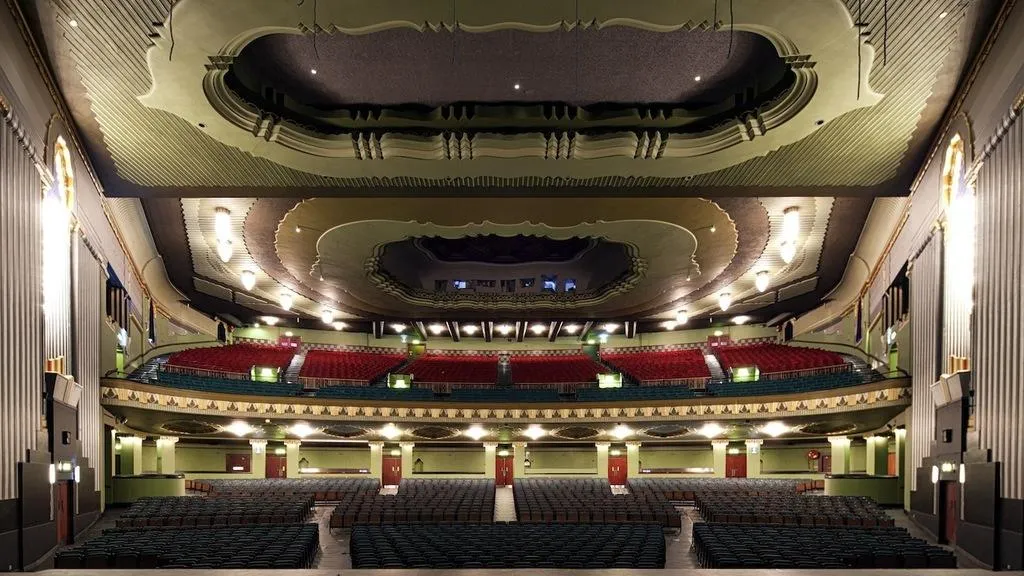
Chapter 35: Chapter 35 - Wonders of Wandel
Chapter Text
•✦—✦—✦•
Friday, June 5th, Labatt’s Apollo Hammersmith
The world was currently shaking in its boots with nuclear bomb tests going down between two rival countries. Out here in London, no one seemed to care. Perhaps, with how tedious our rehearsals had become, Dolittle cast members were even more clueless than most. After our sitzprobe, we went into wandelprobe; if you are familiar with German or with any Romance language, you may have guessed it meant walking or wandering rehearsal. If so, you are absolutely right.
The Wandelprobe was performed in our everyday clothes, with Steven fully in charge. All the scenes we had rehearsed before had taken place in a rehearsal room. Where we used tape and portable platforms to stand in for the actual stage. This time, the stage might have lacked the ninety-two animatronic animals and the full lighting setup, but it had everything else — the real props, furniture, and backdrops. Best of all, it was the glorious Apollo stage, ours to command for the next four months. As we ran through the show, the technical crew scribbled notes furiously, marking every cue and adjustment while we pieced the production together at last on its proper birthplace.
Since the wandelprobe, full performance had been done three times, but we had done dozens of scenes individually as well. We practiced the dance choreographies almost religiously. Each day we met up to warm up and dance before we went into technical rehearsals. Steven had adjustments for everything. Sit there like this, have your arms to show you are daydreaming, open your eyes wider so that people can see your dreaminess. The person who received the most adjustments and directions was poor ol’ Phillip. He was a great performer but a terrible actor. Steven seemed a man about to choke Phillip whenever he delivered his lines too quickly. Yet he looked a man about to rain kisses on Phillip whenever he sang his numbers.
“Slow down, for God’s sake. You are not on TV, you’re not reading off your damn teleprompter.” Steven’s eyes softened — only so much abuse could be directed towards the star of the show. “The way you move when you sing, the confidence that you have! Bring it into your scene work. Think of it as singing, speak on beat if you must.” Steven told the lead actor.
Phillip improved since then, of course, but not to a level that Steven was happy with.
—✦—
“Listen up!” Steven said after his customary claps.
Cast called it the Shakespearean applause on account of Steven having directed mostly Shakespeare plays.
“Tech’s done some dry runs on the recorded cues. Now we’ll do a wet run — that’s the cast and tech coming together. Lighting and cues; if there are mistakes, we’ll reset and go from the last cue. First, get backstage and get your mics fitted.”
If you’ve never been backstage, let me tell you that it is a mess. Wings — that is, stage left and right — would always be an exit or entrance for us, but in some scenes, there were doors or stage props that we could use. That area at the back was called the crossover. As we all made our way back, we were respectful of the queue like no one else. Missing our cues could have us bump into someone in the tiny area; queuing up solved the issue.
If you’ve never been backstage, let me tell you — it’s chaos in the most organised way imaginable. The wings, meaning stage left and stage right, serve as both exits and entrances for us actors. Depending on the scene, there might also be doors or other props we could use to enter and leave. Behind the stage is a narrow passage called the crossover, which lets actors move from one side of the stage to the other without being seen by the audience. Everyone learned quickly to respect our cues and not dawdle or make ourselves scarce from the area. In a space that cramped, missing your cue or cutting the line could mean literally bumping into someone — cracked forehead was not what I was after.
The line moved as quickly as the assistant sound engineers could place mics. Each microphone was different, some wore a metal wire folded into the shape of an ear, some had it clipped onto their forehead. The room was full of digital equipment — monitors, analogue or with screens. Green and red lights were either on or off to indicate which mics were hot. A radio receiver and station were set to the side; occasionally, a tech crew member radioed in information.
My turn finally came.
“Katie,” a lady introduced herself. She sat on a large worktable with various tools around.
Most eye-catching was a plastic sack hanging from a wire. It had pouches built into it, wireless microphones and transmitters all sorted nicely with the actor’s name marked. Clear plastic reminded me of someone’s stamp collection with how the clear plastic displayed the mics proudly.
“Tommy,” I replied distractedly.
“This,” Katie brought up a transmitter — a silver rectangular piece with a label taped on it that said Mic-17/Tommy-1. A wired microphone was plugged into the socket. “It is worth four hundred quid. If you break it, it’ll be off your wages.”
I had clocked her as a nice lady, but you couldn’t always judge a book by its cover.
“No tapping the transmitter, no bumping the transmitter against the wall or your chair,” Katie said, her voice louder with each warning, “No touching the transmitter!”
“Right…” I said. She wasn’t going to get a Christmas card from me.
“If you turn off the mic and go on stage, it will be mayhem. Here,” she said as her hand reached around — a wire from the transmitter went behind my right ear.
Almost too soon, she cut out a clear adhesive tape and stuck the mic to my cheek. She used her hands to move my head up and down as she ran the wire through the side of my head, behind my ear and down to my neck. Each time, she taped it at those spots, making me move my head so there enough room for free movement.
“Just because the microphone doesn’t seem close doesn’t mean you have to speak or sing louder! We can increase the gain at the back — the volume, I mean,” Katie said, dumbing it down for me.
“I understand—” I started to say.
“DO. NOT. TOUCH!” Katie said, slapping my hand as I reached to find the mic. “Touching the mic is very bad — pretend that it doesn’t exist.”
I sighed; Katie was serious about her mics.
“This will help.” Katie handed me a skin-coloured waistband.
The waistband had two wide slots in the back and velcro to keep it tight.
“Or do you want a pouch like this?” she asked me, holding up a single nylon pouch with a cord through it.
“I get a choice?” I asked dryly.
Katie actually seemed to ponder over that for a moment before shaking her head.
“No. You get the pouch. Keep it in your jacket or the back pocket, wherever it doesn’t rub much.” Katie said.
As soon as she placed the transmitter into the nylon pouch, she put it in my trouser’s back pocket and kicked me out of the room.
Outside, I waited for all the cast members with singing parts to get their mics fitted. Idly, I admired all the animatronics that the Creature Shop had built for us. We had horses that looked like the biggest nerds — realistic but just uncanny enough to be fantastical. The Doctor’s house had foxes, a pig, a dog, a chimpanzee and birds of many kinds. Only Chee-Chee the Chimp and Pushmi-Pullyu were being played by humans. The rest were all going to be operated by advanced RC remotes, with voice actors voicing them from backstage.
Today’s tech rehearsal had me excited for one reason. Well, I’d be lying if there was only one reason, because the lights added seriousness that was not present before.
But my real focus was on a parrot made of plastic, silicone and electrical parts soaked in glue and rolled in feathers. Polynesia the wise old parrot was going to have a voice for the first time. I felt that it would be weird to speak to Julie’s voice instead of Angela reading out the lines. My Nain had made a fast friend of Julie — so I heard from my grandma, of all people — regarding my fellow cast member having gone to a recording studio. Julie hadn’t been in a play in London for four decades. How odd was it that her first time back, she was almost like an outsider. An old thin lady worked her RC remote in mad ways, which made the parrot bob and weave as if dancing to an invisible beat. Stage Manager would call the shots for when the recorded lines would be played.
We were only missing the dress rehearsal after this. In one week, previews would start. Family and friends would come at first — it would be our roughest performance. Steven would still keep directing us and changing the play into something that fit his vision better until press night. Then a week after that we would premiere for real. Everything was turning more real as days passed.
“That’s everyone,” Steven said, clapping loudly.
Cast members were all ready to put on the performance of their lifetime.
“Save your voices for tomorrow or Dixon will kill me,” Steven complained.
“Oi oi,” voices replied.
The overture started to play — the band was inside the theatre yet invisible to us. I held my thinking pose, looking like a boy daydreaming. The worst set in the production so far was the dock — the very place the first scene started with. Doctor’s house was work of art but this set looked like Woodfield’s production of Oliver! Underneath my feet and the stage was our orchestra, playing music in a basement like a newly formed band. I looked up on cue, said my lines, pushed the cart until Bryan started his song.
Over the past seven weeks, I had improved as an actor, a singer and a dancer. Children of the Forest taught me some things, but it hadn’t taught me stamina or the ability to turn off and on my acting within moments.
My most natural method of acting turned out to be what some may wrongly call method acting. I didn’t act like my character on or off the set, but I did try to understand my character’s motivations, psychology and limitations. Falling into that character and coming out of it could be emotionally draining. Acting as Pablo, I pretended that I was stuck in a place where I did not speak the language, without coin or food — depending solely on the kindness of children. Fear was easy to understand and portray.
Some characters were easier or harder to get into. I found Tommy easy at first, but harder as the days passed. This character was cartoonish, unrealistic and full of boyish charm and foolish wonder. The more I put on that state of mind, the less effective it became.
Theatre training and rehearsals kicked in then. Rehearsals break you down until you are nothing; you prepare something for so long that every dance move becomes so ingrained in your muscle memory that you no longer have to think about it. The same applied to acting — I no longer needed to really dive into that state of mind, instead I could fool my body into feeling the excitement.
Julie taught me how to cry on command, which I used to manipulate my mother into taking my wages to pay off bills. What I was doing now used the same concept, only I manipulated myself. You could cry for real by going the standard method-act route — recall bad memories and make yourself cry. That sort of thing can drain you. How terrible it would be if I had a crying scene and had to fake cry each day, and it would be real. Each day would be miserable as you went through a bad memory, reliving it daily.
Fabulous Mary Poppins had another idea — she simply yawned. Try yawning right now; exaggerate it as much as possible, close your eyes, cover your face and yawn. You’ll have a few tears if you dab your eyes. The same muscles that you can feel moving when you yawn, you can also move without opening your mouth. Our bodies have their pre-programmed responses to all things life would throw at us.
Getting myself excited could be triggered by so many such things — fast breathing, sugar in my system, jumping around restlessly for a minute, focusing my eyes on something until my eyes dilated. These were the tells I had learned from drawing real excitement from being on the show, then seeing what my body was doing. It worked the other way around, just like the yawning did. Maybe it wasn’t as effective as the real thing, but it offered me more control without the cost of drained emotions.
Today was completely different.
I had a light on me in the very first scene. When I crossed from upstage centre to downstage left, a light went off behind me and another was lit up in front of me. It made me feel giddy and excited. I drew that emotion into me and channelled it into my performance. Before, we were dancing and singing under the dim lights. Now the stage lights shone on me like sun on my skin — the heat was comparable as it warmed me up like summer day. That warmth was instantly associated with me being the centre of attention. My personality wasn’t the kind to seek attention in normal situations, but when I was on stage, I needed that light on me. The audience needed to see me — see my emotions and how much effort I put in. I needed them to appreciate my performance.
Steven complimented everyone in between transitions. It wasn’t only me feeling the excitement today. Our performance was almost perfect — or maybe that was just the lights making it all look so shiny and new.
The role of Tommy usually bored me — he was onstage for what felt like the entire play. But today, I didn’t mind it as much. I was standing under the lights in every scene, and somehow that made all the difference. I didn’t even care that my character was deliberately upstaged in almost every scene; the lighting made it feel like the audience could see themselves through me. After all, in most scenes, you could barely even see my face. Children would see this play and put themselves in Tommy’s shoes, it was a good practice for Harry Potter.
#
I laughed dozens of times during the rehearsal with the mishaps in technicals. The large snail head could only fit through the stage with six-inch clearance, so everyone who moved it had to do it perfectly or things went awry. The same could be said with the mammoth, the pushmi-pullyu (two-headed llama who had two woman inside of it) and the craziest animatronic ever — the Giant Lunar Moth.
Phillip refused to get on at first; his understudy was happy to take his place and “flew” on the moth. The lights hanging from the purple monstrosity made it look more fake than every other animal that the Creature Shop built. Though nothing could really rival the grand size of the moth, nor the way its body moved in conjunction with the flap of its wings. The puppet masters had breathed life into their craft — realistic movements made plastic and paint look indistinguishable from real natural movement.
Our reprisal of Talk to the Animals had more energy than all the other times we had performed it before. As Michael waved from the giant flying contraption to the empty theatre hall, Phillip finished the play from his spot at the sidelines.
“To me!” John Dolittle shouted, music reached a crescendo.
Lights went crazy, and we held our final poses, then bowed to our technical crew and creative team as we would our live audience when we had our first preview.
“Brilliant!” Steven said — his claps this time were of pure joy and wonder.
After seeing it all come together, his frustration with the production seemed to have been washed away. He was incredibly pessimistic about the animatronics being completed on time. Yet here we were — on schedule and nailing our rehearsals.
I, Wilfred Ingrid Price, had received my very first standing ovation. Theatre was special; I felt like I knew all of my cast members better than my family. The way we danced together could be done in a dark room, and I doubted any of us would bump into each other again. Theatre had destroyed me and rebuilt me piece by piece. I was no longer a small boy from Puddleby that Dolittle called me.
Call me overcome with my emotions, but I promised that I would do theatre until I was senile and too fragile. Even then, only falling from a stage could take me off it. Theatre was not just a job; it was a community of the friendliest and warmest people around, and we grew our friendship every single day through our teamwork building activities. Soldiers did the same, but that built a colder person with deadlier capabilities — our purpose was to awe and amaze our audience and that made all the difference.
“Tutoring for Wilfred and Darien!” Maddie shouted and dragged me away from the large hugging pile the cast was in.
Steven wasn’t even mad; he laughed and joked, “Make sure he rests his voice — we’ll be recording the songs tomorrow.”
My schedule had ballooned for June: maximum allowed six-day-a-week rehearsals, studio sessions for the cast album, auditions for ITV and BBC productions. Then there was something that could change my projection in the entertainment industry. Nain had sweet-talked her way to Julie Andrews and got a ticket for Hey, Mr. Producer! — a tribute concert to Cameron Mackintosh, who had been recently knighted for his contribution to musical theatre. Julie was going to be the host, and I would see the Queen in person.
“Ahhhhh!” I screamed silently in excitement. I would wander into the event for the elites.
Chapter 36: Chapter 36 - His & Her Majesty (Part 1)
Chapter Text
•✦—✦—✦•
Hammersmith Apollo had a section called the Pierce Rooms. It was owned and operated by Richard Pierce. Clearly, he seemed to be close to the big wigs of the Apollo Theatre Group because he had managed to convince them into letting him build a studio smack dab in the middle of the theatre.
Originally, the technical room had been nothing more than a storage space for props and costumes, but under Pierce’s machinations, it had been transformed into a proper studio. Mike Dixon had sold us on the idea of recording there in much the same way Pierce must have sold him on using the Pierce Rooms for the recording studio in the first place.
“Monitors to see the stage, a couple dozen steps between here and the stage,” Dixon kept repeating.
It was thrilling—my first time in a recording studio. The room was massive, designed with the novel idea of capturing theatre performances in a controlled environment. Singers had their sheet music stands and microphones arranged in neat rows, much like during the sitzprobe. The full orchestra wasn’t present, but we had a backing track of some of their recordings to guide us.
“Look, it’s state-of-the-art stuff,” Dixon pointed to the monitor.
It was indeed advanced. All of the other screens within the theatre were these thick white monstrosities. This video monitor was the newest craze everywhere — a flat-screen Plasma TV.
“£5000 for that,” England said with a shake of his head.
“Each,” Dixon said, giving the double video monitors a gentle slap.
Turning around, he gave us a look an excited puppy would have. Dixon’s entire job was to get us in position to perform the songs as Leslie had written it. But that could’ve been done by England, his real responsibility was to put on the cast recording. As soon as this recording session (or sessions depending) ended, we would hardly see each other again.
“Thank you everyone for giving me the best you can; it has been an absolute pleasure working with each and every one of you talented folks,” Mike said with a bobbing head.
“No worries, mate,” John said with a chuckle.
“Come here.” Mike opened his arms wide and went to hug John.
These two hadn’t seen each other eye to eye. John had his own version of I’ve Never Seen Anything Like It that he just didn’t want to modify. But they would remain professional and friendly now that they were over the hump.
“Hey, you trying to choke me, man?” John complained.
“Thanks.” Mike ignored the banter and shot a meaningful look at John.
Turning back, he laid out the game plan. The idea was simple: video monitors would be directly connected to the cameras filming the stage. It would allow us to get cues and be synced to the performance as a whole. Flat-screen TV, live feed, and remotely synced musical theatre performance — we were pioneers of future technologies. Terminologies used by Dixon to explain his vision could’ve been off the brochure or a tech magazine. He had never needed to sell us on the idea in the first place; we were excited about it from the get go.
Dixon went to the booth to sit in front of a massive analogue console. Plasma TVs may have been 5K each, but that thing was probably worth 100 big ones. Some of the nerdiness that Dixon was throwing off the walls had stuck to us. Seriousness of the studio lifted it even higher. Our vocal practice involved a lot more honey and steam than usual. I drank a nice chamomile tea with a dollop of honey and ignored the madhouse of sounds around me. Older actors didn’t like doing vocal warm-ups together with the rest of the cast, but today they were enthusiastic and led the warm-ups. Unfortunately, we all had our own voices and octaves; the madhouse of harmony went on until we were content and confident with our instruments.
Dixon tapped on the glass surrounding the booths. He pointed at the headsets around us.
When I put mine on, Dixon’s voice sounded out clearer than in real life.
“Does everyone hear me? Thumbs up for affirmation.” I gave him a thumbs up.
Problems started from there. A few dud headsets, a few replacements, or just those who didn’t feel comfortable with the large and clunky headsets and needed to be told how to put it on. When our first take started, we had to stop to sync the company on stage and us in the studio. The next real attempt finished with us annoyed as Dixon fiddled with a million things, radioing in instructions for audio engineers or stagehands.
Five more swift failed attempts later, Steve, who was directing the stage, came into the studio booth. I had my headset down, so I didn’t catch the first part, but when I put it on, I could hear them as clear as crystal.
“—just do it,” Steve said. “You’ve got it all wrong. It’s pointless to sync the performances; the ensemble is getting killed out there. Try doing a dance where you had partners but now there’s no one. Lead actors are all in here; they’re needed on stage so others can play off them.”
“But this is what this room is for. Look how fancy the stuff here is.” Dixon gestured over to the plasma monitors, clunky but awesome-sounding headsets, and the giant desk/recording console.
“It doesn’t matter. We never rehearsed to do a performance in two different rooms. I’ve got an idea, actually…” Steven trailed off, finally noticing all of us wearing headsets and watching them as if we were tuned in to EastEnders.
Steven’s voice caught for a moment before he shook himself. “How about we use it as a way to double up on tech rehearsals and studio time?”
“That sounds— Hey, don’t touch—” The feed cut out on our headsets.
We all had disappointed expressions, but then it was like watching a silent film. Mystery made it feel even more like soap opera. Dixon’s eyes seemed to tell the tale — he had been convinced the longer Steven spoke.
Eventually, it was decided that we would go between the studio and stage, with principal voices remaining. Michael England helped Dixon get a rotation done, and we were off to the races. All the mishaps and challenges had cooled our excitement so much that we finished the first three songs without needing a second take. I was then promptly kicked out of the recording room and told to join the stage for the songs I had no singing parts. Five musical numbers later, I was kicked off the stage to join the booth for Fabulous Places. That was the entire experience of my very first album recording. All that work with Dixon allowed us to rehearse exactly the way Dixon the Producer himself wanted. My role after the first few songs was just to act as an ensemble backing vocal. My only other time in the studio was me being called later that day to re-record a few of my backing lines and also another version of my solo part in Doctor Dolittle, the titular song.
The Pierce Rooms had been built to provide the best acoustic environment for a theatre production — microphones placed in the right places to allow the capture of orchestra in the most layered and optimal way. The best place to record the birth of my music career, yet I had been in the studio for less than an hour, and most of that was spent listening to Dixon fuss over his fancy equipment. Shame. As Nain dragged me home, I was excited about hearing the cast album when it was released. I would collect all the memorabilia I could from the Dolittle. I would cherish it more than my UKMT medals, more than memories about my favourite books. It was special in that acting was something I could call truly my own.
—✦—
Monday, June 8th, Jermyn Street
Off the beaten path of London’s most famous Savile Row was Jermyn Street. Less than a mile away, it was designed and built in much the same way as Savile Row. In fact, it looked more luxurious than famous Savile Row, with all kinds of luxury brands littering the street. Still, Nain assured me the prices here were more suited to our economic state.
Manfredo Rossini - Suits, Alteration, Hire.
When I saw that sign, I begged Nain to go in there. The names seemed resemble mine and my agent;s, and it would be wrong to pass by without trying the place. At our entrance, an old man in his seventies stood up from a divan. The way his knee seemed to make a popping noise with each step made me feel guilty enough to purchase from him.
“How can I help?” he asked.
“I would like a suit to wear when I meet the Queen. Hire would be best. Growing boy and all,” I said with a smile.
“Meeting the Queen, are we? Well, we can all dream.” He gestured to one section of the store, leading us.
“We actually are,” Nain rebuked. “Front row seats at the Lyceum. Queen Elizabeth II and the Prince Charles of Wales will be there.”
“Don’t forget, Earl of Chester,” I said in my natural Cheshire accent.
“Ah! Will you go into the royal boxes then? I might have to get you solid golden suit,” the old man joked.
“Cheap will be just fine, thank you.” I replied with a grin.
“Julie will see us; your Grandad will be wearing his old tweed jacket. I need at least one person to look the part,” Nain said with a deep sigh.
“Do you have tweed jackets?” I asked.
“Of course—” the old man said, then laughed as I rubbed the spot Nain had just stung me on. “I’m Manfredo. Welcome to my shop. We dress you for the Royals, bien?”
Nain actually let me try on a tweed suit in a sage green colour. I always loved how my Grandad looked at times; the old-timey feel looked ironic on someone as young as me, cloth cap made me look like child laborers of the past. Nain liked a stone-coloured Donegal suit because the wool didn’t look as rough and thick.
Manfredo went to the back, returned carrying a garment bag, and pulled out a new suit.
“What is this?” Nain asked, her eyes already admiring the fabric, her fingers soon following to feel it.
“Herringbone, Signora,” Manfredo said with a small nod. “Silk-striped waistcoat, pinstripe trousers.”
I tried to sneak a look on my tiptoes, but Nain was too captivated and in the way.
“Here, try this on,” she said, turning to me.
“The jacket is tailed,” Manfredo added with a smile, and I finally got a full view of the three piece suit.
A grin spread wide across my face.
—✦—
The Price household drove the reliable old “Maroon” Vauxhall to Shaftesbury Avenue. I walked the street like a true gentleman as fitting my posh suit. The five-minute walk turned into ten as women flocked around me. I had a bright smile, and my hair was styled in messy waves. I wore what is called a Morningwear Tails, type of suit that had fallen out of fashion. Only the royals wore it now, a cute kid could pull it off when meeting anyone. I was both cute and meeting the royals, a perfect occasion.
My Nain wore her very best — a dark full-length gown with a black sash with silver highlights. We matched almost perfectly, save my trousers being dark blue. Grandad wore his Sunday best — a cloth cap and tweed jacket. With the weather, he no longer wore his woollen shirt, but his baby-blue shirt matched nothing the rest of us wore. He did not look dressed up at all. But for Clive to have put on his church clothes; meant he paid the Queen enough respects.
Nain had a different outlook. For her, this day was the most special. She adored Julie Andrews, of course, but she was also the sort of person who thrived on royal drama. Princess Diana had died the previous year, it had broken Gladys’ heart. Now Nain was buzzing with excitement about attending a tribute concert on June 27th — coincidentally the day after my birthday. There was a time I feared saddling my grandparents with moving away. Now, I knew Nain loved London more than anywhere else she lived before.
The women charmed by my cute looks disappeared into the crowd as we neared the Lyceum Theatre. Last time I was here, my mum was taking me to see an agent. Today, there were barriers around the place, black cars blocking the footpath. Royalty Protection Officers were all around, preparing for the Queen of England’s entrance. Photographers and reporters had their cameras and microphones pointed towards the arriving audience as if warding evil. Photographers took photos of my grandparents and me, then a reporter blocked our path asking if we were celebrities. We said no, and they scoffed, completely dismissing us. Change from the attitude from moments before to after was jarring.
We had arrived early as per the host’s instruction. The Lyceum had only one entrance; the Queen’s entrance required space and safety. I think I imagined glamour when I daydreamed about going to the biggest event in the West End in recent years. Instead, we were searched and had our names recorded by the Protection Officers. We felt less like cows for slaughters once we were through to the reception hall; Nain paid it no mind.
“My God, is that Dame Judi Dench?” Nain asked.
Both me and my Grandad looked to where Nain was pointing, seeing an older woman who could be Julie’s older sister or mother. It was weird that she was only one year older than Julie; years had affected them in different ways.
“Could we go say hello?” Nain asked, looking around shyly.
“Why not?” Grandad said with a shrug.
Right as we started walking towards Dame Judi Dench’s direction, a few poshly-dressed people got her attention, and they exchanged greetings. Dame Judi even hugged one of the women in the group.
“Drapia!” Nain cursed, which was Welsh for drat.
“Come on, maybe Julie Andrews will introduce us later.” I said, laughing. Nain started to move automatically as I held her hand and led my grandparents towards the souvenir stand.
We bought the programmes for the show, a tradition for theatregoers. Nain bought opera glasses for a pound.
“To see the Queen.” She explained.
I admired the hand-drawn artwork on the programme, it featured Cameron Mackintosh and the girl on the poster of Les Mis. I still hadn’t seen any plays in the West End; but it would all change today, Mackintosh was putting on various numbers from his most famous plays with their original casts or famous celebrities. Could I perform in front of the Queen when it was Leslie’s turn to be celebrated?
My eyes roved over the songs in two acts the concert would have. The overture was from Cats! But the very first song being sung was Food Glorious Food! How small was the world? My first ever school play, my first ever West End show, my first ever job in a “West End” production. The song was the start of it all.
Nain grabbed my hand, jerking me to a stop.
“Cameron Mackintosh, that’s him, right?” Nain said, pointing at a man sitting at a desk and signing programmes.
He wore a Scottish kilt with white knee-high socks, looking like a schoolgirl. The table he sat at needed a tablecloth because I could see the man’s hairy thighs. The only thing stopping any indecency was the sporran, a metal pouch that protected his dignity and others from trauma. I hadn’t known he was Scottish — the name hadn’t clued me in somehow. But then again, I barely knew the man. Being behind the stage didn’t make you popular to normal crowds. This was to be my first-ever concert/musical I went to — a tribute to the career of a legend — and I would only discover his works today. At least I could be happy that it was a charity event for the blind.
“Let’s get it signed like those people are doing,” Nain said. She showed no sign of her earlier shyness.
Chapter 37: Chapter 37 - His & Her Majesty (Part 2)
Notes:
(See the end of the chapter for notes.)
Chapter Text
•✦—✦—✦•
Monday, June 8th, Lyceum Theatre
My grandparents pointed to one person after another as we moved through the hall. A to Z listers were everywhere or whatever was the equivalent in England. Here people didn’t worship celebrities as Hollywood seemed to. The cheapest ticket for the concert cost £150, twice as expensive as the day before. Two day concert had a final day special in that the Queen was attending. Me, I tried to find footballers, but the best I could do was David Seaman. England’s goalkeeper, out with his new wife, looking happier than he did with his old wife. There was this strange sense of entitlement that I got as a football fan: why is Seaman here instead of training? In less than a week, he would be off playing the World Cup against Tunisia. Why was he going to a concert? Maybe that was just a bit of my dad’s personality rubbing off on me.
An attendant came over to urge us inside. The interiors of the Lyceum felt much more stuffy than the Apollo’s. Everything was varying shades of red—the walls a soft red nearing salmon, chairs a faded red from many arses that sat on it before me, and the curtains were rich velvet. Beauty could often be found in contrasts, and Lyceum did it with taste; complicated Victorian-era decorations were all creamy whites and off-whites. Somehow it all looked humble yet properly posh. Our seats were on the lowest floor, called stalls and as Nain had boasted, we were indeed front row. From my seat, I could see the mezzanine and the balcony seats up and behind me. The circular shape of the theatre surprised me to no end. While my Nain seemed to only pay attention to the royal boxes by the wings.
We spent time talking about nonsense as guests streamed to their seats. My position made me stand out like the stage was standing out. When I turned my head, I could see all three levels of the theatre and the growing crowd. Eyes of the audience seemed to watch me, it was already so intimidating and I wasn’t even performing. How must the view be from the stage? Apollo was larger, but Lyceum had packed us like sardines, it had an effect of feeling more crowded.
“God, it is happening!” Nain screamed quietly.
I was already clued in with her obsession, so I automatically looked up at the boxes. Queen’s bodyguards had been there before sweeping the place. Now, though, it was the Prince who entered. Gasps and surprises sounded out in the theatre. How many of the audience were crazy royalists like my Nain was, rather than musical theatre fans?
“There she is, what a relief,” Grandad said in a dry tone.
Fanfare sounded out from one of the lower private boxes, a herald trumpeting out the notes.
Out came the opera glasses as Nain triede for a closer look.
“That’s Prince Phillip. He’s Greek, you know.” Nain said.
“He’s Danish, I doubt he has any Greek in him,” Granddad said with frustration.
A man stood in the middle of the royal box, staring down at the audience like a conquering king. He turned around as someone else entered.
“Shush you—Oh, here she is! Ohh.” Gladys had her hands to her heart as she looked admiringly at the woman through her opera glasses.
The Queen of England, ruler of the United Kingdom and many other Commonwealth realms, wore a white silken dress with a subtle overlay of green sheer fabric. Theatre lights followed her every movement, casting a soft glow on her face. Her familiar hairstyle was exactly as I had remembered from countless times I’d seen on TV. A diamond necklace and matching earrings sparkled brilliantly under bright lights. I couldn’t help but wonder if designers or stylists had meticulously planned her outfit; the soft green sheen of her dress perfectly complemented the bouquet of flowers she held — white and pale pink roses that mirrored her dress and complexion, with greenery along the edges matching the delicate green of the sheer fabric.
Nain excitedly brought me in closer to her, and in my ear she spoke,
“That’s roses and lilies of the valley. It’s her favorite flower, and she had a bouquet full of it on the day of her coronation. I saw it in the town square in Merthyr Tydfil,” Nain told me with remembrance.
“What year was that?” I asked, Gladys hadn’t even left for Cardiff.
“That’d be 1953,” Grandpa said as he clapped with the crowd.
Slowly, the applause died down, and the Queen took her seat. Everyone followed after. Nain seemed pleased; I held her hand and gave her a bright smile. Just by existing, I had allowed her to meet two of her idols. If I succeeded at nothing else in the future, Nain would still be proud of me.
Lights dimmed suddenly; the loud chatter died down to faint murmurs. Soft piano started to play.
“I had no idea this Mackintosh made Salad Days,” Nain spoke silently.
“No, that’d be Dorothy Reynolds. That Scottish lad was probably not even born then,” Grandad said with a scoff.
“Shush,” multiple people hissed. We shut up, we may be rubes but we didn’t have to act like one to enjoy the show.
A small boy in the exact same outfit as Cameron came on stage: kilt and metal plate hanging from his waist, balloon in his hand. The boy went to the piano as if to try playing a note, got shy, and turned back to the audience. Smiling, he let go of a red balloon. People applauded then, but I knew not why. Young Cameron pushed the wheeled piano away as an overture started to play. On my programme, I read that the first piano number was We Said We Wouldn't Look Back from Salad Days; the overture I was hearing now was from Cats.
Sure enough, once the overture started to reach its end, the proscenium expanded like a picture frame being taken apart. A proper orchestra was visible where the crossover for our play in Apollo would be. Lights turned off as the set transitioned in front of our eyes: Industrial London, metal staircases slid in, and suddenly children started to walk in from under the stage, from the wings, or even on the prop footbridge. Bass played ominously in beat with the steps of the children. Mrs. Moss put on the play at our school; our clothing wasn’t much different from what these kids wore. These were orphan rags, after all, but Mrs. Moss didn’t have the number currently on stage. There seemed to be at least fifty children on stage; there were so many that they fit the stage only because they walked in circular and oval shapes.
When they started to sing, I realized that Mrs. Moss was beaten. Fifty kids sang without any microphones, and all of them were amazing singers. Woodfield hardly had fifty kids that would join the play; West End had fifty who could and had amazing voices to boot. Julie was hosting this concert but hadn’t asked me to join—was I worse than these kids?
Woodfield’s choreography was simple: children’s games done to music accompaniment which built an illusion of well-coordinated choreography. These kids were moving like kaleidoscope shapes they coordinated in sections, across dozen other kids, standing up and down, left and right at opposing times. I felt hypnotized as I listened to the song that I had memorised by heart. An adult actor came out from left stage, walking by the stage apron holding a comically big cooked turkey and roasted vegetables. Eyes of the orphans trailed the food she carried. They sang as they begged for food, holding out their iron bowls which resembled the kind used for dogs. Next came a man holding a steaming pie; the steam made it look so real, if not for the cartoonish pie.
I realized the true difference between Mrs. Moss’ play and this: Sure, they had better singers, but we could sound better in solo songs with me and Henry at the helm. On the other hand, we would never be able to have the details that I could see on stage. Each kid had a gray jacket and trousers torn or fraying in different ways. Shirts were mucked up or caked with mud in odd spots. They held those metal bowls dented in different spots, each more unique than the last. Children had went through Hair and Makeup, giving them a pock marks, dirty faces; it sold the idea of them being orphans better than just the clothing. When you combined it with the stage, props and everything, actors could transform fully into the role.
When the ensemble did their dances, they walked on the apron, I could see them so close to me that it felt like a performance just for me. There was also genius in letting this be the first musical number. Children had no microphones, and the audience had to stay silent to hear them. Dancing, elaborate moves, using the prop as makeshift drums, the children did it all, and it ended with Oliver finishing with the high counter-tenor note. I saw myself in that boy’s place; I could hit the note more cleanly and louder than that stupid boy. So why was I not invited? There were fifty roles for kids with talent, and I spoke to Julie whenever she visited us. Then my eyes fell down. It was obvious: I had limited work rights. I couldn’t rehearse for two different shows if one was already doing a maximum of six days with me. I hoped that was the reason and not my lack of talent.
Thoroughly shown up, I saw the stage transition so subtly; the industrial orphan backdrop changed to a picturesque Tudor-era house. All-adult cast came in wearing outfits suited to the roaring twenties.
Nain was shaking in her seat, her hands grabbed for me. The song was Wouldn’t It Be Loverly? Same song my Nain spoke about hearing Julie Andrews perform before she married my Grandfather. I saw the loving gaze the two shared with each other, leaning in close as they listened to the song. I felt like an intruder as I sat between the two, being squished.
As someone who had been practicing cues and stage crossovers during the tech rehearsals, I was fascinated by how smooth the scene transitions were. The footbridge rose up and out until the proscenium blocked it from view. Actors left the stage without drawing attention while new cast members stepped in, fully upstaging by design. So many things happened in those moments, like the lights going out over the ensemble making their exit while the new actors had a light turn on over them. It was also choreographed in a way that made it feel like the gathered crowd went back to shopping as they were or going back to their work, whatever natural thing that fit the scene and actors, they did it. I had seen our cast over the video feed; we never looked this smooth when doing scene changes. Quit Professor Higgins started and finished quickly, but while we were paying attention to the maids singing the song, the stage had somehow lost all props and lay bare. Audience could have their attention directed just as the director could direct an actor to perform in certain ways. Two men walked in at the end of the song.
“That’s Jonathan Pryce! He’s Welsh!” Nain whispered excitedly in my ear.
Revelation was not needed. I knew him as the High Sparrow from Game of Thrones and Pope in Two Popes. There were only so many Welsh actors, and Mum had done her work integrating me into the Welsh culture. I preferred Sir Anthony Hopkins to Pryce though. The lady playing Eliza started the Rain in Spain song. I didn’t like the song, and Jonathan was nowhere as good as Eliza’s actress in the trio number. Actor called Peter Bayliss showed up to do a song called Get Me to the Church on Time. I loved the funny tone of the song, but it was forgettable. Jonathan did a solo that I enjoyed mostly for his acting method; his singing—or maybe that was just how the song was written—was boring. There were things to learn from Jonathan. The way he changed his expressions without depending on other external movements was simply breathtaking. The monologue at the end of the solo had this frustrated rage that I committed to memory so I could replicate it if I ever needed it. After all, this man was an actor so good that he’d be knighted in the future.
The song ended, and a rare scene with a dialogue played out between Eliza and Professor Higgins (Jonathan). It was a scene where the two seemed about ready to confess their undying love. When Eliza opened her mouth to speak and to accept Higgin’s advances, no sound came out. Instead, Julie’s voice sounded out over the house. It was so iconic that people could recognise it instantly.
“I washed my hands and face before I came, I did.” Julie spoke.
The crowd applauded so loudly that they broke the polite pattern of only applauding at the end of the song.
Jonathan portrayed shock and excitement in perfect balance. Confused, he looked back. I felt how upstaging worked in real time as I couldn’t help but slide my eyes off Jonathan’s superior acting and turn to look at Julie Andrews. It was human reaction to pay attention to what someone else was looking to, so one couldn’t look at Jonathan when he was looking away from the audience.
“Eliza? Where the devil are my slippers?” Jonathan said then approached Julie with a smile.
Julie walked in all regal and dignified to fanfare louder than the Queen herself had received. She held hands with Jonathan and gave a bow. Since I was on a proper production, I realized that Julie had just messed up. You had to see people fail scenes so many times. This time it didn’t seem to be entirely Julie’s fault as another principal actor hurried onto the stage, and they bowed together as four. It was the sort of thing that really put into perspective that even the actors who are at the top of their game, who have accomplished everything, could and would fail. It would be fair to say that they may have failed the most out of any other actors. Their brilliance was shown in how they carried on without showing that they had messed up to the wider audience. Once all the bowing and applause finished, Julie made a microphone appear magically using sleight of hand.
“Your Majesty, Your Royal Highness. Ladies and Gentlemen, Good Evening. Thank you and welcome!” Julie said, playing host.
[Applause]
“As you can see, this evening is a celebration of musical theatre. Somehow, Cameron has managed to bully, blackmail, and browbeat the most incredible array of talent to entertain you for this evening. You are in for such a treat. I’m aware of Cameron’s power of persuasion because a few years ago he cajoled me back to the New York theatre to do a show of Stephen Sondheim music called Putting It Together. I’m so glad that he did.”
[Applause]
Julie wore an all-black sequin dress with pearl beds around the collar. Her entrance had been epic, and her clothes drew you but melded into the dark of the stage. Her pearls framed her face perfectly. Julie had spent all her life in theatre and film; her dress was designed solely to draw the audience’s eyes and keep it focused on her face.
“Putting It Together is what Cameron does; he is a true master at it. Why don’t you all sit back, relax, and put your feet up because he has done it again!”
[Applause]
Time passed quickly after that. Cameron hadn’t shown up on stage, but he had done an amazing job. Memorable songs were One, Two, Three from The Fix, a play that was going to close the same day Doctor Dolittle would start previews. John Barrowman was such a good singer, and the song was simple happy feel good that lifted you up. Jonathan Pryce had been good, but Ellen Greene stole the show. I had never seen the play, but the four-song section for Little Shop of Horrors was all I needed to understand Aubrey the character she played. Hardly any backstory was revealed, but I understood it from the emotions she displayed. It was not as emotional as Anne Hathaway’s I Dreamed a Dream, but it was a scalable version that a theatre actor could use to put out a performance that they can deliver every single day. Anne’s tragic song could be done once but the actor would need weeks to recover from the emotional toll. It was more impressive to me as an actor to see something theatrical and repeatable with great amount of emotions. The love duet of Suddenly Seymour was so beautiful that I knew I would be singing it everywhere I went for ages. The other plays hadn’t interested me so far but once today was finished I would go to watch Little Shop of Horrors. You needed to see great plays if you wanted to put on a great play.
Notes:
I'm sorry if the chapter seems to cut out abruptly, it was originally written as one extremely long chapter.
Chapter 38: Chapter 38 - His & Her Majesty (Part 3)
Chapter Text
Other remarkable performances included Julian Lloyd Webber, who made the cello sound grander and more commanding than any piano or pipe organ in his solo. Some of the older actors performed pieces from plays nearly sixty years old — incredible, though it showed just how dated they’d become, and how their influence had trickled down into the shows still running today. Five Guys Named Moe stood out, too, especially when I realised one of the singers, Clarke Peters, would later go on to play Lester Freamon in The Wire. He’d even written the book for the musical; it was strange to equate the lifelong theatre man to the wise detective, but that was acting to you.
Russ Abbot, a fellow Cestrian, sang “Pick a Pocket or Two” far better than Mr. Ross had in the Woodfield production — so much so that if Mr. Ross had been there, he’d have walked out in shame. Nain covered my eyes during the Miss Saigon segment when women danced around in their knickers. Grandad enjoyed the show as Nain could only block one person from watching. Jonathan Pryce came on for another number and proved once again that he was a far better actor than singer.
The first act ended after The Phantom of the Opera segment. It was technically astonishing — the staging, the lighting, the voices — but I still preferred Suddenly, Seymour from Little Shop of Horrors. When the intermission began, I wandered the aisles in a daze, still caught up in the wonder of it all — the songs, the sheer spectacle, and the realisation of how many legends I’d just witnessed on stage. Julie hadn’t been exaggerating when she’d said it was the best assembly of talent in the business. Even Jonathan’s solid vocals sounded weak beside performers who had defined — even owned — their roles. I was a long way off of these talented people.
“Gladys!” a voice called out as we were leaving the theatre.
It was Emma, Julie’s daughter, who was nearing forty. It was so weird that Julie looked so young but had children who were older than my mother.
“Emma! The concert is so amazing,” Nain said with warm hug.
“Right? So many maestros! Julie wants Wilfred,” Emma spoke rapidly.
“Oh? What for?” Nain asked, worried.
“To meet the Queen, of course!” Emma said, her voice high and exuberant.
“What? Did you say the Queen— The Queen Elizabeth the Second?!” Nain stammered.
“Yes, come on. It’ll be all clear when Mum explains it. Gramps there can come too, but stay close to me,” Emma said and walked off, sure that we’d follow.
“Gramps, my arse,” Grandad muttered, but he came along anyway. I squeezed his hand in support. He was a gramps, but my gramps.
“How do I look?” Nain said, fussing over her hair and makeup turning Grandad over to examine her.
“You look as beautiful as the day I married you,” Grandad said with a deep sigh and a warm smile, then broke down laughing. Nain’s hands shot out as fast as lightning. That must’ve stung. “Fine, you look fine. Dear— Cariad. Stop it, hey. Right, Let’s see this queen of yours.”
Nain mussed my hair and tidied it over and over again, she was proper stressed. I let her do her thing; I respected the Queen, but I didn’t feel the need to look all that good for my meeting with her. Nain, felt differently.
“Mum!” Emma shouted to get Julie’s attention.
She was in a large circle holding crystal glass of champagne; revelations poured in one by one as I studied the men and women around her. Richard Branson was the only one who didn’t trigger my revelation because he had bought the West Coast Train Line that I used to travel to London with. So the owner of Virgin had been all over on TV. But that circle also had lords, knights, billionaires, and businessmen—or some men who held all such statuses at the same time. Julie gave her excuses to the richest and most influential men in all of Britain, walked over, and gave me and my Nain a hug. Grandad received a formal handshake. That little event made me love Julie and ballooned my ego like nothing else.
“Gladys, happy you could make it,” Julie said with a smile.
“I wouldn’t have missed it for the world. Seeing Her Majesty? Are you joking?” Gladys smiled happily.
Julie nodded. “Well, you’ll like this part then. I want to use Wilfred for my devious scheme,” she grinned.
Nain gave me a side-eye, and one side of her lips curled evilly. “Oh? Do tell.”
—✦—
My grandmother needed no convincing and sold me out to the evil mastermind instantly. Julie’s devious plan involved talking to the Queen, which she had done numerous times before. But Julie the Host had another gig—a play so big that it had broken records for the most expensive play in the West End—and she had a plan to use me as a lure to bring a royal into the Apollo.
“Your Majesty,” Julie said with a small curtsy.
“Julie! You were brilliant; it’s so nice to see you on a stage in London again,” Queen Elizabeth said in her posh accent. Her voice was so iconic and familiar to me.
“Thank you, ma’am. It’s all Cameron’s work; he’s an amazing producer,” Julie deflected.
“No need to be so humble,” the Queen said, and her eyes grew soft. “I was oh so, sorry to hear about your accident. It is a shame.”
“Thank you, Ma’am.” Julie nodded.
The hurt on her face had disappeared since the first time I had seen her break down crying in our rehearsal. I had heard Polynesia’s recorded parts—it’s sad, she couldn’t sing anymore. Polynesia sounded like Julie putting on a a funny accent, and Phillip had a hard time doing the duet part in Talk to the Animals with a partner who spoke out her lines instead of singing. Yet Julie had moved on from her loss; she had forty years at the top of the entertainment industry. She could move on and do other things, hosting a concert was one such adjacent job which she didn’t need to climb another peak for.
“Who are these fine people?” Queen Elizabeth asked Julie, taking notice of me and Nain. I looked back to see my Grandpa standing with a protection officer searching him. Hopefully, he wouldn’t kick himself too much over that.
“Ah, this,” Julie put her hands on my shoulders, putting me between herself and the queen. “Is my newest co-star. I’m doing a production called Doctor Dolittle. He is one of the main characters.” Julie tapped my shoulders.
Queen Elizabeth was just a human, but I froze. Nerves had caught up to me. But when Julie tapped my shoulders, I moved automatically like I had rehearsed for Tommy Stubbins. In my mind, I replayed the quick lesson Julie gave me—no handshake unless she offers, bow from the neck, speak clearly, address correctly.
“Your Majesty, I’m Wilfred Price. How do you do?” I said with a bow, my neck dipped.
Queen Elizabeth smiled at me fondly. “How do you do, Wilfred. Is it amazing to work with someone like Julie in a production?”
“Yes, very much—indeed, Ma’am,” I said a bit too woodenly.
“Amazing suit as well, you look properly lordly.” She laughed,
“It’s a rental, ma’am.” I said by habit I developed when I was walking to the theatre.
“It’s good, dear.”
The Queen nodded at me. I was being dismissed. How crazy was it that there was a whole protocol for talking to the Queen, and I could use it to understand what she wanted of me? The nod actually relaxed me, as I was no longer the only thing she was paying attention to. Julie spoke with the Queen, and I spent the time looking at the Queen’s purse. Nain was introduced, and I think she would prefer me not telling the story of how she made a fool of herself. She extended both her hands to grasp the Queen’s hand in a handshake, but it seemed that Elizabeth was used to it and took it in a dignified way. Julie didn’t seem too happy because her plan was in jeopardy.
“So,” Julie cleared her throat, “Prince Harry must be what, thirteen now?”
“Oh, just say it, dear,” the Queen cut straight to the chase. “If you dance around the request any longer, I might have to cut you off the New Year’s list.”
“I’m being honoured? An OBE?” Julie asked, startled.
“Not if you keep tiptoeing,” the Queen quipped. “It would be a damehood.”
I liked her instantly. She had a sharper sense of humour than I’d ever imagined.
“Damehood—oh wow.” Julie reached for her hand, eyes glistening.
“Don’t look so surprised. You were bound to get it sooner or later,” Elizabeth said, her tone firm but fond. “If not you, then who?”
“Thank you, ma’am. It means the world to me,” Julie said, gathering herself. “It’s good to know ahead of time—less chance of fainting when it happens.” She gave a little laugh. “Actually, I wanted to invite Prince Harry to the press night for Doctor Dolittle.”
“Ah,” Elizabeth smiled. “See, Wilfred, everyone wants something of me, but Julie asks me for favors that only others can do. That is very smart, that is.” She bobbed her head as she spoke to me, and I grinned at her in return.
“This one’s devious too,” the Queen laughed. “Fine, I’ll get Charles to take Harry and William if he agrees. But he’s taken Diana’s death hard; might just want to stick around Eton with his friends.”
I felt the hidden pain in Queen Elizabeth’s words then. Sure, she was important, but she had the same worries that a mother would have for her children and a grandmother would have for her grandkids. It seemed to parallel Julie getting over losing her voice. Both women had a year to get over the issue and now only small pain remained.
“Robert!” Elizabeth called out. A man in large square glasses came over. “Take the detail from Julie here; add a calendar item for Charles and Harry.”
“Yes, Ma’am,” Robert nodded.
“Thank you, Ma’am,” Julie smiled brightly.
“That’s fine, dear. I hope the second act is as good as that first one.” The Queen said with a bit of deviousness in her.
—✦—
Act Two was memorable. Hugh Jackman presented me with a revelation so large that it finally allowed me full access to Les Misérables the movie and so many films he’d been in with box-office success. While there were so many great singers in the second act, I was enraptured by a ballet performance. The soft orchestra was barely loud enough to hear, but the faces of the duo portrayed the tale so clearly that I didn’t need to know any backstory. My dancing had improved by leaps and bounds but the two dancers showed me how far I needed to go.
I hated most of Act Two for how much Sondheim was in it; there were so many that I was almost sure I had seen all of his songs. When Dame Judi Dench came on to sing Send in the Clowns, I forgave Sondheim. She was like Jonathan Pryce, her voice wasn’t anything to write home about but unlike him, she was able to insert the emotions into the song. You didn’t need to be the best singer to deliver the best performance. Overall, Sondheim was suited for a more affluent and learned man of theatre, which I was not. Not yet, anyway.
The Les Misérables section was the highlight. Each song fueled my will to master the many new techniques I was seeing. Hugh Jackman’s Oklahoma! was great, but Colm Wilkinson was a world better. The final polyphony in One Day More was the most star-studded song of the night, with Colm Wilkinson, Ruthie Henshall, Philip Quast, and Lea Salonga all singing countermelodies to reach an epic end fit for an epic concert. Three hours had gone by with me hardly noticing the passage of time. The standing ovation lasted minutes until Julie finally walked on stage.
“So now it’s time to introduce the man who has been putting it on for thirty years. Hey, Mr. Producer!” Julie introduced and hailed over the man whose hairy thighs I had seen earlier today.
[ROARING APPLAUSE!]
Cameron, in his traditional Scottish get-up, bowed in all directions, including the adult cast members standing behind him and even child actors in front of him. Sixty or seventy of the best West End and Broadway actors were here paying tribute to a producer. How many people’s hearts must he have touched?
“Shush!” Cameron tried as he fought against the never-ending applause. The crowd finally calmed.
Cameron smiled good-naturedly. “If I don’t get you out of church in time, I’ll be in trouble.”
[Laughter]
“Your Majesty, Your Royal Highness, ladies and gentlemen, thank you so much for coming to this wonderful evening and giving me the excuse to bring together the greatest array of talent we’ll ever see on one stage together.”
[ROARING APPLAUSE!]
“Talking of talents, those two boys could knock me out of the show!”
Cameron joked, pointing at the children from the Oliver! section who were pouring out of the orchestra pit much like how they had shown up on the stage. It was odd seeing odd heads poking out now and then. I think people in the mezzanine or the balconies enjoyed the joke more than I did because I could hardly see them from my vantage point.
[Laughter]
Cameron turned introspective and more serious. The proscenium closed back in, the reverse motion of how it had expanded when the show first started. The lights dimmed again, and a soft piano played—a piece I had heard right at the start of the show.
“Seeing thirty years of my life flash past in three hours is rather disconcerting. It’s wonderful to be part of the musical theatre; it’s what I live for and what I must thank Julian Slade for inspiring me with when I was young. I am sometimes asked what I would do if I didn’t do musicals. The answer is that I would do nothing. Because as long as I can find new musicals to do, wonderful talent like this, new authors, and you the audience come to see it—that’s what I will always want to do.” Cameron’s smile was genuine and thankful.
“Dorothy Reynolds and Julian Slade put it perfectly in this song.”
The proscenium within the proscenium made it appear as if Cameron had been framed in a picture frame. The piano kept playing, and the old piano that the young Cameron had pushed away in the first scene rolled back onto the center stage. Cameron walked to it and held it like a man holding his wife—gentle and caring. He started to sing in a nervous tone; a singer he was not. But the passion still made it so memorable to me.
If I start looking behind me and begin retracing my track,
I'll remind you to remind me, we said we wouldn't look back.
#
Cameron slapped the piano and disappeared behind the now tiny proscenium frame.
Thunderous applause followed, and the whole stage was lit up like Christmas had come early. I had not known of Cameron Mackintosh until a few days before, but after that three-hour concert, I felt like I understood the man more intimately than my closest friends like Henry Harrison or Darien. When I had finished my career, I wished to have made such an impression that so many talented stars would come to pay tribute and perform without want of fame or pay. He had touched people so deeply that he had no enemies but only friends. There were tortured geniuses and misunderstood artists—what did it matter if you were loved a hundred years from now? Friends that surrounded Cameron seemed a better achievement than his illustrious career.
“YES!” I shouted and cheered until my voice felt hoarse.
Chapter 39: Chapter 39 - Birthday Boy
Notes:
(See the end of the chapter for notes.)
Chapter Text
-•✦—✦—✦•-
Monday, June 26th, 1998, Hanover Gardens
My acting days seemed numbered—eight auditions I had gone to, with dozen more that I never had to go to because Baldini had sent over headshots. I loved that word, Baldini. It might turn into Bald Fraud when I became big enough, but for now I enjoyed calling him bald without being rude. I was thankful that my agent was there as an intermediary because I must have had thirty to forty rejections, or even worse, no communication. So far, the only role available to me was in commercials. Money was great—£800–1200 per one to two days of shooting—but it made me feel dirty, and deep in me a beast fought against it something fierce. Since April, though, there was only one movie I was sad not to get: Lock, Stock and Two Smoking Barrels. The thing that I was getting used to was how many child actors got their roles directly because they were related to a casting director, director, producer, or even a executive producer. No one cared about little old me when they could cast their son or Ronnie’s niece. Roles for nine-year-olds were a dime a dozen in various BBC game shows, Blue Peter and more, but I wasn’t interested in slop media like that—I wanted to be in films. Damn it.
I entered for our second dress rehearsals; it was exactly like tech rehearsals, but we had our official costumes. My costume was a white shirt, navy woolen cap and navy jacket, a plaid waistcoat, and white trousers. I liked the cap, but I would only wear it for the first scene; the hat interfered with my microphone, changing my sound tiny bit could mess up my line deliveries. All in all our costumes were very Victorian common-class worker get-up—and lot simpler than what poor Holli had to wear all day. She had a rigid plastic and fur monstrosity that she wore to melt into her role as a chimpanzee. But the story about my first show that should be told another day—because, today was a special day.
“Happy Birthday!” A crowd bid me their well wishes. I thanked them profusely and humbly.
“Thank you!” “Oh my god, how big is that?” my mouth said the words automatically. I was thankful of course, but it felt all too familiar.
This was perhaps the seventh birthday that we had when I was present for rehearsals. How many had I missed? Steven was quite done with them and had made a strict rule of celebrating only for a single short break and return back to work without mentioning it again.
“Here you go!” Sarah said, holding a very large cheesecake.
“Happy Birthday to You!” “Happy Birthday to You!” “Happy Birthday, dear Wilfred!” “Happy Birthday to You!”
“Make a wish!” Holli said to the side, there were many people repeating similar well wishes.
Closing my eyes, I wished for my deepest wish. One that I would keep praying for—to be cast in Harry Potter.
Breathing deeply, I blew out the single candle in a blocky number nine shape.
“Happy Birthday!” voices chorused, decidedly more excited than when it all started. Reason was bigger than my birthday.
“Stopwatch?” Andy reached his hand out. Jane handed it to him.
“Ready?” Andy asked the room, searching out everyone’s gazes.
“Wait, the knife!” Gary said as if he remembered that he kept the kettle on.
“Who needs the damn knife? Use your hands.” Sue shouted.
“Three, two, one—go!” Andy let out, and chaos ensued.
A betting pool was currently underway to pass the time and add a bit of entertainment to our lives. Rehearsals were becoming more and more monotonous by the day, and too many actors were already off-book, only showing up on the days they were performing or on call. The Monday afternoon cast (us) was currently in second place, just behind the Friday evening cast. One “p”—that is to say, one pound—was paid by each person taking part in the challenge.
#
“Anything to wash it down with?” Louisa asked, almost gagging on a particularly large piece.
“Ugh—stop, you’re going to make me—” Holli said, swallowing harshly to stop a gag of her own.
It was an ugly sight as they held squished cheesecake in their hands.
“Two minutes thirty-three!” Andy warned.
“Quick! Wilf, what are you doing?” Gary said with accusation.
Before I could turn, I had a cheesecake being shoved into my mouth.
There was a fundamental flaw in the whole competition—I wasn’t motivated to compete anymore because I was already winning. John had a talent for competitive eating, and unless one of us had learned John’s secrets, there was no way we were going to overtake his record.
“Ohun wun it,” I mumbled with my mouth full.
As soon as I was done with my first piece. Another one was shoved in my face.
“Three fifteen,” Andy announced.
“Watch this!” Duncan said, finally stepping into the circle by grabbing a two handfuls in both hands. His mouth opened and the cake disappeared in moments.
Andy clicked the stopwatch and shook his head.
“Three twenty-nine!” Andy said with finality.
“We were so close!” Holli complained.
“That was two minutes too late,” I pointed out.
“Still, that is a minute quicker than last time— Wow, I already feel sick.” Holli burped.
“Damn it, didn’t we say Duncan shouldn’t have any cheesecake again?”
“It was for the greater good,” Duncan said defensively.
“Not sure about that; we’re still a pound short,” Gary said dourly.
“Pound short and pound heavier—I say that’s worth the money,” Duncan joked.
“Well, you can rehearse far from me. I won’t have your lactose intolerant arse farting near me,” Gary rebuked.
Rehearsal went as usual after that. Birthdays could only be so special after seven different times we celebrated it. Even if that birthday was mine. In many ways, even the Hammersmith didn’t feel as novel to me anymore. Three weeks of consistent rehearsal here had diminished the way it loomed over me like a beast before. Now it was just a place. Maybe I’d feel different when the audience was sat there. Hopefully, I wouldn’t have bowel issues like Duncan did with lactose or start gagging for no reason like Louisa did. Stress was a beast of a different kind that I’d have to tame in time. Exiting the rehearsal rooms, I joined my Granddad for our short walk home.
—✦—
I was now nine years old. There was no denying it—I was getting old. It felt like my joints popped every time I moved; dance moves were too hard for my old bones; my hips and knees stung in pain, heralding the coming rain. Coughs followed too—was that pneumonia or my smoker’s lung?
No, that was just my Granddad. In fact, it was all Clive Price. His health had diminished recently, summer cold perhaps. With his shifting health, his mood worsened. He had started to complain about the Oval, lack of good football (in London?), rude people Londoners and tourists. He’d been to five different churches, seven different pastors—he’d not made a friend. Oh, he was an easy talker and a charming person; the problem, in my opinion, lay with his own mindset. I needed to find out why he kept pushing away people.
“Are you alright?” I asked, worried about him.
“I’ll be fine—” Clive coughed again.
“You should go see the doctor,” I said seriously.
“Bah, have you seen the line at NHS? Wales does it better, none of that NHS nonsense. I’ve had it with—” He hacked and spat something thick and dark.
“That’s no excuse. Why don’t we go together? I can keep you company.”
“Well, maybe. Not today, though,” he gave me a grin. “It’s a big day for the big man with a big job.” He lifted me up, still strong as ever. “How about we find your Nain—do something fun?”
“Okay,” I said, hugging him because I didn’t fancy a fall.
“Sorry about your parents, by the way,” Granddad apologised.
“It’s okay. I know they have money problems.”
“Money problems? What do you know about that, bach?”
“I don’t know much…” I sighed. “Only there were some letters for unpaid bills.”
He chuckled. “So? People forget to pay their bill all the time.”
“Hmph,” I scoffed. “Maybe, but do they forget all of them?”
Clive looked me in the eyes. “Hey, your parents are just fine. They’ve a lot of work, that’s all. It’s nothing compared to my old jobs. You’re lucky to have your parents as often as you do. When I first started at the mine, it wasn’t like that.”
“Mine story?” I said mocking his old tone.
“What? It’s my story!” Clive complained.
“Okay, sorry. You can tell it, I’ll suffer through it as usual!”
“Cheeky get,” He chuckled, “Well, you’re following my footsteps at least. I started working when I was six or seven—doing odd jobs and such until my tad’s friend got me a job on a milkman’s route. Rees, I still remember that old goat. Sucking on his missing teeth all day, but he knew his route well. An hour before sunrise, we’d get to the plant, get the pasteurized milk, and start. I loved it back then. Milk, llaeth. Ehh—that’s milk float, a little truck to carry all that milk. There were not many cars in Cardiff, but milkmen had their Brush Pony. Made a hell of a noise, woke everyone up, and they thanked us for it.” He chuckled deeply,
“Brush Pony, the truck, it only had three wheels. Something like that Mr. Bean of yours had. I’d have twenty bottles in each crate. Rees lifted the crate with milk in it, and I collected the empty bottles. Simple times, heh.” Clive chuckled low.
“How many houses did you go to each day?”
“Hundreds—six by six by two crates, five by four inside each crate. I still remember it like it was yesterday. A man without his tea in the morning will throw a right fit, you hear?” He parted his brand of advice.
“Of course,” I simply nodded.
“I thought that was a hard job, waking up in the dark of night to walk to the plant. But it was no mining—that it wasn’t.” He said darkly.
“What was that like? You hardly talk about it.”
Clive seemed to look me over but then lowered me to the ground. “You’re nine now—no more getting carried places. You’ve got working feet,”
“I never asked to be carried anywhere,” I shot back. He merely smiled, like he succeeded in winding me up.
“Mines were different. I had three brothers, you know,” Clive said, his voice turning odd and wistful.
“Elis, Noah, and John. Close like a fist, we were. Mam said they ran out of godly names, so they named me after a hill we lived on.” Granddad looked into the distance, as if trying to fling away the looming darkness or hook the sun back up again.
“What were they like?” I asked.
“Elis was the oldest of us. I don’t remember much, but he was strong and tall. Few inches taller than your dad—he’d tower over me. Liked his beard; Noah could never grow one, you see. They fought a lot. Noah was smaller than even I grew up to be, and he hated being smaller than Elis. Lots of scuffed faces and knuckles with that two. Did the same when they joined the army. I was younger than you then—never saw them again.” His voice wavered near the end, his hands reaching for the red and white poppy on his jacket.
“Hot-blooded fools, they were. We’d have given everything to have them back. War is a senseless thing, you remember that, Wilf,” he said in a deep voice.
“Yes,” I said, unsure.
“John, heh—” Granddad coughed and hacked a bile out to a near grasspatch.
“John was different—quiet, he was. Went up for war just like Elis and Noah, though. Army didn’t buy his lie about his age; he was too young, you see. I thank God for that every day.” His eyes glistened, but the stiff upper lip came in full force, face as hard as stone.
“But he was still conscripted—just not for fighting. Bevin Boys, that’s what they called them—boys drafted to work in the mines for the war effort. John hauled coal for months on end until he got his shot at the mine face. That’s where the miner breaks the coal off with picks, drills and whatnot. He was like a devil at it—pure engine on him. When I was thirteen, he hired me to his butty. Not the sandwich—it’s something like your company, the crew and cast. I hauled the coal like he did, moved up front like he did. Drill in my hand and coal dust in the air—we’d walk out as black as soot. Heh.” He cleared his throat.
“What happened to him?” I asked, knowing the answer.
Granddad stopped walking to catch his breath; his eyes looked at me oddly.
“Black lung, silicosis—take your pick. Inhaled too much rock dust, he did. John loved his rock drills—he’d get up in kissing distance, have his shoulders tucked in like this,” he demonstrated. “Coal, rock, sand, soil—there’s silica, this small crystal dust in it. He’d breathe it in every day for about ten years, working the long hours. Hated his wife, loved his drill. Only it killed him. I worked as an overman after that—never the mine face again. Overman, because I’m over the deep shafts, over the underneath.” Granddad sighed sadly.
“I’m sorry—you must’ve loved your brothers,” I said.
“That I did. There were no better brothers than them. Mam ran out of godly names, and my simple name’s the only one that lasted this long. Maybe because that hill is still there… God tests us each day.” His voice faltered but finished strong.
“And we know that in all things God works for the good of those who love him, who have been called according to his purpose. Romans 8:28,” I said in reply, my voice without inflection.
I realized in that moment how strong he was—three brothers lost. Even my Nain had a similar story; they had lost those dear and close to them and carried on stronger and kinder. Granddad hadn’t made friends in London because none could compare to his brothers. A lifetime of working in a collier, a lifetime of collier friends. How many still remained? How many deaths had he seen? A newly made friend was a soon-to-be-dead friend. He hadn’t chosen his church nor made new friends because he was afraid—afraid of when they would die.
“Where do you know that from? Have you been going to church without telling me?” He asked me, drawn out of his sadness by the sheer shock of me quoting the Bible.
“The BBC show I did had a Reverend character; he quoted a lot of those passages,” I said, shrugging.
“Baban always said you were sharp as a tack, I should believe her.” he said with a laugh, mussing my hair and squeezing me closer to him for comfort.
Once he let me go, he stopped and suddenly turned to his left like he’d noticed a bear. My curiosity drew my gaze toward the direction, but he squeezed me close to his chest and walked ever faster.
“Hey, what are you doing?” I said, flustered as my legs tried to keep pace.
“Heh,” he wheezed, “Just making up for lost time.” I could see his arm waving to my left, like he was shooing the bear or someone.
“Granddad, stop. Hey!” I complained, but he didn’t heed my words.
When we finally came in, he shoved me inside and slammed the door shut.
“God, what’s wrong with ya?” I shot.
“Don’t use the Lord’s name in vain,” Clive said.
“Not my god…” I muttered.
“What was that?” he asked me.
“Nothing,” I answered, taking off my shoes.
—✦—
My birthday was going to be a tiny celebration. Nain was a fabulous cook, so I had something to look forward to. In the meantime, I decided to go to my new favorite room. The tiny terraced house was full of tiny little rooms on three different levels. One room had a nice long couch, half a bookshelf, a wall mirror, and an antique table. It was easily the fanciest of the rooms and the only one that came well-furnished. There had been a writing desk here before—a very antique piece that had proper hinges that could close to make it appear as a simple clothes drawer. That had been moved into another room. Instead, there was a lovely piano that had cost me £950 and my Granddad his back. It was an upright Yamaha U3, probably a decade or two old at this point. But the dented frame added character, little scratches showed how it had been a useful tool. Polished mahogany finish made me want to rub it like the baby it was.
Passion for music had died for me when it came to songs from Dolittle. I could perform them perfectly with the required emotion, but I was so over them. My newest obsession was learning the songs I had heard from Hey, Mr Producer! My memory was good, but I mostly used logic and intuition to come up with my final renditions. UKMT Math Olympiad was an amazing brain teaser, but it was just something I knew being put to use. This was something else entirely—I used skills that I hardly ever used and could never use before. My new-used piano was my most favorite thing in the world. I opened a page on the music rack—it lay empty. An empty sheet of music hadn’t been something I encountered often these days. Leslie’s music had become an eyesore and I was surrounded by fifty copies of it every single day. But now I had my own music to write down on the sheet. Closing my eyes, I recalled Ellen Greene, whose voice I couldn’t erase from my mind. I remembered the note she sang as the piano played, then Kempner joining her. The pitch was different—my voice was different. So I tried playing notes, sang my own an octave higher.
Music theory was a language on its own; if you want to sing a song but couldn’t hit the key, you could just change the alphabet and match it. My memory never needed to be perfect for it—I just needed to recall the singer’s melody, try singing it until it sounded right to my ear, and try to recall the piano—rinse and repeat the same process. Playing by ear was an improvisation of a kind. Playing without sheet music and from memory meant I was finding root notes and following scales to its logical conclusion. When my sung melody, piano melody, and bass piano notes all matched to a newly transposed key, I moved on to the harder problems.
Think of it as reading a page of a book—you remember the characters, events, and a few memorable words. I had written the whole page from my admittedly sharp musical memory. Music theory was lovely like that—there were only so many variations of words available to us once the other parts of the sentence were known. Now I had to work on the punctuation, capitalization, and exclamation marks. For example, I remembered a time change somewhere, and it took me minutes to realize where it was. So, I used my hearing to improvise the song by trying until everything sounded just right to my ear. Improvise the backbone, translate it to my vocal range, and transcribe it onto the staff paper-the empty sheet music.
I didn’t see Mike Dixon anymore, but Michael England was a much more relaxed person. Maybe I could rope him into finding me the sheet music for Little Shop of Horrors—I wanted to mark my work against the real deal. Then I chuckled and laughed like a crazy person.
Who needed the original sheet music? I had made my own—I needed only to play it in full to know if I had done it right. My ears could tell me how right or how wrong it was.
My fingers moved swiftly across the piano. I messed up and had to start again. I had memories of how to play but not the muscle memories that came with decades of practice.
I sang the first line, just a simple note that Ellen sang. It had no words and worked as a tuning rod for the song. My confidence shot up—it had matched Ellen’s. I tried Seymour’s line, in the deepest end of my current vocal range. The heroic, cheerful, and slightly comical lyrics lifted my heart. Then came Ellen’s part, where she sang in this ditzy baby voice—I did the same; it was right up my alley. When puberty came, I might lose that range forever; using it while I had it was rewarding. I belted out Ellen’s most emotional line, her character was amazed by Seymour not hitting her or berating her. How sad was that?
Lost in the song and how perfect it sounded, I sang loud, and each note I hit correctly made my hands move just a little bit more nimbly, a tiny bit more precisely. Near the end, I couldn’t remember the lyrics for the final verse so I sang the notes without the words, then I belted out only Ellen’s part of the duet. I cared not for Seymour’s part because I loved the emotion on Ellen’s character Aubrey. Duet’s needed two people, I was only one.
Something fell behind me with a thunk. My notes broke down discordantly; my heart had almost stopped by that sudden noise. A small bit of rage smoldered deep inside me—that was an amazing and emotional performance, wholly interrupted right as the climax was right around the corner. I closed my eyes—or tried to. Foreign hands wrapped around my eyes; I yelped out.
“Guess who?” a kid whispered in my ear.
“What?” I said dumbly—my mind was completely jumbled and in shock.
“Ta-da!” the voice said again, freeing my eyes. I whirled around, ready to defend myself from the intruder.
“Huh?” I said. My face must’ve been really funny because the boy in front of me and two adults by the doors laughed, almost falling to the floor.
“Henry?” I let out. “What are you doing here?”
Henry smiled at me knowingly. “I’ve got a ticket for a preview. Also friend’s birthday I couldn’t help but attend.”
“Happy Birthday!” Mum and Dad said in unison.
I saw Granddad lurking at their back, giving me a guilty expression. He had been lying to me for weeks about my parents not coming.
“Clive!” I screamed, moving past my best friend and my parents, chasing the old man.
“Heh, heh” he wheezed out—this time, tears were streaming from his eyes.
#
* * *
Notes:
Let me know if you liked this chapter as I really enjoyed writing it.
Chapter 40: Chapter 40 - Bangers and Mash
Notes:
(See the end of the chapter for notes.)
Chapter Text
-•✦—✦—✦•-
“Are you sure?” I asked.
“Course I’m sure. Light it,” Henry said.
“Okay…” I said and lit the blue paper at the end of the stick.
The lighter didn’t catch on my first few tries, but it worked on the third. The firework on the ground had the word FLASHBANG printed in white and red. When the fire licked the blue paper, it started to emit bright sparkles.
“Run!” I said, laughing. My heart was beating a mile a minute.
“BANG!” Henry shouted proudly.
[BANG!]
The sound came right as he said it—a small white cloud rose, and it sounded like a gunshot going off.
“You damn kids, get out of there!” an older lady with two small corgis cursed at us.
“Mind yer business!” Henry shot back. “Stupid bint,” he muttered.
“We’re scaring off her dogs or her heart. We should go somewhere else before she tells on us.” I suggested.
He didn’t say anything as he stood there, a bit angry. “Sure,” he finally let out.
“How about the other park?”
“Footy would be nice,” Henry replied, smiling.
“They don’t share their ball, and I don’t have one at home,” I pointed out.
“They will,” Henry promised.
We went through a hole in the iron fences and came out onto a footpath we used to walk back home. We had been in a playground called Triangle Adventure. The place had all kinds of fancy things like treehouses, tyre swings, and a trampoline. Henry didn’t let the fact that the playground being closed on weekends stop him from his visitation rights. But even for him, I think the empty playground lost its appeal quickly.
We passed by our house and took the path I took every single day since arriving in London. Only this time, we crossed instead of turning left to follow the road’s curve. The house was a bit of a mess at this time; if you want to know why, you should go to any pub in England during a World Cup year. The day after my preview, England would be playing against Argentina. But today, Clive and Oliver were competing over how much they each hated the French. An Englishman and Welshman could both get behind that for a day, and they were supporting Paraguay of all countries.
I liked France because Gilles was French, so hopefully, he was watching the match with enough praying power to fight back against my family’s ill wishes. Football or rugby, I kind of hated how much passion or hatred it brought out of people.
Henry seemed impressed by St. Mark’s Church. I got closer to him and whispered in his ear.
“They call it the gallows, just so you know.” I said in a spooky voice.
“Why do they call it that?” Henry asked, confused.
“’Cause they hung criminals right there,” I said, pointing at the front of the church.
“Huh,” Henry said, shrugging.
“Now it’s a nice sight you see whenever you exit the tube.”
“Do you want to take the tube?” Henry asked suddenly, excited.
I shook my head. “No, Mum will kill us. I haven’t got any money on me anyway.”
“We can jump the barriers,” Henry smirked. “Or you a pansy?”
“No,” I denied. “London’s not safe—not like Chester.”
“Hmph,” he scoffed. “Right, let’s see this footy park of yours.”
We crossed the road again, and there it was—a massive park with large, mature trees. When I first came to London, these had all been naked trees, but now it was a lush green forest. Summer was here, humidity was killing me.
“That’s a model house the Prince at the time built.” I played the tour guide.
“Model house? What’s it modeling for?” He snickered.
“To show what type of houses would be built for the growing population,” I explained.
“Ehh, who cares, Wilf.” He shook his head, then his eyes lit up. “Is it haunted?”
“I don’t think so.”
“Come on, let’s see if we can break in.”
This time, Henry didn’t wait for my permission. He lifted the wooden gate and just walked through—there was no lock on the thing. The house was originally designed for low-cost housing, yet it was a two-storey house that could almost pass for mansion if not for its size.
Henry passed by the lush, well-maintained garden and went straight to the doorway. He reached for the door handle once he stepped onto the portico. His hands found nothing. With a surprised look, his gaze followed and found a mark where the handle used to be. It had been taken out and replaced with solid metal, forever barring visitors from passing.
“That’s rubbish,” he said, then walked around the front of the house.
I looked out to the park where people were walking past us, feeling guilty. Henry didn’t seem to mind one bit.
“Look,” Henry pointed to a window. “It’s got fake ones, see?”
Following my curiosity, I got closer to the window frame and saw what he meant. The window was boarded up with a metal frame from the inside, but behind that layer was a painted backdrop that gave the illusion of the interior of the house.
“There,” I pointed to another window. A large sign hung there behind the glass:
[WARNING: TRESPASSERS WILL BE PROSECUTED]
“That’s just for the homeless people, or the drunks.” Henry dismissed the sign.
“Do you wanna go up on top of this?” He pointed at the portico. “We can stand on the window ledge, and if you’re standing there, I can climb on your shoulders. Boost me up?”
“No!” I denied. “It’s way too tall even if we are boosted up.”
“Ugh, fine. Whoa!” His eyes lit up again, and he went around the stone barrier for the garden to the side of the building.
“Come on,” Henry urged. “Here, look!”
I followed after him—at least we weren’t visible behind all the plants. Henry was crouching over something. Coming up next to him, the sight surprised me. It was a toad with copper-sheen horizontal eyes that set it apart from everything else.
“It looks like a fat, bumpy olive!” Henry laughed, his hands in his pocket. “Do you wanna touch it?”
“No!” I denied again. “They’re poisonous or something. Mum said you’ll get sick if you touch them.”
“Always the ‘Mum said’ thing. Ugh— I’ve got an idea.”
Laughing, he took out a packet of Benwell-branded bangers—the fireworks we used before.
“Benwell, ha, let’s see how well it does this frog in,” Henry said, putting down the banger right beside the toad.
It jumped away, so Henry shifted it again, which caused it to jump again. I started to laugh at the comical sight. Henry looked back at me, his eyes glinting with promise.
“If you think it’s funny, why don’t you try it?”
“I’d rather not—it might hurt the animal.”
“Bah, stop being a pansy. That’s why the kids never let you play football with them. Here!” He handed me the stick with the blue tip.
“No, take it back.” I shoved it back to him.
“How about this then?” Henry said, taking out the lighter and lighting it. Sparks flew, then he handed the firework to me. My hands reached for it automatically, a reaction to anyone handing me things.
“What the—” I said, and things went into slow motion. It took what felt like seconds to jerk my hand away and step back. In front of me, Henry was doing the same motion in reverse. The toad jumped away from Henry’s stride and to land right on top of the banger.
[BANG!]
The white smoke blasted out, and the frog fell over like a stone.
“Oh my god!” I said, my ears ringing—probably due to the adrenaline pumping through me.
“That was amazing!” Henry laughed. “Did we get him?”
I couldn’t even speak as my gaze shifted between the unmoving toad and the gleeful boy in front of me.
“Is it dead?” Henry said and kicking at the toad.
Before I could say anything, the toad jumped away as soon as Henry’s boot touched it.
“Whoa!” Henry said.
“—God!” I said at the same time.
“It’s alive! I thought you had killed it.”
“It’s just bangers—it couldn’t hurt a thing. Probably the noise’s got it all confused.” Henry shrugged.
“What are you kids doing there?” a voice called out. I saw an older gent through a hedge.
Henry and I looked at each other and ran off as fast as we could.
—✦—
We played football for what felt like hours. Since I was the smallest, they put me in between the sticks. My goal was to stop the opposition’s goals—literally. Being the only role allowed to use their hands in the match was fun, but I think I’d have liked being a striker more. If football was a production of film or musical, then strikers were the stars—the main characters. Goalies and defenders were the ensemble characters; they were important but didn’t get the love or adoration due them.
I thought I did well, saving a dozen goals—but then I had also let in seven in one of the games, this one I had let in six.
“That was offside!” Henry complained.
A freckled boy denied the accusation.
“Nuh-uh, it was offsides. I’ve got eyes, mate—or you calling me blind?” Henry stepped forward.
The boy shut up.
“That’s what I thought. It’s still six-all!” Henry announced.
They moved up front again and played ball. I only had to do something when the ball was in our “court”—which, unlike the expression, was a very bad thing. Henry seemed like a boy possessed, slapping the passed ball aside at a near ninety-degree angle. The kick tore off some grass, dust went in the air, but by then Henry was long gone. The first defender was the freckled boy—Henry swapped his driving foot and dropped his shoulder. A moment later, the boy was on the ground and Henry was still sprinting. A few boys tried to scramble and defend, but it was too late. His kick rolled the ball over the grass and hit bottom right. Opposing goalie stared at the ball unbelievingly, the curve on it probably surprised the boy.
“Yes!” Henry cheered and ran around, his right hand raised in the air like he was waving to someone—Alan Shearer’s celebration. I think my dad would want to see that in the England–Argentina game in couple days. I was the last to join the celebrations with how far I was in goal—Henry was good at football. What sport was I good at?
“We win!” Henry said to the freckled boy. “Give us the ball.”
“Jared, just give it, mate,” their snot-nosed goalie said.
“My mum bought this for me last week,” Jared complained.
“Then why’d you go and gamble it on a game? Are you daft, like?” Henry said, his accent sounding more Scouse than usual—pretty common for Chester near Blacon.
“But it’s new, and she got it from France,” Jared said with a shake of his head.
He held the beautiful tricolore football protectively.
“Doesn’t matter who has the ball—I’ll come later. We can still play. Maybe I’ll give you the chance to win it again,” Henry teased.
“Fine,” Jared said, dropping the ball and kicking it towards Henry.
“Someone’s mad!” Henry said to our team. They all laughed.
I didn’t even know we were playing for the ball, but the World Cup ball was a special sight to see.
“Where do you all live?” Henry asked a blonde boy with a gap tooth.
“Kennington Road,” he replied.
“Never been there. Show me?” Henry said. He handed me the ball and slung his arms across the two boys. One taller than him and other similar in height.
Henry was really good at this sort of thing. These boys hadn’t allowed me to play the last time I was here, but when Henry came in and said a few things, they were all too happy to let me onto their team—something I could never get them to do.
“What’s that?” Henry pointed.
“Coffee shop,” Dan replied. “You’ve never been here before?”
“No, it’s my first time in London,” Henry said.
“Oh, then there’s a good place I can show you,” Dan said, walking faster.
I crossed the road at a different part of the A3 than usual—a part I’d never been before. How odd that I’d been living here for two months, and Henry had already seen more of London than me in just a day and night.
“That’s where Charlie Chaplin lived,” Dan pointed to one of the terraced houses.
I squinted to see a sign that said:
“Charlie Chaplin Lived Here 1889–1978.”
“That the fella with the Hitler moustache?” Henry laughed, holding his fingers right above his lips.
“Yeah,” Dan laughed.
“Who cares where he lived? He almost made it to a hundred though—impressive.” Henry whistled.
The next few spots were only interesting to us because we were kids. Otis and Dan were good tour guides; they knew a spot behind a boarded-up building slated for redevelopment that was a hotspot for neighbourhood cats. They hissed at us if we came nearby but didn’t mind us ogling them. I saw Black Prince Estate, where Edward the Black Prince had lived—a very famous figure who never lived to kingship. Soon I would perform in front of Prince Charles. Many had the same thoughts about him—a son who would never take the throne. Only I knew better—he would, a couple of decades later.
It felt weird meeting the Queen—someone I knew to be dead but who was living and breathing. Granddad must’ve felt that way about making friends. I grew introspective, thinking dark thoughts.
“Let’s do something fun,” Henry said, shoving me lightly.
Coming out of my thoughts, I gave him a questioning look. His eyes sent me a silent signal—glinting, his smile was easy and devious.
“Bangers?” I asked, knowing the answer.
“Yeah. Otis, Dan—want to play a game? Whoever can throw a rock and hit that tree in that hollow is safe. Loser has to light a banger in their pocket,” Henry announced the competition.
“What’s a banger?” Otis asked.
I brought out the box of fireworks I’d seized from Henry after the toad incident.
“Ah, we call those sparklers!” Otis said.
“Those are banned,” Dan warned.
“So what?” Henry pressed.
“So—nothing, I suppose,” Dan answered.
“That’s right. We’ll throw those pebbles from here. Hit the hollow cavity,” Henry pointed to pebbles by the walkway and to the open park with the tree opposite us.
London had many park spaces, this one was the longest and thinnest I’d seen. There were Sunday League games going on in a caged pitch on the other side of the park.
“How many tries?” Otis asked, the tallest among us.
“Three’s the charm?” Henry said.
“Okay, but how do we know whose pebble is whose?” Dan asked, slightly shorter than Henry.
“It’ll be obvious if we take turns throwing,” Henry suggested.
“I don’t want to play—I’ll lose,” I pointed out, noting our height differences.
“Why would that matter?” Henry pressed. “It’s throwing—it’s got nothing to do with height, it’s got more to do with accuracy.”
“It’ll be fun,” Otis insisted.
“Don’t be a pansy~” Henry sang in a falsetto voice.
Today, I’d spent all day denying Henry’s ideas—so maybe I owed it to him. I ended up accepting. My only issue was how far the tree was, and Henry had drawn a line right by the pebbles. Otis threw his first pebble—well short of the tree.
“Watch and learn!” Henry said proudly. His pebble went by whistling and hit the tree’s cavity with a thunk.
“Wow!” we all said in shock.
“I can hit a bird like that! But they can usually dodge—it’s annoying. I got a slingshot, though, that they can never dodge.” he bragged.
I tried mine; it was well short of the target. Dan tried a running start and flung the rock, which came very close to hitting the trunk.
“Oh, close!” Henry laughed.
Otis tried again—it went about the same distance. I messed up somehow and aimed solely at the ground. Trying a different release was obviously wrong. Dan hit the trunk and the cavity on his second try with the same run-up.
“We should try that,” I said to Otis.
So Otis tried—he messed up like I did. But mine went as far as his did this time. We went back and forth, improving incrementally. Three tries was forgotten, we would play until a winner was decided.
Otis just barely missed his shot, a foot to the right and he would’ve had it.
“Come on!” Henry cursed, “How about we up the ante? Loser’ll have their hand in their pocket with the banger.”
“Ohh, that’s sick!” Dan laughed. Henry squeezed his shoulders and brought him close like the buddies they’d become.
“Which hand?” Otis asked.
“Right hand,” Henry replied instantly.
That was my dominant hand. Would that hurt? Maybe burn or something?
“You’re up, Wilf!” Otis pointed out.
I remembered how close Otis got to hitting the trunk—next shot, he might get it. Before, I wasn’t thinking about it much, but now I realised I had to hit the trunk or get possibly burned. I replayed how Dan had run up, then used my revelation-given memories of baseball. That was a lot clearer memory than even what I’d experienced just a minute or two before.
Taking one step back, I planted my legs and swung my arms like a catapult. Energy stored, charged, and momentum given by my twisting torso and swinging leg. The pebble made the whistling sound just like Henry’s had and struck the exact center I’d aimed for with a satisfying thunk.
“Ha!” I said, doing my Alan Shearer impression as I ran in circles around the boys.
I might have found out what I am good at, my aim was so true right then and there. Was there a professional competition for throwing pebbles accurately and if so could I join it as soon as possible?
Dan cheered with me then hugged Otis for reconciliation. Henry didn’t react much. When I was done celebrating, he shrugged, holding up a banger for Otis.
“Put it in your pocket,” Henry said, handing it to him.
“I only got a pocket in my hoodie,” Otis said, lifting it to show his shorts which had no pockets.
“Fine, we’ll light it up, and you have to put it in your hoodie pocket. Got it?”
“Right,” Otis said, his voice nervous.
“Three, two, one,” Henry counted out. “Banger!” he shouted as he lit it up.
The lit banger in Otis’s hand went inside his hoodie pocket. A silent moment passed—but Otis chickened out, his hand jerking away and out of his pockets.
[BANG!]
The toad had fallen over last time from the noise—but Otis cried out, jumping almost two feet high. His hands reached for his belly.
“Aww!” he cried. “It hurts—it’s burning!”
Otis swatted at himself, lifting his hoodie—and I saw a drop of blood in there.
“Holy shite!” Dan shouted. I was right behind him with my curses.
“Okay, I’m fine,” Otis let out with a sigh. “It’s not burning anymore.”
“You’re bleeding, mate!” Dan said in a high voice.
Otis looked down, as we all did. His face blanched. He grabbed his belly and rolled it up and over to see the underside he couldn’t.
“It’s just a scratch,” Otis said, rubbing at it.
We fussed over him for a minute or two, but he seemed right—it was only a scratch almost the exact same as the one the neighborhood cat had given him earlier. On the other hand, his hoodie was wrecked. Only reason I thought he wasn’t hurt more was because of how thick fabric of his hoodie was. Especially where the kangaroo pocket had that sewn-on patch. Now that part was torn up like it had gone through a shredder and some parts were singed.
“Henry, I think those are banned for a reason!” I said in alarm once we relaxed.
“Yeah, that was crazy,” he admitted.
“We should throw them away before we get actually injured,” I suggested.
“But I got five left…” he complained but shut up when we all gave him a look.
“Okay, fine. But we’ll light them all together and blow them up,” Henry tried.
“You can do that,” Dan said.
“Fine, you pansy,” Henry scoffed.
Otis, Dan, and I watched from afar as Henry arranged the bangers in a rough circle so all their tips met in the middle. He lit the blue tips and ran back to us.
[BANG! BANG! BANG!]
“That was wicked,” Henry said with a contented sigh.
“We’re going home,” Dan said, pulling on Otis’s elbow.
“Right, sorry. Our mums will kill us if we stay out too late,” Otis explained.
“I need to go too—I have a big day tomorrow,” I said, giving Henry a meaningful look.
“Fine, but that ball’s mine,” Henry said, taking the football from my hands.
No one argued with his claim.
With all the excitement of the day, I had completely forgotten about what was tomorrow—but it was the only thing I could think about now. The sun was about to set soon, and I had a preview performance for friends and family of all the cast members. Butterflies seemed to flutter away in my stomach; it would be Mum and Dad’s first time seeing me perform after everything I’d learned since rehearsals started. The butterflies clawed their way up my throat. I wanted to take a piss suddenly from the ballooning pit in my stomach.
Had I even improved over the last two months? Would I mess up? Would my parents be proud of me?
All valid questions—and all would be answered tomorrow.
Notes:
It has been exactly 40 days since I posted my first chapter. I started it with an idea that I would force myself to write a chapter every single day. I failed it in 12 days because my stockpiled chapters ran out while I relaxed during a weekend. The missed day has been fixed by a double chapter released when I posted the story on other platforms. Today, we are officially over 100K words when I had zero 40 days ago. That is wild.
Chapter 41: Chapter 41 - Preview of the Future
Chapter Text
-•✦—✦—✦•-
Monday, June 29th, 1998, Labatt’s Hammersmith Apollo
Ever since our rehearsals moved to Hammersmith, I wanted to take the tube to Hammersmith station. Nain and Granddad were both vehemently against it; being proud Welsh folk, they claimed to know the dangers of London. All that talk was abandoned today for practical purposes. My parents, grandparents, and Henry would all be taking the train to Hammersmith. What was not quite practical was everyone coming with me to the theatre.
Currently, it was 2:30 PM; I needed to be at work by 3:30 PM. Then I would rehearse and practice until our first public preview at 7:30 PM. Mum and Dad wanted to see me rehearsing. I told them it’d be boring; they didn’t care.
“Oh, come off it, Wilf. We haven’t seen you rehearse all this time! ” Mum complained.
“Wouldn’t it be more special if you see me performing fully dressed and for real?” I interjected.
“No, any performance of yours will be special to me,” Mum said, rubbing her nose to mine.
Henry gagged to our side; I tried to give him the V sign—the British middle finger—but Mum swatted my hand away.
“You won’t rob me of my God-given right,” Mum said softly. “You know, wouldn’t it be good if you don’t get shy or nervous because you performed in front of us first? For the real thing, that is.”
“Right.” I nodded; she was making sense.
So off we went. The tube was a very novel experience for both me and Henry. He was like a monkey uncaged as he went from blue handrail to another, then to the yellow one in the middle of the train car.
“It wasn’t like this last I was here,” Mum noted.
“Our tax money being put to good use,” Oliver reminded.
“Politicians putting taxes to good use? He, I’ll be the judge of that,” Clive chuckled.
I wondered how long it would take before these bright and new seat cushions were all faded and torn up. But at least it all looked great right now. The same process had happened in reverse for our production. Fresh new faces in acting, singing, or dancing, and we worked hard to wash off our grime, bleach out the bad habits, and build from there slowly. Clean, bright, and organised, we had improved by leaps and bounds. Now it was time to take the final step; we needed our blemishes—uniqueness that added character. After all, you could find the fresh new seat anywhere in the London Tubes now, it was easy to appreciate it. But for the art connoisseurs of the world, they longed for character, they wanted for uniqueness.
I was sure that we would see feedback from our audience. Previews would provide valuable information to us, let us gauge how well we were doing.
—✦—
“Five, six, seven, eight,” Bernadene counted.
I performed my moves perfectly beside Bryan. James was still struggling to keep in time and needed an extra cue from Bryan’s own dancing. Me? I had an invisble drum machine keeping beat in my brain. Dancing was, as we Brits say, a piece of piss.
When we turned over to the other side of the room, I saw my mum and dad in a messy jumble of limbs. They were holding each other like they were afraid the other would disappear suddenly.
“One, two, three, four…” Bernadene followed suit.
I turned around and finally relaxed a bit.
The next spin made me see them just for a second, and I had to let out a frustrated breath through my nose.
“Rain coming, seven, eight,” Bernadene announced.
Suddenly, we all stopped our dancing and did our very elaborate and choreographed action of running away from the pouring rain.
[Clap]
[Clap]
Only this time, it was not Steven’s usual claps—it was my parents going crazy at the chairs in the corner. I looked around at people giving me knowing looks. There weren’t many times I was overcome by embarrassment. But this was clearly one such scenario.
[Wolf whistle]
I almost chipped a tooth with how tight my jaws were set. That was Henry Harrison, my arch-nemesis at this very moment. He had, of course, become fast friends with James. At least I could be happy that Darien wasn’t here today for him to seduce away from me.
“I had no idea we were having previews for our previews,” Steven chuckled.
“I can ask them to leave if you want. In fact, I insist,” I said, like a man reaching for a raft in sea.
“No, no. It’s good to have some outsiders—get rid of the nervousness and all,” Steven rejected me outright.
Closing my eyes, I breathed in deeply.
“Wilf, you’re so dramatic! God!” Sue teased me.
“Am not.” I said my eyes still closed.
“Sure you’re not.” Sue said in a mocking tone.
“Am so, not!” I muttered and tried to breathe again.
She only cackled endlessly.
Were there better breathing exercises? Because the one I was using right now wasn’t so effective.
“Wilf—” Mum said right behind me.
“Oof—” I let out as Mum lifted me up and spun me.
“I’m dying!” I wheezed. She cared not for my plight.
Once she finally let me down and kissed my sweaty brow, I was finally able to breathe. She had lifted me right up by where my lungs were, had she popped something?
“That’s going to bruise,” I said, rubbing at my ribs.
“I was saying this about Wilf before. Erin, he is so dramatic, like you wouldn’t know!” Sue said with a giggle.
“Right? Maybe he is in the right industry,” Mum said smiling.
I left them to chatter and chortle, instead going to find my dad.
“Hey,” I said.
“Hey yourself,” he replied.
“Was I any good?” I asked nervously.
“Well…” He looked left and right, conspiratorially. “Compared to all the other kids, sure,” he admitted.
“You haven’t seen any other kids dance,” I challenged,
“Precisely, son. So, I have said it true and fair,” he concluded.
“What are you doing?” I asked. “Why are you speaking like that?” noting his accent.
“Apparently, I sound too low-class based on your mum’s, umm— say-so. Right. Since she’s making a fool of herself out there, I thought I’d uplift the family reputation a bit,” he stated.
“Huh,” I said, perplexed.
What the hell was happening? Maybe Sue was more right than she thought herself to be—my family were all so dramatic, it explained why I could be one too.
[Clap]
This clap I recognised and answered to, lining up with the rest of the cast. Steven walked the line as a general would, checking each person over, stopping randomly and glancing below or behind someone. I hated that part because of how it made me so conscious of my state.
“Tonight, we are performing our first preview…” Steven started loud but trailed off.
We muttered low but excited agreement—a sound eerily similar to the buzzing bee.
“So here’s our schedule, which most of you should have, but I’ll say it so you have no excuses. Previews start today; we’ll have seven performances a week, including a matinee on Saturday. One day off as usual—Wednesday this week is dark; we need the tech day for stagehands. July 14th is our premiere, but the press will be there two days beforehand. After we open, we’ll do two matinees a week, eight performances in total. We’re thinking Wednesdays with Monday dark.” Steve announced then took a deep breath.
He seemed to age considerably, but then some colour appeared on his cheeks as he breathed. He was doing the same calming method as I was!
“I have a special announcement to make—also a big complaint too.” He seemed to sense the raised bristles of the cast.
Steven held up his hands in defense, “It’s got nothing to do with you all. Good news is that Prince Charles and Prince Harry will be joining us on our world premiere!”
Everyone cheered at that, even Bryan, who I knew to not care about the English at all.
“I’m only complaining because I’ve spent thirty years doing Shakespearean plays, and this”—he gestured to encompass the room—“Leslie’s play is what finally gets the attention of the royals. What, you taking the piss? Yes, I am a bitter man, get over it,” he joked but I felt some true feelings behind it.
We mocked and reassured him in equal measure.
“Anyway, because of that, we may end up changing a lot more based on how the previews go. So, I ask all of you to keep an open mind and be open to changing routines or order of the plays, songs, and what have you!”
“That’s all expected for a new play, you won’t hear me complaining.” John agreed, staking his reputation on it.
Older actors had more say in these things, and sure enough, agreements followed.
“Yeah!”
“We can run it in reverse!”
“Cut my solo and I’ll box yer’ ears off!”
Responses were all over the place, but ultimately everyone agreed. I knew it to be the standard routine from John, who had been averaging three shows per year for about forty years running. Until the show was “locked in” or “frozen,” there would be as many or as few changes as the director wanted.
“Holli, can you go to scene three and run your movements?” Steven asked.
Animals were among the most important parts of the play. I doubted there existed a play where the ensemble got more attention than even the principal actors, but here we were.
Steven made monkey noises and movements to make sure Holli, who was sweating inside a fur suit, could deliver more authentic monkey business. I won’t apoligise for my terrible humour because I had too many things on my mind.
“Hey…” Mum said beside me. This time, she softly enveloped me in a side hug.
“You’re doing great, bach. You’ll do a brilliant job. We’re all going out for dinner and be back for the play. Will you be fine?” she asked.
“Yes,” I said confidently.
“Fine, good luck, honey! Maddie promised to get someone to let me into your dressing room. I’ll be back by seven, I promise. Love you!” she said with a kiss.
“Love you too,” I said, then warily looked around me for teasing looks or smart mouths.
Thankfully, there were none. Henry was the only one looking at me; I felt that he was jealous of something. Perhaps that I was in a play and would be performing to three thousand people every other day from now on. I had asked him about auditioning, but he always changed the subject. Would he want to start auditioning after he saw me? If I could do it, he would be able to as well. Something to explore.
—✦—
6:55 PM, Labatt’s Hammersmith Apollo
I felt sick. My stomach was making odd sounds. Perhaps my meal had something bad in it because my intestines kept making knots—or maybe that was just my imagination. There were so many times that my face made a smug expression as I thought of performing, but now that the time had come to perform for real, I was bricking it.
My dressing room was amazing—and way too white. All the whiteness of it reminded me of prisons or mental asylums. Fortunately, the walls were not padded. Unfortunately, I could have used something soft to rage against.
Hammersmith Apollo was massive, and so we had plenty of dressing rooms. I was in one of the fanciest ones because child actors got special treatment for safety reasons. The entire room was white—floors, drop ceiling, and furniture. Only the floor broke the theme; it was this linoleum-spotted thing, the colour impossible to describe. You might get an idea if I said it looked like the vomit of someone who’d eaten ten different meals. Would I be vomiting on the floor soon? Perhaps not, since I had my very own washbasin for that. But even if I did, I doubted it would be noticeable with that flooring. In the corner was the main attraction of the room—a dressing area shaped like a closet. A large, wide mirror illuminated all around was the centrepiece, with a chair placed before it so I could sit and stare at myself.
So far, I had been in other actors’ dressing rooms—they had costumes, wigs, and all kinds of stuff everywhere. Mine was bare and empty because I only had one costume that I currently was wearing. I needed almost no makeup, or required any wigs. I swayed down until my head reached my knees and leant back until my back hit the back of the chair. Over and over again. That was it. I was going to put some colour into this room—add a show programme or two, pictures of my family, or anything! Crazy people probably weren’t crazy before they were forced to live in a place that looked just like this.
[Half announcement! House is open, I repeat, house is open!]
The sound made me jump. I spied the yellowed plastic of the intercom making that noise. Swaying back and forth again, I tried to calm down. This new method of calming down was clearly not working. I stopped until I was as still as a stone. I drew a deep breath and let it out through my mouth. Repeating it for what felt like minutes made me relax considerably. Steven was older than me, he used this technique for a reason. I should never doubt it again.
[KNOCK KNOCK!]
All my efforts came off loose. My heart was set racing again. I opened the door, expecting to see my mum. Instead the disgruntled form of Katie brushed past me.
“Katie,” I muttered in greeting.
“Tommy.” She called me as usual.
Because I’d made the mistake of turning up my nose when she called me my character’s name once. She hasn’t called me by my name since.
“Mic fit and check,” Katie told me.
“Sure.” I sat down in front of the mirror, and she did her work.
“Don’t mess up my hair!” I warned her.
“Mess up what? Your hair’s messy as usual,” she shot back.
“Ughh…” I let out, rolling my eyes.
[KNOCK KNOCK!]
It was Maddie this time, but my mum followed her in right after. She looked me over as if seeing a dress-up doll for the first time.
“My God, so dwtty, dwtty dwt dwt!” she said repeating the word like a broken record. Fussing over me.
I defended myself from her kiss attacks. Wherever her chin pointed and plunged, my hand was there to block her, dodge, block and parry. Rinse and repeat.
“No fair!” she said, like a petulant child.
“I’ve already been through hair and makeup! Don’t mess it up,” I fumed.
“So CUTE!” Mum said in English this time. Damn it, I was only encouraging her bad habits.
“Remember, don’t touch your mic. Put it in the pouch,” Katie warned, running off from our public display of affection—or at least my defence of it.
“Fancy room for the fancy actor!” Mum said, looking around.
“I share it with all the other Tommys,” I pointed out.
“But I only see one Tommy right now,” she said, always the contrarian.
“I suppose.”
“Are you ready?” Mum asked me.
“Ughh…” I said in reply, my head slumping on the makeup table.
[Tommy Stubbins, played by Wilfred Price!]
The intercom said. This I knew to be sounding out through all of the theatre for the benefit of the audience; whoever did the radio was kind enough to let that play in my dressing room. Just so I could get that experience.
Mum held me close, her face against mine our eyes close enough to touch. I returned the gesture, and we both screamed at each other silently. It was all real now. It was all so exciting.
—✦—
Curtains were closed. I sat at the centre of the stage, sitting on the imaginary dock. Coughs and murmurs sounded behind me and seemed to never end. I put it out of my mind. The overture started to play, and the imaginary drum machine in my head started to count along to the beat. The song was simple and effective. The curtains opened behind me. I paid it no mind. My legs swung over the empty air, going back and forth and I threw a pebble-shaped prop behind the stage. The audience would see a dreamy boy throwing rocks at the sea.
Ensemble actors started to play out the dock scene—shopping and fishing. A man from stage right pushed a cart along until he came right alongside me. He said his lines; I said mine, and he successfully recruited me to push his cart for free. Upstage centre was Charlie, who had been playing at fishing ever since the curtains opened. Matthew and Charlie exchanged their lines.
“Flew straight into the mast, the cross-eyed fool. Broke his wings,” Charlie the fisherman said.
“Can you imagine that? He was probably under the influence,” Matthew joked.
“He looks Irish to me,” Bryan said finally and stole the duck that Charlie wanted to have for dinner. He accomplished the task with his fast talk and charming way, but I think Irishmen in the audience might not like how the first action of the character was to steal something. So stereotypical.
My eyes finally wandered to the stage. For some reason, I had completely forgotten about the audience once the overture started playing. For what felt like an eternity, I stood there frozen. The audience was so close to me, I could see everyone’s faces. My mum was waving to me from the middle row. It felt so odd that I could see the faces of all the old men and women with such perfect clarity—their eyes glinted as the stage light bounced off it. It intimated me, how they all seemed to stare at me.
I should thank Steven, who had directed me well, because the invisible drum machine of mine warned me about the count, and I automatically moved into my part of the dialogue.
Emotions showed on my face that I didn’t actually feel; inside, I was a confused, shocked mess. Each scene I performed facing the audience made me notice one more person—the thin man with a flat cap, the heavy woman with a gentle face, the ruddy-faced man with the overgrown beard, the two parents with three small children wearing tourist merchandise about the Queen. It was so personal—the audience was right there. When I did Children of the Forest, the audience never crossed my mind. Now, I saw them every time I looked forward—people on the mezzanine when I glanced up, and others in the wing seats when I turned left or right. Had my role not been meant to be upstaged for the audience’s benefit, I might have kept staring at them and forgotten to perform. Thankfully, I didn’t and had to interact with other actors upstage of me.
An hour went by so quickly. I had been off and on the stage twice. Holding my duck, I awaited the song to finish. The beat counted right; I prepared to move. A stagehand lifted the prop to let me pass and enter the stage. I sang my lines that featured only at the end of the song.
[Applause]
I let myself enjoy this applause. Whereas other times I had to exit the stage or transition along with the scene, this time curtains closed. I was done—for fifteen minutes. After the intermission, it would all pick up again for the second act. I laughed along with the rest of the cast; our emotions were all over the place. Where I had become more withdrawn and automatic in my acting, the rest of the cast had become more energetic as the play progressed. There were two types of actors—those that loved an audience and those who didn’t. Actors were almost always the first type; some hated the audience. Me? I didn’t know.
There was an audience member who paid attention like no one else did—their eyes barely blinking. I liked that woman. But there was an old gent who fell asleep after our second number and only stirred once when we did a song with loud drums. That made my feelings hurt. I was performing my best, and this man had paid ten pounds, just so he could sleep in the front row. There was a love-and-hate relationship too—the children that came with their parents were loud, spoke, or sang with us in terrible voices. They diminished the performance for everyone, but it all came from a loving place. It was a children’s play, so I expected more of that in the future. The ones that hurt me the most were people who came in and read letters or wrote in their notebooks or talked to each other in quiet whispers. They cared not for the performance; they were doing work. All the effort I had put in the last two months were nothing to them.
But all that—and the crying babies—none of it mattered because I saw the faces my mum made. Her pride and love were so apparent that I almost shed a tear when I was singing a song. My father hugged my mum close and looked like he had no worries at all. That was the happiest I’d seen him, so relaxed! Grandpa and Nain both seemed proud and not surprised in the least. After all, they had seen almost all of it and way too many times. Henry was quiet and hard to read, but his full attention had been on me. He must’ve seen it. While he refused to go to auditions and didn’t practise singing or dancing, I had given everything I had. I had shed tears singing, panted and sweated dancing—I hadn’t bled, but it felt like I had when I did scenework. I had surpassed Henry; he was no longer my rival unless he started trying, started working on it.
I thought about my dream of becoming a renaissance man—to master all aspects of what it meant to be a man. But in that moment, I realised there was no point in becoming such a man if I had no peers. Henry Harrison needed to be there with me—to push me forward, to be my rival. Competition bred excellence. Rivalry created legends. There would be no Beethoven without Salieri, Steibelt or Hummel! Only question was, who would be Beethoven and who would be the loser?
Chapter 42: Chapter 42 – In Search of Job
Chapter Text
-•✦—✦—✦•-
Monday, July 6th, 1998, Labatt’s Hammersmith Apollo
Highs from the preview night died down considerably. Our energetic performance quickly became routine. Steven ended up changing almost nothing—I understood why. The feedback we received was mixed; changing one thing seemingly would result in worse feedback in that area. The play was going to be finalised soon, and after this week, we would no longer rehearse as we had. The only exception was when an understudy came on for their main actor. That was called a “put-in,” so an understudy got an opportunity to do the play in full without an audience.
In the first week of previews I performed on Monday, Wednesday, Saturday, and Sunday—four total performances for me, four for James. Darien hadn’t performed that week. This week I would do the royal performance, but our schedule would shift once we premiered on July 14th. So moving on, I would perform Tuesday, Wednesday, Friday, and Saturday, all were evening shows. James was unhappy with me getting all the special performances, evening shows and occasional fifth performance. A fact that even children could clearly understand for what it was, the director preferred my performance to his. Darien was a lot more down-to-earth kid who was nothing but grateful to do the Sunday matinees.
Just like our first preview night, buzz was in the air. Performing in front of two royals brought out patriotism that many Englishman didn’t know they had in them. I wanted to go out and see the royals arrive to my home theatre. Previously, I was denied the chance because I was among the audience and needed to be inside. Unfortunately, today had a different reason with the same outcome. The theatre employed half calls—a requirement for all cast to be inside the theatre thirty-five minutes before the curtains opened. Of course, royals had their silly and pompous tradition of arriving in order of their ranks. Prince Charles would always arrive before Queen Elizabeth II because the Queen outranked him.
“Do you think Prince Harry will arrive before Prince Charles? Will they only meet inside?” I asked the biggest royal family fan I knew.
“Traditionally, yes. But also, it’s pointless if they’re going to an event together.” Nain seemed to think it over.
“They’ll arrive together. Prince Harry is still a child. Haven’t you seen the red carpet?” Nain asked me.
Of course, I had seen it. The theatre had been completely transformed. A giant Doctor Dolittle marquee in bright yellow dominated the front. Day and night, the large letters glowed with their own interior lights. I loved seeing it whenever I took the Tube home—you could spot the lights all the way from the Broadway Shopping Centre. The theatre sat perfectly between a fork in the road, so everyone driving along the A219 had no choice but to see it before taking either exit.
“You’ve never seen anything like it…” I quoted.
That was the marquee’s subtext, and it seemed apt for the red carpet in use today.
“Prince Charles is a good man; the gate money today will go to a charity for the elderly,” Nain pointed out.
“Sure,” I said simply.
There was no point in getting into an argument with Nain when the subject was the royals. I for one, didn’t believe that a charity would be needed if the government was set up correctly to take care of their elders. Nain would probably agree with me but only if I didn’t mention the royal family.
My dressing room was considerably more furnished this time around. James had added pictures of himself with a few select cast members—mostly the animals, who, of course, had no one inside them. Holli was the only person featured, though I wouldn’t have been surprised if he’d taken the photo with the empty costume instead. Evidence suggested that to be the most likely. We had ninety two animals in the menagerie, James had made a good dent in that number. I wondered if Holli liked the anonymity the costume gave her, or if she was frustrated not to be recognised for her work.
My addition to the mirror gallery was a few photos of my family and Henry. In one, Mum was giving me a big peck on the cheek while Dad held me up. Their love felt stifling at times, and that picture captured it perfectly—even my annoyed face was spot-on. In another, Henry and I stood together; I was the one hugging him while he posed like a cool older brother, all casual-like.
Conversation with Henry had gone down like a lead balloon. Henry didn’t entertain the notion of going for auditions and vehemently denied being interested in what he called “playing at make-believe”. I had told him it was a mistake because he was more talented than I was; he wouldn’t hear of it. I was confused because he was clearly interested in everything about the theatre and paid attention dearly. Something stopped him from admitting that to me. What was there to not like about singing, dancing and getting paid for it? Getting him onside was going to be a hard task, but one I wouldn’t give up on.
“Five minutes, Act One! Beginners to stage!”
The intercom system was the word of God in theatre. People developed routines extremely quickly, and I had gotten it down with only five performances to my name so far. There were also the dos and don’ts of theatre. Leave my dressing room without informing my chaperone or an assistant manager? How about don’t! Listen to the call of the intercom? DO that. Also, DO feel free to do whatever in your dressing room, even if that was perusing for a new employer. Having heard the intercom, I put away the scripts and sides I’d been browsing through.
“Bye, Nain,” I said, with a wave.
“Good luck!” she said, rising from her seat excitedly.
She was extremely happy to leave my dressing room. Soon, she would be watching the show alongside Julie Andrews—her new best friend—and the two gentlemen who lived in Kensington Palace. She deserved that reward for all the times she’d sat in my dressing room, watching over me as a good guardian would. I could only begin my career in acting because of the sacrifices my family had made—and continued to make—for me.
I sensed a eureka moment—but it was gone just as quickly, slipping out of my reach.
My thoughts went back to the scripts my agent, Baldini, had dropped off earlier today. He was somewhere in the audience now, doubtless excited to see his favourite actor performing— I was certain his presence here had nothing to do with the two royal princes in attendance.
An actor’s life could be summed up in one truth: they were always looking for their next job. A “job” could mean anything—a commercial that took a few hours to shoot, a photoshoot that lasted a day, a film that took couple of months, or a TV show that could run for years. EastEnders was like that, though they changed cast too often. A better example would be Hollyoaks, filmed in Chester, still going strong after three years with no signs of stopping.
So even though we were performing for the future King of the United Kingdom, most of us were already thinking ahead to what came next. The next job. I was no exception.
Big-name actors could pick and choose their projects—projects being the operative word there, because at that point it was not about money anymore. Leonardo DiCaprio was in Titanic just last year; I knew his career better than any other actor’s. There were not many times I had seen all the movies an actor had been in. He was the exception. Leonardo was already among the richest movie actors in existence now. Revelations told it true, he’d be chasing all the difficult roles or Oscar-baity films for the next three decades. Because if you had all the money, you’d do things for the artistry, for the challenge. Perhaps, that was just who he was; his first big role was him playing a mentally challenged kid. Could the wealth and fame just been a happy coincidence?
Sarah, who played the love interest in Doctor Dolittle, had been working at a bar before she landed this gig. Andy still manned the phones for a travel agency three days a week, even now. Hell, the person with the most stable job before joining Doctor Dolittle was Bernadene, our dance captain—she’d had a two-year contract with a cruise ship company, one she ended early to take this opportunity. Had she somehow been able to work the Mediterranean by day and perform evening shows in Hammersmith, I think she would’ve done both.
As you can tell, money was an intermittent thing for actors in England. The stream was tiny compared to Hollywood—you had to stand by it, hold out your bucket constantly, and graft hard for your share. Still, I think many preferred that to the fenced-up river that was Hollywood, a private property where only a lucky few got to enjoy all the fame and wealth. Fame, privatised successfully.
My motivations were neither about the money or the art. Money wasn’t a concern to me because I was a child. Artistry could be made up for in the future. My goal was to raise my profile, get lead roles so I could that I had what it takes to lead up a massive franchise like Harry Potter.
Audition calls had dried up for some time when I’d been busy with rehearsals, only to pick up again in July. You could find out the reason why if you went through the scripts on my desk. Most of it though, was sides rather than scripts—a scene that I could do for my audition. Sides also had information for the characters described in the scene—their goals, backstory, appearance, maybe more, maybe less. Details were spotty in some, really specific in others. Mansfield Park, a movie I had received the full script for, had a part for me as the younger version of the adult roles. The only problem was that I needed to be between twelve and sixteen year old for the lead roles. Thus, I could only be a featured character at best, main character’s friend, family, servant, something along those lines.
Then there were the stacks of TV miniseries from BBC or ITV. These UK networks had quarterly meetings, but the important one was semi-annual budget meetings that approved their broadcast schedule for the period. The stack TV show sides on my desk were all the result of the last such meeting. That stack made me question the executives who ran these giant networks.
The BBC had a clear preference for proven works; I had no other explanation for how there could be so many adaptations of Charles Dickens or Jane Austen novels. One would be a TV movie and another a miniseries—both adapting the same story and filming at the same time. Talk about cannibalising the audience’s interest. It frustrated me to no end because the project I was most likely to end up in was Oliver Twist. Again!
The crazy thing was Elijah Wood had already done it the year before—I’d even watched that version when I was cast as Oliver. And now the BBC was producing a TV series just a year later. What was their excuse? That the last one was American, so this one would somehow be better because it was British? I couldn’t explain it. Yet, for all my grumblings, I was still looking forward to the audition.
For one, it was not going to be a musical. I liked music but I wanted to do something else for a bit, recharge some of my interest. Dickens’ famous novel was being adapted as a pure drama with an expanded story on Twist’s parents. A tragic love story could be just what the story needed to elevate it to the next level. Creatively, there were many reasons to read for the part, but I only cared about being the lead—the titular character. Tom Wisdom had played the lead in Children of the New Forest, and he was hardly on screen that much. Oliver would be on screen, most out of anyone else. So as much as I wanted to be done with Dickens, he was not done with me. For that matter, England was not done with his novels.
My next preference was A Christmas Carol, a TV movie, because I could do that one in just a day. Same for Mansfield Park and two other BBC movies. A featured acting job was just fine for me while I had a contract. Then there was the curiosity I received from Baldini today—David Copperfield, two of them: a TV movie and a TV miniseries! The made-for-television movie was of big interest to me because it was being produced by TNT, who were owned by Warner Bros but were casting in London and then filming in Ireland. Talk about a global production!
I was planning to be in the biggest Warner Bros movie series of all time, and creating connections to their production line would help me realise my goals—or at least that was my hope.
All of my machinations for the future were cast aside. I was in the tiny staircase that led backstage. Jumping two steps at a time, I was at the top. The door led to the future. It was time to perform for the royals—a special event for most, but for me, it would be just a normal Monday.
Chapter 43: Chapter 43 - Unexpected Visitor
Chapter Text
-•✦—✦—✦•-
Saturday, July 11th, 1998, Hanover Gardens
Sweet bliss of doing nothing. I loved it. I was playing Snake on my new Nokia 6110—it was so beautiful and way smaller than the brick Dad owned. The middle button was for up or down and shaped like a parabola; I loved keeping my fingers pressed right in the middle and seeing which button would actuate first. My phone rang—Badinerie by Bach played. As far as birthday presents went, a mobile phone was the best. I let the song play out right until the poor speaker just couldn’t pull off the complicated section of Bach’s work.
“Hello?” I answered, expecting Mum.
“Good evening, Wilfred!” A very French voice replied.
“Gilles?” I let out in shock.
“Oui, it is I, Gilles Alberr Lagarde. And you are Wilfred Price, are you not?” He teased,
“You’ve called me, of course you know it is me. How do you have my Mum’s phone?” I challenged.
“Miss Erin Price, she is a true dragon among women. Welsh flower, Cymru Princess. Sacré bleu!” Gilles said with two hundred percent more Frenchness. My face reddened with anger.
“It is Mrs. Erin Price; and she is a Queen to a King! But you are right on other counts,” I informed him as calmly as Dumbledore.
Discordant laughter was all I could hear—apparently, I’d been on speakerphone. Both of my parents had been privy to the conversation.
“I tell you, Monsieur Price, your son is very protective of your wife. Ah, he is a fine gentleman, no?” Gilles asked politely,
“Any true gentleman would,” Dad said. I couldn’t read his tone as he was bit too far away.
“Is Wilf still there? How does this thing work?” Mum said.
“I’m here!” I shouted indignantly.
“Oh, we better turn off ze volume,” Gilles chuckled.
“I’ve just come home after a taxing performance. I’d appreciate it if you stopped teasing me!” I said through my teeth.
“Two months in London and he’s become much—how you say—Posh! Zat’s it. Soon he’ll be demanding a subscription to Sky TV or ze like. Oh là là!”
My dad, I think, made this gasping sound a fish would make.
“He’s already roped us into paying for it! He watches Spanish channels!” Dad exclaimed.
“Mon dieu, what have I done? Zis is already too late, your petit child is lost. My condescensions,” Gilles apologised.
“Don’t you mean, my condolences?” I shouted down the microphone on my phone.
“Hé hé hé,” he let out, sounding as smug as I’d ever heard him. “Sorry, my English no bueno. Zut alors!”
“You’ve been in England for a decade! That’s longer than I’ve been alive!” I said, frustrated.
“Some people live, some learn. I had no reason to learn zis barbaric language when I could learn art and live life,” Gilles said, and I imagined him turning up his nose like he always did.
“I’m hanging up,” I said simply.
“No, non. Zis is tres important, no more joking. Oui? Mon dieu, zese children, always too thin-skinned,” he complained.
“You were the one joking around.” I pointed out.
“Anyway,” he said, still sounding smug, “I’ve seen an interesting program. Have you any idea what it was about?”
I was forced to think about what it could be. Then my mind stopped. How could I forget about this? I had done my very first interview with a new journalist called Darcy Booth. She’d been there for our rehearsals a couple of times and even received preview and press night tickets. The mini-documentary/advertisement should be released today after evening news. The clock on my wall said 10:53 PM, I’d missed it.
“Is it the documentary?” I asked, knowing it to be the case.
“Indeed. Do you know how much it hurt for me to find out about your play on the television? Where are your manners?” Gilles accused.
“Ohh—” I said. He was right, of course. I had completely forgotten about him.
That wasn’t entirely true—I channelled his persona every single day and imagined him speaking to me whenever I failed a dance move or sang a flat note. But it was true that I hadn’t spoken to the man or thought about him other than when I was putting the skills he taught me to good use.
“Hello? Cat got your tongue?” Gilles mocked me.
“No, but you sound so hurt by it. Perhaps I should never invite you to any of my shows. I’m very posh now, got better friends… Teachers too, you know,” I said, going on the offensive.
That was the only way to win against him.
“Ah! Zere you are. Oui, ego will keep you strong and on top of ze industry. You are learning, magnifique!” Gilles said excitedly.
I knew he had given up his teasing now. His voice changed, marking the shift in conversation.
“I thought you may be—how you English say—ehh, half-arsing… Oui, so I, Gilles Alberr Lagarde, shall go and make sure you are not developing bad habits,” Gilles explained.
“Oh…” I trailed off, then my eyes narrowed. “Are you asking me for a ticket without asking for it?”
“Oui! Zis is ze polite way of asking your friends and colleagues for a ticket. I, Gilles, have taught you a valuable lesson,” he said proudly.
“Ughh—yes, I can get you a ticket.” I agreed reluctantly,
“Tomorrow?” Gilles said.
“I’m off tomorrow and Monday’s dark. Tuesday’s the premiere,” I said.
“Perfect! Get me a ticket. I’ll see you tomorrow,” Gilles said with finality.
“What?” I asked, but the call was cut.
“What just happened?” I asked the empty air in the darkness of my room.
No one answered my question.
—✦—
Sunday. Hanover Gardens
Nain’s cooking woke me up—ham, eggs, toasted bread, salt, and pepper. A smile came to my face. Today was a special day: no more singing or dancing. All I needed to do was relax. Two days of rest before the big bad ‘world premiere’. I didn’t feel the need to do something or practice—my voice could use some rest and I could too. Performing nine shows so far had me tired. Adult actors had done sixteen in the same twelve-day period. They must be exhausted.
I skipped down the steps, making sure to use the wall and staircase to not plummet off it. Though the stairs were so skinny that I felt it to be an impossibility.
“Morning! Morning!” I sang, high and then low.
“That would be my unruly grandchild,” Nain explained to our guest.
Suddenly feeling embarrassed, I considered going back to my room. But the promise of egg and bacon pushed my feet forward. Walking like a guilty child, I tiptoed into the kitchen, only to freeze in shock.
Our guest was enjoying a milk tea and my Nain’s special double butter butty.
He turned towards me and gave a smile so white that he could play in a toothpaste commercial.
“Bonjour, Wilfred,” Gilles said.
—✦—
Sunday, Ovalhouse
Gilles had come to my house as a surprise. Hammond had holiday courses that ran each month of summer. He had finished his summer dance course and was going back home to see his family in France. Coincidentally, he had seen the documentary on BBC One and decided to make a whole trip out of it to London, then take the Channel Tunnel back to Paris.
He kept joking about having made my parents pay for his trip to France and that he was here for private lessons. I couldn’t tell if that was true or not. But he seemed serious about the lessons because we were at the Ovalhouse.
“Hi, Jan!” I said with a wave.
“Is that you, Wilf?” Jan, the elderly receptionist, asked while fixing her glasses to her face.
“Yes, how are you? Do you have room for dance rehearsal?”
Our conversation moved a mile a minute. I hardly spoke; Jan spoke enough for the both of us.
“Oh! Sorry, sir,” Jan apologised once she noticed Gilles. “The rehearsal for Murray’s play is over there.” She pointed to the back.
“Sorry, he’s with me,” I explained.
Jan seemed shocked by that, so I explained. That took ages, but by the end, Jan was shaking her head at my eccentric teacher.
“Rehearsal room is in use, but it’s only the Sunday crew. I can ask the director if they would mind you practising nearby.”
“Thank you!” I said.
Did I feel guilty? Yes, but I doubted Jan would’ve asked that if it was impossible. The room could be partitioned off, after all.
After a good five-minute wait, she returned bearing news.
“Murray—the director—wants a fifty-pound discount. You can guess where that’ll come from.” Jan said,
“I’m good for it. Can you write it down so my Nain can come and pay it later?”
“Sure thing, sweet,” Jan said.
“Fifty pounds don’t even make you blink—zis is posh,” Gilles stated.
I could only sigh. He was going to France. Out of the two of us, there was only one person who could be called posh. Gilles was dressed in a leather jacket (in summer!) and had a beanie that made him look a decade younger. Somehow, in the months I hadn’t seen him, his moustache seemed to have become sharper, thinner and more elegant.
Walking the same halls again made me appreciate how far I’d come. That church in Croydon was only presentable due to dozens of layers of paint, whereas Ovalhouse was a decently sized theatre that I couldn’t really complain about one way or the other. Yet, it didn’t come close to the grandeur of the Lyceum or even the Apollo.
“I can see why she racially profiled me,” Gilles chuckled.
We were inside the rehearsal room, and indeed, the Sunday crew had half a dozen colored actors. The only white person in the room before I walked in was a man in his fifties—top of his hair gone, yet he hadn’t given up on it based on the horseshoe surrounding his skull.
“Scenework—we might have to be quiet,” I noted.
“We will be as loud as we want to be; we have paid. How zey say? ze show must go on!” Gilles proclaimed.
For all his bluster, once we set up in the corner, Gilles remained quiet and gentlemanly. He was the posh one! After a warm up routine, he tried to run through my dances but stopped with an annoyed look.
“We need music—zis is killing me,” Gilles said finally, rubbing at his face in frustration.
As if they had been listening to us, the other corner of the room started to play an orchestral piece. Eight count, not perfect but it would work.
Gilles’ eyes lit up, knowing the song somehow.
“They’re doing Peer Gynt—are they geniuses or just fools? I’d love to see which one zey are,” Gilles wondered out loud.
“What is it?”
“A play zat always fails on stage. But foolish directors always think zey can make ze screenplay translate to ze stage. Some zings are better imagined in ze mind. Magic is lost when you translate it.” Gilles doled out his wisdom.
“Art that can’t be translated to another medium is not art at all,” I argued.
“Say things like that more and I would lose respect for you. You’re warned,” Gilles said dramatically.
I showed him my dance number; he learned it after a single demonstration from me and played Matthew Muggs’ role to perfection. I kind of wanted him to play Muggs in place of Bryan, but I somehow doubted Gilles could do an Irish accent.
“You are so stiff. I want you to move fluidly. Commit more, like zis!” He said as he demonstrated the dance, making odd noises as he appreciated his mirror reflection.
As usual, I was schooled—literally. Gilles was a decent singer, but he was an excellent dancer. His long limbs and lithe body moved like a snake—graceful and slithering, or sharp and energetic depending on whatever fit the music better. My simple eight-count dance routine was embellished and simplified. None of the original intention of the moves changed; it was just simply done more smoothly. Gilles’ entire process worked on something he called body lines—each dance move was a line that we made with our body. He smoothed it out so I would only be in a sharp straight shape when the scene required for me to demonstrate such boldness. The concept was hard to explain but simple to see—Gilles’ demonstrations showed how I was overshooting my moves at times. When I moved my feet forward, my shoulders followed instead of moving on the next count. These were natural movements but hard to get rid of, once fixed my dance number looked more slowed down because it was so on beat and smooth looking. Night and day difference.
I laughed maniacally once I got it down exactly as he taught.
“How did you do that?” I asked him.
“Experience, knowledge, and vast amounts of talent,” Gilles boasted.
“Ughh, you always have to ruin it by saying things like that,” I jeered.
“Excuse me?” someone called out from behind us.
“Oui?” Gilles said, turning around.
“I couldn’t help but watch what you were doing with the boy. Are you a dance captain?” the woman asked. She looked about the same age as Gilles.
“Before, oui, I was. Now, I teach. By teaching, I also learn.” Gilles nodded to himself as if he’d said something enlightening.
“Gilles Albert Lagarde. Miss?” He extended his hand, his eyes questioning and curious.
“Josette Bushell-Mingo. Mrs. Bushell-Mingo,” she clarified.
“Ah, shame!” Gilles said with an easy smile.
“What are you doing?” I pointedly asked Gilles.
“Whatever do you mean, Wilfred?” Gilles posed innocently.
“You’ve just said Albert, with a T! You’re also speaking weird, is it because she’s a woman?” I pointed out.
“Sorry, I don’t understand you,” Gilles deadpanned.
I looked back and forth between the two but shook my head. Josette started her speech again.
“Are you interested in getting back into the theatre again? I am heading up this new play with an all-black cast. Not sure if it will end up being fully black, but that’s the plan! You can also do this one if you like straight plays,” Josette explained.
“I like ze drama, ze dancing. So, non, my dear, no straight plays. And certainly not ze Peer Gynt! Sacré bleu, I prefer ze excitement, some life in ze play!” Gilles answered.
“How about a musical then? It will be a Kiwi play—All Blacks!” Josette said with a giggle.
“Ah, sorry. I zon’t want to go to New Zealand,” Gilles shook his head, waving his hands in dismissal.
“I meant, like the rugby team. All Blacks, because we will have an all-black cast!” Josette spattered, trying to explain the joke.
Gilles only smirked. “Ah, it does feel good to tease a beautiful woman,” he said with a side glance at me.
Too gentle of a slap was sent to Gilles; he accepted it with devilish smile.
I noted down the entire interaction so I could use it when I grew up.
“I’m serious,” Josette insisted. “We need a dance captain who can put everyone through their courses. African dance isn’t for everyone—even for black actors,” Josette chuckled.
Gilles suddenly had a gleam in his eye.
“African dance?” Gilles blurted out.
“Yes. Are you interested?” Josette asked.
“Maybe. What is the musical called?” Gilles asked eagerly.
Josette smiled wide as if she knew she got him hook, line, and sinker. Seconds passed, and Josette only stared at Gilles with a widening smile. I saw his expression falter after a brief silence. He was unsettled—shaken for the first time I’d seen him. It was hard to reconcile that image with the flirtatious man from moments before.
Smiling innocently, Josette let out the answer.
“It’s this little new show we’re bringing over across the sea. The Lion King—have you heard of it?”
Gilles’ mouth dropped wide open.
—✦—
Tuesday, July 14th, Labatt’s Hammersmith Apollo
I had a lovely time hanging out with Gilles over the weekend. He was easy to deal with after a long conversation with Josette. No longer was he the well-disciplined taskmaster; he’d turned introspective and easily distracted. Yet for all of that, it didn’t diminish the effectiveness of his lessons. After he fixed my moves in Dolittle in just a couple of hours, he continued by teaching me other dance moves. He kept on with ballet the most, always saying that it was the mother of all dance.
“Ballet is not the oldest dance,” I had pointed out.
“It is not about being the oldest—it is about being a good teacher. Ballet teaches tempo, flexibility, discipline, and coordination,” Gilles replied then, voice inflamed.
“Ballet is the teacher of all dance,” Gilles quoted himself again.
“You fixed it after I pointed out your mistake,” I had noted with a laugh.
“I don’t know what you mean,” Gilles played dumb.
Our world premiere was attended by 3,153 people—we had a full house. Documentary and news about the Royals had a visible result. When I first turned from my opening scene and onto the house, I actually froze. Our previews had the biggest attendance at somewhere between one thousand and two thousand. Today’s sight was stifling and intimidating in ways that the smaller audience couldn’t compare to.
When I went to the Lyceum, it had been a full house—but there, the audience somehow felt larger despite the absolute number being closer to Dolittle’s preview figures. Hammersmith was enormous for a theatre, with a thousand more seats than the next largest venue. A half-empty house made it feel smaller, but today, every seat was taken. The audience was packed in like canned sardine.
Visibly, I stumbled through my cues, messed up my line, and corrected it in moments. Hopefully, people thought that was just me acting my part and not messing up. Focus! I brought out the imaginary drum machine and counted out the beats. My body knew what to do, I loved muscle memory!
—✦—
Gilbert toured the backstage with my Nain and Maddie. He had a charm that let him get away with more than anyone else I’d ever known. The backstage area was supposed to be off-limits to the audience, but he’d talked his way through with ease. I’d only ever seen him at the Hammond before last weekend, but now I was fully aware—he was a smooth talker and a ladies’ man through and through.
“I’m Madelyn Shaw, but my friends call me Maddie!” Mad-Eye Maddie said with a giggle, her hands subconsciously playing with her hair.
If you saw my eyes then, I would be the one nicknamed Mad-Eye.
“Ah, Maddie. Pleased to meet you,” Gilles said, reaching in for an easy hug.
I made a mock gagging noise. Maddie completely ignored me, going back to her conversation with Gilles as if nothing had happened.
“Who is zis? I must know!” Gilles exclaimed when we passed by Bernadene.
“Sorry?” Bernadene said, shaking herself awake.
She was present today for the premiere party; the one I wasn’t welcome to. After which she was off the production unless she was needed to train up new actors. No more rehearsals after today, and she unfortunately had no roles in the play. I don’t think she minded because she was getting an assistant director credit.
“You look familiar. Have we met before?” Gilles said with a genuinely confused expression.
“Have you been on a cruise?” Bernadene asked, her expression had softened at Giles’ dumb look.
“Are you inviting me to one?” Gilles teased with an easy smile.
Maddie’s eyes squinted dangerously.
I made a mock gagging noise again. Gilles ignored me, nothing was going my way today, and everything was going right for Gilles ever since last Sunday. Ignoring their flirtatious behaviour, I turned to my Nain.
“Can we go home?” I asked.
She too giggled. “Of course, bach. Of course.”
“Bye,” I said quietly in Gilles’ direction.
I didn’t want him to hear me and make me suffer through another one of his flirtatious conversations. He could party in my stead today—he surely deserved it for all he’d taught me.
As if excited to ruin my wish, he instantly turned toward me. All the devilish charm was gone from his face. He was serious.
“I will come by in the morning before I take the train to Paris. Drop you off the reviews,” Gilles said.
“Sure.” I nodded, then asked him the burning question plaguing my mind, “Did you like the musical?”
“Ah!” Gilles chuckled, then turned toward the two women hanging on to his every word.
“Ladies, let us go find this party before I speak about the play. Or we might find ourselves too saddened to party right!” Gilles said ominously.
The two women only giggled in reply, not even catching that he’d insulted the fruits of our labour. I think I gagged for real that time around.
Chapter 44: Chapter 44 - Mixed Reviews
Chapter Text
-•✦—✦—✦•-
Wednesday, July 15th, 1998, Hanover Gardens
I was already starting to hate having a job, whenever I woke up, it was the first thing. The need to go to Hammersmith lingered persistently in my mind, I tried to enjoy my time away from my workplace yet every attempt to prolong my stay only highlighted the time I needed to leave by. Rather than going down for breakfast, I did some vocal practice. Call me a baby, but whenever my mood was dark, I would do something I was exceptionally good at. Hearing myself nail the notes, just like I usually could, gave me comfort that food just couldn’t.
Having cheered myself with the equivalent of patting myself on the back, I jumped down three steps at a time to the kitchen. At the table, I saw none other than Gilles, who—despite having partied hard yesterday—looked fresh and doe-eyed. He’d somehow managed to sleep later, wake earlier, and still make his way over to my house before I was even up. Where was he even staying? I narrowed my eyes at Gilles.
“Ah, that is lovely, Gladys,” Gilles complimented wholeheartedly.
“Thank you, I found the recipe on a magazine. Might as well ask the only French person we know,” Gladys replied.
“You mean, the only French person we’re still friends with,” Clive joked.
“Surely, zere must be more friends? We are very numerous, you know.” Gilles laughed.
“We can only tolerate you because you haven’t been rubbing it in our faces,” Clive stated.
“About what?” Gilles asked, eyebrows raised.
“You keep saying that and you can stay here as long as you want,” Clive beamed.
“He is staying here?!” I asked in shock.
“Course, he is love. Where’d you think he came from every morning?” Gladys asked me.
“I don’t know, I just never saw him during— anyway.” I cut myself off, sitting down.
I realized that I didn’t care about it. Grandparents contended behavior with Gilles was self-explanatory. Three days ago France won the Football World Cup. England was out in the round of 16 on penalties, as usual. Wales was never in contention in the first place. So, Gilles having not spoken once about the World Cup meant he was in good graces of the Londoners. Once the dust had settled, I would buy a Brazil shirt to annoy Gilles. That would be when we were both back in Hammond, only I had no idea when that day would be. I had a contract until November, there could be an extension and I could stay in London for exactly one year. But by that time, there would be need to stay in London to raise my collection of works. Landing Harry Potter wouldn’t be easy.
If everything went as I hoped, I could wind up living in London for at least a decade. My mood was ruined again because I started to miss my parents. For all the revelations I had received, being a child still had drawbacks. Quick to rise anger, sudden changes of mood, to name a few.
Gilles studied me as he ate his Cheddar Crepes, Nain and Granddad bickered at the table. French breakfast so soon after France trounced Brazil, it didn’t suit the man and clearly ruined his mood. Then Gilles decided to ruin my day too.
“Here, Wilfred.” Gilles handed me a pile of newspapers.
I saw Daily Telegraph, Daily Mail, Yorkshire Press, The Guardian and The Times. My mood turned sour when my eyes found the first review in one of the papers. Having to turn so many pages to reach the review soured my mood even further.
—✦—
The Times
Academy Award Winner Revealed to Lack Immortality
By John S. Muller
There was a time when Leslie Bricusse bestrode the musical stage like the colossi of the past. Scrooge, Jekyll & Hyde, Victor/Victoria — he seemed incapable of failure. His name adorned both Broadway and the West End; even Hollywood bent an ear to let him write music for the biggest films. Two years ago, I might have said he was untouchable. Now, it seems that everything he touches wilts away.
His latest project, Doctor Dolittle, is a work so bewilderingly misconceived that one wonders whether anyone involved actually likes the theatre. Steven Pimlott is a Shakespeare director clearly unfit to bring the whimsy wonders intended by Bricusse. Bricusse once boasted that he would have four shows running on both sides of the Atlantic. Judging from this, he will be fortunate to keep even one limping through its first fortnight.
Set “about a hundred years ago,” the story is a stitched-together medley of Dolittle short tales by Hugh Lofting, all flung into the pot with the delicacy of a zookeeper feeding lions. The result is a lumbering hybrid — neither children’s entertainment nor adult musical, but something awkwardly suspended in between. Scenes bump into one another with no rhythm or reason, giving the impression of several short plays forced into uneasy cohabitation. Alienating two types of viewers to come view this at the same time his only achievement. Atlantic is in Hammersmith with the ocean Bricusse draws between adults and children.
The only element approaching “never seen anything like it” comes courtesy of the Jim Henson Company, whose puppetry and animatronics occasionally trick the audience into believing they are watching something magical. A double-headed llama, an enormous sea snail, and the Doctor’s parrot Polynesia — voiced, recorded, from Julie Andrews — all provide fleeting marvels. Yet even Andrews’s once-elegant tones are nowhere to be found, her recorded performance reduced to pitter-patter of Rex Harrison. Is this your Fair Lady?
Sadly, the human performers fare worse. Phillip Schofield, plucked from morning television, plays the eponymous Doctor with all the charisma of a weather forecast. His Dolittle is not so much a man who talks to animals as one who mumbles at them. Whatever charm he might possess on Going Live! evaporates the moment the singing stops and he has to speak. Opposite him, Sarah Jane Hassell’s Emma Fairfax tries gamely to inject life into their scenes, but chemistry is so lacking that one might wonder if Phillip has touched a woman.
The casting reeks of marketing rather than merit. On opening night, Mr Schofield was seen obligingly posing for photographs with hundreds of children — a publicity exercise as desperate as it was transparent. One suspects that the producers are relying on pestering offspring to drag their parents to this lifeless pageant of animatronics.
Doctor Dolittle is a curious creature indeed: lavishly designed, woefully written, and fatally miscast. It has all the warmth of a laboratory specimen with as much pulse. For a composer once celebrated for breathing new life into the musical form, Bricusse has here produced something that feels uncommonly close to its death. If this is what we can feed the lions to receive The Lion King, perhaps it is a worthy sacrifice.
—✦—
I could only stare at the paper with rage hoping that it would catch fire and burn. The critic had undressed the production thoroughly, threw tomatoes all over us and then shone the spotlight at the mess. What hurt the most was that the critic only focused on three of the people that he felt responsible for it all. He’d never even considered the rest of the cast. Were we so bad and forgettable that he couldn’t even care to comment?
I reached for the next paper but Gilles kept his hands on it.
“Let go!” I said harshly.
“No, I have bought zis with my money. Say the magic word and you can read.”
“May I have this? Please.” I said through my teeth.
“No, you may not. Magic word is something else. Tell me how zis makes you feel.” Gilles tapped on the Times article.
I closed my eyes trying to relax my roiling rage but found there to be a better avenue. Playing along with him would let me rant about the issue and calm down, I started to speak.
“Awful, this John Baloney guy has no respect for all our hard work. He only complains to hear himself speak! He didn’t even mention me or the rest of the cast other than Phillip and Sarah. Maybe he hates Leslie or something. That would explain it! Yes.” I said, opening my eyes as if I found the secret.
Gilles shook his head at me.
“You are foolish boy, Theatre industry is not for ze small hearted. More ridiculous and more pompous— the better it is for critics, you see! Moulin Rouge is regarded highly! But ze same could be said for it, like Dolittle, it’s all glamour and no glam.” Gilles explained.
“So you think he’s right?” I asked, defeated.
“Yes…” he said.
My eyes fell down to earth.
“Also, no.” Gilles added. “Take it.” He said, sliding a newspaper over.
—✦—
The Spectator
Theatre Weekly
By Sheridan Morley
In a week of big musicals I have, as they sing in another one, never seen anything like it in my life. From a purely scenic point of view, and it is dazzling, there has never been in London theatre a production as rich in special effects as Dr Dolittle at the Apollo in Hammersmith. It could well take at least three years for the many producers to get their money back on a show which effectively stars the late Jim Henson, whose Muppet Workshop has now provided larger-than-life performing seals, hippos, pink sea-snails that fly around the auditorium, and all manner of other eccentric beasts.
What's wrong with Dolittle is still what was wrong when Rex Harrison made the movie all of 30 years ago; Hugh Lofting's original short stories resolutely refuse to bind themselves into a coherent narrative, and Leslie Bricusse's score, though possibly his best, is so close to Lerner & Loewe (who were originally meant to write it) that it often sounds like a parody of My Fair Lady, with Dolittle and Emma Fairfax instead of Higgins and Doolittle.
But no stage musical, not even the Disney Lion King or Beauty and the Beast, can match the spectacle on offer here in some truly baroque and bizarre moments, not least the one where a sextet of life-size seals tap-dance a tribute to Hello Dolly! Aletta Collins's choreography elsewhere only verges on the adequate, but Steven Pimlott's production is agile in a 1950s Palladium pantomime kind of way, and Julie Andrews is back in fine voice as the parrot, while in the title role Phillip Schofield is ageing into a much better leading man than I would have forecast.
—✦—
“This is better. But it doesn’t make me feel better.” I pointed out,
“Yes, because she say ze same thing as ze other guy! But she say it more, how you put it— nicely!” Gilles said,
“Nicely how?” I asked,
“Both are the same review, but one reads like a positive review because it is very hopeful. See how she says Steven is directing like it’s the 1950s, but it’s pantomime. Compliment, critise and compliment. It’s like sandwich! I am brilliant, my brain comes up with zis enlightened stuff. You better keep listening!” He said proudly, I knew that he meant it too.
“So even though it sounds nice, zis is a negative review. This John guy will not be liked by Hammersmith or Bricusse anymore, hated perhaps. This Morley will be liked even with his bad review. But you must read between ze lines!” Gilles taught.
I looked over to see my grandparents quietly observing me, I wondered if they knew the play was terrible from the beginning and had just been indulging me all this while.
Another paper was thrust into my hands.
—✦—
The Daily Telegraph
Moments of Pure Jaw Dropping Pleasure
By Charles Spencer
My favorite musical play ever is My Fair Lady.
Away from the highly travelled Covent Gardens is the well-driven Great West Road that thousands of cars travel each hour, under that road resides the Labatt’s Apollo Theatre. Being so close to the motorway, you might imagine an uncomfortable experience, besotted and noisy. Fear not, for this is a warm and winning family show, and having expected to like Dolittle very little, I actually enjoyed it quite a lotlle!
The musical opens with a dreamy boy wishing for greener pastures, and through his eyes you get to meet the wonderful and eccentric Doctor Dolittle. He may not like people much, but people seemed to like him a lot. The massive theatre, with a 3,487-seat capacity, was full to bursting. It is indeed a family show, as there were crying babies and giggling children on every row. When the musical started, all the cries or worries seemed forgotten, as children and parents were all amazed by the puppet-driven animals by the Jim Henson Company—ninety-two animals that seemed fantastically enchanted yet grounded in reality.
Schofield is inspiring as the eccentric Doctor with sideburns and seems to work perfectly with Steven Pimlott, who directed Schofield’s very first foray into theatre with Joseph and the Amazing Technicolor Dreamcoat. Bryan Smyth is as Irish as they come, and Sarah Jane Hassell portrays the frustrated noble lady accurately. Music is as good as the first time Bricusse took away an Academy Award!
—✦—
I looked up to see all the adults around me studying my reaction. I tried to act as if none of it had affected me. I lasted only a few moments because a smile blossomed on my face.
“What did I say?” Gilles demanded from my grandparents.
“You were right, he’s got an ego!” Nain chortled.
“I don’t have an ego!” I challenged.
“Sure, Wilf, sure.” Clive said.
“Ugh—“ I grumbled.
Left with no other choice to save my dignity, I decided to dive into more reading.
The rest of the papers didn’t do as deep of a review to the musical, instead giving a short review that would later be expanded on a bigger column or on a magazine that accepted such long form material.
“This may look like a low-rent Lion King, but it has its own wacky, very English charm.” - Michael Coveney of The Daily Mail
"If you have got kids - grab them and go." David Benedict of The Independent
"Don't go expecting Chicago or Pal Joey. But, on its own terms, Doctor Dolittle is a wholly delightful family musical: ecologically sound, visually ravishing and genuinely charming." - Michael Billington of The Guardian.
"Animal magic makes the Doctor a winner." Max Bell of The Evening Standard
"There's lashings of special effects plus an impressive airborne finale. It doesn't really deserve it, but I've no doubt this show will become this summer's unmissable family outing.” - Robert Gore-Langton of The Daily Express
Four negative reviews and five positive reviews. It was mixed as far as the reviews went. By the end, even I felt mixed about my own feelings. Three positive reviews in a row had lifted my mood up after such a dreadful reading experience. But the last review was negative and there was that famous saying about last expressions. Or was it first impression? I didn’t care, I just felt empty.
“So?” Gilles asked me pointedly,
“So what?” I replied, all casual.
“You know what, spill it! Mon dieu!” Gilles said in frustration.
I studied his face more closely for the first time today. His eyes had dark bags underneath, cheeks and face ever so slightly bloated. But the biggest tell was that his moustache wasn’t as sharp, he even had a shadow coming in.
“Have you slept last night?” I interrogated him,
“Not sure how zat is relevant.” He gestured at the reviews as if I was the one avoiding the topic.
“I think it does, you have partied with all of my colleagues after all.” I accused him.
“Yes. I also hid my thoughts perfectly! Kept my mouth shut, best way to keep a friendly relationship is to not bring up what you think. Don’t you agree?” Gilles lifted his chin up at Granddad.
Clive seemed to sputter over his tea but agreed wholeheartedly.
I took Gilles for who he truly was, he was a theatre man. A dancer, a singer but he had said it before. He liked the drama, he liked the excitement, the lifeblood in conflict. There was only one other thing that could qualify. He was a football fan and he was holding the fact he never spoke about it over my Granddad. By not saying it, he was already torturing my Granddad who could only act the gracious host.
“Heh,” I laughed in close parody of my Granddad. I tried to telepathically let Gilles know that I was onto him.
Gilles gave me a smirk in return.
“I’m not a fan.” I concluded, “I have a show tonight and all my motivation is gone after reading this review.” I lifted up John S. Muller’s article.
“But then I realize that for every bitter man inside the theatre, there are three thousand parents and children who are happier for having watched the show. So I can perform just as I did without any issue.” I said, smiling.
Everyone else at the table burst out laughing, I had to wait with a red face until they could explain the joke. Of course, I was the joke.
“He said it exactly like you predicted it!” Granddad guffawed.
“Ego is always ze same, people with ego always say ze same.” Gilles informed me,
“What? I’m not being egotistical!” I denied the accusation.
“Narcissists and egomaniacs are all same, same. Zey attribute all feedback of surrounding people or things to zemselves. Like you did.” Gilles pointed at me,
“You were angry with the review that attacked only the composer, director and the led actor because it paints you in a bad light. Good reviews speak nothing of you but you still take it as compliment of you. When you realised, the reviews are mixed, you rejected the bad reviews for ramblings of a lonely sad man and instead only listen to ze good guy with ze nice words.” Gilles explained.
He then went through each newspaper, miming to read one throwing it dramatically away from the table. On some, he lifted up his eyebrows and with a fake smile kept it in a neat stack on the table. He raised a single eyebrow at me, I looked away in shame.
“I was watching, same as this man and that man or this woman.” Gilles pointed to all the newspaper on the ground.
“Children next to me were crying, mum next to me was happy to get some sleep while her kids were distracted. Most parents were dozing off, most children only pay attention to ze puppets. Zis is not a good show!” Gilles let out the final statement harshly.
“Art is subjective— but quality is objective. What I saw, yesterday, was not a play or a musical. It was a farce presented as a showcase for zis Jim Henson’s Creature Shop. Upstaged by puppets and plastics, outperformed by recorded voices and remote controlled apparatus!” Gilles said disdainfully, turning up his nose.
I saw some of myself in him, he was as egotistical as he was calling me to be.
“No, zis I don’t call art. It is reprehensible and I hated it.” Gilles said, finalising his review.
I wanted to leave, Gilles had always been a harsh teacher but well meaning, he had respect for me because of my talent and hard working attitude. But today he was dismantling me just as the reviews had dismantled the show. It was thousand times more hurtful than John S Muller’s piece. After all, that was just an unknown name to me, a faceless shapeless blob. Gilles Albert Lagarde was my teacher who had seen my journey from a terrible dancer to an acceptable one (according to him), so his criticism was much more relevant to me. I wanted to go and hide in my blanket, all wrapped up and away from the judgement of others.
But, that was the problem. I couldn’t do that anymore, James had a matinee that he would perform this afternoon and I had an evening show after him. Based on my dwindling mood I already knew my performance would be worse off. I could always start the drum machine and let my body move automatically. But was that acting or just more of that puppetry that Gilles was complaining about?
A hand reached over to my shoulder, it was Gilles’ and he himself was leaning forward on the dining table. Our eyes locked.
“Zat is what I’m saying.” He pointed at his brow.
“I hated Doctor Dolittle, I admit it proudly! Hey—“ Gilles held my cheek up, not letting my head drop down.
“I hated the show but I didn’t hate your performance. You did your part exceptionally well, I even went to go see that James Paul Bradley boy perform in your place. He was nowhere as good as you were, do you see? Direction was terrible, creatives behind ze show didn’t understand what zey were doing! Zey forget that children watch this and ze only child in play hardly ever speak. Where are ze children? Plural! It does everything badly!” He cursed, in French.
“But individual actors can be good, Alberr Blossom was good!” He complimented, with a sigh.
“You’re only saying that because he has the same name as you!” I accused him with a smile,
“Maybe, but he is good. He can hardly dance, his knee is gone. He is too old and too fat. But he has no need of dancing when he has singing. I can hardly sing, but I can dance! Everyone has different roles, he performed his to perfection! You did yours well. That is all that matters.” Gilles advised.
“But I want the songs to make everyone laugh or cry!” I insisted,
“Then you need to compose and write lyrics!” Gilles answered,
“I also want it to be so good that everyone loves it!” I said,
“Then you need to direct it!” Gilles responded, “You can’t keep everyone happy, that’s where you’re wrong. Art is art, good car is a good car. Subjectivity is built in to theatre. Don’t try to make ze impossible happen. You did your role well, so take zat as my critic’s review! Keep doing as you are, perform your duty perfectly and eventually zere be enough such people doing the same that you will be part of something legendary!” Gilles said with a dreamy expression.
“Then you will know that it was all worth it! Zis is only ze first step of grand adventre, you’ll see.” Gilles smiled.
I sat there silently but Gilles shook my shoulder again, I had forgotten his hand resting there. I looked up at him. He smiled at me sadly, the tiredness had finally caught up to him.
“Now, I must make you sad.” Searching for my grandparents he added, “make all of you sad. For Gilles Alberr Lagarde now must leave for France. My home country awaits me and it weeps for me. So it is only fair that you will all weep for me once I am gone from zis shore.” Gilles said dramatically,
I burst out laughing. This time my grandparents joined me, making up for how they mocked me before. Once I was done wheezing, I looked up to the man who hadn’t slept a wink. My smile hardened, stiff upper lip in full force. Then I said what I’ve always wanted to say ever since I had first found him eating breakfast meant for me.
“Get out of my house.”
* * *
Chapter 45: Chapter 45 - Inspiration Starts with Investigation (Pt.1)
Notes:
(See the end of the chapter for notes.)
Chapter Text
-•✦—✦—✦•-
In the following days, Hammersmith Apollo put on new colours. The previous poster with Phillip in a simple Victorian get-up and a face that made him look like a twenty-year-old was gone. Instead, the picture shifted to a lovely photo of Phillip now with his famous sideburns, stage makeup, play accurate costume and some of the Doctor’s animals surrounding him. That poster captured the play much better than a simple photo that could’ve been anyone.
A second set of posters was also made, featuring the Pushmi-Pullyu, the two-headed llama. However, the biggest gains were easily all the quotes that the new posters displayed proudly.
“DOCTOR DOLITTLE’S ‘MUSICAL MENAGERIE OF MARVELS…’ just as you think the show has exhausted all the visual treats, it manages to trump its own ace.” — The Guardian
One of the posters quoted the article from The Guardian, which, in my opinion, wasn’t all that positive. But that was how the industry worked. The Guardian was trustworthy, and they had a quotable section that sounded very positive. What was the harm in quoting that specific part?
“The multi-million-pound show features lavish sets and complicated animatronics. But it was the star, Phillip Schofield, who stole the show... THIS IS A SURE-FIRE HIT.” — London Tonight, ITV
That one was quoted from TV, which I didn’t think was possible before our production did it. Popular shows and popular news — their words were a bigger testimony than a dozen other newspapers or magazines that ended up writing about us. Perhaps, it was accurate then for us to quote that…
I had finally found a rerun of the BBC One documentary that Gilles had watched, this time it showed up on BBC 2. My interview was cut from the final version. That made me happy because there would be no clips of me slipping up about future information — or at least that’s how I dealt with my interview being cut off. The mini-documentary did make me nostalgic for stuff that happened only few weeks ago.
Darcy had footage of us orchestrating the dance for My Friend, the Doctor. There is something really embarrassing about looking back on stuff like that. Our moves were clunky, Aletta had barely finished her choreography, and Bernadette hadn’t done her magic with all the Company dancers. Every scene I saw on screen, someone would make a tiny but noticeable mistake. My grandparents did not notice that, instead they were excited about me being on TV. Never mind that I was only in a few frames.
The documentary clearly showed how much progress we made even in the few sessions Darcy and her camera crew were allowed in. It also provided insight into sessions I wasn’t welcome to — the ones where Phillip, Bryan, and Sarah and their understudies remained for. They seemed to goof around a lot more than they ever did with a big cast around, their personality seemed to shine through.
Doctor Dolittle was doing great. We received at minimum two and a half thousand people during our weekday performances, including even the matinee. However, my evening shows usually had three thousand people each day. I even had my first experience of people asking for my signature at the stage door.
Funnily enough, if Phillip had gone in inside before me, no one bothered me for my signature. It made sense that no one would be interested in my signature, child actors were ten a penny on West End. Phillip’s biggest fans were the New Zealand tourists that came to find the quirky guy they had last seen on Shazam!. My impression was that it was a show about music, but the Kiwis, with their funny accents, made it sound like something out of this world.
My new schedule only required four days of shows from me, with an occasional second matinee and fifth show every other week. Mondays became special to me because I could go on auditions without worry, do follow ups on Tuesday, and be back in Hammersmith by 6 PM. Then I would go to auditions on Thursday and Sunday. Some weeks I decided to take days off to do my own thing and even enjoy a day of doing nothing. But those were mostly because there weren’t auditions on my off days.
One weekend I went back home to Chester; the next, I stayed home; the one after that, I spent going to Soho for music inspiration. There was a cool record store called Reckless Records in Soho that sold vinyl records and rare collectibles. Expensive, sure, but also an amazing place to jog my revelation’s memory. Soho was full of wonderful stuff, but my favorite place was Dean Street — a place with music and musicians everywhere. Two recording studios were on either side of the street; one was famous enough that supposedly a lot of big names frequented the area.
I came to the place for inspiration. There were singers busking in one corner, and fifty meters away, a jam session was going on between two random people. If their session was particularly good, then those two random people would become lifelong friends. Music could be a bridge that many built a friendship on. Some of those friendships could be the next Oasis or the Beatles.
Robbie was the first friend I made in the street — an old soul who could play any genre of music on his guitar. He owned a music store with his “close friend” Archie, and he spent most days playing music on Dean Street.
Robbie’s jam area was fully set up for his comfort. The grizzly white bear of a man had stands for various instruments. There were none inside any of them at the moment, for this was London and making things easy to steal was asking for it to be stolen. I walked up to the hairy man with a request to jam together. My Granddad took one of the seats for the musicians to rest his old bones.
“Hi? Mind if I join you?”
“Sure, you play anything?” Robbie asked, casual and friendly-like.
“Piano or the drums.”
“You can play the drums?” Granddad asked, surprised.
“Just a bit. I’m better with the piano.” For now, I silently added.
“I’d rather not whip up the drums — they’re a hassle to bring out. Hey! Archie, bring up the keyboard, mate!” he shouted the last part to his music store.
Archie wore dark sunglasses that I always imagined blind people wore. His choice of clothes screamed that he liked reggae music and smoking the green. I hoped that I wasn’t stereotyping him just because of the Jamaican football kit and the green, yellow, and red accessories he wore.
“Who do we have here?” Archie asked in the most posh English accent I’d heard today.
I had a theory that those who looked the most foreign often had the most English accents, and so far, I seemed to be onto something.
“I’m Wilfred Price; that’s my Granddad. I’ve been here twice before, and I always walk past Robbie here — thought I could join him today,” I explained.
“Oh, I better see this. Keyboard and guitar, I know how it goes.” Archie sang the last line like a song, shaking his head.
“Can I get the microphone too? I sing,” I added.
“I’ll set it up so you don’t trip those silly laws these council muppets keep bringing on,” Archie said, disappearing into the shop before coming out holding a chrome microphone.
As he was setting up everything, I got a brief lesson in the law from him. Currently, you could set up anywhere you wanted, but the council was always talking about a law that would allow them to force a stop, impose fines, and such. Revelation told me that London would have a busking licence requirement in the future. I just had no idea when that would become a thing. For now, there was no such requirement.
Robbie started us off with a literal bang. He had brought two guitars for himself. He chose to go acoustic — a sunburnt Gibson that sounded almost as good as it looked. Robbie’s fingers flew over the strings, a Western-style music so upbeat that it made you want to dance.
Immediately, I was stumped. I thought that Robbie would want us to slowly start jamming, but he went into a high-tempo piece that I found hard to play along to. Piano and guitar were both lead instruments, and with Robbie taking the lead, I thought it best to take the back seat for now.
Following the scale he played, I joined him on the same scale, higher in places, which suited the especially energetic strumming by Robbie. Of course, I added the bass accompaniment to make a fuller sound. It was a lovely dance between us — if he went down the neck on his guitar, I played the lower notes on my piano. The opposite applied if he went up the neck. Once I became more used to Robbie’s lead, I started to clutter in small sounds, almost like jingles in the commercial I had blabbed about — just tiny melodies like sizzling meat or a fizzy drink.
Our music started as a Western Mexican sort of tune and turned into what I could only describe as jazz. It was not the discordant mess I usually heard, and it had a lot to do with me. I didn’t like going out of the scale we were in. I didn’t like that sort of music because my ears didn’t like the rogue notes. Robbie tried his best at messing it up — changing time, changing keys, changing genres. I started to not enjoy the jamming session as much; it felt more like Robbie was trying to take over every all of the music for himself. I was a drowning boy gasping for breath while he breathed from my supply.
My choices disappeared one by one. I had a hard time just keeping up with all the changes he was making so suddenly that I was barely masking the notes that I had played to the previous key. My eyes had become slits as I gave the stink eye at an unaware Robbie, all the while my Granddad tapped his feet to the music. Suddenly Robbie slowed down to nothing, which I assumed meant he was finally giving me the lead to, well, lead.
My playing broke down then — I had no idea what to play, not at all sure how to follow up whatever the hell Robbie was playing. I sat there repeating the same notes like a broken record trying to come up with something. Robbie started to play again, skipping over my turn. I realized that he had stopped playing only because he was switching to an electric guitar. This time he didn’t play the country-Mariachi mix; instead, he went the full jazz route.
I realized that he was playing exactly what we had played together, replicating both ours parts on his guitar. Where I had masked the notes not in key because of Robbie’s constant switches, he instead played them fully. Instead of hiding the mistake, Robbie was shining a spotlight — no, he was using it as the key piece of the music. Instead of the discordant notes that made my insides turn, it popped in my ear like popping candy did in my mouth. Those always rumbled and buzzed in my jaw, which made my ear feel funny, it was almost enjoyable. Almost.
“What ya doin’?” Robbie shouted over his shoulder at me.
“You’re playing nonsense!” I shouted back at him, realizing that the microphone was on.
My shout was more discordant than Robbie’s chaotic playing.
“Do that riff from before!” Robbie shouted, singing the impression of a piano part I played earlier.
It was only a repeating note, finished with a full chord. I played it the way he wanted, and somehow it made his jazz piece sound fuller—less chaotic, more ordered.
“Now take it down!” Robbie instructed.
Like he had said, our playing slowed down in time, tempo and even volume. His electric guitar sounded sad, starting in B minor then shifting to an F major. It was so slow, his guitar mimicked a singer doing an emotional song. I really loved the way Robbie did that key change — it wasn’t like the abrupt change from before. It was on purpose: B-flat major shifting to its minor key, then using a minor four chord it moved to a G-flat major. You need no musical knowledge to understand that if you could hear what we played — and it all came down to that special minor four chord. A chord that evoked feelings from the listener; it made you yearn for the resolution that the chord demanded, when it was played the next note had to go back to the root of the key. Only by playing that root, do you feel satisfied. At times it felt every sad song had it and in times like this, I wanted all songs to have it.
So, it was my duty to make Robbie’s guitar sound appropriately sad. I played the bass notes from the chords Robbie played with my left hand. My right hand played arpeggios from F to D. Those were just chords being played out in a broken way, so instead of clicking three keys on the keyboard at the same time, I played them one by one, then went back to play the first note, coming to a full circle.
But who needs the technical explanation — all you needed to know was that I was slaying it. The guitar sang sadly in a long, drawn-out way; I was rapping along to it, quick and fast. It embellished Robbie’s guitar just right, and at some moments, I even felt cheeky enough to do multiple octave arpeggios. Think of that as the piano player sliding his hands across the entire instrument. A technician would remind you that was called a glissando, but I wasn’t that pretentious. Regardless, I wasn’t doing a glissando — no, I was doing an arpeggio going up a few octaves, and I was very proud of how much character it added.
My Granddad was nodding his head along to the music, and for the first time, Robbie wasn’t complaining or looking over his shoulder at me. We kept the pattern going until Robbie sent us home with a solo, sliding from slow blues into rock without missing a beat.
“Sing the melody!” Robbie shouted as his fingers stopped smoking from the rapid solo.
“I don’t know the lyrics!” I shouted back.
“Doesn’t matter, it has no lyrics! It’s just notes!” Robbie laughed.
I started my piano part again, repeating it as I copied Robbie’s guitar melody with my voice. Robbie was right, singers never needed lyrics; I practiced each day doing random “Ooh” and “Aah” sounds, and I just needed to do the same. I cried out the sad part going “Ooh, ooh,” but then shifted to “Aah’s and Eeh’s” when I had to go higher. The emotion in the notes swept me by, and I suddenly started to sound like I was suffering — like I was trapped in a prison out at sea, hoping for an escape boat that was nowhere near.
I sang every other day in front of a crowd of three thousand people. I had spent so much time putting in the effort so I could project my voice and emotions out perfectly to that many. Yet, I was disappointed with Tommy’s parts — there were no highs and no lows, only the cheery happy-go-around sound. Only the one dimensional cage of Tommy Stubbins.
For some reason, the notes sounded like me — Wilfred — crying out for a better role, a more meaningful job. My face contorted, my mouth opened wide while my eyes and brows drooped in sadness, combining into an awful crying expression. I even felt tears coming up. It was just like when I had practiced crying on command using Julie’s methods. You make the expression, you start to cry for real. Maybe it wasn’t that, and it was all real.
I had no idea.
But I rode that wave all the way until it felt like my vocal tears had dried out and there was no more sadness I could express. I went down in tempo slowly, and Robbie followed it until we were radio silent.
Cheers arose from everywhere, opening my eyes I saw that a small crowd of two dozen people had gathered to listen to us. All were seemingly tourists, but from their expressions, they understood the song completely. There were no words in that song — it was my soul crying out for escape, and they had heard it loud and clear.
“Money, where?” an Asian gentleman asked me, holding out a five-pound note.
I held up my hands in protest. “Oh? Sorry, we’re not busking.”
Robbie scoffed at me, “Just take it. I’ve got a bucket here.” Robbie pointed to a red bucket in the style of his record shop.
Before my eyes, five people put in enough money for Robbie and me to have a pretty fancy dinner. I thanked them as much as I could. I hadn’t asked for it, but I felt I at least had to make them feel good about giving their hard earned money.
“You sing any popular songs to make these folks happy and actually open up their purses?” Robbie asked me conspiratorially.
“I can do a good I Want You Back,” I said with a smile.
“I’ve got no trumpets,” Robbie complained.
“What happened to the guy forcing me into uncomfortable genres?” I challenged him.
Robbie opened his mouth to shoot back a banter. I had no patience for it. My fingers played all the parts of the music, leaving only the guitar part to him. I needed no trumpet — I could make do by myself. Piano was the king of instruments, and I practiced on my own by necessity.
When the crowd started to tap their feet to it, I started my vocalisation. There were no more “Ooh’s” or “Aah’s” needed for this song — we were going the full Yankee style.
“Uh-huh huh huh!” I sang.
#
* * *
Notes:
Hey everyone! Back to our regularly scheduled program. I needed a little reset after my streak got derailed. No worries about the story being abandoned — as long as people are reading, voting, and sharing their thoughts, it’ll keep going. The only catch? The one-chapter-a-day pace might slow when I start posting my ASOIAF fanfic and this story just doesn't get more popular.
Chapter 46: Chapter 46 - Inspiration Starts with Investigation (Pt.2)
Notes:
(See the end of the chapter for notes.)
Chapter Text
-•✦—✦—✦•-
Archie’s Archive was a tiny store, a single rented unit that I suspected to only be able to survive in the expensive Soho area due to the outside décor. Instead of all the darks and greys featured on the surrounding shops and buildings, Archive opted for a reckless look, going fully red. Tourists could hardly walk Dean Street without noticing all the heat radiating from the hot rod colour.
The inside of the store had everything music. Vinyls and CDs were set up on slanted stands, with handwritten signs and labels taped to everything. The stand by the doorway had all the popular stuff — Oasis, Cher, Spice Girls, Celine Dion, and more. As you went deeper and deeper into the store, genres beyond mainstream demand began to show up. The closer you walked to the counter, the rarer and more eccentric the album artwork turned.
I couldn’t help but admire the immaculate organization present on the records. I got the impression it was all Archie’s work; Robbie gave off a more carefree attitude that clashed with such organisation. Neatness also explained why Archie’s name was on the sign — he was the one putting in all the hard work.
White Stripes, The Who, Wire, XTC, Yello, Yes / Rick Wakeman, Yo La Tengo — the records were all in alphabetical order. My eyes lingered on the only Spanish band name I could find. The phrase meant “I got it” in Spanish. The words felt like a good omen for whatever I might discover in Archie’s Archive.
“So kid, how long you been playing the piano?” Robbie asked,
I looked over at my Granddad who was busy looking through records on a stand. Each time his fingers flicked to see the next vinyl album cover, his eyes would widen in recognition while his mouth opened like a fish. His section had labels that said [60’s Psych] and all were labeled [A-C] [D-G] [H-L] and so forth. How much of his own revelations must Grandad be going through? There must be treasure trove of memories in his mind.
“For a while,” I finally answered, careful to avoid anything specific.
Who would believe that I had been playing for less than a month? Who would believe I might have been playing for thirty years or more?
Robbie leaned over the tiny counter, his strong arms bulging in odd shapes.
“Well, you’ve got talent and I have no doubt you can be a singer with that voice of yours. But I’m impressed with your fingers. You’ve got great instinct, kid.”
“Never seen Robbie so shocked!” Archie joined in from the backroom,
“Never seen a kid carry the tune to the Klingon Klangon!” Robbie said mischeviously,
“That’s what he calls those mariachi numbers, like the first one he did.” Archie explained.
“I’ve told you, it’s carimbó! It’s Brazilian. Jesus wept, no one in Europe listens to anything on the other side of the Atlantic. They are always, oh so stumped when they hear it.” Robbie said,
“Everyone listens to American music.” Archie pointed out,
“Well, it is a great way to start a jam. Gets everyone flustered and out of their shell.” Robbie explained,
“Right, got nothing to do with your obsession with macarena!” Archie laughed,
“It’s carimbó! Also, I won’t hear you telling me off about odd taste, I don’t talk your ear off about General Trees.” Robbie scoffed,
“Robin Eric Cartwright! General Trees has more musical talent in him than you will ever have. Do you hear me?” Archie asked coldly, warning written all over his face.
Robin nodded like a boy properly told off. Archie scoffed and went to the back of the store. Robin was gone as “Robbie” seemed brave enough to come out again without Archie around.
“He’s proper obsessed with Reggae, his family is from there.” Robbie lowered his voice to a quiet whisper, “or so he says.”
“Can I check it out?” I asked,
“Sure, but Archie’s got them mostly locked up. Quite rare stuff.”
Robbie shouted to Archie and received permission to raid his cabinet. Archie was all too happy to put on General Trees.
I could hear the appeal instantly. Reggae had that quick double strummed note that you could instantly clock. The song Minibus by General Trees made me feel so good without really trying. Maybe Jamaicans had their legendary reputation for being chill and happy people precisely because of this. The music, the patterns, the staccato rhythm, it was an easy going, happy tone and captured the people so well.
“I prefer Bob Marley more. Don’t mind some Two-tone either.” Robbie said,
“Reggae, Ska, Rocksteady, they’re all good.” Archie shouted from wherever he was.
“What’s your favorite genre?” Robbie asked me,
“I like—“ I averted my eyes, not sure what my favourite was.
“How old are you? Eight, ten? You like pop, don’t you?” Robbie asked, picking out the most basic genre.
I shook my head at him, “I think I like Rock the most but I also like the Stone Roses, I think they’re Indie?” I asked awkwardly.
Robbie nodded his head as if he had heard such answers before.
“You know what your problem is?” Robbie asked me,
“What?”
“First of all, you haven’t got a clue what your problem is.” Robbie laughed, “But that’s most of us… Your problem is that you’re young, too young!” Robbie said.
“Pfft,” I let out, dismissively.
Don’t I know that feeling? Everyone saw me as a child — rightfully so, since I was one. But I hated being so young, so small, so limited.
“You’re young and you haven’t heard anything. Hell, I’m fifty three and I haven’t heard half these stuff.” Robbie gestured to all the records around us,
“But I could tell,” Robbie said, grinning. “When we were out jammin’, I could hear it — you didn’t know a thing! Green behind the ears, a pup if I ever saw one.”
“I know many things!” I interjected, “Science, Math, general knowledge. I mean I could tell you about space…” I trailed off when I saw Robbie’s face.
His smile had widened, the intimidating large man looked almost kind as he spoke.
“Great artists and good artists are separated by how much they know. I don’t mean biology, moon rocks or some such nonsense. I mean things that really matter!” Robbie said excitedly,
His fingers slid over the top of vinyl records on the closest stand, there were so many in the column. He seemingly chose one at random, lifting it up.
[Free Jazz, A Collective Improvisation by The Ornette Coleman Double Quartet]
“I don’t like Jazz.” I informed him.
“Hold it for now,” Robbie handed it over.
Then his hands reached for the column right next to it.
[Mingus - The Black Saint and The Sinner Lady]
The album had a black man lighting a pipe, a very cool look but my eyes lingered on the hat the man was wearing. Karakul hat, the material that seemingly represented the waves so popular in black culture. The way it was framed made it look like he had a high top haircut.
Robbie handed it over to me. I took it and admired the artwork. Something about album artworks just spoke to me.
“You’re holding the two extremes, the yin and yang, oil and water.” Robbie said, “Why do you not like Jazz?” he asked suddenly,
“It sounds like nonsense.” I simply said,
“Perfect.” Robbie nodded, “Then you’re in the right place. Listen to both of those albums, you’ll see what Jazz is about.”
“Are you want to sell rain to an Englishman?” I asked incrediously, “I want nothing to do with Jazz.”
“No, you don’t get it.” Robbie shook his head, “Free Jazz is the improv, it’s not bound by any rule, no keys, no sense. Even among that genre, Coleman record you’re holding is the most chaotic one. He threw the whole kitchen at it.”
Robbie then took the Mingus album softly from my hand, almost revering it.
“A Free Jazz enthusiast would hate this album…” Robbie said sadly, “It is the opposite of the genre, because it’s been composed, dubbed, scored and recorded. It stands against everything Free Jazz. It’s the logical next step that no Jazz musician save a few like him stopped being pretentious enough to take. Check it.” He handed it back.
I couldn’t help but feel excited about the prospect of hearing Jazz like that, it was just different enough that someone like me with a good ear for music and working music theory could be intrigued. Some Jazz musicians seemingly had some self respect.
“I’ll take it.” I said with a nod.
Robbie let out a silent laugh, his dimples showed.
“You like Rock, check out the Classics, the absolute peak of Rock and Roll!” Robbie said in an boxing announcer’s voice.
We went over to another column, this one was all Psychedelic Rock.
Album cover was a prism splitting a white light into a rainbow on a dark background. There were no titles or any text on the artwork. I needed it not. It was [Dark Side of the Moon by Pink Floyd]. Revelations gave me all sorts of knowledge that popped into my brain.
“We played something from this earlier,” Robbie gave me a cheeky smile, “I played a part of it and you made it sound almost exactly like the original. Music theory can be odd like that. Buy it and find out which song it was.”
Another album dropped in my hand, I said nothing against the choice this time. Revelations had revealed many things to me and I knew it to be one of the best albums in the world. The added mystery only ensured I’d purchase it.
“Talk to the Elder Price to see if he’ll let you get these. Price on these are quite steep.” Robbie said,
“Oh, I don’t have to. I earn my own money.” I said, I could afford ten pounds here and there.
“Busking won’t pay for many more.” Robbie eyed the albums in my hand,
“No, I meant that I actually work. I’m an actor.” I said,
“Huh, you’ve been in anything I’ve seen?” Robbie asked, looking me over again.
“I’m in Doctor Dolittle, it’s a play on West End. Technically not in the West End, but it’s the same thing. Also a show on BBC but it’s not out yet.”
“Well, aren’t you something. You must make a decent wedge?”
“For a kid, sure.” I smiled at him with as much mystery as I could muster.
Robbie shook his head then his face morphed like he’d seen the light.
“You see my hair and my beard, it’s turning white and I feel already too old. So, here’s some wisdom for you, kid.” Robbie said, gesturing me to follow.
He led me over to the tiny counter, the entire length of it barely fit the giant cash register. Next to it was the turntable playing a General Trees album. Robbie lifted the needle up and reached for another album underneath the register.
“Rock and Roll could be traced back to other genres. Listen well, and listen close.” Robbie said, rolling up his sleeves.
The album said [B. B. King – Kansas City, 1972], and the vinyl was more beaten up than the rest I’d seen in the shop. Robbie placed the needle on a particular groove, seemingly knowing where the song he wanted to play was.
Unlike a studio-recorded album, I could hear the crowd noises — cheers and whoops of joy. Soft bass and piano played idly, almost too quiet, all the while an electric guitar cried out a tune both sexy and longing. I forgot most of what I had been thinking, and even my Granddad stopped ruffling through records to listen in attention.
After a minute of an amazing guitar solo, I heard the saddest note, held up for three long seconds. I’d often found horns to be one of the most melancholic-sounding instruments. B. B. King changed that perception with an electric guitar of all things. It was odd that the band accompanying him had horns, organ, and trumpet, yet the melody was played entirely by King’s guitar. Like they’d heard my complaints, the band started to play louder — trumpets started to blare, piano picked up speed — then it suddenly ended. The guitar was gone; silence lingered only a moment before the horns took over. The band had successfully reestablished their dominance; the piano was now leading the melody. B. B. King then started to sing. My expression must’ve mirrored the crowd’s on the day this was recorded.
Robbie silently pumped his fist — he’d been studying me and the Elder Price’s reactions. I paid him no mind as I listened to the lyrics. B. B. King was a great vocalist for how much emotion he brought to the table. His voice mirrored the guitar solo he’d played before, but a human voice was more real and expressive. The sadness of his voice was more guttural and thought provoking. I listened for meaning in the lyrics but found none, for it was simply a repeated line over and over again.
In the end, it didn’t matter. It needed no complex lyrics. The song was perfect as it was.
“That was wicked!” I said wholeheartedly.
“B. B. King,” Granddad read out loud.
“I can get you a mint-condition vinyl of this. This one’s been well-loved,” Robbie patted the plastic sleeve lovingly.
“These albums are all black men,” Granddad observed as he checked my stack.
“Perfect timing! I was about to move to more British artists,” Robbie chuckled, walking away in search of another record.
“I have no problem with black people!” Granddad shouted in worry.
“That makes you sound more suspect,” I informed him.
“Aye, that’s me told.” Granddad shook his head.
“Choose,” Robbie said, holding up two albums.
Both albums were by Fleetwood Mac. One had a picture of a trash-bin-filled back alley, and the other had a naked man on a galloping white horse. The art style of the second one drew me to it. It had the charm of Greek art mixed with the colours of a stained glass on a church window.
“That one.” I pointed,
“I walked into that one, didn’t I? Not a very inspiring photo, this. British blues — if you like it, these guys have dozen other albums. Before that, they were John Mayall and the Bluesbreakers — some legendary stuff there, basically the founding fathers of the genre on the British Isles.”
“All of rock ’n’ roll is influenced directly from blues. Bluesbreakers split into Cream, Colosseum, and Fleetwood Mac, and even those split into other bands. Inspired a whole lot of the people in the ’60s, ’70s, and even now. John Mayall’s somewhere off in the U.S.A., touring and releasing a few albums every year — probably up to thirty or forty at this point. Colosseum signed for a new label that signed Black Sabbath right after. Since you’re discovering all the greats, that’s a page you must turn to next.”
“Ozzy Osbourne — that’s the Satan worshipper,” Granddad said with disdain.
“Ahh! That’s what people used to believe, maybe back in the ’70s. Read the lyrics of their songs, Mr. Price. They’re all Christians — most of them, anyway. Having those harrowing images allowed them to get popular — break the mould, go against the polite imagery so common of the time,” Robbie said, turning over albums of the era to highlight the tame artwork.
“Heh,” Clive wheezed. “I’m taking the piss. I’ve seen him perform a couple of times.”
Robbie laughed good-naturedly at that.
“Well, think of me as the doctor. Your grandson needs education in music, and I’m prescribing him all the good medicine. He’s talented, but this is London. Seven million people live here — four times that travel through here every year. I see talented kids all the time. Talent’s like a plant — you need good soil, plenty of sun and water, then some good old competition with other plants for resources. But I can’t sell that here. What I can sell are all the greats that music can offer.” Robbie turned to me, fully addressing me now.
“When we played together, you only played the basics. Simple scales, simple chord progressions. You say you don’t like jazz, but those guys have new musical ideas coming out their head every moment — thousands of novel and new ideas mixed with the old and classic, forgotten the next time they put down their instrument. Created anew when they pick it up again. I want you to chew up all these ideas, all these albums, and spit out your own music when we jam the next time. Musicians jam to throw out ideas, show off some cool new motifs, learn about a new one. That’s how you learn something new about the person you’re creating music with and discover more about yourself,” Robbie said.
I took the advice seriously. Robbie had the look of a reformed thug — gruff and mean-looking. But he was really a big softie with a passion for music and great talent on the guitar. He also hit it right on the head: revelations were great for obtaining information quickly and concisely. Music wasn’t quite enjoyable with the revelations — not the listening of it anyway. The same applied to art in general. Reading something and reading about something were different concepts. I could describe a colour or you could experience it for yourself — I think we both know which one you’d prefer.
The same thing went for me: all the music I listened to in the revelations was nothing compared to experiencing it for myself. The emotions I felt listening to B. B. King made me feel like a man wading through waist-deep water — tough but relatable hardship. Revelations would give me the technical hardship of the piece — not the emotions behind it. It just wasn’t the same. So, I had never retained those musical ideas inside me, memories without emotions were as empty as sky without stars. Robbie was handing me the best albums in each musical genre, a collection of humanity’s greatest artists. He was handing me the guide to conquer the music industry — the examples of how others climbed to the peak.
A parallel idea came to mind about my acting career. Not every artist had to consume the work of others, yet every great artist was a fan of another band, artist, or an actor. You needed to be informed of great art to create great art. It reminded me of a quote from Picasso:
“Good artists copy; great artists steal.”
I doubted he meant the lesson literally. Great artists were inspired by others to create their original work. You can’t expect a fish that’s lived in a barrel to swim out of it, and for the same reason, I couldn’t discover who I was without exploring every path available to me. Even the paths I couldn’t see right now. A random day of strolling through Soho had turned into me committing to another time-consuming task.
Yet I couldn’t help but smile as I listened to Robbie gush about each new album he handed me. I didn’t want to be just another talented kid passing through Robbie and Archie’s shop. I wanted to be the greatest to have ever shopped there. I would be the best — and for that, I needed to see, hear, and experience all the best that came before me. Whether it was in music or film, I’d have it all.
Suddenly, I got a funny feeling that lead me to observe Robbie, who was trying to sell me on another album — odd because it was a new release.
[Lucinda Williams – Car Wheels on a Gravel Road]
It was so new that it had only been released the day after we did our first preview show.
“It’s just come out, but I listened to it. It’ll be the defining work for country rock, you better believe it!” Robbie spoke on.
“Erm, sorry,” I said, looking at him incredulously. “Did you do that whole speech just to sell me all these?” I gestured at the pile of vinyl in my hands.
Robbie laughed. “It’s my job, innit? But seriously — the advice’s real. You need all this vinyl — and this.” He added the Lucinda Williams album to the top of the pile.
“I sell water in a desert,” he said, patting my shoulder, “I just needed you to see you were stuck in the mirage.”
“I don’t even have anything to play all this!” I protested.
“I sell that too,” he said, grinning so wide I half expected his face to cramp.
* * *
Notes:
Lots of great albums mentioned here but I highly recommend Lucinda Williams’ album. Country isn’t my thing but she’s got something special, bit sad that she never got the attention she deserved.
Chapter 47: Chapter 47 - Price's House of Critics
Chapter Text
-•✦—✦—✦•-
Next month I spent each free day like a man with a mission. I drafted myself a simple plan, the first of which involved everything music. These had the advantage where I could listen to new music anytime I was home, on days I performed, and even on busy days. I just needed to spent few minutes to listen to a song. Music was the lowest effort I needed to put in and very relaxing. Hardest to make time for were the plays I attended all over London’s West End.
So it was no wonder that my figure darkened the doors of every theatre from Hyde Park to Victoria Palace, from the London Palladium across Shaftesbury Avenue to the River Thames and beyond. West End alone had over forty theatres, and the only reason I couldn’t go to them all was that there wasn’t always a production on. Not at the times I worked anyway. Turns out that it’s difficult to attend musicals if you yourself were a performer who worked those exact hours. Seven thirty was such a common time for plays that I had no choice but to watch matinees when I could find time and even go off West End for shows with less than hundred seats.
With just three free days each week to explore music or musical theatre, I ended up sacrificing other parts of my life. My playing and practice time dwindled, I drifted away from the few friends I’d made in the Oval, and I spent less and less time auditioning — mostly because it had started to feel too depressing. More on that later.
The first show I attended was the rival to Doctor Dolittle, Whistle Down the Wind. It had opened two weeks before us, and unlike our production, it was actually established in the West End at the Aldwych Theatre, right across from King’s College. The theatre was packed to the brim the day I went.
Aldwych was a gorgeous Edwardian baroque building, every corner detailed with care. The balconies were just as pretentious as the Lyceum’s, yet the ceiling — with its dome reminiscent of the Pantheon — felt surprisingly modest. The colours were warmer, more earthy, and somehow more welcoming than the Lyceum. Tiny touches, perhaps, but together they made the theatre feel homely.
The reason the media kept comparing Doctor Dolittle with Whistle Down the Wind was clear. For one, the target audience was children, and the main three roles were all kids who had recently lost their mother. I particularly liked the names of the children: the lead was a teenager called Swallow, and the two smaller kids were Brat and Poor Baby. The posters outside the theatre spelled out a name that made it obvious why it was likely packed every single day, just like today.
Andrew Lloyd Webber.
The man I had seen perform a lovely number with Sondheim back in June. He was the writer of Whistle Down the Wind. The media compared the two shows because both writers had Academy Awards — but that’s where the similarities between the writers ended. Leslie had never won a Tony; Andrew had six to his name so far.
It seemed that the man could only make classics because he won the award for Cats, Phantom of the Opera, and Sunset Boulevard. I knew that he would also go on to make the musical for School of Rock, a film that I would love to be in. It was a shame that I would be too old by the time it started to film.
I had read an article while we were in rehearsals that spoke about how Leslie was hoping to have four shows running at the same time on Broadway. Leslie’s words in that article had jinxed his future, for his shows were canceled one after another. Andrew, on the other hand, had three shows running in both West End and Broadway for well over a decade. Cats had been on for twice as long as I’d been alive, Phantom had celebrated its ten-year anniversary when I was celebrating my seventh.
So, needless to say, my expectations were incredibly high. At the end of it, though, I was disappointed. The plot revolved around children trying to come to terms with their mother’s death. Then through misunderstanding, believe that an escaped murderer was, in fact, Jesus Christ. The way it happened was perhaps the dumbest miscommunication I had seen. But from there it went onto themes that my Granddad both loved and hated. Nain liked the songs but didn’t speak anything too kind about it. For a children’s show, it had a surprisingly thought-provoking theme: Swallow, the lead’s belief in “Jesus,” was so strong that at times it made me question if the convict was, in fact, Jesus Christ.
Technically, there were many things to talk about. The first act ended with one of the most beautiful songs I’d heard. No Matter What was a great ensemble song that gave the spotlight to every children in the musical, but what made it truly memorable was the staging. The police chasing the convicted murderer stood on a platform on top of the barn the children were in. The staging literally divided the theatre stage like a TV screen bewing split in two. The effect was jarring because of how close the platform was to the proscenium. Choice and creativity in there was so radical and made me go, “You can do that?” many times.
The director’s vision elevated the music as the innocent and gentle song would get interrupted by the authoritarian and harsh number sung by the police. The back-and-forth shouldn’t have worked, the contrast was too much. Yet it did—and so well. Though as I left the theatre with my grandparents, I decided that I didn’t like the show.
“Did you like it?” Nain asked the two boys on either side of her.
“I’m not sure why Jesus’ name must be dragged into it. But it was done rather, hmm, tastefully,” Granddad reluctantly said.
“I liked the music, but not the story. You?” I asked.
“Jesus had a lovely voice,” Nain said, then laughed, “Didn’t think I’d ever say a phrase like that.”
“It’s the Man! That’s what it says here, and you should call him that, instead of the Lord’s name,” Granddad said, pointing at the collectible programme that cost us a pound.
“Right,” Nain said with an eye-roll meant exclusively for my pleasure.
“You know we could do this for fun!” I said in sudden excitement.
“Do what? Use the Lord’s name in vain?” Granddad scoffed.
“No, I mean that we review the shows we watch. I’d be happy to spend all my wages to watch every show open in West End. I’ve learned so much today. So we can go watch shows and at the end, you both give it a star review! We can write it all down and everything!” I let out as quickly as the ideas popped up in my mind.
“God, how many shows are even there? My knees would kill me,” Granddad complained.
“Don’t use the Lord’s name in vain,” Nain said with a soft slap on Granddad’s arm.
Clive only shook his head. Women always won that fight; I had seen it with my Father and now with my Granddad. If I married in the future, could I ever win an argument with my wife? Evidence seemed to point to a big fat no.
“Sounds like a good idea, what are the rules?” Granddad said.
“Hmm, we give star reviews, one to five stars on different categories like acting, singing for the cast, orchestra and the score, lyrics and more. Then everything technical, like the staging, set design, costumes, et cetera! I can get Mad-Eye Maddie to print us a score sheet!” I said even as more methods and solutions arose.
“If we have to go to more of these shows, might as well do it.” Nain said.
“Do you not like going to musicals?” I asked, my shoulders sagging.
Bringing people to something they didn’t enjoy doing was not my idea of fun.
“No! It’s fine, dear, we can watch more. I was just not a big fan of this…” She gestured to the Aldwych Theatre.
“Maybe we’ll get our reviews posted in the Guardian, huh? That’ll teach them,” Granddad chuckled.
“We don’t have to, but this will be a fun memory for us to look back on,” I suggested.
“You don’t have to convince me, free shows, count me in!” Granddad patted my shoulders.
“I suppose that giving a low rating to a bad show could prove to be cathartic,” Nain said, seemingly unconvinced.
“Right!” I said loudly. “First category, cast! 1–5, rate them, think of casting, singing, and acting abilities. Could be even how they look or how they fit the role. Say your rating and brief reasoning. Mr. Price, you first!” I mimed an imaginary microphone over at him.
Granddad screwed his face, like he was struggling to remember the cast from a play he’d seen just ten minutes ago.
“Four stars. I’ve got no issues with anyone. But I heard the girl playing Swallow feed a line to the Man. Very embarrassing, that.” Granddad shook his head.
“Nain?” I extended my microphone over to her.
She fussed with her hair, even pretending to open her powder mirror to make sure she was camera-ready.
“Ahem, three stars. The music was excellent, and the kids sang wonderfully, but the acting was weak all around. I would’ve given it two stars if it weren’t for the singing.”
“Okay,” I nodded, “How about the music? It can include the arrangement, orchestral band, lyrics maybe even pacing of the songs.”
“Oh, you won’t get out of this without telling your own opinion. Man is to be trusted only when they state their opinions,” Nain pressed.
“Three stars, I mostly agree with you. Also, the American accents were really bad. It’s weird that the original was set in England then the film changed it to America, so it’s still U.S again. So weird…” I complained.
“My dwtty bachgen has good taste and great observation!” Nain said sweeping me in a hug that made it difficult to walk straight.
“Okay — that’s enough!” I said, pushing away from Gladys. “Ahem… next up, music! I’ll go first this time since I went last before.”
We walked quietly, my mind replaying the music from the show.
“Four stars, but there was a weird moment with the first song. Melody was straight from Jurassic Park!” I pointed out.
“Bloody hell, you might be right. It sounded so familiar, huh…” Granddad said in wonder.
“Of course I’m right. I’m great at the whole music thing,” I said, puffing up my chest.
“Are you still doing this proud little song-and-dance? What did that record shop bloke even tell you?” Nain asked, incredulous.
“Just called him talented, that’s all. Wilf’s quick to pride, he is. God gave you a gift, but a bit of humbling wouldn’t go amiss,” Granddad advised.
“Because PRIDE is a SIN!” I said, at the same time as Granddad.
“You’re a cheeky little sod,” Granddad chuckled.
“Give me just this one thing, I won’t ever brag about acting or anything else,” I pleaded.
“Because you’re not talented at those,” Grandad muttered.
“What was that?” I asked sharply.
“Okay! My turn!” Nain cut us both off. “Four stars, really good songs. I love how romantic they are, even though I hate a love story with a teenager and an adult man. It’s very pure though, you don’t see that ever. Even in the bible.” Nain laughed.
“Hmm… for me, it was a two-star performance. The way the first act ended and the second began — something went wrong there. Can’t say what, though,” Grandad said, much to my shock.
He had a point, I realized. Was it that the second act opened in such a forgettable way? A great song followed by a really basic song… It then made sense—the first act ended on a big number; it built up so much energy, just to be wasted by the intermission and then by how jarring the change of emotion that followed after was.
“Huh…” I said.
“Next is, technicals?” Nain asked.
“Five stars!” all three of us said at the same time.
“Well, that’s as conclusive as that gets,” Grandad laughed.
Choreography could’ve been better, but this show blew Dolittle out of the water by how creative the staging was. Seeing how great of an asset, a simple staging could be as a storytelling device was eye-opening. Thinking outside the box by doing horizontal and vertical splits of the stage was great, but the music and lyrics matched it perfectly to make it a whole experience.
“Right. We are the Wilfred Price Guardians, and we’ll sell a critic review for a pound!” Grandad shouted at the night street.
“I know two customers,” Nain said with a smile.
I committed everything to memory so I could write it all down later. As I looked back at the disappearing theatres of West End, I couldn’t help but feel jealous of the cast of Whistle Down the Wind. There was more room for acting if I had joined that production instead of Dolittle, and there being so many child actors my age also intrigued me. I wondered what I would rate Dolittle in terms of it’s musical numbers—would four stars be too much?
—✦—
Price’s House of Critics, One Word Reviews:
Whistle Down the Wind (Aldwych Theatre)
Eliza: Forgettable ★★★★☆
Mr. Editor: Act-One! ★★★★☆
Cliff: BelieveInGodLikeSwallowDoes! ★★★☆☆
—✦—
Next up was Oklahoma!, playing at the Royal National Theatre across the Thames from the West End. I suggested we stroll along Waterloo Bridge from Shaftesbury Avenue, but my grandparents vetoed that idea. Instead, we took the tube to Waterloo Station and walked the rest of the way — though they still grumbled about the “long” walk.
The theatre itself reminded me of Hammersmith Apollo because the bridge loomed over it like the Hammersmith Flyover did over the Apollo. That was where all comparisons died—where the Apollo had the art deco style, the National Theatre was a concrete collection of rectangles built for brutal function.
The inside felt completely different from any other theatre we’d been to. No lavish Victorian or Edwardian décor, no classical pillars — nothing Greek or Roman. Instead, it resembled a futuristic amphitheatre. There was no proscenium arch, only a simple curved half-wall as the backdrop. Even stranger were the ceiling tiles: enormous modern rectangles tilted at odd angles. Supposedly it improved the acoustics, but I found it so distracting that it felt more like a flaw than a feature.
Lyceum and even the Aldwych had the similar wrap-around audience seats, but the National Theatre took it to the next level by only having two levels of seats in a more aggressive and wider curve. From where I was seated, it felt like the stage was in the completely wrong place and I was watching the show from a side angle.
All my complaints about the theatre vanished the moment the nonexistent curtains, projected onto the stage by a light, opened. The circular stage was set up so perfectly that it felt like peering into a snow globe containing a wheat field. A lone woman churned butter until Hugh Jackman walked in, radiating a cheery energy that could tire any British person. He sang about the beauty of the morning, and the joy in his voice — his infectious, happy-go-lucky mood — spread fully to the audience. I knew then that the song would be stuck in my head for weeks to come. It was better than coffee or sugar at shaking off laziness — that was how powerful it was.
The play seemed to walk towards a tragedy every single number after that, but most characters kept their happy and almost cartoonish attitude even through those moments. In fact, the only person on stage that captured the common dour Englishman was one of the only American actors on stage, Shuler Hensley. His character, Jud Fry, was portrayed as the villain who creepily longed for Laurey, the love interest. The love triangle played out on the stage in a more convincing way than it did with John Dolittle, Matthew Mugg, and Emma Fairfax. Unrequited love trope was turned on it’s head by the unhealthy obsession that the creepy Jud had for Laurey. Photos he kept in his dark room showed a character so reprehensible yet one could pity.
The show had parts that made my grandparents laugh to no end. There were so many innuendos and jokes that an adult could enjoy while a child remained clueless. I got most of them thanks to the revelations, but it disgusted me more than made me laugh. Maybe I needed to hit puberty for it all to turn funny.
Oklahoma was simply so much better than Doctor Dolittle that I was ashamed the longer I watched. But even for how good it was, it had some frustrating things. I hated Laurey, the main love interest, because she was what you would call a gold digger—the comical way she shifted her interests just because of economic class infuriated me. It made me even more pissed off when she wanted to go back to Curly (Hugh Jackman) after discovering how bad Jud was. Yet, I couldn’t even hate her that much because Curly wasn’t all that good a character either. There was a number where Curly convinced Jud to commit suicide because it would make the townspeople appreciate him—if not in life, at least in death. That part was disturbing, comical, and intriguing all at the same time. Hensley’s only solo, Lonely Room, was easily the best villain song I’d heard.
I knew everyone would love Hugh Jackman’s performance, but the real standout for me was Hensley. His character was intriguing, despite his simplicity. Two other interesting characters were the Peddler and Aunt Eller — seemingly the only sane people in the show, who never made ridiculous mistakes. The comedy of the conman Peddler being utterly disgusted by the townspeople’s chaotic and cartoonish behavior kept a silly grin on my face every time he appeared.
Wonders never stopped because the three lead actors ascended even more (literally) when they danced ballet in a dream/nightmare section. I had no idea Hugh Jackman could dance like that.Laurey’s actress hadn’t been a great singer and her casting made sense when she danced. She was a dancer and her pointe shoes had been put to good use.
I could already guess where the ratings would go, and I had no complaints other than how drawn out the ending was. It wasn’t normal to sing the reprise three times, but I could forgive it.
—✦—
Price, Professional Critics, One Word, One Review:
Oklahoma! (Royal National Theatre)
Beth: Tasty! ★★★★★
Potter: Huge! ★★★★★
Clayton: BloodyHellNothingCanTopThat! ★★★★★
—✦—
We were wrong. Because we went to more shows after that, we had to start with the classics—the shows with the long staying power. The Cats and the Phantoms of the West End. Each time we saw the classic shows, we were taken aback and surprised. Every new musical I watched seemed to contextualize why Doctor Dolittle had mixed reviews. It made even more sense why it was set up in Hammersmith Apollo—a place more known for concerts than musical theatre. I was starting to doubt if I was even in a musical.
My journey through the West End opened my eyes to the golden standard by which theatre-goers judged every new musical. It calibrated my own barometer, allowing me to assess casts, productions, and arrangements in a more nuanced way. Even crowd reactions differed from place to place — one show could have people laughing at every line of dialogue or lyric, while another could be as silent as a graveyard.
I realized that I hadn’t truly seen a crowd love a show until I saw Oklahoma!. Phantom and Cats only confirmed it further. Our reviews didn’t exactly match the enthusiasm we felt for Oklahoma!, but I think that’s because our tastes evolved and our standards changed. Yesterday’s five-star review became today’s four-star. I could see myself becoming a harsher critic the more great shows I watched.
And that was exactly as it should be.
—✦—
Reviews for Price, Charged per Word:
Rent (Shaftesbury Theatre)
Mary: Weird. ★★★★☆
Mr. Landlord: U.S.A! ★★★★☆
JustWriteCliveBecauseICantBeBothered: ChristiansDontWatch ★☆☆☆☆
—✦—
Welsh Society of Critics United:
The Phantom of the Opera (Her Majesty’s Theatre)
Poppins: Chandelier! ★★★★★
Mr. English: Phantom! ★★★★☆
Clive!: ThatWasAlright. ★★★★☆
—✦—
After seeing so many good shows and classics, I had this nagging sensation that I just couldn’t shake off. More plays I watched, more I couldn’t put it off. So I spoke to Mad-Eye Maddie, who reluctantly went over to talk to the Front of House at Hammersmith to get me free tickets to my own show. I had spent a hundred pounds on each show I went to watch, and I received a lesson worth at least that much in return.
I had learned something and it kept repeating over and over in my mind—a fact that I simply couldn’t deny anymore. Gilles had told me before he’d left for France. I had read the reviews, but before I had seen those shows, it was all just words to me. Words are but wind and all that.
In the same vein, theatre had just been a job to me. A place where I could learn the skills I could use for the real challenge, films. But somewhere in the last few weeks I had become a devotee of theatre, a fan of the greats. Oklahoma! was easily my favourite, yet every other show I’d seen was more tightly orchestrated, better staged, more finely composed and directed than Doctor Dolittle.
I had to find out for myself.
So I saw the show. The one I was in.
It was a matinee being performed by none other than James in my stead. Rest of the cast were all the principal actors for the role. It was as good as watching myself perform would be.
The next three hours were agonising. The experience opened my eyes to the truth, I kept refusing to accept. My breathing had hitched as I stayed in my seat watching the show—the musical numbers that seemed so simple and amateurish, the choreography so basic that Primary schoolers can perform. Worst of all was also the best thing about the show—the one that everyone kept gushing about when talking about Dolittle.
The animals stole the show, literally. Creature Shop by Jim Henson had built for us a menagerie of animatronic animals so lifelike in their movement. The show’s true colour was revealed to me. The colour of plastic and synthetic fur; wires and radio signals inside. No human emotions or hidden depths—nothing that I could discuss in passion with my grandparents for hours on end after a show.
This time, I didn’t ask my grandparents for their review. I knew they’d give it five stars, they were nice like that. But that wouldn’t mean anything to me.
This review I had to write for myself.
This review, I would keep to myself.
Wilfred Ingrid Price’s Review:
Doctor Dolittle (Labatt’s Hammersmith Apollo)
Cast: ★★☆☆☆ Only John Rawnsley and Peter Gallagher can act convincingly.
Music: ★★☆☆☆ Leslie Bricusse hasn’t learned anything in thirty years. As dull as music can be. Rex Harrison’s spoken-through style is antiquated and wastes the cast’s talent. You must change with the times or you’ll be left behind.
Technicals: ★★☆☆☆ All the stars are for the late Jim Henson and the crew who doesn’t deserve my harsh criticism.
Chapter 48: Chapter 48 - Read For Me
Chapter Text
-•✦--✦--✦•-
Wednesday, September 2nd, 1998, Hanover Gardens
I bowed and waved along with the rest of the cast. If there was one thing I’d never tire of in theatre, it was this part. When the curtain call came, we all lined up to soak in the audience’s adoration. Becoming disillusioned with the show hadn’t stopped me from doing my job as per my contract, and it certainly hadn’t stopped me from fishing for a compliment when I could.
There was something in the air — like a slow train rumbling toward us. I’d only begun to notice it recently, and I was sure the others had too. Even if they couldn’t name it, they must have felt it in their bones.
The crowds were thinning. Our previews and premiere had been packed to capacity, every night was a full house. Weekday matinees, our weakest shows brought in about two and a half thousand. Tourists needed something to see. Our evenings always had more than three thousand. But now, that number had slipped to twenty-eight hundred. Still impressive — but all I could see were the empty seats. One in five left unfilled. Absolute numbers meant little when that void stared back at you.
Around late July, I had gone to a tiny theatre in Hampstead—a hundred-seater. It was an oddly titled piece called The Curse of Tittikhamon, one of the weirder experiences I’d had because it was my first straight play—and a terrible one at that. My grandparents and I made a sizeable portion of the audience that day. Twenty-three seats were filled; I had counted. To no one’s surprise that show was no longer in production. The same fate had happened to every show in the West End except for The Phantom or Cats of the world.
My understanding of the financial side of things was muddy at best, but the idea was that the producers got people in to finance the show, name them executive producers and offer favours or even promise backstage access. Initial funding covered all our salary during rehearsals, stage rentals, props and assets, costumes, and running costs. Doctor Dolittle had broken records for the production costs, hitting five million British pounds the last I’d checked.
Previews were shown for ten pounds for the low seats. After we opened, our tickets started from £32.50—standard for most of the big-budget West End shows. My math said that each month the production must be making around two and a half million from ticket prices alone. I had heard that Sunset Boulevard by Andrew Lloyd Webber had lost money, and so had Jekyll and Hyde by Leslie. How expensive was our show to run? Ninety-two animals, a cast size exceeding forty, crew members half that size, an orchestra, and one of the larger theatre in London—there were so many things to consider. But the writing was on the wall and on those empty seats.
Our reviews were terrible and getting worse as monthly magazines released their issues. If they had reason to talk about Phillip, they brought it up. He was one of the biggest BBC presenters, so of course all sorts of magazines spoke about him and how terrible the show was. Phillip was still a huge draw, as the stage doors each night when I left indicated. His casting was the single best decision Leslie had made—and it wasn't even his idea; it was Paul Gregg, the chairman of the theatre, who had floated the idea first. He paid for the show, Leslie couldn’t say no.
Leslie…
He reminded me of an artist who had lost all their magic. I’d ended up watching the movie from 1967—it was a beautifully shot film with so many authentic animals. How hard must that have been shooting on film? So much rolls must have been wasted trying to get the animals to behave a certain way. The score in the movie was almost exactly the same as our musical.
I remembered all the words Leslie had spoken in his speeches.
“I have rewritten the book many times throughout the years!”
He’d say something along those lines. The man had a tendency to recall names of all the famous people who were in or out of the project at times. He liked to name drop people I had never heard of. But for all those words, he hadn't done much. It is shameful that we were basically doing the movie—just on stage. Leslie was milking old material because he had nothing more to give, no more creativity left in him.
My bitterness and criticism towards Leslie were probably unfair, but I was done feeling sorry for myself or pitying him. He had accomplished many things, and if this production failed, so be it. My focus was on my escape hatch, the tunnel with the light.
I looked to the audience—half made of children and half made of tired parents. Both had different reasons to cheer us, both were right. A bald head caught the theatre light in just the right way highlighting Baldini from the crowd. He had been chasing after me for some time now. Getting a mobile phone resulted in us never seeing each other anymore and I preferred it it that way. But he’d asked to come, so I had Maddie set out a friends-and-family ticket for him. He had not given the show a review so far. If he was to remain my agent, I might as well get his opinion.
f there was one person who should give me objective feedback, it should be my agent.
I beckoned him to the side door near the stage. He seemed to get the message, standing up and making his way to the exit before the crowd would start their march.
The curtains finally started to close. We bowed as one unit together and united. Once the curtain finally shut, half the cast sagged, and the other half moved with a bounce in their steps. We did our own brand of silent celebrations. It was one of the habits we started doing in our previews and never stopped, even after we had performed the show eight times a week for two months. We could always celebrate a performance—whether that meant enjoying the work or loving that it was over, we all had a reason. There was still a challenge of performing without mistakes when you had such a complicated stage, animatronics, voice over artists and more.
"I'm out," Phillip announced, running off backstage.
That was his usual habit after every performance; he’d skip the dressing room and leave in costume every night just so he didn’t get stage-doored. No one liked the idea of being held up for up to an hour after a tiring performance, even if those were adoring fans. It was just sad that I had to see the disappointed looks of his fans each day. Faces of disappointment when they realised that the next person leaving wasn’t Phillip, it was a face that resembled how I felt about the show.
Grandad was waiting for me as soon as I crossed backstage. We made our way towards the dressing room. After two months of performances, the place was looking proper lived in. Parents and guardians had even assembled to purchase better seats for themselves. The old one had been a rackety old thing. It must not be that fun waiting around whenever their children was here. Laws stated that backstage was one area that a child couldn’t be left unsupervised. Parents couldn’t even enjoy the musical because they’d seen it dozens of times.
My process had become fast. I removed the tapes, one at the top of my ears, one behind and one on my neck. Lifting the wire holding the microphone out of my ears, I placed it down. I stuck the three tapes in a cross and one across, making a star. Then I set down the microphone above the star. The process had become so routine that if one took photos of the table and microphone each day I performed, they would find no difference.
I entered my tiny closet and changed into my civilian clothes. Only now it was 1998-appropriate rather than for the 1800s.
Soft knocks rang on the door.
"That's Baldini!" I shouted from the closet.
"Is he welcome? I could thump him for ya," Grandad joked.
"He is. For now at least. Wait for my signal," I joked back.
"What's the signal?" he asked.
"You'll know when you see it." I chuckled,
The doors opened. Baldini greeted Grandad and me when I emerged from the closet.
"Ah, there you are, Wilfred. Wilfred Price, is it?" Baldini said, checking me over.
"Right, it's been a while," I nodded.
It annoyed me that he was letting his unhappiness with me known in such a passive aggressive way.
"Your Nain told me that you've been going around seeing many shows. I'm there in Covent Garden, in the middle of all these West End shows you've been to. Couldn't hurt to show your face," Baldini said.
"Adrian… how can I help?" I cut him off.
He took the seat—the old one that parents didn’t like and had replaced. Grandad and I took our seats. Mine was the fanciest, though a bit old.
"It's come to my attention," Baldini checked my Grandad's reaction as if he’d heard our banter before, "that you are my worst client. You have earned…"
Baldini opened his notebook and put on his reading glasses. His head tilted back, and he read it like how old people read their news—the upturned nose, wide eyes, and all that.
"£186. My cut was £18.60. I don't have that many clients, but I can tell you that everyone's been booking, and you’ve earned the least," Baldini cleared his throat.
Grandad shifted in his seat.
“What is it you’re trying to say?” Clive asked.
“I don’t mean anything…” Adrian sighed, taking off his reading glasses. “It’s just better if I tell you both a story about how I ended up in this business. I used to work for the biggest talent agency in London — if you’ve been around, you’ll know the name. We had thirty-odd agents in the talent department, another twenty in literary, and we even had agents for below-the-line, voiceover, the lot.”
“What’s ‘below the line’?” I asked.
“You know the credits at the end of a film? Well, think of the budget breakdown in the same way. The top earners are the writers, actors, directors, producers, casting — that lot. Then there’s the line. Everyone else, all the crew, fall under ‘below the line’. You see, they don’t earn nearly as much,” Adrian explained.
I nodded, following along.
“Anyway, every year, you get this wave of graduates from theatre schools — RADA, LAMDA, Mountview — hundreds of bright-eyed hopefuls dead set on breaking into the industry. They all want a spot at the big agencies, the ones who represent Meryl Streep or Anthony Hopkins. We’d filter about fifty of them to sign — best-looking, best dancer, best singer, best actor. Then we’d rank them, whittle them down until the ‘top talent’ emerged. You’d be disgusted if you heard what was said behind closed doors: big nose, mole’s too big, too gobby, stupid-looking — that sort of thing. In the end, the one who offends the least number of agents ends up at the top — not the best actor, singer, or dancer, just the easiest on the eye, the least objectionable person. Then we’d give these fifty talents six months to land something. If they didn’t, they were out. Sometimes we’d give them another three months, but that was it. If they hadn’t booked by nine months, they were done.”
He gave a dry chuckle. “We’d even make bets on them — who’d make it, who’d crash out. And you know what? Nine times out of ten, our rankings matched their success. The ones who easiest on the eyes always climbed high. Booked a lot of jobs. I hated it. The whole thing was a factory for dreams — mass-produced and disposable. You’re useful till you’re not, and then you’re gone. Chewed up and spat out.”
“Point is, I don’t want that kind of impersonal relationship. We’re in business, yes, but it doesn’t mean everything has to be a transaction. I went out on my own because of that. But what really gave me confidence to pull the plug was looking at those lists we made and bet on. The actors who offended the most people? They often got the most bookings if you look at a period longer than the nine months. You can have average actors, but you always need an ugly one to make them shine — the fat bloke, a ginger lad, an elderly woman! Typecasting’s a big part of what I do. Instead of signing dozens and letting the statistical noise sort out the successful actor, I wanted to sign the anomalies.”
Adrian laughed. Somewhere in the middle of his spiel, he’d gotten passionate. Sounding much different than the straight man he usually was.
“Are you saying Wilf’s ugly? Is this your idea of getting beaten up?” Clive hissed through his teeth.
“No! I mean, Wilf’s a good-looking kid.” Adrian mumbled.
“Good-looking kid?” Clive repeated.
“As far as k-k-kids go. Sorry, I’m not saying—” Adrian stuttered.
“I’m taking the piss. Lighten up, will you?” Clive shook his head.
Adrian stared at my Grandad for a while then sorted himself again.
"Ah… sorry, this whole conversation started out wrong. Wilf, I signed you because of your talent, but you also have a typecast. You have your green eyes, dark hair, and the way your gaze looks—I can’t describe it, but it’s unique! I want all my actors to have something unique. Whether it’s the stars or the feature actors who’ve been in hundreds of films, they all have that in common. Anthony Hopkins isn’t handsome."
“That’s your opinion.” Clive said,
Adrian breathed out his nose but was too serious to laugh. Looking around the dressing room, he seemed to think on things.
"I'm not saying I will cut you, but I need to know what's been going on. We're having the equivalent of a pilot season—the casting frenzy last August and this September—but you canceled most of your auditions! Your contract is ending soon here; you should be looking for a job," Adrian said.
"He's nine; he doesn't need a job. He should be a child," Clive said—this time, he was serious for real. No more jokes.
"That's not what he said when we first met," Adrian pointed at me. "What was it? You'd be in the biggest films and your pictures will be on posters in airports, highways, and train stations? Where's that kid who had all those big dreams?" Adrian challenged.
"Excuse me? I remember that meeting, and you spent all your time trying to convince me that I needed an agent! The rest you spent haggling over how much you'd charge me!" I shouted.
"Everything good?" a muffled voice sounded from outside.
A head popped in—and of course, it was Mad-Eye Maddie. She thought she could sneak around and listen to conversations just because she was my state mandated chaperone or some such nonsense.
"I'm fine, please leave!" I said, not too kindly.
"Jeez, Mr. Meltdown here again," Maddie said as closed the door.
I was reminded of me screaming her ears off that one time she denied me a ride on Phillip’s cool new car. My face reddened more in anger and equal parts shame. I had said some bad words back then.
"Wow, you must really not like her," Adrian shook his head.
"Don't," I said through my teeth.
"Alright, everyone calm down," Grandad said coolly.
"I don't need to calm down! I'm not sure what Mr. Bald-ini here wants—"
"I just want you to tell me what's going on with you. I don't need you to book anything, but I need to know," Adrian pressed.
"Come on, just tell him," Grandad said.
I didn't like my seat then. It was in front of the vanity mirror, and they were against the opposite wall. They were crowding me, it felt like I was being interrogated.
"Ugh, I'm in a slump," I said finally. "No, I was actually looking to learn more things. This guitarist told me that I have to listen to music if I want to get better at it. I thought the same thing must apply to movies or theatre. If I want to act, I need to see more people acting. So I spent so much money watching all these shows." Words seemingly poured out of me, but I stopped as I remembered something.
"Adrian, we had this review system we used. I want you to give Doctor Dolittle a star rating from one to five—five being the best," I said.
"What?" he asked, confused by the sudden topic change.
I explained the rules and categories until Adrian nodded. He seemed to think it over for so long—or maybe that was just my impatience.
"Three stars on everything… no, that’d be a positive review. Two stars on everything," Adrian concluded.
I smiled for the first time since he had come into my dressing room.
"You know, only legal guardians or parents should be back there in the dressing room," came the muffled and judgy voice of Maddie.
"Go away!" I shouted in kind.
"That is my problem!" I pointed at Adrian. "I realised that Doctor Dolittle is really bad. I've seen Whistle Down the Wind—that was better, even though the story was worse. There was so much potential in this, but we got a really basic show. I hate Doctor Dolittle!" I said.
"Then the solution is simple—just look for another job, like I've been telling you to," Adrian pointed out.
"I know, I know, I will! I've just been busy watching shows, and I only get three days to myself—one of them I still have to spend studying most of the day, and these auditions are in annoying places or at odd hours. Nain and I missed an audition because we couldn't make it from Kensington to Wimbledon in thirty minutes. And even when we come on time, the casting agents always make you wait and take so long. It's all so inconvenient," I listed out all my hang-ups.
Adrian nodded along to all my issues like he understood them wholeheartedly.
"Right! Okay, those are all easy to fix," Adrian laughed.
I looked up, searching for that easy fix on his face.
"You just need a camcorder, decent mic, and some tapes. You can record yourself reading and send it out," Adrian suggested.
It was as if a completely new method had opened up to me. Revelation told me about digital files that’d make this even easier.
"But…" I said as I sorted out revelations and my own feelings, "I prefer seeing the agent so I can tell how they feel about me."
Adrian shook his head. "You can tell? There's no way. Casting directors always have those sour lemon faces—they're great at not giving away their reactions."
He had a point, but I had my own too.
"But I know that they are at least watching and judging my performance. Who's to say that the tape ever makes it to their desk or even seen by the casting director?" I asked.
"All valid questions, but I get feedback if you get pins or holds, and even rejections. You can even use the tape if you go in person. Leave an impression," Adrian said.
Pins were casting directors telling that I was the top consideration, holds basically asked me to not film or accept other job in a certain time slot.
"They usually have cameras," I pointed out.
"Eh, it’s better since you know exactly what you’re giving on the tape. It’s hard to always give the best performance you can, especially on the spot," Adrian explained.
"I always give my best performance," I scoffed.
"Heh," Grandad chuckled.
I laughed too; I'd been talking about not getting prideful over things and I was already slipping up.
Adrian smiled kindly at the both of us. He had no idea why we were laughing but at least the mood wasn’t so hostile anymore.
"I think we’ve got some understanding—you don't want to play Tommy Stubbins anymore. So, you have no excuse for skipping out on auditions. You already missed some big ones last month, but there are plenty in September. We'll send tapes for all the ones you’ll be too busy performing to attend. You'll be free for holds after the middle of October," Adrian said as he took notes.
My mind was elsewhere. Doctor Dolittle had done a lot for me and had helped me jumpstart my career. But now I needed to leave the nest because there was nothing I could improve on if I was stuck here. Having so few days free, pigeonholed me into commercials or small roles that filmed in or very close to London. I needed some flexibility if I wanted to even be in a position to play most roles.
The dressing room suddenly felt too small for me—too claustrophobic. I needed a bigger backyard, open skies, and challenging terrain to muddle through. Muscles didn’t build themselves, and hardship was required for me to advance to the next level.
I nodded to each point Adrian made or advice he gave me. There was no point in hiding away from auditions when that was my escape out.
* * *
Chapter 49: Chapter 49 - Hope Dies Last
Chapter Text
-•✦--✦--✦•-
Fluorescent lights hummed overhead, children coughed around me, popcorn ceiling hung over me, hopeful parents spoke to dreamy children. There were nervous faces all around me, but some were playful and confident; I knew those to be my true competitors. The walls, yellowed, seemed to stare back at me. I imagined they had once been off-white, before too many people had smoked in the room. The scent of stale cigarette smoke lingered, hanging in the air like the hope on the faces of everyone in the waiting room.
This was my second audition of the day, fifth of the week. Adrian had promised to buy a decent camcorder for me — on my dime, of course. But the man had followed through on what he said in my dressing room, His efforts were clear in how many auditions I had lined up. I felt hopeful for all of them.
Hope dies last… who had said that? I couldn’t remember. Still, the saying hovered at the forefront of my daydreams.
I started to count the hopefuls, left to right. There were fourteen boys who all looked slightly older than me. Thirteen parents or grandparents had come. Because one set of boys were twins. Wasn’t that a dilemma? If one of them was cast, who’d be the sad boy left behind? That was like being told that you’re worse than yourself, same looks, same opportunities, and you were rejected while the other went on.
Linoleum flooring and a corkboard plastered with headshots of actors I couldn’t name. Were these all the people the casting director had actually cast in films, or the ones who’d sent their headshots only to be rejected, now haunting the place like old ghosts? Either way, the wall spoke of shattered dreams; each picture held a hope, and even if they had succeeded, dozens others had been in an audition room like this one only to have their fire smothered out.
Adrian had told me how the audition process went. How long I would wait until I heard something. So far I had been in Children of the New Forest and Vanity Fair, one of them I had come for a day and only stayed for an hour. In fact, the only thing I remembered from that day was the food and searching for ghosts in the old manor in Buckinghamshire. Castles and manors were always a great sight to see and a better place to visit. Neither of those two series were released yet, even though it felt like I had done them a lifetime ago.
“Joe Sowerbutts.” the old lady called out.
“Here.” Joe, a blonde boy, stood up like a boy giving attendance at school.
He seemed as nervous as I’d ever seen a boy. The mother seemed to give him encouragement before they both went in together.
I started to hear the muffled greetings. I was so close to the thin walls that I could make out most of the words. It was going to be one of those audition rooms. Had the other hopeful boys heard it? If so, they’d be even more nervous. There was something unsettling about the audition being audible outside — a private moment exposed unkindly. My concern wasn’t entirely that. After all, acting in a theatre was rehearsed in front of cast and crew and later performed before thousands of people. No, my annoyance lay in the thought that my interpretation of the sides might be compromised.
Trying my best at shutting my ears, I opened the sides. It was a simple sheet, portion of the script, containing a scene. This particular one had no direction. Background work it was, as were good chunks of my auditions since I had contracted for Dolittle. I liked those because I could do them even while I was on stage most of the week. Not that I’d gotten a chance to do so… Yet.
“If I don’t have a party, I’ll end up with no friends!” a boy shouted.
Joe, I presumed. He was the one to enter. He was also one of the few kids in the room who were close to my age.
I looked through my side to find no line similar to what Joe was saying. My side was a tiny description of me playing with a scientific specimen suspended in a chemical solution. The entire page mostly described the exact faces I should make, and there was one small scene where I would hug my on-screen sister. No speaking part at all.
“Why don’t you bring Gina?” Joe said with a chuckle.
I couldn’t help listening to it, my head was leaning back against the wall and absorbing the vibrations so I could hear Joe’s words better. I searched my side again: only two dialogues were written in it. Neither were mine.
Unable to help myself, I eyed the sides that the other kids were carrying. Theirs were thicker than mine, which wasn’t hard considering mine was only a single page.
“Excuse me?” I asked the boy next to me.
“Yeah?” he replied back.
“Mind if I see your sides?”
“My side, what?”
“Like those,” I pointed out.
“Oh! Right, yeah take it. I’m so bored of reading it.” He handed it over.
I read the title: [My Parents Are Aliens, Written by Andy Watts]. My face must’ve been a riot to see because the boy snickered.
“You have the wrong script?” he asked.
“No, I think I’m at the wrong audition.” I replied with a shaking head.
“Excuse me—“ I stood up and went to the receptionist.
“Sorry, is this not Angela Grosvenor’s office?” I asked the older lady.
“It is, dear.” she said.
Shaking my head, I asked the burning question. “The other kids have a different script than mine; I just have this.” I showed my sides, or rather just a side, for it was a single sheet.
“Ah, no worries at all, my dear. Angela’s casting for multiple productions. You must be here for…” she checked her notes, “Silent Witness! Yes, we’ll be doing that after this one.”
“I see, thank you.” I said, taking my seat back.
I informed my Nain of the issue, but she was mostly paying attention to her book.
A boy with spiky hair tapped his feet to unheard music; it pissed me off because he kept no particular rhythm. The gaggle of children and herd of parents started to converse. Auditions had finally started, and no one was eager to remain silent. Nervousness would linger if they remained too quiet for too long.
“That was cool!” Joe’s muffled voice shouted in wonder behind me.
“That was pretty cool.” a boy rehearsed the same line opposite me.
Sighing, I tried to think of my experiences so far. Producing a pen out of my rucksack, I took notes.
My Parents are Aliens—this was a show I had told Adrian not to book an audition for me. ITV had greenlit the series for three seasons. The lead roles were three orphaned children. If I got the role, I would be locked out of Harry Potter. Timeline wasn’t quite guaranteed, but I was working by the fast-and-loose rule of one season per year. Releasing in 1999, it could run until 2001; it could get canceled or extended, but I’d rather play it safe. Harry Potter was the goal I’d been working towards all this time, and I couldn’t be on hold when it came to play in it.
My pen scratched into the single sheet of the side, remembering the names of the shows wasn’t easy, but by my count I had auditioned for forty-eight productions. BBC and ITV accounted for almost all of them, and they were mostly background roles. I did the napkin math on it: two roles booked out of forty-eight. That was just over a four percent hit rate. This week I would hit fifty. Next week I would hit sixty-five, seventy-two if Adrian had my camcorder ready.
What would happen when I hit two percent? Hundred tries and only two bookings. At my peak, my success rate was sixty percent. Hundred percent if you counted only Doctor Dolittle. Was that some sort of divine intervention? I had booked my biggest role in my very first audition. Now I was halfway to a hundred with nothing else in sight.
There were a few that I was sure I’d get. Only I hadn’t heard anything in over a month. Only callback to my name since May was a featured role. They too hadn’t contacted me since.
Door handle shifted; it made this ugly noise of metal and wood contracting. Out walked Joe Sowerbutts along with a blonde woman. Boy had a name I wouldn’t forget for weeks and months to come.
“Tobias Henshall.” an authoritative voice said.
Angela Grosvenor, I guessed. A confident-looking boy stood up and made his way towards Angela.
Forty-eight auditions to TV series and films, only two booked. Would I dare audition for more musicals? I still had a hundred percent success there. Remembering that seemed to make me feel better. Part of my pride was happy but other parts made me feel shame.
Singing.
#
Music.
I was great at that, but perhaps terrible at acting. Julie Andrews, who had personally been informed by Queen Elizabeth II about being knighted for her work, had told me I was good. Yet none of the casting directors seemed to agree. Julie had spent her life in the United States; she was a Broadway star, a New Yorker in the truest sense. A city of immigrants chasing the American Dream — and she had achieved it.
But much like Leslie, she hadn’t done anything great in some time. Call it my doubt or disillusionment, but I was starting to question Julie’s judgment. There were forty-six casting directors who disagreed with her. Was that just the aura of doom and gloom hanging over me? Because I was exaggerating, after all; some of these casting directors I had seen four, five times. They had their reputation for casting child actors well or working for BBC productions exclusively and other things. Real number was somewhere in the twenties. But the previous number was hard to move past.
“Ahhh!” boy cried out.
Sounds of odd sneezes followed after; I tried not to dwell on my surroundings.
Tick-tock, the wall clock on the wall behind me sounded. Boy tapped his feet, electric hum buzzed above, parents buzzed in delighted conversation. Trying to ignore it, only highlighted the noise around me. I cupped my hands over my ears, drowning out the noise around me. Instead of the sweet silence I wanted, I could hear the rumbling noise of my body: blood rushing through my body, muscles tensing, pressure on my ears from the my pressed hand.
Sighing, I leaned back at the ceiling to count the popcorns or find shapes in it. Even that failed because my eyes only saw the tiny portion that was peeling away. A loose piece hung by a thread. When would it fall? Vibrations emitting from two dozen people here hadn’t affected it. Something was making it peel away, something had leaked through the floor upstairs. Some time it would fall.
“Are you fine, cariad?” Nain asked in concern.
She had started wearing reading glasses; her eyesight had worsened since she had come to London. Granddad had the same happen to him; he complained about his knees or hips more and more. Some days he was too weak to leave the house. My grandparents were peeling away too. Winter of their years had come, one day they would fall.
I sighed heavily. “I’m fine…”
“You don’t sound fine.” she said with a serious look.
I didn’t like that look; it was the dark art that women all over the world seemed to employ. Furrowed brows, narrow eyes, tight lips, and the intense gaze. It demanded an answer, and I was too weak to hold fast.
“It’s just that I’ve been practicing my acting but no one will cast me in anything. I did the math, look.” I shoved the sheet to her hands before continuing.
“Forty-eight! I got two roles from my first four auditions, and I was living in Chester and took the train just for those auditions. I’ve been performing in front of a big crowd every other day. I live in London now, yet I’m getting nothing! Nothing!” I stressed the word.
Conversations around me seemed to quieten, curious parents and children. I didn’t care. These were probably the people who’d understand me the best, ones who had a similar experience.
“Oh, cariad…” Nain said sadly as her eyes roved over my chicken scratchings.
“What’s the hundred percent for?” she said.
“Dolittle. Musicals.” I said.
“Well, that’s good isn’t it?” Nain asked.
“Yeah, but I told you that Dolittle’s terrible. It can hardly be called a musical.” I scoffed.
Nain laughed a twinkling laugh. “London’s rubbing off on you; soon you’ll be speaking in a posh accent and complaining about the peasants. Constantly.” She stressed.
“If I’ll get more roles speaking more posh, I’d do it. Adrian says it’s best that I speak in my own accent though. Not many Chestrians around. Unique is better, memorable is preferable.” I explained.
“Your accent sounds like every accent rolled together. How is that even possible?” Nain shook her head.
“Manchester, Liverpool, Wales. Cheshire.” I gestured in the air, making a triangle before poking the center of it.
“Hmph.” Nain scoffed.
Chester was in the middle of many interesting places with accents more unique than the last. Mum had a Welsh accent, Dad had a Mancunian accent. I hadn’t picked up either, but I picked up the Chester accent that combined all those and more. It was what many called a posh northern; I disagreed with the posh word but couldn’t deny how accurate that was as far as descriptions went. I was thinking about accents rather than the auditions I’d been failing. Nain was great at distractions, but sadly my mind was quite sharp and all too eager to spiral in anguish.
“Alex Kew!” Angela announced.
Boy who lent his script to me stood up.
“Good luck.” I said with a sad smile.
“Thanks!” He beamed.
He walked like a peacock would.
“That boy will get the role.” Nain observed.
“Why?” I asked.
“Confidence,” Nain intoned, shaking her head. Then she added, “Also, that face screams ‘sweet and stupid.’”
“Why would that be good?”
“I read the script Mr Baldini sent. It’s a children’s comedy — the kid’s meant to be a cheeky boy who’s always getting into trouble, but still likeable enough for people to relate to. You notice these things if you read books. Every character has a requirement, a face that they must have.” Nain said.
“Will you tell me more about these characters? Would be nice knowing which roles I’m suited for.” I suggested.
She simply nodded, but then she had a faraway look as she considered something.
“It’s interesting to see which scripts and sides you throw away. No commercials, no long series, no photoshoots. You’ve always done that until you spoke to Mr. Baldini. Now you’re happy to do long shoots. Now you want to leave Dolittle. So why reject this?” She pointed a thumb to the wall behind us.
I could hear Alex playing the boy much like the others before him did, goofy and loud. My grandmother was nothing if not observant; my reasons were obvious. Long series could lock me out of Harry Potter. How could I explain that?
“Dolittle contract is only six months, but I can’t wait to leave. What if this one is bad too? I’d be locked in for three years.” I said truthfully.
“Hmm.” Nain said idly.
We sat silently for some time. Room had grown quieter; auditions had gone by. Only the first boy who had gone in, was still remaining. I assumed Joe was reading for Silent Witness like I was. Age range was a lot more strict for that role; you could play a few years up, but it was hard to play a nine-year-old as a kid going through puberty.
“Greg McNeil.” Angela called.
Alex left with a wide smile on his face, like he’d gotten the role. I tried to replay the last few minutes. There had been no shouting or lines read. It was silent. Silent because they were speaking about details and moving on to confirm? I eyed my Nain.
“Remind me not to bet against you.” I said.
“Oh cariad, men do stupid things all the time. They also never listen to a warning well told.” Nain said with a pitiful smile.
Out of the corner of my eye, I noticed a new arrival. Room was now fully made of children around my age. Those who would be reading for Silent Witness. One of the kids who arrived just now fit the role description. But the other one was too different. Their mum, a redhead, exchanged a kind conversation with the receptionist. The hugs and kisses on the cheek, they seemed all too familiar with each other. My eyes went over to the mystery—the only girl in the waiting room. She noticed my stare and came to sit opposite me.
“Hi! I’m Clarista!” she said in an accent not quite so Posh. Perhaps Reading or Berkshire.
I noticed that she had her hand extended out, so I shook it.
“Wilfred.” I said awkwardly.
She was a tiny kid, probably just started Year 1, which would make her six years old.
“That’s a weird name.” she pointed out.
“Your name is Clarista.” I chuckled.
“Why does everyone keep saying that?!” Clarista exclaimed.
“Because you always call their name weird first.” Boy with severe eyebrows pointed out.
“I don’t!” Clarista said indignantly but she had a cheeky smile.
“You do.” Boy turned around. “Hey, I’m Nicholas.” he said, extending his hands again.
“I’m Wilfred. Hello.” I said, shaking hands.
These were some weird kids, for I didn’t remember shaking hands with anyone my age.
The door clicked open again; Angela’s voice shouted from inside the audition room.
“Joe Sowerbutts!”
“Ughh, I’m first! Again…” Joe complained.
I nervously roved over my sides again; there wasn’t anything new in there. So I tried my best to listen, nothing could be heard. I leaned back again, nothing. I turned my head around, my ears against the wall. Even the paper-thin walls blocked out whatever sound being made in the audition room.
Giving up on trying to cheat for the answer, I tried to imagine what I would do with my face. Not even a minute into the exercise, I gave up. There was no point; I’d been to forty of these stupid auditions. Half of them were for non-speaking roles. All of them were the same. I had gotten none of it.
Maybe that was my problem — I was terrible at physical acting. Was I exaggerating my movements too much? Bringing theatre into film? It was stupid to keep doing the same thing over and over and expect it to work. I could slam my head against a wall for years; wall or skull, I knew which one would give first. So, I decided to change things up — I’d do my gestures as I did in theatre. By this time next week, I’d have done seventy auditions: twenty of them performed with theatre-style acting. A decent sample size, with immediate results to guide future decisions.
Hope dies last; I could try different things and see which worked the best.
Door clicked open again; Joe left the room and Angela accompanied him outside again. She then searched the waiting room until her eyes met one of the parents.
“Glenis! Oh it’s lovely to see you again!” Angela said, a full smile on her face.
It was repeated by the redhead who had come in with Clarista and Nicholas.
“Angela!” she screamed excitedly — the sound reminded me of the banshees.
At least, my mind reacted as though it had been struck by a banshee’s cry. My ears rang, and not from the soundwaves, but from the revelation racing through my head. Only, this revelation had nothing to do with any supernatural gift, it was no memory from the future. No — this one was entirely my own revelation, entirely organic.
“Nick! Look at you, you’ve grown so much!” Angela smiled as she held Nicholas.
Nick looked cute as he greeted the casting director. Clarista tried her joke again, but Angela didn’t mock her name, instead complimenting it.
“How about that audition, Nick?” Angela asked brightly,
Once Nicholas had entered the audition room, I turned over to my Nain. I gave her an expectant look, making a poor attempt of the one she gave me earlier.
Nain shook her head at me.
I kept on with my look.
“Fine.” she let out a sigh. “He’s getting the role,” She confirmed.
“Care to tell me the reason?” I asked dryly.
“I think you already know.” Nain said.
My neck leaned back, and I stared at the popcorn ceiling, the peeling paint, the yellowed walls. The answer was up there, in the fluorescent lights, written on the walls. It was too blinding to look at directly.
Hope dies last — because then you realise all your efforts have been futile. I thought I was playing a fair game, but it had never been fair. The game was rigged. It didn’t matter how good I was; Angela knew that kid, knew his mother. How many others were like that? Had I wasted all my time auditioning when I never stood a chance?
I had been too blind to see before. But now the writing was on the wall, and it spelled out the word for me to read: nepotism.
* * *
Chapter 50: Chapter 50 - Failure of Mine
Chapter Text
-•✦--✦--✦•-
I sat on the piano. Behind me lay an object causing all my troubles. Playing music never felt so stressful; usually, it’d be how I got rid of any stresses or worries. But all the songs pouring out of me today were in minor scale, sounding sad and dreadful. Dreadful like that thing lodged in my thoughts. Shaking my head, I closed the fallboard so the keys on my lovely piano wouldn’t get dust on them. My expectations for the day was dire.
Turning around, I walked as if avoiding evil. My tiny steps made sure to point away from the cursed item. It wasn’t that the item had sentience. No, I was the one trying to stop myself from looking at it. The curse was in knowing it was there, not the fact that I had received it. It represented a path — a fork in the road, encompassing all my future. Taking the left path meant I had lost and proved my doubts right: I was a terrible actor. Worst of all, it would mean that I was admitting that I was weak — weak to the vices that money could buy for me.
The second path looked nice, it beckoned me in and it looked brighter than the other road. People spoke of moral high ground, path of the righteous and the holy, right way, and such. That was what that fork resembled — pain now so I could repent for my inadequacy, good things would happen after. Punishment now, rewards later. Only reward was not guaranteed. When you took a step back, you realized that no, it wasn’t the path to be tread by the righteous; it was one chosen by the prideful.
Clive Price, a devout man of the church, spoke of the sin of pride. Often it was considered to be worst among the deadly sins; it opened a man to all other avenues of vice — being too blind to see your faults, loving yourself too much, or being blinded by your excellent attributes to see the flaws. I no longer believed in the existence of God, but I was a hypocrite because I found myself praying whenever things went bad. The left fork was still lingering in my mind. Wouldn’t succumbing to my pride succumbing to weakness? Or were both choices rigged and I was only human to accept my weakness?
I shut my eyes and thought of new things. Happier things, brighter things. Doom floated over my head yet again before I had even made it downstairs.
“Ready?” Granddad asked me.
“Yes,” I replied.
I studied my Granddad. Today he was stronger. His cheeks more colourful. Was that him or more the the weather outside? I looked out the windows — the sky was an overcast grey thing that gave no indication of the time.
“Grab your brolly!” Granddad shouted as he put on his boots.
Nain had bought something in Piccadilly — a holder for umbrellas and a bowl centered in the middle to collect all the water. Clever and simple, but I felt the item was too pretentious. Brolly could dry off anywhere else. Things would be the same if she hadn’t bought it. But at least I wouldn’t have to walk to another room to fetch an umbrella.
I was more of a Buddhist these days; extra things were only extra weight on my shoulders. The item that I ignored was only a burden on my soul. Handing my grandpa his brolly, I put on my boots. They were rainproof rubber boots, and they fit my mood quite well. My auditions were going so badly that I just didn’t care anymore. No longer would I worry about what clothes to wear to an audition; no longer would I read sides wondering what the hell my character was meant to be.
Now my focus was to do things in the most efficient and detached way possible. Read sides and scry the mysteries of the world to piece together a character from morsels of information? Improvise and create new dialogues so I could connect with the written words to bring to life a real person, a real kid? I didn’t care about any of those. Not anymore.
I had become a technocrat, a scientist of the highest order. I couldn’t believe in God because there was no empirical evidence of his existence. For the same reason, I couldn’t believe in my auditions until I got decent enough proof that my exaggerated acting fit for BBC children’s shows or physical comedies did worse than my natural acting abilities. I needed to know!
“Let’s walk today,” Granddad said.
I opened my mouth to reject it — my audition clothes were in the car. But I closed it. Why even bother with it? A weight off my shoulders was a weight off my back.
Actors had a lot of stupid beliefs, one of which was that if you got a callback, you should always wear the same clothes and act the exact same way. After all, that’s what got the casting director interested in the first place, and you should stick by it. I hadn’t had a callback in my last dozen auditions, so that was no longer my concern. No, my concern was about removing all factors from my very scientific and extremely legitimate study. If I wore the same thing each day, it could be a grounded study without additional factors to consider. I could bin off today’s data — convenience was better.
My feet found every puddle as we walked down the rainy London street. I conducted my own research into the splatter-to-stomp ratio of puddles — until I got bored. The black water on dark concrete, mixed with bright, colourful lights, made the puddles look like pools of oil: myriad colours within, black and gleaming otherwise. It was a simple body of water dressed up in a thousand ways to present that illusion.
With each new audition, I’d strip away another layer — no more streetlight bouncing a certain way, no more cracked pavement adding texture, and no more emotional, dramatic acting like raindrops falling on the surface.
Finding my own core — that was the plan. Then I would build from there, step by step I would add methods that I was taught. There was the real issue, wasn’t there?
Drama teachers — maybe I needed one. A coach who could keep me grounded and teach new things. Steven Pimlott was my director; he had given me pointers and directions to give the best performance possible. Our show had opened, and I hadn’t seen him since. Actors now ran the stage. The stage manager was the real boss, and I received no more feedback. But when I looked back on it, Steven Pimlott was a Shakespearean director, and Dolittle was so bad that it wasn’t even being called a musical by critics with self respect. His direction wasn’t needed.
There was that sin of pride again. No matter how bad this production turned out, I couldn’t be so self-critical as to mindlessly toil over it. How many movies were made each year? How many even received a positive review? If I was to work in the entertainment industry long enough, I’d be part of many-many bad films. Accepting that would be the first thing I needed to do for my new Buddhist enlightenment.
“Watch out!” Granddad shouted.
I stopped to let a car pass. “Thanks,” I answered idly.
I kicked at the water; the splash went everywhere. I couldn’t help the laughter coming out of my stomach. Sometimes breaking things was the best way to move on. Break it down and built it up.
The walk was short and sweet. Not often did I go to an audition on this side of the Thames, let alone one close enough to walk to from home. The casting office was much like the places I’d become a regular in—just a regular old office setup. Only this one had more of a ’70s standard, brown, heavy furniture rather than the beige plastics I saw most often. Boys and their parents occupied the waiting room; some spared a glance from their sides to look at the new arrival. Measuring the competition, I noticed a dark-haired boy glance away as if I wasn’t worth his attention. But another blonde boy looked at me, his face full of recognition.
Today, I didn’t care much about what others thought of me. So I just waved and smiled at the boy, making my way directly over to him.
“Joe, Joe Sowerbutts, are you not? Big fan of you!” I said,
“Y-Y-Yes. Who are you?” Joe replied.
“Ah, Joe, that’d be telling. I’m more interested in you. This is the fifth time I’ve seen you,” I told him.
“In auditions? Are you eight? It would be weird if we didn’t see each other, we’re in the same age group.” Joe explained.
“Right you are, I’ve seen everyone in here,” I pointed one by one. “Kid in the Corner, TV series — I don’t mean that he is literally in the corner. But that kid is, he was also in that audition and now is in a corner.” I joked,
“I saw him, him, and him during auditions for Titus. Wish I got that. Anthony Hopkins was just announced in it — have you heard?” I added,
“Uhh, yes,” Joe replied awkwardly.
“You, I remember you — Joe Sowerbutts! I saw you at The Turn of the Screw, Kid in the Corner, My Parents Are Aliens, Silent Witness, Last Christmas, Tea with Mussolini, and that Scottish series. I forget the name.” I searched my mind.
“M-M-My Life So Far,” Joe said.
“Mine too. You also have trouble remembering names? Huh,” I joked.
“What?” Joe said, more confused than before.
Maybe I was being too weird and too forward, but Joe was too easy to roll over. I also couldn’t take him all that seriously because of his name. Today’s audition I was going to bin off — my clothes were different, it was raining. Two big factors to change people’s moods and my control group in the study was broken. Who cared? Not me.
I exchanged conversation with him and found out that he’d never been in any production yet. No theatre, no commercials, no school plays. Nothing.
“Wow, your parents must be really supportive,” I said.
Thinking back on it, this kid must’ve been auditioning for half a year. I remembered seeing him when I was auditioning for Children of the New Forest. That was ages ago.
“I am,” a beautiful blonde woman replied.
I hadn’t even noticed her or my Granddad who had joined me at some point.
“Hi! Wilfred.” I extended my hand.
She was taken aback by my attempt at shaking hands but shook it anyway. I learned it from Nicholas Hoult and his family; a week had passed since that audition. Nicholas got the job — I was sure of it. Even though I wasn’t cast in the two-episode BBC gig that I originally came for, I had come out richer from the encounter. When Nick’s full name was read off by the receptionist, I received a revelation about the kid. He would become quite famous in the future. But my particular interest was the movie About a Boy. Whether I got Harry Potter or not, I was planing to be in that movie.
Everything I had auditioned for so far had no help from my future memories. But About a Boy was something I was the right age for and could channel the final film’s memory to draw inspiration from. That was a cheat ability if there ever was one. One of the hardest challenges for me as an actor was finding a character and connecting with them. What if I could see the whole environment, the world, and the rest of the cast—along with the character I played—all ahead of time? All in the final product? I could be the exact person the director was looking for during the audition.
Except, that was the problem. Casting directors chose who they recommended. Directors chose from that shortlist. If I was too good but nepotism reared its ugly head, they could recommend a bunch of bad actors that would make a nepo baby like Nicholas look better and be chosen.
Was that the pride speaking? An answer more likely than that was me just being a terrible actor.
“Joe has just been booked for his first job, actually,” the blonde bombshell next to Joe said.
“Mum, stop.” Joe shook his head, eyeing the kids and parents nearby.
“Oh? Which one did he book?” I asked.
“The—” she started, but Joe held his hands to her mouth.
“Oh, good idea. Joe!” I shook him, gently. “Guessing game, always loved those. Hmm,” I said, bringing up my fingers to my temples so I could think.
“I think you’re too shy to be in Kid on the Corner. My Parents Are Aliens is cast with this kid called Alex Kew. That’s what my Grandma says, she’s usually right with those…” I rattled out.
“She is always right,” Granddad agreed.
I looked around to check if she was around and if that’s why Clive felt the need to agree to the statement. But no, Gladys had trained Clive well, and he would speak well for his wife anytime, anywhere.
“Silent Witness, I think this other kid got it,” I said with narrowed eyes, thinking of the Hoults. “Tea with Mussolini, maybe. But it’s been almost a month, so probably not that one.”
I closed my eyes and made a face of consternation.
“I got it! It’s got to be The Turn of the Screw!” I announced.
“What? How did you know?” Joe asked, perplexed.
“Simple, logic stated that there were only two options—My Life So Far or The Turn of the Screw. Your mum blurted out the word ‘The,’ and only one of those has that in the title,” I said with a smile full of pride.
“Thanks, Mum!” Joe complained.
“No, it was all you, Joe. You’re going to be a big star!” She smiled beautifully.
“Congratulations!” I replied wholeheartedly. Our conversations continued as usual after that.
When we ran out of topics, my smile faltered off my face. Pride was an emotion not so far away from my surface. I acted like I was Sherlock for guessing something correctly. How obnoxious would I be if I got Harry Potter and became famous? I needed to get ahead of it and curb it, because that would be a problem even if I failed to get the Harry Potter role. If my pride was left unchecked, I would live the rest of my life thinking about my failures. That was a terrifying thought. Revelation would turn from an advantage unlike anything else into a torture device overnight. Failure to take advantage of something like that… it would eat me up. I couldn’t bear to think about it.
There was something else I could channel my Sherlock into, something that was much more relevant.
“Sorry. Mrs. Sowerbutts?” I let out.
“Yes, Wilfred?” she answered.
“Are you an actress?”
“No, not at all.” She laughed. “Why? What made you think that?”
“Oh, because you’re very beautiful. Look at you.” I gestured.
“Hehe, thank you!” she said, fluttering her eyelashes and teasing Joe about how good his Mum looked.
Then I asked follow-up questions about their family background. Her husband ran a plumbing business, and she was a hairstylist. And I asked if she worked Hair and Makeup gigs—surprisingly, she hadn’t. I recommended that she should get into it, but she denied it, saying she was happy with her current salon.
Learning about Joe’s family made me realise that Joe had no connection to the industry. Nicholas’ mum was an actress—not a famous or a successful one, but she was an actress, and had connections. Joe was much like me, maybe better off than my family in terms of economic background. Plumbing paid better than general contractor, I think. Not to mention, his dad owned his own company. Sure Joe was from a well off family, but he had booked his first role by his own talent. Best of all, he’d booked a movie. An actual movie where he was an important role. The script itself was weak, but he’d be on screen often.
His success proved me wrong. Talent could get you jobs.
Maybe pride was affecting me in other ways—it was making me blame the industry rather than myself. Accepting that I wasn’t good enough was hurt. Joe, the boy sitting next to me, had gotten a callback, then booked the movie. I, Wilfred, hadn’t even gotten a callback and we had both auditioned for the same role. Now, I wanted to see Joe’s auditions. Now, it became personal to me.
I had knowledge of the future. Acting lessons my parents had to sacrifice paying bills for me to attend. Parents who worked hard to send me to London. I couldn’t lose to a kid that randomly decided to start auditioning for everything because of a mother chasing fame. A mother who failed to break into the industry and now lived through her child.
Pride.
Again, I was blaming others instead of myself. I could just be happy for Joe like I was when he first told me. Stop thinking bad thoughts, brain!
Image flashed in my mind, the haunted piece on my desk.
Now I was thinking about only the bad things—thank you, brain! I wanted to avoid the haunted piece, avoid looking at it or even thinking about it. But Joe’s news made me consider it even more. To accept the first fork, to accept that I was weak and not suited for acting.
“Wilfred Price!” a blonde lady called out.
There were so many blonde people in the room, and all casting directors were always women. For some reason, always blonde women.
“Let’s go, Granddad,” I sighed. “Bye, Joe.” I waved.
“Good luck, Wilfred!” Joe said.
I held up my sigh and smiled at Joe.
I hadn’t touched the folder where I kept the script. It had water droplets on it from me splashing around on the way here. Thankfully, the script inside was dry.
“Come in,” the casting director said and held up the door for me.
“Granddad!” I urged my grandpa.
He didn’t like being inside the audition room. I had made it a habit to have him inside for my scientific study. Ah, who was I kidding? I liked my grandparents inside because it gave me comfort.
“Take a seat!” the blonde lady said. I noticed that she was a different blonde lady.
“Maureen,” she explained.
“I’m Gail,” the other one introduced herself.
“Wilfred Price… I mean, you know that, sorry.” I laughed awkwardly.
“Whenever you’re ready,” Gail said.
I looked down at the chair—a black chair so common in all those audition rooms. It was one of the only constant things during an audition. It was the rock of many actors—an item to ground themselves by, kick away the nervousness, and enter the character they wanted to portray.
I tried to remember the boy I was supposed to play—Pip was his name. But I couldn’t remember much else. Taking a deep breath, I glanced at my script. Gilles had told me to never read the book.
“Off ze book acting! You must show you ‘ave paid it attention, given it ze respect!” Gilles exclaimed, wagging a finger. “Why would ze casting directors pay respect to you if you do not, hein? Zey won’t, mon petit!”
But I needed a refresher.
MRS JOE: Where have you been, you little monkey! Wearing me out with fret and worry! I said, where have you been!
Just reading that line made the whole scene come into my mind. Handing off my script, I looked up from my ritual and nodded at Gail and Maureen.
She read the line exactly as writers wrote it.
Script also described the action of the scene:
She charges at PIP, wielding her cane, ‘Tickler’. JOE does his best to shield PIP behind his large leg, but MRS JOE simply beats him too.
I did my best at acting the boy being beaten. Today, I threw away my theatrical acting where I would display exaggeration of all kinds. The experiment was abandoned for the day in favor of my own natural acting.
“The churchyard! As it was Christmas—” I shouted, gasping in between words either to draw breath or hiss at the imaginary pain of getting beat by a cane.
“The churchyard! If it weren’t for me you’d’ve been to the churchyard years ago, and stayed there! Who brought you up by hand?” Maureen read.
“You—You did!” I exclaimed.
“And why did I do it, I should like to know!” Maureen kept on.
“I don’t know!” I cried out, portraying the boy wanting to stop the pain, the beating.
I had added the exclamations and emotions to the script—stuttering and hissed-out breathing. Those seemed natural for a boy being abused. Gilles had told me not to veer off the script, but today I didn’t care. He had also taught me improvisations in character to learn more about a role. What was so wrong about bringing the improvisation into the audition?
“Okay, let’s do the next scene, the one with the Magwitch,” Gail said.
She read Magwitch’s line—a convict that Pip had found. Whistle Down the Wind had the same story about a child finding a convict and building a friendship with them. Charles Dickens and whoever wrote Whistle Down the Wind were not giving sound life advice. I wouldn’t want to be near a convict, not alone anyway. But I played it without showing it, instead portraying a curious yet scared boy.
I studied the faces of Maureen and Gail as we exchanged dialogues. There was no way to tell how the two blonde women felt about it. Their faces gave nothing away; they were true professionals. My enthusiasm died down a bit as we finished a third scene where I had to act out of breath and show some scared faces. This seemed another audition doomed for failure.
“Thank you, Wilfred,” Maureen said.
“That’ll be all,” Gail added, both with neutral expressions and tones.
I sighed and reached to grab my script and put it back in the folder. I must’ve been dragging my feet because my Granddad patted my shoulder.
“Paid a chodi pais wedi pisio,” Granddad said.
My Welsh was getting along poorly. When there were three people who could teach it to me at any point, I didn’t want to hurry it along. But if I was right, that meant, “Don’t lift your skirt after you’ve pissed in it.” Literal translation wasn’t great there—a similar idiom in English would be “Don’t cry over spilt milk.”
He had a point—no need to show the defeated look or think about another failed audition. I had attempted it and I could only look forward.
“Sorry?” Maureen stopped us from leaving.
“Yes?” Granddad said, a bit annoyed.
“Was that Welsh, by any chance?” Maureen asked. She had a gentle smile on her face instead of the neutral mask that she wore.
“What’s it to you?” Granddad asked.
“Well, uhh—” Maureen started.
“Price, that’s a Welsh surname. Are you Welsh as well?” Gail asked me.
“Um, yeah,” I said.
“Wonderful!” Maureen said, taking notes even as she smiled.
“Thank you, we’ll contact your agent if you are successful,” Gail said, dismissing us.
“What was that about? They don’t like us or what?” Granddad asked stupidly.
I thought about it for a moment before a smile burst onto my face. I waved goodbye to Joe before dragging my Grandpa outside and away. As soon as we were out, I grabbed onto my Granddad.
“The story has an Older Pip! The main character, it’s got to be a Welsh actor! That explains everything,” I told him, gleefully.
“That would do it, that would,” Granddad said, happy mostly because I was happy.
“Wow, who knew being Welsh would come in handy,” I said in wonder.
“Being Welsh is always handy.”
“Heh, can’t argue with that,” I agreed.
The walk back home was almost the same, only I jumped into more puddles than before, and my splashes went almost as far as the water pushed out by speeding cars. I’d just auditioned for a show called Great Expectations—the millionth adaptation of a Charles Dickens novel. My day had started with terrible expectations, but now it had turned all the way around.
I felt great now, I had Great Expectations. Literally!
When I came back to the house and entered the piano room, I didn’t even glance at the letter on the desk. It had been hanging over me all day, but now I had forgotten about it. No, I was thinking about my second gig on TV—a role with a much more prominent screen time. A role to put me on the map for stardom. It could be exactly what I needed to get out of my rut. Songs poured out of me, all bright and happy rather than the sad and slow pieces of the morning.
Chapter 51: Chapter 51 - Countdown (Pt. 1)
Chapter Text
-•✦--✦--✦•-
D+1, After Audition
Particular house in Hanover Garden always had the light on the second floor. It was the largest of the many tiny rooms cluttered throughout three floor property. The open window of the room let out the odd noises and experimental tunes played by a piano. If you stuck around in the footpath outside, you could catch music from eight in the morning to eight at night. Today the piano kept playing even after those hours, and an angry knock came to demand answers.
“What are you lot doing in there?” an annoyed voice shouted.
Even from the second floor, I could hear it — my window was open. I looked up at the clock and realised that I had lost myself at some point. My mood had been great, and I had started to write music for myself. Like a big boy.
Vinyls bought from the Archive had changed my opinion about music in so many ways. At the moment, my obsession was with blues, but soon I’d move on to jazz, and then combine everything I’d learned into rock and roll. British music fans might never agree, but American music was at the top of the world for the same reason Britain had once been—the trading that brought so many people of different cultures together also brought together their music.
Every genre could be deconstructed into its component pieces. Rock and roll combined every musical genre that came before it — blues, rhythm, country, and jazz. But many of those component pieces could themselves be attributed to a common ancestor, blues. That genre also combined folk music of America with African sounds brought over the Atlantic by slaves. It was a genre risen from the need to endure hardships and to deal with it. If music could evolve, why couldn’t I evolve? My goal was to experience the evolution of music myself and ascend as a musician.
Blues was nowhere near the beginning of music. I was no historian and would never claim to be one, and I didn’t see the need to explore obscure traditional music from different continents—not for the foreseeable future, anyway. Blues just fit me. I’d evolve my blues into jazz and improvise it like I’d learned in acting classes, until my jazz transformed—until I built musical instincts. The world had collectively gone through that evolution, creating countless genres of music, new sounds bred from the old faithfuls. Visionaries created radical new music, radical new way of hearing sounds.
When I was done recreating that evolution, I’d have my own working understanding of music. How fun would it be to release albums in various different genres? Raise the stakes, push the timeline further—go beyond the year two thousand. Modernise it all. Surely there’d be a new genre across the millennium breakpoint. I wanted to know how that genre would sound. Could I be the one to create it? If not, I’d add to it my own touches.
Knock sounded much closer this time. My door.
“Yes?” I said.
“Wilf, you’ll have to pack it in for now. Ronnie’s right cross, he is. You’ve got to stick to the time we agreed,” Nain reminded me.
“Yes, I’m sorry, Nain,” I murmured.
“No point apologising to me, cariad — go and speak to Ronnie,” she said firmly.
“Okay…” I sighed, peeling myself away from the piano. The melody I’d came up with was simple, but I’d been enjoying it all the same.
“Oi—” Granddad called as I headed downstairs. When our eyes met, he gave me the look.
That was rare for Granddad, and I shrank a little under it.
“What have I been teaching you, eh?” he asked, voice low and steady.
My mind went blank.
“Things about god?” I ventured a guess.
“No, you daft boy. I’m talking about respect — love thy neighbour. Folk knew that two thousand years ago. But no—” he jabbed a finger towards me and a palm towards Ronnie, “—I want you to remember what you said to him.”
Only then did I notice Ronnie sitting inside, drinking tea — from my mug, no less.
“No need to have a go at the lad,” Ronnie chuckled nervously.
“Ah, but I won’t have a man of this household go back on his word,” Granddad said, voice firm as ever.
That’s when it hit me — I’d made an agreement with Ronnie. I’d promised only to play within a certain time window. Hanover Gardens had been built for the working poor — though over the years, the definition of ‘poor’ had shifted. Area was now my middle class — yet the walls were still thin as paper. No wonder the sound carried straight through to Ronnie’s house, our doors were inches apart.
Shame crept up my neck. It was such a simple promise, and I’d forgotten it as soon as I’d made it.
“Do you remember what I said?” Granddad asked quietly.
“A man’s got to keep his word?” I guessed.
Granddad nodded. “If a man vows a vow to the Lord or swears an oath to bind himself by a pledge, he shall not break his word. He shall do according to all that proceeds out of his mouth. That’s the lord’s word, lad — but I’ll tell you my own. A man’s only worth his word. You can be poor, you can fall flat on your face, I’ll never judge you, Wilf! But you never break your word. Not once. You hear me?”
“Yes!” I nodded quickly.
Granddad suddenly seemed larger than life, and I knew I’d remember that moment. I also learned another lesson bundled with this: don’t make promises you can’t keep.
“Mr Killick,” I said, awkward but earnest, “I’m sorry for not keeping my word. But I promise to not play after eight while I live here. Not again, you can count on it!”
“You do that,” Ronnie said with a nod, then paused, thinking. “You know, I didn’t really mind your playing before — sometimes it’s quite nice to hear. But whatever you’ve been banging out lately, it’s almost as bad as racket you make in the mornings,” he added with a chuckle.
“I can’t believe I apologised to you,” I said, feigning outrage.
“Stick to proper music instead of whatever that hellish noise was,” Ronnie said, downing the rest of his tea in one big gulp.
“Right, that’s me done. Best get some shut-eye,” he sighed, setting the cup down with a clink.
“As an apology, I could get you a ticket to my show!” I offered in apology.
An apology needed a gesture, after all — and this one didn’t cost me a single penny, which mattered these days with how much I’d been spending.
“What? I’m begging you to stop playing, and now you want me to go and listen to you on purpose?” Ronnie asked, his eyebrows shooting up.
“Uh—I just thought—” I began, flustered.
“Ha! Only pulling your leg,” he laughed. “Yeah, go on then, I’ll take the tickets. Don’t moan if I flog ’em off, though,” he added with a wink.
I hadn’t spoken to him much before, but he struck me as a bit of a joker. I wasn’t sure yet if that was a good thing.
“Which day suits you best?” Granddad asked.
“Any day there’s no footy on’ll do me. Mary might even shed a tear or two — doesn’t fancy the stadiums, that one. Theatre will be right down her street.” Ronnie said with a grin.
We spoke some more before seeing Ronnie off. I tried to make myself an evening tea — Italian tea Nain bought for us. It always knocked me out whenever I drank it. Before I could even put the kettle on, the knocker made a sound.
Granddad put on his serious face again; someone showing up late was never good news.
“Who is it?” he asked.
“Adrian, Wilf’s agent!” a voice replied.
It was indeed Adrian, only he wasn’t alone. A handsome man in his mid-twenties was behind him. My agent had come to drop off some new equipment for me — a Sony DCR-PC1 camera that cost him £1300 at the shop. More specifically, that’s how much it had cost me.
Adrian got paid each time I got paid — so far that only amounted to thirty pounds. Reality of the world all over was that you needed money to make money. I had paid Adrian about four hundred pounds to book me a photographer and order prints of headshots, pay for stamps, and more. Each casting director received a print and some details about me — only after seeing dozens to hundreds of such photos, would agents even decide to call some for auditions. Seventy auditions, no bookings since April. Yet the silver lining was that I had that many auditions. Or was that just another disappointed? How many times had Adrian even submitted my headhost? Hundreds, thousands? Surely not.
I’d still need to spend money to even get the chance to audition. This particular camera cost me more than three weeks of salary — it hurt. I was scared to even ask how much money was in my account now.
The camcorder looked beautiful, though. It was small enough to fit into a jacket pocket and even came with a tripod and an external microphone. The reason for the expense was to grab the casting director’s attention—better quality recording, better lighting, better audio. Instantly, I’d set myself apart from the others. That was the idea, anyway. To help with that, the handsome man with Adrian set up three chunky studio lights in the piano room. Each one weighed almost as much as me.
The nameless man carried them both and struggled up the stairs. I made a token attempt at appearing to help, but the best help was to leave it to him. The stairs in the house were so narrow that helping would’ve only got in his way. My bank account couldn’t afford lights like these. Thankfully, Adrian had got a deal on them from a friend at some big production equipment company. Renting was almost as good as owning.
Adrian spent time teaching me how it all worked, but even he wasn’t familiar with all this new technology. He left it all to me with advice for me to remember:
“Set up the lights like how I drew it on this page. Remember to frame yourself in the center — only a slight distance between the top of your head and the frame. Send me the tapes and I’ll send them to the casting directors.”
He handed me a stack of scripts and said a final statement that I only registered as a warning later on.
“Those are your scripts. I added some commercials in there too.”
“I don’t do commercials,” I answered as usual.
Adrian rolled his eyes. “What about the letter?”
The word brought me completely out of my good mood from yesterday’s audition. I was sure that I had scored it — only a few days until Adrian informed me that I got the role. In the excitement of it all, I had forgotten about the letter.
The dreaded letter.
My head turned to stare at it. I had hidden from it yesterday, but I had completely forgotten about it today, even though I spent all day in the same room.
“What about the letter?” I asked.
“They need an answer. There’s just over a month left,” Adrian reminded.
“Do I have to make a decision now?” I said, sagging.
“No, not right now. But I don’t get why you’re holding it off. It’s good,” Adrian noted.
“Because it changes everything… Listen, I think I will be booked for Great Expectations. I did the audition yesterday. Did you receive any news for it?”
“No, give it a day or two,” Adrian said, shaking his head. “Forget about Great Expectations, do your auditions and forget about it. Move on to the next audition, that’s the only way you survive in the industry” he said, patting the tiny camcorder.
“Okay…” I looked away.
“I need an answer in a week. I can’t hold it longer than that — they’ll need to prepare,” Adrian warned.
When my agent left the room, I noticed the handsome lad who’d carried the lights was still there.
“Hey, Wilf, yeah? I’m Blane. I’m his new client,” he said, nodding behind him toward Adrian.
“Wilfred,” I replied simply. “I’m pretty new too.”
Blane glanced around my makeshift studio — the camcorder perched atop a tripod, the studio lights, and my piano giving off a proper professional image.
“You’ve got a cracking setup here. I’ve got a camcorder back home too — nothing as fancy as this one, and no proper lights. But I’ve got a trick that’s worked wonders so far. Want me to tell you?” Blane said, in that tone adults always use with kids.
I didn’t mind. Any tips were welcome.
“Yeah?”
“Record a tape every single day. Read through scripts, work on it until you stop messing up. Improv, improv, improv. Angry even if the script says happy, try it all. My acting teacher gave me that advice — I’ve come on loads since. Not booking jobs yet, but I improved a ton,” Blane chuckled.
Call me old-fashioned, but talking to a camera by myself wasn’t my idea of fun. I must have looked doubtful, because Blane added,
“You can only get better by doing. Don’t wait until you’re cast in a pile of productions to build up experience. Directors have cameras, I’ve got mine, and you’ve got yours,” he said, pointing at the camcorder.
“I prefer auditioning in person,” I explained. “Speaking to a lens feels miles away from acting.”
“That’s not how it works,” Blane said. “You’ll need someone to read for you. You live with your grandparents, right? They seem like a great bunch. Get them to read the lines off-screen. Casting directors need to see the dynamics with your scene partner. That’s why they always read with you — so they can see how you gel with your partner, see if there’s any chemistry and all that.”
My ears burned as I realised my mistake. It had nothing to do with the camcorder or the self-tapes. Gilles had taught me, told me dozens of times, yet I had ignored the lessons because I wanted to see how the casting directors were reacting. I was never successful at that—they were masters at hiding their emotions.
I had denied the bond with the casting directors just to gauge if they’d cast me. Searching their faces had only impeded my own work. Maybe my acting wasn’t so terrible after all. Instead, I’d been shooting myself in the foot at every audition—I wasn’t even acting. I had been observing when I should’ve been connecting, watching when I should’ve been listening.
“Right,” I muttered, my mind far away.
Blane had left by the time I came to. Another person I’d have to apologise to.
—✦—
Two Days Later
I performed two days in a row; Doctor Dolittle had picked up audience again. The weather seemed to worsen each day, all the while our attendance improved. My mood had improved after so many failed auditions, and even the world seemed to be falling in line. Even as I complained about Doctor Dolittle, it was still a blast to perform in front of a full house.
My tube ride back home was spent in introspective silence. Things had been looking up; me being Welsh had been so important that the two casting directors had broken their stony faces and took meticulous notes. But three days had passed without a callback. I thought about the letter Adrian spoke about—at the time, I hadn’t really given it much thought. I wasn’t worried then. Now, it seemed that I needed to make a decision. If I got no callback within four days, I’d have no choice.
My stomach made a noise; it wasn’t from hunger.
—✦—
D+4, After Audition
There had been no callbacks, not a peep. My phone only rang when my parents called; Adrian hadn’t contacted me at all. Holding up a highlighter, I went through my latest script, marking each of my lines. I had received this ages ago, casting date had been announced for ages, and I just happened to be busy on the day with a performance. So I was preparing for my self-tape. It was for Oliver Twist, a straight drama with no musical number—a TV series that I could play a titular character in. As far as casting for Harry Potter went, this would be the most relevant role. A titular lead character for a nine-year-old—those didn’t grow on trees, and they were rare in the industry.
Only there were multiple such roles, and I was auditioning for all three of them. If there was god, they planned it all just right so the best kid could be cast in Harry Potter. One I was doing now, one I had already done and was awaiting good news for, and the last one was David Copperfield. I should never besmirch the name of Charles Dickens because he was providing even after death, opportunities for me to build up my profile.
I’ll spare you how terrible the self-tape went. The Sony camera had so many buttons, and have you ever set up lighting only to find out you have a terrible shadow on your face as you start filming? It was a frustrating experience and I had a new appreciation for the electricians and grips on sets. My grandma was a godsend for all of it as she modelled for me while I set up the lights and the tripod just right and then she read the lines with me. We had connection, it only highlighted my audition mistakes.
One of the tricks Blane told me included sitting the reader right beside the lens of the camera. Nain sat so close to me that it felt awkward, but the camera had the best angle that way, and I got the best dynamics with my reading partner. I had wasted a Hi8 tape, but in the end, I wrote my name in marker on the case and put it in an envelope to be sent off.
Too many days had passed, and sending off that mail reminded me of another envelope that I hadn’t read the contents of. Too long had I avoided the truth; I needed to face the music. Inside my makeshift studio was a nice long couch—a lovely place to take naps on. Except I hadn’t napped here in a week. The letter was the reason for my avoidance of my daily kips. I plopped down on the couch; the crunching leather and soft cushions were just so perfect for my bum.
The envelope lay on the coffee table, lone and intimidating.
My name was written on the top. The yellow envelope differed greatly from the bills my parents received in the mail. It was A4-sized because it contained a contract within. I unwrapped the string from the button and took out the contract, so crisp and crease-free.
In bright bold print it said the following:
Performer Contract (Extension) for
Doctor Dolittle
Dated September 7, 1998
A few days back, I couldn’t even look in the direction of this contract, but now my eyes roved over every detail that had changed from my last. My performance numbers remained the same; my current schedule was listed. The old contract’s schedule had changed as I was more favoured by the time we had premiered. The new end date for the contract was April 9th—almost exactly one year from when I had started Doctor Dolittle.
Then my eye found the juicy detail.
Weekly Salary: £888.45
My mind worked overtime to reason out why that number was given. So specific and random. First of all, I was getting a raise, which was great—it meant that I was wanted, and on top of it, our production was doing great. How our audience numbers increased had a lot to do with the generous terms, probably. This was almost twice as much as I was earning now; my pockets had been recently emptied, and this would be perfect way to solve that hurdle. The money made me feel better, and I started to feel silly for having ignored the contract all this time.
[SLAP]
I had my face in my palms; I had seen a number and dropped my morals in moments. Dolittle wasn’t good for me; I needed to learn more things and try harder productions.
The words on the page seemed to taunt me—Great Expectations would start shooting next year, as would Oliver Twist and David Copperfield. There was room for me to have my cake and eat it too. I would lose my dignity, but eight hundred pounds—I could take acting classes here in London and work on my craft while I did Dolittle. Wouldn’t that be a more surefire way to progress as an actor?
[SLAP]
God, what am I thinking about? I was doing it all so I could get Harry Potter. If I didn’t get that role, there was no point to it all. At that point, I could start acting again once I had finished drama school. No, I had the power of revelation that could guide me. No point in playing it safe; I wanted to take the high road. The more obstacles, the better.
I packed the envelope again and wrapped the string between the two buttons. No longer would this evil object haunt me—I had seen the words written in it. There was no longer any mystery to it. Facing my fears worked better than I thought. Gently slapping my face with both hands, I put my game face on.
There was a whole new audition on the horizon—one which I would no longer mess up by trying to read the impression of my casting directors. No, I would act without committing such dumb mistakes. I needed to book David Copperfield; if obtaining any of Dickens’ titular characters could be great for Harry Potter, what would happen if I got cast in all three? Three lead roles, two of them titular. Warner Bros would have to hand me the job, right? If I could pull that off, there surely would be none as experienced to lead than me.
Chapter 52: Chapter 52 - Countdown (Pt. 2)
Notes:
(See the end of the chapter for notes.)
Chapter Text
-•✦--✦--✦•-
D+5, After Audition
It was my last day off work before I would go back to working four days out of five. I would have a late audition for David Copperfield, so I was trying to blend some of the advice I had received from various well-meaning people. The camcorder or the light fixtures hadn’t been moved, and if I wanted to save myself the trouble, it would never move again. Adrian told me to use a grey background, so I had commandeered a bedsheet and taped it to the wall. Grey combined with the white diffusers of the clunky lights to make the room feel cluttered. Just a couple of days ago, this room had the air of serenity. Now it was industrial, makeshift and practical.
Both my grandparents were in this newly transformed room. Granddad read off the script to the left side of the lens.
“Let the fate of the miserable wretch you see before you be a warning. Annual income — 20 pounds. Annual expenditure — 19 pounds and six. Result — happiness.
“Annual income — 20 pounds. Annual expenditure — 20 and six. Result — misery! The blossom is blighted, the leaf is withered! You are, in short, flattened!”
Granddad delivered his lines exceptionally, partly because the line was someone imparting wisdom onto a child. Granddad had a hard time reading lines of characters he couldn’t relate to, so he was exceptional today.
For my part, I mostly looked up; my eyes were focused on my Granddad. I had no part in this scene other than to show that I could act even when my character’s only part was to listen. Only yesterday, I had sat through a lesson he’d taught me of keeping my promises. So it was no wonder that my performance and our connection in the scene was impeccable.
“I thought you might be hungry,” I said, handing off a rubber ball that I liked to bounce off the wall.
“You have... no close family of your own, Copperfield? — Beyond Mr Murdstone, I mean,” Granddad questioned.
I had coached him through the line to make him sound more like a worried adult for a child. Let me tell you that he understood a child having to work in a factory — especially when I had replaced the word factory with mine. Clive Price understood my character then and saw himself in me. Result was our dynamics today, at times it felt even more real than even our relationship. Ready made lines could do that.
“Mr Murdstone hates me,” I said sadly. “I have no one else. Though there’s an aunt that lives in Dover. She hasn’t seen me since I was a baby, and I don’t think she would want to meet me now,” I added.
Instead of theatrical acting, I was doing more subtle work. Adrian had told me over and over again that my eyes were special. They were a lovely green colour, but it wasn’t the colour that Adrian liked. It was the deep sadness or great knowing in my gaze. I still didn’t understand what he meant by it, though it was a no-brainer to use it to my advantage. My eyebrows crinkled as I made an uncomfortable expression when telling that sad fact, reluctance clear in my eyes. Hopefully, it also looked pitiful, as the script required.
“My advice is seek her out. She may be overjoyed to reacquaint herself with you,” Granddad delivered another line with perfection.
I showed my feigned reluctance but was ready on beat to display shock to a sudden new entrance.
“Wilkins! Our debts are settled! You are a free man again!” Nain said with urgency and excitement.
Oh right! Reason for my own great performance was that every single Charles Dickens novel seemed to involve a boy getting on well with a convict or a prisoner. Mr Micawber was just the latest one, but his crime was only that of not being able to pay his debt. So far, I had auditioned for all of them.
Granddad actually exchanged a kiss with my Nain behind the camera as the script had described. It was a chaste kiss on the cheek but probably the first time I had seen them display affection for each other. It helped me bring the happiness that the scene demanded. I was all smiles at hearing my prisoner mentor’s good news.
“Ha! I knew it! The Lord Chancellor’s acknowledged a miscarriage of justice! I wrote to him personally, you understand,” Granddad said, exultant in victory.
“My family’s remembered their obligations,” Nain said.
“Not, in short, before time,” Granddad complained.
“They think Micawber should quit London and exert his talents in our hometown of Plymouth.” Nain explained to me,
My face shifted from a content smile to instant hurt—a look many Englishmen only pulled when their team had the win in the bag, only for the opponent to equalise in added time. I glanced from Nain to Granddad, hoping my eyes captured the sadness I felt. My emotions were sharpened by imagining Granddad leaving once my stint in London was over—it turned out I really hated that thought.
The two of them made cheerful noises, cooing at the imaginary baby that Nain’s character had supposedly brought in, but I kept looking between them with the sad, pleading expression of a puppy.
We cut to the next part by employing a camera trick of simply pausing and restarting. I didn’t want to lose a moment of that sadness because I’d been employing Julie’s teachings.
“I shall never think of our period of difficulty without remembering you,” Granddad said.
By the time he had finished his line, I was shedding ugly tears.
“God bless you,” Nain said, actually coming into the frame to give me a kiss.
“I never will forget you,” she said seriously, her hand hanging softly as if unwilling to leave.
I smiled in happiness and cried in sadness, rubbing at my eyes. I smiled even brighter even as new tears replaced my old.
“Farewell, my young friend. Farewell!” Granddad said.
“Remember, Copperfield. Annual income — 20. Annual expenditure — 20 pounds and six. Result — misery!” Granddad couldn’t help a last line of advice.
I gazed as if I was looking at a carriage disappearing over the horizon. A single tear rolled down my right cheek, rogue and lone, like the boy being left behind in London without my Granddad.
“Cut!” Nain said, laughing. “My goodness, Wilf! That was absolutely brilliant! Come here, bach!” she said, squeezing me with a hug.
“Brilliant, it was,” Granddad said — short and sweet, as only a Welshman would show their happiness.
“Thanks— hey!” I said, trying to keep my Nain at bay. Though I couldn’t help myself from basking in that glory.
I had used Julie’s methods but got sucked into actually putting myself in the character’s shoes. Perhaps it was only a shoe because I imagined my Granddad leaving more than the Mr Micawber character he was playing. It had been an effective mix of the two, and my emotions were raw. Some comfort from my Nain was as perfect a fix as any.
“I want that copied!” I announced.
Both my grandparents laughed at my shenanigans.
—✦—
I had a copy of the tape made at a shop nearby. We didn’t have a computer at home and only a VHS recorder. Hi8 was common in places, but not at my place. I also didn’t see the point in having one when my camcorder could play it on the tiny two and half inch screen.
“How many copies?” the clerk at the shop had asked.
“Two!” I had replied.
Because that was another thing I could do — just because I went in person didn’t mean I couldn’t hand them a self-tape. A self-tape with the finest acting I had ever done in my life!
Casting directors only recorded a tape during callbacks where the director or a producer hadn’t been able to come for. But if I gave a self-tape at every audition, wouldn’t I be setting myself apart from everyone else? The only person who had a tape before a callback. The idea was so juicy that I planned to do it after today’s audition.
Janey Fothergill’s office was one I had been in before. Rather, it was owned by the BBC or one of their production houses and used by casting directors all throughout the year. Common turf was always a welcome sight, and having a good performance I could replicate again was like knowing I had twenty pounds in my pocket. I had a great feeling for today — perhaps even better than Great Expectations. My acting ability was the thing I put all my belief in today; there weren’t times where I was so confident in my acting and understood the character I was portraying so well.
Charles Dickens wrote a lot about boys, but most of them were bland as bread! On a second thought, that wasn’t fair to bread — there were so many unique taste profiles to bread, sweet, sour, salty. No, I mean that Oliver Twist, for all his importance to the story, is a completely bland boy. He is the main character, yet he is a no-character. The audience needed someone to experience the story through, and so it was Oliver who got the short end of the stick. Why were Fagin or the Artful Dodger so memorable? Because they were proper characters.
Great Expectations’ Pip was a wholly well-built character when he becomes an adult. Young Pip was still quite bland until he meets Miss Havisham. But there was a lot more action to him than Oliver. David Copperfield, on the other hand, felt much more real, mostly because there were so many parallels to be had with Harry Potter. A boy who became an orphan young, a boy who had an abusive new family and was treated like dirt. It was a character that could stand by itself; there also weren’t more memorable roles like Dodger to upstage him.
David Copperfield was now my top target, and it was also the one I was most confident to get. How quickly can a mind change after reading a script? Adrian had a point — I needed to move on after an audition because you never knew what you could get next.
There were so many boys in the waiting room, two dozen and their parents. I ignored them all and meditated on the previous performance I’d delivered for the camera, trying not to forget the emotions I felt at each moment — emotions I would replicate. I was stuck in my mind, thinking of nothing much, when a voice cut through the fog in my mind.
“Wilfred Price!”
I opened my eyes, ready to repeat the performance of a lifetime.
“You’ll do just fine, cariad,” Nain said in encouragement, leading my hand.
“Aye, you show them what you did before!” Granddad said, happy to stay in the waiting room.
I slapped my cheeks softly to get the blood flow going. Theatre had taught me so many things. First, I learnt how to move, to be in control of my body, to portray emotions through gestures, the subtle acting. Then, I danced — danced until I could evoke emotions in others. Then the singing came, even with how weak Leslie’s songs or my parts in it were, it still left kids in wonder of a world more fantastic than they were in. All of these were great lessons but not the thing that theatre taught best to its performers.
No, theatre taught only one thing to perfection. Rehearsals, run-throughs, techs, previews, and premiere. All of them had one purpose one common element — the performance. An element to be repeated endlessly until we had perfected it, and once we had, we needed to repeat it endlessly. Again and again, Tuesday and Wednesday, Tommy had to be Tommy. Friday, Saturday, Stubbins needed to be Stubbins. Actor to actor, character had to remain.
If I gave a performance once, I was fairly sure I could give it again. I just needed my memory of the performance, my emotions at the time, and I would replicate it. I had to! The magic of theatre was making every performance feel special — special for that audience on that day. Even if I had a matinee and then an evening show in the evening, the two performances should not feel tired or repeated. It had to be fresh and new, and I would draw the memories and perform David Copperfield exactly as I had in the afternoon.
My steps were as firm as a man utterly confident in his own righteousness, fully aware that I was marching into a battle I knew I’d win. Behind me, the cavalry stood ready, a shield wall so vast I had no need to fear any foe—not even the casting director. And hidden in the woods, my longbowmen waited. It was Agincourt all over again.
The audition room sat right beside a row of chairs where adults and children waited. My eyes flicked over my competitors, gauging the mood. A blonde boy nervously reading his sides, a brown-haired one rehearsing a line with his eyes closed, and a chubby boy with a stupid, empty smile plastered on his face. Each of them was nervous and fearful of the audition—much like I’d been in most of mine. I’d risen above that fear now, at least for today.
My feet suddenly caught on the flat floor, and I jerked to a halt. My eyes stuck on a particular boy I could recognise anywhere in the world.
It felt like my frontal lobes were floating out of my brain, goosebumps rose as my stomach made a twisting noise. A boy who would go on to have instant stardom, a boy who would be the envy of all, and every boy would want to be him. Most of all, me.
Daniel Radcliffe sat there — he had his big blue eyes open and was curiously watching the kids like I had been before. My sudden stop drew his attention, he looked my way, and our eyes met.
I don’t remember what happened after that well or what went through my head. I just remember walking away. But I remembered his face — he had smiled at me with a nod, then giggled when I kept staring at him dumbly. He had this laughter that could make every children laugh. I don’t know if I laughed then, but then I didn’t really count as a child. But I had escaped the waiting room, like a child, no a baby!
My mind raced. Daniel! Of course he would be around; he was in my age group. Only, he’d never shown his mug around auditions I had been to — all sixty-seven of them! He’d not been at one, at least I didn’t think so. I would remember it; I would have recognised him! Why was he then here, at the first audition I felt ready to deliver my best performance for?
“Hello? Hey!” a voice sounded.
I shook myself awake — I was inside the audition room. A brunette with a severe face looked at me strangely.
“Uhh— Eh?” I let out, completely off my kilter.
“Are you fine, lad? Do you want a cup of water or something?” the lady, the casting director said.
Closing my eyes, I ground my teeth, trying to forget about that chance encounter with the boy, trying to summon my own confidence from before. Trying to remember whose office I was in.
“Excuse me, I think your grandson is injured or hurting somewhere,” Janey said worriedly.
Janey! That was her name.
“Are you fine, cariad?” Nain asked in worry.
There hadn’t been a moment in my life when I felt as unbalanced as this. Closest I can think of is getting my revelations for the first time. My parents had worried back then — it was unnatural for such a small child, basically a toddler, to be so quiet and still for hours.
“Hey? Do you want to go home? We’ll hand the nice lady your tape,” Nain comforted from the side.
The word tape brought me out of my spiralling mind.
“No!” I let out sharply. “—Sorry,” I said softer, holding up a hand to forestall any argument.
Shaking my head, I slapped my cheeks again.
“Sorry! I just recalled something. I’m good to go now!” I said, putting on my serious face.
“Really? There’s no shame in waiting — you can go trot around the place while I audition someone else; you’ll just be at the back the queue,” Janey offered.
“That won’t be necessary,” I said, my voice even and stable.
I wouldn’t lose my chance or give off an impression that I couldn’t act when cameras were on. No one liked an actor who couldn’t act when they were needed to.
“You sure?” Nain asked from my side.
I locked eyes with her and nodded gravely. She took the chair by the side of the room, out of sight and attention. Closing my eyes again, I took deep breaths and put on the face. It was like seeing the massive crowd back during the previews for Dolittle. Three thousand people couldn’t break my composure, and neither would seeing Daniel Radcliffe in the flesh. Trying to summon a particular mood wasn’t always easy, but it was particularly difficult in Janey’s office.
First attempt broke down quickly, second I felt good for a second before the worry crept up, third, fourth — I lost count. Usually, I just needed to count in my head and I would roll back to a specific version of me. Version that could do the part, deliver the performance. Yet I just couldn’t do it.
“Umm?” Janey seemed to say.
Opening my eyes, I nodded at her to signal I was ready. If I couldn’t stop thinking about it, I would force myself not to think about it. The best solution for stage fright was to start performing.
“Ready?” she said, and I nodded.
“Let the fate of the miserable wretch you see before you be a warning. Annual income — 20 pounds…” Janey started to read.
My face shifted. I tried to display that I was listening, but somehow I felt that my face must look stupid. Was I doing too much or too little?
“Result — misery!” Janey finished with a clenched jaw.
God! My brain wasn’t computing; I had been looking at Janey and didn’t even hear her lines.
“The blossom is blighted, the leaf is withered! You are, in short, flattened!” Janey finished.
Each word I had wracked my brain to listen, to single out the words. Process of working my ears made me forget what I was doing with my face.
Janey turned her sheet over for the next scene. I realised that I wasn’t holding a prop to hand out to her, the fruit for her character! Also, even if I had something, I was at least a dozen feet too far away. It was all going wrong. So terribly wrong.
“I—I thought you might be hungry!” I said, a slight stutter and sudden exclamation not present on the morning’s attempt.
“You have no close family of your own, Copperfield? Beyond Mr. Murdstone,” Janey read.
My mouth opened but no words came out. I missed the beat! I had frozen; my brain worked overtime to remember the line.
“Mr. Murdstone hates me!” I said, quick and hurrying to get back on time. “I have no one else. There’s an aunt that lives in Dover. Hasn't seen me since I was a baby. Don’t think she would want to meet me now,” I said, slowing down as I caught up.
It felt like every line out of my mouth was falling straight to the ground. My jaw felt swollen, my face wooden, and my words heavy as lead.
“My advice is, seek her out. She may be overjoyed to reacquaint herself with you,” Janey read.
My face shifted to show reluctance and faux agreement. I’d sooner believe that I made a face more fitting to a person who had shat their pants.
“Wilkins! Our debts are settled! You are a free man again!” Nain said suddenly.
It wasn’t my turn to make a stupid face — it was Janey Fothergill and her assistant who looked shocked this time. But Janey faced me back again, ready to judge my performance.
Nain had inserted herself to try and save my audition, as only family would. Emotions from earlier today came a bit easier, allowing me to fall back into the groove. Janey and Nain exchanged lines as I tried to show happiness on my face that I just didn’t feel.
Nain then spoke louder; her volume’s sudden shift worked to clue me that my turn had come.
“They think Micawber should quit London and exert his talents in our home town of Plymouth,” Nain delivered her line, almost theatrical in terms of voice projection.
My face went through shades of emotion. My grandmother acted rudely to make sure I wasn’t so out of it. She recognised that I was bricking it and tried to lend me a helping hand — to bring me out of the water I had been drowning in. Messing up the audition wasn’t what I had in mind, but my sadness at having screwed up finally came to the surface of my mind. I used the emotion.
I felt like my soul had finally been inserted back into my body. It felt like my movements finally synced with my brain’s commands. When the next scene started, I cried and laughed; my lips twisted and curled, then I let out a breath to laugh and smile at the goodbyes. It was more real than the last time I had done it — the rogue tear didn’t come; my tears were bigger and had pooled in my eyes, blinding me.
“That was great!” Janey said to signal the end of the audition, her voice as neutral as other casting directors.
“Do you have your sheet?” Janey asked.
I fumbled for it and handed it over to her — a sheet for some additional details in case I was selected: dates I was free and such for callbacks. Maybe once I would have taken it as a good signal when CD’s asked, but the only time they asked for it was when I didn’t hand it over or it slipped their mind.
“Cariad, here!” Nain said, opening her purse for the tape.
“Oh yeah!” I took it from her and presented it to Janey.
My name was written in bold black marker. With the date and time.
“Sorry, this is my self-tape! I did it because I practised with a camcorder. I thought I could give you the tape to watch — is that okay?” I asked nervously.
“Oh! That’s a great idea; that’d make my job easier.” Janey chuckled, but I noticed her eyes didn’t laugh along with her face.
Would it really make her job easier, or just keep her stuck at the office longer? The answer was written all over her face. We said our goodbyes, and Nain and I vacated the audition room. The moment we crossed the threshold, I walked quickly—it felt like hiding from the contract letter all over again. Only this time, I didn’t want to see Daniel Radcliffe’s face. Would he have mocked me for my held up tears, or smiled at me kindly?
I didn’t want to know the answer. Nain said something to Granddad to hurry him along, but my steps didn’t stop—my stride stayed true. I went down the stairs and out of the building, walking until I found a bench near some trees. That’s where I broke down, letting all my tears fall; my throat made this awful keening sound as I bawled my eyes out.
“What’s wrong?” Nain kept asking, while Granddad just patted my shoulder gently.
The words were on the tip of my tongue, but I couldn’t let them out. I couldn’t even remember if Daniel did this TV series, but if I’d had any chance, it was gone the moment I saw his face. Wilfred Price had left my body after that moment, leaving behind a husk to act in his stead. I buried myself in Granddad’s warm jacket and let the emotions run their course.
Three chances I’d had to book an important role—two hadn’t even called me back; the third I’d completely messed up on my own. A laugh escaped my throat—it was all so stupid. But once the laughter left me, the tears came again, harder than before.
Messing up so close to the finish line hurt so much.
Notes:
Who saw Daniel Radcliffe jumpscare coming? Wilfred didn't. Ha!
Do let me know if this chapter felt weird, it was weird for me because I hardly had to change anything in edit, not sure if something was wrong with me while editing or not.
Chapter 53: Chapter 53 - Countdown (Pt. 3&4)
Chapter Text
-•✦--✦--✦•-
Day+7, Hanover Gardens
Overcast skies and the grey haze set over London mirrored how I felt. A big opportunity had slipped right through my fingers. It had all been my fault. Moving on was difficult as I recalled Daniel Radcliffe’s face, his gentle and kind smile. Then the rest was all a nightmare, really. Working towards stealing someone’s place in life made me feel grimy, was it prideful to say that I think I would do better? Do the franchise a justice? In other ways, that was a burden taken from him. I knew that he’d have drinking problems as a teen because of fame. Either way, it felt like I was doing something wrong. Once today was finished, a week would’ve passed since the first Dickens audition.
Three swings, three strikes. I was out.
Rolling out of bed, I did a short vocal practice. Routine for every day with a performance to give out.
Dragging my feet, I ate breakfast. Even Nain’s Full Welsh breakfast consisting of sausage, fried eggs, laverbread didn’t cheer me up. Seafood wasn’t my favorite, but I could tolerate laverbread which was a patty made of seaweed. Granddad had a cockles on his plate, a tradition for a miner working in a collier.
“Anything you want before the show?” Nain asked.
“Not really,” I sighed out more than said aloud the words,
“How about Soho then? You always love rummaging through old music, eh?” Nain suggested.
“I’d rather not,” I mumbled, ashamed of spending so much money and still not landing a job.
“Fancy talking about it?” Nain asked gently.
I just looked at her and shook my head.
“Boys’ll be boys, let ’em sulk in it, eh? Heh.” Granddad chuckled.
Banter was a lot better than the worry in Nain’s voice and attempts to cheer me up.
“We’ll have to go see Adrian after tomorrow’s show,” I reminded.
“What for, then?” Granddad asked, already knowing.
“The contract…” I muttered.
“Ah, the contract! Can we say the dreaded word again, eh? Well, that’s a load off my mind. I’d’ve taken that offer in a heartbeat if I were your age,” Granddad said, mock-envious.
“Thought you fancied the collier more than theatre,” I grumbled.
“Prissy dancing about, that is. Could’ve done better than you when my knees were sound,” Granddad claimed.
“Har-har!” I said, shaking my head.
Strangely, I felt better. It sucked to have failed at everything, but I needed to move on. Yesterday, I understood that you had to put the audition out of your mind as soon as it was done. There was no point in abandoning that advice even though these three were the best bet to get cast in my dream role — I had to move on.
—✦—
D+8, Hammersmith Apollo
Performing in front of the crowd was always an incredible feeling. Accepting that I would have to perform for the next six months untwisted my stomach. Going from denial to acceptance came with benefits. For one, I was looking forward to the money that would hit my account. I’d been eyeing a drum set for some time; my neighbour Ronnie would hate me for it. But it was a drum set! It would make all the difference for the rhythm component of all the genres I’d been studying.
What about a recording instrument? Something I could mix or record my playing to put together something comprehensive as a music, that required more thinking.
Another thing to consider was acting classes, language classes, and preferably a sports hobby. Renaissance man needed to build up proficiency in all things he’d fancied and I fancied a lot of things. All of those required more money.
My raising mood made me realise one thing so glaringly obvious that I’d been ignoring — I did not know people in the crew for Doctor Dolittle. I could rattle off some names but really hadn’t spoken to many of them. The human element had always been a hard thing for me to grasp; I thought about using my child status to its full advantage and fix some of my past mistakes. So I found myself in an unfamiliar place.
“What does this all do?” I asked incredulously.
In front of me lay a large desk station for the sound operator for our production. There were buttons everywhere — red and green were switching back and forth constantly.
“Where all the magic happens.” Graeme said admiringly,
“I can understand your explanation! No need to dumb it down for me.” I promised,
“Sure, but don’t complain after.” Graeme rolled his eyes and still went on to explain.
Then followed a lecture that a new sound operator would hear from their predecessor. The desk monstrosity went by the technical name of mixing console; it had faders — these sliders for volume control — and knobs for the same. The way Graeme said it, the knobs could be programmed to do control things like gains, filters and EQ. He kept talking about aux and send bits as if that made all the difference. I wanted to complain about technical jargons if he wasn’t going to explain what it was.
The matinee show was to start soon. Graeme, who looked like a proper nerd with his tiny glasses and goatee, put on his game face and told me to stand back. His room was at the back of the theatre, at the ceiling level, as a projector in a movie theatre would be located. Having been given a chance to observe him at work, I sat silently at the back of the booth.
If you’ve ever seen conductors directing an orchestra, you may have seen a fraction of what a sound mixer does. Graeme controlled every musician’s volume by way of sliding faders, turning knobs. I had thought that the orchestra was underneath the stage and the sound travelled out to the audience seats. No mixing necessary, live music was what the kids wanted, right? Wrong. Instead, it was all amplified by microphones, and each musician had a track that Graeme would adjust as necessary. Mixing together a final product more befitting what the Music Directors Michael England and Mike Dixon had envisioned.
The overture played, and Graeme’s fingers moved like a robot — sliders went up and down, drums faded down, strings boosted a tiny bit, brass reduced, reeds strengthened. I was already impressed when the overture had finished, but Graeme only turned the massive script book in front of him. Bryan came on stage; this angle I had was so aggressively high that it felt wrong to watch the musical that way. Graeme read the script and moved to mute microphones of everyone not speaking, then unmute the person speaking. I was taken aback by the sheer insanity of it.
He was mixing it all live, in beat along with the actors on stage. When Darien spoke Tommy Stubbins’ lines, Graeme would manually make sure it was heard by the audience. Two hands, eight fingers all moved independently of each other. Two speakers, three speakers — a full ensemble speaking quick-fire dialogues were all slid masterfully by a DJ unlike any I had seen. His fingers felt like it had eight joints each because it was wrong for fingers to rise and lower those faders while the next finger did the opposite. His script had hand-drawn instructions of which tracks, all numbered should be muted or unmuted at specific times. That wasn’t all either as orchestra needed their mixing too and if you know, orchestra played while we played and sang. It was a sprint to make sure every track was mixed properly, but the musical lasted two hours and forty minutes, a full marathon.
Graeme was a true master at his craft, he must spend so much time in concentration each day.
But even that masterful display of skill eventually got boring to watch as I wasn’t involved in anything. Thus, I appreciated being able to watch the musical from our room practically in the ceiling of the theatre. Darien only played the role once a week, and I had missed all his performances so far. He had improved just as all the rest of us Tommys did. He’d had a fraction of what James and I got in practice, yet his performance had not been diminished for it.
“That’s how it’s done!” Graeme boasted as Act One finished without any issue, finally allowing him to relax. At least until Act Two started.
“You’re like a maestro at that.” I complimented pointing at the console,
“Had to mess up a lot to get to this point. Couldn’t have done it without this beaut,” Graeme tapped his script book. “Learned it from another operator when I was an assistant sound engineer. When you guys did your technicals, I was up here writing my own script. None of that cue book or prompt books for me. I’ll write my own manual. And if I write it down right, I won’t mess even if I try!”
“Have you never messed up?” I questioned — there were so many moving parts with what he did, I couldn’t believe it.
“No, Sonja will kill me if I do.” He chuckled, “You’ll be able to tell if I mess up — no audio when a line is spoken? That would be me gone. So far, no incidents in 82…—83 performances!” Graeme said.
He had a chalkboard with those days-since-accident numbers written down. We were getting close to that hundred number. When my next contract ran out, we’d have performed just over three hundred times. How mind-boggling was that?
“This is all so incredible. I’ve always been worried about the mic being on whenever I’m backstage. But here you’ve had it all under control. Thank you for keeping us all from messing up — thanks for showing me this.” I gestured around,
“You’re welcome anytime! Are you off to see Sonja now?” Graeme asked,
I nodded gravely. Graeme gulped audibly.
“Right, she likes a chamomile tea with a dollop of honey instead of sugar— oh never mind, don’t bring her any beverage while she’s doing her duties. Only before or after. She’s got this rule… Better stay out of the way and never speak unless spoken to.” Graeme chuckled nervously,
“Advice taken to heart.” I said, smiling sadly as if this were the last we’d meet.
Sonja had a reputation and I was genuinely afraid of messing up.
—✦—
Sonja Clifford, Stage Manager stood in a balcony window in the same row as Graeme’s booth. Except her room was barely a quarter the size of his. Instead of a mixing console, she had tiny screens to her left and right, displaying either backstage, the stage, or the audience seats. There was some sort of audio monitoring equipment, but Sonja didn’t go out of her way to explain it to me.
“Right, you take a seat there and don’t interrupt me.” Sonja said,
She had a handheld radio and spoke to it frequently,
“Read the temps,” she instructed
“20 backstage, 23 on stage. 50% humidity.” a voice replied,
“Start cooling, I want it at 21. Maintain 50%” Sonja commanded,
I wanted to ask what the temperature check was for — was it only for climate control, or did it affect lights, our animatronics, or props? Smoke machines? God, there were so many things to consider and I was probably all wrong.
“Start calls for the intercom, Emily you’re up.” Sonja spoke,
There were no sounds, but I knew Emily was the voice on the intercom who directed us — the actors — to go somewhere or do something. She was an assistant stage manager for stag eleft. The five-minute call was coming up, it was obvious.
Someone walked past one of the monitors on her station, and I realised that it was some sort of night camera — everything was in black and white, sort of like military movies displayed.
“What is this?” I asked, pointing at the odd footage,
Sonja looked at me as if surprised I was there in her booth, then to where I pointed.
“Infrared camera. Lets me see the stage even in the dark.”
“Oh!” I said,
That was so incredible. Even as an actor myself, who often moved during the dark moments on stage, I wanted to see how we all looked. The audience never got to see that part — moments before your eyes were blinded by the stage lights and then it all went dark; before your eyes could adjust, the scene would’ve shifted and lights were back on. The infrared camera would demystify it all for me. I was looking forward to it.
“Mike, did you find the lad with the camcorder?” Sonja asked the radio.
“I let FOH know, no answer yet.” Mike replied, another Assistant Stage Manager.
“Make sure the lad’s out. I won’t have people stealing our intellectual property!” Sonja warned.
Whenever Sonja finished saying something, her attention would shift and it was like her mood was reset at the same time. No more frustrated voice, but she made every line of hers sound disappointed by the end. I think that’s why she was an effective stage manager. She was the disappointed parental figure, you just needed to prove her wrong by being useful and doing things right.
“Light check.” Sonja read out,
“All good here.”
“Prop check.”
“List cleared.”
“Animals check.”
“Polynesia has an issue — when the neck shifts beyond a point, it keeps snapping back. Some of Doctor’s scenes will be hard to do.” A nervous voice told.
“Is that going to be a problem?” Sonja intoned, demanding a fix.
“Uh— no, I’ll tell the controller to keep to the tolerances,” the voice said.
“Make sure she keeps to it. I won’t have Polynesia break on stage,” Sonja warned.
When some time passed without her commanding people or demanding answers I went for it.
“What are these switches for?” I asked, pointing at the electronics before her.
This time, Sonja turned around almost on a dime — even more surprised to find me there than last time.
“Jesus wept, I’m doing important stuff here. Go bother Mike Smith, he’s the stage-right Assistant Stage Manager. Off, off you go!” Sonja said.
I didn’t even say anything — I had fucked up. Sonja was the biggest boss now that directors or producers weren’t here anymore. Getting in her bad books wasn’t my idea of fun. The only way to make sure I was to not anguish there forever was to do as she bid without dawdling.
Stage right was another booth, only this one was backstage. I had to get through many confused cast and crew seeing me backstage when Darien was in today’s matinee.
I’d seen Mike many times because ADs on either side of the stage were always visible to us actors and company. Though I don’t think I had ever seen his station fully — it was set up higher, and I mostly saw his side profile rather than what he had in his station. This booth had another set of monitors and the same equipment as Sonja’s, only it was even smaller and was open to the environment.
“What are you doing up here?” Mike said in worry. “Why aren’t you in costume?”
“What?” I said dumbly.
“Oh, you’re Wilfred. Course, Darien’s in for matinee. Ah… you had me worried for a moment,” Mike said, relaxing.
Turning around, he started to speak to his radio.
“Calls up, go,” Mike said, then turned to speak to me. “Hey, Wilf, what are you doing here? Don’t you have the evening show?”
“I do — figured I could take a look around at how it all works, get to know more people… But Sonja kicked me out for asking too many questions,” I complained.
“Oh? How many questions did you ask?” He asked knowingly,
“Two, I think.” I replied
“That’s one more than I would’ve thought,” Mike winced, “She’s a great hang after work, throws down pints like noone’s business.” He chuckled,
“You mind questions, do you? Because you’ve been asking me an awful many,” I said cheekily.
“Oi, you pulling a quid pro quo on me?” he smirked.
“Sure, I’d love to have a breakdown on how all these work,” I gestured to his setup.
“I can do that — don’t mind if I do other things in between. Once Act Two starts, I’ll be too busy to tell you anything. This, here is very important work,” Mike warned.
“Works for me.”
“Right — these are my monitors. I got the stage-right side monitors and some of the audience. Have to make sure they’re not doing anything cheeky,” Mike smirked, as if he knew some secret.
“That’s my light switches, my cue monitor, those are my cue books. Need a couple for different things. No touching any of them!” he swatted my wandering hands away.
“That’s my microphone, my radio, FOH line and that’s the intercom line!” Mike rattled off.
I thought it was overkill for me to have two microphones on, but Mike had those three ways and even a handheld radio to go along with it. He did a similar lecture as Graeme did with me, but unlike with Graeme, for every word he spoke to me, he spoke five more to the actors backstage, various people in different booths or departments. His job was to coordinate and he did that with dozens of tasks at any given time.
“Act Two, we’re off!” he shouted down at the waiting cast members.
Darien was shocked to see me, but I gave him an enthusiastic wave. Everyone cheered — theatre folks were as friendly as people ever could be. Every moment was a celebration, even when they were about to start another hard performance. I think it’s necessary to do that or each day would become more miserable than last giving the same performance.
“Cue, 72… Go!” Mike started his duty.
His eyes roved from the monitors to a cue monitor and then to his cue book, which was another heavily modified script like Graeme had.
“98… Go! 103, GO! Spot on Dolittle, go! Standby, 36, 84, 86… Go!” Mike went on and on.
His work was to cue in the lights, by calling out the fixture numbers he signalled the electricians to get ready and on his go, the lights turned on or off.
It was about as exciting as watching anything for the first time could be, but it was a lot less impressive than Graeme’s work with his faders and knobs. The only thing Mike had to do was flip switches — except those switches weren’t even the actual light switches. The electricians would actually do all that; the switches instead sent a radio signal which turned on cue lights for them.
“Camcorder lad is back in the house,” Sonja said drolly on the radio.
“Fuck,” Mike cursed, then turned to me guiltily. “I mean, bollocks— Yes, Sonja, I’ll get it,” Mike radioed back.
Then I saw him put on the closest impression to a cattle auctioneer — he would call the light cues, catch a breath, speak to the Front of House detailing where the young man with the camcorder was and still be on beat to call out the goes. That was impressive especially with how much he was multi-tasking, but it wasn’t Graeme-level impressive.
I would keep on touring around the place during matinees on the days I did evening shows. Knowing how the sausage was made was enlightening. The stress and chaos were everywhere but the crew put out all the fires for us, the cast.
I was told a story interspersed with Mike calling cues. He had once lost all power in his equipment before and only had a radio, the audio he could hear and his cue book to call cues from. It wasn’t only the actors who knew the musical and all their cues — no, the three stage managers working today knew every cue by the light changes because they made each of those cues. In each scene, there could be up to hundreds of those cues. I had an internal timer that I kept, one I called the invisible drum machine. I was sure that all of the stage managers had the same thing in their brains to be able to do this job.
Learning how theatre backstage worked was great, but my real wish was to be a fly on the wall in a casting director’s audition room. I wanted to know what they exactly wanted, what competitions I faced and how I could get callbacks and jobs. Even as good of a day as today turned out to be, I couldn’t keep failing out of auditions forever.
Dolittle would hit a hundred performances soon — that would be a day for celebration. I would, in the next few months, hit hundred auditions. If I hadn’t booked a job by then, that could be the funeral procession for my career.
—✦—
D+9, Covent Garden
Adrian’s agency office was exactly as I remembered, only the pile of scripts hugging the office had extended. Soon, two people could no longer walk these halls abreast. The first thing inside of Adrian’s own office I took notice of was the board containing his clients — a large corkboard that had six photos pinned on it back in February when I had met him. This time, the corkboard had eighteen photos on it. Their names were printed, labeled, and even laminated. Mr Adrian Baldini had been busy obtaining new clients. I was the first photo on the second row, and like a timeline, I studied each new face after mine, guessing at their lives and dreams.
One obvious thing was that we all looked different — so far, I was one of only three child actors on the wall. The other two were both girls: a redhead and a very pale girl with raven hair. Something about Adrian’s story could be seen on the wall; all of his clients had something unique to their look. A man in his forties had a mean look, an ugly face, and a scar — I just knew he would’ve played dozen Russian bad guy roles as many TV shows by the end of his career.
An older woman in a similar grain to Maggie Smith was up there — even her wrinkles seemed to have wrinkles. In keeping with the theme, there was another older woman, only she was smooth of face and round of body. Adrian had been collecting a few of each type of actors casting directors required. Most people on that board were unique faces — not necessarily good or bad-looking, but all looked just a bit different. All faces that you would remember from a crowd.
The very last photo on the fourth row was that of Blane’s — his unique feature was that he was different from the rest of Adrian’s clients. He was conventionally attractive, a man to turn the eyes of young women and older cougars. He could be a rom-com lead type, a bad boy looks with none of the risk. Was Adrian’s story not true? What was the unique thing that set Blane about? A mystery to solve.
“Welcome, welcome! You haven’t been in my office since your headshots,” Adrian said, wagging a finger. “Some might think you don’t like me, Wilf.”
“Some might be right,” I said, smiling.
“Ah, at least you’re smiling again. Your nan’s been ringing me non-stop — ‘Have you got a callback? Any takers?’ She’s really fighting for you out there,” Adrian added.
I hadn’t known any of that. I appreciated it, but a pang of shame hit me.
“Yes, I couldn’t ask for better grandparents,” I said diplomatically, making sure to include my granddad.
“Flattery’ll get you everywhere,” Granddad said, with a chuckle. “Not with me, but with most.”
“Mr Price, can I get some tea for you?” Adrian offered.
“That’d do me nicely. You’ve got a kettle here?” Granddad asked, glancing around.
The office was indeed tiny.
“Of course, it’s London. Every office must have one, it’s the law. Don’t quote me on that.” Adrian laughed. “Montgomery, get us some tea!”
“Call me Blane, or you’re getting fired!” Blane shouted back.
“Then I will fire you from my office!” Adrian shot back, grinning.
“Sorry, he doesn’t like being called that — not the most common first name, I’m afraid,” Adrian explained.
“Blane is his last name?” I asked, raising an eyebrow.
Adrian nodded.
“Shall we get down to business?” he suggested.
My mind wandered to a man whose first and last names seemed swapped around awkwardly. I decided to call him Monty from now on — a bit of banter was a solid way to make friends, wasn’t it?
“Yes, let’s get to it.” Granddad said, “Wilf.” He jabbed my ribs.
“Y-Yes!” I said.
“Right, here’s the new offer from Apollo Theatre Group — £888.45 per week, six months. Running up until early April next year. How do we feel about that?” Adrian asked.
“Annoyed, but I’ve no other choice,” I admitted.
“Giddy up, my boy! That’s showbiz as they say. I’ve worked with the best actors in all of England — they only land one job out of every ten auditions. Even Jeremy Irons or Anthony Hopkins. Acting’s a tough business,” Adrian consoled.
“I’m barely over two percent at the moment. I’d give anything for ten,” I muttered.
“Well, an extension’s almost as good as a new booking. It shows you were good enough not to be recast. Might not mean much now, but it’ll count when CDs, producers, and directors are making decisions. We’ll get you a gig — once you’ve got a few credits under your belt, your percentage will shoot up. You’ll see!” Adrian said, firm yet encouraging.
“Hmm,” I said, nodding. I believed Adrian, but I still didn’t trust the nepotism that ran through the industry.
“Any word from David Copperfield? Or anyone else?” I asked, hopeful.
Adrian didn’t need to answer — his expression said it all.
“Nope, it’s all quiet on the western front,” he said, shaking his head.
The doors opened and Monty appeared, carrying two cups of tea — teabags still steeped inside.
“Ah, Montgomery. Hand them over to my guests. None for me, thanks,” Adrian said sincerely and with upturned posh accent.
“Blane!” he gritted out.
“Thank you, Monty,” I said, as he set the cup in front of me.
“You’re that kid!” Blane said, glancing back at the board to read my name. “Wilfred! Just so you know, my name’s Blane — as it says on the board,” Monty said.
Indeed, the corkboard only listed “Blane” under his name — he must’ve changed it himself, since every other name had a first and last.
“Monty’s not bad — he’s a real Python too. Heh,” Adrian chuckled.
“Oh God, not this again,” Monty groaned, facepalming.
“Monty? It’s Blane to see, no? It’s a better nickname for you,” Granddad shot back.
Monty looked at my granddad with a hilarious expression, mouth opening and closing, before making a break for it. “Call me Blane!” He shouted over his shoulders.
“Heh, lad’s easy to rile up. Good kid though — bit daring too. Ran off to London with not a penny to his name. Found him doing commercials — he’ll be a big name sometime, you mark my words,” Adrian said, shaking his head in admiration.
“Let’s talk about Wilf,” Granddad interjected.
“Right. Since they’ve offered a higher salary, we can ask for more — maybe even push it up to twelve hundred and meet them somewhere around a thousand or so. It’s about as good as child actors in triple-cast roles ever get,” Adrian explained.
“Just ask for nine hundred. Nice, round number,” I suggested.
“I wouldn’t bother — there’s no point. Besides, they can go higher,” Adrian replied.
“I took too long to get back to them — what if they’re all miffed about and recast me?” I said, worry creeping in.
“No chance. Even if you were took fifteen hundred a week, it might still be cheaper than hiring someone new at short notice and getting them up to speed. That’s cost for dance captains, rehearsals, put-ins.” Adrian countered.
“Still, I don’t want to annoy anyone,” I explained.
“Don’t worry — that’s why you’ve got an agent. It’d be different if you said it yourself. But an agent always wants more money for their client — and, let’s be honest, for themselves. Of course I’ll ask for more. They’ll understand, and they won’t hold it against you,” Adrian assured me. He won me over with that.
As we finalised all the things Adrian was given permission to bring up in his renegotiation, his office phone rang.
“Sorry, I need to grab this. Could be a booked role, could be a new audition — can’t miss either,” Adrian said apologetically.
I found myself staring at the corkboard, thinking about the last five months in London. Seventeen others had been through this same grind, or were still going through it. Blane was definitely one of them. Maybe I shouldn’t feel too glum about doing Doctor Dolittle for another six months. Blane wasn’t even practising; he was busy making tea, sorting scripts for actors, and helping Adrian with his work. He couldn’t afford to take time off, which made landing acting jobs even harder.
Granddad placed his hands on my shoulders and squeezed. Hard. Close to hurting, actually. I glanced at him in surprise. His eyes were wide as saucers, and he was nodding his chin toward Adrian. I turned forward to see Adrian grinning.
“You’ve been pinned, kid,” Adrian said, a smile stretching wide across his face.
“What?” I managed, dumbfounded.
“Someone liked your audition. They want to see you as soon as possible. The director’s flying in to watch all the callbacks in person. You’re their top pick,” Adrian said, beaming.
I looked between my granddad and Adrian, unable to believe how quickly things had shifted.
“CD sounds proper stressed — basically all but promised you the role, as long as the director gives the nod,” Adrian continued.
“Oh my God… are you serious?” I muttered, numb.
“Yes. Still want to do Dolittle?” Adrian asked, teasing me.
“Can I do both?” I asked, hopeful.
“Hmm.” He rifled through a sheet he’d brought up during the call. “Yes. Filming’s in May, running through to August at the latest.”
“Yes!” I said instantly.
“Ha! Right. Still want to ask for the £888.45?”
“No — ask for fifteen hundred. They can accept it or reject it. I don’t mind if I don’t do Dolittle anymore. I hate it. We can look for more local auditions with near dates if they don’t accept,” I said, deciding in a heartbeat.
“Hold your horses, Wilfred. Your parents might not even agree,” Adrian said, serious now.
“Why?” I frowned.
“Many reasons. But, Will — tell me, have you got a passport?” Adrian asked.
“No? Why?” I replied, puzzled.
“Because you’re going to Italy,” Adrian laughed.
Chapter 54: Chapter 54 - Face to Face
Chapter Text
-•✦--✦--✦•-
Sunday, September 13th, 1998, Hanover Gardens
Things were getting weird. The three Charles Dickens adaptations were all my hopes for getting my name out there. Yet, the first work I even received a callback for was a film I had auditioned for almost two months back. I had been emotional because of constantly getting rejected; it was impossible to feel bad when it seemed that no one wanted to do anything with me. Whether we like it or not, we need a confidence boost every now and then. My confidence may have been at the bottom if not for performing to a large audience most of the week.
Now, I had flipped all the way back. Full confidence because a casting director wanted me to come back for a second audition. Best of all, she had me pinned, which was an industry term for being shortlisted as a top consideration of the casting director. It effectively meant I had skipped over the callback process, which often involved dozens of actors until the CD could make that final recommendation of only pinned actors.
Having been pinned, it was now time for the director and producer to come in, and I would do another audition. It was still a callback even though I’d been pinned. I tried to remember what Adrian had said to me:
“Director will want to see how well you take direction, how well you fit their creative vision. So don’t be too discouraged if you don’t book. It could be so many things, and sometimes a smile or hair colour can make the difference. Remember, a pin is a win. Don’t feel too bad.”
That was worrying because Adrian was working on the expectation that I wouldn’t book the role. I wondered if that was because I would throw away my theatre extension to work this job. After all, that contract would ensure six months of steady wedge for Adrian. Perhaps, it was too bitter to suspect such things; I still had some prejudice against agents. No, it seemed more likely that Adrian didn’t want me to feel down again.
As a boy who had been down in the dumps recently, I really didn’t want feeling like that again. Over sixty auditions since the last time I had received any feedback, callback, or a pin. Right before I reached seventy, I had finally been told that I was being considered for a role — finally being rated good or bad — it gave me an impression that I wasn’t just casting these auditions out into the void.
My acting had improved, and being cast as the younger version of the lead character was impressive. It meant I could be trusted to carry a portion of the film; that was immense news for my failing confidence. No, it would bum me out to fail to book this one, but I had won something. Like Adrian said, a pin is a win. None of that really mattered because I had a feeling I would get the role. The way Adrian talked about how the Casting Director was stressed and even promised to offer me the job — I was practically guaranteed it. I just knew it! I just had to make sure I delivered.
So, I was ruffling through the small pile I had collected in sixty-eight auditions so far. Some of them were back home in Chester, but this pile contained almost all the roles I had auditioned for. Reading each one reminded me of the day, things I did during the audition. Most recent on the pile was David Copperfield — an embarrassing experience where I ran into my biggest rival, true obstacle to the dream I’d been working for. I had completely broken down, failed at performing and ended up crying.
Oliver Twist was my first self-tape audition — still no news, and I didn’t expect anything, not anymore. Untitled Jane Austen film was next — the tiniest of sides attached to it, and the character breakdown only said “ten-year-old boy.” They hadn’t cared to even send in proper sides; the role must be so minor, and I hardly remembered that audition as my interest was also minor.
Great Expectations — the one I used to be really confident about. Next was side was one of the most fun ones I did, Kid in the Corner, where I had to play a child with ADHD. It was different and challenging; no director wanted a child to carry the show, and so all child roles were mostly just shapeless blobs with no character. So having the opportunity do something interesting was great.
There were so many auditions, scripts, and sides — a trip down memory lane for all of it, a reminder of all the failures, reminder of all my hard work.
Finally, I found the script for the movie I had just been shortlisted for: Tea with Mussolini, a movie set decade before World War II about a British diaspora in Italy. I had forgotten most of what the movie was about, so I refreshed my memories.
I read the casting notice much like the ones I had received every time I booked an audition — it was a document containing a breakdown and basic information about the film or show.
CASTING CALL
TEA WITH MUSSOLINI (F-TWM)
Franco Zeffirelli, dir. and Clive Parsons, Ricardo Tozzi, Giovannella Zannoni, prod.
Shoots: April 18th–26th, June 7th–June 28th (Time subject to shooting schedule)Tea with Mussolini is based on an autobiography of Franco Zeffirelli; the story follows Luca Innocenti, son of a cloth merchant who is sent to live with an enclave of British women living in Italy just before the start of World War II.
Roles available:
Luca Innocenti (young): Male supporting, 7–10 (Italian accent advantageous).
Luca is a shy, innocent boy with a sad disposition. He has not been loved by his own father due to his bastard status and is hoping for his mother to show up to save him. Unbeknown to him, his mother has been long dead. (Must be comfortable working with dogs)
I remembered how the audition went and even what I was wearing on the day of. There was a golden rule I’d been told — to always wear the same clothes as you wore to the audition to the callback. Might as well follow it now that I got my first opportunity at following that wisdom.
Sides had the rare instruction for me to speak in an Italian accented English during some scenes and then later on in the posh Received Pronunciation (RP) accent. My interpretation of the breakdown was that the British women in Italy were rich aristocrats and diplomats, and all that tendency had rubbed off on the lad.
I didn’t know an Italian accent then nor now, so during my audition I had cheated by just putting on my Spanish accent developed during the filming of Children of the New Forest. I would have to repeat the accent because I got the pin doing that; the golden rule still said I should do exactly as I did in the last audition. Casting director was interested in what I did, they would be disappointed if I changed it up.
Chuckling to myself at the absurdity of getting pinned for a role I hadn’t even thought of in weeks, I read all my lines and called for my Nain. The dialogue had mentioned a female character who was in her fifties and later on in her sixties, she’d act as my mother figure in the film. If there was one person who could relate to that, it was me. My Nain had been raising me all this time in London — it was easy to imagine my Nain as this Ms. Mary Wallace in the text.
“You know, if you keep making me do this, I might as well start acting myself,” Nain quipped as she entered the room.
”You could! Adrian would definitely want you. When Granddad and I went to his place, that board of his gotten bigger — two women your age were there! One fat and one thin; you’d be smack dab in the middle,” I said and got my ear cupped. “Ow—”
“Are you calling me average?” Nain asked, tasting the word.
“N-No! I mean that you’d be… normal— relatable!” I finished awkwardly.
“God, you’re bad at this, Wilf. Never call a woman anything other than beautiful. You learn that, bach. Now, let’s get to reading,” she said, rolling her eyes.
Gulping, I took the advice to heart.
Her throwaway joke, it was an interesting concept — Nain had this severe look and no-nonsense attitude that might do great in the industry. She was different from me; I could have my confidence shattered and emotions all over the place. It was hard to control my emotions — try being a child, you’ll see how difficult it was. I hadn’t even hit puberty yet, I wasn’t looking forward to that. But Nain had more composure than most adults, and she had industry connections with Julie Andrews. Huh, was I going crazy, or could this actually work?
Before that thought could go anywhere, I was dragged into reading my lines. The Spanish accent wasn’t my native accent yet it definitely fit the occasion better, as it sounded more European than South American. We did a read-through, same as I remembered how I’d done my first audition. Then we watched the tape together.
“This is good,” Nain complimented.
“Is it?” I said, my eyes narrowing — something was missing.
“Can I do something different? Let’s try scene 21,” I said.
“That’s the sad one, is it?” Nain said, rolling her eyes.
“Yes, but I want you to think about my mum instead of Luca’s mum! She’s not coming to London for my birthday. You have to tell me that, you actually told me that as a prank! Do that but bring more sadness. Also, those soldiers in the line refer to people who died in the Great War. Erm…” I said, clearing my throat.
“Out with it,” Nain demanded.
“Think of your brothers. Think of World War II — you’ve lost people then. Mary Wallace lost her fiancee and her father in the war. Bring that emotion in,” I directed.
“You’re quite demanding, you know that?” Nain said, but her eyes went down to the script again — more sad than the moment before it.
“I want to set up a table here, but it’ll be hard, and the audition rooms usually just have a chair, so I don’t think it’ll work either. Hmm…” I thought out loud.
“Nain, why don’t you come onto the frame?” I said, coming up with an idea.
“Oh, we better not,” she said, shaking her head.
“Let’s do it; I’ll pull back the camera a bit. This scene needs the human connection,” I insisted.
“Okay, but no sending it off anywhere,” Nain reluctantly agreed.
“Sure,” I said with a cheeky smile — if she had future in film, it would show in how the camera loved her.
I marked the old spot with tape so I didn’t have to bother shifting things again and moved the camera until both of us would be in the frame just right.
Standing to the side and in front of my Nain, I rolled the camera.
“Luca…” Nain said, looking down on me sadly — or at least that’s how I imagined; I was looking out to an imaginary horizon.
“I thought my mother had come back,” I said, controlling my face to show sadness.
Nain looked around uncomfortably before ripping the bandage off.
“She will not be coming back, Luca,” Nain said matter-of-factly.
I turned back to her, my eyes slightly widened and unbelieving — like a kid not wanting to believe those words.
“I don’t understand… Why?” I said.
“Do you remember the two photographs you saw in my room?” Nain asked me straight.
“Your soldiers… they didn’t come back,” I said. Nain seemed to sag under those words. Maybe it was cruel to make her remember the past, people left behind.
Nain then took a deep breath and explained to the boy in front of her.
“But they’re always with me, even though they’re not here. Love doesn’t die.”
Turning to gaze over the horizon as I had, she continued.
“And in the same way, your mother will always be there with you… even if she’s — ”
“—Not here,” I finished it for her.
Nain seemed surprised to hear it from me but nodded her head, even as she closed her eyes as if sad to admit it. I turned slowly — almost a bit too slowly — as my eyes looked at the imaginary horizon before I too sagged, copying my Nain. It showed that my character understood death.
“Cut!” I said. “You were amazing!” I smiled.
“Was I now?” Nain chuckled, embarrassment clear on her face.
“Yes!” I said, even as my mind started to race.
Human connection — it was so damn important! Nain had broken down emotionally, just for a moment, as she remembered her past. That connection we had, us as grandmother and grandchild, it extended to the bond between our characters — it made my character understand a lesson far beyond him in a convincing manner. Me? I learned something too: using emotions sporadically in scenes. My line had hurt Nain as she recalled her lost family. I stole her action of sagging stature in my own character’s arc. I had also used her sadness to inform my own reaction. Luca, the boy who learned his mother was never coming back — he was hurt by it; his figure had shrunk as if jerking away from pain. But he accepted it and looked at the horizon to symbolise looking forward to the future.
I had done an improv and improved my character and the scene. Even my Nain, I thought, looking over her, who intently watched herself in the tape.
“This could work,” I mumbled.
“What was that?” Nain asked distractedly,
“Nothing,” I said cheekily.
I had an idea of a new concept. One that I’d call reverse-nepotism. Could I drag my family into acting after I found success in it? Wouldn’t it be incredibly funny if my Nain was cast as Ms. Wallace? Sadly, the role had never been on the casting call. The Italian production had only asked for a child and no one else. How curious?
—✦—
Monday, September 14th, 1998, Hanover Gardens
Another day, another casting office. Only this time, the office was completely empty. There were no receptionists either — only Emily, the casting director, was there and immediately beckoned me into an audition room and bid me to wait. Soon I was joined by a boy; I remembered him from a couple of auditions I’d been to.
“Hi, I’m Wilfred,” I said with a nod.
“Charlie. This is my dad — I call him Gnarly. Charlie and Gnarly,” Charlie smiled.
“It’s Garrett, actually,” his dad interjected.
“Hi Gnarly,” I waved then before Garret could respond I kept talking to Charlie, “Did you expect us to get called so long after the audition?”
“Erm— I wasn’t sure; this was like my fifth audition. Still haven’t got any roles yet,” Charles laughed.
“Do you dance, sing?” I asked, hoping to saddle him with Dolittle if possible.
“I’m a bad singer; I can dance, though.” Charlie said,
“If you call that dancing, I’m an athlete,” Garrett said, extending his hands to my Nain, “Garrett, by the way.”
“Gladys. I’m Wilf’s grandmother,” Nain introduced herself.
The door opened then, revealing another boy — blonde of hair much like Charles.
Another round of introductions happened; the acting business was made up of connections, and each day I seemed to meet and learn a dozen new names. I had a good memory but not good enough to remember all their names. That third boy was so forgettable that I had forgotten the name almost as soon as I’d heard it.
“Hi, I’m Emily. Casting Director. I’ll go bring in the director, producer, and a surprise guest,” Emily said.
A moment later, she came into the room with an old, stocky man in his seventies and a man with very large glasses in his fifties. I didn’t recognise their faces but they could only be the director and the producer.
The next person through the door I immediately recognised, but my Nain was the one who made a gasping noise. It was none other than Joan Plowright — I knew her from 101 Dalmatians, she even looked exactly as she did in that film. As my Nain did her stargazing, I was reminded of needing to work with a small dog. I could almost believe that I was in a sequel to 101 Dalmatians. Terrible yet memorable movie.
“Lady Olivier,” Nain said incredulously.
“Oh no, just call me Joan. You are?” Ms. Plowright asked.
“Gladys Price, I’m this one’s nain— erm, grandmother. Wilfred Price,” Nain replied.
“Hi!” I waved.
I knew her from TV — she came up in children’s movies. Dennis the Menace was a throwback if there ever was one. But I had none of the reverence that my Nain had for Joan. Those were some bad movies, even if iconic in their own way.
“And who are these two?” Joan said kindly to the other two boys,
Joan was in her late sixties or early seventies, with prominent chubby cheeks and a round face, her short curly hair set in a neat perm. Simply put, she looked every bit the stereotypical kind grandmother — the sort who’d feed you until you were fit to burst whenever you visited. I felt at ease with her, and even the director and producer didn’t seem quite as intimidating.
“Ladies always get most attention,” Franco — I assumed — said; easy to tell with his subtle Italian accent.
“Couldn’t complain, could you?” the producer said. I thought of him as Clive Parsons — the only English producer out of three.
“No, no, I don’t complain,” Franco replied, spreading his hands. “Buonasera, everyone. Thank you for coming on such short notice. I am Franco Zeffirelli — I direct films, opera—”
“And politics,” English man cut in with a grin. “Senator too, our Franco.”
“Ah, please, don’t remind me,” Franco groaned, “I only get so much time off.”
“Hello, hi!” we — the children and our parents — chorused, eager to make an impression.
“I’m Clive Parsons, producer for Tea with Mussolini. No fancy titles, just the man trying to keep the train chugging along,” Clive Parsons said,
Another round of hellos went through.
“Emily?” Franco asked.
“Right! Okay, so we’ll begin your auditions and do a chem read. That’s chemistry read, which means you boys will have Ms. Plowright here to interact with. We’ll see how well you work together. Before we start, we need to know a few details,” Emily said.
“First, are you all British citizens?” she asked, more from our parents than from us, the kids.
At everyone’s nods, she continued,
“Raise your hands if you and your child have passports.”
Only Charlie Lucas and his dad, Garrett, lifted their hands up.
“Are you willing to obtain passports as soon as possible if selected?”
Everyone nodded easily at that.
“Please understand that the role will start filming in April for some scenes, and the rest until summer is well underway. The director and the producer,” she nodded in their direction, “would like to capture the passing of time in the film. This film has been shooting since August already with a smaller cast and crew. Are all of you willing to travel to Italy and stay for up to two months at a time?”
Again there were chorus of agreements and nods from everyone — this time much more enthusiastic than the last.
“Excellent, then I would like you all to vacate the room. My associate, Gemma, should be back. We’ll call you in one by one for your auditions.”
We all left the room and took our seats in the oddly empty waiting room — it was usually packed whenever I was in one. But this was a different day; pinned in as I was, the place felt thinned out to make up for it.
“Wilfred Price!” Gemma, receptionist/associate, called out.
“Bollocks, I’m first,” I complained.
“Don’t swear — come here.” Nain pulled me into a hug. “No pressure, but I really want you to land this role. That’s Joan Plowright in there!” She laughed nervously.
“Thanks… More pressure for the pressure chamber.” I hissed.
“Pressure makes diamonds.” Nain pointed out with a grin,
She had a point. But really, I didn’t feel nervous today. My expectations had lowered because I had seen Joan; this movie might not be a big success. Revelations being quiet on the matter only seemed to strengthen the assumption. Nain accompanied me inside but took a seat near the door.
“Wilfred Price, I see. You do musicals, eh?” Franco said, tilting his head, the Italian accent almost impossible to tell.
“Yes, sir. I play Tommy Stubbins in Doctor Dolittle at the Hammersmith Apollo.”
“Ah, singing role?” Franco’s eyes lit up with curiosity.
“As part of an ensemble. I’m on stage most of the show. Only one little verse as a solo in the first act. Mostly I dance or sing harmonies with the company,” I explained.
“Capisco… I see,” Franco murmured, nodding slowly. “And this Children of the New Forest… how was your experience on set, eh?”
I eyed him for a moment, wondering if I should speak truthfully. Maybe it was my expectations or that he was a foreigner, but I felt comfortable telling him the truth without the dressing.
“Not very good, sir. The director wanted to get everything filmed as soon as possible, and we only had one take for everything — even if people messed up. It was a BBC and ITV production, and I don’t think they wanted to waste much time or money,” I said.
“Ha! Ha la bocca grande!” Franco laughed, his hands flaring out.
He has a big mouth, I translated to myself. Italian was so close to Spanish—really, the only difference here was how he stressed bocca.
“Is this out yet?” Clive Parsons asked. I still couldn’t bring myself to call him just Clive because of Granddad.
“No, it comes out around Christmas, I think. I haven’t heard anything official,” I said, rubbing the back of my neck.
“Okay, allora, let us begin, sì?” Franco said, eyes twinkling.
“Yes,” Emily and Clive Parsons replied.
“Joan, please. If you will.” Emily gestured, and Joan came to stand beside me.
“Let’s do Scene Five—read from line ten. Imagine the paper theatre described in the scene—no props. And Wilfred,” Emily added, “imagine you’re holding a stick with Romeo attached to it. It’s a toy theatre, capito eh?” Emily joked, making fun of Franco,
Franco only rolled his eyes,
“Yes,” I said with a nod.
Theatre was easy to imagine for me. Joan and I took our seats on the folding chairs, set around an imaginary table, the toy theatre laid out between us. Imagination was our prop.
“Ready?” Joan asked.
“Ready,” I replied.
“Lady, by yonder blessed moon I swear that tips with splendor all these fruit-tree tops.” I said, in my Spanish accent.
“Oh, swear not by the moon, the inconstant moon… that monthly changes in her circled orbit, lest that of thy love prove variable.” Joan replied,
“What does that mean?” I asked, heavily accented.
“Variable? Changeable — changing. Things that don’t always stay the same.” Joan explained,
“I see. Vario!” I said excitedly,
“And Juliette knows that true love is not vario. It lasts forever. It’s the most important thing in life. Now, it’s Romeo’s turn.” Joan smiled,
“What should I swear by?” I asked in Romeo’s voice,
“Do not swear at all. Or, if thou wilt, swear by thy gracious self… which is the god of my ideology, and I’ll believe thee!” Joan said dramatically,
She looked at the imaginary toy and at me.
“Now he comes up the balcony.”
I moved my imaginary stick,
“Ha, yes… Let’s go back to the beginning again.” Joan said,
“Imagine that the windows are broken — stone and sticks are being thrown — crowds gather outside unhappy at you English folk!” Franco suddenly cut in with a shout,
I hadn’t expected the man to give direction in the scene, so I actually looked panicked. The scene required me to panic, and so I used the emotion as fuel for my performance. Looking around in panic at the window, I clutched at my chair, looking between Joan and the window. Slowly my panic disappeared in favor of a questioning look towards Joan. Adults fixed problems, right?
“Good. How about we do Scene Twenty-One?” Franco asked.
This, in my opinion, was the big scene for my character — at least for young Luca. I was conflicted. I had performed it differently the first time around, but when I ran it with Nain the day before, I’d made a different choice in the character’s portrayal and my actions, which had improved my acting. The problem was that I’d gotten the callback — and the pin — precisely because of how I performed it last time; changing it now would be unprofessional. All I could do then was to ask,
“Excuse me!” I held up my hands. “When I did this scene with my Nain, we found a good dynamic if we stand instead of sitting on the benches like the script says. Could we do two takes? One like I did in the last audition, and one my way?”
“Ah, big words for a big boy!” Franco chuckled, shaking his head with a grin. “Bene—okay. Do it like your first audition. Then we try it your way. Emily, set up the camera, sì?”
Emily got the tapes rolling as I got ready.
Joan and I remained on the folding chairs so common in audition rooms everywhere. We brought them a little closer, so when she delivered the lines, she could comfort me as the sides demanded. It was the same dialogue from the scene Nain and I had done yesterday, only Joan was a brilliant actor where my Nain was a lilting one. She portrayed a true character and I felt the emotions pouring out of her. I played off those emotions coming from her. There’s something special about working with an actor who can radiate those feelings as the character demands. It made me perform better; it turned it from acting into reacting. Gilles had often said that reacting is better than acting — one is pretending to be something, the other is truly being it.
I had missed that during my past auditions and my former scene partners. Now only Joan who was there in my mind. I was transported fully into the scene.
Even as we did it how I’d done the first audition, it came out better than my last performance — so much better, so much more natural. As we finished, I looked at the director, producer, and casting director, who for all our stellar performance didn’t display much emotion. Worry crept in, but I kept a lid on it. It was time to perform — worry about the future later on.
“Thank you,” Emily said, as neutral as she liked.
“Do it your own way,” Franco said,
Leaning close into Joan, I explained what I wanted. She was an utter professional with it. We moved the chairs away, and I stood in front of her — she was to my back and side. Drama pose, common in stage plays. This time I turned on my own acting abilities. Joan had emitted emotions that I had worked off before — now it was my turn to be the moon, radiating sadness rather than happiness.
My shoulders drooped, and my gaze looked almost straight at the floor. I imagined the River Dee there, the rushing water beckoning me in, mirroring my sadness. Sides had wanted my hands grasping my head for an amateur attempt at displaying a child’s sadness. For my attempt, my eyes did the job. Adrian was right — my eyes were powerful. My eyes had an emotional range of their own; they could say sad in that gaze just as the gaze could appear cheeky.
I could make out Joan’s figure in my peripheral vision, but I twisted my head away as if ashamed. I looked into the flowing river I imagined — the water was green and brown, full of sediment — then started to speak.
“I thought my mother had come back,” I said sadly, still looking down and away.
“She won’t be coming back, Luca,” Joan said.
My eyes teared up slightly, and my head turned suddenly again — only instead of hiding away from Joan, it went to confront her eyes. Luca didn’t want to believe that statement.
“I don’t understand. Why?” I asked, my eyes drilling into Joan’s for an answer.
Joan played off my emotions; I was ashamed to meet eyes with her, but now I was confronting her. Emotions pushed and pulled, conflict was the same. It was her turn to look away — only she didn’t look at the river beneath us. Her eyes looked up to the distance for a heartbeat or two, then back at me, as if ready to tell the child about the sad reality of life. Her hand reached for me, but she let it drop down, unsure if she should. All that took seconds, but all of those emotions were displayed — awkwardness and all.
“Do you remember the two photographs you saw in my room?” she asked, eyes meeting mine.
“Your soldiers that didn’t come back…” I said; my eyes dropped back to the river.
“Yes. But they’re always with me, even though they’re not here,” Joan replied, trying to make me feel better.
I looked back at her — listening to her. Actually hearing her words. The script or the sides were gone from my mind. Only her words were there — words that felt new to me as a real conversation would feel. Words I didn’t know before she’d say it.
“Love doesn’t die,” Joan said; her eyes felt so kind and careful not to frighten me away.
Like my Nain had, Joan turned to look to the distance. Before, her head had turned when she looked away from me, but this time she looked to the distance in the direction my body was facing. It was a minor thing, but the audience would unconsciously recognise that her character was trying to align with mine.
“And in the same way, your mother will always be there with you…”
I looked to the distance she was looking at too, facing forward, square with my legs.
Joan continued, “Even though she is—”
“—Not here,” I finished for her.
All my acting from then was done with my eyes. I made my eyes shake — easy to do by engaging my crying muscles; it’s one of the ways our eyes naturally move before we cry. The next part was all about my emotions — only there was no way of knowing if my eyes even portrayed it. Neither could I know if Franco, Emily, and Clive could all see it. Cameras had a close-up angle for a reason — not just for seeing but amplifying that emotion. But I knew that my tears had glistened in my eyes, not enough to cry but enough to show sadness, enough to show composure.
Once I held it for a few seconds, I relaxed. Coming out of the scene.
“Fantastico! Very good! Very good,” Franco complimented.
I felt a smile form on my face as I looked at Franco’s expression, then Clive Parsons’ and Emily’s. But I turned back to Joan, my scene partner — the first scene partner I ever had who made me act better. No, she made me stop acting and start reacting. One plus one equaled three. Is this how it felt to work with a great actor? If so, I always wanted to work with the best actors.
“Thank you so much! Reading that scene with you… it felt completely different,” I said.
“Oh ho! You were brilliant, Wilfred. Really well done,” Joan said warmly.
“Very good improvisation. Standing works much better — and the simple stage setup suits the scene perfectly. Well done,” Clive Parsons added.
My brain slightly short-circuited as I got compliments from all angles — the scary people evaluating my performance felt more like friends fighting in my corner now.
“Right! It was good, but we have a few things to go over,” Franco said.
“Yes!” I said quickly, standing straight.
“You are what I’m looking for, kid. But… how can I say this?” Franco asked, turning to Clive Parsons.
The man cleared his throat, not too eager to reply.
“We had a casting call in London and a few cities in Italy,” Clive Parsons explained, his voice tight with irritation. “This role was already given to an Italian boy—very good actor—but the parents lied about him speaking English. So when the two of us met him and actually spoke to him in English, the child broke down crying.”
“Si… sì, you obviously speak English,” Franco said, hands gesturing as if grasping for something. “We are in London, eh? But your accent… it does not sound Italian. Luca Innocenti, this boy—he is Italian. He must speak Italian, or at least appear to speak Italian. Yes?”
The walls seemed to close in on me. I had never practised an Italian accent. Hell, my only exposure to it was the occasional Serie A game on TV. Somehow, I doubted that speaking like a football announcer would pass for an Italian kid. I needed to improve my accent if I wanted the part, and I racked my brain for a solution.
“What was that accent anyway?” Clive Parsons asked curiously,
“Erm— it-it was a Spanish accent. The TV show you asked about before — my character was a Spanish boy.”
“It doesn’t sound very authentic,” Clive complained.
Franco looked surprised and turned to interject, but I answered first.
“I—I speak Spanish,” I said, glancing nervously at Nain. Revelations—my ability to glimpse future knowledge—went haywire whenever I even thought about revealing information to my parents, my family, or speaking about things that hadn’t happened yet.
Telling them I spoke Spanish was risky. What nine-year-old in England could speak fluent Spanish without ever learning it? I barely had an alibi. But! I needed the job. I couldn’t let a language be the barrier to landing the role.
“You speak Spanish? Like… a few words?” Clive Parsons asked, chuckling.
“No, no,” Franco said, eyes wide. “I thought… his accent, it sounded authentic! That is how Spanish people speak—I can hear it!”
“Kid, do you understand me?” he asked in Italian.
I nodded. It was the same language, just spoken a little differently.
“Answer me back in Spanish, if you really speak it,” Franco said.
“Yes. I understand you. I can speak Spanish almost fluently—I watch Spanih TV all the time,” I said.
“Whoa, whoa… speak slower,” Franco said, slowing his own words as he leaned forward, hands waving.
I repeated my phrase again. He understood it too. How odd was it that we spoke different languages but could converse just fine? I thought some words were wrong because they made no sense in Spanish, but at the same time it was really easy to know what Franco meant when I could understand nine out of ten words. Context could do the rest.
“Well, I’ll be damned. Kid’s a real talent,” Clive Parsons chuckled,
“Indeed. Wilfred, are you willing to learn Italian before we start filming in April? We pay for the teacher, accent coach too,” Franco said, finally switching to English so everyone present could understand.
“Yes! I’m good with languages. I’m even learning Welsh,” I said, glancing at my Nain to see her surprised look. Balls… that was going to be hard to explain.
“Wilfred Price, I’m willing to offer you the job on the spot,” Franco said, a mischievous glint in his eye.
“Hey, don’t do that!” Emily interjected. “We still have to audition the other two kids.”
“The other two are blonde-haired,” Clive Parsons reminded Franco.
“Bah! I wrote the damn script. The story is mine, but I’m not so insane as to make it exactly as I was. Kid can be dark-haired; it doesn’t matter. Even that Baird kid has dark brown hair,” Franco grumbled, waving his hands to dismiss the point.
“We are producing it precisely because it’s your autobiography,” Clive said, sounding exasperated.
“Semi-autobiography! It’s already bizarre for me to direct it myself; I don’t need you stroking my ego more!” Franco snapped.
“Right… your ego,” Clive muttered, rolling his eyes.
I only stood there, trying to make no noise or grab any attention.
“Regardless…” Franco said, clearing his throat, “I’ve decided — he’s my Luca.” Franco pointed at me,
My heart suddenly started to beat a mile a minute. I had booked my first job since Children of the New Forest; it had taken me eight months to book another job. A new one, at least.
“Don’t say that; we have two more candidates,” Emily reminded,
“Of course,” Franco said, rolling his eyes, his voice flat. “Thank you for your audition, Wilfred. You may leave. We will contact you if you are selected.”
“Thank you… thank you for having me!” I said with a bow.
I didn’t care about making a fool of myself; I had booked a job. I was going to Italy! I was going to be in a real movie! Like a real boy!
Nain finally caught up with me and dragged me out of the audition room. Once we were outside, she took me by the shoulders and turned me to face her. Her eyes were severe—it was those eyes again. The ones that forced the men of the Price household to answer the question. The truth-seeker’s gaze.
“So… you speak Spanish? Since when?” Nain asked.
Uh-oh.
Chapter 55: Chapter 55 - Back to Back
Notes:
(See the end of the chapter for notes.)
Chapter Text
-•✦--✦--✦•-
“So… you speak Spanish, do you? Since when, then?” Nain asked.
Uh-oh.
How was I meant to answer that, now? I couldn’t tell her the truth. No, I couldn’t. As always, the shadow seemed to creep towards me — it was not real, just my mind knowing exactly where this chat was heading. My brain’s way of saying I was getting too close to the drop again.
So, lies it was. Like always. Like that time I’d lied to Mum. Which time? There’d been plenty… She’d seen the drop often enough, and often enough I’d lied to her.
“Yes, I speak Spanish,” I said, keeping the worry off my face.
“Right, you’ve made that clear. I heard you rattling it off in there. So how d’you learn to speak it, then?” Nain clarified.
“Oh?” I said, pretending to be casual. “From that book we bought in Piccadilly. But mostly from watching telly in Spanish. Been at it since back in Chester, really,” I said, trying to look distracted — like it didn’t matter.
Please don’t ask the name of the book, I thought. I’d never opened it — waste of time, that was. And now I was paying for it.
“You’re telling me you learned a whole language from a book without a teacher, are you?” Nain said, half laughing, half disbelieving.
I hadn’t even bothered to pretend to be learning or practising all this time...
Chuckling lightly, I said, “Telly’s is the real teacher — the way people speak is so different from words on paper.”
Nain’s eyes were no longer the truth-seeker’s gaze. Instead, she looked at me with sheer disbelief. It was almost as effective as her usual scrutiny—her eyes suddenly narrowed, as if she could sense my lies, or feel the guilt creeping inside me. Guilt was too much; I wasn’t made for lying, even if I could do it convincingly. I could just tell her the truth.
Fully intending to confess about my memories, I opened my mouth.
Suddenly, my stomach dropped, like I’d just realised the kettle was left on and I was miles from home. Goosebumps rose across my body as if I’d seen a ghost, and cold sweat trickled down my back as though I’d suffered a heart attack.
It had been so long since I last got this feeling that I had forgotten how I usually coped with it. Back then it happened so often that I felt a prisoner in my own body.
For all her questioning gaze, Nain had looked away right as it happened. Right as my face had paled.
“Let’s walk and talk… So you’ve been mucking about with your Welsh just so you could learn Spanish of all things?” Nain said, frustration creeping in.
My mouth moved mechanically, the words coming out didn’t feel like mine. The drop was always disconcerting.
“I can learn Welsh anytime,” I said, almost too dismissively.
“You could’ve learned Spanish anytime, mind. Didn’t have to start with it first,” she said, sounding a bit like a jealous kid.
“Do you want me to brush up on my Welsh, then?” I asked; my voice finally felt more like mine.
“No, Wilfred Price. I want you to speak your mother tongue!” Nain said, incredulous.
“My mother’s tongue, maybe — but it’s not really my mother tongue— Ow!” I yelped, rubbing my ear.
“Your father wasn’t even in the same city when you were born. Manchester, he was. No, the first words said to you were me cooing over you — and it was all in Welsh! That is your mother tongue!” Nain informed me.
Humour was helping me. Our usual banter was so familiar. I felt fully back in my own body — no longer spooked out of my shell.
“Wouldn’t it be the midwife or doctor going ‘It’s a boy!’? Reckon that’d be the first words I heard,” I said, playing along.
“I think you’re right,” Nain said. I turned to look at her, surprised — she didn’t usually concede points. “Only the doctor was Welsh. So she said it in Welsh.” Ah, there it was.
“We’ll only speak Welsh in the house from now on. Let’s see how quick a learner you are,” Nain warned.
“But I have to learn Italian!” I complained.
“Only if they offer you the role,” Nain reminded me.
“I think I’ll get it,” I said, glancing back at the office. The high from that moment rushed through me again.
Now I felt relaxed — my heart calm, breathing steady. Revelations demanded I keep my secret, and I had to lie again to meet its demands.
The drop! I realised what I had never thought of before. I started to grin.
“What’s got you grinning, you cheeky sod?” Nain said.
“I’ll be speaking four languages by this time next year,” I said, making up a reason on the spot.
“Hmph, you’ve really learned a whole language by yourself?” she asked again.
“Mhm,” I nodded.
“Your father might’ve been right about your brain. I hardly believed him,” she said.
“I’m smart!” I insisted.
“If you’re so smart, why act the fool all the time, then?”
“When have I?” I challenged.
“Stockwell,” Nain replied instantly.
“Alright, I’ll learn Welsh as fast as I can,” I said, neutral as I could.
“You’d better,” Nain said, smiling.
We walked to the Tube in quiet company; I’d gone introspective.
As a toddler, I was given my first revelation. It had happened when I was being baptised. Since then, I had learned truths about my environment — facts and information without any personal memories. Those proved a gift to me, as I hardly had to learn anything; I had information appear in my brain to teach me things children bothered their parents endlessly to learn.
I didn’t have to point at things and ask my parents, revelations took care of that.
There was a price on the gift, though. If revelations could be triggered by seeing or experiencing new things, then I could also trigger the drop. Revelations giving me the cold squeeze was one of the only ways I knew that these memories were not some kind of defect in me or crazy hallucinations of a sick mind. There were times I got it all the time and worried my mother endlessly. Times I had wanted to tell my Mum about everything. Drop was a feeling that I could only describe as my soul leaving the body — I hated it. I feared it.
Message had been received loud and clear. Lesson had been taught so deeply that I never even imagined haphazardly referencing future information or revealing my advanced memories anymore.
The drop was a fear punch — a guaranteed showstopper and composure breaker. But! That was amazing, wasn’t it? Horror scenes, fear, bloodless face, goose skin and cold sweats. It was like having a button for my own body — a sort of control that no one except me could display, not as fast as I could anyway.
This sort of thing — I knew people could do it manually. Crying on command was a real skill, and actors had methods for every little trick like that. Only, I had an invisible button. The moment I decided to tell the truth about my memories, it triggered the drop — something so utterly useless and inconvenient in every situation, and downright dangerous in some. Except actors had a use for that very thing. I was thrilled.
The drop had always been a prison for my body — a restraint, a hold over my own agency. But with a clever twist of its function, everything changed. I could pull the trigger; the gun would still fire as it always did. Only now, I could use those bullets for my own purpose.
I felt free.
[RING!]
“It’s Adrian,” I said.
“Take it,” Nain urged.
“Hello?”
“Wilf! There you are — where’ve you been?”
“Just finished the callback audition. I’m walking back to the Tube station.”
“Huh, that’s funny — I just got a call from Clive Parsons. You’ve been offered the role of Luca Innocenti!” Adrian practically cheered down the line.
I drew a deep breath and let go of all my worries — I was free.
—✦—
Tuesday, September 15th, 1998, Apollo Hammersmith
Recently I’d watched Groundhog Day — and if not for all the wild new things happening lately, I might’ve thought I was repeating each week. My life revolved around three locations. One was my home in London, a three-storey terraced house originally built for the city’s poor. Time had moved on, and now it was fit for upper-middle-class families.
A couple of minutes’ walk from there was Oval Station, where I’d take the Tube and alight at Leicester Square for the Piccadilly line, then stop at Hammersmith and walk through the busy streets with the flyover hanging above.
Thousands of cars travelled each hour on that flyover, and right below it stood the Apollo Theatre — my home four evenings a week. Recently, I’d started to break my routine, trying to escape the prison of repeating the same day over and over. On days with matinees, I’d show up early to observe the crew and technical workers plying their craft.
I’d lived my life knowing things so far — but learning would define my next six months. Each new thing I learned was proof I was living a fuller life than the one bound by revelations’ old memories.
Every day I spent at the Apollo, I was an employee bound to a contract — with responsibilities and duties to uphold. I loved the people I worked with; cast and crew alike were some of the nicest I’d ever met. Yet, it wasn’t in me to be Tommy Stubbins. Revelations had given me knowledge beyond my years, and it had only made me more curious. I wanted a challenge. When I worked on another theatre production in the future, I’d make sure it was something truly interesting. Right now, the Apollo felt like a prison holding me back.
In my dressing room I sat in front of the vanity mirror, in my hands was a contract I’d received from Adrian. It was the key out of this prison. When I signed it, I would get some control for myself — some freedom. Perhaps it was an illusion, for I’d only be thrusting myself into another prison. Only that prison was in Italy — new land, new people, new experiences and, best of all, new challenges. Trigger pulled again, I decided when and where. Control.
Mental gymnastics to deal with my issues? Hell yes. But the number on the contract was juicy enough to convince me all on its own. Two months of work would pay me to the tune of €40,000. So much money that I could hardly believe it. In British pounds, that was only £27,000 — but that was four thousand euros per each week I worked. I was in the big leagues, the salary seemed to be anyway.
“Will you stop staring at that thing, will you?” Granddad complained.
I couldn’t be alone in the dressing room — safety law for child actors in theatre forbade it. We were so used to the routine that it was easy to forget he was even there.
“It’s so much money! Look!” I spun my chair around and shoved the contract in his face.
“I know how much it is! You’re going to earn more than your mother. That just isn’t right,” Granddad grumbled.
“What can I say? Simple demand and supply — there’s only one Wilfred Price,” I said, nodding proudly.
“Really doesn’t take much to puff up your ego, does it?” Granddad chuckled.
“Ahem, I need to get into costume,” I said, doing my best to look and sound professional.
Financial freedom was a key to more improvements, in life and in skill. I wouldn’t see that money for ages, but I could budget for the future. Bryan had an expensive training from a vocal coach — could I get one for piano? Someone exceptionally good at the craft, someone who could impart knowledge that even my revelations couldn’t provide. I had the width but I needed to add some breadth. There were so many possibilities and things I could improve on.
Someone knocked on the door. Granddad went to open it. I turned to see who would come in. Ten times out of ten it would be Mad-Eye Maddie. Only, this was someone completely different — a face I hadn’t seen in ages, a name I had completely forgotten until that moment.
Paul Gregg — the producer who was bankrolling this whole production.
“Tommy Stubbins?” Paul asked.
“Yes, that’s me. Hi, Paul!” I said casually — the contract had even loosened my tongue. Job security was a powerful thing.
“You remember me! We must’ve met only once or twice,” he said, easy smiles all around.
“You were there for quite a few rehearsals. I remember,” I replied.
“Indeed. Lots of money riding on this. Have to make sure it’s in good hands,” he chuckled.
“What brings you here?” Granddad interjected.
“Ah, just wanted to say hello to the cast and crew. Show my face — make sure everyone’s enjoying themselves,” Paul said cheerily.
I didn’t buy it. It was no secret that everyone was tangled up in contract drama. Most of the cast had six-month contracts — unusual, but telling of the producers’ confidence in the show. And yet, audience numbers were still strong, full houses ever since autumn. I’d even heard that a few had been offered year-long extensions.
Paul’s presence could only be explained by one thing — money.
“So, are you enjoying the theatre? Having a good time?” Paul asked.
“It’s good. I love the cast — everyone’s been so nice,” I said.
“So, you’d like to stay on?” he asked, the question hanging in the air.
It was a hard question. Could I really say no?
“I don’t mind,” I said, feeling a bit dumb.
“You’ve got a new agent. Maybe he’s not the right fit — asking for a ridiculous contract like that. Some agents just try to squeeze every penny out of you — shameless, especially for a cute kid like you. Honestly, the gall on some people. Ask your grandfather about those sorts — he’ll know,” Paul said.
Paul and I hadn’t really interacted before, and he spoke as if I were a toddler.
“Adrian’s perfectly fine, thank you,” Granddad interjected.
“He is,” I said, eyes widening. Playing daft to match the man’s expectation seemed wiser.
“Right… um — Mr Price,” Paul continued, turning to my Granddad. “Are you aware that this Mr Baldini has asked for £1,500 per week and a five-month contract? It’s highly unusual,” he informed.
“Yes, Wilfred here is booked for a role starting in April. We had to cut out the last two weeks of the contract extension,” Granddad explained calmly.
“I see,” Paul said, giving my Granddad a look of polite disdain. I made a mental note — excellent expression for my acting toolbelt.
“You understand you’re putting me in a difficult spot,” Paul continued. “We don’t have time to train a new child actor. I can’t even use Darien Smith or James Paul Bradley for the role because of child safety laws. We need at least three kids in the part. Your agent is trying to extort the production.”
I just looked between Paul and my Granddad, eager to watch the showdown. Paul saw a child actor — and I acted the child.
“Seems a fair wage to me,” Granddad said, picking at his ear casually.
“It’s fifteen hundred pounds per week — more than the adult roles get!” Paul protested.
“Maybe for the animal voices, but I know some of these lads and lassies are earning a tidy sum,” Granddad said. “No problem with my grandson getting his due.”
“No problem with — right… fine. We can go up to £1,250. Can you get Wilfred’s agent to agree?” Paul asked.
“Two hundred and fifty pounds? That’s about eight people’s tickets. You have three thousand seats filled each night. Must we haggle over this?” Granddad said, utterly shameless.
His attitude was breaking Paul’s brain.
“Is this what you want?” Paul asked me, turning over to study me.
“Erm — I let my Granddad handle the money thing,” I said dismissively.
“Ugh — fine. Thank you for your time,” he muttered, nodding to Granddad. “This is all fine! Just fine, goodbye! Even the kid wants more money… simply absurd, ten actors…” he kept mumbling as he stormed out.
Once he had gone, Granddad closed the door.
“Sour bunch, that one,” Granddad said.
“Every penny not paid to actors is money in his pocket,” I explained.
“Well, he isn’t taking a penny from you. I’ll make sure of that,” Granddad said, puffing his chest out.
“Thanks,” I said with a chuckle.
The entertainment industry was tiny; bad blood with a producer could ruin a career. Child actors faced unfair competition from nepotism babies, but I had one clear advantage — my family spoke for me, my agent spoke for me, and I could act dumb. They could hate my agent, but that was his job, so they couldn’t hold it against him or me. They could dislike my family, but they weren’t actors to employ.
Still, I was taken aback by Paul actually showing up himself to save five thousand pounds. This production was easily clearing half a million each week. Money-grubbing at its finest.
—✦—
Wednesday, September 16th, 1998, Covent Garden
I had rarely come to Adrian’s office since April, but lately I was visiting almost daily. I had a show in the evening, so I’d come to sign some documents. Ah, who was I kidding — being a child had disadvantages, namely I couldn’t sign anything. My grandparents were my legal guardians, so they could. But Adrian preferred my parents signing the document. I was here to give my consent to Adrian’s negotiation tactics. To get us aligned on what we each wanted.
“Take a seat, I have a surprise for you,” Adrian said, smiling.
“Did Dolittle agree?” I said incredulously.
“Oh, them? I’m sure they will. Don’t worry about that for now, you’ve got leverage. Child actors never get that, they’re just recast — these guys at Hammersmith hardly produce musicals. Should’ve offered a year-long contract, should’ve got extension talk going before previews.” Adrian shook his head. “No, I’ve got something else! But that’s for later. For now, we’ll talk Tea with Mussolini.”
“I am ready to sign,” I said eagerly, standing up.
“Whoa, hold it there, Will. That’s only the initial contract offer. Forty thousand euros is pretty big. Franco Zeffirelli is a big name. He must have a good budget — we can get more.”
“I don’t want to lose the role by asking for more,” I grumbled.
“Oh come now, you were all too happy to stick with the £1,500 on Dolittle, you wouldn’t even budge when I asked for some room for negotation. But this, it’ll be easy to get at least sixty, maybe more. How did Franco react exactly? You tell me that,” Adrian demanded.
So I told him how the audition went.
“Maybe we can get eighty,” Adrian chuckled. He held up his hands at my protest. “Just leave it to me, Wilf. Trust me, I got this.”
“Fine,” I agreed. “When can I start my Italian lesson?”
“Might take a while. Once the contract’s signed, they’ll have to hire someone. Depends on their end,” Adrian said.
“Maybe you could teach me in the meantime,” I suggested.
“I don’t speak Italian,” Adrian said sourly, almost embarrassed to admit it.
“But you’re Italian!” I protested.
“I’m English — my grandparents were Italian,” Adrian insisted.
“Sure… I reckon you just don’t want to teach me,” I said, rolling my eyes.
“That too,” Adrian grinned. “I’ll get all the paperwork sorted. There are some documents needed for the licence needed so you can work in Europe. Your parents will have to go to the Magistrates’ Court for it. I’ll let them know when they sign the contract. You won’t need a tutor in Italy, but if you want one, I can get it written into the contract.”
“No thanks,” I said quickly.
“Okay, I’ll call as soon as the production agrees on the salary. You’re quickly becoming my biggest-earning client,” Adrian laughed.
“You can celebrate when we sign the contract,” I said, mimicking his accent.
“Well, you can celebrate yourself — you’ve got another booking,” Adrian said, his eyebrows doing a little dance.
“Sorry, what did you say?” I asked, sitting up straighter.
“You’ve booked another role — no callbacks, straight to booking. You must’ve made quite the impression,” he said.
“Is it David Copperfield?” I asked, springing to my feet.
This could be everything! Beating out Daniel Radcliffe here could secure me Harry Potter — or maybe it would inflame him to do more. Regardless, I would know I was better than him. That would mean the world to me.
“No, it’s Great Expectations. Another Charles Dickens adaptation. There’s a slight overlap in filming dates, but only a day. I’ll inform them and let both productions sort it out — they usually only bother for big stars, but a day’s just a day.”
“Sorry… Great Expectations? It’s been over two weeks,” I said.
“You’d be surprised — some people aren’t booked until a year after their audition. Depends on the production. Oh, you’ll be filming in Norfolk,” Adrian said, scanning the offer.
“Can I see?” I asked, curious.
Great Expectations had a very low budget; I was to be paid £600 per week. It was almost laughably little after Adrian had been filling my head with big numbers — numbers almost reaching six digits.
“What? Too little?” Adrian chuckled knowingly.
“No,” I said, blushing. “I’ll do it,” handing the offer back.
“Good. What did I say about booking jobs? They come and go—”
“—But sometimes it pours,” I finished for him.
“Exactly. I’ll keep sending you to auditions as they come in. But there’s an easy way to get more bookings. There’s always—”
“Please don’t say commercials,” I interrupted.
“Commercials are a great source of revenue, and they’re not as time-consuming as these,” Adrian pointed out, nodding to the two contract offers.
“No commercials,” I said firmly.
Adrian rubbed at his face, unhappy at my stubborn attitude about commercials.
“Have you heard anything from the other two Dickens adaptations — Oliver Twist and David Copperfield?” I asked.
“I know Ros’ associate — Oliver Twist has already been cast, or so I hear. David Copperfield too. One of my friend’s kids got the role. Just heard about it yesterday,” Adrian said.
“Oh… I was hoping to get David Copperfield. But I messed up at the audition,” I muttered, wincing at the memory.
“You’ve got two roles. Great Expectations is as good as David Copperfield. It’s a TV movie too — trust me, better than a miniseries,” Adrian reminded me.
“I guess…” I sighed. “Who got the role?” I asked, curious.
“Dan Radcliffe. Cute kid. Looks just like Marcia — that’s my friend. She’s a newly minted casting director. Worked as an associate before Dan.”
“Dan? Daniel Radcliffe?” I said, dumbly. “Of course… it’s him. His mum’s a casting director?” I felt anger creeping in.
“Yeah, what about it?”
“Uh… nothing. It’s just — everyone’s parents are actors, agents, or casting directors. It’s frustrating,” I muttered.
“That’s how it all works. My father was an actor, and here I am,” Adrian chuckled.
It was my turn to rub at my face. The entertainment industry was rotten to the core. I doubted Daniel got Harry Potter because of nepotism — the books were too massive for that to make sense. Adrian had even told me that Daniel’s dad was a literary agent, the kind of person who got books published. I could see how Daniel landed David Copperfield: casting directors knew each other, and they could help out their friends’ children by getting them cast in roles.
Casting directors couldn’t choose the final actor who’d be cast in the role — theirs was to recommend actors for the roles. If CDs wanted to be hired for more productions, they would have to cast actors well. They couldn’t just cast their friends in every role. Child roles were one place where no one had many expectations from the actor’s performance — you could only ask for so much acting skill from a nine-year-old. So this was the area where casting directors could really get kids cast without much problem. Recommend three choices, all three were kids of friends and family.
Did Daniel have this happen to him? There was no way of knowing, but I was getting tired of competing in such an unfair playing field. I did my relaxation exercise, breathing in deeply and out slowly. Dickens was done and dusted now — I’d succeeded at getting one of them. I was made up about it.
I was free of waiting for uncertain news. I was free to move on to the next phase of my life.
A year from now, I would be competing for the role of Harry Potter. By then, I would have appeared in at least four TV projects and one theatre production. I had a year to improve my acting and stack up even more credits. I could fight nepotism by booking more and more roles — each new credit was a point in my favour, a reason to choose me over the child of someone famous or well connected. I just had to build my reputation, brick by brick, credit by credit.
Notes:
Daniel Radcliffe happened to get David Copperfield because of his mother asking a casting director friend of hers for an audition. Wilfred doesn’t know this but that TV mini-series was the entire reason Daniel Radcliffe was eventually cast in Harry Potter.
Christopher Columbus had seen the show and immediately knew Radcliffe was Harry Potter because of his big sad eyes and tortured look which reminded him of the abused child living in a cupboard under the stairs.
More you know~ Here’s a promotional photo of the Dickens’ collection. It was incredible to discover it even as I had been writing Charles Dickens competition thing. Really informed me about the whole thing.
https://i.postimg.cc/Gm5hv4kH/Boxset.webp
Chapter 56: Chapter 56 - Day in the Life of an Actor (Pt.1)
Notes:
(See the end of the chapter for notes.)
Chapter Text
-•✦--✦--✦•-
“Say it like the last time you did, more aspiration on those letters.” Sally commanded.
Rolling my eyes, I started to speak the stupid phrase as she had demanded. I was groggy from waking up — I hadn’t even had my tea yet — and Sally’s cheery attitude was testing my patience to the limits.
“And gentlemen in England now abed... shall think themselves accursed they were not here... and hold their manhoods cheap whilst any speak... that fought with us upon Saint Crispin's Day. Upon Saint Crispin's Day!” I said, my eyes closed, wishing I was in bed.
Each word I made sure to speak exactly as Sally wanted, even if it grated me to do so.
“That’s good — boss, even. Mad how you’re dead better when you’re half asleep, like. Must be ‘cause you’ve got less attitude, I’d say. We might make an actor outta you yet,” Sally said in her Scouse accent.
“You’ll get us some charcoal chicken, yeah?” I asked in my butchered Scouse accent making sure to sound as stereotypical as possible.
“It’s proper rude to imitate people, y’know,” Sally pointed out.
“That’s literally my job — I’m an actor!” I reminded her.
“Imitate life, yeah, imitate people — but don’t mock ‘em. Do it in good faith, lad,” Sally advised.
I reclined back in the sofa chair. Nain had seen it in this second hand shop and had fallen in love with it, price had stayed her hand as had our temporary home in London. Those factors hadn’t stopped me from gifting it to her on her birthday. I made use of it in the mornings and Nain would join me afternoon on the other seat. She liked to read while she kept an eye on me. It was cozy enough that she didn’t even mind having to listen to my music practice.
“How about a bit more of the Italian practice, then?” Sally asked.
Shaking my head, I had no choice but to agree. Sally opened up the script; word was that the director Franco Zeffirelli had been so happy with my audition that he was motivated to write new scenes specifically fitting my talents. My screen time had gone from a just under the third of the movie to just a smidgen over it. The biggest difference would be that I’d speak more lines. At least, that’d been the last I’d heard of it. I hadn’t received any new scripts and the only copy from when I had accepted the contract was still being passed a round.
Let’s do Babbino’s speech, eh?” she said.
“Uhhh…” I groaned, palmin’ me face.
“What? I thought you liked comedeh,” Sally said in her accent.
“Yeah, comedeh. That’s me life, that,” I said, all annoyed.
“You’re here to learn how to say your lines the Italian way — stop butcherin’ the Scouse accent,” she chided.
“I’ll be proper seein’ me arse,” I muttered — that was Scouse for makin’ a fool of meself.
“Nah, you’ll do sound, lad,” Sally said.
Standing up, I got myself ready to do the role a justice. Not liking the part had nothing to do with my ability to pull it off. A comedic scene needed a comedic gesture to go with the whole thing. It wasn’t quite a role for a child, but it was a great practice in both the accent and my overall acting. Puffing up my chest, I took myself ten times more seriously, I walked like a peacock testing each step.
When I started my speech I walked with my hand kept behind my back, each time I trailed off, I did a gesture that I felt natural in the moment. First I had my hand up, grasping for something invisible as I searched for an appropriate word for a letter I was drafting to an important person.
“Caro Signor Keegan. Most respected and famoso mercante di Manchester. I am in grande gratitudine for the massive...” I made an expressive gesture of thinking, then, as if a lightbulb had gone off, I continued, “and importante bundle of silk... which will bring — which will bring... ehhh... lagrime allegre to the eyes of molte bellissime... Signore Florentine.” I finished, my eyes fishing for a compliment that was never coming my way.
The script described Signore Florentine as being a dramatic, over-the-top man. He was a merchant who chased the latest trends and minded how people perceived him. So as I said those lines, my hands had come up in a fist, waved away words not good enough for such an important letter, and even chuckled at the parts where I came up with the flowery language. Signore Florentine thought himself a wordsmith, even if Joan was typing the letter on a typewriter while he was absorbed in his disillusionment.
Sally read her own part, speaking for Joan’s character:
“Thank you for the consignment of fabric. It is up to your usual standard,” Sally said, her Scouse accent had gone away completely. In it’s place was the most typical British RP accent.
Sally Grace was a dialogue coach specialising in accents. She’d worked for about forty years with actors on their accents, speech and dialogue.
“Please accept, signore, my most humble compliments... and sincerissimi good wishes,” I said, a bit annoyed at Sally’s character for simplifying my language.
Signore Florentine was a wordsmith when drafting letters, but Ms Marry Wallace only translated it into milquetoast letters. I got myself worked up at this attitude as Signore Florentine would.
“Yours sincerely—” Sally continued, uncaring of my growing annoyance.
“Ah, Miss Wallace, that’s all for today,” I said, waving her off.
I was a dignified man, it would be unbecoming to show anger to a lady, I told myself.
“No, it isn’t,” Sally insisted.
“What?” I asked, finally looking at her eyes instead of just speaking in her direction.
“Your son,” she reminded.
“My son? He is at the orphanage school. Why?” I asked, dismissive.
“Try to do it like this — it’s more of a j rather than a g,” Sally said, demonstrating the sound.
My eyes rolled again — I couldn’t help it. This was Sally, an Englishwoman from Liverpool. Most people outside England wouldn’t understand a word a Liverpudlian said. Yet here she was, teaching me to speak English — English, my goddamn native language. Next, she was trying to teach me Italian-accented English: specifically, Tuscan Italian attempting poor English. Need I remind you that Sally’s own speech wouldn’t even be recognisable as English to most native English speakers? And yet she expected me to follow her instructions — terrible instructions, in a way no Tuscan would ever actually speak. To add insult to injury, she didn’t even speak Italian herself.
“My son? He is at the orphanage school. Why?” I repeated, fixing my pronouncation as she bid.
Sally nodded at my attempt. “No, he isn’t. He ran away to find his mother.”
“That’s the orphanage’s business,” I said carefully, making sure I kept on how she had demanded I do.
She bobbed her head again, happy with the attempt.
“You brought him into the world. You are responsible for him.” Sally said,
“Of course. I pay for his education. And I still pay you to turn him into a perfect British gentleman who’ll speak better English than mine. What more can I do?” I said, acting mostly annoyed but I added the element of shame in there too, wide eyes and fearful eyes darting around to check if anyone had heard something they shouldn’t.
“Give him a home.” Sally said,
“—Home?” I asked.
“Okay, that’s grand for now. Your accent work’s coming along nicely — you’ll be ready soon.”
“I was ready weeks ago,” I grumbled.
“Nah, you still keep droppin’ it in long dialogues. We’re in your own home and it’s just me here. If you can’t hold it here, you’ll proper mess up on set — I need to know you can keep it goin’ for as long as needed.”
“This is all a load of bull, y’know that, right?” I asked. Before she could answer, I carried on, “I miss Mark’s teachin’, he’s proper good at it,” I added. That oughta sting a bit — she deserved it.
When she didn’t respond, I continued on.
“Look, I’ve learned to speak Italian. From an actual Italian, born in Florence — that’s in Tuscany, Italy, by the way!” I reminded her.
“That’s got nowt to do with your accent work,” Sally insisted.
“It’s got everythin’ to do with it!” I shot back. “I can speak proper Florence accent! That’s the real deal!” Was I goin’ mad? Why couldn’t Sally see her version was fake Italian and mine was the real stuff?
“There’s the true accent, and there’s the expected accent,” Sally said, flatly.
I flopped back on the five-hundred-pound sofa chair, meltin’ into it until my legs were hanging loose on the floor.
“Come off it, Wilf. You throw this tantrum every single lesson. You know it won’t change nowt.”
She was right — I did tell this to her whenever she’d show up. She was as stubborn as a bat and I was almost as bad. She just wouldn’t crack; she would never concede the point.
“How about we practice some American accents then? You can do the southern cowboy accent you liked so much,” Sally tried bribing me to learn,
There it was! I sprang up, back straight, neck upright. Sally was infuriating when it came to Tuscan English — I just couldn’t take it, because I actually spoke Italian, whereas she didn’t. She had no business teaching me Italian, nor proper English! But she could teach me American — that hardly counted as English, right?
Thirty minutes later, my head was stuffed with phrases and slang from Sally’s massive folder. She carried it everywhere — a compendium of every accent she’d mastered in her sixty years. It was a treasure trove, and I had spent at least ten minutes copying down some of her phrases and rules. Discounting her attempts at teaching me that terrible Italian accent that sounded too stereotypical, she was actually a great accent coach. Her belief was that there was no person who couldn’t learn any accent from anywhere in the world. Even as a big skeptic of such blanket statements, I had come to completely agree with her in time.
Her method was simple and applied to every accent. There was no point learning specific slang or other quirks before mastering one very important thing. She’d even go a step further, but not everyone was like me. The key to accents was mouth shapes — the way we formed sounds, not words, just sounds. It didn’t matter whether you were in Chester, where I was born and learned to say “Mama,” or ten thousand kilometres away, where a Chinese kid said the same word. Where we were born and raised dictated how our mouths moved to form each and every sound. Our ways of simply calling for our mother would differ and so would every word we have in conversations.
Sally had spent years organising her findings about different accents and isolating each mouth shape associated with a regional accent. In essence, she had deconstructed accents down to their tiniest components. Bite sized pieces that I could learn quickly. Once I had mastered those shapes, I could speak any accent convincingly just on that basis. From there, it was a matter of adding flair — slang, idioms, and common phrases — to make it truly feel a native tongue.
When I was learning Italian from Pippo, Sally had actually come in to sit with us. She had in her compendium the Italian accent from south of Rome. Sally made Pippo speak numerous words and sentences she had prepared. She even spoke her own Southern Italian phrases so Pippo could point out where things differed. A few lessons like that added another regional accent to Sally’s book of accents — and helped me learn the language with the proper mouth movements. It wasn’t something Pippo had been aware of, so even he was happy to learn that. His future lessons would yield students with better sounding Italian.
For a while, I sounded like a South American speaking Italian, but having a speech expert helped me understand the distinctions. My mouth adjusted to different shapes for certain vowels and consonants, and suddenly I was indistinguishable from a fluent Italian speaker. Language itself was far easier to learn than Welsh. For all the ways I was frustrated with Sally teaching me Italian, my Nain felt the same way about me learning Welsh. There was no revelations to help me there and the language had nothing in common with Spanish. Thankfully, Italian and Spanish shared more than eighty percent of their vocabulary and had the same grammar. I only needed to learn the differences in words.
When we finished our American accent practice, my mood had lifted considerably. I was no longer annoyed at Sally.
“Thank you, Sally. You’re great,” I said wholeheartedly.
“You always say that if we learn any other accent than Tuscan,” Sally said, chuckling.
“I like learning new things! Mrs Grace, I’ll seek you out if I ever need any accent work from now on,” I promised.
“You’d better. There’s no one better than me in London,” she said. There was no pride or bragging in her statement — only the cold, hard fact.
“Bye, Mrs. Grace,” I said as she was leaving.
“Goodbye, Mr. Price. Wish you the best for tonight.” she said, smiling.
“Thanks, I’ll be just fine, I promise.” I said,
Nain and Granddad both said their goodbyes to Mrs. Sally Grace and walked her out. I put the kettle on for some more tea — I needed the refreshment. My routine seemed to change often enough, but lately it had become a proper mess. I had tutors teaching me Italian, dialogue coaches teaching me English, and another one teaching me Italian. Then there were the lessons I was taking at my own expense. Money had been good, almost too good. I was earning more than my Mum and, on some weeks, almost as much as Dad. The clock in my studio rang hollowly — it was far too old. The time read 12:00 p.m. — noon had arrived. As usual, the knocker on our door rang just as the clock struck twelve.
“I got it!” I shouted, running down to answer the door.
I swung it open to find the oddest person I’d personally met.
“Pippo! Welcome, come in!” I said, smiling from ear to ear.
“Hello, Wilfred,” Pippo replied politely.
“Please, please — come in, have a seat. Fancy some tea?” I asked.
“No, we’re on the clock. We should start,” Pippo said, all business.
“Of course, of course. But wouldn’t you prefer to get a bit comfortable first? I could put on some music — classical, perhaps?” I suggested, testing the waters.
“I’d rather not. We should stay focused to make the most of our time,” Pippo said.
“Great! I’ve heard of a new method for focusing the brain — would you mind if we tried it in today’s lesson?” I asked.
“Yes… that’s fine,” Pippo agreed, his eyes were tiny bit narrowed, but that could just be my imagination.
My cheery attitude didn’t falter — I couldn’t let it. Pippo was the most fascinating person to me. He was professional to an almost unbelievable degree; he had no interest in making personal connections or showing any human emotion. I called him the Vampire of Florence — but only when he’d been gone for at least ten minutes. I couldn’t risk it being true and him hearing me from miles away. The man had been a mystery for the longest time.
I only knew his name, occupation, and birthplace because those were the relevant info he’d revealed. Pippo, the name might sound odd but according to the man, it had derived from Giuseppe and Filippo. Kind of like how Robert became Bobby. He himself had been named after a plane that flew during World War II — and as if the war had drained all his joy, he was without any life to him. He came to teach and do nothing more or less. Pippo had been raised in Florence, and from what I suspected , he had lived in a rough neighbourhood. That was as far as he would indulge me. I’d tried for weeks to learn more — the mystery made me want to unravel this person before me even more. But it hadn’t worked at all.
So here I was, trying to crack Pippo’s façade for the final time! I needed to know if he wore a mask while working or if this was his true character. Regardless, getting him to break character or lose his cool would be a day to celebrate.
“Would you mind if I go to the bathroom?” I asked.
“Not at all. You may go,” he said.
I flew up the stairs to my room and changed my outfit. No more sweaters and jeans — I put on shorts and my England football kit. It was hard to get them on the way I was doing, but I eventually managed. Making sure to grab the tennis balls I’d bought last year, I found myself in front of Pippo.
The dour man locked his eyes with mine, making no indication that he had seen my outfit or even cared for it.
“Should we start?” he asked.
“Of course,” I said. “Would you like one?” I extended a hand holding the container for the tennis balls.
Pippo looked down to my extended hand and what I held — he was silent for a second as he processed what he was looking at.
Once he’d realised what it was, he replied “No, thank you,” Pippo said, shaking his head.
Pippo took out a blue plastic case littered with scuff marks; inside were his grandma glasses with chains. His bald top and the glasses matched like old couples arguing an old topic. From his leather suitcase, he drew out a binder much like the one Sally had. Only, this was full of materials lifted straight from Italian language tests.
“We’ll do more slangs and terms local to Tuscany. I suppose we’ll spend the rest of the time conversing — it’ll help you get used to the language.”
“Sure,” I agreed.
In the early days, we used to focus a lot on written material — taking notes, brushing up on grammar . But as I had grown more proficient by the day, it was all put away in favour of more practical lessons. Learning a language was easiest if you could immerse yourself within it. Pippo had taken that as his method; the problem was that he only had me two hours each day. So his solution was to saddle me with Italian books, movies, and media to consume.
I’d been watching AFC Fiorentina a lot for that purpose. Their purple kit had made me fall in love with them, and the fact that I was actually going there made them feel even more special.
The immersion method worked wonders because I already spoke Spanish — the similarities with Italian made understanding much easier. Without any help from Pippo, I could follow an Italian conversation. By now, I could even fool a local Tuscan into thinking I was a real Italian boy.
During the conversation part of our lesson, I tried to pry personal details from Pippo, but he kept inventing facts.
“What did your father do?” I’d ask.
He’d reply, “Wool merchant,” the first time, then “Butcher,” and “Bricklayer” the third time.
If I asked a question more than three times, he’d just rotate the same answers again and again.
Pippo was an excellent conversationalist — he could talk about any topic under the sun. My favourite subjects were his ramblings about Italian government, society, and the mafia. They felt so real, so charged with frustration and human experience, that I would almost forget he was just performing. And then, just as suddenly as the passion appeared, it would vanish, and the stony face would come up again.
Determined to get him to crack, I tried a few things. I’d been learning to juggle recently, so I grabbed my balls and started my routine. The basic three-ball cascade was exactly what one imagined when thinking of juggling — but, being me, I had to take it a step further. Box juggling involved throwing one ball straight up with one hand while the other threw a ball sideways to meet my waiting hand. It was trickier than it sounded, demanding perfect timing and the ability to move each hand in opposing directions.
Not a problem for me, I’d been playing the piano where I’d play bass and melody in each hand — that was all kinds of more complicated than the simple juggling.
As usual, Pippo didn’t say a word while I juggled, box juggled, then threw a ball over my back and spun around to catch them one by one like how clowns did on telly. I even comically failed on purpose — according to the only witness testimony — and lobbed one of the tennis balls at the wall for good measure. Even fake threw one right at Pippo’s face.
Pippo didn’t so much as blink.
Our conversation continued smoothly until he asked, “So, are you excited about tonight?”
“Not really, but I’m glad it’s almost over,” I said with a faint smile.
I had so many memories tied to this production — I’d hated it at times, but now that it was ending, I was already starting to miss it.
“All birds must leave its nest,” Pippo said.
“I’m ready to spread my wings — real question is if the sky is big enough for me,” I replied, full of confidence.
“You say it like spread — correct term is spread wings. Try again,” Pippo instructed,
And just like that, we were back to the lesson. Pippo hadn’t made a single comment about all my antics. I had to accept that the man either had no soul or was a robot sent from my future self to teach me Italian. Either seemed a fair bet.
A knock sounded on the door to my studio.
“Enter!” I called, finally speaking the first English words since Pippo had arrived.
“Thought you two could use some tea,” Nain said, carrying a saucer with two steaming cups.
Her eyes scanned me and then did a double take.
“What are you wearing, cariad?” she asked, mouth wide open.
I looked down at my England kit — only the number seven was visible as I glanced down; Beckham was written right below it. My plan to wear my clothes backwards today had been a complete waste — Pippo hadn’t reacted at all, and now I’d have to endure Nain’s teasing.
“I was just trying something,” I mumbled, unconvincingly.
“Trying what? At being daft?” Nain asked, laughing,
“Har-har… No, it’s Pippo’s last day. Thought I’d get him to break his stony attitude,” I explained.
“There’s nothing to break with this one, I’m afraid,” Nain said. “He’s a professional through and through. Thank you so much for teaching my grandson everything you could. We can’t thank you enough,” she added, addressing Pippo, who was like this Duolingo my revelations had talked about, personified, an uncaring automaton.
“No need to thank me — I’ve only done what I was hired to,” Pippo replied, neutral as ever.
It was so frustrating having this man right in front of me. Perhaps the best way to cope was to ignore his attitude — act like nothing was wrong. And as I thought that, I almost wondered if Pippo was doing the same but for me. Was I as frustrating to deal with as he was for me?
He began writing a report. After each lesson, he’d hand me a report detailing what he’d taught, complete with a letter grade. Despite my ridiculous outfit, I was a straight-A student. This would be the last report he’d ever give me. When he extended it towards me, my eyes locked on the A+ — the first and only one I had received so far.
“Well, I have finished my contracted hours. You can now speak Italian as a Florentine would. You have graduated my class. It was great to watch you make a fool of yourself every day. Couldn’t have asked for a more entertaining student,” Pippo said, chuckling.
The change was so sudden and apparent that I couldn’t help but wonder what had just happened. For the first time, it felt, Pippo sat back on the sofa chair with his shoulders fully relaxed. His face even had an easy smile, cheeks flushed with colour. A foreign look on that familiar face.
“Who are you, and what have you done with Mr Pippo Rossi?” I asked, as a priest might during an exorcism.
“Pippo Rossi has been freed from his contract. This is just me off-duty,” Pippo said, smiling. “You really gave it your all today — it’s admirable. I almost cracked when I saw you stroll in with that.” He nodded at my clothes.
“You were purposefully acting like nothing was wrong?” I asked, incredulous.
“Yes. I do that because it’s exhausting to waste time speaking about nothing in particular. It’s more effective to let them focus fully on the task at hand,” Pippo explained.
I could only stare at the man before me — nothing came to mind, not even a word.
“It’s time for me to leave. But I’ll let you in on a little secret. Every question you’ve asked me, I’ve answered with two lies and one truth. You wanted to know more about me. Well, you’ve always had the answer. Construct the best image you can of me, you win if you are right on all counts.” Pippo said, smiling.
“What?” I muttered dumbly.
“Good luck tonight — I won’t see you once you’re gone. Say hello to Mark for me, tell him he needs to improve on his Tuscan.” Pippo added. “Here’s a gift from me — read it when you’ve grown up, or read it and grow up. It matters not to me.”
He handed me a book with an illustration of a severe man in a red cap and red robes, similar to how cardinals dressed. In golden lettering was the word LA DIVINA COMMEDIA. The book looked so at odds with the kinds of books my Nain read — the cover was vibrant and dark at the same time. I could almost imagine it as a vinyl album cover from a rock band. Religious image and cool font — it was a vibe. Dante’s Inferno, in the original language.
Looking up, I tried to refuse the gift. “I don’t want to read this religious stuff. I don’t even go to church anymore.”
“So your grandfather tells me, but that matters not. You needn’t be religious to read this. This” — he tapped the book — “is similar to the Odyssey or the Iliad. It’s an epic exploring themes of the afterlife, faith, and justice. But there are elements of government, politics, and some veiled points you may only recognise years from now. It is a cultural lodestone from which you can learn many things and inform your true calling, acting. I see how you study musical artists — this will teach you about literature and much more. Also, the author, Dante Alighieri, is from Florence — it seems only right for you to have it,” he said, sliding the book closer to me.
“Thank you, Mr Rossi. I don’t think I’ve got you a gift,” I said, embarrassed.
“How about a ticket for tonight?” Pippo asked, his smile making me feel oddly unsettled.
“Sure. Don’t complain if it’s not a good seat — it’s so last-minute,” I grumbled.
“No problem. If I don’t like the seat, I’ll just move around. Heard there’s been many empty chairs,” Pippo joked — actually joked!
“I think it’s time for you to leave, I don’t recognise you anymore,” I said.
“I agree,” Pippo said, standing. He lifted his suitcase and studied me. “Wilfred, I wish you the best of luck on your last performance. It’s been a pleasure to have you as a pupil.” His professional attitude was fully back in place.
“You were the best teacher. Thank you,” I replied, nodding as professionally as I could.
Pippo smiled gently and started to walk away. I made no effort to help him; the man had driven me nuts all this time — he’d hardly revealed anything. Yet today he’d shown me it had all been a mask; lies and truths in equal measure. Wool merchant’s son or butcher’s child — he had bamboozled me. But he’d taught me Italian to complete fluency. I looked forward to seeing Franco Zeffirelli’s reaction to my mastery of the language.
I glanced at the grandfather clock — ten past two. Time to start walking toward Vauxhall for my dancing and acting lessons. If Pippo had been a troublesome teacher, this dance teacher was the real T.R.O.U.B.L.E. And yet, I was looking forward to the session.
Notes:
Time Skip! Wee-Woo!
Chapter 57: Chapter 57 - Day in the Life of an Actor (Pt.2)
Notes:
(See the end of the chapter for notes.)
Chapter Text
-•✦--✦--✦•-
Finally free from my language lessons, I got myself ready. Busiest of my days were those I performed on. I felt weary for the upcoming day, it wasn’t even because of how busy that today was going to be. It was going to be a very busy day. But I wasn’t looking foward to all the goodbyes I’d have to say. It was wild how many people had become permanent fixtures in my life and now I had to leave them behind.
There were days I used to perform for three thousand people; that number had dwindled these days. But I still felt that I had three thousand people I regularly interacted with each day. London used to be this dangerous image full of knife crimes and hooligans to mug me in dark alleys. But within a single year, I had become a native to the city and a network of friends with dreams as lofty as mine.
Pippo was an odd man — would I ever see him again? Would I see the others again? How many more odd folks would I find as I walked my path through life on this earth? As an actor, I cherished every odd character I met; every one of their gestures, mannerisms and tics were a string to add to my bow. All of their life experience would help realise the Wilfred Price I wanted to become.
These were also the days that I could be considered somewhat of a veteran in the industry. Through trial and error, I had a whole process developed and it was all in a bag near the foot of my bed. I hated not having things ready at hand, so I eventually bought a gym bag, then added things to it as I found the need. Days where I struggled to fit my stuff into my backpack were long past. Instead, in the gym bag, I had everything Wilfred Price could ever need.
I messed up once and left my sweaty clothes inside for two nights when I’d gone back to Chester. It was a smelly disgusting thing when I came back to London. So when I got dressed and ready, I started to pack the contents of my “practice” bag from where I kept them dry and exposed to air.
First was my dance shoes — the main ones I wore for daily warmups at Apollo and in tap classes. There were also ballet slippers that I used at the dance studio. Those things disintegrated extremely fast and were a constant annoyance to get replaced. Then there were changes of clothes, my dance belt, shorts and tights. It was a constant battle to have everything clean, but keeping organised had saved my hide enough times already to make the effort worth it.
Then it was my Volleyball knee pads — it was a complete life changer, and my knees no longer hurt when I had to hold stupid poses in Dolittle for extended periods. One of the small tricks that one learnt with experience, but mostly I just watched people around me and copied their tricks and equipment. I had some tapes, markers, my school material and the most recent audition scripts in there too. But today was to be my last day; I had done my tutoring sessions and auditions were on pause as of yesterday so I took them out.
I was missing the brolly and my water bottle, which I would grab from the kitchen, but that was the current iteration of my practice bag that had everything I would need in a routine day.
Vauxhall was a walking distance away from my place, but with how loaded my day was shaping up to be, I had no interest in taking twenty minutes to walk over. Instead, my Granddad dropped me off at Vauxhall in his ageing red Vauxhall. My dance teacher had rented a place next to Vauxhall Spring Gardens — originally it had been known as the New Spring Gardens, and some parts of it had been allowed to be built upon. The place was now mostly full of offices and under the train lines, we passed under a tunnel to the dance studio that I was paying a good portion of my earnings to attend.
Saying goodbye to my Granddad, I couldn’t help but see the spray-painted mural on the brick walls and turn my nose up at it several times. If this was a routine day, then I couldn’t help but do that routine. The whole place was too pretentious but the mural was bordering on egomaniacal. Unlike the mural outside, the dance studio itself was a warm place of learning and bonding.
The reception area had a store that sold dance equipment — if you’ve never been to a ballet practice, you’ll be surprised at how fast people go through pointe shoes. These were all made from cardboard, satin, leather and glue, built up until they could hold the shape. Dance belts, shorts and tights — most of it I had bought from here, and I was sure that branded water bottles, printed shirts were a decent margin for the owners.
“Welcome to Companie Lagarde!” an enthusiastic girl welcomed me,
“Please don’t say that name, Aurélie,” I begged,
“Sorry, boss’ commands goes,” she said with a cute laugh,
“Ugh, where’s he?” I asked, making a face.
“He’s in studio Un and ready for you.” Aurélie pointed towards the studio at the end of the long hall.
“You should tell your boss that labeling things in English would attract more clients in England. Or soon he’ll find himself evicted,” I suggested,
“I talked him down from Studio de danse un, and he likes to say it’s ze charm of ze place.” Aurélie said smiling,
“Good impression,” I complimented as I made for the studio,
“Oh, are you pumped about tonight?” Aurélie asked,
Groaning, I ignored the question.
Long white halls had many white doors leading to different classrooms. Each door had a clear sign holder with the names of the instructor inserted in. Today, Studio Un had my instructor’s name inserted in it. Seeing the name soured my mood, so I skipped right by it to get changed in the dressing room instead. Breathing in and out, I got myself mentally prepared for another practice session — another session of learning. It was just another session of learning, I repeated.
“Ah, nice of you to finally show your face. Two minutes late — you know what to do,” the voice said.
I made a groan full of my annoyance. My tiny meditation hadn’t worked and my mood was already ruined. Whining, I slid a two-pence coin into the piggy bank.
“You’re so shameless with your attempts at extracting as much money as possible from your students,” I pointed out.
“You’re wrong. I’m just diligent in teaching my students about punctuality! Time is your friend and enemy — better remember it,” he said,
I eyed the man’s pencil-thin moustache and strong figure. He wore a black leotard with long grey tights and a dance belt — full ballet gear, for it was our ballet class. David was in the room too, and there were plenty of crash mats set against the wall ready to be used for later. It was also an acro day — acrobatics was a tough one, but I was no longer the doe-eyed boy who could hardly dance. To learn more, I had to challenge myself, and lately I’d been focused on aerial jumps from ballet and an acrobatics teacher had been hired by the owner.
“Warmups — up, up,” The teacher said,
David lined up next to me to join in the warmups. Ballet had a reputation for being a woman’s sport. It was certainly true when it came to the demographics, but like all dance you want to have a partner in the end. Dance was movement, movement was emotion. Professional ballet thus had a fair bit of male ballet dancers. Unlike most boys, I had never looked down on ballet, but nowadays I had respect and admiration for ballet dancers. I used to think of it as a form of dance, something fun it was that, sure but so much more. Ballet was a sport — a highly demanding and brutal sport.
“Light jogs — let’s get zem legs warmed up!” he said,
David and I followed our teacher’s papce and ran around the room.
“Prance like stags — like ze cute leetle princesses you are!” He chuckled low and deep,
So we did — ballet was a dance focusing on legs, and you needed blood flow there to get it going. Prancing around helped loosen the joints too.
“Let’s get down and zirty!”
That was just him being extra. In fact that word could describe my teacher in his entirety. We did stretches and rolls to get our joints and tendons ready for the upcoming abuse. Head rolls, shoulder rolls, neck twists and arms in windmills, imitation rain dance and the kung fu bits — we did them all.
“Plié and calf raises!”
Our warmups were getting faster — building up momentum as we moved through exercises. Ballet for men was strength and grace in equal measures. And for dancers, strength came purely from the legs. So we rolled our ankles, stretched our calves, went into a plié — that is just a fancy term for bending our knees — and then a relevé, where we stood on the tips of our toes.
David currently competes for Great Britain at the Olympics — he was part of the GB gymnastics team. He was genuinely a master at his work, a lifelong gymnast. Unfortunately, sport was a competition, and even as good as he was to be on the team, he just wasn’t the best, not in the nation nor in the world. David was a lean and well toned guy, but his legs were strong. He had big and strong calves that he’d worked years to obtain.
Then there was my vaunted teacher — the person who drove me nuts each day but kept it fun enough to make sure I came back. He made David’s legs look puny and thin like chopsticks. Those quads and glutes looked almost disproportionate when he was wearing those grey tights. His calves were round, bulbous things that could only be found on one other group of people; cycling athletes. These glutes would make women feel bad about their bottoms. Ballet was a sport of the highest order of difficulty, and its practitioners were athletes at the peak of their craft.
“You may stop admiring me,” my teacher said, his moustache quivering with held laughter,
“No one is admiring you!” I said, blushing.
“Wilfred?” He said butchering my name with his stupid accent, “I wasn’t talking to you. But you’re being so defensive. You are a guilty boy, naughty boy.” he said, laughing in that irritating way.
Busted, I thought. It was true that ballet dancers could immediately see my teacher as a lifelong ballet dancer just by the size of his legs. Stammering I tried to come back with a biting remark.
“Core and lumbar extension!” He shouted, putting an end to it.
We got on the floor and engaged our cores.
Ballet for men was all kinds of jumps of varying difficulty. My teacher told me that the jumps were the easy part — it was the repetition that was hard. Swan Lake, a famous ballet from Tchaikovsky, famously had thirty-two fouettés — that’s where the dancer spins around on one leg, stops and starts again like a spinning top. It looked elegant, and an audience would be impressed by the ballerina keeping their balance and not falling from spinning so many times. They were wrong.
It may come as a surprise that keeping the balance would be the easiest part — the hard part was the leg that the ballerina spun on; it would bear all the weight focused on the shank of their pointe shoes. According to my teacher, his partners would lose the feeling in their left leg after that sequence but would continue on with the ballet through sheer willpower. Imagine having a dead leg and still having to perform at the highest level — it was the equivalent of a footballer, after a rough tackle, doing a pitch-long sprint. It was passion incarnate.
Ballet was a sport, alright.
Men’s version of the same difficulty was eleven grands jetés — a jump where your legs were split to opposite sides, all jumps were successive and performed in a row with as much attitude as possible. I meant that both literally and figuratively — in attitude meant your body weight was only on one leg. So those eleven jumps were your body weight plus momentum landing on the same leg over and over again. It was an endurance sport too — willpower was the minimum requirement to participate.
“First position!”
Ballet was also an art. Art made up of lines — there were only five arms and feet positions; each was numbered easily for convenience, and I had been trained to assume those positions immediately as they were called out.
“David, zis is terrible — terrible, I say!” he exclaimed, throwing his hands up in dramatic despair.
“Oh yeah? Let’s see how you get on with acro and gymnastics then,” David shot back, cheeks red like a gammon. “How about some 540s? Think you can manage that, mate?”
That was probably the hardest ballet move possible. A jump where the dancer spun one and a half revolution in the air.
“I was doing 540s before I even ’it puberty.” He puffed out his chest proudly. “Five-Forty was born in ze ballet theatre — and I perfected it!” He gave that smug little chuckle he was infamous for.
“Then go on — do a routine! Get tumbling, old man. Let’s see how you look then,” David said, going even redder in the face with irritation.
“Fat chance of zat,” the Frenchman sniffed. He turned to me with exaggerated gravitas. “Listen, Wilf — listen to ze foolishness of men. You must stay realistic about your capability, or you will look as daft as zis fool ’ere.”
“The day before yesterday you said a man has to at least a bit delusional to challenge the norm,” I reminded him, surely he couldn’t refute his own words.
“Pfft,” he scoffed, flicking a hand. “Zat is if you are tackling easy things — doing a ’ard dance, toppling a government, starting a revolution—”
“Right, because a revolution is such an easy thing,” David muttered.
“It is! You must ’ear how many France ’as had. Almost as many as the sunny days as you lot get.” He shrugged, entirely serious. “Now, where was I? Ah, yes — delusion! You may be delusional to achieve such easy things. But ’ard things — like beating me at… anything — hah! Fat chance of zat. You must remain sane and evaluate yourself properly!”
Both David and I rolled our eyes; Gilles was an annoying person and a pretentious idiot at most times. Oh right, I forgot to tell that Gilles was indeed the owner of the newest studio in Vauxhall — perhaps one of the only ones still open for business on this riverbank. Gilles’ life took a different turn right after he’d gone to France for the holidays. I had no way of telling what had happened for him to change, but Gilles suddenly decided to spend all his life savings to establish himself anew in London — this time as his own person and an owner of a business that he was an industry expert in.
So now he had a dance studio two minutes’ walk away from the River Thames, with a massive mural of himself painted on the side of the building. That stupid image could’ve been any person or someone famous; it could’ve been something that clients could use to imagine themselves as. Black silhouette was good for that sort of imagery — you could see a crossing sign and know you were barred from it. But no — he had gone and put his pencil-thin moustache right on the silhouette. Egomaniac, Gilles was.
“Are you sure about acro lessons today? You’ve got an important thing tonight,” Gilles asked, his voice almost sounding protective. As he’d said, there was a fat chance of him feeling that way.
“Oh, right — the thing! You could pull a tendon, better skip it,” David suggested.
“No, I must keep my routine,” I insisted, “Also please don’t ask about the—“
There was a knock at the door.
“Jes?” Gilles called, his French accent colouring the word.
“We’ve got a new student — six-year-old girl! Francesca, she’s cute as a button!” Aurélie gushed with a laugh as she poked her head round the door.
“You take her. Let Georgia ‘andle reception.”
“Okay!” Aurélie giggled, then skipped off. Her curly hair bobbed in time with her steps.
Aurélie was Gilles’ sister, and if there’d been any ego floating about in their mother’s womb, Gilles must’ve swallowed the lot before she’d had a chance. Terrible comparison, really, considering Aurélie was only nineteen. A twenty-year age gap was something else entirely — but for all that, they were as thick as thieves.
Not even a moment after Aurélie disappeared, the door banged open again. Georgia stormed in, her heels clucking sharply on the wooden floor.
“What do you mean I’ve got to sit at the front?” she complained.
“No one’s in your class today — except zis one.” He said, side-eyeing me. “You’ll have to fill in elsewhere,” Gilles added, barely glancing up as he got us down doing push-ups.
“I came here to teach! Teach, Gilles. You told me the best way to learn was to do it, and that you had students lined up for me,” Georgia accused. With her posh accent and blonde-bombshell confidence, every word landed like a slap.
Slap may have meant something for a man with a shred of dignity. Gilles was not that man.
“I did not say zat,” Gilles replied in a sing-song voice, wagging a finger. “I said you will get an agent — and zat I know one — but I promised nothing about students or even a job. Now… did you get an agent?”
“Erm — yes, I did,” Georgia said, straightening with a touch of dignity.
“Indeed. So do not worry, woman. I have something diabolical cooked up; I’ll get you an opportunity tonight,” he said with an evil little grin. The way he side-eyed me as he said it made my stomach drop. The drop wasn’t as scary as the unknown.
“I’d rather be out auditioning if there’s nothing for me to teach,” Georgia huffed.
“You’ll need to put food on ze table. I’ve told you many times — and I pay your salary,” Gilles reminded her, flicking his hand in dismissal.
“Hmph.” Georgia gave an exaggerated scoff and stalked out.
That was all of the teachers at Companie Lagarde. The name of Gilles’ dance studio seemed so humble and normal that one might wonder why someone as extra as him would choose it. But if you had any industry knowledge, you would know that “company” in our industry referred to the cast and crew of a production. Gilles was so pretentious that he had his goal written across the building walls and drawn on the brick façade. He was planning to hire out a dance company for events, shows, compete in competitions, and eventually get big enough to put on his own productions — it was sort of like calling yourself a doctor just after entering med school.
Six months ago, Gilles had been in Chester, in a respected but tiny performing arts school. Something had happened in France for him to chase his dreams again — or perhaps it was the mid-life crisis hitting him. He was at the right age, anyway. There was also a chance that the encounter in Ovalhouse Theatre had changed things for him. When I was out of luck and struggling to get roles, Gilles had come to watch me perform. He met with a woman who was producing Lion King, and I had paid the Ovalhouse for that session! Gilles became a frontrunner for the Lion King production that was going into rehearsals in a month or two and all on my dime. I had no idea if Gilles was cast in a role yet, he was secretive like that. The show was breaking all kinds of records on the other side of the Atlantic and the West End production was highly demanded. It was all but guaranteed that he’d work as a dance captain, just not obvious if he’d also do a role. Perhaps that was why he was here in Vauxhall, fully taking on the role by starting his own dance studio.
Gilles taught dance of all types — jazz, contemporary, ballroom, tap, and some hip-hop. But his first and last love was ballet, and his insanely jacked body told the story. I wanted those thighs, glutes, and quads. Puberty couldn’t come faster — I couldn’t wait to jump like I had pogo sticks for legs.
“Alright — let’s do some centre work and start jumping around,” Gilles announced,
David made a fool of himself — he was getting training from Gilles to learn enough to work as a coach in productions. His competition days were nearing their end, and, being a man of realistic expectations, he’d decided to carve out a new niche for himself. With a career in gymnastics and acrobatics, which heavily employed dancing techniques, he was in a good spot to make a lateral move. Vaudeville had popularised acrobatics, and David could teach acrobatics to all kinds of dancers and performers. Having a technical background was a boon when you changed the industry you worked in. He just needed to familiarise himself with the classics. Though I assumed he’d remain a technical teacher for the rest of his career.
“Let’s do some jetés, cabrioles — and I want to see your single tour en l’air, Wilfred. Your spotting is quite dreadful there.”
“Yes,” I replied.
“Yes what?” Gilles demanded,
Rolling my eyes, I said, “Yes, Maestro.”
“That’s right. Now listen to ze sound of music — You! you try your best, David,” Gilles said, laughing,
David was struggling with the new technique, but he was a quick learner. I’d thought myself a fairly quick learner when it came to dancing, but David was shattering all expectations. He knew all the technicals and was an experienced competitor. And spotting was second nature to him — he’d done the similar thing with competitions all over. Judges were as strict as ballet academy judges. I wasn’t looking forward to when David caught up and surpassed me — maybe that was my Maestro’s intention. To challenge me by a rank amateur who was miles better than me and who would blow past me with ease.
We continued to do jumps each higher than the last; our movements looked varying shades of graceful. Gilles had those trampoline legs — each of his jumps reaching so high that he looked a man flying. David could reach almost as high owing to his technical talents, but he didn’t look anywhere near as graceful. I hardly lifted from the ground, but I looked quite graceful, if I say so myself.
Problem was that I was too young to really get more complicated or even practise too many jumps. Gilles told me it had to do with growth plates and the effects of testosterone that puberty had. Essentially my muscles and bones were too weak to do too much practice now. Once Gilles was happy with my work, David took over as my instructor. We moved to the crash mats and did backflips and front flips and side flips. Each time I jumped, David would spot me by finding my waist and at times applying more torque or absorbing some to correct me. I loved acro, it was pure fun.
“Shall we start some tumbling?” David asked, grinning.
“Hell yes!” I said, lighting up like a Christmas tree.
There were no words for how amazing it felt to do the moves I’d learned from David. Backflips were insane, and Nain had already warned me off doing too many, especially out in the public.
“You’ll be a bad influence! I don’t want kids breaking their necks because of you,” she’d said.
Tumbling meant somersaults, flips, twists, cartwheels, handsprings — all rolled into one. Nothing compared to the rush of soaring through the air, feeling completely out of control, yet seizing it back just in time to land straight. It was pure adrenaline bottled for me.
“Right — we’ll finish with a bit more centring work. Then you should go and watch Georgia hear herself speak,” Gilles announced, clapping his hands.
Both David and I sighed but got to it — it was the boring bit of work in ballet, basic and foundational. Gilles was still unhappy with me not being perfect and even David who was technically sound. I didn’t even know if there was ever a perfect form when it came to ballet. If one could pull it off, it was only in the moments. Consistency couldn’t be achieved to the degree that Gilles could be happy with. Unless he was speaking about himself, he would never describe anything as perfect. Class had lasted an hour and a half, and I was tired already.
“Your Grandpapa and zis Nein is here,” Aurélie said when I exited studio one, I refused to call it Studio Un.
“It’s Nain — but keep calling my Granddad like that. You make him sound cute,” I replied,
Aurélie giggled — she was a ball full of joy and happiness.
I had lunch with my grandparents. I probably ate three times as much as children my age, at least on performing days. I had to burn a lot of energy each day. Since I performed after seven, timing my meals was crucial. Actors didn’t like eating right before a show — feeling too full could throw you off enough to ruin a performance. Eating afterwards was out of the question; you simply wouldn’t have the energy to make it through the show. So I stuck to two equal portion of meals: lunch at 2 p.m., the dinner at 5.
Renting a studio in Vauxhall had its perks — mainly the abundance of space. A train line ran overhead, crossing a bridge with a tunnel for pedestrians beneath. The narrow gap underneath doubled as our lunch tables and hangout spot, though mostly it was where the smokers congregated — except during lunch hours. I enjoyed a meal and some conversation with my grandparents. I repeatedly asked what they were up to today, but they kept suspiciously ignoring me.
Inside the studio, I found the room with Georgia’s name on the plaque.
“Enter!” Georgia called as I knocked.
“My student — my lovely student. Any parts in your movie for me?” she joked, twirling a lock of her blonde hair.
“Sorry — you’re far too young for the roles available,” I said, laughing.
“Can’t believe you’re going to be in a movie with Maggie Smith and Dame Judi Dench. Joan Plowright too…” Georgia’s eyes sparkled like the first time she’d heard the news.
“Do you want some tips for tonight? You know I’m really good at those right?” Georgia said laughing,
“Please — let’s start,” I complained. I didn’t want to talk about.
Georgia smouldered at me and let out a low growl, then returned to her papers as if nothing had happened.
She was my acting coach, and often displayed odd emotions and facial expressions because she believed actors should be ready to show any feeling at a moment’s notice. I wasn’t entirely convinced. Goergia had lovely blonde hair, blue eyes, diamond shaped face, and thin lips that she painted red. A triple threat, she’d been in a fair few musical productions already, but recently she’d set her sights on breaking into screen acting. It required a completely different skill set, and she threw herself into it wholeheartedly.
“Let’s do some Meisner,” Georgia said excitedly,
“Ughhh—” I groaned,
“We’ll do ‘What can I do for you?’ Imagine yourself as Aurélie — the receptionist outside,” Georgia said, closing her eyes to engage her own imagination,
“It’s Gilles at the table now,” I reminded her,
She looked annoyed for a moment before shaking away all bad thoughts. “Fine — imagine yourself as Gilles,” Georgia said with a shudder,
I laughed, understanding her reluctance.
“Now say it with me.”
“—What can I zo for you?” we said in unison, both cracking up.
“Okay — let’s keep repeating it until you can’t hear yourself think!” she declared.
My laughter died down, but I could use all the acting help I could get.
Meisner had this ridiculous technique for practising improv — simply repeating a phrase over and over in different tones, emotions, accents, and characters. I hated it most of the time, but there was no denying it worked. Sometimes brute-forcing things was the only way to unlock a character or slip into an unexplored part of a scene.
Georgia had been plucked straight from the Manchester School of Theatre, where she’d graduated. Before that, she’d studied at the Hammond in Chester. Gilles had never taught her, but somehow fate had drawn them together. Georgia had been promised a good agent who could secure her auditions for the biggest projects out there. Gilles had made that happen by leveraging his own new agent — the one whose name rhymed with Canadian Martini.
That’s right — Gilles had signed with Adrian as soon as he returned from France. He’d asked me for an agent! Since then, I hadn’t seen him rehearse or read scripts or sides for auditions once. I had a sneaking suspicion he’d signed for connections — primarily so he could recommend Georgia to Adrian and get her to enrol at his studio. Gilles was paying her alright, but he was also charging her because he was teaching her dancing. Circular economy… He’d also charmed Adrian so effectively that half a dozen of Adrian’s clients were now paying for classes at the Companie Lagarde.
Gilles had an eye for business and a ruthlessness when it came to exploiting his connections. It was almost impressive — even if he had used me as a stepping stone to land Baldini. And, of course, I was paying him three hundred pounds a week for it. He had me completely under his thumb, and as I looked around the dance studio, I realised that I’d be coming here for years to come.
“Are you ready?” Nain asked,
“Yes,” I said, having put on my change of clothes.
“Final performance — are you excited?” she asked,
“Ughh!” I groaned, looking up at the sky in defeat. Everyone kept asking me about tonight and I was trying not to think about it.
Notes:
Hey guys, sorry about not posting yesterday. I was sick and knocked out all day and night. I tried to edit but couldn’t even focus. So here’s yesterday’s chapter, and I’m editing today’s chapter now which will be posted later today.
Do remember that I have changed the schedule to 5 chapters a week, posting on every weekday. It will probably remain so for quite some time.
I cut out the weekends because people hardly ever read on weekends. And I could really use some days where I can recharge.Thank you for your support!
PS: We have skipped just over six months of time and we will be moving a bit faster now. There’s going to be a whole lot more productions. Hope Wilfred won’t burn out… Muahaha.
Chapter 58: Chapter 58 - Day in the Life of an Actor (Pt.3)
Notes:
[TRIGGER WARNING: MENTIONS OF CHILD LOSS.]
Chapter Text
-•✦--✦--✦•-
Georgie was an amazing person. From the year I’ve spent in the entertainment industry, I’ve learned that acting coaches never had to be the best actors. Think of the best actors in the world; their acting coaches were more likely failed actors or, at best, a character actor with a hundred credits to their name. The best acting coaches were the best actor friends; Georgie was more like an annoying sister I’ve never had but I guess you could technically call her my friend.
Camera and an actor had a relationship — one where the camera loved the actor and where the actor ignored it completely. Georgie said ten things, nine of which I ignored; she was a bit of a scatterbrain. But when I’d left, I’d miss her. My schedule ahead was long and completely booked, I’d fly to Tuscany, Italy and then to Norfolk to do Great Expectations, then back to Italy. At least two and a half month I wouldn’t see her, time that she wouldn’t tease me endlessly.
“What d’you fancy for dinner, then?” Nain asked as we stepped out.
“What we had for lunch,” I replied.
“That seems a bit daft, don’t you think?” she said.
“What’s daft about it?”
“You eat the same thing every day,” Nain complained.
“There’s only one way to avoid the trousers day,” I said, shuddering.
“We could go to places we’ve been before — on days you’re performing or the day before,” Nain suggested.
“No, never again with the trousers day. Food I know is better than food I don’t,” I insisted.
“Fine, so you don’t want a Sunday roast?” she asked.
I’d eaten only two hours ago, but I’d kept it small for a reason.
“I could do a Sunday roast,” I reluctantly admitted.
“Great!” Nain chuckled.
“Where’re we off to?” I asked.
“We can leave by six. How about we nip home for a bit?”
“Alright,”
When we pulled into the Hanover Gardens roundabout, I saw that our parking space was occupied. It was all kinds of rude to do that, so I took special note of the car parked in front of our house. An old Ford Escort van in a dusted white coat was parked right in front of our house. The blue trim on the side made it instantly recognisable to me. I did a double take before I whipped my head around to look at my Nain. She had the face of a girl caught with her hand in the cookie jar.
“Are you serious?” I asked.
“As serious as a heart attack,” she confirmed.
“Quick, park somewhere!” I urged.
It took ages for us to get parked down the street and felt like hours to walk back up to our house. Frankly, it was only a couple of minutes but time was a suggestion more than a fact to a child.
I made a racket out of the knocker; I needed to get in there, fast!
“Whoa, there’s an eager lad outside. You reckon we let him in?” a voice teased from inside.
“Only good lads get in — naughty boys get left behind,” another voice chimed in.
“Nain, where are your keys?!” I hurried her.
“Haven’t brought them with me — you’ve got to negotiate with the bridge troll.”
“Riddle me this and you may enter,” the man declared in an overly deep voice, making it even harder for me to hear him through the thick doors.
“Riddle this! Open the door or I’ll knock it down. Don’t test me!” I shouted, smacking my palm against the door.
“People are watching,” Nain murmured, mortified.
“Who’s your favourite person in the whole wide world?” the troll asked.
“Henry the Eight — what does it matter? Open the door!” I demanded.
“BZZZZT. Wrong answer. Try again,” the troll said.
“Ughhh—” I groaned, gently smacking my forehead repeatedly against the door. “It’s Mum,” I said, finally surrendering to the game.
“You’ll never win against me,” the second voice said, twinkling laughter sparkling through the air.
The door clicked, then swung inward. I slipped through before it had opened an inch. A silhouetted figure stood in the entrance, and I launched myself at him.
“Oof—” Dad grunted, laughing as I barrelled into him with a hug that could’ve knocked a tree over. “There, there,” he chuckled, squeezing me back.
I was shedding a few tears of happiness and, once that long moment had passed, I forgot Dad was even there and made my way towards the person standing just behind him.
“Don’t jump at me,” she warned. “Hey— eek,” she squeaked as I knocked the breath out of her.
“I missed you,” I said, trying to melt into her.
“It’s only been two months,” Mum said, rubbing my back.
“It’s been two months!” I shouted into her belly.
“Hey, you’d better be careful with her belly,” Dad said at my side.
“Huh, why?” I asked, finally peeling myself off Mum.
Dad looked vaguely guilty and rubbed the back of his head.
“Nothing, son. Just thought your Mum might be hurt,” he said.
I narrowed my eyes, but Mum cupped my cheek and turned me back towards her; she looked smaller somehow. Tired — maybe overworked?
“Did you miss my cooking?” she asked.
“More than I missed you,” I bantered, hugging her again.
“Oi!” she feigned indignation.
“You deserve it. Why couldn’t I come back for the last two months?” I asked, tears returning now that the hurt had resurfaced.
“Nothing to worry about,” Mum said.
“It’s everything to worry about,” Dad muttered — tone enough for me to know it was an old argument.
“It’s a thing of the past,” Mum said firmly.
“Nah, I’ve had it with the police. It’s not right for us to get burgled, twice!” Dad complained.
“What did you say?” I asked sharply.
Mum shot him a glare, and he shrank a little.
“Nothing to worry about, dear,” Mum repeated.
“Yes, lad — listen to your mum,” Dad added quickly.
“Okay…” I said, suspicious, looking between them. “Is Henry here?” I asked, glancing around.
Mum and Dad exchanged another loaded look — what on earth was going on?
“Henry’s busy, you see… Can’t ask a lad to drop everything and come to London with strangers. That’d be like kidnapping, that.” Dad said, laughing awkwardly.
“But you did that last time. Haven’t you spoken to Henry’s parents?” I asked, incredulous.
More silent eye-communication between my parents. God, it had only been two months, and somehow they’d turned into different people. They were like strangers up to no good.
“He couldn’t make it, that’s all there is to it, Wilf. Now, how’ve you been? I hear Gilles is in London — should we invite him for dinner?” Dad asked.
“Yes, it’s been ages since we’ve seen him. How’s his business?” Mum added.
I was about to stop them from deflecting the topic when Nain answered for me.
“Gilles is doing great, he is. Built up a whole place in Vauxhall — even got his face painted on the outside,” Nain chuckled.
“Like his actual face?” Dad asked, almost offended.
“No, but I reckon he’s wanted to. Aurélie must’ve stopped him. That’s his sister — came over from France few months back. Lovely lass, only nineteen. Must’ve been a hard pregnancy. Twenty years, age gap.” Nain spoke in gossip, eager to help my Mum dodge the topic.
There it was again!
“What is that?!” I said, pointing at Dad’s face.
“What?” he said, turning round. Acting dumb.
“That!” I jabbed my finger again, pointing between them both.
“We’re just getting reacquainted with everything — it’s been ages. You know that,” Mum said, smiling without smiling.
“Yes — now why don’t you put away your things, get changed?” Dad said, gently steering me towards the stairs.
Unable to conceive what the hell was going on, I made for the stairs, turning back about a dozen times to look at my parents. To see that they were still there or bursting into laughter because they were pulling my leg. They did neither. Mum and Dad both had a guilty look that I just knew they were hiding something from me. We had our house burgled twice? What in the world? This was Chester we were talking about — I was in London, crime capital of England and even I hadn’t been mugged yet. And hopefully never will, but burglary happening back in Chester — what had happened?
My mind seemed to race fast for all kinds of awful things that must’ve happened to my parents; could Dad have gotten into some bad blood with work colleagues? Contractors were famously not a gentle bunch were they?
I was only a child and imaginative to boot — I had to be in order to be an actor. So, all kinds of scenarios ran through my mind, each worse than the last thing my brain cooked up.
I had to know! Imagination that had tormented me moments before came to my rescue. A solution to my problem. I ran up the stairs fast, skipping steps or two. Importantly, I made sure to make enough noise to wake the dead.
The moment I made it to my room, I threw away my indoor dancing shoes — the ones I hardly wore outside. We were a shoeless household, but in my shock of seeing my parents and subsequent kicking out, I had forgotten to take it off. Now in my socks, I sneaked back down the stairs, skipping over the one that made the groaning sound, the other one that whined. Then I was at the second-floor stairs, my ears strained to listen for any conversation going on. I heard a movement from my grandparents’ room and had to stay still. No one came out, so I continued to creep, making sure to step as lightly as possible.
Then I heard it, a sound that I could hardly make out.
“— bad business he is, better not talk about it,” Dad said.
“What’s this thing between you two? You look like the day you asked my girl’s hand in marriage from us. You’re making me anxious. Something else isn’t right,” Nain said.
There was no reply; I couldn’t hear anything. I crept down one more step; I was already down on the landing, the last place I could get to before I’d be back on the ground floor.
I felt the sniffles more than I heard them; Nain sighed and made a shushing sound to show her empathy.
“What’s wrong, cariad?” Nain asked, her voice full of gentle caring.
“I—” Mum said, then sniffled again, her breathing growing fast and quivering.
“You’ve got this, dear,” Dad said in support.
“It’s just—” Mum cut out, crying between breaths, “Wilf’s been gone… so long… it’s just the two of us in Chester,” she said, breathing heavily.
Another silence rang loudly; my heart was suddenly racing and I could hear the blood rushing in my ear.
We’ve tried it… three times,” Mum let out, then wailed silently.
“Three times? You mean…” Nain said, sounding not like herself at all, unsettled.
“Wilf was a miracle,” Dad cut in, and I could almost see the shaking head that accompanied the word.
“He was!” Mum said. “We had stopped trying. Then he was there! He was God’s gift to us… to someone as terrible as me. I’m such a bad mum,” she cried.
Like a deer in headlights, I was stuck there on the landing of the stairs. I didn’t know what to do. I had never seen my mum cry — still haven’t, technically. But this was breaking my heart and I didn’t even know what was wrong. I wanted to go and tell her she was the best mum a son could ask for. I wanted to go and hug her, to make it so obvious that I loved her. To never let her forget.
“Last one happened two months back,” Dad said matter-of-factly; he was strong like that.
Mum kept crying; I couldn’t help but start tearing up myself, even when I didn’t know what the problem was.
“Twelve weeks — we came up to twelve weeks! We were so sure it’d happen this time,” Mum said, her voice still unsteady.
“Twelve weeks,” Nain gasped.
“I was at work. Then suddenly I got cramps — like a period… it’d been three months since my last period. I knew what was going on, I’d had it before. I didn’t want to go to the bathroom. But it got worse — the pain… so I went…”
She broke down again, a raw, shaking sob — that thin, keening sort of cry where no sound comes out, but you still feel it, deep in your chest. I heard it because… I’ve still had a heart.
“My baby was just there… red… that’s all that was left of my child. Twelve weeks, Mam! The doctor said the fetus was fully formed. He said there was a heartbeat — faster than both of ours put together.” Mum’s voice cracked, worn out, defeated.
“It’s all my fault,” she whispered, hollow.
“Oh, cariad, come here. It’s not your fault, you hear me? Come on—”
“Mum, please… not a word to Wilf. I don’t want him knowing,” she begged.
“Of course not—”
“Mam, promise me. Not a word!” she cut in, almost panicked.
“I promise, love. I really do. Come on, let’s get you some tea, eh? Sort you out before Wilf comes downstairs.”
As soon as I heard of Mum being pregnant, I had lost myself in the imagination. Little sister, sweet girl whom I would protect from all the bad things in the world. Little brother, tiny me — no one would hurt either of them so long as I was there. My tears were running down my cheeks; I had never realised how much I wanted a brother or a sister. In all my life, I had never questioned being an only child, never asked for a sibling. If what Mum had said was right, I was a miracle child. A child who should have never been born.
How many brothers and sisters had I lost?
The word miracle was like a knife in my throat. Did I have anything to do with it? I almost collapsed then; revelations were something fantastical, something not of this world. My mother had suffered untold pain all this time and I’d been blind to it all. Knowledge of future, talent at singing. Was I the cause of all these terrible things happening to my mother?
“I’m a terrible mother… wanting to replace Wilf. It’s God punishing me for wanting more… for being a greedy woman,” Mum said, shoulders slumping, her voice heavy with blame.
She was wrong, so so wrong; I had to go and tell her that it was all my fault. It was the revelations — it had to be! What was the chance of all this happening to Mum or me receiving future packets of knowledge? An advantage that no one had. I thought to stand up, to go and confess it all to my Mum.
Revelations disagreed, strongly. I was frozen inside my body, unable to move, unable to breathe. Something deep inside me — the person that I was — it was bleeding and crying for me to keep it all a secret. Was that my own fears? The fear of being branded a nutter, a twit, loon and other things? What did that matter when I was hurting my mother?
Unable to move, I could only listen as Nain and my parents made their way into the kitchen. They continued talking.
“I don’t think I can do this anymore,” Mum said, her voice wobbled on the verge of tears.
“You don’t have to, love. Please… don’t think I need another child. I just need you. You’re all I need,” Dad said gently, warmth in his voice.
They shared a quiet, tender moment, the room still for a while. No sound for me to hear.
“How many times did it take before Wilf came along?” Nain asked eventually.
“We’d stopped trying, completely forgotten about it. Didn’t even know we were pregnant,” Mum laugh-cried, a small, bitter sound.
“It took months before we even knew Wilf was in there,” Dad chuckled.
“Then there he was! Perfect child, with those pale grey eyes… they turned green so fast that I didn’t even realise it. You were there, Mum,” she chuckled through tears.
“Perfect child, he was. Still is,” Nain said softly.
“I miss him… I wanted him with me all the time. That’s why God’s punished me,” Mum sobbed.
“God’s not punishing you, dear… shh, shh. Children always leaves the nest, do you think I haven’t cried when you left.” Nain consoled her, wrapping her gently.
Words kept stabbing me; each new sentence felt like confirmation of my existence having robbed my parents of children, a house full of little kids. Little Erins and little Olivers. I was a parasite, a leech sitting on my parents, robbing them of joy. I wanted to say it all to them and hug my Mum if she’d let me, ask for forgiveness.
My body was still in its prison, my muscles were tight, I was locked in place — punished to listen to it all, listen to how I ruined two couples’ lives.
My parents told more things to my Nain that I’d never been privy to. Who would tell a child these things? Mother had had six miscarriages between three weeks to twelve weeks. Money problems had racked up for fertility treatments outside of NHS coverage. Erin and Oliver had been attempting to have another child — to give me a little brother or a sister. They were faulting themselves for their inability, when it was all mine.
I kept on glaring at my legs, willing them to move. They wouldn’t budge. I was as a rock was — unmoving and still even as my emotions were like a sea raging in storm. Having no choice, I closed my eyes, thinking of a time different from this. Of my home in Chester, spending time with my family, embarrassing and sad memories. But each of them seemed to be missing a hole for siblings to have slotted in — their slot stolen by me. I’d killed them. I kept on silently crying, listening to the quiet conversation that I could still hear due to the paper-thin walls.
I felt a hand on my shoulder; all my fight-or-flight responses triggered, adrenaline shooting through my body. But when I opened my eyes and tried to jerk away, the hand kept me still and steady. Old hands, weak bones, strong grip — Clive had strength owing to everything but his own body. He was a rock too, of a different kind.
My mouth opened, not sure what I was going to say, but before I could, Clive put his hand on my mouth. He then let go and gestured for me to keep silent, a faint, knowing smile on his face. It was too late; just as I had eavesdropped, he had heard everything. The sound from his room when I had come down — he had been listening as long as I had. Clive, who’d complained about his knees when he dropped me off at dance practice, the man who’d been presumably sleeping in his bed, getting a kip. He gently coaxed me to move, to get back up, dropping the hold on my body from the revelations, even the supernatural wasn’t willing to let me fall and break my neck on the stairs.
I had forgotten about the creaky stairs, but Granddad hadn’t; he reminded me which to step on by demonstrating it first and making sure I did as he bid. The walk up seemed to last ages. We were finally in my studio — the room I was usually at my happiest in, except now I was at my lowest.
“How much’ve you heard?” Granddad asked.
“Everything,” I said, numb.
“Heh,” Granddad wheezed. “Time for a story, then,” he said, settling onto the sofa in the room.
It was a cluttered space; surprisingly, I had a lot of folk hanging out in my “studio” these days — coaches, teachers, even the odd friend from the park when I let them in.
“Do you want to hear about the collier? We lost many a good man down there,” he asked.
“No,” I said, sniffling.
“Fine, lad. Then I’ll tell you about my brothers. World War II — you’ve no idea how busy it was all back then. The war machine, as they say, was roaring, bellowing smoke; we hardly had folk home. The military knew that, so they’d come round at dinner time or after church. At the table, John’d be as black as the coal he mined. Now I think on it, he must’ve had an inkling when they knocked at our door. That was the way of it, see — bad news always travelled at dinner or after church. A knock meant only one thing.
In came some young lads, Elis’ age, wearing their uniforms. We called them Swansea Riflers, but the war made them Cardiff Riflers. They came to tell us we’d lost a brother. Fighting in Poland — that’s all we got. Me Mam cried harder than my little Erin out there. Just a few days later, the knock came again. Dark words to sour another well-earned dinner. Same lads again, lads keeping us safe from shelling in Cardiff. Only now they said Noah was missing. Last seen fighting in the Battle of the Bulge, Bastogne — that’s in Belgium. His regiment faced tanks; no one knows what happened. He’d gone missing, no peep from anyone. Mam didn’t cry then, no — she insisted he was fine, that he’d be found. She’d say, ‘No confirmed dead,’ that’s what was written on the letter, see. She held on to it. Weeks passed, her hope never faltered. Then the letter came, months after. Only it said, ‘Presumed dead,’instead. That broke me Mam.”
Granddad coughed and looked out the window. What must he be seeing out there? A crying mother, like my Mum downstairs? I felt annoyed at his story when I’d just heard something important. But he’d only ever talked about Elis, John and Noah, his older brothers, a few times. And needing some distraction, I kept listening.
“Where was I?” he asked, looking confused and suddenly weak. It was one of his bad days, as he called them.
“Presumed dead,” I replied.
“Right! Err— the waiting had given my Mam so much hope, only for it all to be taken away in the end. Grief’s a harsh thing, Wilf. Everything ends,” Granddad said, his voice had gone tiny.
“We’ll end one day, Wilf. One day I’ll be gone. Next, it might be your Nain. She’ll last longer than me, I know it. Then it’ll be your parents. Hopefully when you’re much older than you are now. Don’t do what my Mam did — don’t throw your life away. I lost my Mam the day those letters came, those young soldiers telling us about Elis’ death. Live, live, live until it ends. Your Mum’ll be fine, lad. You might get a sibling, you might not — these things happen or don’t. You can’t change that. But you can be a good son. Spend time with your Mum, enjoy your life. I wish I had, I wish I was as smart as you.”
Wiping at my dried tears, I scolded him, “Not a good story, that,” I said, mimicking the way the Welsh speak.
“My story’s got a good lesson for you, mind. Keep your Mum happy, Wilf. Don’t let her check out. Don’t let grief take her.”
Tears shining in my eyes again, I whirled around to Granddad. “How would I do that?” I asked.
“Simple, lad. Simple,” Granddad said, smiling. “Let her enjoy today — let her enjoy her son’s happy day. Let her be a mother. Remind her of you, and the good days. We’re human, see; we can wilt and droop down, but all we need is a little water. Human.”
“You mean I can’t talk about it? Pretend nothing happened?” I said, pointing downstairs. Angry at his suggestion.
“No, lad. You heard her. She’s asked Gladys to keep it secret. That’s like the letter, boy. It’ll make it real for your Mum if she knows that you know. You’ve got to act as if you don’t — pretend the letter isn’t there,” Granddad said.
“What?” I said, unbelieving at the words coming from his mouth — unbelieving at the wisdom and cold logic of them.
“Go on now. Go perform — go enjoy your final show as Tommy Stubbins. Let your mum see you happy. That’s what she needs, that,” Granddad said, serious as anything.
Was that it? All the siblings I could’ve had, the pain that Mum must be feeling. It was all my fault. She needed to know who to blame, the person who’d caused all this. As my thoughts turned dark, Clive grabbed my shoulders and dragged me down to sit next to him.
“What’re you thinking, Wilf?” he asked, looking straight into my eyes. Even he could see my guilt, I thought.
I sat there quietly, fighting against the drop for control of my own body — though there was no real fighting it.
“That it’s my fault,” I said, vague and low.
“What? How would it be your fault?” Granddad asked, genuinely taken aback.
I battled the drop and my own mind, trying to keep the conversation stripped of anything extraneous to stop my from talking about it.
“You heard Mum. She’s never had a miscarriage before me—” I said sadly.
“So what? And you think that makes it your fault? Don’t be daft, lad. Could be any number of things. Hey! Don’t you go blaming yourself for this, do you hear me?” he said, his voice tightening as if he was worried about me checking out.
I didn’t say anything — he didn’t know what I knew. All this time chasing a dream, and I’d never seen the shadows hanging over my own parents.
“Stiff upper lip, is it? That what you’re doing, Wilf?” he asked. When I still didn’t reply, he pulled me into a rare hug.
“Pretend you didn’t hear me if you want, Wilf. But it’s not your fault — and it’ll never be. Women are the cradle of humanity, the ones who breathe life into men. But that gift’s always been the costliest thing. You and I will never know the pain. But it’s no one’s fault. God gives when it’s time, takes when it’s not. You remember that, Wilf. Remember it.”
Dinner might’ve been enjoyable any other day, any other time. But after today’s news, even Mum’s cooking tasted dull in my mouth. Being an actor hadn’t prepared me for hiding my feelings from my own mother. Still, I tried my best to put on a brave face, following what Granddad had told me. My guilt could wait — but I couldn’t let Mum hurt more. Not today, not now.
The dinner was awkward and quiet. No one suspected a thing, because each of us had our own little secrets and worries percolating away inside our heads.
—✦—
Mad-Eye Maddie welcomed me and my family backstage. It was usually a big no-no to bring more than one person to the back, and I even got that much only because the law required me to have a guardian.
“This is my vanity mirror. I’ve hung all our photos — even the New Year ones. I should grab these before I forget,” I said, giving a tour of my dressing room.
“It’s a lot different from the last time I was here,” Mum said.
“Yes, someone broke the mirror with a hanger. They never owned up, but I think it was James,” I said darkly. “It’s been replaced, though I don’t remember if it’s the same one.”
“It’s just more well lived in, that’s all,” Nain said.
“Yeah, that too,” I said.
“Warm‑ups,” the intercom called.
“I’ve got to go. Do any of you want to come?”
“Better not. We’ll take a seat somewhere,” Mum said, looking between Dad and Nain meaningfully.
Secret conversations kept going on around me and could continue only when I’d left. Even my Granddad seemed to realise what was going to happen. He was going to have to play at his own acting. I could understand it too—they would bring my Granddad into the secret. I would have keep on pretending that nothing had happened. Unable to say anything else, I left for warmups.
The rehearsal room was oddly full today; often the adult actors warmed up by themselves but today they were all here. Ensemble, principal roles and all the animal actors. I did a double take when I saw Leslie Bricusse, who I hadn’t seen in months. Creatives finished their job when the show premiered.
“There’s the boy I was looking for,” Leslie said with a smile. His round glasses and Beatles-style haircut made him look far younger than his near seventy years.
“Mr Bricusse,” I said in greeting.
“No, that’s Leslie to you—and everyone else here,” he said, sweeping a hand towards the suddenly gathered cast.
“Just over a year ago, I saw Wilfred at his audition for Tommy Stubbins,” he told the impromptu crowd. “Cute little boy, looked as nervous as I was when I asked for my wife’s hand. But when he sang… I just knew he was our Tommy. Smoothest voice I’ve heard from a boy of eight. He’s nearly ten now, and he’s improved so much I barely recognised him the last time I was here. Didn’t even recognise him on TV too,” he said with a laugh.
People around me chuckled too — my first-ever TV appearance had been during the holidays last year, and Nain had made sure every single person in the cast knew about it. Show premiered in November and finished a week before Christmas. Leslie must’ve heard it through the grapevine.
“Spanish boy, who would’ve thought it!” Leslie chuckled. “Many of you will be leaving soon,” he said sadly, scanning the room.
People nodded; the writing had been on the wall for ages. No show had ever been destined to last forever, ours even less so. It was still profitable, but that wouldn’t last. Rumours of cancellation had floated around for months, and now Leslie had confirmed it.
“I reckon we’ve got a month or two left in us. Theatre’s fickle like that—not everyone can be Cameron Mackintosh. Sorry, that’s Sir Cameron Mackintosh now.” He said cheekily,
Maybe he wanted his own knighthood but so far his only recognitions were from American institutions. Phillip, Bryan, John—they were the nearest to me, and I could see the pained smiles on their faces, show was to be axed.
“But it’s funny that our very first cast member to leave is none other than this little boy. I don’t think you’ve grown one bit, mate,” Leslie said.
Everyone laughed at that.
“I’ll be taller than all of you, just you wait,” I said, even though it was hard to banter after today.
“Perhaps you will.” He said turning to address the cast again, “But his career’s definitely going to be taller. If you haven’t been living under a rock, you’ll know Wilfred’s leaving because he’s off to Italy to act in a big-budget movie. His castmates will no longer be small time actors like Phillip Schofield, John Rawnsley, or… Bryan Smyth,” Leslie said, looking around.
“Hey, I’m quite famous, you know,” Bryan said mockingly.
“In Limerick, maybe,” Phillip shot back.
Even Bryan laughed at that, as did most of us.
“He’s going to be in a movie with Dame Judi Dench, Cher, Maggie Smith, Joan Plowright. I’ve met them all, but can only say I actually worked with Maggie. Nine years old and already more successful than most of us ever will be,” Leslie joked.
Crowd laughed again, funny because unknown actors worked with big actors all the time. No one became famous doing that. But even so I could feel some envy from them. There was nothing mean behind it, but we were actors first and foremost. Auditions were plenty, roles were few and far between. Experience working with such famous and experienced actors could be worth more than the pay.
“We were his first ever credit in any musical, play, or production. If his stars are rising, it’s thanks to all of us. Theatre’s where we make friends, meet our lovers, and spend our lives. Curtain call comes for us all. You’re the first to leave, but you’ll always be remembered,” Leslie said.
“Hear, hear. Well said,” the crowd murmured in disjointed agreement.
“So we thought we’d give you a proper send-off…” Leslie added with a cheeky grin.
“Oh no — I hate surprises,” I blurted, not in the mood after what had happened back home.
“Well, you might like this one,” Leslie said, eyes twinkling. “When I was a little boy with snot behind my ear, like little Will here, I was given an opportunity by Beatrice Lillie. I was fresh out of Cambridge. I had to find my foot in the door and fight to keep it there.”
I’d forgotten what Leslie was like after not seeing him for months—he was the sort to name-drop every famous person he’d worked with. I happened to know her—or, well, know of her name. Probably because Leslie had mentioned it before.
“—she said, it’s the connections you make that shape the rest of your career. So, to cap off your stay at the Apollo, and to mark the start of your career, I grant you this.” Leslie turned to grab something — something anyone in the cast would recognise.
It was a hardback folder, familiar to everyone in theatre. The kind we kept our musical scores in — these were copyright-protected and expensive material. Was Leslie really handing me a musical score? Why? I already had a copy.
“Here, open it,” Leslie said, thrusting it into my hands.
Unconsciously, I took hold of it and opened it. It was the score for Doctor Dolittle—the titular song Bryan and I performed right after our characters met Doctor John Dolittle and had to stay the night at his place because of the pouring rain outside.
I looked at Leslie questioningly; he just lifted his chin towards the score, urging me to keep going.
It’d been a while since I’d seen the score last. I kept a copy of the script and score in the dressing room, mostly to free up space in my bag. Our cast had been a full year past needing scripts or scores — we had it memorised better than the backs of our hands.
But then I noticed it — the melody had been modified after the first verse. Despite everything that had scrambled my brain today, I could still make out the intention straight from the sheet music. Subtle tweaks on a few lines, adjustments to the orchestral accompaniment. My eyes widened and I stared at Leslie in disbelief.
“I think he gets it now,” Leslie chuckled.
“Gets what? What is it?” people around me asked, trying to sneak a look at the score.
“It’s a solo!” I announced to everyone.
“Sorry, Bryan — I’ve cut out most of your parts to let our newest star sing to his hearts content,” Leslie added.
“Upstaged by a nine-year-old! Gobshite!” Bryan stomped his feet, though his eyes were still smiling.
“You knew about this?” I asked him.
“’Course I knew about it. I’m not a natural singer like you — cost me a session with my vocal coach. I’ll be harmonising with you, in support,” Bryan mock-grumbled.
“Oh my God, thank you!” I said, throwing my arms around him.
He patted my back and, chuckling, shoved me off. “Thank Leslie for doing this.”
“Yes! Sorry — I mean, thank you!” I said, going in for another hug.
The warmth in the room rose again — only it had nothing to do with the temperature.
“Better get to warm-ups now; you’ve got to practise this song,” Leslie reminded me. “Do you need help with the notation?”
I looked over the sheet music again. I’d composed my own pieces and transcribed plenty of things I’d heard on my turntable. This was a piece of cake.
“No…” I said, eyes still on the score. “Can I keep this?”
“Of course — it’s yours.”
“Can you sign it?” I asked, almost pleading.
“Sure thing, kid,” he said, quoting one of his old plays. Or at least that’s what I thought it was, weird to put on an American accent for no reason.
Someone passed over a marker and Leslie signed the score, then Phillip did, and the rest followed. Within moments, I was holding sheet music for a specially modified version of the song — one meant strictly for tonight’s performance. A sheet that had the mark of everyone that I had worked with on the show. A proper send-off for a cast member. I was already emotional twice over today, and I hadn’t even performed yet.
Bryan and I rehearsed our parts together; the ensemble section stayed exactly the same as before. Our harmonies had been switched so I would lead and Bryan would support me with his deep voice. In many ways, it was the opposite of the original arrangement. I wasn’t even looking forward to the song — not because of nerves, but because our lovely stage manager, Sonja, had given us permission to do “whatever you want” for our scene: blocking, props, the lot.
We’d had blunders and mishaps on stage dozens of times, but this was the first time we’d ever been given free rein to improvise. All of Georgie’s lessons swirled in my head as I workshopped what Tommy might realistically do on stage. The scene itself had Bryan and me settling in to sleep — him on the sofa, me on the floor near a very cuddly dog. And even though it was my special night, I couldn’t forget that for most of the audience, save my friends and family, it would be their first time seeing the show.
There was no way I could stray so far from the script that it became hard to follow. The idea was simple: Bryan, as Matthew Muggs, was introducing me to the town’s eccentric doctor, who just happened to be able to talk to animals. It wouldn’t make sense for me to introduce him. But we had a neat way to manage it without any problems. The scene revolved around Bryan and me singing with minimal orchestral backing, Bryan wishing us goodnight, and then the orchestra kicking in full force for a dream sequence where all the animals could appear on stage and do the sort of musical antics theatre was oh so famous for.
We decided to ‘fall asleep’ sooner than the original script suggested. It might look a bit odd when the orchestra kicked in, but we could use it as a moment of ramping action. Surely that would work.
To be honest, as much as Bryan and I discussed what we’d do with all the animals, by the time we stepped on stage it was basically full-on improv. Lines were forgotten — hell, I could hardly stop myself from falling back into the same beaten path of the musical I knew so well. It didn’t help that there were three different songs before our scene, all of which I had to perform exactly as usual. If you’ve got a routine, it’s very hard to break out of it.
When I lay down next to Jip the Dog to get some shut-eye for my scene, I couldn’t help but glance at the audience. I spotted my Mum and Dad, their faces full of smiles as bright as the first time they’d seen me perform this show. In the same row were people I’d met today: Sally, my accent coach; Pippo, my teacher who insisted Tuscan Italian was the only true Italian; Gilles, a new business owner and ballet maestro; Aurélie, his sister, who was joining the Royal Ballet School; Georgie, a whirlwind of bipolar energy and soon-to-be very serious actor.
Then there were people I hadn’t seen in ages — Archie and his flatmate Robbie, music shop owners who hadn’t seen this show even though I’d spent thousands of pounds at their shop and even handed out free tickets; James Paul Bradley, my rival Tommy Stubbins; Darien Smith, my comrade Tommy Stubbins.
And then I finally saw someone I truly hadn’t seen in a full year — the person who started it all.
Mrs Moss sat beside Mr Ross, their hands clasped tightly, their love so complete it was visible to everyone. Ross had always been a Moss, hadn’t he? He’d played Fagin in my school musical, and Mrs Moss had produced and played the piano for that musical. It felt like a lifetime ago. I was just a kid back then, out of my depth, my head spinning with revelations instead of living in the present.
All of today’s emotions came out of me. I’d miss everyone I saw today — I’d remember all of them. Me from a year back was a small child without any direction; me of this year had friends, family, mentors, and even rivals who surrounded me. They were watching me; they had come for me. Eighteen hundred twelve tickets were sold today, only half the seats were filled in the theatre. But I felt like a boy surrounded by eighteen hundred people close to me.
Matthew Muggs started the song, but Tommy Stubbins continued the tune. Everything I learned today had unsettled me, but now I was fully back in control. Tommy Stubbins, the simple and stupid character who knew nothing but joy. I could be him today — I had to be him for my mother. Maybe her miscarriage had nothing to do with me. But I would do my best; I would get her the best doctor possible. If she wanted, I would move the mountains for her.
Words poured out of me; lyrics didn’t matter. Music was there for me, and my emotions accompanied it — all the warmth from all my well-wishers. They bubbled out of me. My Mum’s eyes were glistening with happy tears; the cheer in my heart had affected them, as had theirs.
A chapter of my life had just closed.
A year ago, I couldn’t have commanded the stage or stirred emotions in an audience the way I did now.
A year in London had forged Wilfred Price into a formidable child actor.
Who would Wilfred Price become in a year? Two years? Five—or ten?
Only the future held the answer.
* * *
Chapter 59: Chapter 59 - Through Europe, Toward Light
Chapter Text
-•✦--✦--✦•-
Tuesday, April 13th, 1999 — Hanover Gardens
“Do you have your passport?”
“I’ve got it.”
“How about your jacket?”
“I have it ’ere.”
Grumbling noises continued even as Nain kept asking for more and more specific things. Each time she received a nod or a grumbling agreement until the child before her started to act even more childlike and more undignified.
Contrary to what you might be imagining, it wasn’t me that was doing all that grumbling. No, it was none other than Clive Price. My very own grandfather who had come up with the brilliant idea of going to Italy by — drumroll, please — a freaking train! Our road trip was going to last us at least three days and perhaps an extra if we missed a single train out of the planned dozen interchanges in the future.
“You’ve no idea how beautiful it is! I made this trip back in the ’60s. There’s nothing quite like it, there is.” Granddad gushed on and on in his Welsh English, repeating the starting of words at the end.
“Hush, you’ve told him that a hundred times. Where are your maps, then?”
“In the luggage — outside pocket, easy to reach,” Granddad said in a clipped voice.
“Hmph,” Nain nodded.
“How about your toiletries? Have you packed them?”
“’Course I have, woman. This isn’t the first trip I’ve been on with you,” Granddad said, bristling up cutely.
“Might be the first time you’ve not forgotten something,” Nain conceded grudgingly.
“Now, we’ll be going through Paris.” Granddad said a smile quickly blossoming on his face,
“Eww,” I grumbled, as any Englishman would.
Granddad reached for a hug.
“Hey, France is a beautiful place,” Nain interjected.
Granddad and I exchanged a glance. France might be our ally and friend, but there was a certain level of piss-taking between friends.
“Don’t be a bad influence on the boy,” Nain said seriously.
“You wouldn’t get it, I’m teaching him how to be a man.” Granddad replied, sounding like the petulant child he’d been all morning.
I nodded in agreement. Our histories were as entwined as two nations could get. A hundred years of war and a few hundred more wars had gone down between our nations. We had conquered each other over and over again until ultimately, our cultures had become quite similar. A few bits of murdering each other for centuries would do that.
Granddad continued on, as if nothing had happened.
“Then we hit Switzerland through Geneva and then to Chur. It’s a beautiful city, you’ll see. But the mountains — god, it’s a right beauty, that. We’ll cross the Alps to reach Italy.”
“You know this adds two days to our journey,” Nain said.
“Bah, I’m taking Wilf and I say what goes. Olly and Erin can complain when they’re taking him in the summer,” Granddad said.
We had reached an agreement that we would all take an extended holiday during summer. I also mean that this was a holiday with the extended family. I’d finally be seeing my Welsh cousins after almost two years. They hadn’t even come up to London to see me, they were tiny little things and the older ones were too cool to see a children’s musical. I’d been asking to get Henry Harrison, my best friend from Woodfield Primary, into the trip — but it’d been falling on deaf ears. I’d keep trying because it’s already been months since I’d seen him last. Friends needed to meet. Allies needed bit of a friendly rivalry going.
“Wilfred, you listen — and listen well. You’ll see something on this journey so beautiful you’d never get it on an aeroplane. You’ll know it when you see it, and then you can tell me if it was worth it,” Granddad boasted.
“Oh, he’ll like it,” Nain said with a knowing smile.
Honestly, I was more excited about taking trains for days. The idea of a long rail journey through several countries fascinated me to no end, but Granddad had taken enough flak from Nain that he seemed desperate for some validation.
“I don’t mind — as long as you two help me with my script,” I said.
“You and that script — you’ve read it front to back dozens of times,” Granddad grumbled.
“He’s a diligent worker, he is,” Nain said proudly.
“I’m rich too and handsome to boot.” I said with a grin.
“Oh, good lord — let’s not start on this Wilfred,” Nain said, rolling her eyes.
Officially, I had earned more money than my mum, Granddad and Nain. I still hadn’t beat Father yet, but construction work paid decent wedge and I was still some ways off that. It would all change when I started getting paid for my current role — the one I was travelling to Italy for.
Mr Adrian Baldini was a bald fraud. Except he wasn’t really a fraud — no, that’s just an expression we use to take the piss out of every bald person. He was 100% bald though. Adrian had signed me to his agency after my mother had scoured London for an agent with an upstanding reputation. He used to work for the biggest talent agency in London until he was denied a promotion for the nth time. Now he had a fresh new agency of his own with two dozen actors signed up to him and I was currently his best-paid client. Me — a boy just a touch under ten years old.
My family had always given me their full support but the €75,000 he negotiated for really let them know that I had a place in this industry and a lucrative career ahead. At the current exchange rate, that money was just a bit shy of £50,000. So much money, at such a young age.
What could I do with it?
—✦—
Tuesday, April 13th, 1999 — Waterloo International Railway Station
It’d been just half a year since I’d been to Waterloo. This place was famous for having the London Eye; a year ago Mum took me on it. It was overhyped in my opinion, but I still cherished the memory of sightseeing London with my mum. Half a year ago, I was here for Oklahoma! And today I was here to leave London — and England — behind.
Waterloo International Railway Station was the newest and fanciest of its kind in London. The turnstiles, the matrix departure boards and payphones operated using telephone cards — it was all the newest of technologies of the day.
“My god, they’re charging an arm and a leg for this,” Granddad complained.
“Everyone wants to take the Channel,” Nain sighed.
“These don’t look anything like the trains I knew back in the day,” Granddad said admiringly.
The Eurostar — all steel, yellow trim, and that sleek bullet-shaped nose — looked like something straight out of the future. Science fiction had arrived early, and it was costing us over seventy quid each.
“This bad boy goes a hundred and eighty miles an hour,” I said, quoting something I’d read in a brochure somewhere.
“Bah, I’m telling you, Wilf — we’re on a commuter line. No chance we’ll hit that speed until we’re under the Channel,” Granddad said confidently.
It took us fifteen minutes to get on the train and settle in, and we were soon rolling out. Nothing like the faff of showing our passports and getting our luggage through. Granddad was proven right almost immediately with how slowly we picked up speed, and I was already beginning to get bored.
“Three hours to Paris,” Nain said.
“Back in my day, there were no Eurostars — it was just the train,” Granddad said.
“Even in my day, there were no Eurostars,” I pointed out.
They’d only opened about four years ago. I was already in school then.
“You know what I mean, lad,” Granddad chuckled. “We’d take the train from Victoria Station down to Dover, then ferry across to Calais. That was about five or six hours, depending on how the border and the transfers went. Now we’re down to three hours. Soon enough we’ll be reaching Paris in an hour or less,” he said confidently.
I looked outside through the window in our standard seats. If London Underground was a car, it’d be a beaten up van. Eurostar was a Benz with all the bells and whistles. To say it was comfortable didn’t do it justice. But even that didn’t get me all that excited. We were provided a meal which had cost us thirty quids of surcharge for the “plus” option. Meal was unremarkable and I was bored of seeing the English buildings and small towns pass by.
“Want to help me with my script?” I asked both my grandparents.
They seemed to think it over before Nain replied.
“Maybe you should take a break from it. Some time away from it, will do you some good. Provide a fresh perspective and all that,” Nain said.
“She’s right, you know. Did you know that soon we’ll be in the tunnel for up to thirty minutes?” Granddad suggested and changed topics to distract me.
Shaking my head, I went through my rucksack which I kept on the seats with me. Not many things were currently in it, it wasn’t my dance bag but I found the script inside. It was true that I had read it way too many times — I was starting to remember every line and page number. Maybe my grandparents were right and I needed to just enjoy the moment. I looked outside again for five minutes before I ruffled through my rucksack again. This time, I came up with a book by an Italian author with a familiar name.
Zeffirelli: The Autobiography of Franco Zeffirelli — it said on the cover, with a photo of the director’s slightly younger but still aged face. Zeffirelli had gotten his fame in England by putting on Shakespearean plays, operas and musicals, so it was no wonder that his autobiography was written in English. Reading a biography of all things was not my idea of fun.
But I had motivation to the tune of £50,000. I was playing Luca Innocenti — a stand-in for Franco’s own self and bakcground. This man had a biography written thirteen years ago, which seemed enough time for his ego to have grown enough to do a film version of it and direct it himself. How big could a man’s ego balloon up? With a new perspective on Franco’s guts and fascination with the psychopaths of the world, I was even more intrigued about reading how he thought of himself.
“I’ve told you about commuter train lines, did I not? This is dreadful, this,” Granddad complained.
“You could’ve helped me with my script, you’d be less bored.” I said with an exaggerated eye-roll.
“Or you should’ve brought a book,” Nain said with a chuckle.
She was holding her own book and seemed to have settled into a comfortable position.
A long minute passed where we enjoyed the silence.
“Wake me up when we leave the Channel tunnel,” Granddad said finally.
—✦—
Tuesday, April 13th, 1999 — Paris, France
When the bright star outside — called the sun — shone brightly again, we knew we were in France. There were genuine cheers of happiness from the passengers when we finally left the dark and dreadful tunnel. It was the same type of crowd that clapped when aeroplanes landed.
I wanted to clap for my own reason — we had just been under the damn sea going at near two hundred miles. Humanity had achieved that. We had grown bored and annoyed of simply taking ferries and just went, “Why don’t we just build a tunnel under the sea that went for thirty miles?”. Then they’d done it, we were literally under the sea in a train. My latest dated revelation went up thirty more years in the future. How much could we achieve in that time?
Sadly, France looked exactly the same as England did. Entry to the tunnel had a long wall around it, as did the exit. I tried to look down my nose at the buildings and towns rolling past as was my right as a Brit. But even that was hard when I couldn’t see a difference between our towns.
“That’s Calais, Wilf,” Granddad pointed to a city in a distance.
I excitedly tried to find some sights but we were at the outskirts of the town. Only sights that were visible enough were the warehouses that featured every dozen feet. It was simply boring — so I continued to read my book.
“Ladies and gentlemen, we will soon be arriving in Paris,” the intercom announced.
“What?” I asked, stupidly.
“The line in France will be high-speed, I’d wager — far less dilly-dallying about,” Granddad said.
Much to our childish relief, we were boarding the TGV Lyria after only half an hour spent in Paris. This time we were bound for Zurich, Switzerland.
“You were wrong,” I told Granddad.
“What?” he asked.
“We’re going through Dijon and Basel,” I pointed at the board.
“Ah, they must’ve changed it. Sensible choice, that,” Granddad said, as if he’d known it all along.
Shaking my head, I gazed out of the window for far longer than I had leaving London. Calais looked like England — as did much of northern France — but the colours and the architecture shifted the further we travelled. Everything looked much greener without the overcast sky, which made the whole experience far more palatable. If you averaged out every shade of building in France, I reckon it’d come out a touch greyer than England’s overall.
Eventually I got back to reading the autobiography again. Franco Zeffirelli was born as an illegitimate son of a wool merchant. He was denied the names of both his father and mother who were both afraid of a scandal. His mother had given him the name Zeffiretti, which meant “little zephyr” — a reference to Mozart’s opera that she’d enjoyed. Unfortunately, even that name had been denied to him when the register’s office had mistyped it and he was forever know as a Zeffirelli.
His mother had tragically died when he was only six. He lived in an orphanage until an aunt of his took him in to the family. I found it fascinating that the story was largely similar to the character I was playing — but also so much more normal. The autobiography was being honest, very drab with the rare details it morseled out, and lacking any real tell into what Zeffirelli was like or who he was as a person.
Not many would call Tea with Mussolini as an exciting story when it came to Luka’s character. But this was even more boring than that, I had even more questions than answers. So I opened one of the most recent articles in which Zeffirelli was being blasted for his conservative Catholic views despite coming out as gay himself. The man was all kinds of opposing views and conflicting opinions.
When I had acted as Pablo in Children of the New Forest, I hadn’t really developed a character to play. I was only reading lines in my best Spanglish accent.
In the time since then, I’d been honing my craft and working on trying to analyse the characters I portrayed. So far, this was my first professional attempt — but I had already explored this with many characters from all kinds of sides and scripts I had received over time. Georgie was a great teacher and a better scene partner to work with for things like that. She never made me feel stupid or embarrassed me for bold and odd choices I made with characters.
The reason, I say all this was because I was starting to dislike how few lines I’d had — the child years of Luca Innocenti were too short, too normal. Children and child roles in general were completely lacking in individuality. Much like the autobiography that Franco had written.
I was getting all kinds of useless information. Luca was a boy of ten — a boy too shy and lacking any sharp personality. I was reading about the man that boy would grow up to be, rather than the boy he was. It was useless and boring task.
So, I tried to analyse his rise to success.
Franco Zeffirelli had been inspired by Laurence Olivier, who he’d seen as Henry the Fifth. Performance had changed Franco’s path in life and drew him to theatre. He had done odd jobs — working as a stagehand, set designer and painter for all kinds of opera productions and even tried acting. As it seemed so common with all the stars or wildly successful people in the entertainment industry, he was found by a director who had hired him as an assistant director — which changed his life. There was always someone who plucked out a misunderstood genius and thrust them to stardom.
Twenty-five years until he got his first role as an assistant director.
Twenty-six years until his set design, helped by his architectural study in Florence, took him to work in movies with the biggest stars and movies of the time. Time enough for him to learn new and old tricks, time enough to absorb it all.
Thirty years until he was finally allowed to direct his own production.
These were all numbers and timeframe too big and long for me to even consider. I didn’t want to wait until thirty to start working on my movies. I wanted success fast — but I also wanted to be ready for it. Like the train chugging along, I was moving fast. A hundred and fifty miles fast — yet the journey ahead was so long and unknown.
“Look — see out there. That’s Basel. We’re in Switzerland,” Granddad said.
I looked around, but aside from the colour palette being a bit more beige than back in France, there wasn’t much to note.
“Get your jackets ready,” Nain said.
“It won’t be cold — I’ve told you,” Granddad complained.
“We’re heading into the Alps, fy anwylyd. It’s getting visibly colder out there, can’t you see?” Nain said, pointing outside.
It was true — the sky looked more familiar to a British man than ever, and the the window was cool to the touch. The haze outside also seemed to scream the word, cold.
“Fine, put it on, Wilf,” Granddad grumbled.
As we searched for the next train to board, I felt perched on the edge of an idea — teetering right at the precipice of my mind. Ever since leaving London, something had been missing, and crossing another border brought that absence sharply back into focus. I thought of the future ahead: six months of productive theatre work, six months of well-earned money, all well spent. Yet the problems lingered, hadn’t it? I was in another slump, with nothing new booked. My audition numbers kept increasing, percentages booked decreasing. Adrian was pushing commercials yet again — like he’d done the last time I was flunking out of auditions. Adrian was making a killing with his clients doing commercial work — but that wasn’t me.
Time felt like it was running out as Britain slipped behind me. And it was only more clearer when leaving France behind. I needed a new role, even before I’d started filming for the current one. I’d be busy only until June, then unemployment was staring at me. No theatre to return to, no Tommy Stubbins as a safety net to fall back on. What other nine year old worried about this in the world? Maybe Clive did back in the day.
Was this how actors felt? I’d heard they juggled multiple jobs just to make ends meet, never pausing their search for the next opportunity, even with a role in hand. John’s words floated up to my mind:
“Auditioning is the job. Showing up is the getting paid part.”
I needed to start doing my job—searching for auditions.
I needed a role, a full schedule—my calendar booked all the way until June this time next year.
Chapter 60: Chapter 60 - A New Dawn in Italia
Chapter Text
-•✦--✦--✦•-
Tuesday, April 13th, 1999 — Zurich to Chur, Switzerland
Zurich was cooler than Paris had been. Fifteen degrees Celsius (59°F) outside which my jacket did well to keep at bay. It wasn’t too different from London but the weather seemed a week or two behind on getting warmer.
The train ride from Zurich to Chur was operated by a SBB, a Swiss company. This time my books and scripts took less attention from me. I couldn’t help it, when we left Zurich, we started to hug the Lake Zurich for another scenic ride. It was a serenely beautiful body of water that went for miles and miles. There were trees right up to the train tracks that drooped down onto the lake. That was only the first lake I’d see today. The sight took away most of my worries about my future roles and auditions. Who knew when I would see this lake again, I simply enjoyed the sight and the constant rhythmic sound coming from the train.
In my introspection, I realised that the answer was staring me in the face. I’d been doing it since I had left London. Solution was not to search deeper, it was the search wider. My hand went ruffling into my rucksack again, out came my phone. A trusty phone that I was paying ridiculous amount of money to keep I service. A service that I now put to the test, I didn’t make a call to let my parents know that we were doing fine. No, that seemed a call that I can make once I was on the set of Tea with Mussolini.
“Hi?” I said stupidly when the phone finally stopped ringing.
“Yes?” an Englishman answered.
Roaming worked without an issue. Brilliant.
“Mr Baldini—”
“Uh-oh, what’s wrong, Wilfred?” Adrian asked, worried.
“Nothing’s wrong.”
“You only call me ‘Mister’ when you’re cross with me or you need something. Ah — you need something, don’t you?”
“Yes.”
“Aren’t you in Italy?”
“No, we’re in Switzerland.”
“Why? Wilf, mate, you do realise you’re in an Italian film? That’s a different country, lad,” Adrian teased.
“Long story — we’re travelling by train. Granddad says it’ll be worth it.”
“Damn right it is,” Granddad chimed in.
“What did you need?” Adrian asked.
In that moment, I was struck speechless. Another lake had come into view — the Walensee — and even as my eyes roved over the astonishing turqoise water, I couldn’t help but notice what towered behind it. A massive Alpine mountain rose straight from the lake’s edge. I’d had a completely wrong idea of what mountains were; the hills we’d passed earlier were nothing in comparison, lacking both the stature and the sheer presence of the sight before me. Did mountains have auras? This one certainly seemed to.
I followed the opposite shore of the lake until an even larger mountain appeared — a peak so high I couldn’t even see the top, the rock face so sheer it simply vanished into the sky.
I knew why people travelled — who wouldn’t want to see new places, meet new people, explore new cultures? But I think I only felt the love of travel when I saw that mountain rising into the sky at such a sheer angle. The limestone ridges seemed to tell a story untouched by humans or animals — too ancient for creatures as young and mortal as us. No, these mountains told the story of the planet itself. The weathering on the limestone showed markings that hinted at where the sea level had once been — thousands, even millions of years ago. A timeline so impossibly long, and a mountain so impossibly heavy in weight.
The water was a mix of turquoise and deep blue, fed by the glacier that must have supplied the lake. The cliff face was so steep it felt almost like a fjord, and the contrast between the lake and mountain was so beautiful that it left me utterly speechless.
“Are you there, Wilfred?” Adrian asked.
“Sorry,” I said, finally managing to look away. “I wanted to discuss auditions.”
“Oh. I’ve told you, we’re quite dry at the moment. You’ve got everything I’ve got in my office. I’m submitting you to auditions as they come in.”
And it was true — I had sides for every new BBC, ITV or Channel 4 production. Anything that was filming in London. Though, if we’re being honest, not every agent received every casting call. There were always hierarchies in this business; everything ran on who you knew. Especially if you were an agent. But I wanted to stick with Adrian — I’d feel that there could always be a different agent with a better reach even if I had the best in the business. It was rare to find someone who seemed as invested into my career as he did.
My introspection as I left Zurich made me realise I’d been thinking too small, too close-minded and short-sighted. I’d been staring at the lake when the mountain — vast and undeniable — was right behind it.
“I want to start looking foreign — global. Whatever you find, I want to audition for it. Even Wales, though I doubt they’ve got much—”
“Hey!” Granddad and Nain both said in mock anger.
Rolling my eyes, I continued.
“—Scotland, Ireland. Maybe even north of England,” I said with a shudder. “I want to cast out nets so wide and large. I want to go to both Americas. Film movies in Italy, Spain and the US. I need more roles and I want to compete for them now,” I said seriously.
“Why do you need more roles, Wilfred? You’ve not even started filming your current project,” Adrian said, incredulous of my passion.
There was a dog in me that Adrian just didn’t understand — it was greedy and it wanted to fight for any scrap of meat that it could chew on. Problem, though, was the timeline. I had just about a year before Harry Potter started filming. Worst of all, I had no idea how long the filming lasted or when the auditions would start. When the casting call came out I needed to have my schedule open and myself available. Which meant I needed to get all of my credits before that deadline. Auditions happened up to a year before things ever started filming and, theoretically, the movie could be cast as early as this time next year. It worked the other way too — if I wanted to start filming movies, I needed to be cast now rather than six months from now.
“It’s been six months since I booked a role—”
“You did book some roles, and then you rejected them.” Adrian interjected,
He was right of course, but the scripts were so terrible that I had to bail out. I could do many things but I really didn’t want to put out a show as bad as those had been.
“Yes, and I’ve told you why. I want you to find me something to do after this summer, something to do in the winter. Something interesting, something boring — most anything will do. Start making calls — start closer then farther out: Manchester, Liverpool, Birmingham, Limerick, Aberdeen or wherever. I need my next audition booked before I’m in Florence.”
“I can do miracles, but you can’t just ask me that on such short notice,” Adrian spluttered.
“You said you’re the best agent when you signed me, Adrian. I don’t want a London agent — I want an agent who can get me jobs anywhere in the world. I don’t want the best in London — I want the best in the world,” I said partly to show how serious I thought it was but mostly to try to stoke some of Adrian’s own ego.
He had a dog in him too, didn’t he? Or he’d never have left his job to start his own agency. Adrian stayed silent on the line for some time; my grandparents were sending me worried looks. They didn’t like me talking about finding more jobs. I had a focus so unnatural to a child my age. They simply didn’t know about the deadline or how massive what I was working for was.
“Fine, I’ll do it. I know people all around England. Some in Edinburgh, don’t know any in Ireland, though. Even if I did, they’ll kick you before they hire you. Troubles and all that,” he said with a laugh.
That seemed to track — Irish weren’t all too happy with England. How much would they hate it if I stole a job from a nice Irish lad?
“But you’ve got it, kid. I suppose we’ve been too lax in this,” he said, chuckling. He didn’t seem to think so. But he seemed excited all of a sudden, “I could find more work for everyone else too. They’re hungry and won’t mind taking a train to Inverness or a ferry to Dublin. Get them out and auditioning.”
“Thank you, Adrian. You’re the best!”
“You can call me the best when I’ve got that audition lined up for you. No promises, but I’ll try.”
“Yes, I will!”
“You seem a lot happier now,” Nain pointed out once I put away my phone.
“We’ve been in three different countries today. I need to be in films in more places than London,” I said, smiling.
“You’re going to film in Italy. That’s a place other than London,” Nain said.
“I need to be on the lookout,” I clarified.
“You also need to look out there,” Granddad said with a gentle push on my cheek.
While I was talking to Adrian, the train had turned away from the lake. Alpine mountain ranges surrounded us on both sides — even larger and taller than the last before it. One mountain in front of me, ten behind in long rows, dozens surrounding the area I was in. It felt like the enormity of what I was planning to do — and how small I was compared to it all.
We had taken just under twelve hours to reach Chur in Switzerland. A city smaller than Chester yet had more tourists going through it each year. Despite being surrounded by the Alpine mountains, the whole city had more orange and warm tones than I would have gone with. Our teeth made clattering noises with how cold the breeze turned. We waddled our way towards our hotel. Stretching my legs after sitting around all day felt like a reward — but as soon as my head hit the pillow, I was out like a light.
—✦—
Wednesday, April 14th, 1999 — Bernina Express, Switzerland to Italy
Cold breeze helped me truly wake up; it had snowed overnight in Chur — though by the time we left the hotel for our train, it had turned into an icy sludge. The Bernina Express was a train line operated by Rhaetian Railway. Original railways had been built more than hundred years ago. The line had won plenty of awards since then and had become a tourist attraction of its own.
The train was unlike any I’d been on. A red and sleek-looking train had more windows than walls. The glass went all the way up until it curved to a stop right overhead of a window passenger. The whole thing was like a glasshouse on wheels. Me and my grandparents spent the first hour ogling outside at the sudden winter wonderland we were surrounded by. It was April and the season was turning warmer in Europe — only, the Alps hadn’t been told the news and everywhere was still capped with snow. Yesterday’s snow hadn’t helped but I doubted it made a difference where we were going. The panoramic windows offered unprecedented viewing angles that we were almost snow-blind from the sight.
My eyes couldn’t leave the white fields before me, a sight so beautiful that it kept me in hypnosis. I was warm and comfortable and outside was a frozen, cold and quiet place. There are beauties in contrasts — and so I was enjoying looking at the blue toned evergreen trees that crusted under white snow. We kept going up and up like we were in a roller-coaster, ascending the Alps. When we reached the top, would we drop down as fast?
Higher we climbed, more I could look almost directly down. At some point the valley below me had both green and turquoise flowing in it like oil and water, forever barred from mixing.
“In a few minutes, we will be running the sixty-five metres high, Landwasser Viaduct. It is one of the most impressive constructions on the line as it curves elegantly above the valley below before entering a tunnel carved into a sheer rock face,” the intercom announced.
Bernina Express was a tourist attraction and the train company had done their best to provide a respectful tour-guide experience. I now knew more about the route than I cared telling.
Bushes and twigs dusted in white snow and the hazy mist hanging over the treeline. Seeing it all from the train didn’t seem to do it justice. I wanted to be outside — in the quiet and serene environment. Perhaps to rent one of those lodges I saw by the train tracks when I grew older. If my plans worked out, I would need some time to get away from all the attention. This seemed the perfect place.
We passed over a viaduct with a small valley underneath. I had heard a lot about the Landwasser, but it wasn’t as impressive as what Granddad had been hyping it up to be. I looked over at my Nain and Granddad with a questioning look but they had this cheeky face that made it apparent they were holding back a secret.
“What?” I asked.
But Granddad only cupped my cheeks to turn me back to the large windows to the outside. We kept ascending and ascending until we passed through a short tunnel. Then I saw it — and even the train slowed down so all the passengers could enjoy the absolutely beautiful mountain and its cliff face in front of us. Within moments we were over on the viaduct and I saw the front of the train in full. This viaduct was so much bigger and taller than the last — below I saw a glacier like river running, in front I saw a rock formation crusted with snow, erosion on the cliff face and the trees made the mountain look like it had broccoli for hats dipped in powdered sugar.
As my head turned with the curve to look at the beauty of the world around me, the tunnel kept creeping nearer and nearer. Right before I was plunged into the tunnel I read a sign that said:
Landwasser Tunnel 216m
I found it almost a religious experience — that we were surrounded by super-bright lights reflected by snow, then suddenly stuck in complete darkness. Train tracks made clicking noises, a low hum rang all along until we were out; my eyes couldn’t help but squint while my face grimaced at the extreme brightness. Like a baby born again, I wanted to cry out.
“You know, Granddad?” I said quietly.
“What’s that, Wilf?” he asked knowingly.
“I like trains,” I said with a smile.
“What else?” Granddad asked, a grin on his face.
“It was worth it,” I admitted.
That seemed all the approval that Clive needed. He was serene as the winter paradise around us.
—✦—
We reached Ospizio, which the intercom told me was the highest elevation the line reached, and the sun seemed to get ever brighter then. We were treated with the sight of the Lago Bianco — Italian for White Lake — and the sign that we were now nearing the Italian border. Going beside the green lake of the glacier in a train felt like touring another planet.
Granddad and I even went to the back of the train where there were open windows and came back with red cheeks and happy smiles. When the train stopped at Alp Grüm station, we saw folk in proper winter gear, unlike us tourists who were passing by the Alps. Our descent began from there, and snow seemed to disappear. The plain fluffy white snow was replaced by twiggy snow into dusting and then into muddy browns. The more we descended, the serenity was lost — and even the trees started to look less dead and white and more brown and struggling. When we went through another tunnel, the snow and cold gave way to green trees and actual grass.
I had forgotten about the character I was to play or the scripts I was to read. The train ride had shown me all seasons of a year within four hours. I don’t think you could have found me in a more serene mood.
“Hey, Wilf. There’s something ringing,” Nain pointed out.
I woke from my dreamscape and noticed my phone was ringing. Caller ID said Agent 47. Mr Baldini was calling — right as I was in Italy. I had a couple more days left on the journey before reaching Florence, and plenty more touristy things to do. Could he have gotten me an audition in less than a day?
“Hi?” I asked, barely paying attention to my surroundings.
“I’ve got a few auditions for you. But you might have to fly out to a few different countries,” Adrian cut to the chase.
“You’ve already got me auditions?” I asked in amazement.
“Yes — but you may have to lie.”
“Lie about what?”
“About where you’re from,” Adrian said.
“Oh?”
“You might want to work on your Spanish accent. Maybe some northern English too.”
“What are the names of the productions — what else have I got to prepare for? What about the sides, any breakdown?” Questions seemed to tumble out of my mouth.
“That’s just it. One of them has seen hundreds of boys in open audition but they haven’t found their boy yet. You’ve got the dancing skill they need. Only problem is — you’ve got to be from the north of England. They’ve not looked for anyone south of Middlesbrough. The other one is in Spain; you’ll need a Castilian accent.”
I started to hear a hum — only this time it wasn’t the train. It was my brain. A revelation was so close to the surface. I only needed one tiny push.
“What is the name of the project in England?” I asked.
He told me — but it didn’t help. So I asked for the name of the director, the producer, and a bit more of the story summary. Adrian read it off from whatever notes he’d taken. The hum turned into a proper buzz until the revelation burst into my brain in one big packet. A whole film played out behind my eyes and in my mind.
I’d been staring at the beautiful scenery through the last leg of the Swiss Alps and northern Italy, but I couldn’t bring myself to care anymore — this was more important than anything else I had lined up or auditioned for. This could be my ticket to Harry Potter. My head buzzed with all sorts of new ideas. This was going to be a new experience for me in more ways than one.
“How much money will I make from Tea with Mussolini?” I asked no one in particular.
“£50,000. You keep asking me that — does it really make you feel that proud?” Adrian laughed down the phone.
“So I’ll have money, right? I need to hire a dialogue coach. Can you book Sally for more sessions — or whoever can do this West Durham accent?” I asked.
“Sure, I can get that sorted and ready for when you’re back,” Adrian agreed.
“I don’t want it done then, Adrian. I want it done now. I want Sally flying out to Italy. I’ll reimburse her and even pay extra.”
“Hey, hey. Having money doesn’t mean you’ve got to throw it around,” Adrian said.
“You can do your haggling with her, Adrian. But I want her here and teaching me the accent as soon as possible. I don’t remember a Geordie accent. Please — I need this more than anything in the world.”
“Anything?” Nain asked, eyebrow raised.
“Well, no…” I admitted, ashamed. “But I want it. This is a test just for me. I’ve been practising for this since I met Gilles — I just didn’t realise it.”
I beamed, radiant in knowing it was true.
“I also need to hire an actor who’ll act as my parent,” I added with an evil grin.
“Who taught him this?” Adrian muttered, even though he wasn’t on loudspeaker.
Somehow Nain heard him over the hum of the train.
“That’ll be him,” she said, pointing straight at Granddad.
Even without seeing it, Adrian knew exactly what she meant.
“Bad influence, that man,” Adrian said.
“You watch your words, Baldini,” Clive warned — though it was all in good humour.
“Are you trying to book one of my clients, Wilf? When did you become a producer?” he teased.
If he expected me to back down, he’d underestimated me.
“I want someone who can do a West Durham accent. Someone around forty or fifty. Grandmother-slash-teacher type. Redhead, if you can swing it,” I said, sporting the most wicked grin.
For the first time, I’d been handed an audition for a film I already knew — scene for scene, beat for beat. I finally had an edge. I could study the accent, the rhythm, the movement of the actor who’d come before me and sharpen it into something new. I could picture every partner in the scene, every prop, every shadow of the set. I wasn’t walking in blind anymore. I had the map to the treasure.
The revelation hit hard — I’d grown just enough as an actor to use this, to turn the future knowledge into an armor and weapon for me to wield. I could dive into this role in a way that I couldn’t in Tea with Mussolini.
“To be what you want to be, you must give up being what you are.”
Gilles had said that to me once — cackling as he claimed it was Voltaire’s quote.
He and Voltaire were both wrong, though. For me, it wasn’t about giving anything up. It was about becoming more, wearing other face and being other people. Adding lines to my credits, layers to my acting and notches on my belt.
If I wanted to be Harry Potter… I had to become someone else first.
To be Harry Potter — I must first become Billy Elliot.
Chapter 61: Chapter 61 - La Bella Vita
Chapter Text
-•✦--✦--✦•-
Friday, April 16th, 1999 — Florence, Italy
It took four days and three nights to get to Florence. But we finally made it to where I’d be spending the next week in. I was a hard travelling companion for both of my grandparents. I was way too hyper about Billy Elliot and way too worried.
Revelations gave me the uncanny ability of being able to see a movie in my mind. Often it lacked any sort of emotions and I couldn’t really feel anything because the movie played back in moments. Usually memories were triggered by other senses especially emotions but revelations were uncannily sanitised of any kind of personal memories and that included even things like emotions that were associated with the memory. Because, I wanted to get the role I kept replaying Billy Elliot in my mind, again and again.
To say that I was obsessed with the film didn’t fully encompass my feelings for the film. Billy Elliot was a movie that seemed to be about my life, as if a screenwriter had watched me for years then wrote that story.
Well, I wasn’t from Durham now was I? But really, Chester is kind of like Durham County, right? Small places with rough folk… Well maybe that was a stretch.
Also my father and brother weren’t miners, but Clive, my grandfather, was one. That was close enough wasn’t it? Billy attended boxing lessons because his father wanted him to be an uber manly man; once the man had found out Billy had been going to ballet classes he had grown livid and almost beat Billy. Manly men of the past weren’t happy with their boys going off to become poofs which was an offensive word to describe a gay person. Billy wasn’t gay but ballet dancers were always associated with that crowd more. Never mind that men in Renaissance era could fight better than all these modern megamensch and do all sorts of artistic things.
Georgie had taught me that playing a role first required understanding the role. I had a similar relationship with ballet as Billy did with it. On the other hand, I’ve had it lot easier than Billy ever did. In fact, as much as I could find similarities between me and Billy’s character, there were many differences too.
My mother and father had seen me in Oliver!, heard me sing, and knew I was destined to be on stage in one way or another. If not acting, I would’ve been a singer. I was gifted and you didn’t need to be an expert to know I had a talent in it. Everyone liked music, everyone liked songs. They had offered me their full support and I was grateful for it.
Meanwhile, Billy got it only at the end of the movie after a long and emotional dialogue between father and sons. It portrayed men showing proper emotion which was rare for movies. Billy and I were also people of different cloth. He was the type to hide all his emotions until it came bursting out, I… well, I suppose I was like that too. I had screamed my head off at Mad-Eye Maddie in righteous indignation. I thought of myself as a kind and gentle person but that day was not congruent with my self image. That event at least proved I could swear and curse like the best of us like Billy could.
As different as I thought I was to Billy, it was undeniable that Italians were alien enough to my British sensibilities. They did everything slowly; they walked slowly, no one looked at their watches and they ate with company and late at night. After Turin, we went to Milan, a city where I hadn’t found many contrasts between our cultures. It was full of tourists even in April and was more multicultural in the first place. But every step away from the city centre seemed to highlight all our differences and Bologna made it even more apparent.
To start with, Italians did things slowly. A British person walking about would walk quickly and determined — we were more tightly wound creatures while Italians were relaxed and living their la bella vita — which stood for “beautiful life”. I observed that that when I arrived in Florence. There was no helping the comparisons I made with the places I’d been to. Human experience was like that, we compared things. Admittedly, I hadn’t been to many cities, and most of them, I’d only been in the last three days. We were in and out of cities more than being around to see things but I could admit it freely now that I was at my destination. Florence was a city more beautiful than any I’d been to.
If you’ve ever wondered why the Renaissance took over Europe, then you just had to visit Florence to know exactly why. The whole city was a work of art. The Duomo de Firenze stood like a monument in the centre of the city — a building so detailed and beautiful that I was speechless even looking at it from far away. There were statues, parks, fountains, and buildings showing age and each of them had more custom work put into them than anywhere in London I’d seen.
If you’ve ever walked by the embankments of River Thames, you may have seen the lampposts. They were called the Dolphin lamps which actually featured sturgeons and had symbols of all sorts of things. Victorian England was similar too Florence in that we had tried to build something beautiful. Lamppposts with mythical creatures, decorative style and fancy new technology called electricity. There was the end of our similarities, we English did even beauty in fast economical fashion. Time wasted was money lost. So it was all cast iron moulded and produced en masse.
Florence did things differently. It felt like tens of thousands of stonemasons had spent countless years carving everything to perfection. It was handmade and imperfect. Caring and passion had been poured into it along with patience and determination. That was my impression just walking through the city; I couldn’t even know what more I’d see when I saw the famous sights.
Our temporary base camp for the production was a fancy hotel called Helvetia and Bristol. Name had nothing to do with Bristol, as far as I could find out from the workers there. Like the movie, I was about to film soon, this hotel was built when Britain was the world leaders. So they had named it something recognisable in hopes of getting aristocrat attention. Seemingly, they had succeeded as they stood here after hundred years.
As soon as we checked in, I needled my Nain about going out to find a ballet teacher while we were in Florence.
“Dear god, Wilf. What’s gotten into you? You speak about this audition like it’s God’s gift to Earth. You’re in Florence — have you seen how beautiful it is? Just enjoy it, come on,” Nain scolded.
She dragged me around the public areas of the hotel. When we circled the whole place once, I thought her as being thorough. But when she did another lap, my suspicious bones started to tingle.
“Gladys Price,” I said sharply,
Nain seemed to shrink in on herself like a cat being told off. But just as a cat would, she remembered she was in command.
“You know, it’s rude to call your grandmother by her full name.”
“Hmph, right. Pray tell, my lovely grandmother — why are we circling this hotel like some lost puppies?” I asked in the same posh tone she’d been using ever since we walked in the fancy hotel.
“It’s good to know where we are. Better to know the amenities available to us. Fire exits and all that, Europe might be different than what we’re used to.” she said, sounding almost confident in her words.
“And it has nothing to do with you searching for my co-stars?” I asked, wearing a knowing grin.
“What? We’ll see them later anyway. No, no — we’re just here to see what we can… ahem — would you like to try some gelato? Maybe Florence has better ones,” Nain said in attempt to bribe me.
“We can go out for gelato, yes. But I want to find a ballet teacher.” I demanded,
“Ohh, I don’t know about that,” Nain said.
I thought she’d cave to the demand, but something else was behind her hesitation.
“Why not?” I asked.
“We’ll only be here for eight days. Will you even have time for ballet lessons?” she asked.
She had a point — eight days of filming, and I wasn’t even sure of my exact schedule yet. A production assistant should give me the call sheets in time. So far, there weren’t any cast or crew in Florence. They were filming in a nearby town called San Gimignano and would arrive later tonight.
“It’s good to get acquainted with the place and put out some feelers,” I insisted.
“Fine — but we’ll only walk around for an hour or two. We have to be back for your Granddad.”
Granddad had trouble with his knees, so he stayed behind at the hotel to hold down the fort.
Streets of Florence — or as proper Italians called it, Firenze — were a work of art. Every building was seemingly built from either sandstone or limestone or some combination of the two; the roads and walkways were all cobblestone. With all the stone, it would’ve been easy to become a blocky senseless town, but alleys were curved and narrow providing visual differences to break the monotony of cubes and rectangles. Most importantly, the buildings had so much attention to detail that I could find new elements the longer I focused on one. Arches above doors, traditional shutters on windows, gutters with stone trimmings underneath. In many ways that spoke about the Italian way of life. Things were just beautiful here; people dressed well and buildings had bells and whistles for no other reason than it looking good. None of it seemed to come from a place of wanting to show off — rather, it was just the self-respect of the place.
We wound our way through Florence’s narrow, twisting lanes, pressed in by crowds and centuries-old walls. Our eyes fell on new sights and our mouths made O’s of surprise and wonder. The tiny Vespas darting past suddenly made perfect sense — half these streets could never fit a full-sized car. And if this was only the beginning of the tourist season, I couldn’t imagine the chaos when summer truly hit.
“What’s that say?” Nain asked.
“Medici Chapel,” I translated.
“Medici… that the rich folks?” she asked.
“If by rich you mean rich enough to buy countries — then yes,” I said.
“Let’s have a look inside,” Nain suggested.
“Are you sure? We should wait for Granddad.”
“Bah, he’ll be moaning about being sore all day.”
We bought tickets and queued like the good English and Welsh folk we were. Even from the outside, the details caught my eye — marble-framed windows with lion heads carved into them. It was one of the two Medici chapels next to each other, and inside I saw the work of a true genius. Michelangelo was a Renaissance man in every sense, the type of person that I wanted to be. Cappelle Medicee demonstrated him at the height of his craft. Architect, sculptor, painter — the man could shape mud into statues fit to depict divity.
Inside, there wasn’t much to say that hadn’t already been said by four centuries’ worth of visitors. People in my life liked to tease me about my ego, but the Medicis operated on an entirely different plane to my puffed up feathers. Michelangelo had spent years crafting a ceremonial tomb for just two members of the family — and the rest of his time shoring up the Medici legacy. The greatest artist of his age working at the pleasure of the rich, his genius bound to their gold. Part of me wondered if that limited him, diminished his art… but standing beneath those statues and the painted dome, I wasn’t so sure. Only someone with fear of God and devout religion could create something like this.
The Medicis had burrowed their rich fingers into the papacy and built a god complex so immense that it still lingered in the air. Many of these statues were in poses that gods were depicted in. Small wonder Michelangelo approached their monuments with the sincerity of a true artist. Egomania, false sense of divinity, lunacy — and yet, some intrusive part of me admired it. They shaped art and culture for centuries. They rose, they fell, and their bloodline vanished. But in a way, they bought their immortality with their gold; as long as civilisation lasts, their name will be forever spoken.
We went for a gelato at a stand nearby and were served one in a steel cup. Whenever my grandmother tried to talk to Italians in English, they’d be hard vendors with gruff service. When I spoke in Italian to help my Nain along, they were impressed to no end. This applied when I asked for a gelato and got an extra scoop for the both of us. I would later find that it applied to every Italian people I met. Language got you everywhere. There was no bigger respect to a culture and their people than learning their language.
Right at the opposite end of the two chapels was the Mercato Centrale — the central market. We were greeted by leather goods: belts, bags, rucksacks, and hats. Cheap jewellery, beads, and more. Inside were food stands, little restaurants, and shops selling wild parts of animals like beef intestines, kidneys, livers, meat from boars, and other odd animals. Fresh greens, formaggio of every kind, spices, olives — oh so many olives. Life in Tuscany was slow and calm that even the tourism couldn’t penetrate it; the temperature was perfect to go with it. Twenty degrees Celsius, which was perfect when the sun shined but cool enough in shaded spots to offer refreshment.
“Non parlo italiano.” I coached my Nain for the hundredth time.
“Non farlo Italian-oh.” she said, making a complete mess of it.
“Are you mocking me?” I asked, incredulous at how she seemed to get worse with every attempt.
“For what?” Nain pulled a face — the sort of daft expression that told me she was absolutely mimicking me.
“For not learning Welsh,” I said through my teeth.
“Ah! Welsh — whyever would I think that you, Wilfred PRICE, a WELSH child, would learn the WELSH language. Are you going to learn French before you tackle Welsh next?” Nain asked, hitting every word like a hammer.
“Nain, I’ve been busy and this is for a role. It’s hard to learn a language,” I appealed.
“So hard that you were fluent in less than six months! You’re brilliant with languages. You speak three and you’re not even ten! Couldn’t you try to learn Welsh?”
“Once I have some time, I will,” I promised.
“You had time after June, but now you want more auditions. If you book it, you’ll just be busy from then on. I want to speak to my grandchild in my mother tongue. Your mother tongue!” Nain pressed.
She was right in so many ways, and yes — I was being kind of an arsehole. No, let’s be honest: I was an arsehole, wasn’t I? The trouble was, there wasn’t much practical benefit in learning Welsh. It would make my Nain happy, and I could do that… but there were other ways of making her happy too.
“You want genuine leather? Very good, buene well!” an Italian merchant said with the oily charm only a salesman could muster.
“No, thank you,” I said in Italian, then asked him for a food recommendation.
He rattled off a few places and I slipped him a lira note with a large number. Though around here that was probably worth one quid or less. The currency felt strange in my hand — as did even the euros. Italy was switching to the euro from the start of this year, but plenty of places still gave change in lira whenever they could.
“My god, you sound exactly like the people here. Why can’t you do that in Welsh?” She said, exasperated,
“I got us a nice place to try a meal,” I said to distract her,
Her mood lifted when we had the best sandwich of my life — it was oily and savoury to the maximum. Every bite demanded we take another.
“This is brilliant, this. What’s in it?” she asked,
“I’ll tell you once you finish it,” I said with a grin,
“What have you done?” she asked, frozen right as she was going for another bite,
I stayed quiet and knowing.
“Out with it,” Nain demanded,
“It’s called Lampredotto. It has salsa verde and broth on it. It’s beef…” I admitted,
Nain visibly relaxed and reached for another bite. Once she had her bite, I finished my sentence.
“It’s beef. Beef intestines,” I spoke eloquently, grinning brightly,
“Wilfred Ingrid Price!” Nain shouted in cold anger.
That was almost as scary as the drop was.
—✦—
We searched for a ballet school for an hour. In which time, we even crossed one of the many bridges over the Arno river to the south side of Florence. I couldn’t wait until internet became widespread enough. For now, I could only ask people on the street for guidance. It took dozens of people before we found a man who was an uncle of a woman who worked for a company that was building for a ballet school that was opening soon.
Rosanna was a lovely lady in her late twenties or early thirties. Apparently, opening soon meant that the place had never been in business yet before. Ballet school was being renovated, so there was no space for us to practise. Regardless, I got some quotes and asked about her credentials. She was born in Genova and had debuted in London as part of a Nutcracker production before moving to France with a jazz company. People and few companies she mentioned, I had no idea about, but they sounded important. She had not much background in contemporary dance, but she knew enough about ballet, tap, and jazz for it all click.
I got the phone number to her actual house and negotiated a fee while my Nain looked more and more consternated by the minute. She didn’t like being left out. I noticed that Rosanna hadn’t told me about how big the theatres she performed in were, but I was glad to find someone who could help me.
Frankly, I wasn’t sure I could pull off being Billy Elliot. As a ballet dancer, I was miles ahead of Jamie Bell — at least technically. Gilles had trained my eye well enough to see that I was more fluid than the Billy on screen. But the physical emotion Jamie carried in his movement, the anger that ran through his body, the way his face flushed when he snapped — that was something I’d never done. He had a face built for expression, and he used every inch of it.
Once my Nain stopped fretting about whether I should sound Welsh or Italian, I tried to analyse the actor I was up against. Jamie Bell had been fourteen, with the boy who played Michael even older at seventeen, yet both made a believable eleven-year-old Billy and Michael. Even revelations had remarked this as noteworthy enough detail to remember, usually it’d be lot more sparse than that. Jamie was also taller than me — maybe 5'2", which put him at least three inches above my own height. He was going through puberty, mine still seemed miles away. That gave him a lankiness perfect for ballet on camera. Ballet is all about lines, and the cleaner the line, the more beautiful the movement.
For my role as Luca Innocenti, I’d been confident. A director with hundreds of productions behind him had taken to my acting without hesitation. But Billy Elliot was the complete opposite of anything I’d ever played. I was always cast as the shy one, the innocent one, the cheerful one. Billy was anger — a river at boiling point, full of passion, pride, shame, and fight inside. Billy’s story related to the stiff-upper-lip society that British men participated in with daily ritual.
I understood Billy hiding that he went to ballet. I’d done the same, only telling Henry and a few others until the rumour spread on its own. Kids did tease me — called me girly, even though half of them were dancing in Oliver! with me and didn’t realise the irony of making fun of me. It never got unbearable, mostly because I escaped to London before things could boil over.
Billy Elliot was my story, and the story of every boy chasing something labelled “girly” or “queer” by the world around him. That culture insists you must be a man — smoke, drink, box, scream at football matches, and never show weakness of any kind. I felt like I owed something to every boy who wanted to dance, to do something odd but had less support than I did.
Except… that was the problem, wasn’t it?
Jamie Bell was extraordinary — iconic enough to carry a film that went on to win three Oscars, iconic enough to win a BAFTA for himself. My revelation-self knew this story almost as well as it knew Harry Potter. It was universal, relatable thing every boy with a dream could recognise some parts of themselves in.
So was I really the right one for it? I felt capable, but not certain. Not certain I could hit the emotional depth and expressive passion Jamie Bell had reached. And if I fell short, I wouldn’t just be letting myself down — I’d be letting down every boy who’d been mocked, doubted, or pushed aside for wanting something different.
This story deserved everything I had. I had to promise myself I’d give it that.
So practice it was — every scene I could recall. I had to imagine it, replay it and portray it. There were going to be a lot of hours spent in front of a mirror while I tried to get my facial expressions just right. I had to reflect more on my life too in order to get the correct emotions. I had an expressive eye — that’s what my agent Adrian always told me. Jamie did too. But he had an expressive face to go with it — more cartoonish and more rugged. You could believe him as a boy from a rough family. I had to give off the image that I belonged to a traditional coal-mining family.
When we were back in the hotel room, I stared at myself. I was a cute boy, even handsome if I say so myself; I had a rare black hair and green eye combination that only the Black Irish and the Welsh seemed to have. I made faces — angry faces like Billy. Confused faces, then a sudden charming grin like Jamie Bell had pulled off.
He gave off an image that he was more mature than most, but he was so caged up that he couldn’t express himself. I could always express myself when I sat in front of a piano, expressed in ways that even movement couldn’t. It was hard for me to relate. Billy needed electricity, his mind went blank while dancing. I could do that when I played music or sang in melody.
That was it, wasn’t it?
Revelations had kept me in prison while I listened to my Mum cry too. I didn’t have to walk a shoe in someone’s life to know how some emotions felt and what I needed in order to imagine myself as that character. I just needed a similar emotion that I felt somewhere. Similar enough for me to relate with and replicate endlessly.
“Wilf! Someone’s here to see you!” Granddad shouted.
“Hi, I’m Maria Teresa — this is Lamberto,” Maria greeted.
She was a lady I suspected was older than my grandparents, though her hair was painted in glossy black.
“Good evening, I’m Wilfred Price. This is my grandfather, Clive Price. That is my grandmother, Gladys Price,” I said, introducing everyone in Italian.
Maria visibly relaxed when hearing me speak Italian. Happier to speak in Italian due to poor English?
“Are you also from Canada and moved to Italy for some reason?” Maria asked.
“Oh, no. I’ve been learning Italian for the last six months, who's the Canadian?” I explained.
“Your older version. You’re kidding me, right? Come, speak more. I want to hear,” Maria urged.
Lamberto also teased me and cheered me on in equal measure. So we struck a mindless and meaningless conversation.
“You sound very Florentine, but like a news reporter. Stiff and formal. You don’t sound casual like we do,” Maria concluded.
“Then keep talking and I’ll learn that too,” I said, eager to learn.
“Yes, but first we must cut your hair. Show me what you’re working with.”
I took off the hat I was wearing everywhere in my travels. My face was for the camera and I couldn’t get a sun tan — actor things, don’t ask.
Maria’s hand immediately grasped my hair and she rubbed a handful between her fingers.
“Good, good. Good volume, thick strands. Didn’t the script say blonde hair?” Maria asked from Lamberto.
“Yes, old one said that. But Franco says there’s no need to change colour or use wigs.”
“Okay, get your tools out.”
“What’s happening?” Nain asked, worried at the strangers opening bags of blade and scissors.
“Ah! Sorry — they’re here to cut my hair to what the production requires from me. They’ll take photos too, I think. That’s what they always do,” I explained.
Showing off that I was bilingual was frustrating my Nain to no end. I couldn’t blame her at all. It was rude to stand in the circle yet be left out of a conversation — especially because these two spoke English. I had to somewhat curb my eagerness to communicate in a new language.
I tried. I really did. But after a couple minutes I was speaking fully in Italian with the two makeup artists who also moonlighted as gossip mongers. Nain was annoyed enough with me switching between languages to have two separate conversations that she declared she wanted to go for a nip.
If you ever enter the acting world, remember this — make friends with the hair and makeup artists. They were the hub of everything. Every actor, every extra, big or small, talked to them. A whisper from the wrong person could reach everyone on set — and not always in your favour. Today, I used those gossip engines to find out what was happening with the film.
Maria Teresa was a marvel — she knew everything. During this trip, I was going to film all my scenes with Cher, who was about to head off on a world tour for her new album, Believe. Apparently, Franco had a fallout with the producers, and production had been halted before resuming, so the movie was behind schedule for many months. A new script had been written with fresh scenes which no one had seen yet because Franco was keeping a tight lid on it. Rumours and more rumours.
It felt strange listening to the mystery about the script — it wasn’t as mythical or dramatic as the rumours made it sound. It was just me being cast, Franco liking my work, and me getting a scene or two extra. That explained why no one had read it yet — I simply hadn’t been there. Then, as always, there were the side stories: who was dating who, who couldn’t stand each other. Apparently, Baird Wallace — my older counterpart in the Luca role — had been shooting since last year, his family already living in Italy for years before the film had ever come about.
“Someone else is at the door. Don’t know what he’s saying,” Granddad grumbled.
“We’re done. Don’t muss up your hair. We’ll need to take photos for continuity,” Maria Teresa warned.
Nodding, I made my way to the door.
“Good evening, I’m Sara, production coordinator. I’ve heard you speak Italian,” Sara said, in perfect Italian.
“Yes! Wilfred Price — good evening!” I replied.
“Very good. You and your family must come with me to sign some documents. We also have to provide you a chaperone while you’re on set.”
“Okay, I’ll be down soon,” I said.
“Are you sure about going there?” Sara asked, giving me a pitiful look.
“About where?”
“Istituto degli Innocenti.” She said seriously,
“Yes! I must see what it’s like. For my acting,” I explained.
Sara rolled her eyes, probably thinking Actors, am I right? — but probably with more Italian charm than I gave her credit for.
“Okay, your chaperone will accompany you to the institute. Nice haircut, by the way!” she said, leaving.
I glanced at the nearest mirror, forbidden until now. My mid-length waves were gone. In their place—a proper nerd’s bowl cut. Straight bangs, longer sides framing my face like some tragic doll. I looked absurd. And yet… this was Franco’s vision. I sighed, half exasperated, half intrigued. Somehow, this ridiculous haircut felt like the first step toward becoming Luca Innocenti.
Because the boy in the mirror looked nothing like Wilfred Price.
Chapter 62: Chapter 62 - House of the Innocents
Chapter Text
-•✦--✦--✦•-
Saturday, April 17th, 1999 — Istituto degli Innocenti, Florence
Walk through the museum had been a bitter pill to swallow and even made me tear up at times. Istituto degli Innocenti was now a museum and charity in operation for children. This place wasn’t just an ordinary orphanage in Florence. This was the very first orphanage in the entire world. Ospedale degli Innocenti had been founded back in 1444 and operated until the end of the 19th century. Over three hundred thousand children abandoned by mothers, fathers and family had found a new home here.
At some point they had even installed a wheel in which the parents could insert infant children in while remaining anonymous. Thereby, retaining some dignity. That practice hadn’t lasted because reading between the lines seemed to reveal that a child was left in the wheel overnight and had died. Otherwise, it seemed odd to stop a long tradition suddenly for the worry of a child being left without the nuns being alerted. All the texts here were sanitised stuff but revelations worked overtime to provide me extra details. Revelation knew nothing of Italy. But it knew about orphjanages around the world. Specifically in the context of Catholic Churches having terrible reputation for it. My life had been influenced so much by the revelations but today I hated these memories and knowledge. I felt my innocence had been taken by the stories of washerwomen in Catholic laundries. Magdelene laundries had operated until only a few years back. It was modern slavery and child murdering machine. My tears were dry when I was done.
How ironic for me to lose my innocence in the so called House of the Innocents? There was a name for those who passed these halls. Innocenti or the Noncentini.
Catholic Church thought the children born out of wedlock were innocent of the crimes of their parents and had provided care for them. Babies were swaddled in strips of cloth like the one we now associated with mummies. It was a catholic superstition that a child would be healthier when swaddled like that and often the parents left identifying items in the swaddling clothes. One story remained with me — one end of a coin split in two was left in the swaddling clothes the baby was left with. Eventually, that had helped the parents to come back for the child. Parents were meant to parent and missed their baby.
But that wasn’t the fate of every child who passed through these walls. Many had never known a parent at all — only the orphanage that fed them, worked them, and sent them out into the wide world. I felt for the girls most of all. The boys were apprenticed and taught trades, stepping toward a decent life. Hard but fair life. The girls were expected to marry, a task made nearly impossible when a dowry was required and the orphanage could spare so little. A meagre dowry meant a meagre husband — and often a small, unfulfilled life. Often it led back to the orphanage, only they carried their own swaddled babes.
I spent hours in a quiet room lined with metal lockers, each holding the tiny belongings of children who had once lived here, along with fragments of their stories compiled for those who wished to read them. They were little rascals, truly. Their notes complained about wet nurses, nuns, priests — but mostly about chores. Scrubbing floors, sewing, learning a trade, endless prayer and services. Life had been unrelenting for the “foundlings,” and they had worked twice as hard for a future that had already been denied them.
Even with all the bad things, the place had given life to three hundred thousand people that would’ve been abandoned and left behind. There were even unmarried pregnant women they had taken in, many childless women or milk bearing women had done their share to help turn babies into toddlers. I had come here for inspiration and some information regarding the role I was to play. But instead I had seen the darkest shadow of humans along with the brightest flame that survived within it.
I stood in the cloister of the men’s quarter, sun shone brightly in the central courtyard where some potted plants and growing saplings were placed in an aesthetic formation. Italians seemed to have thought of appearances of all things.
“Are you done with this visit?” Elda asked.
Shaking myself from my deep thoughts, I nodded at my chaperone for Italy.
“Did you get what you wanted?” she said as she took in the serene environment of the courtyard.
“That and some more,” I said with a sigh.
“So you can play Luca Innocenti now?”
“I can play him, but my teacher said it’s better to be the person rather than play the character,” I said as we started toward the exit.
“So you’re one of those method actors?” Elda said in understanding.
“Not in the way you think. People assume you have to be the role on and off the set. I only want to be them when the camera’s rolling. But even then, I won’t delude myself into believing I am the character. That way lies madness,” I said seriously.
“Perfectly put,” Elda nodded, though her eyes didn’t quite agree.
“My teacher is also a student of acting — she says all actors are students. We have to develop our own ‘method’. I’m trying to combine Meisner with Method. Some already do that, but I want it in a way my mind understands. Becoming the character and improvising as them. I just need to learn the relevant information and build that character until I’m informed enough to be them when needed,” I explained.
“Of course, that is admirable,” Elda agreed.
I couldn’t tell whether she cared to keep the conversation going or whether she even considered what I was saying. But she had been respectful and silent for hours while I read, observed, and internalised new information, so I couldn’t give her any lip even if I wanted to.
The wheel stood in a corner by the pillars that held nothing but the sky up. It was fully decked in beautifully trimmed stone — a frame that architects called an aedicule. It was the sort of thing you’d see around the grand doors and windows of Florence’s historical buildings, copied the world over. The wheel where abandoned babies would be placed was barred with iron now — this place no longer accepted orphans. Above it was a painting of two babies in swaddling clothes. A framed text rested on a decorative scroll held in their hands.
Pater et mater dereliquerunt nos, Dominus autem assumpsit — Psalm XXVI.
“Father and Mother have abandoned us, but the Lord has welcomed us in,” I intoned.
A few silent moments passed as I said prayers I hadn’t spoken in ages. This was a holy place, its purpose righteous. It had done good things — visibly, tangibly — unlike most churches. Perhaps I’d do my share one day when I had the means.
“You’re an odd kid, you know that?” Elda said.
I could only shake my head.
#
—✦—
Saturday, April 17th, 1999 — Istituto degli Innocenti, Florence
Hotel Helvetia & Bristol was a five-star hotel situated smack dab in the middle of the city centre and where the tourist attractions were situated within walking distance. When I walked in that afternoon, I wasn’t expecting the drama that was brewing in the lobby.
“Hey, you’re back!” Sara Rossi, a production coordinator, welcomed me.
“What’s going on here?” I asked. There were many more people in the hotel lobby than the night before or even this morning.
“Trio di leonesse,” Sara said, as if that explained everything.
“Sorry, what? The trio of lionesses?” I asked dumbly.
“Yes. It is what Franco calls your English ladies. Three lions — you have this?” Sara asked, pointing above her chest where a badge would be.
“Like in football? Yeah, our national team.” I admitted.
“Yes, yes. Three English ladies, all famous and great actresses. England’s three lions are here, but they are all lionesses and eager for a bite,” Sara laughed.
It wasn’t that funny once she explained it, but my eyes couldn’t help wandering, trying to catch glimpses of the so-called lionesses. As it happened, they were behind an arch in a more private area, drinking Italian wine and gossiping like any old English women.
“That’s them, isn’t it?” I said almost subconsciously.
“That’s them, yes. They are very happy now. You have no idea how many complaints I’ve had about them wanting to move hotels,” Sara said in annoyance.
“Oh?” My ears pricked up, sensing some tea about to spill.
“Cher was staying here while the lionesses stayed in a four-star hotel. They did not care that Cher was paying for this hotel from her own pocket. We had to spend production budget for hotels for the ladies and some other cast and crew members, directors and everyone else who wanted to move up. You were included — you may thank me,” Sara said, clearly expecting to be rained in adulation.
“Thank you?” I replied, unsure.
“No problem, Luca. At least the ladies will not complain anymore,” Sara said, getting ready to leave me behind to do her coordination job.
Elevator dinged and Cher strode out. I knew celebrities travelled with an entourage, but Cher truly had one — seven people in tow, all hauling luggage marked with designer logos or the kind of leather that smelled expensive even from across the lobby.
“What’s happening?” I asked, worried — Cher was clearly leaving.
“Not sure…” Sara murmured. “Those two are her assistants, Suzanne and Jennifer. Three bodyguards. And her makeup artists.” She pointed discreetly as they passed the reception.
“What’s the meaning of this?” Maggie Smith swept out of the lounge, voice crisp as winter frost, making to intercept Cher.
“Maggie! Great to see you,” Cher called, in that unmistakably loud, warm American way. “This place is fabulous. I hope you love your stay.”
All the production bigwigs lucky enough to have five-star rooms had formed a loose circle around the lobby. Even they seemed worried about collateral damage, better leave some distance between the lion fighting a jaguar? Drama was brewing — and no one wanted to miss it.
“Indeed. And where are you off to, my dear? I thought you were on book for another week,” Maggie said, her tone so proper it could have worn its pearls.
“We’re finally escaping that dreadful little town,” Cher said, smiling wide enough to dazzle the crowd. “There’s nothing to do here. Elsa’s an American, sinful or not — she needs life! I’ve got an invitation from a friend with a villa in Florence. He’s putting me up.”
I saw Maggie stiffen ever so slightly, then smooth it away like the professional actor she was.
“I see. Well then — see you on set,” she said, clipped and cool, before turning on her heel and sauntered back toward the lounge.
Cher beamed, dimples flashing, before signalling her battalion of beefy men and graceful women to march onward.
“She is so bad-ass,” Sara whispered, her voice suddenly twice as Italian and word said in English.
“Do they hate each other?” I asked, anxiety creeping in.
Toxic work environment wasn’t really my plan of fun.
“Hate is a strong word. Between the three lionesses and Cher, they have four Academy Awards.” Sara gave me a wicked grin. “Call it… friendly competition. With claws. If they don’t get scratched, they at least sharpen theirs.”
“Is there a tally for who’s winning?” I asked, matching her grin.
“You and I might get along,” she said. “If the budget survives, I’ll put you in a five-star again when you’re back in Firenze.”
“You’ve just become my favourite Italian person.”
“You’re channelling your Franco very well. Now — time to meet him. You have a run-through in two hours,” Sara said, slipping back into professional mode.
“Ah! I forgot you’re the taskmaster,” I said with a solemn nod.
“That’s right — now off you go. Pip-pip!” she chirped, in mock English accent.
Did she know I was cast as Pip? She had to, surely. Sara was nothing like the drab professional I’d assumed last night — she was a gossip powerhouse with razor wit, and I liked her all the more for it.
My chaperone, Elda, handed me off to my grandparents for a well-earned break on her part. I enjoyed a late lunch, cleaned myself up, and headed down to the hotel’s meeting room. Granddad came along — Nain very sweetly offered, then insisted, but her starstruck eyes weren’t exactly ideal for a first work meeting. Granddad, who couldn’t care less about famous people or even the Queen of Commonwealth, was the perfect choice.
The meeting room was huge, with only a handful of people scattered among the dozens of chairs around the long table. After five months of knowing the casting, it wasn’t a surprise to see the women already there. Still, it felt surreal to walk in as the only person — besides Granddad — who didn’t have an Oscar nomination to their name. Cher was opposite the three lionesses, the aura of competition seemed to be perfectly even at the moment.
“This is the boy you’ve been fussing over?” Maggie asked, giving me a brisk once-over.
“Yes, my lioness. Here he is.” Franco said with a flourish,
“Don’t call me that,” she snapped back. “What’s your name, boy?”
“Wilfred. Wilfred Price. Hello, everyone.”
“Hmm. Highly irregular — an actor joining midway through production, a child at that,” Maggie said, arching a brow.
“Baird was a special boy,” Franco began, “I plucked him straight out of school in Florence when he was leaving for home. American lad, fluent in Italian and English. Perfect look — exactly like me in my youth. But the fool producer whom I wont name cast an Italian boy for younger version. Boy’s parents he lied about speaking English, so we had to let him go. And now — this one. Baird reminded me of myself. This boy not at all. But when he acts? He is me. In the flesh.”
My face burned. Praise from teachers was one thing — they handed it out like sweets. Praise from Franco was like Gilles saying you weren’t that terrible. Practically sacred.
“His screen test with me was marvellous,” Joan said.
“Indeed. Now we make introductions,” Franco declared.
“Oh, do sod off,” Judi said, waving him away. “Look at him — bright eyes, cheeks on fire. He knows everyone here, doesn’t he?”
I nodded, wishing my cheeks would cool down.
“Good. Then we can start. And perhaps tonight I’ll finally sleep somewhere without engine noises. A proper rest at last, oh…” Judi said her hands stuck to her forehead in dramatic annoyance.
The two English ladies beside her hummed in agreement. Cher just smiled — the kind of smile you wear when you’ve already won. It seemed the tally was going up for Cher.
“Right,” Franco clapped his hands. “You missed the table read and you’re arriving halfway through. So — we run scenes. Fifty-three to fifty-five, then sixty-seven through sixty-nine.”
I knew them by rote. Twenty scenes total. Fifty-three to fifty-five were the ones guiding Cher’s character through a ruin in Florence and then over to Lily Tomlin’s mark, plus Cher swearing about her husband and finally recognising the young Luca. The others were the Uffizi scenes.
“We only have permission to shoot in the Uffizi and in Fiesole for thirteen days combined. Wilfred is here for eight. So — we talk, read, then do light run-through.”
I was officially working again. Experience was so much different than what I’d had before. It was one thing to do a table read where the most famous person was Phillip Schofield. But in this room, these were people recognised everywhere — not just in England. Not to mention Phillip had been an amateur actor, these three were at the top of their field and with Oscar wins or nominations. Franco had collected the holy grail of actresses for a movie with a relatively low budget. It had confused me to no end that Daniel Radcliffe was to be in a TV movie with more budget than Franco’s more international project.
That cast had Sir Ian McKellen in it. Of course it also had Maggie Smith as the mean aunt. Lady Hester Random, that she was to play in this film, was in the same grain as David Copperfield. Maggie was typecast as an aristocrat, sophisticated women all her life. I had to leave an impression on her — she would be a person who the casting directors of Harry Potter would ask for advice. Why not? She would be the common denominator between us two.
Doubt still clouded my mind. Tens of thousands of kids had auditioned for the film. Nothing should change except for me joining in to that massive number of kids. To even get a callback would be impossible with that many entries. But the stakes were there — importance of me impressing this crowd was beyond simply proving that I could act. I had to do more. I wasn’t stupid to think I could charm Maggie with my cute looks and boyish charm. These were famous people and probably had bootlickers coming up to them every other day.
Cool and collected Wilfred it was then that would rehearse with his fellow cast members.
The table read slash rehearsal and run-through had lasted until eight p.m. It had run so long that I had no choice but to cancel my scheduled ballet class. As much as I wanted to start doing my due diligence for Billy Elliot, I just couldn’t bail on something I’d accepted. Having a new shiny toy didn’t diminish that I was overjoyed to get this role half a year back. I had a responsibility to give it the proper respect.
My family was invited to a dinner afterwards by Franco, along with the English ladies, Cher, Lily, and Franco’s “family.” Everyone who had ever been related to him was long gone — years and years had taken them one by one. Even his recent life had been unkind. He’d undergone a hip operation and picked up some kind of hospital-acquired virus in America. Age and frailty didn’t help, yet he still smiled and carried himself with the same brave face he’d worn his whole life. When he’d had no parents or guardian, it was his aunt who had taken him in — and now Franco had spent years paying that forward, trying to make Luciano and Pippo his legal sons. The process was slow and messy, mostly because both “boys” were grown men.
Artists were strange folk, I’d learned. The three Lionesses, dignified as they were on screen, cursed and bantered like sailors without a care for who overheard. Joan and Cher tried to chat with me, and I did my best in return. On-screen chemistry began long before the camera rolled, and I knew these moments mattered. Nain, of course, enjoyed the night more than everyone else combined. She made friends faster than I could form sentences — so typical!
I kept stealing glances at Maggie throughout the dinner. For all my determination to impress her, we weren’t going to share a single scene together in the entire film. No chance to play off each other, no chance for that actor’s dynamics and bond to form. I’d been given the script to David Copperfield; I knew her character would share plenty of scenes with Daniel.
Shared. Past tense. That production was already done and dusted and in post.
I wondered how those scenes had gone, whether I could ask Maggie about them — whether she’d start drawing comparisons. Whether that would even be smart when we’d not share a scene.
It hit me then, suddenly and painfully.
I was already losing to Daniel without realising it.
Chapter 63: Chapter 63- A Method of My Own
Chapter Text
-•✦--✦--✦•-
Sunday, April 18th, 1999 — Fiesole, Tuscany
First day of shoot started with a relaxed attitude. The cast and crew had done some hard shoots with tanks and other heavy war equipment the week before in San Gimignano, so Franco’s idea was to start with a nice picnic. The joke landed well and got some chuckles because there was an actual picnic scene in the script. The one we were off to film.
So at around ten, we all boarded buses, cars and vans to make our way towards Fiesole, a commune only five kilometres away from Florence city centre. It gave me the vibes of first day back to school. More than a year since I had been in a project with any camera on me. My stomach was going from buzzing with excitement to knotting in anxiety and fear in turns.
There was no base camp for today — the plan was not to dawdle and spend more than a day here to film few minutes’ worth of footage. I had no idea how Franco worked, but even Mr One Take, Andrew Morgan, had spent a day on set or more — get all the shots necessary and only leave when it was done. Clearly, Franco wasn’t planning to come to Fiesole again. When the bus stopped, the theory seemed to catch more credibility. Trailers were there, diminished even compared to what I had on Children of the New Forest — only the props and hair and makeup department, along with one massive tent for shading and the mobile kitchen, was set up.
The crew moved at speeds that just couldn’t be compared to what I saw in England. This crew was familiar with each other and worked with marked efficiency. While I went through the costume department and then hair and makeup, the set was already constructed. With this being an outside set, main problems were the dollies, tracks, cameras and blocking. They had even set up lights to be used despite the sun shining brightly overhead.
I was given white socks, leather boots, matching shorts with suspenders and a white polo. It was all period-appropriate stuff, and I couldn’t help but gawk at the mirror as I observed myself. I either looked like a child of some rich millionaire doing equestrian training or a kid from the 19th century.
“They’re already complaining,” one of the makeup artists said.
“Who started it?” Maria Teresa asked.
“Maggie,” Giuseppe answered, laughing.
“I expect my five euros soon,” Maria Teresa grinned.
There was a whole game on set about whether Cher’s team or the three lionesses would start complaining first. You’d think with how many lionesses there were, it’d be Cher who was the underdog. Yet the results were even enough for even odds to emerge.
“One hour until shoot starts — you’re needed for blocking rehearsal,” Luciano came in to notify me.
Did I forget to tell you that nepotism was how the industry worked? Luciano was Franco’s “illegal” adult son and the second AD on Tea with Mussolini’s set.
I opened my eyes to a sun-struck road just as a cream-white convertible rolled toward its mark — black trim, chrome bumpers and mirrors gleaming like fresh silver. The thing looked carved from cherry wood, rather than built from parts. One of the prop guys had told me it was at least ten years too modern for our period film, but honestly, who cared when it shone like that?
I shut my eyes again, forcing myself into Luca Innocenti’s character. Orphan — bastard — prodigy with a brush, shy as a maid.
“Taglia! Prepare second camera — steadicam on Luca!” Franco barked.
Yesterday he’d been soft-spoken, spent. On set he was electric, like a man possessed. He belonged here. I ran through every note he’d thrown at me during blocking, trying to feel the rhythm of it all. The beat behind it. Today the lens would follow me — every action, every word.
“Ready, kid?” David asked. Same age as Franco, and looking slightly misplaced behind the rig in his age.
“Ready,” I said.
When I opened my eyes again, the world slid away. The camera and its operator hung at the edge of my vision inviting me to look, but my mind scrubbed it out. I stood still, pulse steady, waiting for my cue.
“Motore!”
Tape spun up — audio and video, both units running. Familiar sound of tape.
“Partito!”
A thumbs-up from the audio guys.
“Ciak!”
The slate cracked shut, loud enough to slice the air making a sharp sound. Insiders called it a slate; for me, it was the signal. I didn’t need the final word but it came anyway.
“Azione!” Franco roared.
I ran over with an open mouth, making sure to run on the invisible line that Franco and his first AD instructed me to follow. When I neared the car, I crashed into the bumper to stop my momentum. Laughing, I looked the car from left to right. My head made movements that weren’t in the script nor in Franco’s direction. It just felt right and, really, I admired the car. When my eyes reached the chrome Jaguar, I couldn’t help but boop its nose with my hand.
“Excuse me!” Cher said from inside the car.
I didn’t even hear her words. My eyes were only for the car.
“Ma che bella maccina!” I said in admiration of the craft that had gone to it,
“Cut!” Franco thundered from behind his monitor.
He immediately laid into his first AD, voice echoing across the set. A moment later Pippo was doing a sprint out of a walk towards me.
“Luca, Franco says you say the line wrong,” Pippo announced.
Pippo — the elder of Franco’s two “sons” in everything but paperwork. I rewound the moment in my head. Somewhere in the take my brain had translated Italian to English, then tried to translate it back, and of course it twisted the word on me.
“Wouldn’t it make more sense to say maccina? Nobody calls it automobile in Italy,” I said.
“But this is old time,” Pippo insisted. “In those days they say automobile.”
“Maybe the English did,” I shot back — and then immediately saw the reason. My mouth snapped shut so fast my teeth clattered.
I thought I’d done the clever thing — tried to match Luca’s instincts. I’d forgotten the simple truth: Luca was being raised by English women. Their speech would bleed into him. He should say automobile. The whole point of the scene was to show that he was becoming anglicised, at least that’s what Italians would understand when viewing the film. I was playing Luca Innocenti — but in the moment, I was the one who was innocent of the script’s intention.
“Sorry. I was wrong. I’ll say it the right way,” I said, nodding.
“Bene. We go again from the top,” Pippo said in English.
“Yes.” My eyes dropped — and that’s when I noticed the oily fingerprint smudges I’d left all over the pristine car.
“Can we wipe this first?” I asked, pointing at the mess.
“Yes, yes. Daniele! Come — clean this now!” Pippo barked.
My first take of the entire film was already blown. Some actors swore it was good luck to ruin the first one, some said it was a bad omen. I didn’t lean any particular way. Georgie always said you rarely nailed it on take one anyway. Andrew Morgan hated second takes. Franco hated improvisation. And I, apparently, hated understanding the scene before acting it out.
“Ciak!” The slate cracked shut.
“Azione!”
I ran down again — all the nerves from minutes before wiped clean, just as they always were once the scene started from the top. Stage habits die hard. My eyebrows lifted, my mouth eased open, all restrained enough to keep it honest for the screen as I fixed my mind on the car. With a car that beautiful, there was nothing to fake.
“Excuse me!” Cher called from inside the gleaming vehicle and mirror like sunglasses.
“Ma che bella automobile…!” I breathed, full of awe.
“Umm…” Cher said, unsure.
I turned toward her, one hand still fastened to the car like I refused to let it pull away.
“Can you tell me where a Signora Georgina Rockwell is?” Cher asked.
That’s when I really took her in — pearls upon pearls, a hat that belonged in a museum from the future, white dress, white silk gloves, sunglasses so glossy I could see my tiny self reflected in them.
The last few days had forced me to learn how to code-switch. So I shifted into the odd in-between accent Sally had coached — English smoothed, Italian colouring the edges. Not how either nationals truly spoke, but it would keep Sally quiet when she saw the final cut. Film industry had built expectations and I needed to match them even if it’s a silly accent.
“You mean Georgie?” I asked, squinting in the sun. “She’s over there!” I pointed behind me.
Third camera was already planted for the over-the-shoulder shot, framing the new angle just right.
“Thanks a million, kid!” Cher said, smiling as bright as her pearls.
“Taglia, taglia! Move to next scene!” Franco barked, pushing himself up from his chair.
Second take — nailed it. All the worry about hitting marks or pointing off-frame just right for the camera that I couldn’t see evaporated in an instant.
“Great job, kid!” Cher said, her voice dipped in the cartoonish American twang she was putting on for the film.
“Thank you. And you look… molto bella today!” I said, adding every bit of boyish charm I could exude.
“Well, aren’t you a real charmer?” Cher chuckled, glancing at her driver. “Can we move off now? I hate this seat.”
“Wait for second AD,” the driver said in rough, heavy English.
Luciano — Franco’s second son and second AD — jogged over, with Franco limping behind him.
“Molto bene, mia cara, always you do fantastico work,” Franco said, beaming at Cher. “Now we go to the scene with the news reporter. I want that accent—that accent. You bring all the anger for the old husband who doesn’t even treat you to a painting of Picasso.”
“Sì, Franco, you’ve got it!” Cher laughed, making finger guns.
Then Franco turned to me. His smile vanished; his eyes narrowed like he was grading me in real time.
“You and me,” he said, tapping his chest, “we run the scene again. Come. Bring your chaperone — I need someone for blocking.”
Before I could answer, he pivoted and walked off, favouring his good leg with each short, impatient step.
What had I done wrong? Franco looked genuinely annoyed — or worse, disappointed. I watched him hobble to the edge of our marked “set”, waving for Elda to come in from her spot by the pile of equipments.
Fiesole was famous for the Roman settlement that used to be here. There was dug up ruin of an Etruscan temple which was converted into a Roman school of priestly learning. Work was completed and dug up to satisfaction, but for the movie’s sake, there were tents, workbenches, ladders and sticks hammered into the ground. I even spied a wheelbarrow that didn’t seem quite period accurate but who was I to complain?
It physically hurt me to watch the old director walk up the steps of the ruins. Temples were gone now and walls had fallen, yet some of the stairs in lower ground still survived by virtue of being buried away earlier.
“Now — here is the stone you can lean against in the scene,” Franco said, patting a sun-warmed block as if blessing it. “Luca! You are very curious about what this new American woman — dressed like a peacock — is saying. You don’t understand half, sì?”
“Yes. I understand,” I replied in English.
Franco loved switching languages mid-direction.
“No, you don’t understand.” He said in joke but turned serious again, “Stand there,” he said, stabbing a finger toward the broken pillar.
I moved to it, shifting my weight until I found a position that felt natural. Franco rattled off instructions to my chaperone, Elda, then to a crewman I’d never met.
“Sit here, sit there. Tu! Come over. Stand here,” Franco said, waving them into place like chess pieces.
There were no marks on the ground — it was an outdoor wide shot — and Franco was eyeballing his angles.
“Now, talk! Gossip about the three lioness or whatever new drama is brewing here,” Franco said, shaking his head. “Luca, you are interested, but not too much. Not so eager to be noticeable, yes?”
“Yes.” I nodded.
I tested the pillar again. The pillar that was not a pillar was the perfect height for me to rest my head when leaning on it, and a lower ledge gave my raised knee a place to rest on. My hand naturally slid up to cushion my temple; my body fell into a casual, listening pose. I shot a look to Franco, seeking approval.
“Don’t look at me, Luca. You listen to the gossip, listen to the scene.” Franco snapped.
He circled the space, while the extras made of crew murmured greetings to Elda — who was standing in for Cher. I half-listened, imagining how Cher and Lily would actually play it as opposed to these crew members.
“That’s it!” Franco barked at me. “That is the face. Thinking but not deep, listening but not deep. Sì. Now — here.”
He pivoted to the little cluster of chaperone and crew.
“I want you to hand over… ah.” He grabbed a fist-sized rock off the ground. “This! You imagine it is money. This random boy has done you some service and he is lingering for no reason. You try to give him money so he goes away, yes?”
“Yes—” Elda started.
“Good. Now try. Action!”
She offered it to me stiffly.
“No! Not good. Think of it like a tip. You take it from your purse, then hand it out. Make him reach for it. You are the stronger party, you have something he wants. You are not a nice woman.” Franco wagged a finger, pacing to check more angles.
Elda flushed but adjusted, doing it again but with touch more attitude.
“Okay — will do for now,” Franco sighed. “Now, Luca — you are not interested in the money, yes? You are only curious about this new woman. Don’t accept the money. Money is a poison.”
He pointed at Elda. “You — what’s your name?”
“Elda.”
“You are basically Elsa! How funny. You recognise this boy! He was a toddler last you saw him. He is son of your good friend. ‘Luca? Are you Luca?’ Say it like you mean it.”
Elda obeyed immediately — not overthinking — which made her delivery better than the last time.
“Smile, Luca! She knows you! You don’t know her, but you are happy to be recognised. No friends, no family — sì?”
I nodded, fixing that thought into place.
“Now she beckons you closer. You must sit next to her. When I say azione, you all perform like I told you. You two just stand there. You face here — and you, you sit there.”
Franco clapped once, sharp as a firecracker, to seal the instructions.
He walked around the place, trying to imagine the angles that the camera would shoot from. I’d seen the plan for this when we were setting up but Franco seemed to want to make sure that he had the best angles possible even to the last minute.
“Azione!” he shouted,
I was ready at once, I was just standing but I leaned to the side in the pose I had decided on in a casual manner. I tried to imagine Cher there, but then thought that when she was actually there it would be hard. So I studied Elda’s expression even as I thought about Cher. I’d just use that memory when it was Cher sitting there.
“Luca? Is that you? Luca! Come here!” Elda said, the magic of the moment before was lost. She read it like she was reading lines off a page.
I still gave her my best winning smile that I had perfected with Georgie back in London. She called it the commercial smile. I didn’t do commercials but I could call it the lady killer. At her last word, I pushed myself off the pillar and walked like I didn’t really want to. Bit of that shyness to sell the character.
“Elda, try and touch his shoulder. Check his strength. And give him a hug — first time in years. Cute kid, one plus one is two, yes? Makes sense? Go!”
She hugged me, and Franco jumped straight to his next instruction. Then it was my turn.
“She is holding your shoulder and speaking about your mama, who has died, sì? You don’t want to admit she is dead. You must be sad. You get away from this hug, you don’t want this. You walk over there and take a seat. Try to show your sadness. Action!”
We started again. I felt a thrill — this was so much more communicative than the production with Andrew, who only redid takes when multiple people erred or take was unusable.
“No, no! Not good, Luca. Not good! Your legs, they have lead in them! Shoes are wet, ground is swampy. Hard to walk! Walk with weight of sadness, walk with defeat! Again!”
I obeyed. When I finally nailed it, he cut us and delivered the next jab.
“Try to hate the hand — really try to get away! But no push, no push! Sway your shoulders, move your head, sell it! Think of Elda as a smelly old hairy man, sì? Go!”
On and on it went. Five minutes stretched to ten, ten to twenty. The camera crew moved around us as they set up their shot, Franco giving tight commands to them even as he directed — “Più vicino! Angle tighter! Third camera, close-up of reporter now!”
“Sun will be in position in half an hour,” Luciano called.
“Si! Everybody off, we need the space!” Franco barked, kicking us out.
I was buzzing, charged by the intensity of his direction. He watched, he honed in on me, directed in ways no one had before. Franco reminded me of Steven Pimlott with clarity and motivation — no constant jokes, no abstruse metaphors. No obscure movie references, no plays or musicals I’d never seen. Short, sharp, exact. Every word aimed straight at emotion he could evoke from his actors and onto the scene.
This was the real acting that I’d been looking forward to. The end result of this scene would probably not be the finest acting I’d be remembered for. I had no lines, it was all physical and it was short. But I already felt a better actor for understanding the process better and being told that some poses or gestures didn’t look as good as I thought they did. It was an invaluable lesson with a director who had directed the best Romeo and Juliet adaptation.
“Let’s get you some water.” Elda said,
“How did you like that, Cher?” I teased Elda,
“It was fine.” Elda said deadpan,
“Oh?” I said studying her,
“Oh, indeed. Now, let’s walk. I am parched.”
She had a mask didn’t she?
—✦—
Fifteen minutes later the same scene repeated but with Cher, Lily and Tessa (as a reporter) being given an instruction and some notes. We would only have limited amount of time to get the shot done. Especially the wide-angle one, so Franco kept on and on about how important it was for us to nail the scene unless we wanted to lose an extra day here.
“Azione!”
“Here!” I said, pointing toward our newly workshopped scene.
Franco didn’t like that we’d have to record the line in post and match it to the footage, but he loved what he called l’interesse visuale. From the car, the wide-angle shot would pan and tilt upward, keeping us in frame as we moved diagonally from left to right, bottom to top. My pointing hit the precise angle, rehearsed enough to be camera-ready and greenlit. Filming and acting often made no sense, but I couldn’t wait to see the dailies — if Franco would let me.
“From the top again. Cher, keep holding Luca’s hand,” Franco called, eyes sharp.
I noticed something odd — Cher was called Cher, everyone else by their character name. What was that about?
We went again. I pointed, hit my mark perfectly, but as we neared our B point, Franco cut us.
“The timing is not good. No, no — it’s not you,” he said, striding off to speak with David, the cinematographer.
“Azione!”
The fourth take seemed fine. I suspected it had more to do with the sun — the lights were set to use the stationary sun. Change the angle, and resetting for another take would have been impossible. There were still a whole scene and three camera angles to cover while dialogue happened. One mistake, and everything could unravel.
I sat out as the reunion scene was filmed, the two women bringing in enough cheer, giggles and screaming to draw the eyes of everyone within miles. Americans were really loud, especially when there was at least two of them.
“Print, we’re losing daylight. Let’s go to the next scene.”
I got to my mark, planning to stay in character until I would be on the frame. Which wouldn’t happen until Cher and Lily had their dialogue.
Cher and Lily had already run seven takes. At first, the makeup artists dabbed fake sweat onto Lily’s face, but now it glistened for real. Agonising, yes, but strangely familiar — like performing the same scene 154 times on the West End. I had done that, how crazy was that?
Lily and Tessa were flawless; their lines were minimal. Cher, though, carried the monologue, punctuated by tiny interjections from the other two. So, if she messed up once it ruined the take. Franco also seemed to want something different. I kept my timing true and my expression correct, just as Franco had instructed — curious, introspective, a flicker of thought and distance in my eyes.
When Cher handed me the money — and the cut wasn’t called — I was surprised. I used that energy for my own, I withdrew my hand from my knees, glancing away. My posture screamed refusal: I didn’t want the money. My mind offered me the reasons why I didn’t want it: useless, outdated, not even legal tender anymore. Small gestures, yes, but Franco seemed to approve. No cut came. We kept rolling.
“Luca! Luca! Luca!” Cher’s voice trilled over and over, each time her expression moving from surprise to delight.
“My God! Look at you — you have sprouted like a little bean since the last time I saw you!” Cher mussed my hair, hugging me tight.
Even in character, I could feel her energy — genuine, unforced. The scene wasn’t cut; she was truly happy to see me, she couldn’t fail the take. I laughed awkwardly, smiling shyly. Cher smelled of perfume and smiled sunshine, radiating warmth.
“Now, you tell your mother that I'm going to need a completely new wardrobe, so I plan to keep her as busy as a little beaver!” Cher continued,
Luca’s character was in control. I had seen the orphanage and the story of those who had lost their parents or never had the privilege of knowing them. The words from Cher felt like ashes pouring on me. I jerked away from her hands mussing my hair, my neck tugging away from her warmth that seemed toxic to my new state of mind.
“She’s really better than anyone else, better than Schiaparelli and—“ She stopped suddenly as I walked away.
“Elsa!” Lily called.
“What?” Cher asked.
“There was no chance to tell you, but Clara's dead.”
“My God, Georgie.”
“Nothing to be done. Just—“
The words faded from my whirling thoughts. Instead of imagining sad and make-believe memories about a fictional mother for Luca, I used the stories of the orphanage boys — but mostly what the revelations had told me about. Mass graves of babies were dug up in Ireland. An evil beyond what a human should be capable of, committed by those who act the highest and mightiest among us.
I stood atop the ruins of an ancient temple, the fractured stones and scorched walls whispering of wars long forgotten. Hundreds, perhaps thousands, might have perished here, swallowed by the passage of time. Each step I took felt heavy, small against the weight of history. The air smelled of dust and decay in the frame of my mind, a ghostly reminder that death is inevitable — and merciless. Thinking of the orphanage, the Magdalene laundries, the hushed stories of suffering, I felt hollow, a vessel emptied by history. I couldn’t even draw up some anger, for that had no place against the past, the unchangeable events. To act, I reminded myself, I needed to feel — true empathy only emerges from real emotion. It applied to the audience, to the viewers, even through the silver screen.
As Luca Innocenti, my mind tangled Wilfred Price’s memories with the echoes of this place. Confusion and sorrow pressed in like the walls around me. I sank onto the stone steps. One leg swung down the ruined steps; it refused to move further, strength sapped from it. The other knee rose naturally, an instinctive support for my upper body. My head leaned against it, fighting gravity as though it might fall to the ground, shoulders slumping under the weight of the emptiness. Despite Franco’s careful coaching I had strayed off-script, again.
But the emotion was raw, uncontainable.
My eyes lingered on the first green shoots pushing through the dirt. Life, I realised. New and young. Life was but death in transition.
“Cut! Print it.” Franco shouted, “Great job, everyone. We’ve got the shots. All of you here are done for the day.”
I had a whiplash from Franco’s words. I jerked to look at the cameras, all three of them. Crew members swarmed around us, dozens moving with purpose, while hundreds lingered at the edges of the next set, buzzing with anticipation. The picnic of Lady Hester was on the docket, Cher and Lily embraced as cheers rose from the crew. We were wrapping.
I had tangled Meisner with Method, letting Luca Innocenti and Wilfred Price collide together. My own memories, my future echoes sent back with revelations, all bled into one performance. Dangerous, every acting coach I’ve had warned me off full method, yet I was buried so deep with my own method that couldn’t pull back. Each heartbeat, every pulse of raw emotion, all for a few seconds on screen — seconds where I wasn’t even the focus. And still, pride surged through me, radiant in the win.
First wrapped filming day after a whole year spent away from the big cameras. My own method of acting had borne fruit. A proof of concept — an acting system or method forged for me, by me. Then there was the director who actually directed, who spent hours dissecting the character, the scene, the set. Who told stories of the period, of his life, and made us understand his vision. Confidence radiated from the crew here, so different from my BBC days.
When I first arrived in Florence, my excitement had been subdued, smothered by my thoughts of Billy Elliot and the better film waiting around the corner. But now… now it burned again. A fire for the craft, for the people, for everything I could absorb from these talented artists, best actors. Italy, I realized, wasn’t just a road for me to pass through — it was the forge, and I was ready to be tempered.
Chapter 64: Chapter 64 - Wrap Party (Pt. 1)
Chapter Text
-•✦--✦--✦•-
Monday, April 20th, 1999 — Helvetia & Bristol, Florence
I awoke later than usual; for two nights in a row I had dinner after eight PM. I had a carefully designed timetable for how I ate, a habit formed from being a performer in a musical theatre. I never ran down to such late hours for a dinner. Turns out that for Italians, dinner time is a social event, and it happened after eight when everyone stopped working, so exceptionally late for any other countries or cultures. These dinners took a lot of time as well; when eight out of ten crew and seven out of ten cast were Italian, it seemed almost inevitable for us to be dragged into such activities. Though, it was hard to complain when I was having dinner hangovers from the tasty meals in Firenze. If your idea of good Italian food was pasta and pizza, you were missing out on so many things. To be frank, I was missing out on a lot too but I had more time in Italy to try out more things.
My phone rang — Italy was an hour ahead of London and I only got calls from London.
“Hello?” I groaned.
“Wilf, my boy. Let’s talk some of that good stuff,” Adrian said.
“If that’s meant to be American, you’re doing it badly.”
“Well, see if you still think so after you hear this… I’ve got you auditions, my boy!” Adrian all but sang.
That was enough to drag me out of my groggy haze.
“Auditions? Is it Billy Elliot?”
“No, it’s overseas. You and your Billy Elliot… It’s called Dancer. Dancer!”
Not if I had any say in it, I thought.
“Right, so if you were doing an American accent — and not some bizarre Kiwi thing — we must be auditioning for American films?” I said.
“My accents are perfectly fine, thank you. But quite right, I’ve got a few projects here,” he laughed evilly, “The Dress Code — something about a genius kid. Works for you and your maths medals, eh? Cactus Kid — boy’s got cancer and wants to rob a bank. A horror thing with no title yet, about the Antichrist —”
“I don’t think my grandparents will let me do that one,” I cut in.
“Then there’s Chain of Fools, R-rated comedy… yeah, no, didn’t think so.” Adrian sighed. “Oh — you might like this. Says here: thirteen-to-eighteen-year-old boy accompanies a band to write a Rolling Stone article. Open casting call. And if you book it, I expect ten percent!” he added in a sing-song voice.
“Fine. We can update our agreement.” If he was finding me work across the Atlantic, he deserved it.
“Right, casting call says they prefer actors who can play instruments or sing. Maybe lean into your talents. Brad Pitt and Sarah Paulson dropped out, so it’s a bit of a mess.”
“What’s the film?” I asked. It sounded big, Brad Pitt was Hollywood.
“Untitled Project by Cameron Crowe.”
The information flicked straight into place. The movie hadn't even gotten it's name yet, but I knew the movie. It was named Almost Famous and Adrian was wrong — the lead was definitely older than thirteen. There was a younger version I could play though…
“Sorry, is there no role for a kid? Eight to twelve. Not the lead, maybe a young version.”
“No, that’s the only one. They start filming soon. Went to open casting because of actors dropping out. But Kate Hudson’s in it now.”
I knew that. The film was practically about my life — the life I didn’t remember. The revelations knew more because I’d been a musician in that past life. I was fairly sure about that; no one had that industry knowledge without being deep into a professional music career. Movie was about rock and roll. The ’70s. Zooey Deschanel. Philip Seymour Hoffman — future Oscar winner. Only problem: the roles I could play weren’t in the casting call.
“When does it film?”
“Beginning of June, but they want end of May if possible.”
There was the problem. Billy Elliot was bigger — but I wouldn’t mind featuring if it was a short shoot time.
“Want more? Because I’ve got more!” Adrian said, slipping back into his awful American accent.
“Fine. Go on.”
“The Cell — ah, already cast. Bit late on that one, sorry about that. Angel Doll, Baby Bedlam, Beethoven’s Third, Baby Brother Troubles, Brainiacs.com, Unbreakable, Bruno, Bored Silly… God, these all sound like straight-to-DVD material. Why are there so many B’s? Anyway — all have roles for a kid.”
“Unbreakable?” I said, half stunned at the buzzing in my brain.
“Yes. By some odd-named bloke. But he’s a favourite with the big wigs, I reckon. Already got a film coming out this year and one with casting. His name is—”
- Night Shyamalan, I thought right as he said it.
The Sixth Sense… I could’ve been in that. Bigger than Billy Elliot, even. Haley Joel Osment got an Oscar nomination and he was just a kid. And it wasn’t even a particularly hard role. Revelations were brilliant, but couldn’t tell me things I didn’t already know. No point regretting — it was in the past.
Unbreakable though — interesting. I could be Bruce Willis’s son. That actor was also in Gladiator, my mind supplied. Another revelation came bounding in.
“Was there anything period or Ancient? Anything like that?”
“No. Nothing.”
Gladiator. Another one I’d missed. So many good films I could’ve been in. It was painfully clear I needed an American agent — or to get big enough that my agent got those calls too. I’d missed Star Wars, Gladiator, Sixth Sense… all career-makers. I’d been stuck in little old England. Star Wars had even come in town for casting but I wasn’t interested in acting back then.
“Anything else?”
“Loads more, my boy. Loads more. US is massive compared to London. There’s David Copperfield, but we knew about that ages ago — the TNT one.”
That brought a bad taste in my mouth. Daniel had taken the role from me in another adaptation of the same film. Doing the American version now felt like acting in a second-rate film. But if we were going to be compared during auditions, it might as well be on the same material, right?
“I’ll just list them, will I? You always want them read out, that’s odd, you know that? But you go on and tell me what you want, and I’ll send you the scripts or sides.”
“How?”
“Fax, my boy. You’re in a big hotel, right?”
“Oh. Maybe you should stop that ‘my boy’ thing. I don’t get the reference.”
“You’re no fun in the morning. Right — George Washington — no, says Black kids only. Last I checked, you weren’t black. Gepetto, Finding Buck McHenry, Delivering Milo, Flights of Fancy, Escape to Grizzly Mountain, some Brady Bunch documentary, I Dreamed of Africa, Jeremy’s Egg, Stepsister From Planet Weird, Spring, Trial of Old Drum, Velveteen Rabbit, You Can Count on Me, Legend of Bagger Vance. Phew — let me breathe…”
“Million Dollar Kid, Mail to the Chief, Miracle in Lane 2, Runaway, Frequency, New Adventures of Spin and Marty, Newcomers, The Next Best Thing, some Christmas film with no title, another Christmas film with a generic Santa title, Pay It Forward, Perfect Game, My Dog Skip. That’s all of it. Honestly, I think I need to hire this guy — makes sense to have someone in the States. This is loads.”
So many films, but only a few matched my revelations. Pay It Forward — another Haley Joel Osment film. Frequency had Dennis Quaid. Dozens of titles, but I only cared about the ones that mattered. There was no point flying to America to do a cheap straight-to-DVD role; I had plenty of those in England. Child actors weren’t paid much — the trip wouldn’t be worth it. But some films, I could lose money on and would be glad on it.
“Frequency, Pay It Forward, Untitled Project by Cameron Crowe, Unbreakable, and You Can Count on Me,” I said, waiting for him to note them.
“You sure you don’t want to audition for all of them? This cost me a big favour — and probably the wages for a new agent doing the legwork. I think I’ve got to hire that guy. Expand to the States.”
“You said it already. But it’s a great idea and I will need you to keep doing that. Maybe even expand to Spain. I can speak Spanish, got to lean into that. But, yes. I want to be selective if we’re going global.”
“Spain? Wilf, you’re relentless. Fine, but I’ll only do it if you book something from the US, fine?” I agreed, “Selective? I’ve barely told you anything besides titles and directors. You’re a strange one, Wilf. You know that?”
I did know. I just couldn’t say why that was.
“Send me the stuff. I need to get ready for the shoot.”
“Oi, you still need to send me the hotel’s fax num—”
“—Cheers!” I said, hanging up.
I didn’t want Adrian to ever linger on my revelations or the movies I picked. My ability never liked leaving crumbs for others to follow and and prickled up like a stray cat at it. I had to work to conceal it even if I came off a bit rude. Though, it was a small price to pay for the knowledge.
Filming in America for all these films… it could really make me recognisable. It was all good films but, except for the Haley Joel Osment films, it was all supporting roles without much lines. Billy Elliot was still the key to the city as Americans said, though it was still called Dancer at the moment. That film would make my career while the others raised my profile. It seemed that I needed to find someone to film me for these self-tapes.
—✦—
Monday, April 20th, 1999 — 97 Via de' Tornabuon, Tuscany
We were outside one of the two oldest pharmacies in Firenze. As it turns out, Florence also had many more oldest or ‘first ever’ description to fit onto things or places. This was one of the two pharmacies but not the oldest in the world nor Florence itself. That one we would film in the vicinity of later in the summer when I came back from Great Expectations. Florence had the oldest museum, first ever paved streets in the world, first ever opera and even created the piano as we know it. This place was chock full of history and invention, but best of all, it had kept all the old charm without modernising and losing their history.
I kept staring at the numbers of the buildings, the street addresses. Ninety-seven was the plaque on the side of the building, yet the next building over was marked fifteen, while the opposite building had numbers both in the 90s and the 10s. I must have been making a great confused face because I was interrupted.
“You look like a tourist,” Elda cut in, eyeing me staring at the street number like a lost puppy.
“I am a tourist,” I said.
“You look like one now,” she insisted, tapping my arm. “Looking at addresses and making faces. Like fish, yes? English like fish and chips.”
“Har-har. Very funny. Now tell me why your addresses are all messed up.”
“I would love to know too,” Elda replied, tilting her head as though the street were personally offending her. “But the numbers in red are for business — for the mercati. The black ones are for houses, the good folk.”
“This is worse than I thought, how do you even go places?” I muttered, squinting at the street numbers.
“You get used to it,” she said with a dry little smile. “And if you do not… you go to the wrong address, and then you learn to not make mistake.”
“Ehh… thanks,” I said, shaking my head.
I hesitated, then cleared my throat. “Actually — could you help me with something?”
She raised a brow. “Sì?”
“I need to film some self-tapes for an audition. Could you find someone who does that? I can pay for their time.”
“Oh?” Elda pursed her lips, amused. “Already looking for another job? Is that not rude? This an English thing.”
“Fine, I’ll do it on my own time—”
“Relax, ragazzo. Yes, yes. I find you someone. Sì.”
“Erm… cheers,” I said, though the way she looked at me made forming words feel like wading through muddy ground.
One thing I’d learned about studying other languages was that native speakers often preferred to switch into yours. Elda clearly wanted to polish her English. Perhaps she dreamed of going to London and finding some chap who loved fish and chips. Her very own fish and chips man. The thought made me almost gag — it didn’t feel right. She seemed better suited to a German fellow, I decided.
I was reading off the sides while Maggie filmed a scene with Mussolini’s soldiers — peacekeepers, terrorisers, the blackshirts. The entire shopping street had been closed for the shoot because Franco had an in with the mayor; being both a celebrated director and a senator had its perks. The pharmacy’s exterior had been remade into a café for the scene. As it happened, this had once been a spot for Gran Café Donney, a favoured meeting place for the “Scorpini”, the English noblewomen who lived in Florence during that era. The street lay just down from the British Consulate, so it made perfect sense that it had become a natural gathering point for the English community.
Have I mentioned how brilliant the revelations were? Before that, Billy Elliot had been the only film I was preparing to audition for where I’d actually seen the finished product. Now there were five, and all I had to do was outdo what I’d already watched. So many scripts came with vague notes, empty stage directions or sides that gave no clear hint of what emotion was meant to carry the lines. I still couldn’t get over how incredible it was to have that advantage — a secret map no one else had. Something that even the directors didn’t have.
“We’re changing locations,” Elda said with a tap on my shoulder.
We moved down the street where an actual café was to shoot the interior scenes. Movie magic things. Unfortunately, movie magic meant that I had to sit there for an hour while they set up, and then thirty more minutes while they fixed more stuff and got the background actors and the set ready. I preferred theatre when it came to stuff like this. Just sitting around while on the clock didn’t really work for me.
Two cameras shot medium shots of Joan and Cher and another one for Maggie and the British Consul’s table. Michael’s character name on screen and on credit would be “British Consul” and nothing more. He was a funny Scouser who could put on the most posh English accent. He was just a few years younger than my grandparents and during those years an actor only got anywhere by using the Queen’s English as would a proper man. That was where my brain kept coming back to. I needed Sally and I needed her soon. Jamie Bell’s accent wasn’t even great compared to the actor who played his father. Northern accent wasn’t good enough. Geordie wasn’t good enough. I wanted West Durham. Was Sally even coming, did Adrian get her contracted out and flying? Many worries and doubts.
“Are those sides? They are not for this film,” a voice accused behind me.
I turned to find Luciano, the second AD, eyebrow already raised.
“Sorry. I’ve got a few self-tapes to send off.”
“Uao…” Luciano drew it out, lips pursing. “Busy like a castorino, eh? What you work on?”
Busy as a little beaver? That was kind of rude. Though, I remembered it, to use for myself later.
“A song, and two dialogue scenes,” I said with a shrug.
“Bene. Do it when you have free time, sì? Now we go. You’re up!”
I folded the pages and forced myself into the zone. Being Luca Innocenti — except today I wasn’t using my newly minted method. That would defeat the whole point for today.
“Sì, molto buono!” Franco called from behind his monitor, admiring Cher, Maggie, Joan — or the whole trio.
I took my place, obedient as ever. Franco’s gaze slid to me, sharp and measuring. His director face — the one that kept everyone teetering on the edge just enough to perform with efficiency and little dawdling.
“Today, you are not Luca,” Franco said. “Today, you are a piccolo ragazzo carino. Little. Cute. Boy. When they see you in the cinema, I want girls swooning and mamme and nonne wanting to pinch your cheeks, eh? The smile from before — you do that. Sì?”
He’d said the same thing in blocking earlier. I knew the assignment. Today, I had to be cute. Double dose of cute.
“Yes,” I nodded.
“No, no, no. Already be cute. Be cute when you say sì. Start now!” Franco barked as he hobbled off.
I tried. Which is much harder than it sounds. Harder still when you can’t see your own face — though I’d practised the expressions in mirrors and camera lenses plenty of times. Eventually, Franco seemed it good enough and I was relieved to see Luciano.
“Luigi! One Knickerbocker Glory, per favore!” Luciano laughed while I cycled through my expressions.
“I ring you up like a good boy, eh? I put it on Mister Zeffirelli’s tab,” the man — presumably Luigi — joked as he approached.
He held up an extravagant ice cream.
“One Knickerbocker Glory for the young boy,” Luigi announced in an Italian American accent.
“He’s Italian,” Luciano teased.
“Yes, real Italian, the true blue. Leather is in my shoe, and in my face.” Luigi shot back with a laugh.
“Eh, adesso basta,” Luciano said, waving him off.
“Fine, fine. I’m American-Italian, if that’s what you’re wondering, kid,” Luigi told me. “And don’t eat from this. This one is for looking, not eating.”
“Yes. Only from this side — where the white stuff is,” Luciano added, turning the dish in his hands. “We put whipped cream. For camera, like this.”
Off we went for the scene. In this particular one, I was put in new clothes by Cher and Joan babied over me while feeding me American dessert. Maggie turned her nose up at me and cursed my food choice and the scandalous outfit that Cher’s character decided to put on me. All the while cameras shot the scenes and I held a pose until it was my turn to be on camera.
“Tongue out — no. Less out — yes, good out. Okay, smile right after,” Franco coached me through it.
On my cue, I walked to my seat with my tongue slightly out in anticipation of a tasty treat. I looked to Joan and Cher before delivering the commercial smile/lady-killer that me and Georgie spent ages perfecting. Looking at Cher was enough for me to bring my charm out, and I hoped that it translated to the tape. At fifty-three years old, Cher looked younger than most women in their thirties. She also had this smile that, when you saw it, you could only smile in return. Perfect scene partner for this specific shot.
I only had to do the scene twice before Franco was happy with it. It was awkward to do my scene and just wait while Maggie and her table delivered their lines. So even if I did my part right, I’d still have to perform it if the others messed up. Extras got a lot of shouting from Franco for not doing things on cue. That was a hard task when there were ten different things happening all at once at any time. But, everyone had come through.
“That’s the shot! Very good smile!” Franco declared. He wasn’t smiling himself, despite the praise.
Even so, the tension in my shoulders eased.
“That’s a wrap for today. Short day, eh? We get ready for Uffizi on Wednesday, sì? And— everyone, give big cheer for our lovely Cher! She has finished her filming. She must away!” Franco announced.
Cheer rose instantly — rapturous, Cher stood elegantly — glamorous.
“Thank you, thank you,” she said, hands pressed together. “Y’all have been amazing. I’ve loved my time on this set. Working with all of you beautiful people has been special. If Franco gives his blessing, I’d like to invite everyone to a little wrap party. Some folks… like me won’t be here after today, so why not celebrate now?”
She looked especially regal today; earlier scenes had her in an outfit that wouldn’t look out of place now, but today she was every inch a queen — furs, pink jacket, double pearl on each ear, and a crown braid that made her seem as carved as Firenze’s statues.
“You are really doing this?” Franco sounded almost offended, though loud enough for all to hear. “I have tight schedule to keep, you understand!”
The crowd froze — nothing halted noise on this set faster than Franco the Director. Production might outrank him on paper, but this was Florence, and Franco ran Florence.
“Because I must say…” he began gruffly, though his tone softened halfway through, “I like this very much. We go to this villa of yours, eh? We celebrate like there is no tomorrow. There is a quote, from Laurence himself…” His eyes drifted toward Joan, misting. “Good company, good wine, good welcome can make good people.”
Joan huffed a laugh, lips pinched. “You’re mixing your Henrys. That’s not from Henry V — and certainly not a quote my late husband said.”
“Eh! Non mandare tutto all'aria,” Franco sighed. “Still! We celebrate. Who among us can say we have partied with three lions and a Cher?”
Cher laughed like it was the cleverest line she’d ever heard, and everyone else joined in a beat late.
“I thought Franco had a bad hip, not a bad mouth,” she teased once the laughter simmered down. “And just to be clear — we planned this together. That’s why I moved to a friend’s villa! Dinner’s on me and Franco. We’ll feed you and entertain you.”
This time the cheer was deafening.
Chapter 65: Chapter 65 - Wrap Party (Pt. 2)
Notes:
(See the end of the chapter for notes.)
Chapter Text
-•✦--✦--✦•-
Somehow, I’d ended up at a super-posh villa with a sweeping view over the city and the Boboli Gardens. Villa Cora had a history as layered as Florence itself. Built in the comparatively modern nineteenth century, it now hosted the loudest crowd it was likely to see all season. Food was fabulous, drinks were freshly juiced not a few miles from here. As the hours ticked by, I was already starting to dislike the whole affair. Adults were annoying enough, but adults who were drunk were infinitely worse. Nain, Cher and even the three lionesses took every opportunity to muss my hair, pinch my cheek or fire off some ridiculous joke before dissolving into laughter while I seethed.
The Italians, at least, held their drink well. They were loud, but no louder than their usual selves. I wanted to go home. If this went on much longer, my Nain might not be able to walk back. I eyed the so-called three lions speaking quietly with my Nain — bad influences, the lot of them. My Granddad… where had he gone?
I wandered through the opulent golden halls of the mirror room, its painted ceilings and gilded frames glowing under crystal chandeliers and golden candelabra. Marble statues stood guard above us while ancient vases decorated every surface, and every mirror caught a brief, ghostly flicker of my reflection as I passed. Fancy and creepy. Even the grandeur of the place seemed to sag under the weight of drunken adults making dithering fools of themselves. If my Nain said I was just being a grumpy boy, they should look themselves in the mirrors first.
Then I spotted my Granddad, laughing loudly with David Watkin, our senior cinematographer of all people. I supposed it made sense — those who couldn’t speak Italian would naturally converge together. I felt like the only child at the party, and, worse, the only sober person for a mile around. Even some of the servers and bartenders were quietly sampling their own wares. Instead of my grandparents acting as my guardians, it looked like I’d have to shepherd them home.
“Blergh—” Franco belched straight into the mic. The feedback noise screeched so violently the whole villa winced — but it snapped the room to attention better than any announcement ever could.
A wave of good-natured boos followed.
“Eh! You’ve all had your turn. Now let the director speak!”
The boos doubled, louder, cheekier.
“I’ve had to listen to Marco grumble, grumble about money. Clive— always yapping about shooting schedule. And Pippo — even my son — complaining while making the speech for our ‘wrap’ party. Producers and their priorities. He says we have months left. I know! I am the director,” Franco barked, laughing at his own joke.
“But this you must hear.” His tone dropped; he weighed his words, letting silence stretch just long enough. “I must say it.”
He breathed in, heavy with memory.
“Everything I am began here in Firenze. The most beautiful city in the world. Warmest place on earth, kindest people around. Everyone here has shaped me. So first — I thank the city of Firenze.”
He gave an extravagant bow toward the open balcony, the glittering city was visibly catching the last threads of daylight. View was incredible.
“First person I must thank — Mario Primicerio, our mayor. Without him, this film… impossibile. Please, give him applause!” Franco urged.
The crowd obliged, loud and sincere. I saw a man around my grandparents’ age try to humbly accept the gratitude. His family surrounded him looking markedly odd in with the crowd of movie folks. I think going to a party like this was a reward enough for him. How many government officials are paid this way for smoothing things out for the filming permissions? Famous people was enough incentive for many people.
“Next, the producers who gave us money… and almost killed me with a heart attack by taking it back before committing once again!” he roared.
Laughter erupted — producers were the true gods of cinema, after all. By their bounty could movies even be hewn.
“I’ve been thinking of this story, making it a movie for decades on end. I shared it with many friends and colleagues, some of you have pushed me away from it while some of you have insisted I do it. So, lets talk about those who wanted this film made. Of course, I must thank my three ladies — the English ladies who made my career and walked with me on that journey. Joan Plowright!” Franco lifted his chin proudly. “She acted in two of my plays in London — Sabato, Domenica e Lunedì and Filumena Marturano. Her late husband, Laurence Olivier, inspired me to pursue theatre. He is gone… but life brings us full circle. Just as she acted for me then, she acts now in the story of my life. I mean— partly my life. Semi-autobiography!” he declared.
Jeers and cheers tangled together; Joan blinked quickly against tears. Memories could crush you gently, couldn’t they?
“Maggie Smith!” Franco boomed. “Everyone knows her Beatrice from Much Ado About Nothing. Old Vic! Sublime. And now— after more than thirty years— eccoci. We have lived, eh?”
Maggie was openly crying, fanning her face. I nearly joined her. It was a new weakness I’d formed; my Nain had passed it on like a hereditary affliction. Someone dies in a film? She’s a sobbing mess beside me. Something happy happens? She’s a blubbering child hanging onto me. I swallowed — Maggie did the same — both of us trying to steady ourselves.
“And finally, Judi. My lovely Juliet!” Franco said with a flourish. “She was— what— twenty-five? I gave her theatrical debut at the Old Vic. Splendid Juliet. She brought the affaire de cœur to life. We created the Swinging Sixties together! We did, eh?”
His English was noticeably cleaner here, smoother — like slipping into a forgotten old coat. I wondered if this was the voice he used in London before switching back and dropping his careful pronunciation once he returned to Italy. And the history between these icons… forty years. A lifetime.
“That was not my debut, actually,” Judi cut in, her brows twitching in indignation. “I was Princess Katherine before Juliet. And Ophelia before that,” she muttered, half-mumbling, half-scolding.
Her husband Michael, who was playing the British Consul gently held her back. As you would do stop a pitbull from attacking, but Michael also had to mind the damage to his own, so he was awful careful.
“Ah! She will never drop it,” Franco lamented, raising a fist to the sky before looking on at the English women with gentle eyes, “When this movie was nothing but a dream, Joan insisted I continue on. I thank Riccardo Tozzi and the brilliant Cattleya production company for making this come true. When I said, I had funding Joan and Maggie did not ask me even one question. They accepted. They trust me, as I trust them. Judi— not so much. She asked about everything,”
Even I laughed; Judi was very much that sort of person. Catlike — and yes, terrible pun for she was in Cats before dropping out of the musical — but she was warm to the core. Two days had been enough for me to see it.
“And then, Cher,” Franco went on, voice gentling. “She came to me when I could not find my Elsa. She wanted the challenge. She wanted to stand beside these lionesses. Cher, you are brave and you are beautiful. You held the ground, isn’t it true?” he asked, turning to the three titans.
Maggie’s lips curled inward, disappearing into themselves; Judi’s mouth tightened into a thin blade; Joan’s cheeks inflated like a squirrel hoarding a nut.
The crowd sensed the shift — silence rippled outward.
Another storm was brewing.
“She was serviceable!” Maggie declared.
“Quite so,” Judi added with a prim little nod.
“Perhaps that’s… a touch unfair,” Joan murmured, cautious as ever.
The temperature in the room spiked; Cher’s smile faltered.
Then, in perfect unison, the three lionesses burst into laughter — sharp, wild, more hyena-like cackles than royal pride adjacent.
“Oh, you’re an awful bunch of silly old ladies!” Cher shot back, loud and brassy in the way only an American could manage.
“Old? Who are you calling old?” Maggie snapped with comic outrage.
“Now, now — claws back in,” Joan chuckled. “Cher, darling, you’ve been wonderful. You’ve acted beautifully. We’ve enjoyed working with you… and sparring with you.”
“All those digs and cold comments — you’re calling that sparring?” Cher asked, incredulous.
“This is how the British show friendliness, but you would’ve known if we were being mean.” Judi said, baring a mischievous grin.
Conversation spilled over again, drinks resurfaced like tidewater, and the room grew louder. I found myself liking it less and less, even though the tension with Cher had finally evaporated. If anything, the four of them were louder now — the alcohol hadn’t helped. People were steadily slipping towards “merry” and beyond.
“Hey, keed!” an Italian voice called in questionable English.
“Hey yourself, Luciano,” I sighed, eyeing him to gauge the damage.
“I am sober! I see you judging me,” Luciano protested dramatically.
“I can smell the wine,” I pointed out.
“Well, I’ve had… eh… a glass or five,” he admitted, laughing. “Come, come. You wanted self-tapes for audition, yes?”
“Err… yeah? Why?” I asked, suspicious.
“We go film it now!” Luciano insisted, already reaching for my arm.
“No. You’re drunk, everyone’s drunk, and it’s too loud,” I countered, trying to pry him off.
“Yes, but you wanted to sing! Singing needs festa, publicco — audience, atmosphere. It is perfect, is it not?” Luciano argued,
The room was splendid of course.
“I’d rather not,” I muttered. I’d already been stroked and cooed over like someone’s unfortunate house cat when the kids came along; singing would make it veven worse.
“You see David?” Luciano pointed vaguely. “Clive make him agree to shoot your tape.”
“Granddad did?” I asked, momentarily impressed.
“What? No! Clive Parsons. The producer!”
“Oh.” My face fell in embarrassment.
“If you want to keep your job,” Luciano said dramatically, “you must come entertain us!” He tugged at me again.
“No, stop — at least let me warm up!” I hissed, pushing his hands away.
“Fine, fine. But five minutes, sì?” he demanded.
“Sì,” I groaned.
—✦—
I sat at the piano, staring at the gold-leaf Steinway & Sons logo. The lyre always struck me as an odd choice for an emblem for their business, but that hardly mattered — I was about to play a Steinway. A real Steinway. The dream piano. The holy grail. Golden standard for industry professionals.
A crowd of drunk, boisterous bodies hovered around me like overexcited vultures. I looked around the mirror room bursting with people. Other rooms, the bar and the dining room had all spilled over here for my performance.
“I performed in front of three thousand people. I performed in front of three thousand people,” I muttered under my breath, over and over.
My nerves didn’t care. Some of the people in this room mattered to my future — a lot. And Cher, one of the best singers of her era, was five feet away with a drink in hand. Yes, I was nervous.
“Okay, Luca! Whenever you’re ready!” David called.
He held a handheld camcorder similar to mine, though he’d attached one of the production’s proper microphones. Luciano was clutching the boom like he was holding on for dear life. Pippo was holding a thousand watt light with a diffuser over it.
“Ciek,” Franco joked — and of course an actual clapperboard materialised.
“We came prepared,” Luciano said proudly, laughing at the shock on Franco’s face.
These folks were serious even though they only had a 8mm camera with them.
“Do you want help, Luca?” a voice asked.
I turned, hardly believing I’d heard right.
Cher stood beside me, cheeks flushed from drink, smiling like she’d just found a stray puppy she wanted to adopt or kick. Her eyes looked dangerous enough for both.
She was offering to sing with me.
“Yes!” I said immediately — far too quickly, mind.
“What song are you doing?” she asked, eyes glittering.
I leaned in and whispered it to her. Her mouth fell open.
“Are you trying to suck up to me? Because it’s working,” she laughed. “You know he and I go way back, right?”
“Really?”
“Yes, really,” Cher said, rolling her eyes fondly.
“I’m changing the key to suit my voice — that okay for you?” I asked
“Even better,” Cher said,
I shut my eyes and breathed deeply. The nerves always lasted right up until the moment I started performing — never during. But even that was nothing compared to when I sang. Music was my muse, my only real talent given to me.
I nodded to Luciano and David. They lifted the camcorder and the boom and made expressions of seriousness as if they were about to shoot Raging Bull.
The clapper snapped shut, making this awfully loud sound. The room fell instantly silent. Years of film discipline — everyone was made to pay attention and keep quiet at once.
I began to play.
In the last nine months, I’d become competent at the piano — transcribing, transposing, practising until my fingers cramped. But more importantly, they stopped making stupid mistakes. They felt under my firm control now. I’d chosen this particular song for a lot of reasons. One was that I knew it inside out. But the bigger reason…
This was the song — the one played during the most important scene in Almost Famous. If anything I’d seen in my revelations could help me land a role in that film, this was it. This was the moment that could swing it in my favour.
My hands shifted close together, adapting to the lower key. I’d lost some of the range, but I kept the sparkling high notes in — the ones that buzzed and trembled in the air like fireflies. Ones that fluttered around like buzzing beez.
“Oh, Bennie, Bennie!” Cher sang-said with a laugh.
“Sorry, start again! You reminded me of Elton. So serious on the piano — we sang Bennie and the Jets when we were just kids,” she added.
I smiled. Of course they’d performed together. And now here I was, sitting where Elton once had. How incredible was that? I had to live up to it, and this felt like the perfect moment. My hands slipped over the keys — quick and light, loose and assured. As always, I fell straight into the music, into the notes unfolding beneath my fingers, into the little world I could weave in one chord at a time, steady rhythm holding it all.
I drew a deep breath and began to sing — a touch higher than the original, as smooth as I could manage.
Blue jean baby, L.A. lady
Seamstress for the band
Pretty-eyed, pirate smile
You'll marry a music man
Ballerina, you must've seen her
Dancing in the sand
And now she's in me, always with me
Tiny dancer in my hand
Cher slipped into the second verse, and I let the piano take over my hands completely.
Jesus freaks out in the street
Handing tickets out for God
Turning back, she just laughs
The boulevard is not that bad
Piano man, he makes his stand
In the auditorium
Looking on, she sings the songs
The words she knows, the tune she hums
She sang in the same key I’d set, yet somehow her voice coloured it differently — unmistakable, textured, effortless. Her timing was looser than mine, freer, and it suited the song so well I found myself adapting to her without thinking. I slipped into a small solo, grinning at her as I played. Singing alone was one thing, but singing with someone truly great was something else entirely. It reminded me of performing with Robbie — except Robbie had never been a singer. As good as I was at playing the piano, it was never my main instrument. Everyone I’d sung with lately had been professionals. I’d missed this: the unforced joy of singing with another person just for the passion of music rather than money that we could earn.
She didn’t need cues or prompts; she knew the lyrics, the phrasing, the shape of the music. She simply knew — the same way I did.
My solo melted into a slight key change in order to set up the chorus.
Lost in the music, my head dipped down to the level of the keys. My body insisted on it, music demanded it and I didn’t fight it. My lungs filled, and I released the pre-chorus.
But, oh, how it feels so real
Lying here with no one near
Only you, and you can hear me
When I say softly, slowly
Cher let me carry the line, then slipped in beside me for the chorus. The tiny bench worked to hold us together. Our eyes met as we blended, her harmony locking into place with uncanny precision. I’d listened to her album — that deeper, distinctive tone people sometimes called masculine — yet here she was matching me effortlessly, singing just a shade below my register and sounding perfect.
Hold me closer, tiny dancer
Count the headlights on the highway
Lay me down in sheets of linen
You had a busy day today
Hold me closer, tiny dancer
Count the headlights on the highway
Lay me down in sheets of linen
You had a busy day today
I forgot the room. I forgot the party. There was only Cher, and the music between us. If this was what it felt like to sing a duet with a real vocalist, perhaps I ought to have questioned my entire career path. When I ended with a flourish on the piano, the room erupted in applause.
Only then did I remember the audience — and the cameras. Heat flushed through me; I’d been so lost in the music I’d forgotten everything else. It’d been ages since that last happened. Lyrics usually were what wore me down, but I’d never related much to Tiny Dancer, so it was the piano on its own to sweep me away this time.
To sing with Cher while Maggie Smith, Joan Plowright and Judi Dench watched — it was an impossible high. And these legendary actors could sing too, couldn’t they? I’d heard Dame Judi Dennch in London; her Send in the Clowns in Hey, Mr Producer! had been so full of emotion that I’d cried. As the last notes faded, I hoped that in my little haze of music, I’d managed to inflict even a fraction of the emotions she had dished out on the stage of the National Theatre.
My head turned to see David’s face and his hand holding the camera. Luciano with the microphone. This may have been filmed for a self-audition, but I was going to make at least a hundred copies of that tape. This was a memory I’d cherish forever.
Franco Zeffirelli watched me with a look I couldn’t quite read. I wondered what was going through his mind. He’d been strangely distant — always sharp with directions, yet offering little feedback beyond a brief good scene. To be fair, the two shoots I’d done so far hadn’t centred on me, so it was hard to tell what he truly thought. Still, I kept waiting for the new sides he’d promised, the ones for the additional scenes he had apparently written with me in mind.
“Good job, kid!” Cher said breezily, as if she hadn’t just showed off everyone in the room — including the three lionesses.
If there ever was a competition, Cher had won it completely. Our English ladies were amazing bunch but they just didn’t have the spunk that Cher had.
“Good job yourself,” I laughed.
Notes:
AN: This is probably the last time I’ll be inserting lyrics — they always cause formatting chaos, and I’ve been trying to avoid that. Still, I felt I owed it, especially since the song ties so neatly into what Wilfred is going through. One more note: directors writing scenes for specific actors isn’t unusual or special at all. It depends on the director, of course, but it helps that Wilfred has a skillset Franco can actually use for a scene.
As for the drama between Cher and the Three Lionesses (yes, that really was their nickname), that part was at least partly true — or so an autobiography of some director in Italian claimed!
Chapter 66: Chapter 66 - Tale of the Three Gifts, First Gift
Notes:
(See the end of the chapter for notes.)
Chapter Text
—•✦—✦—✦•—
Colourful curse words in Italian flew about the hall. My eyes kept going back to the wall; the red wallpapers had given these rooms the moniker of red rooms. There was art hung about the walls, and I stared at the pictures depicting figures of naked men and women in various poses.
“You! Stop looking over here. This is amateur work — do it again and I’ll throw you out!”
“Vaffanculo…”
“Out! Out!”
My face stayed perfectly calm. I’d endured this tirade for days. Boredom had got to me again, so my eyes had drifted. Another naked figure on canvas, a woman trying to cover the dignity of the painted subject — though nobody here called her a woman. To them, she was a goddess. And again, I found myself staring at a haunting, beautiful painting where everyone was fully clothed.
“Do you not understand basic instruction?” he barked. “You look and act like waiters. American waiters wanting tips! Be more aggressive! Be mean!”
“Move that leg!”
“Isn’t it wonderful?” Judi murmured beside me.
“Indeed,” I replied with a small nod.
“Aren’t you cool as a cucumber?”
“I’m used to worse. You’re theatre-born — you must know your Shakespearean directors.” I gave her a grin.
“True. But the time pressure on locations? It rattles people. You don’t get that in theatre.” She sighed, shaking her head.
“MOTORE! MOTORE! MOTORE!” someone shouted down the hall.
Judi and I snapped into our scene faces — first thing theatre taught was to make that second nature.
I busied myself, eyes flicking to the nude figure before dipping my head as though concentrating deeply. When I looked up again, I wore the faintest mask of focus. Three cameras on three separate tracks found me; one swung around to focus on Judi, who had walked up beside me and was staring at the drawing I was working on.
“That’s very good, Luca! For only seven, that’s excellent — better than most amateurs.”
One of the cameras took a panning shot of the three graces being copied by an amateur artist, while another took over the shoulder view of my hand drawing. It was not drawn by me.
“Where did you learn to do that?” Arabella asked.
“There wasn’t much to do at the orphanage,” I said with a soft smile.
“Oh, you poor thing,” she gasped, wrapping an arm around me in a quick side hug.
I flashed my lady-killer smile again. Arabella leaned in and kissed my forehead — she never could resist that look. Or at least that’s what we tried to portray.
“Go to the Look in the Paper!” Pippo shouted.
Right on cue, the Scorpioni’s minor characters shuffled in — a parade of old women filling the gallery. Judi was ready in her new position for the continuation of the scene. I turned and stroked the dog at my side; she barely moved, a gentle creature who could sit for hours without complaint.
The camera swept around us as the women gathered on the round gallery sofa. Dolly lunged up, trying to lick my face; I pulled back with an exaggerated “eww,” laughing. Did Franco name her Dolly after the camera technique or Dolly Parton? Both seemed likely.
“Look in the Paper!”
“What is it?” “What is this?”
“Good heavens! It’s Lady Hester — and Il Duce himself. They’ve done it!”
I sprang up on cue, craning to see the newspaper, fighting over shoulders of the old women with a bit of exaggeration. Our eyes were a lot better than the camera. You had to do some dramatics to show you really wanted to read whatever was on it. Old ladies, which unfortunately included Dame Judi Dench, also made their delight of the news known.
“They had tea with Mussolini!”
“Blackshirts incoming!” Pippo called out.
The moment they stormed in, we snapped into our fear and shock faces. After fifty or more takes, none of us were truly startled — and bless the elderly actresses, but one of them was practically senile and always half a beat out of sync. It’d been a source of everyone’s frustration for the day, but you couldn’t just get an English old woman who could act on short notice. Old actors were cast months or years ahead; I was cast half a year ahead. Many things could happen during that time. Maggie had lost her husband after she was cast. That poor woman had lost her mind.
“No food or drink allowed in the Uffizi anymore!”
“We always make tea here!”
“There is a change in policy. Go drink your tea in one of your colonies!”
I threw on my confused, startled expression again — honestly, not much acting required. After a whole day of sitting, waiting, and repeating the same scene, bewilderment came naturally to my face.
“This is a free and civilised country!”
“Come on!”
Chaos erupted again. For the fiftieth time, I prayed no one would slip and force us back to square one. The Blackshirt bloke, to his credit, actually channelled his temper into the scene — or maybe he wasn’t acting at all. He shoved two background actors aside and snatched a tea tin with such force that Dolly, the dog, let out a frightened whimper. That confirmed it: he was genuinely pissed off.
I forgot my own direction entirely. Instinct kicked in. Dolly scrambled backwards along the sofa, trying to make herself impossibly small. For a Jack Russell, she showed none of the usual fire and tireless energy — only trembling fear. I stepped in front of her, shielding her with my own tiny frame.
Around us, the elderly women cried out as they were pushed aside, their makeshift artwork, hand-stitching implements, and — worst of all — their beloved tea sets seized without the slightest care in the world. The Blackshirt who’d taken the tin returned, eyes wild, and this time he reached for Dolly.
Without thinking, I blocked his path again.
Dolly was Franco’s most beloved pet and joy of his life — the one personal indulgence he insisted on including in the film. Seeing her distressed pulled something fierce and foolish out of me, something absolutely not in my script. The Blackshirt actor had clearly hit the limit; he’d spent all day being talked down to and wasn’t about to let a child ruin the take. His expression said it all — he’d take the blame again, just like he had the dozen times the senile old lady had missed her cue and ruined takes.
He shoved me aside. Not viciously, but not gently either. I slid a good distance before landing in a soft heap on the other end of the sofa. Shock rippled through me; whatever face I made, only the camera would know. I wasn’t acting anymore, I was in the scene. Only Dolly, me and the Blackshirt were in that scene, one not written and never read by me.
I steeled myself, sprang up and chased after him as he carried Dolly off in his arms like a baby. She kept whimpering.
“Cut!” Franco called.
Everything froze. I came down from the scene — always the most difficult thing, especially when I lost myself in it. We all waited for the inevitable rejection. Fifty takes, fifty times he’d said no. I braced myself. Dolly had been so convincing she’d pulled me clean out of character. She wasn’t even acting, though, was she? The Blackshirt actor would probably hate me for ruining it — I didn’t even know the man’s name. I’d probably learn it before the end of the day.
“Print!” Franco shouted.
A ripple of nervous laughter spread through cast and crew. After three days, we’d finally finished the damned scene. Two scenes in three days. Brilliant.
“Set up next scene,” Franco barked, already hurrying to his dog. He scooped her up, cooing and kissing her until she melted into him.
The crew sprang into motion at his command.
I sagged, relief washing over me. One scene down. Several more to shoot in the Uffizi. How many attempts would the next one take? Huh, did they call it a take because of that?
It was only the action scene…
Surely it couldn’t be worse… could it?
—✦—
We had dinner after eight, as usual. Baird and I had been invited to Franco’s table along with our family and the Three Lionesses. Today was no different — though seeing Maggie and Judi chatting beside me felt both familiar and oddly strange.
“Where are you off to next?” Maggie asked.
“I’ve got a few scenes to film for a Bond film,” Judi replied.
“Why do you even bother with that? It’s been downhill for years, maybe even decades,” Maggie complained.
“Are you prickly because you didn’t get the role?” Judi shot back.
“Oh, come off it,” Maggie huffed.
“I thought she was lovely as Moneypenny,” Granddad mused.
Everyone at the table froze, trying to gauge if he was joking. I knew he wasn’t, so I tried to send a message to him. I tried to engage my mind powers; unfortunately, that particular one was beyond me. He was on his own.
“What?” he asked, wide-eyed like a startled deer.
“That wasn’t Maggie, dear,” Judi said, grinning.
“It’s an honest mistake.” Michael nodded.
“Well, I’m glad to be mistaken for a woman almost thirty years younger than I am,” she said.
“You should say twenty years, love. Fool these youngsters about your age — a real woman would,” Judi teased.
“I know your games, dear. Make me look younger, and by extension, you look younger too. But let me remind you — you’re still older than me, old woman.” Maggie chortled.
“By only three weeks, that’s hardly anything. You know how things were back then too. Might even be a clerical error. Franco knows all about that,” Judi added.
“Oh yes — my last name isn’t even the one I was given—“
“Don’t change the subject, it’s rude,” Maggie interrupted, with a look towards Judi.
Granddad looked relieved to be forgotten. I tried to forget those around me.
I let myself relax. The last few days had been hectic, often frustrating. Uffizi scenes were mind-numbingly dull, and I’d missed out on practice time. Late nights, late mornings, early starts, sitting around doing nothing for twelve hours — not exactly fun. I’d also made three different bookings with the ballet teacher here and hadn’t once been able to make up the time to go. Sally had never come either. She was still in London.
“Where are you going, dear?” Maggie asked me.
“Oh! I’m doing a Dickens adaptation. Flying back to London, few days’ rest there, and driving to Kent with my grandparents.”
“Look how busy kids are!” Maggie said, sparking another conversation and bringing in Baird.
Unlike me, he had nothing lined up. He’d been picked up by our director outside his school. He knew nothing about acting, yet here he was next to the best three English actresses. I’d worked a year to get a mere featured role. He’d exited his school one day and landed a lead role. Conversation rolled back to centre on me.
“I’ve done a Dickens adaptation myself, just this last year.” Maggie informed me,
“Oliver Twist or David Copperfield?” I asked.
“David Copperfield. How’d you know? Have you auditioned for these two?”
“Yes. Who got the young role? Do you know?” I asked, knowing the answer.
“Dan Radcliffe — you two look very alike. He’s a bit chubbier than you,” she said, chuckling.
“Thanks,” I said, smiling. It was nice to have a confirmation about the casting.
I wondered if Daniel was working on something else at the moment. He’s scored a lead role before I ever did too.
“When will yours be shown, do you know?”
“Erm… I’ve had to go to costume fitting earlier than usual because of this.” I gestured vaguely around us to indicate Italy. “The director said around Christmas time. Seemed made up about winning the slot.”
Maggie sipped her tea and leaned back.
“Looks like we’ll be competing, then. Christmas slot, too. David Copperfield and…?”
“Great Expectations,” I added.
“I’ll enjoy watching you in it even if I won’t watch Dan. Dickens always wrote such detailed things.”
“You won’t watch David Copperfield?”
“No, I try not to. It’s frustrating to see my own performance and not be able to do so something about it.”
I let that sink in for a few seconds. She was a theatre kid just as I was.
“Because you can’t do another take?” I guessed.
“Precisely. Theatre allows retakes — every show a chance to get better, to improve oneself. Film doesn’t offer that. More than that, I can’t bear hearing my voice or seeing myself on screen,” Maggie explained, with a gag.
I never would’ve guessed. I always assumed great actors were egotistical enough to enjoy their own work. Or maybe I was just making myself feel better with that thinking. I had a bootleg copy of Doctor Dolittle that I enjoyed watching.
“I felt like that watching myself for the first time,” I admitted.
“You’ve been in other things, Will?” Baird cut in.
“Yes! Don’t sound so surprised,” I shot back, smiling. “It was a tiny show, filmed in less than two weeks and I was in half the episodes. We had four retakes once, and the director made a girl cry for it. I’d only done school plays before that. I booked a musical afterwards and learned a lot. Nine months later, I almost cried watching myself. I was so dreadful!”
“You’ve no idea how bad Judi and I were,” Maggie said,
Judi piped up, prying herself from a conversation with Joan and Franco.
“Speak for yourself — I’ve always been great!” Judi said.
“She thinks she’s better because she debuted later than me with a bigger role,” Maggie stage-whispered.
“And it’s true, always has been,” Judi grinned.
Maggie let her lips make a line. She whispered again, this time for real: “She always says that before bringing up her knighthood. Let’s ignore her and talk about something else.”
I caught Judi smiling at Joan with the expression that said “See?”.
“I think she’s counting on you to back down,” I muttered.
“Nothing to be done about it,” Maggie whispered, coughing lightly.
“They say, best defence is a good offence,” I hinted.
“That vile woman!” Maggie shot a cold stare toward Judi. “She’s been training me to do this! I’ve always lost an argument when she talked about it. Now she doesn’t even have to work to defeat me. I just concede…”
“You’re still whispering,” I pointed out.
“No need to go shouting about it,” Maggie said, grasping to stop me but then laughed it off.
“Oww,” I said, shaking my head at her antics.
These two were thick as thieves, their banter so refined and familiar. They were rivals, weren’t they? They’d started in the same old company when theatre was a more closed-off group than it is today — two young women in their twenties who competed and fought until both became among the best actresses in Britain. Evolution needed threat as an ingredient. Diamond was made by pressure. Talent is sharpened by rivalry. Mozart had Salieri. Judi and Maggie had each other.
I needed a rival to push me forward. Could Daniel Radcliffe be mine? Revelations didn’t say he was the best actor — not even close — but Daniel also had drinking problems, the fate of being hassled by fans, a childhood he couldn’t enjoy. Could he be better without these things blocking his way? Or would I live out the same fate under the pressure of all the rabid fans of a franchise so huge? Perhaps I was going for the wrong role. No — I shook my head. It would all be worth it. To be excellent, I needed scrutiny.
Wouldn’t Jamie Bell be a better rival, seeing his career hadn’t been stained by Harry Potter? Yet he’d done Fantastic Four — one of the worst films ever made. How about Henry Harrison as a rival? I’d yet to see a boy my age be so effortlessly better than me. He was talented beyond many kids I’d seen in musicals, plays or films. Except Jamie Bell maybe, he’d gone on to win awards for Billy Elliot. That had to count for something.
Perhaps the best rival is someone I’ve not yet met. I wondered if Revelations held the name of an actor I’d never heard of who might serve as that rival — push me forward the way Judi and Maggie had for each other. Two boys, two men to lead films. To change cinema forever.
“Hello, ah Managgia. He is gone, I tell you.”
“What?” I said, finally going out of thinking about the future. I did that a lot, didn’t I?
“Franco has a gift for you,” Nain whispered.
“A gift?” I said, excitement blossoming within me from nowhere.
“Yes, a gift. Gift from Magi,” Franco said, laughing, Dolly was on his lap as usual.
Lazy dog slept soundly from all the food he’d stolen away.
“Gift from the Wise Men. Traditionally there are three gifts, but I’m only one man. So here’s one from me.”
“Well, don’t let me keep you waiting,” I said.
“He’s a cheeky one, that,” Judi said.
“He’s a bit of a brat.” Nain shook her head.
“I’m not a man to hold over a surprise. So, here!” Franco reached into his leather suitcase.
He seemed to dig through the thin suitcase for a few moments, not finding his gift. The moment turned into a minute, and a long one at that. I kept watching his hands in expectation, then looked up at the silence around me. All the adults around the table laughed like they’d pulled the funniest joke. Once they’d calmed down, Franco finally let out his gift.
It was a script. Was it a new film?
“Here’s the script that I promised you.”
Oh! Right.
“Thank you,” I said, reaching for it.
Right as my hand neared it, he pulled it away, making me grasp for air. Everyone laughed again. Was I so easy to fool? Also, why is it always me, who’s the butt of a joke?
It was a folder, and inside was a screenplay in much the same way I’d become used to. Only when I opened it and my eyes actually registered the words did I realise the oddness. I’m used to the standard format — a 12-point Courier font with the margins slightly wider on the left for some reason. This script stuck to the same standards, only every word was written in Italian.
Tea with Mussolini di Franco Zeffirelli
Mortimer’s name was missing, so I looked up to study Franco’s face. He said nothing. Franco had written it himself. When with how busy we were, I couldn’t tell.
It was a thin folder, maybe only ten pages or so. But that was a huge number; each page of screenplay roughly translated to a minute of filmed scenes. This could amount to ten minutes of screen time for me, give or take. I could easily double my screen time depending on how much or how little was in these pages. I skipped over the title page, trying to dive into the juicy details.
First page set the environment.
INT. OSPEDALE DEGLI INNOCENTI — GIORNO
The orphanage I’d visited. During daytime. Inside.
The first few pages mentioned all the things I had to do or experience — chores, schooling and even some bullying from other kids. It portrayed a sad boy, being picked on by everyone. Boys around my age kept mocking Luca about his dead mother. Luca coped with it by denying it all, saying that his mother was only gone to another city. The script went on and on; the last few pages depicted a Sunday service scene. I, Wilfred Price, would have to play a choir boy and sing a hymn along with the boy choir, then escape afterwards. There were even attached musical notations that fell out from the folder. The script contained cues for the music.
“Are you sure this is a gift?” I asked.
“What is it, Wilf?” Granddad and Nain chimed together.
I glanced at Granddad — the more devout of the two — wondering how on earth to break it to him.
“Wilf-eh!” He said, in imitation of my grandparents, “He has new scenes, I’ve written it fresh.” Franco announced proudly. “I wanted to explore my time in church and how religion shaped me. He’ll even sing in the choir!”
“He’ll sing in the choir…” Granddad murmured, then repeated it with growing dread, “He’ll sing in the choir.”
“Oh…” Nain turned away, trying to hide a laugh.
“What’s the matter?” Maggie asked.
“We’re English. Remember?” Judi nudged her, elbow sharp.
“Right,” Maggie sighed, rolling her eyes.
Granddad stared off into the distance as if consulting heaven, then fixed Franco with a look.
“You know, I’ve lived in London a year. I’ve been to many churches. This boy —” he jabbed a thumb at me “— has only come once. Because he was bored, I think. And now he’ll be singing hymns in a Catholic church. This is not right. Not right, I say.”
“Catholic, Protestant — we are all Christians,” Franco tried, attempting diplomacy.
Granddad eyed him like he’d just insulted the entire Welsh lineage. He shook his head. I swallowed a tight breath I hadn’t realised I was holding. Protestants didn’t have anything against Catholics… but they did have problems with the papacy. And we were in Tuscany, with the Pope practically next door. Granddad was devout enough not to even say the word “Pope” because that alone felt blasphemous to him. No head of churches except God himself.
“We’ll have to fix this,” Granddad said, giving me a glare of pure disappointment.
“I’ll go to your church twice for every time I go to film these scenes,” I offered quickly.
“You’ll go to church twice for every time you go to a Catholic church?” he repeated, horrified.
Brilliant. I’d stepped in it, haven’t I?
“It’s fine, Granddad. I’m not following any religion — not in this life. But I’ll accompany my grandfather, and you can’t stop me,” I said firmly.
“He’ll accompany me…” Granddad muttered, shaking his head. “God forgive me.”
“Oh, stop being dramatic,” Nain said, giving him a gentle slap on the arm.
“I think it’s because of what I said earlier,” Michael put in with a smile.
Judi’s husband — soft-spoken, reserved, a gentleman, likely out of survival for being married to someone as brash as Judi — lifted his tea calmly. Nain gave him a questioning look.
“I’m a devout Catholic,” he explained. “I told him I run a guild for Catholic actors. Bit rude of me — I asked him and your Wilfred to join.”
“Don’t feel bad,” Judi said brightly. “I married the fool and never converted. I’m Protestant through and through.”
“Quaker, you mean,” Michael said, rolling his eyes.
Their bickering went on for a few moments; it warmed the whole table. Maggie jumped in when she could.
“These two have lived together nearly thirty years with two completely different beliefs.”
Granddad seemed genuinely struck by the support. He cleared his throat and straightened up.
“I was merely planning what to do,” he said. “Today’s Friday, we fly tomorrow… I was wondering if I can get Wilf into the Sunday choir at my church.” He chuckled at the adults' reactions.
“Michael,” he added, pointing, “the only thing you said that disappointed me is that you support Everton.”
“And what do you support, mate?” Michael asked, Scouse thick enough to slice.
“I support Cardiff F.C.”
“Oh, here we go. Fourth tier, third division. You’re proper minnow, you.”
“We’re about to be promoted. Six points clear of fourth place,” Granddad retorted. “Mark my words, Michael — we’ll be in the Premier League soon enough.”
I tuned out the conversation and went back to the script. My eyes kept widening as I read it. Franco always looked at me as if he wanted to tell me off for not being good enough. But these scenes ran directly against that thinking. The script gave a detailed account of a boy in an orphanage and their daily routine. The final scene revolved around a Sunday service where I would cry while singing the beautiful song extolling the virtue of God while suffering punishment from his servants. I felt it resonated with the me who had gone into the House of Innocents and read those stories.
I reread the last page a few times, picturing the scene and the emotions I’d need to bring to life. I had assumed the movie held only one truly challenging moment for me — the scene I’d nailed during auditions. This, however, promised to make the role far more demanding. I caught Franco’s eye and gave him a thankful nod.
“You asked me if this is a gift?” he said. “It is a gift. You like a challenge — I’ve learned that. I’m changing the opening scene. It’ll show Luca’s life in the orphanage-cum-church, ending with you escaping and Joan here portraying Miss O’Neil — or rather Ms. Wallace — finding you. Sorry, I confuse them in my head sometimes. Anyway, this changes the film quite a bit, and I believe it makes it stronger. More personal.”
I couldn’t believe it. My first scene in the entire script began with me being led away by Mary Wallace, Joan’s character. Later, she would explain that I had run off from the orphanage. This new sequence started days earlier and ended where the original beginning of the film would have been. It meant Franco trusted me — trusted me to carry the first act, to start the story in truth.
A mist formed in my eyes. I opened my mouth to thank him — but the words never made it out.
“You’re cutting us out of the opening scene?” Judi demanded.
“You promised us the leading roles!” Maggie added, eyes flashing.
“We’ve waited years for this, had to clear out our schedules. And you repay us like this?” Joan shot.
Franco’s shoulders slumped. He looked utterly defeated. I could have thanked him, let the banter roll past, moved the conversation on. But that wouldn’t have been fair. He’d pulled my leg. He’d made his bed — now he had to lie in it. I smiled.
Notes:
Hey all. Sorry about disappearing for three days. Had some technical issues and also some writing block. Good thing is that next arc is pretty much locked in now. There will still be five chapters released in this week.
Chapter 67: Chapter 67 - La Segunda Dádiva
Chapter Text
—•✦--✦--✦•—
Saturday, April 24th, 1999 — Somewhere in London
We landed in London Heathrow after a quick two-hour flight. My first experience flying was about as tame as it came. Nain tried to get me to look out the window seat she’d specifically purchased for me. But, I barely gave it a glance before diving into my sides that I’d been faxed in Florence. Trip that took me and my grandparents almost a week of travelling by train was completed before I could even get through all my sides. Flying was convenient, way too convenient even. If things went as I planned, I’d be flying a lot more frequently and soon. The song that Cher helped me and the scene I’d had David’s help in filming was sent off by an aeroplane to Canada. I had a plan to send out more. Hopefully it’d result in me being sent off by an aeroplane.
My grandparents wanted me to rest back at home. Catch up on some sleep and some off-time from working so hard. Me? I had no plan to do such things.
If my experience on set with Franco Zeffirelli had taught me anything, it was that there was no time at all for an actor to do much of anything while booked and filming. As much as my Granddad talked down Kent, it was still in England and Britain. Commonwealth law applied here, one of them was incredible law that limited my working hours. A law that I was planning to take full advantage of when I’m out in the middle of nowhere in Kent.
Already, I was making calls to my contacts starting with Georgie. I needed a reading partner and an acting coach for the other auditions I needed to have filmed and sent off. The taxi trip took ages, almost half the time of the flight. Daylight was burning, so I kept hurrying everyone. My attitude got the attention of my grandparents.
“You’ve got a problem, Wilf. You do,” Nain chided.
“My only problem is that this ride’s taking ages!” I shot back.
“Sorry, lad, but I’ve no control over the traffic,” the driver apologised, eyes on the road.
“What’s gotten into you?” Granddad asked, leaning forward to study me.
“I’ve got to film some self-tapes,” I explained for what felt like the hundredth time.
“You can film them in Kent. We can bring your camera.”
“I’ll need the lights too. They are impossible to bring,” I countered, folding my arms.
“You’re not shooting a serious film. It’s an audition tape,” Granddad tried.
“I need to catch the eye. These are huge films. Lights make all the difference.”
“There’ll always be huge films, Wilf. Why don’t we grab a nice lunch, eh? We could even go back to Chester and see your parents, if you want. Drive to Kent from there.”
“Chester?” I harrumphed. “That eats too much time. I need to see Georgie — I want her to come over and help me film. But she’s not picking up her phone.”
“She’s got her life, probably busy auditioning herself. You can’t expect everyone to drop everything for your plans.” Nain remarked,
I shoved my phone into my pocket, frustration bubbling inside me.
“Even Gilles isn’t picking up.” I added,
“Heavens, who did Wilf take after? Just a child and already so obsessed with work — this isn’t right. It just isn’t,” Nain sighed.
Granddad smiled knowingly; I already knew the line coming.
“That’s the mine in him, that. He is mine grandson,” Granddad declared with great wisdom.
“Ughh,” Nain and I groaned in unison.
I needed to prepare for Billy Elliot, and there was only one person I trusted for it. How much would it cost to bring Gilles to Kent? I cared not for the cost. Ballet classes whenever I wasn’t shooting. Days when I had tutoring or had to sit out because of working limits — Gilles could handle all the dances with me. He could help with the acting too; he was brilliant with emotional works. Billy needed fire, pressure, rage — and Gilles could draw all that out of me. Sometimes, him speaking was enough to bring all of that out of me.
“We’ve lost him again,” Granddad said, shaking his head.
As soon as we were home, I’d have to get to Vauxhall.
“Granddad,” I said, turning to him, “can you drive me to Vauxhall?”
“You won’t even let your pops rest…” Nain sighed dramatically.
“Well?” I pressed.
Clive Price gave me a long look before nodding in resignation.
“Thank you!” I said, leaning over to hug him.
“God, he’s become so transactional,” Granddad complained, though he hugged me tightly all the same. “If I’d said no, he’d have been shooting me the stink eye and being a right brat all day long.”
—✦—
Saturday, April 24th, 1999 — La Compagnie Lagarde, Vauxhall, London
When my Granddad’s Vauxhall drove under the Vauxhall train tracks, I already knew something was wrong. The usual empty street that La Compagnie Lagarde occupied had cars parked up and down the street. It was a Saturday, the offices around here wouldn’t be open. Did Gilles suddenly become a famous teacher?
My feet carried me towards the studio. I saw two older people outside taking a smoke. I gave the obnoxious mural art a disdainful look as was proper. Inside in the reception area I saw there were almost a dozen more people sitting and chatting along. La Compagnie Lagarde had a hit a record amount of pupils, though that was never hard with mostly me haunting these halls. No, the meter had blown up. This was a stampede.
Aurélie’s mouth fell open when she saw me.
“What are you doing here, Wilfe?” she asked. Her French accent was faint, but she always pronounced my name with far more Frenchness than necessary.
“Hello, Aurélie! Great to see you too. I need to see Georgie and Gilles — it’s urgent,” I said.
“Is it urgent enough to interrupt a class?”
“What class?” I asked, even as I glanced around.
“African dancing classes,” Aurélie said with a twinkling laugh.
“African dance?” I echoed — then clocked that everyone milling in and out of the studio was Black or, at the very least, a person of colour.
Aurélie curled a finger, beckoning me closer. She leaned in and whispered, mischievous as ever:
“Lion King.”
“Right! I’d forgotten all about that.” Italy had been chaos incarnate; some part of me was still in Firenze.
“How was Italy?”
“Benissimo!” I announced, then moved on just as quickly. “They’re both busy, are they?”
“Yes. David’s free, though,” Aurélie offered.
I considered it. As much as I needed training, acrobatics wasn’t the priority. Still — that one scene with a single front flip mixed into tap and ballet… It would be incredible to enhance it with a proper tumble. The idea was tempting, juicy even. But I couldn’t now, could I? I’d need a proper warm-up, and my body wasn’t in the right shape yet. I’d eaten a lot in Italy, it was tasty food. Sue me. Self-tapes came first. And on top of that, I had an entire TV movie to shoot soon.
“When will they be free?”
“They’ve only just started. You can join the class if you don’t want to wait.”
“Me? In African dance class?” I said, utterly bewildered. “Me. In African dance…” I repeated, as if saying it out loud would make it less absurd.
Aurélie watched me with those enormous round brown eyes of hers. Those eyes reminded me that I needed to get some practice in. Though I had no plan for any African project at the moment, dance was still dance.
“Yes! Count me in. I think I need to buy a pair of slippers, though — I didn’t bring my bag.”
“No problem, we’ll put it and the class on your tab. Though soon you won’t be our biggest spender!” she sang.
I glanced around at the parents dotted along the corridor — the same energy I knew from casting offices and rehearsal halls. These were hopeful Lion King parents, which meant their kids were training hard for one of the biggest musicals in existence, a show that would probably outlive us all. A far better jump-start to a career than Dolittle, that was for sure.
“Here.” Aurélie shoved a ballet slipper into my hand.
“Thanks,” I said, giving her a grateful smile.
“Studio Un,” she instructed, pointing down the corridor.
“Ugh, so pretentious,” I muttered, shaking my head.
Rhythms I’d never heard in any other dance class pulsed from behind the studio door — proper African dance, taught by the most French person I had ever met. How wild was that?
I cracked open the heavy studio doors and was immediately blasted by the thundering pulse of drums. At the front, a man was hammering a proper war drum — real leather, real hide, ropes pulled taut to make a goblet shape. Gilles stood before the class in a proud, dramatic pose, launching into a tribal routine that looked utterly absurd coming from him — the most French person in existence. Eleven kids — Six boys, five girls — copied him eagerly.
“Imagine a clock face! We go around ze clock. Right foot, twelve o’clock. Right foot, three o’clock. Yes, we go around ze clock, we go. Excellent—”
Gilles clocked me straight away as soon as I entered. He dropped everything, though he still made sure to finish his eight count. I imagined, he’d say something like how he wasn’t so savage to stop mid-beat.
“—Wilfred!” Gilles bellowed down the room, making sure to Frenchify my name.
“I suppose he couldn’t let me join without drama…” I muttered under my breath.
I was already in dance clothes, bar my jacket and shoes. I ignored Gilles entirely as I slipped into my ballet slippers and shrugged off my jacket.
“He was on Hammersmith Apollo for Doctor Dolittle, all thanks to my instruction!” Gilles announced to the class as if delivering a sermon. “Very bad when he came in, but now he is almost… tolerable. And it only took a year! All thanks to moi skilled and professional teaching.”
I shook my head and moved into line.
“Are you sure you’re in ze right class?” Gilles asked, eyeing me up and down.
“This is Studio Un, is it not?”
“Non. This is Studio Africa. Studio ‘artlands. Our motherland. You look far too pale to be here. Are you auditioning for Lion King and I have not heard of it?”
I’d been gone less than two weeks and had somehow forgotten exactly how obnoxious he could be at times.
“Afraid not. But I’d love to learn,” I said my face a mask,
“Should we accept him, pupils?” Gilles asked, sweeping an arm at the class.
The kids murmured their agreement. One more body clearly didn’t bother them.
“Excellent. He is not as good as ze Dominicana, but you can see ze minimum improvements I expect from all of you, in time. So watch him. Now, let us pick up where we left off.”
He launched back into the clock-face explanation — laughably simple even without the great analogy. African dance wasn’t about technicality; it was rhythm, emotions and the beat vibrating up through the body. Step forward, step back, step sideways, pivot — but everything was dialled up to the nines, every movement large, expressive, utilising full-body instead of just footwork like other dance styles.
“Three and four… six o’clock, twelve o’clock. Now use ze hands! Strong hands — commit into it. Follow me!”
We finally reached the sequence he’d been doing when I entered — something tribal, reminiscent of a haka that Maoris did, though the live drum gave it a distinct African weight, nothing like the rugby versions I’d seen.
“Double time!” Gilles shouted.
That was when the simple dance turned hard. Difficulty which had nothing to do with how hard the movements were. It was all about how tiring it was to move back and forth with so much energy and expressiveness. I’d not warmed up so I started to flag behind.
“Double time again!” Gilles shouted — unmistakably to punish me.
That was when it truly became difficult. By the time we stopped for another round of instructions on a more complex sequence, I was breathing hard. Gilles, of course, didn’t spare me so much as a glance nor much time to catch my breath. He simply demonstrated and carried on.
“Pivot, pivot! Jumps, jumps. Grounded — falling — and rise up!”
I immediately regretted joining a session already in full swing. With Gilles I was used to private, one-to-one lessons; here, surrounded by kids, he had an entire new arsenal of sadism to experiment with.
“Wilfred! You seem to be, eh what’s ze word, struggling, yes? Do you want a leetle rest?” he called out, voice brimming with false kindness.
“No—! I… I’m— fine!”
“Great! Then let us incorporate another move. Hands up to ze sky, sideways, and swing it. Like zis!” He demonstrated with infuriating ease and freshness.
Inside, I cursed him. He’d put me on the spot, challenged me outright. I hadn’t danced properly in two weeks, but I still had over a year of training behind me — theatre work, relentless practice, discipline. These kids weren’t my competition. But I was flagging, I had to keep up. Sweat rolled down my brow. Sweat, plural. I was shamefully out of practice. Shamefully, full of pasta, pizza, bistecca, lampredotto.
“How about we go back to square un? Back and forth — simplify! Add more power to zose hops,” Gilles sang.
I clenched my teeth. He’d deliberately taken us back to the most exhausting section. My thighs and shins burned. Gilles caught my eye and smiled — an oily, annoying expression. People spoke of punchable faces, I found that the saying had truth today.
“Great job, Luke! You’re really getting the timing right. Stay fluid — just like that! Pippa, incroyable—”
We continued for another fifteen minutes, dancing in bursts. Eventually I settled into the rhythm. Exhaustion racked my limbs, but I was deep in the momentum of the dance, it was enough to carry me. A short minute here and there while Gilles demonstrated was all the respite I got. My breathing eased, my focus drifted I could afford to, and I finally noticed the group around me — all Black kids. The next generation of Lion King hopefuls.
I hadn’t seen the musical — Broadway and Japan, too far for me to have went — but I knew there were only two child roles, both Black roles, which meant this wasn’t a role I could compete for, it was denied to me at birth. But Black actors had the same issue with every other role — so who was I to feel hard done by? Gilles had left France because of racism, struggled even with his prodigious talent, and even turned to teaching to make ends meet.
One boy kept drawing my eye. Luke — the one Gilles had complimented. Gilles never handed out praise lightly. Was he simply gentler with them, or just particularly cruel to me?
None of that was what truly bothered me. Luke looked familiar. Maddeningly so. Yet my mind found no hook, no spark, not even a revelation — only a quiet, persistent tug of recognition I couldn’t place. That tug had nothing to do with the buzz I got from revelations either. It was solely my own memory.
“Let’s cool down, everyone! Just like after ballet. Good job, kids — we’ll make proper cubs of you yet,” Gilles announced with a neat little golf clap.
I shot him a stink-eye. Gilles, naturally, didn’t bother meeting it. He kept that smug, self-satisfied grin, as if I’d be jealous of a roomful of kids. Fat chance of that. Still, the cloud of irritation hung over me. I wanted him in Kent with me. It was a tough preposition already with him having just opened a new studio. But now he had nearly a dozen kids relying on him, a responsibility that he had to keep. There was no way I’d find another teacher of his calibre. Not quickly anyway. And not at all in Kent.
“Hey!” the boy — Luke — called as we jogged in slow circles around the studio.
“Hi,” I waved back.
“I saw you shooting me glances. You’ve got a problem with me?” His tone was joking more than anything.
“Thought I recognised you. Do we know each other?” I dropped back to run beside him.
He studied my face, “No, don’t think so,”
“Huh.”
We shuffled through a few more lazy laps until the jog descended into a walk.
“Static stretches!” Gilles barked.
Luke plonked himself down right in front of me — odd, considering everyone else was in a circle. He didn’t mind being the centre of attention.
“Are you mistaking me for someone else ’cause I’m Black and we all look alike?” he asked.
“What? No! I just thought you looked familiar!” I spluttered.
“Relax, I’m only pulling your leg, mate.”
I was frozen for a few seconds staring at the grinning boy in front of me.
“Honestly, I can’t catch a break today,” I muttered, shaking my head.
“It’s a class full of Black kids — I mean, I didn’t think you thought that way.” He grinned. “I’m Luke, by the way.” He held out his hand.
“Wilfred,” I said, going in for a shake — only for him to tap my hand instead.
“You’re really behind on your Black culture,” Luke teased.
“Is this another one of your jokes?”
“Sort of.”
“But seriously — what’s your full name? I swear I know you.”
“Luke Youngblood. What’s yours? Are you from Westminster?”
“No, I’m a Price. From Chester.”
“Where’s that?”
We traded the usual background details. Luke was ridiculously cool and absurdly confident for a boy of eleven. He’d only just started at Sylvia, a posh theatre school. His family was from Kenya. He’d been in Oliver! — in the West End — when he was seven. He rattled off all his family members as if reading a call sheet. I shared mine, it was lot shorter than his. Nothing clicked despite all the information. No revelation. No sudden remembrance. The nagging feeling just stayed there, stubborn to leave. Was jet lag possible after a two-hour flight?
“So who’s this Dominicana Gilles kept praising?” I asked, turning to an easier mystery to solve.
“It’s a girl. Nathalie. She’s so good she’s been banned from class.”
“Seriously?”
“Yeah. She did one session and Gilles complimented her the whole time. He looked proper jealous.” Luke flashed a cheeky grin — that grin. Familiar. Frustratingly so.
“Anyway, it’s been two weeks. We only see her at the start and sometimes at the end. We think she’s in a more advanced class. But Gilles won’t tell anything.”
“That doesn’t make sense — Gilles is the best teacher here.”
Luke just shrugged.
I’d been replaced as his star pupil — after only two weeks. Brilliant. And why was I feeling a pang of jealousy over some mystery girl who’d apparently made Gilles redundant as a teacher?
“Good job, everyone!” Gilles called out. “Zat’s ze end of week two at Cub Academy! We’ve got eight more weeks. Remember, even if you’re not selected, you’ll have learned a ton. So don’t stress — enjoy yourselves, learn, improve. Zat is how you get parts, even if Lion King isn’t possible.”
The kids buzzed with excitement, chattering in their little groups. They were apparently fine with competing for a part. They’d had a solid day, but leaving was clearly the highlight based on their expressions. Thankfully, Luke stuck by me, making me feel a little less singled out and lone.
“What’s he talking about?” I asked him.
“Cub Academy. They’re trying something new. Three classes like this — thirty-two kids total. Only four girls and four boys get the parts in the end. But all the classes are free!” Luke laughed.
Free. These kids were getting professional training for nothing. My family scraped to pay for mine. ‘Bad Wilf’, I cursed. Comparison was the thief of joy. No point sulking — I’d landed brilliant work recently, I had no right to complain. Stupid kid brain and stupid jealousy.
“I’ve got to head off now, Will,” Luke said. “Will I see you again?” He grinned, the same familiar grin.
This time, I recognised him. The one time I’d given up on trying to remember who he was. Luke Youngblood, kid I didn’t know by name because my revelation didn’t know that detail about him. I knew almost everything about Harry Potter but some roles were small as Luke’s role in Harry Potter was. He was Jordan Lee, the boy who did commentary for the Quidditch matches.
My grin matched Luke’s own Cheshire one.
“We won’t just see each other again. We will work together.” I promised,
Luke’s eyes got wide at my promise. For the first time, my revelations didn’t prick about me trying to reveal something. That was something. I had no intention to reveal anything and it hadn’t hit me with the full-body seize spell that it usually threw my way. Revelations worked by intent, I realised. Luke shook his head slowly and he had this expression of pity on his face. His hands grasped my shoulder as if delivering grave news.
“You know Lion King is an all-Black cast, right?” Luke asked, tone pitiful.
“Yes…” I replied slowly, not sure where he was going with this.
“Wilfred. You do realise you’re not Black?” He said as if I was a boy being told that Santa wasn’t real.
“God, you’re annoying.” I laughed, shoving away his hands.
Luke and I could be friends. He had the right kind of humour, older than me, and had that mix of sass and confidence most kids my age lacked.
“See you next time,” I said, giving him a quick hug.
One by one the kids trickled out, until it was just me and Gilles left in the empty studio.
“Wilfred Price. ’Ow nice of you to show your face around ’ere,” Gilles remarked.
“Har-har. What’s going on with you? I wanted to hire you out to Kent so I can get some ballet and tap lessons.”
“Kent? Why would I go zere? Too close to France.” He sniffled dramatically.
“Are you mocking me? Because I genuinely don’t get it.”
“Non, never mind zat. I have ascended, Wilfred, mon garçon. I am now on West End! On ze biggest show. And best of all, I’ve scammed zem into giving me more money to teach a whole load of kids. Fifty new students! Too many to teach on my own — Aurélie handles the ones not in ze academy.” Gilles burst out laughing, delighted with himself.
I stared, stunned at Gilles’ expression. Turns out even stone could be bled. Apparently this cruel man could feel relief when his star finally started rising. And because he’d taught me well, I had no choice but to put him down a peg — the way he always did with me whenever I got too pleased with myself.
“What role did you land?” I asked, casual.
“Dance captain and a swing,” he replied, breezy as anything.
“Couldn’t land a principal role?” I grinned, knowing exactly where to jab now. It would land between his ribs.
He shrugged, far too casual. He knew what I was doing and was batting me away with ease. Annoyingly, he even displayed that clearly with his smile afterwards.
“I got offered a principal role. But zen I wouldn’t be dance captain.”
“You gave up a principal role to be a dance captain?” I said, genuinely taken aback.
“Indeed. It means I get thirty-two students guaranteed. All paying full price, thanks to Disney’s deep pockets.” Gilles cackled like a mad villain.
I eyed him. Financially, that was definitely better than a principal role — or sounded like it. So why did he keep waffling? Something smelled off, and it wasn’t the studio.
“Hm…” I murmured as he rambled on and on.
He went on about the programme being ten weeks, how he hooked in extra kids from the open audition. How he now had fifty students. Fifty. He kept repeating the number like a dodgy car salesman trying to upsell me. Was he expecting praise? Gilles never rambled like this. He was lying about that principal offer — he had to be.
“Sorry,” I cut in, “what role were you offered? I didn’t quite catch it.”
His smile collapsed as if yanked off his face. No — he had been acting. Blimey! He was actually good when he put the effort in. Too bad, he only did it for his sinister acts.
“Banzai,” Gilles coughed.
“What? That sounds Japanese.”
“He is one of ze hyenas,” he muttered, eyes averting away.
“Hyenas? Like one of the dumb ones the bossy female one orders around?” My volume rose as understanding dawned.
“Oh my god — I can see it! A hyena. It really suits you. Lord… What a casting choice!” I burst out laughing.
“No laughing in ze class.” He sniffed,
“Laughing like how you cackled! Also, class is over, Gilles.”
“You call me Maestro,” Gilles huffed.
“A hyena! You even look like one when you’re like this.” I cackled right in his face.
“Merde… arrête tes bêtises!” Gilles snapped.
I only laughed harder.
“’Ave you finished?” he finally asked once I calmed enough to breathe.
“Yes. Mr Hyena — or is it Banzai?”
“Oh, stop it. It’s unbecoming. Now tell me, why ’ave you come?” he grumbled.
“Like I said, I came to hire you out to Kent. I’ve got a role — a huge role coming up.” I emphasised the word. “If you know someone who can teach me privately for a few weeks — I’ll pay and put them up in Kent. There’s choreography and everything. I need it to be perfect, I need a coach.”
“You book one film and now you’re tossing money around like sweets? ’Ave you lost your mind?”
“It’s not tossing money away,” I insisted. “If I get this role, it’ll make me famous and not in some superficial way. I’ll get critical acclaim. If I can do it right.”
“Eh. It’s not Lion King,” Gilles muttered, lying to himself.
He had no idea what I knew — and I couldn’t exactly tell him. He fell silent, thinking, then smiled slowly as he got his solution.
“I ’ave just ze person for you. I ’ave been wanting to fire zem for some time.”
Maybe Luke’s grin earlier had primed me, but Gilles’ grin proved infectious. Before I knew it, I was grinning right back.
—✦—
“Why don’t you go in?” Gilles said, giving me a gentle shove.
Nerves prickled under my skin. This was the advanced class — the one with his new favourite student. Gilles never offered things like this, at least to me. Which is to say that something suspicious was afoot. I tread carefully.
I knocked. The noise inside cut off at once. A click, a twist of the knob—
“Ahh!” I yelped as the door swung open.
A woman pulled a grotesque face straight out of a horror film, then immediately swapped it for a grin.
“Hiya, Wilfy! Who’s scared you off?” Georgie chirped.
“You! God, I forgot how insufferable you can be.”
“Where do you learn these phrases? Your grandad? You should spend more time with kids your age.”
“Zat is ze plan!” Gilles declared, shoving me fully into the room. “One new student for you~!”
I whipped round to glare at him, but the door slammed shut in my face.
The studio was the same size as Georgie’s usual space, but we weren’t alone. She was here — the new favourite. The usurper. My new arch-nemesis.
Except… I recognised her. Exactly as she appeared in my memories. My revelations stirred, sharp and insistent — the ones I’d been avoiding all this time. Harry Potter had been plenty to obsess over; another massive franchise had felt like too much. But now those visions came anyway.
“Hi,” the girl said shyly.
“Hi,” I muttered back, still reeling as the revelations unfurled in my mind.
“Come on, introductions. Manners maketh man,” Georgie said brightly.
“I’m Wilfred Price.” I extended a hand.
“Nathalie Emmanuel. Pleased.” She shook it gently.
I didn’t need to be told that. I knew that name. I knew her. Even at this age, she looked just like the older version lodged in my memory — only destined to grow even more stunning.
“Er—I’m playing Nala in The Lion King. Nala means ‘gift’ in Swahili, but it can also mean ‘cherished’. Oh! I’m from the Dominican Republic, not Africa. I don’t speak Swahili. Well— actually I was born here. So I’m English. Oh my god, please don’t tell anyone I’ve already booked the role! I’m not supposed to say anything until the academy finishes.” She rattled on, nerves spilling out in a rush.
Nala meant gift. The revelation finally finished with me. Game of Thrones, the story I’d been saving for later. The one, I’d just seen to the end. Nathalie had given me a gift without even realising it. But I wouldn’t understand how much this day mattered until years afterwards. The man I’d become, the purpose I would serve. It was all hatched that day. For now, she was the gift. My rival. My Nala.
I smiled at the fluttery girl at the edge of tears. She was so good that she’d booked the role outright. Good enough that thirty kids were fighting to be her second. They just didn’t know it. I almost felt bad for them.
“I’m from Chester. You’re Dominican, right? Do you speak Spanish?” I asked, eager — too eager.
Her gift could keep on giving. Her island, Dominica, tiny jewel in the Caribbean — maybe her Spanish could give me a hint. What my accent was supposed to be. Where my revelation-self had their roots. What Caribbean Spanish even sounded like could help me place myself.
Nathalie flushed and folded inward.
“Sorry, I only speak English. My mum tried teaching me, but I was too busy dancing.”
I wasn’t even disappointed, I couldn’t be. I wanted to know everything about her. My mouth started moving before she’d even finished her rattles. For some reason, Georgie kept shooting me a cheeky grin — But, I paid her no mind.
I’d found my rival at last.
Chapter 68: Chapter 68 - The Measure of an Adversary
Chapter Text
—•✦—✦—✦•—
Saturday, April 24th, 1999 — La Compagnie Lagarde, Vauxhall, London
A caramel-skinned girl stood before me, she had a prominent cheek and brown eyes the size of saucers. But that was probably due to my overt attempts at making a conversation with her.
“When did you start dancing?”
“When I was three?” she replied, the end tilting upwards like she wasn’t entirely sure.
“Which dance do you like most?”
“Ballet!” This time the answer came sharp and certain.
I pulled a face. This wasn’t working. I needed better questions — open-ended ones, ones that actually got a person talking.
“Your accent… where are you from?”
“Dominica and St Lucia. Oh — but my accent’s from Southend.”
Brilliant. Open-ended questions were hard. Still, it was the longest string of words she’d managed since that flustered introduction.
“Have you been in any other musicals?”
“No, this is my first one. Mum’s really excited.”
“Aren’t you?”
“Well…” She glanced down at her hands. “I’m excited too, but it’s the first audition I’ve ever passed. She’s over the moon, but I still don’t believe it.” She gave a small, awkward smile.
“I’ve done a hundred and forty-two auditions,” I said idly,
“So many?” Her eyes somehow widened even further.
“Yes. Go on, guess how many I’ve actually booked.”
“Umm… thirty?” She tried,
I burst out laughing. Thirty credits — even adults I’d worked with didn’t have that many.
“Oh my god, is it more? Or less?” Nathalie flushed scarlet.
“No, sorry, it’s just — that’s loads. Thank you for the vote of confidence. But no, I’ve only ever booked four.”
“Whoa, I haven’t even done ten auditions yet.” She remarked,
“Yeah, don’t worry about booking now. Loads of people audition their whole lives without a single role. My agent said ten percent is good booking rate for established actors. One job for every ten auditions.”
“Like me?”
“You’re doing better than the average. Better than some actual stars,” I said with a grin.
“Thanks… Are you also in The Lion King?” she asked, as politely as possible.
“Oh — no. They didn’t like my face, too ugly for it.” I said smiling, “I go to Gilles’ classes.”
“He employs Gilles,” Georgie chimed in. I’d honestly forgotten she was still in the room.
“No, I don’t. But I was his only student in London for a month or two. That’s why she keeps saying that.” I explained,
“He’s really nice!” Nathalie said earnestly.
Georgie stepped back into the conversation and I had to wait, biting my tongue until I could ask more questions.
“I heard you’re really good at dancing. Do you mind showing me later?”
Nathalie turned red again. Either I was catastrophically bad at small talk or she was simply this shy.
“Yes. I practise after I finish Georgie’s class.”
My ears pricked up. That class. The supposed advanced class. The one everyone thought she was in. It turned out that was just acting class, but here was another morsel of information. Maybe those kids hadn’t been wrong after all. She’s really training at a higher level.
“Can I join that class?” I asked Georgie.
“Oh, have you only remembered I exist because you want something?”
“Never mind, I’ll ask Aurélie,” I said, turning away.
“No!” Georgie grasped for me, “Yes. You already did the earlier class. But you can join the other one, I’ll let Gilles know.”
“What do you mean ‘the other one’?” I asked,
“Cub Academy classes,” Georgie explained.
More pointed questions followed before I finally pieced it together: Nathalie wasn’t in any advanced class. She’d simply been moved to a different Cub Academy slot because Georgie was only free at the hour she was assigned to. The mystery dissolved into nothing, though I let it rattle around my head for a bit.
Still, I kept the questions coming — and to my relief, she kept answering.
—✦—
“Why don’t you give Nathalie a bit of rest?” Georgie said, folding her arms.
“I don’t think she needs rest. We’ve been sitting this whole time,” I countered.
“Let the girl speak for herself.” Georgie commanded,
“But—”
“No ifs, ands, or buts.” Georgie jabbed a finger in my direction. “Now then, Nathalie — would you like to see how audition self-tapes are filmed? We can have him do one and we’ll critique it together.”
“Yes, please!” Nathalie said, her excitement bubbling over.
I suppose that was fine. I’d bothered Nathalie about a lot of things just as I did with Luke. My reward was largely useless information about Nathalie and her family. She was from Southend-on-Sea, which sane people just referred to as Southend, a small city east of London. As much as I called it a small city, it was probably bigger than Chester owing to its coastal nature. It was an hour or two’s drive from London and her mother drove her to and from London every single day.
Just from that I could derive more information, such as Nathalie had really supportive parents, especially her Mum who sounded unemployed. That meant her family was well off too because she has been attending drama and dance classes since she was but a toddler. To add onto it, she was also in a private school which seemed to reinforce the theory even more. Though private schools could be really expensive like the King’s School that me and Mum visited or decently affordable. But, I was sure that her family was more well of than mine.
Surprisingly, my revelations held little about her beyond a small role in Game of Thrones, where she played a handmaid and advisor to the Dragon Queen. From everything I’d heard today, it seemed she might have gone into a dance career afterward, or perhaps returned to musical theatre. Either way, my revelations self didn’t know much about her. Still, the image forming in my mind was that of a worthy rival — someone who could actually push me forward.
It was time to show myself. A matador presents the red cloth to provoke the bull — in much the same way, I had to deliver a performance that would inflame her into taking me on. Our dance would be brutal, but we would emerge as Bull and Lioness. That was the legacy of the Three Lionesses, and it felt fitting, considering Nathalie was playing Nala — a lion cub — in the West End. Though, I’d need a better animal to represent me. Something to think about.
I ruffled through my rucksack to hand Georgie a copy of sides. I hadn’t been able to pack my dancing shoes or much else; the bag was weighed down with papers and folders of creative material. The massive script for Great Expectations — production starting in two days — and two copies of every set of sides I’d prepared for my audition tapes.
“Here’s one for Unbreakable, by M. Night Shyamalan.”
“Sorry — by who?” Georgie blinked at me.
“You heard me. Don’t ask me to repeat myself.” I smirked.
“I think you’ve had a stroke in there or maybe I did.”
“Har-har. You’re being culturally insensitive. He’s foreign, you know.”
“Oh? I do like an exotic man. Especially one that writes, they see the world in a different way.” Georgie teased.
“He’s American. And he’s the director of the film.” I laughed.
“Directors too, they see the world in different colours,” she grinned.
“Ughh. Here’s your copy. We’ll do the first scene I’ve highlighted.”
“Have you got the tapes? We’ve not actually filmed anything with this one yet.” Georgie tapped the ancient, bulky camera Gilles had bought from some production company that recently went bankrupt.
“Yep.” I handed her a couple of Kodak Super 8 tapes.
It took us a while to set everything up — partly because the equipment was almost prehistoric, mostly because Georgie was taking her sweet time explaining every step of filming or auditioning to Nathalie.
“Stage is different to film and telly,” Georgie said, adopting her ‘teaching voice’. “Directors in theatre stay with you right up until opening night, so everything’s done in person. But films? Half the time the director’s in America or sunning themselves somewhere in Europe. They only get involved when filming starts, which is only the small part of making a movie. As far as you’re concerned, the casting director does all the legwork — they’ll film you with a camera like this one and send it off, or keep it until a decision’s made.”
I gave some rundowns of my own when Georgie deigned to include me. I had more experience auditioning for films and movies than even Georgie because she’d only decided to transition to the screen recently. Though, it was guaranteed she’d overtake me very soon. There were just way more roles for a young woman in her twenties than there were for child actors. Children were included reluctantly and avoided if possible due to British checks and balances imposed on employing a child actor.
Georgie then started to read the side, making sure to include Nathalie and explain as much as possible.
“At the top of the sides you’ll see the breakdown,” Georgie said, tapping the page. “It says Megan is the mother, David is the father, Jeremy is the son. These breakdowns can be really vague or really detailed. ‘Eight to thirteen-year-old boy’ for Jeremy, ‘early forties’ for both parents. No other information.”
“What does this mean?” Nathalie pointed at a line.
“‘Beat’. It just means a pause — you pause during a dialogue. Let the moment hold, it’s a place that you can insert emotions or your own acting choice.” Georgie nodded towards me. “Wilf, do you want to explain your process on how you’re imagining these characters?”
I couldn’t exactly say I was picturing Bruce Willis and Robin Wright. These drafts were so early the character names didn’t even match what I knew from my revelations. Night — the director — had written a fresh new script while The Sixth Sense was in post-production. He didn’t yet know he’d made a phenomenon as the movie wasn’t released yet. As soon as it released Haley Joel Osment would become the biggest child actor in the world. I still kicked myself for missing the audition out of pure ignorance.
“I’m imagining someone bald with a kind face — sort of like Bruce Willis, who’s in another movie of his that’s about to release soon” I said carefully. “And the mum… I’m thinking of a blonde woman. Hard to describe exactly what she looks like. I’m more interested in her vibes. She is more colder than David, she is more distant. Like she’s my mother but at the same time, not…” I explained,
“That’s fine, Wilf.” Georgie turned back to Nathalie. “Remember — you can use as much or as little imagination as you like when acting. You can even pull from your own life. For example, this father and mother roles, you could think of your own mum and dad. Goal is for you to perform at your best and that means you might like more imagination or less. It’s very personal.”
We went back and forth as I broke down the moments in the scene. This was the most important scene in the whole film for my character — and pretty important one even for David, who’d spent the entire movie denying he had superpowers. His son pushing him to the brink is what finally snaps him out of it and forces growth from everyone involved.
“You can be Meghan,” Georgie said.
“But I don’t know what I’m supposed to do.” Nathalie said, worry apparent on her face.
“You don’t have to. All you’re doing is reading the lines. Wilf is the focus here — we just need to make sure he can deliver. This is important too: look him in the eye. Real conversation requires eye contact. Remember that.”
“Okay.” Nathalie straightened, a bit of resolve showing.
We tried nearly a dozen takes. My granddad even wandered in once to check on us. I usually didn’t stay this long at Compagnie Lagarde. Georgie played my father, David, and she only needed two passes to find the emotional shape for the scene. Nathalie, meanwhile, struggled with her shorter section and was the reason for my struggle. I gave both her and Georgie as much detail as I could — where the camera would be positioned, how the reveal worked, how the tension should rise. The revelations helped, and I found that I could share certain details so long as I framed them as a personal interpretation.
Night’s draft included explicit action beats. Scene started with David washing dishes as he talks with Megan. Afterwards he goes silent and looks back, stunned. Meghan then notices it, turns around and screams. Such simple words with no description of how the actor should act that out. An actor had to imagine the scene clearly, transform into their character and build the moment themselves. So I sold the revelation’s knowledge as if it were just my own way of picturing the script coming to life.
“From the top,” Georgie said.
I sat at the desk, the chair angled just right, the camera framing me at eye level from a medium distance. Georgie would have to shift angles halfway through — a technique she’d perfected in the last twenty attempts.
“Oh. Elijah Price came to visit me at the centre today.” Nathalie read the line — wooden in her delivery.
“Jesus,” Georgie muttered under her breath.
“He didn’t do anything. He just told me his theory… It’s sad when patients get like that. They lose reality.” Nathalie continued, still more reading than acting.
“Jeremy, what the hell are you doing?” Georgie said, calm but with a low worry underneath.
That was my cue. I lifted my head, eyes distant, fingers inching towards the banana on the table.
“Ahh!” Nathalie yelped, trying for a gasp and a scream in one go.
Poor attempt and hilarious, I almost cracked but somehow kept it going. My method helped keep me grounded.
Much of the scene in the side I received was different from the film I’d watched in my mind. As much as the revelation allowed some revealing of information within the context of imagination, it clearly didn’t want me to reveal the adjusted scenes in the finished film. So, I had to stick to the current draft.
“You don’t believe,” I said, tears already streaking down my cheeks. “I’ll show you… You can’t get hurt.”
“Jeremy, did you load the gun?” Georgie asked with worry.
“Yes!” I cried, tightening my grip on the banana like it were cold gunmetal.
“Elijah was wrong,” Georgie insisted.
“Sometimes when people are sick or hurt for a long time, like Elijah, their mind gets hurt too,” Nathalie said.
My eyes flicked to her. You always look your scene partner in the eye — even if they’re off-camera. It reads. Casting director can tell. Anyone could tell even if they couldn’t pinpoint why it felt wrong.
“They start to think things that aren’t true. He told me what he thought about your father. It isn’t true,” she added, a little better this time, but still too bland, too timid.
“I’ll show you,” I said, my banana’s barrel lifting towards Georgie.
She shifted subtly left, lining herself up for the angle change she’d perfected. My banana tracked her like a real gun. She had to stop and think of a new method to disarm me.
“You know the story about the kid who almost drowned in the pool? That was me they were talking about. I almost died. That was me.”
“You’re lying!” I snapped.
“I’m not. I just didn’t connect it,” Georgie cut in sharply.
“Jeremy, your father was injured in college — you know that. You know all about that.” Nathalie added.
I let my gaze slide back to Nathalie — fear first, then confusion, all genuine. My custom new method didn’t have a name yet, but it always started with feeling. I imagined Jeremy — who would later be renamed Joseph — as a boy desperate for a strong father, a cool father. Someone extraordinary, someone special that he could brag about to his friends. David was a simple security guard, it wasn’t enough for Jeremy. Also I imagined my own father: rough voice, wiry build, strong as an ox, softening to a kind guy when around me. All of it wove together, imagination, memories, creativity. My method gave birth to Jeremy. He was scared, confused and wanted so much to believe.
The tears kept coming, hot and constant. My breathing hitched into quick, shallow bursts — nearly hyperventilating.
“Don’t do it. He’ll die, Jeremy!” Nathalie cried out.
This time, I didn’t look at her. My focus stayed fixed on Georgie — she was my father here. I had to shoot her! To prove that he was special!
“I’ll just shoot him once.” I negotiated,
“Jeremy, listen to what your mo—” Georgie cried,
I mimed cocking the banana with my thumb, my hands suddenly steady. My posture screamed that I was about to do it. Tensed shoulders, drawing my lips into a line, deep breath. Body language to indicate my decision, decision to pull the trigger.
“Don’t be scared,” I whispered, rising to my feet. I stepped sideways, slowly, deliberately.
Georgie adjusted the camera slightly. Capturing me unobstructed by either the desk or the chair.
Then she erupted — her voice loud, breaking, desperate. She was in the scene, fully. Pleading for her life. Pleading as if a real gun were pointed at her chest. She had to stop me from shooting her. Because she knew the bullet would kill her.
“—Jeremy! If you pull that trigger I’m going to leave! I’m going to go to New York!” Georgie tried in desperate attempt to talk me down,
I kept the banana trained on her, shifting my stance, licking dry lips — all done by instinct. My method meant surrendering to whatever the character’s body would naturally do in that moment. Seeing me not react, Georgie tried again. She agreed with me.
“You’re right… If you shoot me, that bullet is going to bounce off me and I won’t get hurt… but then I’m going to go upstairs and pack. And then leave to New York,” she warned.
Her voice tripped over some words or emphasised clearly in all the right places. If I hadn’t already been deep in character, she’d have dragged me there by force. Acting was reacting. My father, who I respected was now threatening to leave me behind. My eyes watered again.
“Why?” I choked, my face twisting into something raw, ugly, helpless.
I squeezed my eyes shut, trembling so hard the banana wobbled. It wouldn’t last after this scene.
“JEREMY!” Georgie yelled, sharp and hurried. “You’re about to get into BIG trouble! I’m your FATHER, and I’m telling you to put that gun down right now, God DAMN it!”
She’d gone from logic, to emotion, to authority — logos, pathos and ethos. Three pillars of rhetoric employed by M Night, he was proving himself as a great writer. It just happened that ethos, the appeal to authority of the speaker was the only thing a boy like Jeremy would obey. He loved his father, he worshipped his father.
“One!…” Georgie counted,
My hands shook harder. But I kept my feet planted, ready to pull the trigger.
“Two…” Georgie counted, more slowly.
All my strength seemed to leave me in a breath. I threw the banana onto the table as if it was burning me.
Georgie stopped reading her part, she tracked me with the camera as I collapsed back against the wall. I slid down it slowly, the adrenaline draining out of me in waves. I wiped my tears with my jacket sleeves, still sniffling, still coming down from the scene. The camera stayed on me the entire time.
When I was steady enough, I looked up and murmured in a small and wounded tone:
“You didn’t have to yell…” I blamed,
“Cut,” Georgie said — then burst out laughing.
“How was that?” I asked, finally out of the storm of my method.
“Hold up,” she said, fiddling with the massive camera.
I reflected on the scene. Usually, coming down from something that emotional required space — real space — a minute to breathe and scrape the character off my skin. This was the first time a camera had required to see the comedown as well. It made the whole thing feel strange, as if the performance wasn’t finished when the scene ended but carried on in this blurry after-state. Something to think about for layered scenes in the future. And what if, later on, I had to play a character who was acting inside the story itself? That would be chaos to internalise. My method’s weakness seemed to be with acting in layers. It made me smile, it was an obstacle to overcome, a problem to be solved.
Chapter 69: Chapter 69 - Rose with Many Thorns
Chapter Text
-•✦--✦--✦•-
“Nice. Okay, I think it will play now.” Georgie announced.
“Straight away?” I asked.
She ignored me again. After nailing a scene I wanted my laurels but Georgie stonewalled me yet again.
“I’d like Nathalie to learn as much as possible. How about you do a scene afterwards? Are you up for it?”
“Umm… if it’s okay, yes…” Nathalie replied.
“Okay! Let’s start.” Georgie said with a quick clap with sudden burst of energy.
The tape began to roll. And on the tiny display I appeared: head bowed, hands in my lap. The banana gun was prominently displayed, taking up the centre of the screen.
“This bit isn’t in the sides,” Georgie explained, “but Wilf did it anyway. Actors decide how they want to portray a character. A hundred people get the same sides, and a hundred people do the same thing. Casting directors get bored watching the same thing after another. You have to catch their attention.”
She pointed at the screen.
“Wilf is seated, and there’s already tension on his face, even without knowing, you know something is wrong. But there’s some humour because the banana feels so out of place, so in contrast. That’s called a strong choice. Make strong choices about a character, you’ll grab attention. And if you can’t, use something memorable as Wilf did. Even if Wilf flunks the audition, the casting director will remember the boy with the banana. Do you get it?”
Nathalie nodded — completely absorbed in the tape. My enthusiasm dropped, apparently I’d done a piss poor job.
Georgie resumed the playback. We watched the whole scene without any interruption. I felt oddly proud as I watched, but pride was useless here; I cared more about how they saw it. Clearly, I was too involved to judge myself objectively. When I performed and felt I’d done a good job, it was hard to not have my view be distorted by the action of the scene. I was too biased.
I leaned forward as the tape continued. Georgie was just as focused as Nathalie. She must have an opinion about my performance. Yet she kept me on the edge of my seat, waiting for that feedback.
“He never looks into the camera,” Georgie observed, “Even when he crosses near the lens to look at you, his sightline stays just below the lens. That’s good. Never look straight into the camera, not even for a frame. And look here — he stares into my left eye and then into your right eye. Those are the closest ones to the camera. It makes the audience feel closer to the scene, I’ll show you the difference later. Now he goes down to the nose then back again. That’s how real conversations work, how real people move unconsciously. Eye acting matters. Eyes are windows to the soul, emotion must be visible there.”
She demonstrated smiling with her eyes, then smiling without them — which made her look disturbingly like an evil doll. Nathalie nodded earnestly in understanding.
“How was I?” I asked again,
Georgie ignored me completely. “What else do you notice?” She asked from Nathalie,
“Hmm… he’s doing an accent,” Nathalie said. “We sound like Londoners, but he sounds… American?”
“Yes. It’s not bad. You noticed it because it’s distracting, there’s a lot of contrast. Ideally the reader should match the accent too, but readers aren’t always actors and we get whoever we can. I could do an American accent but then I’d lose emotional accuracy because I only had a few minutes with this script. So for our purpose, it doesn’t matter if only Wilf is doing the required accent. What else do you notice?”
They watched the tape once more. I watched them instead — Nathalie’s face full of concentration, Georgie’s completely neutral and devoid of anything identifiable.
“I don’t have anything else,” Nathalie said in defeat. “He was really good.”
I was over the moon. Nathalie — the new rising star, the new favourite pupil — thought I was good. We would be worthy rivals. I was sure of it.
“That’s fine. We’ll go over it more once we do your tape.”
“You mean… I’ll do a scene like Wilfred?” She asked,
“Yes. Right after this. Best get on with it, I say.” Georgie grinned.
Nathalie looked like she wanted to run, but wasn’t brave enough to say so.
“Generally,” Georgie went on, “the camera never moves. These tapes are almost always shot by a casting director. Hardly anyone owns a proper camera. A casting director would never move it. It’s not a good idea to pan and tilt the camera like I did.”
“So… it was bad to do that?” Nathalie asked.
“Yes. But not really.”
Nathalie seemed confused, so Georgie continued, “If the script says you’re sitting and then standing, or walking and talking — those are actions. Easy enough in a casting office, but tricky with a fixed camera. The script requires Wilf to move, so a casting director can’t blame us for that. Miming it will look even worse, it doesn’t look real. You want to show your best performance, so do what you must. With that being said, notice he only shifts a few inches and stays mostly within the frame. Just because you can pan the camera doesn’t mean you should draw attention to the movement. We’re not directors, we are actors.”
“I think you’re confusing her,” I said. “You say we can do something, then say we can’t.”
“Well, there aren’t strict rules for this. Except maybe one. Want to hear it?”
We both nodded. Georgie let the moment stretch dramatically, because of course she had to. Drama teacher, she was.
“Always be professional. That’s the only rule there is.” Georgie said wisely,
“Lame. You’ve never been professional,” I pointed out.
“I’m professional with the right people,” Georgie shot back. “Now, shall we start with the tape?”
It took a long stretch of coaching before we managed Nathalie’s first tape. She was doing a scene from Pay It Forward. She had to play a boy — all the sides in the room were for boys, because it was my sides. I did have the full script for Great Expectations with an age-appropriate Estella that Nathalie could perform, but I wasn’t risking muddying my own preparation. I’d see the real actor for Estella soon, she should inform her character to me not someone else. My performance hinged on that.
“That’s me, and that’s three people. I have to help them. But it has to be something—” Nathalie tried, stumbling over words.
Georgie stopped the camera and held up her hands for Nathalie to stop.
“Let’s try that again,” Georgie said. “The sides say you’re in front of the class. You’re presenting. You’re nervous — which is good — but your delivery is too even. You want to show the nerves.”
“Couldn’t she show her nervousness by reading more flatly?” I asked. “Like she’s trying too hard to keep control, trying to be too formal. It seems natural and loads of kids do that if they’re on the spot.”
“Possibly. But she’d have to sell that with something else. Eyes. Tics. Breathing. Tighter angles, wide shots. A physical giveaway we’ve set up earlier. For an first audition tape, let’s not jump to such a strong choice. We’ll start simple and build up from there.”
“Fine.”
Nathalie tried again. She was still nervous but for the wrong reasons — us, the camera, her own awareness of being watched. We reset. She forgot a line. We reset again. My eyes narrowed. This looked like camera shyness: fixable, but tough at first.
“Georgie, maybe she doesn’t like the camera? Try one without it?” I suggested,
“Fair dos,” Georgie said, turning the tripod aside.
The next run went better — but then each one after it worsened. Maybe I was the problem. Maybe she felt judged. But I wasn’t leaving. If I couldn’t observe her baseline, there was no point. She was my rival; I needed to see where she began and how far she could go.
“Let’s try a different scene,” Georgie said. “Something that speaks to you. How about Nala?”
“Okay…” Nathalie nodded.
The difference was instant. Her Nala was rehearsed — well rehearsed — on both sides with Georgie performing Simba. It wasn’t perfect, but it was considerably better. And somehow that disappointed me even more.
“How about we try it on camera now?” Georgie said, switching it back on.
Nathalie’s performance was the same but she eyed the camera a few times on accident. Her performance felt drab, lifeless. At first, I thought that maybe it was my ego which couldn’t accept someone being better than me. Now, I couldn’t deny it anymore. Nathalie is an amateur. That was me being generous and nice with my choice of words. She didn’t seem talented, she was slow at taking direction. She was nervous and flustered easily.
Something was wrong. So very wrong.
Initially, I helped with the scenes but I rejected to join in favour of observing from a more neutral angle. Distancing myself from them allowed me to see it for what it was. Nathalie was new to acting, it was plain to see. Even Henry, all that time ago would do it better. Hell, even me during that Oliver performance could do these scenes better.
Growing quiet, I tried to unravel the mystery. My brain couldn’t comprehend what I was seeing. I kept hearing the words — buzzwords that repeated until I had to accept them for what they were.
“Good work.” “Great job!” “Amazing, that’s the best we’ve seen so far.”
Compliments. Georgie was complimenting the girl for what was frankly a terrible performance.She was an amateur. She was in this class because she was a beginner. This wasn’t an advanced class or some special group for booked actors. It was just a catch-up session for Nathalie, who was behind on the drama side of her training. Was that all? Luke said she was brilliant at dancing, but her ‘advanced’ class turned out to be a beginner acting class, and she attended this Cub Academy as well. Gilles taught her with the rest of the hopefuls, she wasn’t in an advanced class. What if she was terrible at dancing too?
I spent more time simply observing, keeping quiet until the two of them largely forgot about me. Nathalie didn’t improve much, if at all. I’d tried to reason with myself that she was a fast learner, but she kept proving me wrong. Even with the rosiest glasses on, at some point even a fool has to admit when they’re wrong.
All my excitement about having a new rival washed away, leaving me hollow. First Henry — who my grandparents and parents would never speak about anymore. Then the Tommy Stubbins at Apollo, nice enough kids but clearly not focused on acting as an art form to be my rival. And now Nathalie Emmanuel, whom I’d inexplicably put on a pedestal. I partly blamed Franco for the idea he had planted in me, the story about the three gifts Jesus received. My ego was so inflated I was comparing myself to biblical stories — as though I was a hero, collecting quest items before a great journey.
It was all nonsense. Nathalie was a lovely girl, sweet, kind, and pretty. But that was it. She wasn’t my rival. She didn’t have the qualities I’d expect from one. I knew I’d recognise my rival instantly — work ethic, respect for the craft, a drive for excellence. All qualities you could sense, especially if you possessed them yourself.
Someone rapped on the door — quick, sharp, four beats, nails drumming in a staccato beat. I knew who it was before she spoke.
“Wilfred! Are you in there?” Aurélie called, voice cracking.
“Yeah?” I said, standing to open the door.
Aurélie was crying, fresh tears streaking down her cheeks.
“What happened? Are you alright?” I said, flustered. Who on earth would make someone so sweet cry? Was she crying over some idiot boy from London? I swore that if I found out who, I’d give him a smack round the head.
“What did you do?” Aurélie fired at me, accusing.
“What?” I blinked.
“You said something to Gilles. He fired me! And he said it was because of you. I’m his sister! Ce n’est pas vrai!”
“Oh, love, come here,” Georgie said softly, pulling her close. Then she shot me a look. “What have you done?”
“Aurélie!” Nathalie hurried over to hug them both in support.
All three stared at me — not hateful, but with a touch of disdain.
Oh. So I was the reason for why she was crying. Now I had one upset girl and two others glaring at me. I felt my face harden. Gilles really was a complete arse.
—✦—
Monday, April 26th, 1999 — Rochester, Kent, UK
Rochester reminded me of Chester and it had nothing to do with the names of the town being similar to Chester’s. Actually, I suppose it did. Chester was an anglicised word for caester, Roman word for fortification. So as you’d expect, Rochester was built by Romans and their handiwork could be seen everywhere. Likeness with Chester continued with the Tudor-era buildings strewn around the town. But what really got you to notice these similarities was the was the river Medway going through the town. Across the river was the town of Strood, two towns formed the very new Medway council.
Two towns divided by a river. Rochester was Chester, Strood was Saltney. How peculiar.
We’d spent the Sunday getting settled at a hotel provided by BBC. Being back on production finally settled my mind from reeling too much from the disappointment. Even without a rival, I would grow up to be the best. It was just another challenge.
A large studio had been hired for today’s activity. We were going to do a read-through of the entire script. So I sat on the massive fort made out of tables. Weirdly, all of the cast were present. Which was the first time it had happened with me on any production. Second weird thing was this table read was happening only a day before the shoot started. Usually that happened with TV shows but apparently it extended to this particular BBC production as well.
My eyes went through the cast members making small talk. Our director Julian Jarrold started the morning by instructing us to talk to the person next to us. He had a medium-length light brown hair done in a side part. It would look bad on most people but somehow it looked just right on him. He seemed to have been working exceptionally hard to get the production started because the man was sporting the darkest eyebags I’d seen on a live person. Not that I’d seen a dead one yet.
Tony Marchant the writer was a guy with nerdy square glasses and the body and face of a football hooligan with a haircut of a skinhead. Guy sent all sorts of conflicting signals, it almost seemed appropriate that he was a writer on top of that.
My eyes roved over the actors. Much like Tea with Mussolini, I was in face of a famous and professional cast. Some people were much more famous than others. Namely Ioan, Welsh actor on the rise and the sole reason I, a half-Welsh was cast in the role of Pip. Man was getting all kinds of attention from cast due to his recent fame for Horatio Hornblower. I didn’t think that the show got popular outside of the UK. But within our border, he was huge.
Brunette bombshell was speaking in an animated conversation with Ioan. Justine Waddell was a fairly new actor in the scene but she’d recently finished production for a film called Mansfield Park. Miramax had produced that, so I was pretty sure it’d get pretty big.
Next to them sat Charlotte Rampling, who was to play Miss Havisham in Great Expectations. One of the most memorable characters from the novel and most adaptations. Though she was important to me for a completely different reason. Dune, one of the biggest trilogies since Harry Potter and unlike most trilogies it was regarded as one of the best ever. She played the leader of the Bene Gesserit in it. I didn’t want to watch it, it was so far away that I would probably be in pain waiting many years for the film to be produced.
My eyes kept going around the room, small actors, big actors. All of them offered me revelations small and big — Sherlock Holmes, Les Misérables, Illusionist and more. Unlike the Italian actors I’d seen, these actors would act in more known artwork. At least to my revelations self.
“How many productions have you been in?” the annoying voice asked.
I bit my lip. I am as serene as Lake Como, I told myself. After forcing down the irritation, I answered the unwelcome question.
“Three.”
“Only three? At least tell me they were films,” the girl huffed.
I shot her a glare, then forced my eyes forward.
“Well, since you’re new,” she continued, “I might as well teach you the ropes. This is a table read. The director wants us to greet each other, chat, build rapport. We won’t start reading for another ten minutes or so.”
“I know,” I snapped.
She smiled, a slow, satisfied curl of the mouth. “Then play the game as is proper. Answer my question.”
“One film,” I muttered.
“Only one? God. Where did they dredge you up from? Do you know someone in the production? Is that how you got the job instead of someone… competent?”
“No, I don’t know anyone. Is that alright with you?” I said, anger leaking into my voice.
Annoyingly, she wasn’t completely wrong. If I understood things properly, Gail Stevens had only cast me because Ioan was Welsh and Nain just happened to speak Welsh after my messed up audition. Stupid Nicholas Hoult and Stupid Daniel Radcliffe. This was one role that I mucked up yet somehow I landed it. It was fair to say that I didn’t deserve it.
“Are you even from England?” she said, tilting her head. “It sounds like you struggle with whole sentences.”
She even said it slowly, which annoyed me even more. I shifted away from her. She was too much. Maybe not looking at her face will make her more tolerable.
“Yes, I’m from Chester.” My accent came out full force — always went more Manc-and-Scouse than proper when I was angry.
“Chester? Where’s that? Some little backwater? You might’ve heard of Sheerness or Kent, maybe you can give me the tour when we’re there. What about your family, then? Where are they?”
“They’re in Chester, alright? It’s near Liverpool and Manchester,” I said through gritted teeth.
“That old woman talking to Ioan earlier — was that your mum?” she asked, sing-song and smug.
“She’s my grandmother! That’s it. I’m not talking to you, anymore.” I slapped my hand on the table.
She rolled her eyes as though I were a toddler having a tantrum, then calmly went back to reading her script. That irritated me even more — she didn’t even care. She’d won at some game that I didn’t even know we were playing. Was that hatred I was feeling?
I studied her properly. Dark brown hair, so deep it was almost black. Eyes a pale gold-brown that shimmered like honey when the light hit it just right — ironic, considering her personality was anything but sweet as her looks was.
Our conversation had started innocently enough when we were seated together for the director’s exercise: she’d asked my name, schooling, training, credits. But whenever I tried asking anything back, she ignored me and delivered little cutting remarks about me, my teachers, and my training. Now, I didn’t even know if I could work with her.
Five minutes passed. I watched the adults chat, growing bored. The girl playing Estella hadn’t looked up from her script once. Something came over me — boredom, maybe, or the illusion of normality during her five quiet minutes — and I forgot how unpleasant she’d been.
“What’s your name, anyway?” I asked awkwardly.
She looked up, momentarily surprised I was speaking to her, then gave an evil little grin. It made her look more mature, somehow.
“I’m Estella Havisham. Pleasure,” she said, overly posh.
“Are you going to keep being so annoying? What’s wrong with you?” I snapped.
“I’ve no idea what you’re on ab—” She stopped mid-sentence as understanding dawned. “Oh, honestly. You’re so serious. So… dull. Can’t even have a bit of fun.”
She straightened, her voice slipping into theatrical grandiosity. I couldn’t tell if she was still making fun of me.
“My name is Dorothea Offermann. Actress extraordinaire. Wunderkind. And you are Wilfred Price — lucky enough to share the silver screen with me before I ascend fully into stardom. You may brag about knowing me before I was famous. You’re welcome.”
“Right… uhh,” I said dumbly. What else could I say to that?
“You’re not reading your script,” she commented, judgy as ever. “You do realise our job is to bring those words to life?”
I glared again. She was prickly enough that I regretted speaking.
“I’ve memorised the script. I’m off book,” I said,
“Hmph. Well. Maybe you’re not half bad.”
She paused. “Quarter bad,” she corrected, then lifted her chin with a prim, self-satisfied nod.
“If you need help, you may ask me. I’ve done thirteen productions, and I’m generous enough to offer guidance to the needy.”
I just stared at her.
What ten-year-old talked like that? What ten-year-old thought like that? Dorothea Offermann was a concentrated ball of delusions of grandeur and arrogance, all wrapped in terrible manners and a narcissism so oversized it made Gilles look positively modest. Every infamous stereotype about actors and rock stars lived inside this one tiny teeny little girl.
And I would have to endure her unpleasant company for the next month.
I gave her another stink eye — purely on principle.
She was rapidly becoming my least favourite human being on Earth.
Chapter 70: Chapter 70 - Dark Horse of Rochester
Chapter Text
-•✦--✦--✦•-
Monday, April 26th, 1999 — Rochester, Kent, UK
My impression on table reads was that it was boring as hell. I’d read the script a dozen times front to back and here I was about to do it all over again. Yet, I was proven wrong as soon as Julian called for the start. He described the first scene, making sure to really help us visualise the area.
“We are in a swampy area. Common reed is growing so tall that a boy hiding in it can barely be seen. Boy stands up and runs away. Boy’s name is Pip and is seen in running away from an unknown threat. Every few steps he looks back to fearfully gaze at his chaser.” Julian read lines not written on any pages.
These came directly from his imagination. Director’s role was to come up with a vision and make it translate to film. As he read more and more lines, the floweriness of it was swapped for the words on the script and later the slug lines and action beats were shortened. There was limited amount of time in the day and we couldn’t go too deep on everything.
However, Julian made sure to describe the environments we would be shooting at. It was a helpful information for actors, knowing it helped us perform better, imagine better. Department heads of the production sat around the table and were introduced one by one. Alice who headed the production design piped in with the shooting locations, making sure to add on to Julian’s words with detailed information of the shoot needs like weather.
When we’d arrived at the table, we were provided with a new revised draft. Back then it put me off a lot. After all, I’ve had my own copy that I’d spent hours upon hours highlighting lines and making notes on every page. There were so many changes in the script, we had gone through so many gamut of colours that I must have missed half a dozen revisions. My hand moved as fast as it could to jot down details, highlight my lines and information about the locations. My image of the boring table read was quickly extinguished as I got more and more busy.
“This will be filmed in Thornham. An old coal barn has been transformed into a set of houses. Sunrise tomorrow is at 5:47 AM. ” Alice the Production Manager would say,
“Area is marshy, with old boats stuck around the place. Child actors take priority, we’ll film as schedule demands. We’ll shoot on an overcast day. B rolls and exterior transition shots if the sun bothers to show itself.” Julian would add.
That was the hardship in a production. As much as the first AD wanted to have stripboard of the whole principal photography scheduled, it all hinged on the weather. Stripboards were a scheduling laid out on a board with neat colours to indicate simple information at a glance. On this production, yellow stood for external day shoots. Whereas white stood for internal day shoots. White could be done at anytime really, lights were there. So, on the board, I saw so many yellows. No wonder, we had to depend so much on the weather.
“No, don’t go looking into those boards. That way lie madness.” Julian warned with a chuckle.
We got back to the reading. I didn’t simply read the lines. I acted them out even while sitting down. My accent transformed to a working-class accent for all my initial lines. Before, my character Pip encountered Lady Havisham or spent time with Young Biddy and adopted the more genteel accent, I would use that one. Kent accent was quite close to working-class accents from London, but Sally had worked with me to provide details on the more historic version that was more appropriate for the Great Expectations era. I pronounced Sorry as Sorree, Thank you as Thankee. Bernard Hill had the role of Magwitch, an escaped convict, and he’d had a Manc accent that he swapped out entirely for a working-class accent so bumpkin that it was almost unintelligible. This man had played the Captain in Titanic and would go on to play King Théoden in Lord of the Rings. He was so skilled that I knew I would try to spend as much time learning from him as possible.
We read for three hours, broke for a fifteen-minute rest, and then read for three more hours. Table reads were important — I made sure to remember that. It wasn’t simply learning lines or doing a run-through — it was understanding the story as a whole from the perspective of the actor who would bring it to life. Miss Havisham’s lines being delivered — her facial expression — or lack thereof. Dorothea’s annoyingly smug behavior — which perfectly matched Estella, the character she was to play. Clive Russell’s kind and soft tones — owing largely to his kind eyes. It all informed me on how to act — as I was sure the others were also informed of their roles from the lines I read.
For example, Ioan — who was to play my older version — modified his accent to match mine more closely. That would be needed for the time-skip scene — before the Old Pip goes to London to become a gentleman.
It was a very tiring day — but I largely understood how everything would work from now on. It informed my role so much and cleared out all sorts of miscommunication. What a discovery. What had I missed by not being there for the table read of Tea with Mussolini?
Julian stood up and got our attention.
“We’ve got a scene to film on a foggy day in the marshes with Young Pip. This is the crucial opening — everything hinges on the weather. Once we get a favourable forecast, we’ll scrap all prior shoots and make off to Fairfield, wherever we are in that day. Keep in mind we may have to spend the night at base camp if we’re away from Rochester or Thoresby Hall and can’t secure hotels in time. Though we’ll warn you if something like that happens. Mind, many things have to go wrong for us to not be able to book a hotel.”
Julian went through more notes which I assumed came from his departments heads.
“Oh! Spring weather will be against us — so brace yourselves for chaos. Rain can ruin shoot days, but so far we’ve got decently clear skies in the long forecast. All company moves together — all scenes, young or adult, will be filmed whenever we’re on location. We’ve planned shoots for twenty-two days with six slack days for contingency. This applies to everyone — give it your all! If we overrun the schedule, people start losing jobs and maybe even heads. Child actors get priority, given their limited hours available to work. To the rest of the cast and crew, I want to thank you — and apologise in advance for all the hard asks I’ll be making from here on.”
Murmurs of groans and cheers rippled through the room. We were about to start principal photography. Three hundred miles separated our farthest shooting locations — twenty-five trailers packed with equipment, cameras, and crew, along with buses to shuttle everyone. We were heading out on a tour through swamp and marshland to film a movie where the weather could ruin everything even if we performed perfectly at all turns.
Needless to say — I had Great Expectations.
—✦—
Tuesday, April 27th, 1999 — Rochester, Kent, UK
As usual, the filming day began with me having to make contact with the scariest people on set — the production management. Their priorities were different from most on set, largely because of how much money was on the line. And as you know, money is the most important thing in filmmaking. Creativity and ingenuity? No one cared if the film couldn’t be made.
I was reintroduced to the two ladies by the production — one to chaperone me, the other to tutor me. Unfortunately, that was where all the fun ended. After my week on set in Italy, I’d forgotten that in other films I wouldn’t usually be the only child on set. Dorothea Offermann, the annoying brunette, walked in and immediately looked down her nose at me. Imagine someone entering a room and souring the air in an instant. She smelled nice enough, but that was beside the point!
We set up in a trailer at base camp while the crew arranged the rest of the set. Our shoot wouldn’t start until later today, but the adult actors could begin immediately. Maybe it was Dorothea’s presence, or just the irritation of having a tutor, but I spent most of the morning sighing into the air.
“God, have you hopelessly fallen in love with me?” Dorothea asked in annoyance.
“What?” I said — completely thrown off.
“You’re sighing with every breath you take. If you haven’t fallen for me, maybe you should get that checked. Don’t want to catch something from wherever bumpkinland you’re from.”
“I’m from England…” I muttered, too quietly for her to hear.
Then I sighed again. Arguing with her seemed a waste of energy. Unfortunately, I had to work with her. Only three to four more weeks to go — tick-tock.
I made a point of ignoring as much of the negativity sitting opposite me as possible.
#
“That doesn’t make sense,” Dorothea insisted, eyes fixed on her notes and the problem our tutor had set on us.
I looked anywhere but at her.
“That’s fine, Dorothea. We can simply treat the letters as placeholders for the real numbers. Think of it as a puzzle. Best start with what you know — the corners and such. Then we have something to work with. Here…” the tutor explained.
I’d already finished my work long ago. This stuff was easy enough, but the tutor was oddly insistent on keeping us up to speed with schoolwork because we’d be taking the SATs at the end of the year. SATs in the UK — unlike in America — were for measuring my attainment in primary school. How ridiculous was it for me to attempt that? Well, I’d have fun scoring perfectly.
I was planning to test out once things settled down more. Whether I got Harry Potter or not, I’d test out shortly after 2001. In the UK, we are forced to attend school until sixteen, even if we test out. That meant my only option afterwards was to attend university or other programmes like trades or drama school. If I had a choice, I’d pick a music conservatory in a heartbeat. It was the only thing that truly spoke to me. But I might have to pursue business or science too, since they offered excuses for the future I was planning.
Recently, I’d been given the sides for a movie called Frequency — a role that had, unfortunately, already been cast before I could even submit my tapes. Still, knowing about it gave me revelations, and I enjoyed watching the movie in my mind. It highlighted an area I’d been neglecting — there was a scene where the protagonist from the future told his childhood friend about Yahoo’s stock.
The film was a feel-good drama and a half-baked thriller, but all around decent and memorable. I was thankful it opened my eyes to stocks — even if it reminded me of opportunities I’d pissed away by not being active in my life. With all that being said, I couldn’t help but not care about money, not yet anyway. I only cared about it in terms of the training it could provide me. Securing the roles I was chasing would be enough to ensure generational wealth. Then there was the looming economic collapse — actually the best time to become filthy rich. Needless to say, I wasn’t in a hurry.
“Good job, now let’s see if you’re still keeping up with Geometry. Oh, how are you doing, Will?” the tutor said, reaching for my notebook.
She made appreciate noises as she marked my notes.
“This is excellent work — you’ve got them all correct,” she said.
I nodded in simple acceptance. This was all beneath me. I had a UKMT Gold medal for material much beyond this one.
Dorothea kicked me under the table. When I shot her a glare, I caught her expression — the kind that said she was absolutely not pleased. Apparently, Dorothea hated being shown up. Learning that lifted me in a way no gentleman should be proud of. I couldn’t help but grin, basking in the joy of finally having something to fight back with. This annoying girl wanted to beat me at school — me. It was literally impossible.
I would hit her back with this after thrumping her for the entire production period. As they say, revenge is a dish best served cold. I also loved having the final word in. Don’t blame me, blame my Mum.
—✦—
As soon as our classes finished, we were dragged onto the set by the second AD — me more than Dorothea, as her screentime was far smaller than mine. My grandparents were both there, along with a third person who seemed wildly out of place. She waved enthusiastically, her smile so bright that I had no choice but to grin and wave back. Aurélie had recently been “fired” because Gilles was doing all of us a favour. At first, I’d been in a hot pan with all three girls angry at me, but by the end Aurélie was hugging me while the other two looked on, smiling.
I was bleeding money for the privilege of training. One such recent expense was Aurélie’s fee for dance lessons — she was due to join the Royal Ballet School after summer. Billy Elliot’s goal was to join the Ballet School, and Gilles had thought it so juicy and appropriate that he just couldn’t help “firing” Aurélie from his studio so she could work with me.
£550 per week, plus all her accommodation fees paid for while on set. I’d wanted her for my time in Italy too, but by then auditions would almost certainly be over. I was already jittery being stuck here in Kent. The auditions had started earlier this month at Newcastle Civic Centre. Aurélie’s tutoring didn’t come cheap, but for a private tutor who travelled alongside you, it was about as cheap as it could get. She’d imposed two conditions for the arrangement — one, she could be on set to watch the magic happen, which cost me only a word with the production coordinator. The second condition… well, that one worried me. But really, future Wilf’s problems weren’t my concern.
“Pip! Come here,” Amanda the first AD called out.
I joined the huddle, which included only women except for Julian. The camera department was usually packed with men in sets around the world, but Julian clearly preferred women in charge of his team — all his ADs except one were female.
“Great. Wilfred’s here. Five hours start running from now. We’ve got thirty hours of Wilfred from today until Saturday. Four and a half hours of rehearsal allowed. Let’s get moving, everyone,” Julian commanded.
I was handed new sets of sides and began receiving direction and information in equal measure from all sides. Needless to say, I was overwhelmed. Last time I’d done a TV show, I’d had a tiny role — maybe ten minutes of screen-time, a few lines at most. Often, I was discarded on set and forgotten until I was needed for the next scene I was in. Leading roles, I now realised, received far more attention from the important people. After all, I was about to carry roughly a third of the movie on my own. Three acts — one entirely to myself, half of one shared with Ioan.
“We’ll work in a sequential order on set. Meaning that we’ll start filming from the first moment this scene’s in the particular shoot location and work from there. Charlotte?”
“Opening scene start with Pip’s encounter with Magwitch. But for this location, our first scene is different. He runs back home because he’s been gone for too long, he’s worried about his sister beating him. Scene 5 is next,” Charlotte, the script supervisor, said.
“Lesley and Clive are in H&M, ready in ten.” the second AD reported.
“Alright, chop chop everyone!”
Even on the set of Tea with Mussolini, I’d never had so much attention on me at all times. Chris, the only man on the team of assistant directors and coincidentally the most junior of them, acted more like my chaperone than my council appointed chaperone. He had a notebook page dedicated entirely to my schedule. How… curious?
First stop was the hair and makeup trailer. It had only ever been the makeup trailer for me in all my time acting. Today I had my first experience with the hair side of the department. Two women worked hard to attach extensions onto my hair, which had last been cut in a bowl shape in Italy. Once they were done, I saw that my hair was the longest it had ever been, reaching the back of my neck with the sides covering up my ears. Then I was made ugly with makeup, and Nicola mussed up my hair in artful ways. Continuity department — made up solely of Charlotte — came over to snap photos to ensure each scene was shot correctly without wardrobe errors. I couldn’t even pay attention to most of what was being done to me because Julian came over to go through the scene and give me a rundown of what he expected from me in particular.
I couldn’t nod or move with people fussing over me, so I made agreeable noises all the way through.
“Remember, everything rests on you. Gail had a lot of trust in you, and you were great when I saw you in the callback. Bring the same energy and we’ll do great together!” Julian said, his passion leaking enough for me to notice.
My enthusiasm shot up to two hundred percent at that. Having more responsibility thrust on me was invigorating. I’d always been regarded as a child by the adults around me, so when Julian spoke so earnestly and expected so much of me, my motivation went through the roof. In that moment, I could have run through walls for him.
“There you are, Pip,” Nicola said with a light tap on my shoulders.
I stood to look at myself in the mirror. A tattered jacket sewn and repaired with fabrics of every colour and type — though unless you came in close, you’d only describe the whole thing as brown. My hair was matted and messy, dirt coloured my face, and my trousers sported holes of various sizes. I looked a proper Dickensian protagonist, alright. My grandparents fussed over me, and Aurélie even joined in to make cooing noises. I looked quite cute, in a sort of orphan-on-the-side-of-the-road-you-want-to-pick-up-and-pressure-wash-with-a-hose kind of way.
“Is this your usual clothes?” a familiar voice asked.
My enthusiasm dropped off a cliff.
“It’s my first costume,” I explained.
“Mine is a fancy dress, you know. All white, silky and poofy from all the lace and whatever they make it out of.” Dorothea said, smiling.
“Good for you,” I let out.
“Well, it’s fitting for the both of us, I suppose.” She said rubbing my tattered jacket between her fingers, “Let’s walk, shall we?” she said, starting to walk.
I noticed that she made sure to wipe her hands after touching me. So irritating. I studied the second AD, who actually started to lead the way for her, and had to follow.
“Sorry, see you guys soon!” I said, waving goodbye to my entourage.
My grandparents had much fewer issues with being on set out here in England. Folk here spoke their language. Aurélie was having a jolly ole time. People’s first time on set could be noticed by everyone — the magic was special, but so quick to fade. I hoped that she’d enjoy it completely.
“I came over to see how you’d perform. Table read didn’t tell me much. After all, bumpkin accents are easy for bumpkins to do,” Dorothea said with her signature smirk.
“Thanks for the vote of confidence,” I muttered.
“Have you read the book?” Dorothea went on.
“What book?”
“Great Expectations, of course,” she said with a roll of her eyes.
I really didn’t want to speak to her, but I had to make some effort to connect with my colleagues. She might be rude, but I had to rise above my dislikes. Trying my best with someone as rude as her might help me when I had to deal with the infamous Hollywood stars that tabloids kept printing about. As it happened, I’d read the book but didn’t like it because all the characters were annoying, superficial and selfish. In fact, Dorothea acted almost exactly like her character Estella was described. She was cold and cruel, easy to fire biting remarks at others or put people down for being beneath her. Though, at least she didn’t use her mean words in the ways Estella did.
God, I was actually excusing her behaviour for not being as bad as Estella, a fictional character. There was something seriously wrong with me.
The marsh in Hunstanton had a walking trail of packed earth. But if you went back to the beginning of the trail, there was a dirt road that forked away, which folks drove down all the way to reach the coast. Right by the coast stood the Old Coal Barn, it had long since stopped operating. Distant towns no longer needed coal to cook their food or keep warm at night. So now the Old Coal Barn looked more like a massive house, because a new set was built and connected over to the old barn, which itself was dressed to look more homely by the set designer of our production.
“No, not that one. Just this,” the second AD pointed us over to another room of the house but held up his hands to bar the way of Dorothea.
“Estella, you’ve got no scenes today. If you want to watch, you can stand there with the rest of the crew.”
Dorothea nodded silently and almost seemed to glide to the directed place. I watched her walk away when she suddenly stopped to give me a meaningful glance without any words. The girl unsettled me with her every move.
Tearing my eyes away, I took note of the shoot location for the foreseeable future. The three different buildings connected together to make up a hall house which used to popular in the British Isles in times long past. Since the Old Coal Barn was so massive, the final house looked more like a house for giants. But camera magic would work to make it seem smaller. Trick was to never place a person next to it and Julian planned on keeping to that promise.
Thus, the new “Gargery House” looked impressive and real enough from afar, but from this close up I could tell that it just wasn’t right — too perfect or too rough, paint marks everywhere or no paint at all in places the camera would never see. Smooth and uniform materials that made things look boring and unreal if one were too close.
Old Coal building was too big, too limited in functions, too old and dusty. So we were instead shooting in the smaller set that had been built up from scratch. Inside, I saw wooden rafters, stone walls, exposed brick and a fireplace. Precisely one of them was real — the fireplace, because it couldn’t be faked without costing more money. Rest were painted acrylic, plastic and foam. This purpose-built set also had advantages of being modular enough to have its walls removed for more access for the cameras and dollies. Hell, even the roof could come off for an overhead shot, if that’s what Julian wanted.
—✦—
“Slate 1A, Take 1,” Julian announced.
“Action!” he called out.
I walked in slowly. Lesley Sharp and Clive Russell stood on their marks, playing my sister and her husband respectively.
“Hang it right, man! Hang it right!” Lesley slapped at Clive before getting frustrated enough to take over the task herself.
I took tiny steps until I was in the room. On cue, Lesley — or rather Mrs Joe — turned around.
“Where have you been?” she asked, full of accusation.
Before I could reply, she was off to hear herself speak.
“Look what I’ve got before me while you were out for yer leisure. You tell me directly… what you’ve been doing!” she said, pointing at the dirty dishes and the dusty home.
I couldn’t answer on the account of her grabbing at me, shaking me and shoving me away. I tried to aim for the corner, to get away. Lesley started to slap me on the buttocks when I’d turned. I stood cornered and Joe came over to sit beside me in show of emotional support.
Mrs. Joe, Pip’s sister leaned in close,
“Well? Or I’d have you out of that corner if you was fifty Pips, and he was five hundred Gargerys.” She said with disdain,
“I… I’ve been down to hear the carols.” I blurted out, as if I’d only just made it up because of course Pip had come up with the lie.
“Carols, is it?” she asked, her eyes going mad with the whites showing. I flinched at her movements, fearing another strike.
“Perhaps if I weren’t a blacksmith’s wife and a slave with an apron never off, I should’ve been to hear the carols. But too busy I am, bringing you up by hand! Why do I do it?” she demanded as if she wanted to know the reason.
“I don’t know, sister,” was all I could say.
“I don’t… And where’s it brought me, this being your mother?”
But she didn’t wait for an answer. Lesley’s eyes judged the dingy house around us. It was home for Joe and me but Mrs. Joe could only see a prison around us.
“This house, this apron and ’im.” She pointed at Joe, “That’s all!” she barked, and left with an angry trudge.
That was an unhappy woman with her lot in life if there ever was one.
“I hope you sang your heart out, old chap. Glad tidings and all that.” Joe burred in the old accent, kindly smile that ran in complete opposition of my own sister.
“I gave it out, Joe.” I said in an equally rough accent.
Since Lesley had gone, I sat down and visibly relaxed. One man and one boy, we made a pair of sorry old chaps.
“Cut! Okay, let me get the crew on this. I’ll be back in a minute,” Julian called out.
I couldn’t be excited despite the success of the scene. We were not filming yet, no cameras were running though they’d moved with us for practise. I knew it would take some time until Julian was happy with the blocking, his cameras, and the characterisations of all the actors present to call action for real.
“Gordon, come here!” Julian waved over a rough looking guy. “Lesley, speak to Gordon here on how to hit Wilfred better. I need the action to look better. Look at Camera 2 for the angle and brainstorm something that won’t actually hurt the boy. Off there in that corner, off you go.”
Once they’d gone, Julian grabbed Clive’s shoulder. “You’ve got that part perfectly down. No need to overact, I’ve no direction — a beat husband’s easy one to portray for us beaten lads, innit?” he teased.
Clive faintly smiled and shook his head.
“Now you,” Julian said, beckoning me to another corner. “How about we add some tears for when you’re beaten? H&M have got tear sticks you can use to simulate tears. Simple transition and editing could have you crying in moments. I want Pip strong! Think of it as not wanting to cry but you couldn’t help it with all the beating. Pip is a strong and brave boy — he’s from the old times when men were supposed to swallow their pride and not show any weakness. Clive’s character does the same thing when his wife beats on him. That’s just how the time was, so keep that in mind. Nathalie! Call Nicola over for—”
“—Excuse me!” I cut him, “No need to get the tear sticks. I can cry on cue. When do you want me to start crying in the scene?” I asked.
Julian gave me a long look. “You’re asking when exactly to shed tears? Lad, you’ve got to be real confident with yourself to claim that talent. Fine, let’s do a few run-throughs. We’ll fine tune your performance and see.”
And off we went. Honestly, Lesley was perhaps the best cast actor on today’s set. She was so overpowering that a dialogue between her, me and Joe felt more like her doing a monologue. It fit her character well. Best of all, her performance was just right — her eyes looked crazy and her intensity and anger at the world and her fate showed but more importantly it was balanced and believable. Not dramatic or comical, tough balance to achieve with such a character. Her shouts had even left droplets all over my face from being so close to her. Spittle flying everywhere. I couldn’t even be mad — this was a non-issue in theatre. We were a fair distance apart on stage. Meanwhile, filming with a 16mm camera pointed at us than normal people ever stood to converse, such was the cost of movie magic. It was merely the hazard of the duty.
“Okay, let’s take a five. Don’t go smoking if you are to be within a dozen feet of our Pip! I don’t want you all reeking right before a take and ruin it,” Julian warned.
He didn’t take a break himself — instead tightening up angles and discussing future photography with David Odd, who was responsible for camera operation in our little production.
I came out to an overcast sky. The custom-built set was a very hot place. The weather outside hadn’t warmed too much despite May right on the horizon, but I was wearing a jacket made of what felt like a dozen layers. The real factor that had me sweating was the lights. There were massive, heat-ray-like lamps all around the set, each carefully angled to give the impression of sunlight passing through a window. Light from windows you see on films — those soft glows or the angled moonlight that looks beautifully composed on camera — none of that’s real. There’s always a light behind diffusing material, a blanket or a bedsheet, creating the magic. Though this was a proper production instead of my studio back in Hanover Gardens, so they probably used something better than a bedsheet. Point is, these lights got real hot.
“Sweat will do you some well for the scene,” Dorothea commented.
I’d forgotten about her, and she instantly ruined all the serenity I’d gained while cooling down.
“Do you mind?” I asked, incredulous at her behaviour.
“No, I don’t mind. You’re half decent. Maybe… quarter decent. I’ve got a tip, though. You’ve got to work on your mouth movement. How open it is affects your look and emotion. When you went inside the house, your mouth was closed and drawn in a line. You need to open it slightly, grind your teeth together. Hold it for a few moments and it’ll look like your blood’s been drained. I learned that on the set of All Quiet on the Preston Front. Experience — I have plenty of it. You’re welcome, by the way.”
That had me stumped. On one hand, I hated how she turned my request to bugger off into an invitation for her to pass down advice. But she was doling out genuinely good advice. Half-open mouth, tightened jaw — it would tense the muscles and make the face look more gaunt, more scared. Pip’s sister was an abusive woman, so it fitted perfectly. Pip always gave cheerful, rosy lies to avoid her beating him. The idea wasn’t just helpful here — it would be helpful in the next scene and the next. In every scene.
“Uhh, thanks?” I said, looking at her in wonder.
She gave me a dry look, then rolled her eyes. “Can’t have you ruining a film I’m in,” Dorothea said, and walked off shaking her head.
“She’s really crazy, that one,” I muttered under my breath.
I focused on my task, now with the added element of keeping my mouth in the right shape. My custom method could handle it — I just needed to be aware of planned actions. It was similar to having planned emotions and character. Tightened jaw, scared expression, then I’d wince as Lesley grabbed and slapped my buttocks. Teeth clenched together, eyebrows drawing close in pain. I needed to cringe and wince when she tried to hit me, then close my mouth to brace for impact. Yes… this was great. This was brilliant!
I shot the receding girl another look. She may be rude, but she had a trick up her sleeve, didn’t she?
“Wilfred, you ready?” Julian asked.
Closing my eyes, I nodded. This was going to be a marathon, not a sprint. I needed to nail it every single day. So many people’s jobs depended on me and all of them doing their own perfectly in turn. No more distractions, no more getting unsettled by rude girls with an ego the size of this planet. It was time for Wilfred Price to disappear and the Young Pip to enter. Orphan boy, innocent, naive to a fault. That was the base of Pip. As the filming continued, I would add more traits — Pip would become more ambitious, more prone to lying, more angry.
Character traits were notches to my belt. The method with no name needed to be perfect so I could slip the prong between each notch. It sounded tough, going from early Pip to later Pip as we passed through new locations to shoot on. It was going to be easy at first, characters developed all the time. Tough part was going back to the beginning. A few days from now, I’d need to portray the first version again.
I tried to remember the scene. Remember Lesley’s mean words, crazed expression and slaps on my buttocks. Sharp sting of a fake slap that turned out real. I took in a deep breath, taking in the smells around the set. Snapshots of my character would be tied to my memories, memories to smells and other sensations.
Next important thing was the emotion. I slipped in the emotion of being surprised by Dorothea when I came out for air — it seemed to fit the current Pip the most. There would come a time when Estella was cruel to Pip. I would attach all the bad memories I had of Dorothea to that Pip so my acting became more authentic when I needed anger.
“Wilfred, are you ready?” Julian asked yet again,
“I’m ready,” I replied.
Chapter 71: Chapter 71 - A Contest of Honour
Chapter Text
-•✦--✦--✦•-
Wednesday, April 28th, 1999 — Rochester, Kent, UK
“No, we want to show anger. Quiet anger.” I insisted for the umpteenth time.
“But you look so constipated. Ballet is freeing. Even if you are constipated, you need to look elegant.”
“Yes. You are right. BUT! Billy is different, he is repressed, his family doesn’t like him dancing. Society doesn’t like him doing girly things. I need to portray emotion. I mean… think about Swan Lake? They are portraying dark things, right?”
“Have you seen Swan Lake?” Aurélie asked.
“Well, no.” I admitted, I’d seen Nutcracker during last Christmas. Which was to this day the only actual ballet I’d seen. “But that’s beside the point. I want to portray my anger. I’m not just dancing, I’m acting too. This isn’t just ballet either, this is tap, this is modern dance, this is jazz.” I pointed out.
“Okay… Where did you see this choreography though? I want to have a read or see it if I am to help you better.”
That was the problem now, wasn’t it? I couldn’t tell her that I was doing the choreography that would be in the final movie itself. I’d imagined working with a ballet teacher would have me learning her teachings. Yet, here I was teaching Aurélie the choreography and doing a terrible job at it. As much as I had trained at dancing, I couldn’t perform some of the technical moves. Which was causing all sorts of problems. For crying out loud, we hadn’t even started yet. Not really.
“Let’s work on the simple things. How about you teach me how to do this?” I said, demonstrating Billy’s special move. “If we get this, I can point out the choreography more.”
Aurélie looked at me and shook her head.
“How do you know this is what you need to do? Do you even know if it’s possible,” she complained, “It’s radical. Pirouettes and tapping at the same time? This is jazz. I’m a ballet and tap dancer.”
She was a purist — a true ballet student.
“Please, just — open your mind. I need to fuse the two styles. How does this look?” I said, frustrated.
“Your spotting is terrible, I mean it has to be, right? You are tapping while pirouetting, it makes no sense.”
I was frustrated — so frustrated that I felt like doing the angry dance Billy did in the movie. Aurélie was a passionate and talented dancer, but she was a purist. Billy was a futurologist, a mixologist, a — fusionologist? Was that even a word? It didn’t matter, because it all made sense and the final product was in my head. I could see Jamie Bell doing tap and ballet together: a perfect mix. And while his spotting wasn’t as good as his ballet spotting, it was still good. Spinning and tapping went in opposition of each other because my feet needed to make contact with the ground to tap. Ballet pirouettes needed long lines because I needed to spin.
Sitting down, I stewed in anger. Aurélie was trying out the dance moves I’d demonstrated in the mirror. We’d hired a dance studio and my running costs were increasing by the day. With the auditions already underway, I would be at a disadvantage. I was awaiting my one day off that the law dictated; child actors couldn’t work for more than six days in a row. I planned on hopping off from Saturday’s shoot and driving through the night to Newcastle to audition on the Sunday. Be back on Monday for the filming, as if I’d never left.
But, as was apparent to me, I couldn’t audition in this state. I needed to impress, I needed to amaze. My only advantage over Jamie Bell was that I knew the choreography and the final movie. I could give the director and the choreographer exactly what they wanted right at my audition. It would skip the hassle of having to fight with Jamie Bell through callbacks for the role. My schedule didn’t even allow me to be back in England for those because I’d be in Italy.
Then there were other problems. I needed to attend a Sunday service and sing with a choir — which I’d done once in London, but I needed more experience. If Franco could sweet-talk the mayor of Florence, the Duomo could open its halls so we could film a Sunday choir scene inside it. My performance had to be spectacular. Except I was tied to two productions already, and there was so much chaos in just Kent alone. We were almost done with all the scenes in Gargery House and the company would move as soon as my scenes were wrapped. I had so many things to do — and so little time.
“I’ve got it! Mon dieu, I’ve actually got it!” Aurélie laughed.
I spun round to see her tapping and pirouetting at the same time, her spotting nearly flawless. Spotting — keeping your head facing front while the body turns — was supposed to be difficult, but Aurélie made it look effortless even as she tapped her feet in a beat. Her head stayed forward almost the whole rotation, only snapping round for that split second each turn. It was nearly as perfect as her ballet spotting which, if you hadn’t guessed, was already immaculate.
“How?” I said, staring at her feet with more concentration than I’d ever managed in any lesson.
“It’s… so… simple!” she said, doing a full spin between every word.
I kept watching her feet until suddenly it clicked.
“Oh my god!” I shouted, grabbing her by the arms. She burst out laughing at my expression.
We ended up spinning in circles as we hugged each other, hopping up and down with ridiculous excitement. Aurélie had cracked the tapping-while-pirouetting problem by ignoring the usual physics ballet demanded. Anyone who’s spun on a chair knows the trick — arms out, you’re slow; arms in, you shoot round and round quicker. Ballet works the same, physics applied. We’d start the pirouette with one leg extended, then draw it in mid-turn to whip the spin into speed!
Aurélie solved it by never extending the leg but just simply hopping for every revolution. Legs generated the power for the spin, pirouette was still fast but I spotted the glaring weakness. She lost momentum quickly. She had to fight against the physics which helped ballet dancers. Her method came with the solution: just hop one more time — hop with every pirouette.
“It is just sautilé! Just like this, we start from fourth position. Then pirouette. But no fouetté en tournant! Can’t kick out the leg. You lose power but we just jump again! Hehe!” Aurélie laughed cutely.
She bounced into a pirouette, demonstrating the sequence with that effortless, floaty elegance she seemed able to summon on command. Her feet barely kissed the floor before she was spinning again.
“You’re a genius! Thank you! Thank you…” I said, backing away to give myself space to try out the move.
I managed it on the first go — scrappy, uneven, but undeniably working. The second attempt was cleaner, the third smoother still. Each try burned the movement deeper into my muscles, the rhythm settling in my mind. The memory of the movie replayed itself behind my eyes, and for the first time the move that I’d struggled over clicked together. A secret hiding in plain sight because I didn’t have the technical know-how.
I tried to copy it.
“How are you doing that? Oh wow.” Aurélie said, genuinely stunned.
I was hitting two half rotations inside a single whole pirouette. Sounds impossible, but it wasn’t — not if you saw it. Mid-turn, I let one leg drop before the revolution finished, switching legs halfway through and hopping again to complete the spin.
“No loss of momentum!” I declared proudly.
“Amazing!” Aurélie laughed, clapping her hands together.
The rush of suddenly mastering something that had felt unreachable only minutes before — it was intoxicating. I wanted more. I wanted to learn everything.
We’d solved the biggest obstacle in my path. Mixing styles of dances was a tough cookie to crumble if you didn’t know where to start. Perhaps a choreographer who worked in theatre may have been better choice than someone like Aurélie who was a complete ballet purist. But we’d solved it together with guile and tact. Now we could start actually training for my audition.
“We have to go now, or you’ll be late!” Aurélie said as she looked at the wall clock.
I didn’t even mind it. Leaving on a win was better than the last few days.
Hours of practise, hours of banging my head against the wall stuck on the first step. Only took two days to get to a point where we could even crack one move. Only so many hours in a day with only so many days left…
—✦—
“Brilliant. Brilliant work, everyone.” Julian called out.
“You’ve got to go now, I reckon.” Clive said.
I shook my head. Julian was obsessed with getting the photography done in the shortest amount of time possible. Unlike The Children of the New Forest, which had finished filming within three weeks, this would go on for a maximum of four weeks.
Julian was a different sort of director too, he did more takes and spent more time directing his actors. Where Andrew Morgan got efficiency by not giving a single damn about the end quality, Julian seemed to extract it using highly detailed pre-production work.
Locations didn’t come for free though and he had to be in Edinburgh for the scenes that Ioan and Justine would shoot for the last half of the movie. Edinburgh in this case was going to play 19th-century London. Imagine being the city that barely managed to look like London of hundred years ago. That didn’t enthuse me about seeing the city but I was not going to be needed for that last push of the filming. My part would wrap within the allotted 22-28 days.
“Thanks, old chap.” I smiled at Clive.
I swear, half his lines were that expression.
“Now, you’re making fun of me.” He said in a low voice.
For an actor the man was such a gentle soul. He was the most appropriate person for the world we were portraying but just didn’t fit the modern world of entertainment we were a part of. I walked off to find my grandparents. They were sitting with Dorothea’s mum, who was way too sweet to have given birth to a daughter with such a rude quality.
“Are you done with the shoot?” Nain asked.
“No, there’s a few more scenes to film but the sunset is almost over. They’ve got to get some shots with Ioan so we don’t spend an extra day out here.”
“Where are we off to next?” Clive — my Grandad — asked.
“Thoresby Hall in Newark.” Dorothea put in smartly.
She appeared carrying a tray like she was born doing it, handing steaming cuppas to the adults with an air of ceremony more appropriate to the period of Great Expectations than the set here. I narrowed my eyes only to notice Aurélie following behind with her own load. Traitor!
“Thank you, dear. You’re lovely, you are.” Nain complimented.
Dorothea shot me a triumphant smile over her shoulder.
“Sorry, Pip. We had no idea you were coming. You’ll have to get one for yourself.”
“Thanks, I’m not thirsty.” I said flatly.
“Wilfe, did you know that Estella here dances too?”
“You’ve never told me that! Oh, I’d love to see you dance.” Nain said as she took little sips from her cup.
“A lady doesn’t brag. Though, it’s etiquette to learn dancing and I have a sure enough feet for it.” Dorothea said elegantly.
“Estella is so talented. I’m so proud of her.” Maria — her mum — added.
Dorothea only liked being called her character name while on set — even by her own family. So, being a fair person who appreciated justice in this world, I simply had to call her by her real name.
“Dorothea, care for a competition?” I challenged.
She lifted an eyebrow, her face otherwise frozen like a porcelain doll.
“Oh?” she asked, pulling the fakest surprised expression I’d ever seen.
“Yes. Aurélie here is a student of Royal Ballet School—”
“I’m not yet, I will be though!” Aurélie corrected.
“Accepted and signed. Makes no difference. She can judge us as there’s no one better than her here.”
“They’ve got a dance instructor here for Ioan and Justine.” Aurélie added.
Dorothea and I ignored her.
“Strange way to ask a girl to a dance.” Dorothea pointed out.
“Oh, how exciting!” Nain chuckled.
“I’m not asking you to a dance!” I denied, “We will dance separately. In turns!”
Dorothea glanced at her mum, at my Nain, then at Aurélie — some silent girls-only discussion happening without a word. That stupid telepathic powers of their kind! I checked my Grandad for support and attempted to converse with him and only got a shrug in turn. Brilliant.
“I accept. What does the winner get?”
“Err— pride! Of course, that means a lot to you, does it not?”
Dorothea gave a thoughtful purse of her lips, then nodded once as if approving a proposal in Parliament.
“Okay, I’ll play. And if I win, you must refer to me as Estella and pay respect due to me as a lady.” Dorothea said in that cut-glass accent of hers.
“Agreed.”
Nain clapped merrily from the side.
“Oh, I’m looking forward to this.” She said in glee.
I noticed Grandad frowning as if I’d set myself up for failure.
“I love it when kids make friends.” Maria said.
“We’re not friends!” I blurted at the same time as Dorothea.
“See, they’re like twins!” Nain chuckled lightly.
I shot Dorothea another stink-eye.
Frankly, I was starting to make this expression way frequently. Why was she always watching while on set? Didn’t she have something better to do? I would have killed for some extra practise time but she spent her time under the shade and gossiping with the production crew. They had jobs for gods sake. Any self-respecting actor would spend their time enriching themselves and improving their skills.
I had to win.
“Company moves tomorrow. How about we do this duel when we’re in Newark?” Aurélie asked.
The shoot had wrung me out today, and with more scenes ahead I didn’t dare argue. I’d have to squeeze in a bit of solo practice before bed. There was no way I’d underestimate Dorothea — she needed taking down a peg or two.
“As it comes, duels have choices of weapons, do they not?” Dorothea asked no one in particular. “As the challenged, I have the right to decide the terms of our duel.”
“Sure and I’ll beat you in any dance you choose.” I piped up.
“Really? Then how about…” She paused, then smiled as if unveiling some masterstroke. “Improv. Aurélie decides the music and can change it freely. We can impro using any style we choose. Short dances and in turns, like how they do it in America. Dance battles.”
“How would we even score that?”
“Do you have to ask? Staying on beat, technicals, energy. Dance is emotion, have you heard of it? Winner is the one who can tell their truth better. Aurélie has the final say for being our better.”
I caught faint murmurs from the adults nearby, a mixture of amusement and interest in our childish games. Made comical by Dorothea’s accurate and posh speech.
The idea of dance battles was new to me, but revelations helped me as usual. Even if they’d hardly given me much to go on in this case. I’d never competed properly, but it felt like useful prep for Billy.
“Acceptable.” I nodded.
“Oh, I choose the date too. I need a few days. I don’t practise while I’m on set. Mum, do we even have dance shoes?”
“No, we don’t. We’ll have to purchase them.” Maria shook her head.
“Fine—”
“I also get Aurélie to rehearse with me.” She cut in.
“Okay, won’t change a thing though.” I smiled.
Dorothea only gave a slow shake of her head, the sort adults used when a child had said something hopelessly naïve. I felt the same way about her confidence. She was a full-blown narcissist; people like that always overestimated their own limits. All I had to do was beat her so thoroughly she’d stop looking down on me — quite literally too, since she was annoyingly a bit taller. Girls and their stupid early growth spurts.
“So much fire! I love this.” Aurélie laughed.
“Pip! Costume change for the next scene.” The Second AD came over to collect me.
More scenes to get through. I scratched at a mosquito bite. I didn’t want another day here — now I understood why hardly anyone lived near marshes: bugs. Always bugs. Still, I couldn’t help grinning as I sat down for my next outfit. I’d crush Dorothea like the bug she was.
“You’ve got an evil smile, you know that?” Nicola said.
I tried to smooth my expression out, but the corners of my mouth kept tugging upward. I would commit the face she makes when she lost to me. It’d make up for me suffering her company.
—✦—
At eight, my scenes were finally wrapped. Thirty minutes before a mandatory call by my chaperone to put an end to the day. Director had cut it close. At least Julian seemed happy with today’s takes. We’d had multiple takes of scenes so editors could have an option or two. And overall, the director seemed pleased with keeping on schedule.
“We’re on schedule. Company moves tonight, crew will be shuttling through the night. Cast can leave in the morning, we won’t need you guys for a day while we set up shots.”
Cheers were markedly silent today. No one liked having to work long hours but crew often drew the short sticks. If we had early morning shoots, they started at dawn. If we shot at dawn, they’d start at night. Such was the need for the rigging, electrical work and blocking out a scene.
Nain appeared in the doorway and swept me straight into her arms, holding me with that fierce warmth she possessed.
“Wilf, god, are you fine, cariad?”
“I’m okay, Nain.” I said.
“Oh, poor boy, you sound positively drained.” She guided me towards the exit of the set with maternal fussiness. “Let’s get you back in bed, tuck you in real nice.”
“You’ve got to tell him,” Grandad muttered from behind her, arms folded.
“It can wait until tomorrow,” she insisted, not slowing her pace as she led me away.
“What is it?” I asked, stopping in my tracks.
“Your phone’s been ringing.” Grandad explained.
“It’s that dreadful agent of yours,” Nain cursed, hands going down to her hips. “Always wanting you off and working. He’s bad news, he is.”
She’d been muttering like that for weeks now. She hated how many auditions I was doing, how many films I’d ended up in already. Children needed to be children, apparently. Meanwhile Dorothea had done thirteen productions and she was only a couple months older than me. If anything, I was behind. I needed to catch up.
“Where’s my phone?”
“You can talk to him tomorrow. We’ll get you a light nip and you need to have your kip,” Nain insisted, ushering me towards Grandad’s car.
“I need to talk to Adrian. It’s got to be Sally he’s calling me about.”
“Sally this, Sally that,” she huffed. “I’ve told you she’s off in Italy.”
“She should be back soon. Their shoot is on a break.” I informed her.
“Fine, give him that brick.” Nain said, unimpressed.
Grandad passed the phone over, the old thing felt heavy in my palm. Perhaps, I needed one of the newer ones with the nice colours and thin bezels. I immediately jabbed speed-dial. Adrian was number one — higher than even my Mum.
It rang and rang, a whole minute, before he finally answered.
“Who’s this?” Adrian said groggily.
“Are you sleeping already? It’s only eight.”
“Wilf! I’ve got to sleep early so I can work early. Americans and all that.” He yawned.
“What did you call me for? Is Sally back in London? I want her in Newark.”
“Sally? Oh, she’s here. Yeah. You really want her to drive to you?”
“YES!” I snapped, rubbing my forehead. “I need her to teach me a Durham accent, Geordie if she can’t. It’s important. I also need that actor I asked you about.”
“You’re really serious about this? I thought it one of your big talks, nothing serious.”
“I am! Adrian, I need you to take this seriously. Billy Elliot is huge! It’s a role tailor-made for me.”
“Fine, fine. I’ll get on that.” I could picture him waving the words away. “You’re really making me work hard for that ten percent. I can’t be your manager always.”
“I’ll get one but only when I’m big enough.”
“Heh, maybe you’ll get there.” Adrian chuckled.
God, was he ever serious? After a full day of shooting and tutoring, I was beyond spent. I took a deep breath, reigning myself in. Adrian was still in my corner — snapping at him wouldn’t help anyone.
“I’ve called you up for an audition,” he said. “You’ve got a callback — well, it’s really just an audition.”
“Audition? I’m too busy filming.” My frustration slipped out before I could stop it.
“It’s what you wanted and you also said it was important.” He pointed out,
My irritation vanished instantly, replaced by a sharp jolt of energy.
“What is it?”
“Untitled by Cameron Crowe.”
“Untitled?”
My mind shot straight back to the audition tapes for American films. Almost Famous hadn’t been titled yet. It was still going by Untitled.
This was massive.
“Yes, they want to fly you to New York. Gail Levin, the casting director, said it was urgent. They just cast a new boy, Patrick Fugit. Not sure what sort of racket they’re running this late into the game. But it’s first big role for the young actor, first film credit too now that I think of it. You and some boys that look like their new star have been called in.”
“When do they start shooting?”
“May 24th.”
All my excitement vanished. I was available for a week and a half maybe. But then I’d have to go be in Italy. June 7th, we’d start shooting again. There was no way I could commit to it, I’d have to drop out of Tea with Mussolini to shoot it. As much as I wanted to be in this film, there was the novelty of being in a movie with the Three Lionesses. Another big consideration was that of ruining my reputation with Maggie Smith. It just wouldn’t do.
“I have Great Expectations AND Tea with Mussolini. You know that.” I pointed out.
“Yes, and believe me, I was the first to tell that to this lady in New York. They know you’re already in two films. Gail put me in touch with the director. I’ve spoken to Cameron Crowe himself. He assured me they’re shooting sequentially — you’ll be in and out. ‘First to shoot, first to wrap,’ that was his exact words. Oh, and they loved your tape. Audition tape featuring Cher? Ha! He went on and on about it. The point is, you won’t be on set for long. They just need you and a few other kids for a day of auditions and some costume fittings to try out the visuals.”
I tried to keep my excitement in check. This was a massive role, a proper cultural phenomenon that people would remember and revisit endlessly. Something close to my heart, both as a performer now and in terms of the revelations-me. But our current shoot wouldn’t finish until the 19th of May. And that’s if everything ran smoothly. If we fell behind, I could be stuck here until Tea with Mussolini started filming.
I had to be realistic. My roles were still small; Wilfred Price wasn’t a proper movie star yet. Productions had millions of pounds riding on them. I was too minor to pull out — and more than that, I wanted a reputation for keeping my word. If I agreed to do something, I had to see it through. My dad had taught me that.
“I can’t. I want to… but I just can’t,” I said, my frustration swelling before collapsing into a hollow sort of emptiness.
“They’ll sort it, Wilf, they really will. It’s a Universal picture; they know people. Even visas can be arranged quickly. But we need to get on top of it,” Adrian promised.
God, I hadn’t even thought about the visa. Even working in the UK was a headache; I needed licences for filming, chaperones, tutors, council approvals. Who knew what hoops we’d have to jump through to get me to America and on set.
“But I can’t go to the audition. We’re filming six days a week.”
“You can fly out once your shoot wraps for the week and you get your mandatory rest day. You’ll be back before filming starts. Now, where’s the boy who wanted all the roles? I’d like a word with him,” Adrian said. I could practically feel the smile through the phone.
God. I’d been having the same dream about driving off to Newcastle for the Billy Elliot audition, with the exact same idea — only we’d actually be driving there.
“How long’s the flight to New York?” I asked.
“Eight hours. You can get some kip on the way,” he replied.
“Heh, thank you, Adrian. You remembered what I said,” I said, realising he was fighting my corner.
“There aren’t many actors who chase me down like you do. Everyone wants the roles, but they don’t ring me enough until I start dreading that ringtone,” he laughed, a deep, belly-vibrating chuckle.
“I’ve told you, when the roles come, they come fast. But remember, you’ve gone nearly a year without landing anything. That’s just how the business works. And, listen, Wilf — it’s fine if you don’t want to do it. I can tell you now, it’ll be a tight squeeze. Even if you agree, you’ll have to convince your mum. Your nan won’t even take my calls anymore — I gifted her that phone! So, be ready for your family to reject the idea. You’re still a kid; they have the final say. Oh, you’ve not got the role. So don’t be too excited either.”
Adrian — what a man. He pushed me when I was reluctant but pulled back when I was on the verge of saying yes. I couldn’t have asked for a better agent.
“I’ll call you back,” I said.
“You do that. But drop me a message. I need to wake early for work, then grab some sleep before I start talking to New York again. They’re five hours ahead of us. It’s a faff, I tell you.”
“Thanks, Adrian. Good night.”
I clicked the phone off and wandered into the quiet, lost in thought.
“I told you, Adrian’s not good news. Look what he’s done to the boy,” Nain complained.
“It’s fine, cariad. Honestly, it’s fine,” Grandad said, giving my Nain a reassuring squeeze.
I hadn’t really considered it, given how much support my family had always shown me in chasing my dream. But now the cracks were showing. Nain was firmly against me taking on more roles — at least not so close together. Grandad, as always, was easygoing, but between the two of them, I knew who held the final say.
Then there was Mum.
We spoke daily on the phone, though I’d refused to go back to Chester. She missed me terribly as I missed her. After her miscarriages, and with her son off making films, even the most pessimistic outlook suggested she must be growing tired of me constantly dashing off for work. The call I needed to make next would have to be handled with a delicate touch.
Chapter 72: Chapter 72 - Ghost of Thoresby Hall
Chapter Text
-•✦--✦--✦•-
“You know you have to call her, right?” Nain reminded me.
As usual, I ignored her insistence and kept on waddling. I was spent from the hard work and long day. Though the real weight on my shoulders was from having to make this phone call. I’d completed a contract and extended once while performing on West End. Now, I had two movies in production with none complete. Here I was then, looking to book my next work even as I wasn’t done with the current one.
More than a year of living away from Chester, a city I was born in, place where my family lived. I felt a terrible son to a loving mother, son who didn’t deserve the support she gave me. Deep down, I knew that my mother wanted the best for me, wanted what I wanted. So perhaps, she wouldn’t say no to me flying off to New York.
Oh, who was I kidding?
I’d told her that after Great Expectations, I’d come back for some extended stay in Chester. Yet the timeline was now being shifted, or at least had the opportunity to do so. I was a child, but I wasn’t a fool. Flying a child actor from UK for an audition in a majority American cast and so close to the filming date. Cameron the director’s excitement about my audition tape and song. As long as I didn’t mess up terribly, I had that job in the bag. I was sure of it.
Then I wanted to book Billy Elliot, tough ask but it would block out my August all the way until December. What if I got more roles afterwards? I wanted to be in Unbreakable, Pay it Forward and more. Shooting schedules might conflict, but to book Harry Potter, I needed a lot of credits. Credits for good movies, films showcasing my range.
When I called my Mum would end up complaining but ultimately accept me flying off to New York. Then, there was Billy Elliot, I would have to do my best to appeal to her as she put on more fight. Perhaps, she’d accept that one too. But at some point, my mother would say no, she could recall me back to Chester. Put up a limit, limited amount of productions per year. Limited amount of time at auditions. Suddenly, I would no longer have a career.
Frankly, it would be hard to argue if she said that I can pursue acting or music once I’m finished with schooling. Legally, there was no way I could go against her. To keep my Mum onside, I had to be honest with her. Honest with my intentions, that way her love for me would require me to chase this career I wanted. Same thing could backfire too, loving mothers wished the best for their children and children often wanted something that was bad for them. Sweets, dangerous games, children eating dirt, playing with heavy rocks, sharp tools. Kids needed telling off, they needed discipline.
So then, there was only one solution where I got everything I wanted and she got everything she wanted, wasn’t there?
I clicked the number two button and stared at it.
“You’ve got to click that button.” Nain said smiling,
“What do you mean, fly off to New York?” Mum practically shouted when I explained what was going on.
I winced. I’d expected resistance, but not for her to shut it down quite so fast.
“Well… I wanted to see New York and—”
“—See New York? You’re only there for a day, and you’ve got to be back in— where is it— Newark? Do you hear yourself, Wilfred?”
I swallowed. Mum never called me Wilfred — not since the last incident. That hadn’t been a good day.
“Mum. Would you like to come with me? I’ve got an off-day on Sunday.”
“An off-day is it?” Mum gave a near-hysterical laugh.
“Mum. Please. I need to do it.”
“That’s what you said about the last two films. Mum, I need to go off to Italy. Mum, sign the court papers. No, Wilfred, I want you back in Chester. You’ve gone swanning off round Europe, and now you want to hop across the ocean. What’s next — New Zealand?”
New Zealand… ironically, I still had an audition tape pending for a little-known series called The Lord of the Rings. A brilliant revelation and an incredible trilogy, far more acclaimed than Harry Potter. But the role didn’t interest me — a few seconds of screen time, however legendary the film, wasn’t enough to tempt me.
“Mum. I love you,” I prefaced.
“No. You’re not buttering me up with that. It won’t work. Not now.” She promised,
I let out a laugh — a proper, full-bodied one that lightened the weight over my shoulder. The solution was so simple I couldn’t believe I was dancing around it.
“Mum, let’s live together again. Me, you, and Dad.”
“Oh.” She sounded stunned. “You want to come back to Chester? Have you been missing us, bach?”
“I have. I do,” I said, smiling. Nain was smiling too, as was my Grandad. “But I’m not coming back to Chester. I want you and Dad to move to London.”
My grandparents and my mother at the end of the line, they all froze as they watched me and let the idea settle. Mum was the first to break the silence and her rejection was strong. But I heard the crack in her voice. The wish to come join me, wish for a united family.
I smiled and got my points ready.
Nearly an hour later, I finally hung up. The call might’ve gone on even longer if my phone credit hadn’t run out. After 7 p.m. calls were cheaper, but there was still far too much to say between me and Mum.
At first Mum rejected the idea of having to move to London but then started to come around to it. I could only do my job if I was in London, Mum and Dad could do their jobs anywhere. Not that she took to the idea easily and there was some ridiculousness to the idea my job was more important than my parents’ jobs.
I was going to earn enough money from Tea with Mussolini for our family to start a new life in London. My offer of money landed like a lead balloon, but I had more time to get them to accept the money. No matter how much they insisted it was my money, they deserved a big part of it. Dad could use a jump start to starting his own construction crew in London and if he couldn’t, it would still help us settle.
—✦—
Friday, April 30th, 1999 — Thoresby Hall, Newark, UK
Thoresby Hall was a country home that had been converted into a hotel. Or rather it was just being converted now. Renovations on the main building was mostly complete with room furnishings left. Courtyard was a proper mess with all sorts of equipment and torn down flooring and century old stones. House went from hands of a noble house to the control of a business with the idea of a hotel being opened in its place. Before they opened doors for real business, they’d somehow managed to start earning money by hiring out the location for film productions. It seemed a savvy enough business.
How weird was it to be on a house that had been demolished then rebuilt every hundred years since the late 17th century. The current building before me was the third and final version bought in auction by Warner Leisure. A company that had nothing to do with Warner Bros. Though it seemed to be a rule that I was seeing ton of things that reminded me of the dream I was chasing. Such was the human mind.
Crew had traveled through the night to set up the shoot and the cast arrived yesterday afternoon. Julian made us of the time by running through scenes and finalising blocking. Even as we rehearsed, I noticed the set design crew gluing things to place. Construction site slowly transformed into a derelict house that Dickens first envisioned as the fictional Satis House. I saw fake moss, carefully pruned and arranged branches being stuck on to every surface that the eye could see. These looked much more unreal than the decorations that made Gargery House possible but there was a difference between a purpose built house and one being transformed into a set. Julian used me and my fellow actors to stand in places as he looked down his viewfinder to make sure he only chose angles that portrayed the house from far enough without giving up the cinematic look.
During our rehearsals I’d tried to speak to Charlotte about our upcoming scenes but Dorothea rebuffed me everytime until I got the message. Something about wanting my genuine reaction when I saw Miss Havisham that she would portray. Her role was easily the most memorable character from the Great Expectations novel and often portrayed as a pale ghostly figure wearing a tattered wedding dress and lived in a rotting mansion. Charlotte herself looked nothing like that image, constant smiles and laugh lines, kindly face.
Even Dorothea didn’t give me opportunities to rehearse lines, only going through the blocking of the scene. She cited the same reason that everyone kept telling me. They wanted a genuine reaction. I’d cursed them under my breath all through yesterday, I expected professionalism from my fellow actors yet been made to feel unwelcome to the set. Blocking with us in modern clothing and no makeup didn’t even do to engage my imagination.
Because of being denied all throughout yesterday, I was looking forward to today’s scenes.
“No peeking yet.” Kayla, another second AD, warned me.
“Must we do this?” I said in frustration.
“Yes. We are filming outside scenes first then move onto the house. You’ll have to be patient, lad.”
I kicked at the ground, almost bored with the whole secrecy thing. They kept saying it was for getting genuine reactions out of me but to me it felt like they didn’t want a kid wandering around the place. All the greens and greys were stuck in the right places to make the place feel a house abandoned in time. Nature had seemingly laid her claim on it. The fictional Satis House was supposed to give off give off haunted vibes though I felt the place looked even more beautiful with the natural dressing.
“That’s the signal. Get ready.” Kayla said.
“I’ve been ready.” I muttered.
She led me off to where the horse trainer stood with Terence an actor who was playing Mr Pumblechook, a family connection for Pip. The man who arranges Pip an audience with the rich Miss Havisham.
“Ready for a ride?” Terence asked with a ready smile.
“Sure.” I said, jumping to get on the carriage.
“Hold it.” The trainer barred my way.
The man actually read me a safety warning and additional instructions even though he’d told me the same thing back in Thornham. The scene that this shot today was to be the continuity for. It seemed everyone wanted to test my patience ever since we’d arrived in Newark.
Julian walked over as he was finished telling me off.
“Let’s get it done quickly. This will be a short one. Make sure to use up your imagination, Pip. You won’t be staring at the hotel when we take the shot.”
True to Julian’s word, we finished that shot easily. My only job was to look curiously and in excitement at the fancy mansion. Task made ridiculously easy from when I’d made the same faces when I saw the Thoresby Hall.
“Action.” Julian called out a new scene.
I ran up to the gate made to look proper creepy from all the dead branches that the set designed ziptied to the gate. It felt like a gate to a graveyard or the underworld. Since everyone had been denying me access to the place after it had been decorated, I couldn’t help a genuine curiosity show on my face as I poked a head through a gap.
“Boy, let your behaviour here be a credit to them which brought you up by hand.” Terence warned.
“Look into the gate again,” Julian called out.
I conjured up an even more curious expression and curled my eyebrows as I focused to the footpath.
“Camera B.”
Another camera came up directly in front of me to film close shots. My eyes looked anywhere but at it. This frame would be edited with Dorothea opposite to me next. So I made sure to look up, imagining her as a seven footer. Julian had went on and on about symbolisation in films. The way people were framed subconsciously told the audience who was more important or in a more powerful position in the relationship.
“Off your mark, Pip.” Second AD instructed,
I stepped back to allow the camera to take my place.
“Estella’s entrance!” First AD called out a cue.
My eyes immediately locked on to the girl walking towards us. The camera captured her entrance framed by the dead trees and dried leaves with the backdrop of an overcast sky. Dorothea wore a pristine white Victorian era dress with enough puff for a princess to wear. Yet the most prominent figure was not the stark white dress but the wig that the hair department had put on her. It was a shiny raven black thing with bangs perfectly framing her face. She had a fancy hat tied to her neck and hanging loose on her back. The whole get up made her look beautiful in sort of a porcelain doll fashion. The way she walked casual and sure of herself with a facial expression that made you feel belittled and inadequate. Estella had been designed to look a creature of contrasts.
When she closed in on the gate, she bent to grab a chain of keys from a dead branch in shape of a skeletal hand. Her head poked through the gate just as I’d been doing earlier.
“What name?” she asked in her usual posh accent.
She’d not even come up with an accent for the role. My opinion of her diminished a tiny bit.
“Pumblechook.” Terence announced,
“Quite right,” she replied with an annoyed sigh.
“Camera A again, back to marks.”
I stepped back in place.
“From ‘this is Pip’, cue on the gate opening. Camera C on your mark.”
Estella opened the gate and Terence put both hands on my shoulders to present me.
“This is Pip.”
Dorothea looked me up and down in disdain, her gaze lingering on my shoes for a moment. Her nose wrinkled at something she saw.
“This is Pip, is it? Come in, Pip.” She said with judgement but stepped aside to let me pass.
The whole attitude of hers was exactly the same as how she’d been carrying herself all this time on set. I tried to tell myself that it was acting but it was getting on my nerves. Keep it professional and soon it would be over. I climbed over the chain to stand next to her. Terence followed me behind.
Dorothea stepped in Terence’s way, stopping him awkwardly with one leg over the chain. She gave a sweet smile but her eyes didn’t seem to agree with the smile. I only saw pleasure in it, a cruel pleasure.
“Oh, did you wish to see Miss Havisham?” Dorothea asked, knowing the answer.
“Camera B.” Crew moved to stick a camera extremely close to Terence. “Go!”
“Miss Havisham wished to see me.” Terence tried to say with confidence but a stammer made his real feelings apparent.
“Ahh,” Dorothea smiled and shook her head, even coming up close to shove Terence away with a hand. “But you see, she don’t.”
Her final push was forceful, causing Terence’s top hat to get caught on the top chain of the gate. The man somehow got ahold of it even as he was stumbling over the bottom chain. The gate shut on his face and she poled her head through the gate again, delivering an evil smile. Wow.
“Walk off, walk off.” Julian called.
I grabbed on to my jacket collar or lapel, whatever you wanted to call it. It was apparently a common gesture the men of the time did and roughly equivalent to the hands in a pocket of modern time. I stepped in behind Dorothea, who was already striding off quickly.
“Remember Pip.” Terence called up behind me.
Turning, I listened to his words.
“Credit. Nothing but credit.” He warned.
That was right, I was in this place to be in Miss Havisham’s favour. I’d need to watch myself. My future depended on her liking me. She’d open up opportunities that an orphan like me would never get. Nodding meaningfully, I started to turn. Dorothea stopped and was glancing back at me. Nose wrinkling again, she barked out.
“Don’t loiter, boy!”
I ran as the rehearsal had me do. The sudden acceleration almost made the wind knock over my hat but somehow I kept it on.
“Cut!” Julian called.
He fussed over the cluster of monitors for a minute before finally calling for a print. We’d managed the scene in one go — the first time that’d happened since we’d started shooting. At least, the first time on a scene I was in.
A flicker of excitement went through me. No lines, just physical acting. Who knew that’d be the thing I was best at.
Julian strode over with a wide grin. I smiled back — only to immediately frown when he walked straight past me.
“Estella! Amazing job with that. So much sass, the perfect air of superiority. Exactly what we needed.” Julian said warmly.
“Thank you,” Dorothea replied, giving a neat little curtsy, fingers pinching her skirt and head dipping just so.
“Brilliant. Brilliant work.” Julian sighed contentedly. Then, turning, he noticed me. “Oh — you too, Wilfred. You too.”
He’d literally walked past me to get to her, then remembered me at the last second like I was some furniture or perhaps a dead tree as befitting the environment.
Dorothea flashed me the same evil little grin she’d given Terence on the earlier shoot. I kept my face as still as stone. It was her first scene. Beginner’s luck. Surely.
“Let’s get to the next location,” Julian said, buzzing with energy. “Courtyard’s over there — some of the rooms are kitted out fully. One of them’s a surprise, but we’ll save that for tomorrow.” He shot me a knowing smile.
He loved his set dressing. Fair enough — that kind of detail was what turned words on paper into something real. Combination of sound, visuals and movement, those were the reasons film beat every other medium. It simply combined everything. I was excited to see the transformed rooms, just slightly irritated by the endless red tape barring me away from it.
“Hall scene next, three shots. Off we go.” Julian marched away, cheerful as ever.
Left alone, Dorothea gave me her signature smirk.
“Want to compete on how many retakes we need each? Most retakes loses. Winner gets to lord over the other for a day.” She proposed crisply.
My mind raced — benefits, risks, difficulty. That last scene, I’d nailed in one take. Today was shaping up well. Two scenes down — one didn’t quite count for how short it was — but still, both done in one take. I could beat her easily.
“You’re on,” I said, smiling.
Chapter 73: Chapter 73 - A View Too Small
Chapter Text
-•✦--✦--✦•-
Hall scenes went by quickly and I was suddenly all smiles. Those scenes were fun to shoot because Dorothea messed up her continuity and we had to start from the top once.
“One-nil.” I muttered under my breath as I passed her.
She glared at me so I gave her a smirk. Her only response was to look away in shame. That’s right. I was ahead.
The halls inside had not gone through renovation as the outside of the Thoresby Hall had. Walls were torn, some were knocked down or were in process of getting knocked down. Dust from construction work seemed to hover in the air and covered everything.
“From ‘After you Miss’.”
I saw the marks on the floor and started to slide into Pip’s skin. Dorothea’s presence and the set design should help me dive into the character rather than be distracted by the construction zone. Time to get serious.
The massive double doors stood before me, Estella stepped aside to let me pass. Pip was a country bumpkin, a boy with no etiquette but that didn’t mean I didn’t know some genteel behaviour that any man should display.
“Erm — after you, Miss.” I gestured to let her pass.
“Don’t be ridiculous boy. I’m not going in.” Dorothea scoffed.
I took off my hat and fidgeted with it in my hand. Gulping, I stepped forward and knocked on the thick wood of the massive door. Dorothea had her hands on her hips and looked at me in disdain before deigning to open the door for me. Though she made sure to get a barb in.
“Go on!” she grit out.
Stepping forward I opened the other door. Don’t ask, it was for the camera rather than any sensibility on Pip’s part.
“Steadicam!” Julian shouted.
There was a mark for me already on the ground, the one I had seen and practised with the day before. Pip had to be taken aback by the room but curious enough to explore it. Something I didn’t need to act out, this room had been transformed within a day. Creepy mannequins wearing old dresses. Actual porcelain dolls in wedding dresses that even Dorothea in her current getup and sporting an evil grin could never surpass for creepiness factor. Old clocks, glass boxes, bronze statues, dirty mirrors. All seemed to say that they were abandoned for decades in here even though I knew it had arrived here a day ago.
I noticed all the clocks were stuck on eight forty. Pip in this specific moment didn’t know why, so I only gave it a moment’s glance before moving away.
No sound came from front or backwards, the set had gone silent. The audio had to be just right if we didn’t need to re-record lines in a studio. Steadicam operator behind me seemed to stop walking so I started with the next part of my act. Everything was a cue for an actor.
Second camera came up to my side on the tracks. Julian had told me that I could interact with anything for the scene but to telegraph what I was going for to let the cameraman make snap judgements on filming the scene right. Pip the character I was putting on was interested in the jewellery box but I crushed that thought. Camera B was on my left and it demanded that I go left to right to stay in frame. I moved a picture frame on my left a bit then ran my fingers through the metal decoration. My fingers came up grey with dust. Camera on the track seemed to pan to get closer look, so I held my hands in the air to let him capture details as I rubbed my fingers. My hands then tested other things, makeup implements, broken and decaying, mirrors and decorations all dirty from disuse. My hands moved steadily in the air, letting the camera follow it before settling in front of the jewellery box. I opened it expecting to see the rich that Miss Havisham hoarded.
There was nothing inside.
Camera panned back to me, I masked a disappointed expression and looked to my right to make sure I was alone in the room. But my attention couldn’t skip over a glass of perfume, something that Pip had never seen before. Even with all the dust over it, the object seemed to show the worksmanship that went into it. Glass was coloured and crystal-like, the cap on the bottle was made of silver and had exquisite craftsmanship. It was an object I was required to interact with. Something a smith’s boy would be interested in. Something conveniently in place for the next event.
Squaring up myself perfectly on the mark, I rubbed at the perfume bottle even as the third camera rolled on the tracks to capture me just right. Once there were no more sounds again, I let my eyes wander away from the perfume bottle, noticing my reflection in the mirror.
I rubbed at the perfume again and glanced up to the mirror. Within the short moment I’d looked away, Charlotte had walked up behind me. Even knowing that she was to appear behind me, I was taken aback by her ghostly appearance. I froze seeing her and turned to her with a sharp intake of breath. Damn it, I’d almost missed the mark there because of a natural reaction of my own body.
“Who are you?” the living corpse before me asked.
“Pip, ma’am.” I answered with as much etiquette as I could bring forth.
“Pip?” she repeated, her eyes dim.
She’d forgotten who was to visit today. But I doubted she even knew what world she was on. That expression, this decaying mansion. This woman was only going through with the motions of living for she had no joy left in her heart.
“Mr Pumblechook’s boy.” I reminded.
Her hands came up to touch my cheeks. As if testing if I was real.
“Sometimes I have sick fancies,” she said absentmindedly, her mouth curled up but her eyes didn’t follow.
I gulped, opened my mouth but shut it just as quickly. Dorothea’s trick, wildly useful in portraying emotion.
“I have a sick fancy that I want to see some play. So, please…” she said walking away from me.
Each of her words seemed to come out with a second of pause as if a ghost struggling to communicate with the mortal plane. Her steps were unsure and uneven but she got to the high-backed chair safely and sat down. Charlotte the actor was gone, in her place was Miss Havisham, a tragic woman.
“Play!” she said, her arms the only thing I could see from my vantage point. “Play… Play!” she demanded.
Her harsh word, whipping hand and snappy voice. I couldn’t help but wince. Sister had beaten me all the time, that gesture and the tone of voice never meant anything good. It always meant a beating or worse, her verbal assaults. So, I started to play, only Pip was an orphan boy who’d never played with other children. Pip hardly knew any games, so I did the best impression of the children I’d seen playing about. My wrists went over each other, going up and down like a butterfly wing, I hopped up and down as if I was riding a horse. It looked something out of Monty Python when King Arthur rode into view, though I had no servant to bang two coconuts behind me.
“Hyahh,” I shouted as I circled the room.
Ms. Havisham shook her head fiercely, “No… No!”
I stopped on a dime and looked up fearfully at her. Sister beat me when she said those words and unlike Ms Havisham, she looked a normal person. What would this ghoul-like figure do to me?
“Are you afraid of me?” she asked, her head tilting creepily to the side. Though her expression remained frozen.
“I’m afraid of not pleasing you. I should get into trouble with me sister, if you wouldn’t favour me.” I let out, revealing my secret task without any prodding.
It was better than the beating that sister would give me if Miss Havisham showed no favour.
“Fetch Estella.” Ms Havisham commanded, as if I’d not spoken.
“She —” I started.
“Fetch her!” the command came again.
I turned around awkwardly and walked towards the exit where a camera captured me. At one side of the room, hidden from the main camera’s view, the steadicam operator was curled up. My hands went up to grasp at my lapels, my eyes studied the ceilings and floor. Estella wasn’t up there, but you had to play it up for the camera. A creak sounded behind one of the massive doors and I walked past it to see Estella hiding. Her face tried to assume the proud dignity that she often displayed, but she’d been caught redhanded eavesdropping.
“CUT!” Julian yelled out.
I let out a slow breath, closing my eyes just long enough for Pip to slip away. Not too far — but just enough for me to feel like Wilfred again.
“We’ll check the monitors for continuity. Hold on.” Julian announced.
“Not bad,” Dorothea commented, casual as anything.
“You too,” I said generously.
After all, I was winning. By the end of the day, Dorothea would have to swallow her pride and give me the respect I was due.
“Me? I was perfect.” Dorothea scoffed.
“We had to restart your shot. I’d count that as a retake.”
“It were the floor that stuck to my shoes. Merely an accident,” Dorothea insisted, crisp vowels clashing with the excuse. She almost tripped over the sentence — rare for her. I was getting to her.
She still wasn’t dropping Estella’s lingo. Fine. I could speak in kind.
“Aye, and we’ll be counting how many floor get stuck on yer shoes. Soon we’ll be out of planks for the floor,” I said in the bumpkin accent she hated so much.
If Julian called print on this shot, I’d pull ahead properly. Then I’d dismantle her, scene by scene, take after take. Let’s see how her precious poise held up once the pressure mounted.
“Perfect. Charlotte, you’ve stood right on the mark. Your face is perfectly framed in the reflection of the mirror. We’re printing,” Julian said.
“Thank god, I was so worried,” Charlotte beamed.
She looked like a princess who’d fallen face-first into a sack of flour — the complete opposite of the character she was portraying. It made me uneasy that she was the ghostly figure with a dead expression a minute back.
“Let’s set up the card scene. Give us a few.”
I wasn’t looking forward to this. Wide shots, three characters, plenty of action, an overhead shot… and not enough cameras to get everything in one take. No chance of a one-take miracle. We’d have to repeat and repeat, each pass only catching some of the reactions. Minimum two attempts per scene — if we did it perfectly. And I had to do it perfectly to really show off to Dorothea. Theatre was famous for repeating a scene, I could deliver the exact same performance even with all the moving parts and multiple takes.
“Here’s your sides.” Kayla approached with two copies of the script.
“I don’t need that,” I said.
“No, thanks,” Dorothea scoffed, exactly at the same moment.
It would’ve been a landmine if I’d taken my sides and she’d refused. It wouldn’t count for our game, but everyone knew a proper actor stayed off-book. Still, as soon as we both rejected them, I secretly hoped Dorothea might flub a line or two. I glanced over — she looked infuriatingly confident. Maybe not. She’d been in too many productions to make a rookie mistake, and she hadn’t been shooting before today. Surely, she would’ve spent her time memorising.
“Alright, follow me.” Nicola, another AD, guided us over and sat us down on our marks.
“Have you played this game before?” Dorothea asked while camera crew fussed around us.
“Yes, with my grandparents. I wanted to make sure I knew the game.”
“How do you like it?”
“It’s random and involves no skill. Not my idea of fun.”
“Since it’s all luck, want to make another bet? Loser owes a reasonable wish to the winner.” Dorothea smirked.
I only scoffed. This whole scene was designed for me to lose — my pile of cards laid out in an exact order to hammer home the gap between our characters: me the orphan, she the noble lady. She would win even if no skill existed in the competition. That was the point.
And knowing that, she still offered a bet. The nerve. The thing that really pissed me off was her hinting that I was stupid enough to take it.
Another evil smirk on her face. Could she be more annoying?
“Quiet on set!”
“Rolling. Speed.”
“Slate!”
“Action!”
Overhead camera took shots while we “played”, we performed the scene as written in the script even though no camera was recording us. Only the card game was being captured that time.
The second take, the cameras were running. One camera taking a master shot from a wide angle while two extra were sitting at angles to capture me and Dorothea from up close. Charlotte had no camera on her as any camera on her would be visible from the master shot.
“Beggared again.” Estella said laughing.
I paid the taxes of two cards and Estella hit me back with a jack, frustrated I dropped the tax of one card. Fortunately, it happened to be another jack.
Smiling I said, “Two jacks, now we have to go to war.”
Estella laughed and gave Ms Havisham a look. The look seemed to say, ‘look how stupid he is’?
“He calls the knaves, jacks,” Dorothea said, searching for approval from Ms Havisham.
I opened my mouth as the scene demanded, showing unfamiliarity and worry about offending Ms Havisham. She didn’t answer either of us. Cards seemed to agree with Estella as she kept putting down face card after face card. I was out of cards, she’d won.
“Look at how coarse his hands are,” Estella said in disgust, not even celebrating her win. She expected to win, she’d won at life by being born in a noble house.
Gathering the cards, I tried to hide my hands under it. Pip wouldn’t be able to take the teasing and the shame.
“And what thick boots,” Estella added.
I drew my feet in, so my boots were under my legs, invisible to her judging gaze from where she sat.
I was on the ground while she was sitting on a fancier yet disused chair. A shot composition to show our power imbalance and wealth disparity.
“You say nothing of her,” Ms Havisham noted. “What do you think of her?”
I shook my head, embarrassed and shy to make a comment on her.
“Tell me in my ear,” Ms Havisham said conspiratorially.
Unwilling to make her displeased, I stepped up beside her.
“Camera C. Tight angle, Camera B on Estella!”
I whispered into Ms Havisham’s ear. Honesty was the best policy. When I said enough, Ms Havisham moved her head away to look at Estella. Her eyes twinkled, finally some life to her dim look.
“He thinks you are very proud and insulting,” she immediately notified.
Pip didn’t expect she’d reveal what I’d told in confidence, so I got a bit flustered. But then Miss Havisham continued, telling a complete lie.
“And very pretty.” Ms Havisham finished.
That wasn’t what I said! Flushing with anger at the accusation and my inability to speak against the words of a noble lady. I decided there was only one move I could make. The smile on Estella’s face helped me say the words.
“I think I should like to go ’ome now.” I let out.
“And never see her again? Though she is so pretty.”
“I’m not sure I shouldn’t like to see her again, but I should like to go ’ome now.” I said in a childish tone.
“Come back after six days, you hear?” Ms Havisham told me.
“Yes, ma’am.” I nodded.
“Estella, take him down. Give him something to eat, let him roam around.”
“Wait for camera… Go!”
Estella stood up and grabbed me by my lapel to lead me away as if I was some dog.
“Cut! Pip, you missed your mark. We didn’t have your shot, also try to whisper a bit louder so the boom mic can pick it up. I want more flushes too if you can swing it. Going again!”
“One all.” Dorothea counted with a smile.
I brushed off her hand from my lapel. Now that she’d scored, she was counting our retakes. We went through the scene again.
“Cut! I want some movement, Pip. Step back and forth like you’re holding in your pee. Show you’re uncomfortable having your words bared in front of Estella. Two Havishams, keep doing what you’re doing. Go again!” Julian said.
“Two, one.” Dorothea reminded before the scene started.
I messed that one up because I looked more angry than flustered. Dorothea was getting under my nerves.
“Three, one.”
…
“Four, one.”
…
“Five, one.” Dorothea giggled.
…
“Cut! Print it. Right, courtyard scenes next. Charlotte let’s film your hanging scene while they’re setting up the shots. We won’t need more than one camera.”
Finally it was over. Dorothea was messing with me and it was getting harder and harder to keep in character. I couldn’t even give Dorothea the stink-eye for the shame I was feeling. I’d went from winning to being behind four points. Dorothea on the other hand had gotten exactly zero direction from Julian. She was killing it.
“Oh, you look positively like a beaten dog. Come.” Dorothea moved in for a hug.
I stepped back as though she were a wet mouse someone had dropped in my direction.
“I won’t hurt you… not yet.” Dorothea smirked, “Let’s walk over to the courtyard. I’ve heard Bruce has some dog food.”
Who Bruce was, I had no idea. I kept quiet and trailed after her. Grip and gaffer crews darted about, rigging cameras and lighting. One camera was already rolling on a different set-up while the rest were being prepared.
I halted. Charlotte hung in the air with a noose around her neck, gently swaying.
The sight snapped me out of my sulk and straight into a different sort of worry. That shot looked dangerous — what if she was actually being hurt?
“CUT!” Julian shouted.
Charlotte — Miss Havisham moments ago — suddenly brightened.
“Someone get me off these cables,” she commanded with a laugh.
Two crew came in with a step for her to stand on and unhooked her from the safety rigging hidden down her back. I let out a breath. Of course they’d done it safely. Still a bloody creepy thing to walk in on.
“Tear stick?” Kayla offered at my side.
“Erm—no, that’s okay,” I said, still distracted.
“Alright. We’re set up already. Julian’s coming over soon.” She moved on.
I closed my eyes and settled into the scene. Anger needed to land on screen — sharp, relatable, enough movement to look volatile without alienating the audience. Pip had to be furious, but not so violent to turn away the cheering audience. He was the main character after all, he was who you rooted for. How to balance that?
“You know,” Dorothea murmured beside me, “I thought you were better than this. But five retakes is… well, a bit tragic.”
“Shush, I’m trying to prepare for my scene.”
“Oh? Are you cross because you took five takes? Should I avoid mentioning it now?” Dorothea’s tone was sweet poison.
I clamped my mouth shut. Anything I said would sound petty. She was winning — and she knew it. If she kept delivering flawless takes, my only chance to claw back at her would be during the dance duel. Then I could be the one with the cutting remarks.
“Three productions is too little practice; I can’t blame you. Would you like some instruction? Like I gave you on your first day?” Dorothea asked, her voice almost sincere.
“No, thanks,” I muttered.
“It’s your funeral. Or hanging, as it were.” She glanced towards Charlotte, still being unstrapped from the rig.
“Hey, Bruce,” she said suddenly, her voice dripping charm.
“Oh, there you are, looking so pretty,” came Bruce’s reply — presumably Bruce, anyway.
I listened in and pieced it together: Bruce was head of the property department. One by one grip, gaffer, assistants and assorted crew drifted over to her, handing out compliments. Every single one called her Estella — a cold, distancing habit if you weren’t in the middle of a take.
But they were all friendly with her. Far too friendly.
“Steve, how do you rig that?” Dorothea asked.
“Oh, this thing.” Steve said laughing and went on to explain in simple terms.
I couldn’t help but notice how Dorothea was paying full attention to the process. She even asked follow-up questions that showed she had real prior knowledge of the rigging. My eyes narrowed. I’d assumed she hung around set to gossip, but she was learning from every single person. In fact, she seemed to know the entire crew on a first-name basis. She’d made connections and friends. She was using them for lessons now, but later those connections could become something more. Who knew which among them would become a director one day and call up a nice girl they’d met before — a professional who never flubbed a line or messed up a take.
I gulped.
My brain worked to dissect the day’s events. Dorothea had around the same number of lines as I did for today’s scenes. She was also featured prominently in every shot, a pretty girl in a fancy dress — the future love interest of the main character. And except for when she slipped, which I now suspected was actually due to the floor, she hadn’t failed once. She delivered every line, every emotion, without a single note from Julian. Meanwhile, he directed me endlessly, handing me notes one after another, and only ever commended the two women. I’d thought myself a much improved actor, but it turned out there was a great deal more to learn.
And Dorothea — I studied her again.
“Back to your marks,” Kayla called from behind me.
A crew member whose name I didn’t know scattered dried red leaves over the ground. They blew around, adding a burst of colour against the green moss on the stone wall of the building. From where the camera stood, this corner of the stable would look exceptional. Properly cinematic, even. The smashed window reflecting the overcast grey sky, the blue doors and faded blue gutters — all of it taking on the muted palette England was known for. Two cameras were ready on parallel tracks, set to follow as I walked along the wall. One for the close shot, one for the wider angle. A camera operator stood with a steadicam, prepared to get in close for the tightest shots. Every camera the production owned was in use; it was an important scene and a particularly difficult one to shoot.
“Estella and Pip, behind the doors,” Kayla instructed.
I noticed Dorothea had a small costume change — a silk scarf draped over her arms. A crew member opened the doors, and we stepped into what must once have been a stable, judging from the smell. When the door shut behind us, the world fell instantly into darkness.
“I thought a country bumpkin like you would know how to play bumpkin,” Dorothea mused.
Gritting my teeth, I stayed still, trying to summon Pip — the version of him who had just seen Miss Havisham. The snapshot system I’d been developing for my method. Strangely, Dorothea’s remark brought up frustration that actually helped me settle into the scene.
“I’ve heard from Richie that you only got the job because you’re Welsh. But he swears he’s never seen you speak it. Is that true? Did you lie to get the role?” Dorothea asked. Even in the darkness, I could hear the accusation in her voice.
Who even was Richie? I had no idea. But she’d made friends with everyone on the production, I didn’t even know the crew that had decorated the set. I turned towards her, ready to erupt. She was worse than the character she played — no wonder she’d landed the role. I wouldn’t have been surprised if she’d gone around badmouthing me too. Worst of all, I’d caused five retakes today. She’d beaten me in skill, and now she was attacking my integrity. My face burned. Casting had made a point of my Welsh heritage. It was possible — painfully possible — that I’d been hired for my birth rather than my talent.
I opened my mouth to say something I hadn’t even thought through yet, but Julian called for quiet on set. The scene was about to start.
“Get behind me,” Dorothea ordered.
Swallowing my anger, I tried to put Pip back on. But he wasn’t there. My method wasn’t responding. When the call for action came, I was still searching for him — his personality, his memories, the emotional imprint I used to transform into character. All gone. There was only Wilfred. A bitter boy, furious at losing to a girl.
“What are you doing?” Dorothea hissed at me. “Open the door.”
My body seemed to move on its own. My mind was busy, shocked, still reeling from my failures — still searching for Pip.
I opened the door for her to pass. She was holding a tray of food and stepped quickly to get onto the set where three cameras and one steadicam sat waiting.
Wind blew in my face as I got out and followed her. Wilfred walked behind Estella. I was defeated, she’d unsettled me enough for me to fail at acting entirely. I accepted that our score would be six and one soon. Maybe I’d need as many as a hundred takes to get through whatever this was.
My leg kept on moving for some reason, coming up in front of my mark, which was the only space that the red leaves didn’t mark. The only bare stone visible in the shot. Dorothea placed the tray of food right in front of the spot as if setting out a bowl for a dog. She walked off casually, without a word, without concern. She had won. I was so far beneath her that I didn’t even warrant a barb.
Somewhere in losing my character, I’d forgotten to keep my hand on my jacket collar. My hands were in my trouser pockets. My mind snapped to awareness of my shoulders — raised slightly, burning with anger. I watched Dorothea leave, then my gaze fell to the food she had set out for me.
Leg of some animal, more bones and sinew than meat. Rotten too.
Brown bread so old it had turned to brick, the only thing keeping it from complete decay.
A beaten-up pitcher of brackish green water.
My anger boiled over, and somehow I channelled it into the scene. Pip returned to me, even though I hadn’t been thinking of him at all.
The camera on the track closed in. Anger bubbled up, threatening to erupt. My nose flared, wrinkling as my eyes went cold. I moved to kick the tray of food, fit only for flies.
“Wait!” Julian called out right before I erupted.
It felt like steam was coming out of my ears, like a kettle whistling as my anger kept building up. Camera took ages to get back into the position.
“Camera B ready. Camera A ready. Go!”
Mount Vesuvius erupted. I made an ugly face as I kicked away at the food. The water splashed, the meat rolled across the ground, the metal tray and pitcher clanking as they went. I imagined Estella in their place — a girl so mean and unkind, a girl who’d treated me like dirt.
Wilfred had failed at today’s competition.
In much the same way, Pip had failed at his task of earning Miss Havisham’s favour. His sister would beat him for it.
Wilfred, meanwhile, would go back to his hotel room and admit that Dorothea was his superior.
I hit the wall with my fist. I didn’t even feel the pain through the white-hot rage coursing through me. Reaching the end of the wall, I turned and walked beside the camera tracks. They followed, capturing the eruption of Mount Vesuvius for future archaeologists to study.
I kicked the wall with my steel‑toe boots. The kicks came quick and vicious, then settled into a rhythm. I tried to curse, but only the script’s words came out.
“Beat. It. Out! Beat! It. Out!” I grunted, the rhythm of the lyrics matching the useless kicks and blows I was raining down on the wall.
“Old CLEM!” I shouted, driving my boot hard into the wall.
It was the stupid song Joe kept singing at the forge — the only entertainment Pip knew, the only culture he’d ever had. Miss Havisham was from another world entirely, and Estella had made that painfully clear.
Even through the rage, my toes throbbed. The pain snapped something back into place — reminded me of the scene, the one I’d been doing purely on instinct. Pain reminded me I’d forgotten something. Tears. I had to cry. I’d refused the tear stick because I was certain I could cry on cue.
My hands beat against the bricks and limestone; my legs lashed out one by one. Anger made the tears easy. They came at once, hot and spilling down my cheeks.
“Camera A get in position. Three, two, one. STOP!” Julian called in low volume.
There was no more Wilfred, beating at the wall. Pip stood there and looked up in sudden fear and shock. Pip took a step back. My memories helped to bring up the image of Charlotte who’d been hanging from a noose up there just five minutes earlier. I sniffled and wiped at my tears with my jacket sleeve.
There was nothing at where I was staring but Pip was supposed to see Ms Havisham hanging and then he’d see Estella once he’d wiped off his tears. Estella would stand there, taunting me with the chain of keys in her hand. She’d locked the gate and wasn’t letting me leave. I imagined her evil smile again. The one that seemed to say she was better than me. No! One that knew she was superior to me.
My anger came back again, gritting my teeth I started to run after her ghostly image.
“CUT!” Julian called.
All my anger suddenly left me. Pip was gone and Wilfred was back in place. Stumbling, I came to a stop, even my head seemed to hurt from the jarring sensation of the character I was playing and the person that I was. The anger had seemingly been exhausted, I tried to summon it back. Anger felt better than the emptiness. But it was gone. My toe was hurting, my hand was hurting. I was an empty vessel with nothing to give.
“Jackpot! Print that.” Julian laughed behind me. His hands resting on my shoulders proudly.
“Those tears, you can really squeeze them out when you want huh? Brilliant work kid, brilliant! I thought this scene would take ages to film, I haven’t even called the kid playing Herbert on set. What a performance.” Julian chuckled.
My gaze looked straight ahead as Julian’s words faded into the background. Dorothea kept needling me, pricking me, prodding me. All those stings had built up within me for days until I’d erupted. But that eruption had somehow helped me nail the hardest scene in the movie in one take.
I wanted to thank Dorothea. I also wanted to scream at her. God knows, she deserved it both.
Chapter 74: Chapter 74 - Third Gift Revealed
Chapter Text
-•✦--✦--✦•-
Friday, April 30th, 1999 — Thoresby Hall, Newark, UK
The high of nailing a difficult scene on the first take was invigorating. My emotions were all over the place from being so unsettled by Dorothea’s words that I couldn’t even perform to then suddenly diving so deep into the character that I’d transformed into them. Upcoming scenes would generally be my favourite ones to film because I loved movement of a wide shot as opposed to dialogue-driven scenes. But even the high or the favourite scene could make me forget.
I took notes from the director as he blocked our movements while the crew fine-tuned the camera’s. Wide shots played out and I performed them beat for beat, each repetition driving the memory deeper — the one I’d been refusing to acknowledge. Cameras captured Pip chasing after Dorothea, who kept slipping around corners and appearing somewhere new. One moment she wasn’t there, the next she materialised with that smirk, dangling the keys to the gate just out of reach.
Pip was trapped in the maze of the courtyard. Faded green paint clung to every wooden plank, door and shingle. Moss smothered the stone walls, lichen spread across the cobbled paths. Roofs half torn down for renovation only reinforced the truth: this place was rotten, forgotten by time, a home for ghosts unaware they were dead.
The wind picked up, blowing my newly lengthened hair across my face and tossing the scattered red leaves into wild, swirling patterns. The set had been built and dressed with care — but the wind was entirely accidental. It made the moment feel alive. It might have been the most cinematic shot we’d taken so far.
And her — she cut through it all. Hair black as a raven’s wing, dress white as fresh snow. Monochrome against a world bursting with colour. Lacking her own colours, yet somehow containing all of them.
She jangled the keys one final time, letting me finally catch up to her.
“Why don’t you start crying again.” Estella poked,
“Because I don’t want to.” Pip said defensively,
“Yes, you do.” Estella said knowingly,
That whole scene and our dialogue. The symbolism of a child chasing after a ghost. I had to confront the truth for refusing to was a ticket to madness. Dorothea Offerman was a more talented actor than any child actor I’d met so far. My fellow Tommy Stubbins boys, background actors, featured roles, principal ones for Children of the New Forest. Great mates, sure, but they were among the worst actors I’d had the pleasure of working with.
Child actors were young, inexperienced and only at the beginning of a demanding career that they’d fallen into because the had a passing fancy for it. Acting was tough and unrewarding, children preferred quick rewards, oil didn’t mix with water.
I’d had the opportunity of working with three women who would all become Dames for their achievement in acting, I knew a good actor from a bad one. Additionally, I’d been to plays and musicals all over London in my quest to learn and enrich myself. On that path, I’d seen child actors perform at the highest levels to the most audience members. And Henry — how could I forget Henry? A wolf among sheep, his talent obvious the moment he stepped onstage. I’d never seen such a gap in ability between cast members ever since that school musical we’d done.
None of those talented or seasoned West End child actors came close to touching Dorothea’s ankles. I was born with a natural talent in music and revelations granted me knowledge far beyond my years. That knowledge made me live for the future, towards opportunities of being part of history. Those visions of the future pushed me forward, shaped my drive, sharpened my ambition, forced me to think outside of the box. I recognised these qualities in others too. Nathalie loved the industry but lacked the ambition. Henry had the talent but not the desire.
Dorothea, however, dangled the key — jangling her prodigious talent for me to see. Her smile mocked me for lacking the gifts that came to her so naturally. If I wanted that key, I would have to fight her for it.
Estella’s role felt designed for her. Their personalities mirrored each other. Circumstance had given her the perfect part, so of course she excelled. Yet every new scene with her surprised me. A full year of training, countless hours of work, the humiliation of bad performances, the thick skin required to bare my emotions on command — all of it had led me to confront someone far better than me.
Was it only her talent then that led to her trumping over me? Ten years old, she was already a veteran actor with thirteen credits to her name. TV series, films, and theatre. She’d done it all. Where I was musically inclined, she was born an actor. More importantly, while I stressed over every scene, she spent her time speaking with producers, cast and crew. She collected knowledge, connections, techniques. She was constantly adding strings to her bow. She was confident in her acting — the same way I was at music.
Then there was the way she spoke, lexicon she used. What ten-year-old spoke like that? Only me, I thought.
The final scene of the day ended with that signature smirk she gave to Pip — He’d been tasked by his sister to get a favour. Pip had failed, and Pip would lie to his sister to avoid a beating. Wilfred couldn’t lie to himself.
Like Pip, Estella had a mission but from Lady Havisham. One of seducing and breaking Pip’s heart, she was practising her womanly wiles even as a child. She was learning these arts to exact revenge that Lady Havisham desired so much on the world. Her pain to be felt by more people. Broken people broke others; Estella was her instrument.
Wilfred knew Dorothea had her own mission — not one born from spite of an old lady but from an ambition purely of her own. Her gaze reached beyond today’s work, far into the future. She was learning things she planned to use one day, things that only a director or a producer needed to know.
My cheeks burned in embarrassment. I’d looked down on her for gossiping with the crew. I’d assumed ego. She had one — but she’d earned the right to own it. I had misjudged her completely.
“Cut! We’re printing that one,” Julian announced, then wandered over to me. “Your big surprise is tomorrow, eh? Old chap?”
The “surprise” — some specially dressed room — no longer held any weight for me. Not after clocking how Dorothea worked. Still, I managed a polite smile for the director.
“Ah, our actors must be tired. He’s lost his voice. Kayla, let’s see them off, shall we?”
“Can I stay on a bit longer?” Dorothea asked sweetly.
“’Course you can, but stick to the schedule. I don’t want your chaperone tearing strips off me again about mandated work hours. As far as I’m concerned, you’re wrapped for the day.” Julian strolled away, pleased with himself.
“You win. This time,” I conceded.
“’Course I’d win, boy.” She referenced the scene we did, but her expression softened as she remembered her prize. “How about you come with me? A lady needs a gentleman to show her round the place.”
“Oh, shall I offer you a hand to hold?” I extended my elbow,
“Don’t be absurd… though I suppose we’re meant to have a chaperone. Unmarried ladies and all that.”
“Why do you talk like that?” I asked, genuinely curious.
“Talk like what?” she said, face full of innocence.
“Like that.” I pointed at her vaguely.
She scoffed. “Queen’s English. You might’ve heard of it?” She walked away in haste.
I sighed and followed her to the H&M trailer to get out of costume. An idea buzzed in my head — a chance to get over the false impression I’d had of her. There was a show I used to watch before moving to London. Famous Five — a gang of cousins and one very loyal dog going off on adventures, unearthing treasures or solving small-time mysteries. Their method was simple, and I hoped it’d work for me. Find clues and look at them with curious eyes. Retrace my steps and I’d see where I’d misjudged her. From there, I could see her for who she really was — the actual shape of Dorothea.
My real aim, though, was to understand her better. Something didn’t sit right. I just couldn’t pin down what.
“Estella, dear! You were wonderful,” Maria said, coming in to hug her daughter, who was already out of costume and having her makeup taken off.
Dorothea smiled kindly — actually sweet — and returned the embrace.
“Thank you, Maria,” she said as they stepped apart.
My ears pricked up. That line. How strange for Dorothea to call her own mother Maria. It wasn’t even the first time; thinking back, she always called her mother Maria. A detective had to stay curious and gather clues until the case cracked open.
I watched them both. They looked so alike that, were they not mother and daughter, they’d have passed for sisters. So I doubted stepmother. Their conversation stayed light — work, the day’s scenes, the usual set talk. But in trying to keep my mind open, I noticed something more important: what wasn’t said. Nothing personal. No pet names. No references to family, friends, home, hobbies — nothing beyond the shoot.
Odd. What was the riddle of Dorothea Offermann?
“Maria. Pip will be joining us today on our walk. Would you chaperone us?”
“’Course, dear. I shall,” Maria smiled.
I called my grandparents to let them know I’d be hanging around and that they could fetch me in two hours. The three of us then wandered the set, careful not to step on anyone’s toes or disrupt the work. The adult actors were filming, but crew came and went around them. And with every person we passed, Dorothea greeted them by name and asked about their job or whatever tricky procedures they were handling.
“How do you light the whole set if the camera has to move around?” “What’s this chalked ground mean?” “What do these numbers on the tape for?”
I’d had the same questions when I’d been in the theatre but it’d taken ages for me to show some initiative. The crew member answered every question Dorothea had, the tape and chalk was for the camera dolly start and end points. While the numbers stood for camera aperture settings — these were not at all what I concerned myself with while on set. Those were the sort of things that you left to the director and his crew.
Actor didn’t need to know these things. Apparently, that was exactly what Dorothea wanted to know. Was her goal in the future really in those jobs? Did she have a creative talent in writing as well as acting? How fearsome would that combination be? Questions, questions. So many questions to the riddle that she was.
A red-haired woman hailed us down and immediately fussed over Dorothea. She looked late thirties, maybe early forties, and even I, as dense as I’d been about the set, knew she was the costume designer.
“Estella! I’ve got your black dress ready, and you’re going to love the red silk robe we’ve done. You’ll look a proper gothic lady.”
“Thank you, Odile. I’ve always had such trouble with my seamstresses. You’re a treasure,” Estella chimed.
Seamstresses? What seamstresses? Were we suddenly in the 1800s, or was Estella simply an odd girl who liked playing at old-fashioned speech? I filed that away for my case files.
“You have a seamstress?” I asked once we’d moved on from the costume trailer.
“Indeed. Quite a few, in fact,” Dorothea nodded primly.
“Fine, you don’t have to answer,” I muttered, shaking my head. “Where do you live?”
Her eyes sparkled. “Fetch us tea, Pip. Off you go.”
“Chloe, can you get us some tea?” I asked our very patient, very quiet chaperone.
“Oh no, you’ll have to get it yourself, Pip. Remember our wager,” Dorothea reminded.
Unable to argue, I trudged off — initially in the wrong direction — and had to circle back past them to reach the tea station. Embarrassing moment after embarrassing moment whenever she got under my skin. Chloe followed after me, quoting child-licensing rules and safety regulations like scripture.
When I came back with the drinks, Dorothea spent a good minute belittling my tea-making. I didn’t have the heart to tell her Chloe had ended up brewing them while giving a lecture about hot liquids and set safety. Some of her stories sounded fake but if they were real, I wouldn’t be caught making tea again on set.
We spent the next hour making rounds or watching the adult actors rehearse and shoot their scenes. Ioan was noticeably stronger than everyone except Charlotte Rampling. I took note of his choices, though I didn’t learn much else from the sidelines.
Nain arrived to fetch me back to the hotel, and Dorothea seized the moment.
“You’re a much better companion when you’re not sighing constantly or being rude to me. We’ll do our dance duel tomorrow after the scenes, so you can start calling me Estella.”
“I can’t,” I said. “I’ll be going to New York.”
“New York? Whatever for?”
“Audition. A big one.”
“Oh, my girl’s also got—”
“Maria! Please.” Dorothea snapped, shushing her mother.
This girl was so odd. Also, did I hear that she had an audition in America?
“Right, sorry, dear. I mean — Estella,” Maria said, flustered.
Dorothea paused, thinking, then something clearly clicked in that mind of hers.
“You will attend your tutoring session after class?”
“Yes… Chloe said the council needs the hours signed or production would lose their license. I’ve even had to get new tickets,” I grumbled.
“Brilliant. We’ll fit it in that slot, then,” Dorothea declared.
“But we’ve got to be, you know… tutored,” I reminded her.
“Oh, Pip. Don’t you fret your pretty little head about that,” Dorothea said breezily, and walked off without so much as a farewell.
And somehow, I found myself believing she could pull it off. Chloe wouldn’t budge even if the director demanded it — but Dorothea had a way of making the entire crew bend for her. She’d get what she wanted.
“Worry about losing,” Dorothea called over her shoulder.
My teeth clenched again on instinct.
She seemed to have a way with me too — the way of winding me up with ease.
That night, I went to bed thinking over everything I’d gathered about Dorothea. Oddly, the riddle of my co–young-lead had only grown larger. I had to recall back to when I’d first met her: the table read where she’d needled me without pause, which I now figured was her true personality. She’d told me her real name and fired off questions — where I lived, what my accent was, what films I’d done. The only concrete things she’d volunteered were how many productions she’d appeared in and, later on, when giving me a lesson she’d bragged about being in a show called All Quiet on Preston Front. Apparently she danced as well. That was the grand sum of what I truly knew about her.
Meanwhile, any question I’d asked had been sidestepped or ignored, and I’d been too distracted by her constant mocking to notice. Realising that made a cold sweat prickle down my back. Dorothea was a mystery — and she’d hidden it with such smoothness that I’d never noticed how neatly she’d danced around everything personal. Even today, she’d done it when she asked me to fetch tea. Any personal questions were met with a stone wall.
An idea so unbelievable came to my mind as I’d been drifting off to sleep. In my dreams that seed of an idea grew, warped, stretched — and twisted into a nightmare. By the time I woke the next morning, the ridiculous thought I’d entertained the night before suddenly felt… possible.
Dorothea Offermann, actor extraordinaire. A girl so talented the revelations seemingly knew nothing about. Ten years old, yet speaking with more poise and maturity than most adults on set. Drive and ambition that matched my own, stride for stride.
Could she be someone born with the same revelations ability I’d been blessed with?
—✦—
Saturday, May 1st, 1999 — Thoresby Hall, Newark, UK
Large number of crew were present today. Well, they were always present somewhere on location. But they’d all gathered to watch me be surprised by the “surprise” set they’d prepared. I’d just left a rehearsal hall that had been taped with measurements in the style of theatre rehearsal halls. Floors marked where the props would be and the walk I’d have to perform. Julian spent a precious hour of his to hammer in the whole scene to me and Charlotte.
Money was certainly riding in this particular set dressing because Penny, who I was introduced by Dorothea, informed me that she’d spent three weeks making the props. Weirdly, Penny’s eyes kept twinkling whenever she said props and her lips curled when I asked about what her process was like.
“I don’t kiss and tell.” Penny had said,
Camera stood behind me and in front of me, Vince the steadicam guy was in my face. My head turned to see the massive crowd behind me. Everyone was excited but I could feel the dark energy off them. They didn’t have good intentions. There was something bad on this set. I just knew it!
I spotted Dorothea, who gave me a smirk. Gulping, I eyed the massive double doors again. Idea of her having revelations scared me and the fact she’d kept dodging my questions. It made me overthink things even more sinister. What if she knew about me and was keeping me at bay?
“As we rehearsed, Wilfred. Estella, on your mark. And you lot, get back.” Julian shooed the crowd,
Everyone grumbled but went to one side where they wouldn’t block the lighting or be seen by the cameras.
“Quiet on set, don’t ruin this shot!” Julian warned seriously,
I went to stand on my mark behind Dorothea.
“Sound, speed,”
“ACTION!”
Dorothea walked in front, she held a candle holder shaped like a miniature brazier.
“You are to come this way, today.” she said as she walked in prim and proper gait. “You are to go in there.”
She came to a stop near an open doorway that led to the hall containing the real room. Turning, she warned:
“Don’t open the doors that are down the corridor.”
Her turn didn’t falter as she pivoted on her heels to leave. Pip tried to mimic Estella’s cold detachment.
“You ask a favour of me?” I accused,
Her footsteps echoed, one after another, each slower than the last. Then she stopped, frozen, pivoting lightly on the balls of her feet. Even in boots, she moved like a ballerina on pointe. Soon, we would dance, duel for proving our supremacy. Her effortless grace unnerved me. Men of science often relied on historical data; Only data I had said one thing. Dorothea excelled at everything she attempted. Studies aside, I just knew she could be a brilliant dancer too.
Those eyes curled as a fox’s would. Though the face held an unimpressed expression.
“It is an instruction.” she said, and stormed off.
Wilfred, summoned to the fore by Dorothea’s presence, receded. Pip returned, inhabiting my skin again. No Dorothea. Only the room I’d dreaded. Tudor-era double-panel doors loomed before me — vertical rectangles, horizontal panels, intersecting lines — their recesses giving them weight, authority. The set was silent; even my boots clacked sharply against the floor, the echoes filling the empty hall.
Nerves coiled tight, sweat forming on my brow. I licked dry lips and stood before the doors — or perhaps the camera. I drew a deep breath to summon courage.
“Hold for Camera C.”
I froze, waiting for the camera to roll along the track behind me, while the one in front slid aside. The Steadicam waited, poised. Silence held its breath with me.
“Slate up. Action!”
I breathed deeply just as I did a minute before. Continuity was not important for this action, but I wanted to capture the exact same emotions again. Stepping forward I pulled open the panel doors, both at the same time. A perfectly centred composition stood before me — or at least it felt like it at a glance. Taking off my hat, I gazed directly ahead. Julian’s direction of me not being spoiled by the set was for me to look anywhere that was not the table.
“Steadicam.”
Fixing my gaze into the least distracting thing, I stared to the spot while appearing as uncomfortable as I could to the camera.
“Clear out! Return on the mark. Slate again for this, we might need a lot of cuts. Action!”
I let the Steadicam clear, then walked forward slowly. My hat rested in both hands, clutched nervously, unsure of how to move. The room buzzed with distractions, yet I held my gaze on nothing. Once I reached my mark, I stopped and froze again.
I was adding new powers to my method of acting. Great Expectations was letting me experiment, push boundaries. The technique I’d dubbed Snapshot tied memories to scenes, allowing me to summon a character frozen within that moment. Seven-year-old Pip was not the same as twelve-year-old Pip. This screenplay squeezed the story into spanning a month or two, but my method could summon different Pips for different sequences.
The technique I was using now, I called the Freeze. It let me stop thinking and remain fully in character, suspended in a specific moment of a scene. Its usefulness was endless. I’d developed it from meditation methods I’d been experimenting with to manage my frustration with Dorothea. Who would have thought that coping with her could help me stay fully in character while the camera crew set up?
“Go!”
My eyes finally dropped to the table — a banquet table set for a noble wedding, fully decorated with ornate splendour. Fancy wine glasses with gold accents, gold salt shakers, silver utensils, crystal candelabras, pristine porcelain plates, flower bouquets and a five‑course meal. Two decades ago it might have been magnificent. Now it was nothing but ruin.
The stench hit me and I wrinkled my nose, lifting my hat to mute it. The Steadicam stayed with me as I took everything in. Plates held only dust. Smudged glasses sat empty. The pretence of luxury had passed decades ago.
A fancy vase held nothing but dried, decayed flowers. The wedding cake had cracked into something that looked like cement. I almost gasped when I saw a rat burying its head inside it; when I passed, it tilted its head at me. Leaves littered the once‑white tablecloth, now yellowed.
I stopped when I saw the food. An elaborate metal bowl with lion‑head designs held what had once been bread, now moulded into bricks. And atop it lay the true source of the smell — hundreds, perhaps thousands, of maggots crawling over the slop. I gagged, feeling the blood drain from my face.
Miss Havisham was mad! This room hadn’t moved past eight forty, stuck in time like the clocks on the walls — but even she couldn’t stop nature from reclaiming everything. She slept in the next room. She still wore the wedding dress from twenty years ago. What was I even doing here? What favour of hers could possibly help me? My feet stopped entirely; I was ready to bolt.
“You saw my relatives downstairs?” Miss Havisham asked suddenly,
I gasped and turned. I triggered my revelations ability, promising for a split second to tell her everything. Blood drained from my face as the drop took over my body — and just as quickly, I rejected the thought of telling her all. Revelations were mine. None would hear my secrets. The blood rushed back to my face, my body in my own control again. The fear on my face was more genuine than anyone could ever display.
Pausing at the sight of her, I forced myself to steady. I tried to make my face appear normal again, nodding awkwardly. Once. Twice. Thrice. My voice returned, but instead of speaking, I drew a breath and gave a firmer, more decisive nod.
“Today is my birthday.” she remarked,
I had to act! Miss Havisham was mad. Kids in town spoke ill of her, they’d said that boys who came here never returned. If I couldn’t help it, that would be my fate as well. The only way out was to be in her favour, just as Sister wanted.
“Many happy returns—“
“—I don’t suffer it to be spoken of!” she harshly rebuked, “Come.”
“Cut!”
I employed the freeze technique again. My mind suddenly blank of much thoughts. Only listening for two words. One would affirm that I was on the right path, while the other meant that I had a long road full of detours awaiting me.
Time felt a foreign concept in the freeze. I’d failed all methods of meditation but one. Even if I never acted again, this one would be my most used technique.
“Print!”
The words were music to my ears. First-take miracle, once again. I’d felt I’d done a good job but with so many cameras, a shot could be ruined by an equipment showing up on frame. Even though we’d not rehearsed on this specific set, we’d nailed it on the first try. My happiness felt muted, almost underwater. The freeze almost came unravelling with the happy emotions. But the next words reminded me why I was still in freeze.
“Slate again. Camera B on the dolly. Check continuity. Action!”
Charlotte urged me forward, getting a hand over my shoulder as we rounded the table. A genuine tree was growing in the room, but it had died sometime ago, just like everything in this room. Dead leaves painted the floor and as we walked they crunched under my boots. Her tattered dress had a long tail that trailed on the ground, the only broom that these halls had seen in decades.
Miss Havisham told me her tale and Pip gave the best acting performance he’d ever given in his life. Even Sister would’ve been fooled by it.
When we wrapped the scene ten minutes later, I let Pip slip away again. This time it felt far less jarring than the angry performance from yesterday. It had been easier, though my head still throbbed. Each passing moment eased the migraine until I was fully myself again.
“Simply amazing, Wilfred! That was incredible — you’ve saved me days of work I was dreading. Emotion in your eyes, the subtle body language… How have you done it, boy? Ha! Brilliant, that! BRILLIANT!” Julian chuckled, laughing heartily.
He hugged the ADs and recounted the story over and over, exaggerating as though none of them had been in the room filming it with him.
“Dorothea is a natural-born actor as well! So much talent on a set with child actors. Haha! Maureen and Gail are the best casting directors I’ve worked with — or perhaps we’ve received the gift of God!” Julian boasted.
Kayla jabbed him sharply with her elbow. “Call her Estella! You know the deal we signed.”
Julian stammered an apology, only to launch straight back into boasting, retelling the tale again. My eyes widened.
“Excuse me. Excuse me!” I called, louder this time when he didn’t pause.
“Uh, yes? Wilfred?” Julian’s smile was the warmest I’d ever seen.
The director who’d cut days of shooting was now the happiest person on earth.
My words sounded foreign as I asked the question my mind couldn’t let go.
“What was it that you just said?”
“You mean about Doro — I mean, Estella? She is amazing, isn’t she?”
“No, before that.”
Julian’s eyes dimmed slightly as he recalled. “Maureen and Gail are the best casting directors. They’re a gift from God, and I’m blessed to have it,” he said.
The riddle of Dorothea Offermann seemed to disintegrate before me — the mystery whose shape I hadn’t quite recognised unravelled before me in one fell swoop. I didn’t need to solve the riddle that was her. Sometimes, the answer just dropped on your lap. Julian had told it to me directly.
Back in Florence, Franco had handed me a gift and spoke of the three wise men — three gifts for a child destined for greatness. Unlike Jesus, I wasn’t a god, and I didn’t believe in one, but still the shape of the story lingered, threading itself through my thoughts. Patterns emerging, a tapestry formed.
The first gift was Franco giving me the gift of a man — offering me the opening sequence of the film and the chance to sing on screen for the world. There was no spotlight larger than that he could grant to me.
The second gift, I’d thought, was Nathalie: Young Nala, the girl whose very name meant gift. I convinced myself she was what I’d been searching for, the gift I’d wanted more than anything. But as sweet as Nathalie was, she couldn’t provide the spice of a challenge.
I’d been blind to the signs — to everything that had been staring me in the eyes, from the moment I’d met Dorothea. Her rightful pride I called egomania. Her drive and ambition I labelled laziness. Her relentless push to improve I dismissed as bad habits.
The reason every word from her hit a nerve.
The reason I’d begun to hate her.
Threads of understanding weaved into a single truth.
When I looked in the mirror, I saw Dorothea in the reflection. Everything I was. Everything I could be. The person I was. All the qualities I prized to be my best, the reflection twisted them into flaws. My own unforgiving gaze could only magnify the blemishes on the uncut gem.
Those three gifts I’d imagined receiving from three different sources — one would be from man, for gold represented an instant benefit. Such was Franco giving me the stage.
Second would remain a mystery until I realised the truth in me.
But the third, I knew to be from God — for what other fortune could let our paths cross? I’d been looking in all the wrong places. The third had been standing right in front of me and I was too blind to see it.
Dorothea Offermann was God’s gift to me.
My Salieri — or I was hers.
My Michelangelo — or my Da Vinci.
I had found my rival at last — and the future seemed suddenly, so much brighter.
Chapter 75: Chapter 75 - Interlude: Gift of God (Pt.1)
Chapter Text
-•✦--✦--✦•-
Saturday, May 1st, 1999 — Proteus Army Training Camp, Newark, UK
Sun barely crested over the thick forest that surrounded a rare clearing in the middle of it. Wooden houses littered the clearing with a recreation centre in the centre. A woman in a pink tracksuit jogged on a dirt track while taking in the nature all around. It was a rare sunny English day. Her jogging took her past a gazebo and her eyes suddenly shot to a movement she’d detected. Only, the gazebo was completely empty. Dark-skinned girl seemed to shrug and picked up speed for the upcoming lap around the camp.
Once she’d passed, a small stream of mist and fog streamed out from behind the wide pillar of the gazebo, drifting up and away as if a tiny fire was burning. A head popped out from behind it to eye the young woman’s shrinking figure in the distance. Birds made calls overhead to signal the start of a new day. Another smoke cloud puffed out right where the dark figure could be barely seen under the shadows of the roof. Young woman’s path led her to a corner, and a figure popped out fully from behind the pillar to reveal an older woman. Taking a long drag from her cigarette, the woman relaxed but kept her walk around the pillar so she’d always be invisible to the young runner.
“A new day beckons.” Plump woman sighed out as a new drag was empty of any of that goodness.
Angle seemed just right, standing up, she put out her cigarette and walked off. Her steps were sure and her hands were busy, a mouthspray came out and she squeezed it twice. Mint exploded in the air. A wrapper opened and she started to chew a gum, both items seemingly disappeared into a tiny handbag.
It was time for her morning walk.
Once the sun was fully over the treeline and the clearing was fully in the sun, two women walked together into one of the lodges. One spoke in quick excited tones while the older one spoke in a slow sing-song tune.
“I heard the Army’s coming in soon for their training. Tanks everywhere, guns being fired! How you say it, soldiers tramping about. I wonder if there are some handsome ones.” The young woman laughed, light and unbothered.
“We’ll be well gone by then, mark my words,” the older woman replied.
The lodge they stepped into was well kept, in the tidy, practical way of places used to housing officers. A heavy table sat squarely in the centre, scarred with use and names carved in the edges edges. The open kitchen was clean and efficient rather than cosy — built for function, not comfort.
“Go on, get yourself a shower. I’ll see to breakfast.”
“Merci,” the young woman said, dipping into a playful curtsy.
Gladys Price shook her head, fond but weary, at the girl’s uncontained cheer and endless energy. What she wouldn’t give to feel that light again — that free. Perhaps, it was the English land she was in or the lodge she was occupying but even a happy girl seemed to wear on her mood.
Of all places, they were living it up in an English Army training base. Life had a wicked sense of humour. Poor Clive had been in a permanent sulk since they’d arrived. Even the military, it seemed, was short of funds now, renting out surplus bases to film production companies. Soon they’d be selling government buildings to foreign investors. What had happened to the Englishmen’s pride?
Her eyes searched for the item that she’d gotten used to seeing in recent times. A call sheet that was full of all sorts of information, top of it had ‘Day 6 of 22’ in bold letters. It even had details such as the sunrise, weather forecast, sunset and the golden hour, some sort of mythical time where the sun was low enough to paint everything in the golden light.
It was a tool that made her days of managing a particularly difficult child easier. Knowing which scenes needed to be shot and where, emergency contact or phone numbers of all people who had any sort of say in things. They gave these to every cast member at the end of a night and it had made her realise that, she needed to do something about the boy. Director’s name was sprawled on top and his phone number was neatly printed, she whipped out her phone to place a call.
Conversation was quick and to the point and she wrote a new item to the callsheet. A new appointment for the child sleeping like the dead in the other room.
Gladys set out eggs, bacon, and bread, then went down the short corridor to rouse the Price men. Clive was already awake, toothbrush in hand. Age did that to you — or perhaps it was habit, drilled in over years of early starts and rigid schedules. But Gladys would be the first to admit that her sleeps were short and hard to come these days. Short sleep was getting shorter by the months passing by and any noise seemed to rouse her easily. Perhaps that had more to do with the other Price down the hall.
The last door led to the smallest room, the one Wilfred had chosen himself. She knew before opening it that he was still asleep. If he’d been awake, he’d be singing loudly enough to raise the dead.
Wilfred lay sprawled around a pillow, hugging it like a lifeline, drool escaping the corner of his mouth and there was a wet patch marking it. Poor boy had worked all day yesterday and even spent extra time on set until he’d been kicked out by his chaperone.
“Come on, love. Time to get up.”
Nothing.
Gladys shook him gently.
“Wilf, wake up, bach. Big day ahead.”
“Five more minutes,” he grumbled, nose scrunching.
“Oh no. Not this again,” Gladys warned. “If you can talk, you can warm up.”
“Ughhh,” Wilf groaned, but he hauled himself upright all the same.
His dark hair stood in every direction, sleep having fought a war on that battlefield. It was unclear who won, but the battlefield was thoroughly destroyed. When his eyes finally opened, bright green emeralds met hers — sharp even through the fog of sleep.
“Top of the morning to you, then,” Gladys said with a lazy smile. “Breakfast in ten.”
She returned to the kitchen just as the shower kicked on in the next room. Aurélie would have made a far easier child to look after. Girls just had a way of taking responsibility that the Price boys tended to shirk.
Eggs went on — sunny-side up. Bacon crisped. Toast was burnt just right for everyone except Clive, who’d always insisted on fried bread for his plate.
Then came the familiar morning sound, the one that was the rooster’s call for the Prices in London.
“Ah, ah, ah, ah —”
Wilf’s vocal warm-ups cut clean through the paper-thin walls. Gladys turned her nose at it, these walls didn’t seem the best practise for an army base to have.
Her grandson was a perfect singer, the notes were clean and articulate that Gladys couldn’t help but harmonise with quiet hums of her own. Boy had the voice of an angel and often sang songs from when she herself had only been a girl. Every children seemed to admonish the prior generation and their interests but Wilf seemingly had an old soul for music. He’d always complain about music not having the same soul that it used to. Or was that Clive? She couldn’t remember. Though with the family travelling and living on sets across Europe, Wilf didn’t sing as much anymore. Practise was all the time he could afford.
“Boreu, cariad,” Clive said.
Wilf had kept to a strict morning routine ever since they’d arrived in London. Clive, on the other hand, seemed to have misplaced some of his own, time and routine remained the same. But the man expressed retirement with a greying beard that clung stubbornly to his face. It fit her husband well even though she’d need time getting used to a bearded Clive after a lifetime spent with clean-shaven face.
“Morning yourself, love,” Gladys replied.
Clive drifted closer, drawn by the smell of hot fat and salt, and smiled. Gladys admitted — grudgingly — that the beard suited him rather well. It gave him age and mystery that just didn’t exist. At least to her, who knew all about the man.
“You’ve always known the way to a man’s heart,” Clive said, pressing a bristly kiss to her cheek.
“Every woman does, love,” Gladys chortled.
She took out a plate and loaded it with all of Clive’s favourites — double sunny-side-up eggs, bacon, mushrooms, tomatoes, and a slab of fried bread.
“Aye. That they do. Mm,” he murmured in satisfaction.
For all his gruffness, Clive was easier to please than a dog. He didn’t even grumble about a full English breakfast on an English Army camp. Such was the power of a proper meal.
“Cariad, will you help pack Wilf’s things? He’ll be heading to the airport as soon as tutoring’s done. Or I suppose once the dancing’s done.”
“Right,” Clive said between bites.
“Don’t forget his passport. Erin and Ollie should be here in two hours, they’re driving out from London. Keep my phone on you and fetch them.”
“’Course. Mm,” Clive replied.
“Ohh ohh ohh ohh,” Wilf sang somewhere down the corridor.
The shower sounds finally cut off.
Within minutes they were all seated around the large table, plates full and mouths busy. Wilf looked proper serious — as opposed to merely looking serious. Gladys waited until he’d finished chewing.
“Wilf, we’ll be seeing Julian and David later. You’ve been sitting on your hands long enough.”
“Why?” the boy complained, on instinct.
“Because you’re a silly boy with no manners,” she said flatly.
Wilf scoffed. “I’m the most gentlemanly boy there’s ever been.”
“Oh bach, when did you get so big-headed?” Gladys sighed.
Wilf stiffened, worried. “It was a joke. I don’t actually think that. When have I been big-headed?”
“Good. Best not let your head balloon up, or someone will feel obliged to pop it.”
Wilf stared darkly into his milk. Words seemed to cut deeper into the boy today.
“Don’t I know it.” Wilf said meaningfully, “But why Julian and David? They’ll be busy all day. It’s hard to keep this ship running or so I hear.”
Gladys shook her head lightly, always with the big words with this boy. Two could play at that game, she supposed.
“Listen carefully, Wilf. Professionalism means telling your superiors when plans change. You’ll let them know you’re flying to New York and might be delayed for filming on Monday.”
“I won’t be! I’ve got it all planned out. Eight hours flight there, they’re four hours behind. Seven hours back to London because of the Atlantic winds. Shame there’s no direct flight to East Midlands, but I’ll be in Dublin and fly directly back.” Wilf complained.
“That’s assuming everything goes perfectly. You could be jet-lagged, useless to anyone. Courtesy is warning Julian so he isn’t caught off guard and can plan ahead.”
“We’ll be in and out — back before Sunday’s even over.”
“What’s that saying you’re always quoting?” Gladys elbowed her husband, who was still eating.
“Hm,” Clive swallowed. “No plan survives first contact with the enemy.”
“That’s the one,” Gladys said, pointing at Wilf. “Any obstacle matters. Haven’t you heard your director? People will lose jobs when schedules slip.”
“Yeah, but he also said I saved him three days of shooting at Thoresby Hall.”
“That may be so, but you don’t want to cost him even one. People remember their first and last experience with you. Give him the courtesy of informing him. It’s not just your audition at stake, it’s everyone’s job at stake here.”
Wilf stared down at his plate, pushed food around, then nodded.
“Good. Have you packed?”
“I’ll just take my rucksack. It’s only a day,” Wilf shrugged.
“Clive,” Gladys pointed with her fork towards the man. Who understood what she wanted of him.
“No plan survives first contact with the enemy,” Clive echoed the phrase.
“Yes… I understand, Nain,” Wilf sighed.
“Excellent. Now — tell me about this dance duel.”
“Ughh,” Wilf groaned.
Gladys noticed Clive had finished eating and was rubbing his stomach contentedly.
“Medicine time, cariad. Make sure I see them go in.”
“Ughh,” Clive groaned but stood up to fetch his medication.
The girl who’d been silent the whole time finally giggled. “You’re going to have a problem tonight, Wilfe.”
“Is she any good?” Wilf asked, suddenly tense.
“I’ll only say this,” Aurélie smiled, “You cannot take her lightly.”
Wilf leaned back on his chair completely, looking even more tired than a Welshman on English army camp.
“Ughh.”
The Price men, as ever, groaned more than they spoke.
—✦—
Julian, the director of the production, was lodged in a building almost identical to the one the Price family were staying in. Unlike theirs, however, his was packed to the rafters with film stock and daily rushes. Gladys eyed the haphazard clutter with clear disapproval and would very much have liked to give the man a lecture on fire safety and flammable materials — if not for the inconvenient fact that her grandson was employed by him. Strange times, when a child could be working and earning a tidy sum and hierarchy around the place was all sorts of twisted.
“Ah, there you are. Hope you’ve all slept well,” Julian said cheerfully.
“I’m not sure about us,” Gladys replied, taking in the room, “but you certainly look as though you have.”
Julian laughed and his palm made a so-so gesture, “I was expecting this production to be absolute chaos. But so far… it’s been manageable.”
Gladys shot Wilf a brief, commanding look. Julian noticed the boy promptly duck behind her.
“Oh — oh. Is there a problem?” Julian asked, eyes widening. “Please don’t tell me there’s a problem.”
“Go on, Wilfred,” Gladys said, nudging him forward.
Wilf glanced back at her like a cornered puppy.
“It’s all right,” Julian said gently, crouching down to Wilf’s level. “Just tell me what’s going on. You’re not hurt, are you? Any family emergencies?”
“No — no, I’m fine,” Wilf said quickly. He swallowed, then straightened, his expression suddenly confident. “It’s come to my attention that I may have lacked certain manners and common courtesy toward my employer.”
Gladys buried her face in her hands. The boy had a dreadful habit of sounding like some middle-aged solicitor, and that new girl — Dorothea — was only encouraging it further.
“That sounds serious,” Julian murmured, though he waited patiently for the shoe to drop.
“I’m going off to do an audition for another role,” Wilf continued in a rush. “I will be coming back to do this, of course — it’s just for my next project and it’s only for a day.”
Julian blinked, then let out a low chuckle, clearly relieved.
“That’s no problem at all. Directors do auditions too — we just call them interviews or a pitch.” He reached for a binder. “Here. Have a look.”
Wilf flicked through it, brow furrowing. “This isn’t our script.”
“No,” Julian said easily. “That’s my next project. Even while filming this, I’m speaking to agents, writers, producers. We never stop lining up the next job. You don’t need to justify auditioning to me. No director worth their salt would begrudge you that.”
Wilfred looked back at Gladys. She couldn’t help but nod again for affirmation.
Julian paused, then frowned as he studied the exchange. “Mm. I don’t like that look.”
Wilf had gone sheepish again.
“Well… I’m actually going to New York.”
“New York? America?” Julian repeated. “Well — of course you are. But how —”
“I’ve planned it,” Wilf said quickly. “I’ll go to Nottingham after my scenes and tutoring, then fly out. There’s no direct flight, so it’s longer, but I’ll land in the morning because of the time difference. It’s a short audition, my agent says it’s practically booked. Then I’ll fly straight back and be here on time for Monday’s shoot.”
Julian watched him rattle it all off, the confident performance of moments before replaced by the anxious child beneath.
“This isn’t ideal,” Julian said carefully.
Wilf shot Gladys an accusing look. She wondered, not for the first time, whether the boy would ever learn to mask his emotions. Actor he was, yet he wore his emotions on his sleeves.
Julian tapped his coffee mug, thinking. Making sure to drag the moment longer and longer. “How do we manage this…”
“Oh, don’t be so cruel to the poor boy,” Gladys snapped.
“All right, all right,” Julian said, holding up his hands. A cheeky smile blossomed on his face. “Don’t worry, Wilfred. We’ll sort it. For a start, you’re not shooting on Monday, anyway. Come and look.”
He led them to the back of the room, where a large board covered the wall — the same one Gladys vaguely remembered from the read-through a week ago. It was a riot of colours and strips, utterly indecipherable to her.
“You look lost, Nan,” Julian said kindly. “This is our stripboard. Producers, ADs, myself — we plan everything down to the minute. Of course, things change. Weather’s one such culprit, but delays happen regularly due to human element. We pay for those with lost sleep and in dire cases, extra days of shooting.”
Director seemed suddenly tired and he took a big sip of his mug. It seemed to have an immediate effect.
He pointed along the board. “Wilfred and Estella have given us some breathing room. Very few takes, very efficient. You don’t get that out of child actors much. These yellow strips are interior scenes — we expected a full week and then some more in Newark, but now we’ve only got a handful of scenes left. Most of them are for adult roles.”
He tapped a single red strip. Gladys realised this board is where the call-sheet that she found so useful in managing Wilfred’s day were constructed from.
“The fight scene,” Wilf recognised the colour immediately.
“Exactly. Herbert’s actor was locally cast, short shoot, tiny part and all. Monday was meant for solo rehearsal with you and the coordinator. But the kid’s called for Tuesday, and we’d likely shoot Wednesday. If all goes well, we’ll wrap in under a week.” Julian turned to Wilf. “But it depends on you. We’ve got more scenes today up until Estella gets mad. Think you can pull off another miracle?”
“Yes,” Wilf said, without hesitation.
Julian smiled. “Good. Then don’t worry. I won’t need you Monday, you can rehearse with the Herbert kid on Tuesday. I’ve seen that you can follow instructions, action scenes are harder but we’re going handheld anyway, it’ll mask a lot of bad stunt. Older Pip scenes will go ahead tomorrow and Monday as planned, since you and Estella are on a mandatory rest. When you return, you rest up, you hear? Flying that far will take it out of you. I want you bright-eyed and bushy tailed on Tuesday.”
Wilf stared at him, momentarily lost for words.
“Well? What do we say?” Gladys prompted.
“Um — thank you?” Wilf ventured.
“Don’t thank me,” Gladys laughed. “Thank him.”
“Thank you, Julian,” Wilf said properly. “I’ll let you know once I book the role.”
“Confident, are you?” Julian whistled. Then, he said firmly, “You’re welcome. But next time — you tell me a week in advance. If we’d been behind schedule, you might not have been able to go. We are all laughter on set but I can be demanding too, you know.”
Wilf laughed. Even as thick as the boy was, he could see through Julian putting up a tough face. “Understood, sir. See you on set.”
“See you,” Julian said.
Gladys eyed the office-cum-bedroom Julian and David were staying in and felt her mouth tighten before she managed a polite nod of thanks to the director. She’d known her fair share of directors since coming to help Erin with the boy. Julian unsettled her the most, truth be told. Franco had been exactly what he looked like — loud, flamboyant, no mysteries there. Steven had been all nerves and jokes, bless him. Julian, though, was quiet, guarded, never quite letting on what he thought. Still, after the children’s performances — far better than she’d expected, if she were honest — he’d softened, almost relaxed. She wondered how long that would last once the pressure crept in.
The jokes might not be an act, she supposed. Directors had to be sharp when discipline was required. She could see well enough that the current arrangement suited him for now; results always bought kindness. But she’d lived long enough to know that smiles disappeared quickly when standards slipped. No proof, mind you — just instinct. And her instincts had rarely let her down, not in all her years.
Wilfred held Gladys’ hands until they’d gone a good distance away from Julian’s lodge.
“Thank you, Nain,” he said with a side hug.
“It’s okay, bach. Just make sure to give the courtesy they’re due. Most people will work with you if you let them know, this goes for anything. Also, now you’ve got nothing to stress over while you’re in New York.” Gladys said.
Wilf smiled happily as they walked back to their lodge.
Clive and Aurélie left together, chattering about studio hire and fetching Erin and Ollie later. Gladys stayed put with Wilfred. Film sets no longer felt quite so novel to her. For all the boy’s cleverness, he was hopeless at keeping track of where he was meant to be, so she’d taken to carrying the call sheet herself and making sure the boy was in the right place at the right time. Someone had to. It seemed even more important today because the boy had developed a very new habit of wandering off, chatting to anyone who caught his interest.
Costume first, then hair and makeup — she shepherded him along like a sheepdog, firm but fond. Maria joined her in the trailer, and they passed the time with quiet talk and shared sighs until boredom loosened its grip. Within thirty minutes, they stood watching from the sidelines when possible and in the other room when the set was too small to accommodate them. Miss Havisham and Estella made fun of Pip until he had to sing a song for them.
“He sings very well, your Wilfred,” Maria commented.
“That’s his talent. He loves music and practises endlessly,” Gladys said proudly.
“My Estella’s not very good at singing. We’ve had some vocal coaches but she’s only passable,” Maria added.
“She’s very good at acting though is she not? Wilf is always going on about her. I think he sees her as a challenge.”
“Oh?” Maria prodded.
“Yes. Wilf is like a sponge — when he sees a thing once, he’ll know all about it. Singing, acting, dancing. He lives and breathes them in that order. Always been the best at those things wherever he went, so I think he’s surprised that your girl’s better than he is. You’ve taught her well,” Gladys complimented,
Maria nodded knowingly. The woman had played in a few plays and musicals herself but had married quite soon after drama school. Now, she spent time teaching drama, dancing to children. Gladys had heard her mention it and clearly she’d poured much of her effort in ensuring her daughter had the best tools available.
“Thank you, but I can’t take the credit. I failed — rather spectacularly — as an actor. I went from ensemble work in the West End to ensembles in local theatres, and finally to taking lead roles for free in community productions. That was the only way I ever got a lead, you see. Somewhere along the way I lost whatever drive I’d had for the industry. Then I fell in love and left it altogether. Teaching, though — that’s what I’m actually good at, and it pays well enough. Estella… she has something I never did. Real talent. I barely taught her a thing. When you say Wilfred picks things up like a sponge — Estella’s exactly the same. She’s endlessly hungry to learn. She understands acting at a level I never reached, not really.”
Maria shook her head as she said it, dismissive in tone — though Gladys caught the pride all the same.
“Why do you always call her Estella? I find it so confusing at times — Dorothea, then Estella, back and forth. It feels like we’re talking about two different girls,” Gladys chuckled.
“That’s all Estella’s doing,” Maria said. Then her head turned sharply, checking the girl was still on set and well out of earshot. Satisfied, she went on.
“Dorothea is the serious one — at least when it comes to acting. It was always her thing. I fought the idea at first, because of my own time in the industry. Didn’t want that life for her, the rejections and the poor wages. But the moment she started school it was plays, then musicals, then drama lessons, then dance — and before I knew it she was begging me to take her to auditions. The girl was always going to act. Sometimes I think she soaked up all my anger and resentment for the industry while she was in the womb and came out determined to take revenge on it for my sake.”
Maria smiled faintly, something wistful passing over her face — nostalgia mixed with relief. The moment stretched a little too long before she cleared her throat.
“Sorry. It’s just — I remember those first bookings so clearly. We’ve come a long way since then. But to answer your question — it started with her drama teacher telling her something new. I’m decent at teaching dance and theatrical acting, but screen acting isn’t my strength. So I went practically begging at a big drama school, looking for someone who could teach her properly. They had books, systems — all these formalised methods I’d half forgotten from my own training.
#
“Dorothea became completely obsessed with one of them. Strasberg — the famous acting coach — his method is all about using your own memories to become the character. Everyone just calls it ‘the Method’. She’d been doing that for ages, but then a friend of mine — an acting teacher — told her about Daniel Day-Lewis. Erm — do you know who he is?”
Gladys smiled. “The Age of Innocence actor. I remember him — mostly because Wilf goes on and on about the man. He’s very good, from what I hear.”
“That’s exactly what her teacher did,” Maria said. “Went on and on about Last of the Mohicans. Apparently he lived out in the wilderness for months — hunted his own food, built a house with period-appropriate tools, the lot. She swears she was trying to warn Dorothea off that sort of thing, but I think she was absolutely gushing about it to her.”
Maria snorted softly. “Dorothea latched onto it immediately. Decided she had to live every role she played. Thank God most parts for a girl aren’t seventeenth-century Mohican warriors. Still — her demands got more and more ridiculous, so I had to set some ground rules.”
She ticked them off with her fingers. “She gets it in writing that the crew address her by her character’s name and refer to the other cast by theirs. Off set, she stays in character as Estella or whoever she is playing — so she’s been quite dark, quite sharp with her remarks. Exhausting, really — but far better than the nightmare she was at the beginning. Girl asking to live out in a tent for a week because she wanted to know what it was like to be on her own.”
“Isn’t that a bit…” Gladys began, then faltered, the word escaping her.
“Crazy?” Maria laughed. “Yes — completely. I’ve been telling her that for ages. This is the fifth time she’s done it. I worry about what happens when she gets a genuinely complex role. Eleven-year-old girls are more or less the same, emotionally speaking. But she’s utterly taken with the Method. Pretends she doesn’t know what a mobile phone is, insists on period-appropriate language — Gladys, she’s doing my head in.”
Gladys couldn’t help but laugh along with the nervous laughter from Maria.
“I thought our Wilf was mad,” she said. “Spent a full day in an orphanage reading first-hand accounts of orphans. Went to churches to sing at Sunday service because that’s what his character needed to do. Sounds like he might be doing something similar, it worries me.”
“That’s proper method acting — Stanislavski created it, Strasberg refined it,” Maria said. “There’s nothing wrong with researching a role, learning skills, drawing on emotions to make the character real. Dorothea just goes too far. I’ve had some serious conversations about how an eleven-year-old shouldn’t be doing this sort of thing — developing brain and all that. But she won’t hear of it. At least now she doesn’t pretend she’s in another century entirely, or someone else altogether. There’s some amount of her left in the character.”
“So she’s always this Estella — even off set?” Gladys asked.
“Not quite as intense, but yes. I think even when she’s giving it everything she can’t stay immersed all the time. Estella lives in the eighteen hundreds — Dorothea gets into a car, goes to a restaurant full of electric lights. It’s impossible to maintain that sort of mentality at all times unless you genuinely go mad. I’ve been trying to stop her pushing it any further, but she treats it like a challenge that she must conquer.”
Maria shook her head, looking thoroughly worn.
“And how do you deal with it?” Gladys asked, gently keeping her talking.
The talk stretched on for hours. By the time it wound down, the two children they’d been dissecting were already finished for the day, changing out of costume somewhere beyond the set. Gladys watched the performances whenever she could — both children did wonderfully, and Wilf even had a chance to use that fine singing voice of his on camera. She noticed Maria stiffen at one particular moment, making special note as Estella’s character unravelled on screen. That was when Gladys learned that the girl herself was wearing a character atop a character — Miss Havisham was teaching her how to break hearts of men. Estella they met was not the true Estella.
Gladys had always been a Jane Austen woman. Dickens had passed her by, for the most part. Even so, she could see plainly enough that the layers the child was carrying weren’t just impressive — they were troubling. No eleven-year-old ought to be holding that much weight, not in their head, not in their heart.
She offered her two pennies, as gently as she could, echoing the worry she saw in Maria. Children had no business with method acting taken to such lengths. It was bad enough when they played at being someone else all day, but that was the thing — it was playing at a character. What Maria was describing about sounded like something else entirely.
As Gladys saw it, Dorothea and Wilf sat at opposite ends of the same stick. Wilf threw himself into Pip’s feelings — the anger of it, the hurt — and it left him wrung out, sleeping like the dead once the scene was done. Dorothea, on the other hand, skimmed the ocean that was the emotion. Yet, she never let go of the skin she was wearing. Carrying a role home, keeping it on long after the cameras stopped rolling — that didn’t sit right with her at all. A child should be able to come back to herself at the end of the day. If she couldn’t, then something had gone amiss.
Maria stepped out of the trailer. “Tutoring session’s about to start.”
“And when will they be dancing?” Gladys asked.
“Last hour of it. Dorothea’s managed to convince the tutor by labelling it as ‘PT’,” Maria smiled faintly.
Gladys chortled. “Since when is that a class?”
“I don’t think it matters to my girl, she spun it right out —” Maria said lightly — then her attention was pulled elsewhere.
Gladys turned and saw Erin and Ollie standing a little lost amid the cables, rigging, and chaotic machinery of a production crew on set.
“Mam!” Erin called, hurrying over.
Gladys wrapped her daughter in a tight hug. “How have you been, love?”
“Good — really good.” Erin pulled back, head on a swivel. “Where’s Wilf?”
Gladys smiled to herself. Motherhood reordered the hierarchy of relationships — she couldn’t fault Erin for it.
“He’s inside doing his hours with the on-set tutor. Go on in and say hello — Tara won’t mind, I’m sure.”
Oliver followed after his wife after a short greetings. Clive came to stand beside Gladys and Maria, and the three of them watched as Erin and Ollie went inside. Wilf’s carefully held seriousness vanished the moment he saw them, replaced by a bright, unguarded version of the boy he was. Tara smiled indulgently from her desk even though she’d lost control of the classroom.
Gladys’s gaze drifted instead to Dorothea, who was watching the reunion with a look of mild distaste.
“Don’t hold that against her,” Maria said quickly. “It’s the character. Estella isn’t meant to like affection — or love of any sort.”
“Oh, I understand that now,” Gladys said, amused. “That’s what makes it funny.”
“Funny?” Maria asked.
“Watch how Wilf shoots a glare at your Dorothea whenever he can. I’m just wondering when Wilf’s going to realise it all,” Gladys grinned.
“He doesn’t know?”
“No. He’s been complaining nonstop about her being rude. Been making sure to call her Dorothea just to spite her, despite everyone else calling her Estella.”
Maria stared — then laughed, loud and easy, drawing a few curious looks. She covered her mouth, trying to compose herself.
“Oh, that’s rich. Dorothea’s been saying the same about him. ‘He keeps calling me Dorothea,’ she says. ‘He’s trying to knock me out of character.’” Maria laughed again. “They’re both thick as two short planks aren’t they?”
Gladys smiled faintly.
“They’re more alike than either of them would ever admit,” Gladys said sagely. “That’s usually the trouble with children.”
Maria was all smiles too. “Adults are just as guilty. Men more often than women. Now I really want to see this dance duel.”
“Care for a wager?” Gladys asked, keeping her face perfectly straight.
“You still think Wilf will win?” Maria raised a brow. “I’m not the best actor, but my girl is. But I’ve got the dancing feet in the family and did my best at teaching her and paid for better teachers too. She’s been at it since she could walk.”
“Oh no,” Gladys said calmly. “I don’t think Wilfred will win.”
Maria blinked. “Then what are you betting on?”
“I’ll back my grandson regardless,” Gladys replied primly. “But you know what they say — things are more interesting with a wager involved.”
Maria laughed. “Winning without effort does have its appeal too. You said he’s only been dancing a year?”
“Just over,” Gladys confirmed. “Though I suspect the most likely outcome isn’t the one either of them expects.”
Maria tilted her head. “Oh?”
Gladys’s smile widened. She knew exactly what she was doing. Whatever the result was in their competition, Wilf would gain far more than if he won outright — even if he didn’t realise it yet. Unlike her grandson, Gladys knew how to place a proper wager. The trick was to suggest a wager with the favourable outcome already included, then wager over the small parts — the ones that didn’t matter.
“There might not be a clear winner,” she said. “So let’s make the wager with that in mind. Here’s my proposal…”
Maria’s eyes widened as the implication landed. She shook her head, sighed — then nodded.
Wilfred would do his best to win. He just didn’t yet know he’d already lost when Maria agreed to the wager. Gladys couldn’t help but look forward to seeing the expression on the boy’s face once she let him know about the detail. He’d make a dirty face, she just knew.
Gladys Price had learned long ago that sometimes you did what was right for the Price men — whether they understood the reason or not.
Tutoring session ended right on time. Three generations of Prices stood together once more. All that remained was the dance.
Chapter 76: Chapter 76 - Interlude: Gift of God (Pt.2)
Notes:
(See the end of the chapter for notes.)
Chapter Text
-•✦--✦--✦•-
Saturday, May 1st, 1999 — Edwinstowe, Nottinghamshire, UK
It didn’t take long before Erin and Ollie were ushered out and the tutoring session began in earnest. The Prices caught up properly then — news exchanged, gaps filled, tea consumed. Ollie was already sporting a light tan despite the fickle weather, marking his hard work. Erin looked far healthier than she had months before — it wasn’t an easy thing to miscarry.
“How’s Wilf been?” Erin asked eagerly.
“A bit stressed —”
“What? Why?” Erin cut in at once.
“Nothing serious, love. Just children being children.” Gladys waved it off. “You met the girl beside him?”
“Yes — Estella. She seems lovely.”
Gladys did not even bother to introduce her true name. Wilf would complain enough for both of them, and she could spare her daughter from hearing it more than once.
“She is. Wilfred doesn’t see it that way yet. They’ve got a rivalry brewing. It’s quite cute. Give it an hour and they’ll be at each other’s throats for the sake of dignity.” Gladys arched an eyebrow.
Erin’s eyebrows shot up too, prompting Gladys to recount the entire saga.
“I’m glad he’s made a friend,” Erin said once she had heard the tale.
“So am I,” Gladys replied. “Now — shall we grab some late lunch before your flight?”
A good mother would never deny her family access to her recipes. Erin might not miss her mother in the abstract, but she would always miss a mother’s food. That was almost the same as missing Gladys, wasn’t it?
—✦—
Erin and Gladys bickered in the kitchen over important matters — which way to cut onions, how much spice and salt the broth needed, and the proper use of pots and pans. The words exchanged were sharp, but both women were clearly enjoying themselves. The banter carried them back to a distant time, when Erin had been a quick-tempered teenager. Gladys felt a pang of nostalgia for Erin at Wilf’s age — sweet, soft-spoken, all gentle. Puberty had knocked that out of her. Now she was headstrong, stubborn even, but the love she carried more than made up for it.
Ollie looked like a boy awaiting a caning as he made half-hearted attempts at conversation with Clive. Giving away a true Welsh daughter to an Anglo-Saxon man had never sat right with Clive, and in the early days he had made sure Ollie knew it. Gladys remembered teasing them both mercilessly. That relationship had warmed up over time. But Ollie taking Erin’s surname at the wedding had finally won Clive over completely. Years later, Clive spoke only well of his son-in-law, but men rarely shed old habits or admit they were wrong. So Clive still looked displeased, Ollie still sheepish, and football remained the only safe common ground for them to discuss. Soon, Prices would live together in Hanover Gardens — it might be a good entertainment to watch these two make conversation while living together. Surely there had to be a limit to how much footie you can talk about.
Once the men’s conversation dropped to a low murmur and Aurélie stepped out to fetch the children, Gladys turned to serious topics at hand.
“Erin, love — how have you been?”
“I’m good.”
“I mean — how are you doing?” Gladys pressed.
Erin caught the implication and paused before answering.
“It gets easier with time. We’ve put the idea on hold. It’ll happen or it won’t. No use crying over spilt milk,” she said, smiling still.
She had always been like that — never letting the unhappy feelings show.
“That’s good, love. It will happen, you’ll see. For now, enjoy a bit of freedom. Are you ready for Italy?”
“I’ve been getting ready for more than Italy. We’re putting the old place up for sale. Chester’s always been too small, and our savings are eaten up by Ollie driving out to Manchester or Liverpool.”
“You’ve made the decision then? Why so fast — and when will you move?”
“We’ve been circling the idea since Wilf went off to London, and it became serious when he extended his contract. Once we sell, we’ll put down a deposit on a new place. Ollie can work on it beforehand, and we’ll live with you three for a while. Hope you won’t mind us.”
“Mind? We’d love that. Why a new place, though? I thought Hanover Gardens was perfectly good.”
“It is — just not long-term,” Erin said, lowering her voice. “A property’s come up near Vauxhall. The bidding starts at six hundred.”
“My God — that much?” Gladys gasped.
Erin hurried on, suddenly nervous. “We bought for seventy-one and listed for one seventy-five. Ollie reckons it’ll clear two hundred with the work we’ve done — the freehold’s decent, with the garage and shed. It’s a good time to sell. Prices are going mad everywhere.”
“That also means it’s a dreadful time to buy. Even so, you’ll be taking on a mountain of debt.”
“Ollie’s selling half his share in the company. Terry was happy to buy him out. It’s not massive, but it gives us some seed money to start in London.”
“How much can that really be? I thought it was a small firm.”
“It is, but they’ve got contracts all over Liverpool and Manchester — five crews now. Builders are struggling, but their business keeps growing. He hates letting it go, but you can’t walk away and still draw profits. He’s got it in his head that he needs to give something up.”
“Doesn’t sound very sensible. You’ve only just paid off the mortgage and now you’re selling — what is it — trading assets for a bigger debt. How much was he making?”
“Four thousand a month from profits, not counting wages. But it’s volatile. Bad margins and he loses money. He’s always firefighting to keep things on schedule.”
“Wilf said you two were struggling. This doesn’t sound like struggling — Ollie’s practically rolling in it.”
Gladys eyed him with disbelief. Rough beginnings or not, family life had lifted him far.
“It’s recent,” Erin admitted. “We got carried away and went for treatments that were still a bit out of reach. Now that we’ve stopped trying, we’ll recover.”
“Ah, love.” Gladys pulled her into an embrace.
Miscarriage left scars no one could see. There was no cure for it — only care, which Gladys gave freely.
Erin put on a brave face and stepped away, carrying on as though nothing had interrupted them.
“We can always sell if it goes wrong. Ollie’s always wanted a place to do up — a doer-upper, he calls it.”
“Wouldn’t it make more sense to buy cheaper and trade up? Six hundred’s extortionate.”
“I said that. We saw places yesterday that he fell for straight away. ‘Good bones, great area,’ he kept muttering. He’ll keep looking while I’m with Wilf, but I know he’s made up his mind. Detached house, gated drive — tiny, but still. There’s a garage too, barely big enough to sneeze in. The area’s rough. Stockwell’s got a reputation. The agent swears the pocket we’re looking at is quieter — Portuguese families, more insular.”
“For that money it ought to be posh. London’s dangerous enough as it is. Even little old Chester has its problems,” Gladys said pointedly. “It’s far too steep, especially when you’ll both be job-hunting.”
“It’s all up in the air. Ollie’s talking to mates. We’ll land on our feet — we always do.”
“And what about you?”
“I don’t know yet. I want something flexible — more time with Wilf. Ollie keeps nudging me towards estate agency. But we’ve cursed enough of them over the years. I’d hate to turn into the heartless bastard they usually are,” Erin said with a grin.
“Oh, you’d be brilliant. Headstrong, impossible to refuse. You’ll do just fine,” Gladys said.
Conversations went on and all the adult Prices discussed about the prices of houses and true cost of time. Gladys couldn’t help but feel that she was out of her depth with every single thing that the two men discussed about the house that Ollie was smitten with. But even she couldn’t help feeling excited about the Italian and Georgian style house that even had Italian Cypress trees that apparently blocked it out completely from wandering eyes of the street. Welsh food sat well with everyone except Ollie, who was polite to the highest degree. Erin’s gentle side came out as she made blissful noises. Good food lifted away the uncertainty and brought forward all the good things happening around them.
Gladys set aside some food for Aurélie to have for later. Wilfred wouldn’t have food before his dancing session so close. As if they’d waited for the Prices to finish eating, footsteps and buzzing conversation drifted towards their lodge. This place was set up quickly and had no sound deafening at all.
“There they are,” Gladys said, getting up to open the doors.
Erin was already up and running though.
“Estella and who is this?” Erin said as she opened the door.
“Maria Offermann, her — well, you must know all about it,” Maria said with a glance towards her daughter.
“She’s Dorothea’s mother,” Wilf cut in.
“Who’s Dorothea?” Erin asked in confusion, looking around for an extra girl who wasn’t there.
“Estella is Dorothea,” Wilf grumbled.
“Oh! Hey Dorothea, sorry, I must have gotten confused.”
“It’s quite alright, Mrs Price — do call me Estella, I prefer that name while we’re here.” She gestured around.
Gladys was happy to see that Erin seemed to get that she preferred being called by her character’s name. Her grandson might be thick, but her daughter had some social grace owing to her mother.
“We’ve got the cars, right? Let’s go to the studio,” Wilfred urged, confident look on his face.
“Why don’t we have some tea first? We’ll be terrible hosts to deny them some tea, won’t we?” Erin pressed.
Wilf made a face but simply ushered in the Offermanns and Aurélie, who seemed all too entertained. At least Gladys would get to see some of that fire brimming between the two young actors soon.
Maria and Erin made friends faster than they’d even exchanged two sentences. They were both the right ages and had given birth to the two devilish children who made a fight of even setting out tea or telling stories about the set. Gladys noted that even with how Dorothea carried out her method acting, she had no issues discussing the production. That argument seemed to be won by Dorothea, who seemed to know everything about how a film was made.
Oddly, Wilf didn’t even seem too mad about it. Call it a mother’s instinct, but the boy seemed to have gained respect for the girl that he didn’t have the day before. How peculiar.
“Ahem,” Aurélie cleared her throat politely. “We have quenched our thirst, I believe there is a duel to be fought at ze dawn.”
“It’ll be a beating, I’m afraid. But you’re right, of course. Let us make way,” Estella spoke.
“What, no biting remarks?” Gladys teased the boy.
“I was just imagining how she’d take her defeat,” Wilf said, but he’d missed a beat.
Wilfred was nervous! He’d never had that when it came to performing, and if he had, it was lost within months of arriving in London and being on a stage. Gladys couldn’t keep the wide grin from her face — the boy had finally shrunk that big head on his shoulders.
—✦—
Less than ten minutes’ drive away from the army training base was a small town of Edwinstowe. Biggest draw the town had was being in the Sherwood Forest area and the church. Clive had already scouted out the area and got a spot for Wilfred to sing at Sunday choir. Unfortunately, it seemed that the boy was flying off before he would join service. Poor Clive would have no happy memories about Nottinghamshire.
Tallest building in the town was the church and the largest parking lot seemed to be the car dealership, which the dance studio just happened to be next to. There were no classes going on just yet and the two kids were talking mad banter. That’s how kids spoke these days.
Aurélie moved to the centre of the room, clapping her hands once as the two children finished warming up.
“We are gathered here today to se battre en duel — to fight a duel! Those are not my words, but the words of these two young actors and one very talented actress. How exciting is this?” She beamed, then flicked her wrist towards the adults. “Grown-ups, please take a seat at the back.”
Wilfred scowled faintly at Dorothea being called talented, while the adults glanced around, momentarily perplexed by the complete lack of chairs.
“I do not mean real chairs,” Aurélie clarified briskly. “It is an expression, yes? The rules are simple. I will play a song neither student has heard in advance. Each of you dances for a short time until I say switch — or stop. Remember, this is impro. If you repeat the same move too much, you forfeit your turn. Do we understand?” She fixed them both with a pointed look.
Two solemn nods answered her.
Wilf wore shorts and a sleeveless vest, while Dorothea stood in a pink leotard and white tights, leg warmers around her ankles. Both outfits on the children looked at least two sizes too small. Wilf had insisted it was important to show his lines, whatever that meant. It seemed even Dorothea seemed to follow that line of thinking.
“I will judge originality, musicality, and creativity — and of course technical skill. You may use any style you like, as long as it suits the music. I award a point for each round. We switch music every time. First to lead by two points wins. Understood?”
“Yes!” Wilf said, far too keenly.
Estella simply dipped her chin.
“How cute is he?” Erin whispered, eyes twinkling.
“Very. But don’t ever say that to him,” Gladys murmured back.
“No, I won’t. I’m his mother, I know how prickly he gets. I wish I’d brought the camcorder, though.”
“We’ve got his audition camcorder in the boot,” Clive said, perking up.
Erin turned slowly to Ollie, fixing him with a look.
“How about it, then? Go and fetch it.”
Ollie sighed and headed for the door.
“I can’t wait to see how much he’s improved,” Erin added, watching him go.
“I’d like that too,” Gladys said. “Though you can only watch for so long before you get bored. Gilles doesn’t like parents hanging about the studio either.”
“If only he went to church half as often as he goes to dance class,” Clive muttered, shaking his head.
“Oh, give it a rest, love. Wilf’s never going to be religious.”
“No one is these days,” Clive grumbled.
“That’s what my father used to say,” Gladys replied mildly, “and yet churches are still standing, full enough on Sundays. Maybe you’ll find a permanent church in Stockwell.”
“There is one,” Clive said flatly. “And it’s Catholic.”
Gladys sighed inwardly. Her husband hadn’t had many victories lately. Perhaps his favourite supper would lift his spirits. With Wilf away for the day, she could even go to church with him — maybe follow it with a proper brunch and a date. It had been far too long since they’d spent any real time together.
Wilf and Dorothea both stretched and ran around until Ollie came in with the camcorder. Aurélie had cassettes ready to be played and the two mini rivals took each other’s measure.
Is there some sort of tension coming from that side of the room?” Ollie joked.
“Yes,” Erin and Gladys said together.
Clive shook his head, lips pressed thin. Maria covered her mouth as she giggled.
“When I point to you, you start dancing!” Aurélie called out, arm already poised like a conductor’s baton.
The first cassette went in — some childish, new-age music Gladys had never heard before. Within moments it was already grating on her ears, the speed and frantic rhythm sending her blood pressure climbing. Dorothea slipped off her tap shoes and pulled on her slippers instead. Wilf looked surprised that they could switch shoes depending on the music, but he had already lost the advantage of speed. How fun would it be to see the boy try to tap along to this fast of a song?
Aurélie pointed both hands at Wilfred, who took a deep breath and a few moments before starting.
All the nervousness of being put on the spot seemed to drain out of him as soon as he made his first move. He was already backed up against the wall, close to the massive mirrors. Both elbows moved in and out like a chicken flapping its wings, while his legs hopped forward and his toes pointed inwards, outwards then hopped again. Movements complimented what his hands were doing and made the boy look tiny and large and tiny again. It was like a flower blooming, like the volume of the beat that seemed to increase in time. All the while the boy travelled towards the girl at the opposite end of the room. With one big step, he dropped his head, suddenly looking like a boy about to pick a fight, even his fists were clenched. His feet stopped and tapped sharply along to the music, then, on the next beat, he turned sideways and continued walking, elbows in and shoulders going up and down. His hands making aggressive gestures, nose wrinkled and still tapping along in impossibly weird way of walking that seemed to fit the music somehow. His expression hardened into anger to match the chaotic music, one hand swinging out to slap the air as he advanced.
Almost too soon Wilf reached Dorothea, he thrust both hands forward to stop himself — close enough to touch her, but not quite.
His hands began to move in tight circles, as if washing a car, wash on and wash off. His hands deliberately aiming every motion at the girl he had been butting heads with. He pushed against the air, stepped back, dropped to one knee, then exploded upright again. Turning sideways he rocked back and forth in quick, jerky motions, dropping down to become small, rising up to become big. Even as inept as Gladys was at dancing, she could recognise him moving backwards through the routine as he retreated. It felt like tap mixed with jazz, the kind she had grown up watching, but sharpened and made aggressive to suit the music.
“Is this hip-hop? God — he’s really good,” Erin breathed, leaning forward despite herself.
That made sense, maybe she wasn’t the best at recognising this new type of dance. Gladys had to agree with Erin’s comment — the boy had taken his lessons and learned them well.
Aurélie’s finger traced circles in the air, copying the uneven spins Wilf was doing. It seemed to be the signal for Dorothea’s turn, because the girl began to walk forward — no dancing at first. She moved like a model down a runway only each step came with a spring and confidence, feet falling perfectly on the beats of this godforsaken song. Her hands dropped gracefully at a diagonal to her sides while one foot lifted to a forty-five-degree angle, almost as if she was about to fall backwards. That pose seemed to almost go in slow motion before she launched into a spin.
She spun like a top. Her leg was fully extended at first, then drew in close to her body as she spun faster and faster. With one elbow up and down, it almost looked like the spinning top was about to tumble. On a beat Gladys could barely hear, Dorothea suddenly dropped low as the music slowed.
Only then did Gladys realise that the ballet pirouette mirrored Wilfred’s uneven turns perfectly, replicated in another style. On cue, Dorothea sprang up from the floor by standing on one hand while her legs kicked out. An athletic motion Gladys had never seen before.
“What on earth was that?” Gladys asked, glancing sideways at Maria.
“It’s a floor leap. I didn’t teach her that, though,” Maria said, eyebrows lifting.
Dorothea began blending ballet and contemporary dance, echoing Wilfred’s movements while warping it inside out. Where Wilf had kept his movements tight and close to his body, she extended a leg far away in sharp kicks. Where Wilf had gone big and forceful, she drew inward, spinning into pirouettes or launching into other acrobatic movements Gladys didn’t even have words for. Her dance carried her farther and farther from Wilfred until she reached her side of the room again — then she suddenly sprinted back towards her opponent.
Her diagonal run drew gasps as she leapt twice into the air, her legs stretching impossibly far with each jump.
“That was a straight-leg grand jeté. I did teach her that one,” Maria added, a note of pride creeping in.
Wilfred’s dance had begun far away, travelled towards Dorothea, and ended where he started. Dorothea seemed determined to reverse even that. She finished with a pose where her torso dipped low and her feet curved outward and up. It was simple if you saw it, but impossible to describe — the English language simply did not have the words. That pose What Gladys did understand was that Dorothea had taken Wilfred’s incredible dance apart piece by piece and rebuilt it as a taunt. Wilf’s flushed, red face seemed to confirm that interpretation.
“She’s very cheeky today,” Maria laughed, folding her arms.
“What were those movements at the end?” Gladys asked, unable to stop herself.
“Passé port de bras, illusion to attitude derrière, into a penché fan, finishing with a fondu,” Maria reeled off without pausing.
“That was absolutely no help at all,” Gladys said flatly.
Maria only shrugged. It seemed every movement in dance had a French name that described it, and Clive looked irritated enough on behalf of every Price in the room.
“Blimey — Dorothea’s incredible. Who knew kids could jump that high, flex so far or spin that fast?” Erin said, thoroughly impressed.
Gladys noticed the two men as well, both staring at the children in equal parts awe and surprise. How many times had they watched Wilf dance before? His simple theatre routines, a handful of sessions at Gilles’ studio before parents and guardians were banned. Clive must have seen him about six months ago at the least, but Ollie’s stunned expression told a much longer timeline. Being busy had its drawbacks — he had rarely been there to take Wilf to his classes in Chester and ever since he moved to London, there was not even that few to count. His impression on Wilfred would have been over a year ago, when the boy was just learning the basics. This boy in front of them was a dancer through and through.
The movements were elegant and restrained, yet completely free. His confidence and originality were impossible to miss.
And then there was this new girl, performing acrobatic moves no one else in the room except Aurelie could manage. The men looked shocked, impressed — and faintly embarrassed for having assumed it was just children playing at competition. These were children with more flexibility and explosive power than anyone had given credit for.
“One point to Estella! Score is one-nil.” Aurélie declared, pointing and clapping.
A gesture which the surprised men copied, and even Gladys and the women had to join in to show their appreciation and support.
Wilfred’s face darkened, he’d gone first and had his moves stolen, transformed, and improved. That was a beating and a lesson by the girl. Aurélie put on the next song quickly, her hands pointing to Estella. It seemed the winner of the point would start the next dance.
This song was one Gladys knew, I Love to Boogie by T. Rex.
Dorothea seemingly picked up right from where she left off, walking up to the centre room in a different type of walk, her hands touching the sky then falling down in time with each step. Turning sideways, she jumped up with her leg extended outwards, the other bent. Right as her arse hit the floor, she turned it into a back bend, kicking off with her extended leg to settle on a headstand. The move was so smoothly done that it felt jarring when she came to a still, with her legs swinging forward and backward. Then her feet started to curve, curl, shift in time with the music. Every beat made her pose shift, every shift was a new move. It was a finger dance being performed by legs.
When Gladys thought that there was surely no other pose that she could do, the girl pulled her legs together and kicked them up into the air. Right as they straightened out, her head came up to face forward. A handstand and a split in the air. This one dance move she knew, she’d tried it when she was a teenager. Here was a girl doing it with that tiny body. A move that she’d never pulled off. Dorothea held the pose only for a split second before dropping it and standing up again with a turn. These small embellishing movements seemed to fill in all the dead spaces between these hard moves. Even Wilf had done these small adjustments and flair gestures to make the dance busier and more effective. Perhaps, it was that musicality that Aurelie talked about.
Dorothea’s legs kicked out to the left, to the right, while the hands complemented the move and suddenly she was pirouetting again. Only a few revolutions, she took the energy of the spin and started to walk away while turning. Angular momentum in place turned into real movement. Then suddenly she was sprinting again, hopping up for the same move she did before, the one that Maria called a grand jeté. Instead of doing it twice as before, she stopped to reorient herself and suddenly broke down into a happy, chaotic dance that normal people thought were good. It communicated that she was feeling the music and was beyond happy. She’d most recently seen such a thing when Chandler on the telly do it. A victory dance! Dorothea spun again and fell down to the ground to make another pose, then did a handstand which turned into her standing up with a flip.
“That’s called a walkover! So smooth…” Maria exclaimed,
Without missing a beat, Dorothea did a front flip, landing with her knee extended and the other knee bent. Exactly in the opposite sequence of how she first went to the ground in this impro dance. The girl seemed to like her dance in symmetrical fashion, and Gladys couldn’t help but agree that it was satisfying to watch.
Aurélie called for a stop and Gladys saw even more amazed adults making appreciative noises. Maria looked entirely too proud of her daughter.
“I called her Dorothea because my great-grandparents were Greek. It means ‘gift of God’,” Maria said, eyes misting.
“She dances like God gifted her legs,” Gladys said, smiling softly.
“She’d be God’s gift to me even if she had no talent at all,” Maria replied. “But every day I feel like I chose the right name. Those were incredibly difficult moves to link together without mistakes — let alone make them look that smooth.”
“She’s lovely, she is,” Erin added warmly.
The praise was cut short as Aurélie pointed sharply at Wilf.
He was still in his tap shoes, somehow looking more confident than before. Going second seemed to have given him time to form a plan. He set off at a run, hopping on one foot while the other flicked back, his arms swinging in opposition. He repeated the pattern as he carved out half a circle of the room, barely dancing at all — more like controlled momentum. The only resemblance of a dance was in his hands lifting up at an angle, head dropped against his shoulders.
“It’s as if he wants to do a sissonne but doesn’t quite know how to leap,” Maria murmured. “So he’s running with the arms set.”
Still smiling, Wilf stopped, threw his knees and hands upwards, then dropped to one knee, kicking the other leg back. From the side, his arms formed a blunt T-shape.
“That’s a split leap — but he’s not jumping. Oh,” Maria said, comprehension dawning.
Wilf was responding to Dorothea and issuing his own challenge. Dorothea had filled her turn with trick after trick, all height and flexibility. He answered by echoing her shapes while keeping himself grounded, refusing the air altogether. It was not that he lacked the ability — Gladys knew better. She had scolded him often enough for spinning, flipping or tumbling around the house. She’d been warned repeatedly by Gilles about mats, mattresses, and broken bones.
Grinning now, in stark contrast to Dorothea’s face of concentration, Wilf clasped his hands behind his back and began tapping in place. He stepped forward, arms loosening into a side-to-side sway. A small jump — then a soft landing in plié — he tipped as though about to fall, turning it into a run, arms held neatly at his sides in ballet form. The half-moon run returned, hands lifted, this time clockwise. He finished by spinning as he walked forward, each step accompanied by a half turn.
“That’s a piqué, poorly done of course — and he’s tapping at the same time,” Maria said, surprise breaking through.
The boy was tapping all along — Gladys had barely noticed it herself. How he managed to keep it going while turning, running, and slipping between different styles was beyond her. It went on, Wilf deliberately performing half-passable ballet steps while his tapping grew more intricate. The clicks and clacks sped up as the ballet grew increasingly dreadful.
Maria kept murmuring about how impressive it was — and how cheeky.
Wilfred had taken Dorothea’s idea of deconstructing dance and added a layer of pure insolence. He was mocking her for choosing overly complex movements by dancing badly on purpose, while simultaneously proving his skill by tapping through it — something that ought to have been impossible.
Was this the move Aurélie had mentioned — the one they had both apparently struggled with for days? If so, the boy had mastered it already.
Maria continued to explain, pointing out which steps Wilf was intentionally botching and how he was stripping the complexity into simple shaped moves effortlessly. Gladys liked dancers — the kind that appeared in the black-and-white films the cinemas used to show. Musicals and tightly choreographed dance pictures had once filled British screens. Fred Astaire was a big one and her boy was dancing as smoothly as that brilliant man. Even so, she lacked the technical understanding to fully grasp what she was seeing.
Maria’s commentary bridged the gap. Slowly, the Prices began to understand the level of competition unfolding before them. For all Maria’s confidence in her daughter, it was clear both children were exceptional — matched far more closely than anyone had expected.
Dorothea’s expression darkened, colour rising sharply in her cheeks.
Would these two actually come to blows before the duel was settled?
“Point for Wilfred! One-one, tied,” Aurélie announced, lifting her hand towards the boy.
“Estella, try not to repeat the same tricks,” Aurélie continued. “You lost that round on originality, though your contemporary work was exceptional. Fewer tricks — more musicality, please.” She paused only briefly before turning. “Wilfred — excellent creativity, and well done using the Billy move.”
The pride on Wilf’s face vanished instantly at the mention of the name.
Gladys made a mental note. She would bring it up later. Whatever this Billy move was, it had clearly struck a nerve. Gladys would find the root cause to why the boy looked suddenly ashamed.
The next song was one she’d heard all over London, every store seemed to play it on loop.
Barbie Girl by Aqua.
Wilf groaned, he didn’t like the song one bit.
Aurélie pointed at Wilfred to start. Boy only took a moment before drawing on his confidence. A sudden creepy smile appeared on Wilf’s face and never left it. Literally. In fact, the boy had his arms frozen in front of him, legs wide apart, no movement at all. Suddenly stiff as a plank. A second passed, then two, nothing changed. Birds tweeted on the song and suddenly Wilf started to move as if he was a robot, his head tilting sideways and arms waving in awkward motion which was answered by the lyrics.
♪Hiya Barbie!♪
“He’s moving like a Ken doll!” Erin pointed out the obvious,
♪Hi Ken!♪
♪You want to go for a ride?♪
♪Sure Ken!♪
♪Jump in!♪
Smile still wide on his face, the boy made wide sweeping turns in order to walk around the place. It looked unnatural and very much doll like, it was the way girls moved their barbie dolls, turning them with each step instead of trying to mimic real walking motion. The first few lines of the lyrics went by just like that, but when Ken on the music said the words and the beat changed, Wilf was quick to dance.
♪Come on Barbie, let’s go party!♪
Wilf’s hands scissored up and down, while his back went forward, backwards, and sideways in the way the plastic dolls moved. It was the victory dance but interpreted by a plastic doll. It matched the beats and the moves were eerie, with the boy’s face and eyes completely stuck on the same Ken doll smiling expression. Not even a blink on his face, just a stretched smile plastered on his face. For all of how uncomfortable and stiff it looked for Wilfred to move as if he had no joints, all of his movements were on beat. But most of all, the dance took everyone by surprise and laughter filled the room. Ever-so-serious Estella was laughing alongside Aurelie, giggling even.
Robot Barbie-doll moves continued with the boy twirling and turning and somehow pulling off a ballet pirouette with such stiff limbs. Once he stopped, he used the lyrics to play out the dance.
♪ You can brush my hair ♪
Wilf’s hand brushed back and forth over his hair.
♪ Undress me everywhere ♪
His hand pulled at his vest to expose some skin, once, twice, in beat to the song.
♪ You’re my doll, rock’n’roll, feel the glamour in pink ♪
Doll moves started up again, turning wide and ending in a new pose with his elbow bent, hand extended.
♪ Kiss me here, touch me there ♪
His hand went back and forth to his lips, making a kissing gesture.
♪ Hanky, panky ♪
Boy even slapped his bottom with plastic movements.
♪ You can touch, you can play ♪
Wilf moved back into a robotic pirouette and ended it by dropping the whole doll act altogether. Ballet moves came in one after another, this time with all the smoothness and grace the boy had been developing for the past year. Another quick pirouette on one leg was drawn closer into his body to spin faster and faster. He started to sprint just like Dorothea had done earlier, turning with each step until he leaped off his left foot. His jump in the air seemed to bring him up high, and while turning, he did a split, then suddenly he landed with his back to the audience and on his right leg.
“Saut de basque with a split,” Maria gasped.
It looked as though Wilf meant to end it there. He threw his arms up into a final pose — then, just as the moment stretched, he carried on. From the held position came powerful travelling steps and turns, finishing in a jump where his legs clapped together mid-air, the movement fluttering like a butterfly’s wings. He struck another pose, then broke into a run — one turn, two — and leapt again, another split suspended in the air. This time he held the ending pose, refusing to let it go.
Aurélie took the cue and pointed crisply at Dorothea.
“Cabriole,” Maria said, recovering her breath. “He tried for a double but only got one. The tap shoes won’t help — you can’t curl your toes to click properly. Still, that flamenco finish was spot-on.”
“Dorothea’s starting,” Erin said sharply, cutting through the sudden swell of murmurs.
Dorothea answered with simplicity. No doll-like stiffness, no acrobatics — just an upbeat song matched with buoyant movement, elegant and clean, shaped to fit closely to the lyrics. It was a beautiful dance. Yet Gladys sensed even Dorothea knew she could not top Wilf’s improvisation in the round. The performance lacked conviction, as though the decision had already been made.
Aurélie did not let it run long.
“Stop! Point to Wilfred, Two-One. Wilfe leads. Match point.” she signalled, ending the music.
This time, Wilf made no effort to hide his pride.
Gladys found herself wondering at the difference. Had he been embarrassed before — winning by parody, by mockery? Or did those Billy moves carry some meaning she could not grasp?
“Wilfred is exceptional,” Maria said, eyes fixed on the proud boy.
“He’s improved so much,” Erin added.
“That saut de basque was very advanced,” Maria continued. “It demands real leg power and core strength — children struggle with it. He could attend the very top ballet schools.”
“He’s that good?” Erin sounded genuinely taken aback.
“Not the best I’ve ever seen,” Maria said — then paused, eyebrows shooting up. “But he’s still in tap shoes.”
“He’d be better in slippers, then?” Ollie asked.
“Almost certainly,” Maria said without hesitation.
Ollie and Erin exchanged a look, pride blooming openly between them. Gladys felt it too. Maria was not the only one blessed — Wilf was rare talent. She had not watched him dance in months, and in that time he had improved by leaps and bounds.
Wilf always claimed he was bad — because that was what he heard in feedback. Gladys’ eyes narrowed as her thoughts returned to Gilles. The Frenchman rarely praised the boy and demanded relentlessly high standards. His ballet lessons were expensive, always one-on-one. Wilf had never danced alongside other children his age.
Was Gilles shaping an exceptional dancer in silence, setting the bar so high that Wilf believed excellence was merely the average? How evilly genius. Gladys couldn’t help but let a laughter escape.
“That was very creative, Wilfe — very good,” Aurélie said. “Dorothea, it is good to recognise when you are lost. The creativity in Wilf’s dance was exceptional — probably never been done quite like that before. Dorothea, make sure you take the next point.”
Dorothea nodded, solemn and focused.
The next song began — Dock of the Bay by Otis Redding.
At once, the dancers made opposing choices. Wilf kicked off his tap shoes and slipped into a ballet slipper, while Dorothea calmly traded her slippers for tap shoes.
Wilfred began, moving slowly, almost lazily. Maria murmured that it was contemporary — not unlike what Dorothea had done earlier. To Gladys, it looked like one of those interpretive dances she had never quite understood. How a style could borrow from everything and still manage to look the most self-important and pretentious of all styles was beyond her.
And yet, something caught her.
It was not the difficulty of the movements — the controlled lifts, the careful balance — but the feeling underneath them. Wilf danced more and more, yet never travelled. He stayed rooted, circling himself, never committing to a step in either direction.
♪Look like nothing's gonna change
Everything still remains the same
I can't do what ten people tell me to do
So I guess I'll remain the same, yes♪
It was the picture of a life spent waiting. A man sitting still as the years slipped by.
Gladys did not like it, she couldn’t tell why. It just seemed touch too tragic. The dance and song combined to make her feel a hollow sadness. Wilf seemed sad too, as if he feared the life of such normalcy the lyrics sang about. The life of most people, really. He seemed to want none of it, but he displayed it all the same.
“Estella,” Aurélie called, pointing.
The song carried on. Dorothea answered with soft, measured taps, at first barely audible, echoing the slow beat. Unlike Wilf, she moved — but always returned to the same place. When the lyrics looped back around, her taps quickened, brightening the rhythm, lifting it into something lighter than the song itself.
♪I left my home in Georgia
Headed for the 'Frisco bay
I've had nothing to live for
Look like nothin's gonna come my way♪
She was pushing against the meaning of the lyrics.
Her turns brought her back again and again to the same spot — living life on the dock — but her movement told a different story. A life not endured, but enjoyed. Always returning home, always making the most of where she stood, always enjoying the journey, not the destination. She was a bird that migrated but always came back to where she first roosted.
Gladys watched, surprised by how clearly that imagery landed. Dorothea had taken the emotion of the song and turned it on its head. In doing so, she gave the audience hope — and, more importantly, built a connection.
That was what Wilf had missed. For all his technical skill, he had danced inward, sealed off from the room. Sealed off from sharing the tragedy together.
“Point to Estella. Two-all. Tied,” Aurélie said, confirming Gladys’ interpretation.
Wilf stood there, disappointment and confusion flickering across his face.
Natalie Cole’s “This Will Be” filled the hall, its echoes ringing through the empty studio.
Dorothea launched into her own brand of contemporary. She began on the floor — rolling, folding in on herself, stretching out again — before spinning sharply into a pose. She rose while turning, the movement flowing straight into a pirouette. Within seconds the song lifted into something brighter, and Dorothea seemed to have been waiting for it. Her tempo increased naturally, each phrase gaining momentum as the jazz elements burst through, saxophone ringing clear. Her feet seemed to dance with the music, like swords parrying and attacking.
Emotion had become the battleground, and Dorothea claimed it fully. She pranced across the space, ballet leaps melting into turns, then breaking into contemporary shapes. She danced as if she were lifting the room itself, energy spreading outward. One by one, smiles blossomed over the adults. She darted past Gladys, hands beckoning her along, then doubled back to plant a quick kiss on Maria’s cheek before spinning away, light and unrestrained.
Gladys felt her foot tapping before she realised it, a smile tugging free.
The song promised everlasting love, and Dorothea danced like a girl who believed in it completely — like a princess waiting for her prince, like first love felt without doubt. Gladys drifted closer to Clive and slipped her arm through his. He smiled softly and drew her in. The room felt warmer for it. Connection to the audience, yet again proving its power.
“Wilfe,” Aurélie called, pointing.
The boy tried. Ballroom steps, classical shapes — but without a partner, the dance fell flat. He seemed to realise it mid-move and shifted again, portraying longing instead, another note of quiet tragedy, another dance that didn’t match the tone of the room. It lacked the joy Dorothea had flung so freely into the space. It lacked what they were all feeling.
“Point to Dorothea. Three-two. Match point,” Aurélie announced.
Another song followed — guitar and drums rolling in, rhythm thick with heat.
“I love Des’ree,” Maria said. “It’s Fire — by Des’ree and that other bloke.”
Dorothea moved slowly now, rhythmic and controlled, tapping gently to the beat. It was simpler. She did not know the song well enough to fully let loose.
Wilf sensed the opening.
He dipped his chin, turned his head to the side, and began tapping in time with the bass.
“Is this what I think it is?” Ollie murmured.
“Of course it is,” Erin said, laughing.
The slow, sultry beat suited him perfectly. No fedora, no glove — but every ounce of attitude. He slowed the movements, burned through the rhythm, turning Michael Jackson’s sharpness into something smoother, darker. Spins lingered. Steps oozed confidence. It did not strike as deeply as Dorothea’s dance full of emotion, but intrigue had a pull of its own.
“Point to Wilfred. Three-all. Tied again,” Aurélie said. “I’ve only prepared ten songs. If you want victory, now’s the time.”
Time seemed to stretch as the duel dragged on. A point to one, then the other — margins too narrow to separate them. Wilf’s face tightened with each round. When Dorothea claimed another match point, something in him snapped awake.
He went for a hail Mary.
Acrobatics spilled out one after another — leaps, flips, a tumble that sent him spinning three full rotations before he landed clean. It was all the best moves and tricks he’d learned over the year. The mastery of aerial skill won him the point, but he staggered back afterwards, breath ragged, and that cost him the next round.
Another match point to Dorothea.
Wilf looked pale.
Gladys watched as they danced through It’s Alright by Huey Lewis & The News, It’s Not Unusual by Tom Jones, even a burst of classical ballet number that she knew not. Both children stood panting by the end, sweat-slicked foreheads, faces full of concentration.
The score sat at five to four, Dorothea leading and on verge of a win.
The best Wilf could hope for now was a draw — a thought that had never once crossed his mind before this moment.
“I only put the last song in because it was funny and we had room for one more,” Aurélie said, a cheeky smile tugging at her mouth. “This decides everything.”
The opening notes struck, and Gladys recognised the song at once. She had been given the CD by the artist herself. Wilf groaned, his pale face flushing red with irritation.
Gladys owned a copy of the album signed by Cher. She had handed out gifts to cast and crew at the wrap party — what was meant to be a quiet gesture had turned into a full-blown signing event. Best of all, she had been given an open invitation to the tour, due to arrive in London that October. Backstage pass and everything!
She couldn’t wait.
Aurélie might have chosen the song to needle the boy, but Gladys was far too intent on seeing how the two young prodigies would interpret it.
Dorothea began with her back to the room. Pose followed pose, sharp and deliberate, before the dance burst into life. It stirred memories of old vaudeville — travelling performers passing through Welsh towns — yet the modern edge called back to the West End shows she had attended with Clive. Wilfred had the bright idea to watch all the shows in the West End. Few were barred to him.
Chicago, in particular, was one that Wilfred was denied from attending — it was all about sex, vice, and danger. Most importantly, women dancing in stockings and underwear.
Dorothea leaned fully into the style that Chicago had employed. Burlesque blended with vaudeville and jazz. According to what Maria murmured beside Gladys, anyway.
♪Well, I know that I'll get through this♪
The bridge arrived, wordless music played. Dorothea shifted cleanly into ballet.
“Hourglass, split leap, floor, handstand, walkover, fondu, tumble, penché, à la seconde into pencil turn, grand jeté, cabriole, entrechat quatre,” Maria muttered, breathless.
Gladys was almost as impressed by Maria doing a play-by-play commentary — though almost was giving it too much credit. The girl in front of her had brought up all her energy into scoring that last point available. Move after move connected and combined elegantly with technical skills far surpassing all that she’d displayed before. The emotion burned cooler this time. — Dorothea had decided to win on the account of her skill rather than her connection with the audience.
“That’s my girl!” Maria shouted.
It reminded Gladys of red-faced men roaring at football matches. She could hardly blame her. Her daughter was an exceptional dancer and every round, she was proving herself to be better than the last assessment they’d had. Grandmother’s instincts led her to seek out Wilfred.
He stood utterly blank.
What was going through his mind, she couldn’t say. Had he given up?
“Wilfred. Your turn!” Aurélie said.
The words snapped him back. He had slipped into his tap shoes again. Backed into defeat, he began simply — knees turned inward, hands clamped to his head as though the noise were too much. The dance centred on tap, layered over a loose disco rhythm. With every phrase, the footwork sharpened. Taps quickened. Legs kicked wide.
Fifteen seconds in, the colour had returned to his face.
Gladys felt it then — Wilf had stopped trying to win.
He was simply enjoying the music.
Five songs in succession had drained him. No energy left for acrobatics. So he tapped. Jazz steps, flashy footwork, rhythm for rhythm’s sake. The tension slid off him as the combinations grew more complex.
“Irish tap,” Maria murmured.
Wilf crossed his legs tightly, joy breaking through. Ballet slipped into tap, tap into contemporary, jazz into ballroom — everything he had shown that day folded together into something strangely seamless. Irish tapping again, then a jumping turn. He dashed into the sequence he had mocked earlier — the Billy move — this time executing it cleanly, openly.
He was grinning now, radiant, even on the brink of defeat.
The dance became chaos — tap melting into ballet and snapping back again. Wilf played games with the rhythm, answering himself in opposing styles. The song ended before he did.
He carried on a cappella.
He rose onto his heels, stomping out a beat, then rolled smoothly onto his toes without losing time. A small hop — suddenly he was balanced on the side of his foot, the other tapping against his heel. Gladys and Erin burst into laughter. Had it not been so funny, they might have worried for his ankle.
Rapid taps followed. Wilf dropped into a squat and launched into something that looked suspiciously like a folk knee dance.
More laughter filled the room.
“Ukrainian Hopak,” Maria said, hand clapped over her mouth.
Wilf rose from the squat, spun on his heel, and finished in a deep curtsy.
The room erupted.
Applause, cheers, whoops — it was finally over.
Two children, shaped by devoted mothers and demanding teachers, stood beyond reproach. Talent in this room was overwhelming. Erin and Ollie were holding hands, pulling faces at each other like love-sick teenagers. Gladys had always believed children were the future — Erin was proof enough — but this felt bigger still. Maria and Erin had given birth to these two kids with so much talent. How far could they go? It was almost scary to think about what fame would do to them.
She’d talked to Julie Andrews, Judi Dench, Maggie Smith, Joan Plowright, Cher, Franco Zeffirelli. Out of these women, only Julie and Cher were at a level of fame that they had trouble going around places.
These two would be stars, perhaps at the level of these two icons.
The thought made her eyes sting. Fame was frightening. But their gift deserved to be seen. Their skills would influence so many people and give the joy that they’d given to their family today.
Dorothea walked towards the boy in front of her. Wilfred followed after. They came to stand face to face at the centre of the room. It had seemed cute before, how they both took it so seriously. Now, she felt the fool for not taking it seriously enough. This was indeed their dignity on the line.
“Ahem,” Dorothea said, clearing her throat. “Before Aurélie calls out the winner, I will offer you the chance at a draw. A gentlemanly offer, as it were.”
Wilfred had none of the grace or the prim Victorian speech that Estella displayed.
“Because you’d lose? You cheated anyway. I’ve seen Flashdance. You nicked half of it.” Wilf accused.
Gladys couldn’t help but chortle. Boy really couldn’t accept a loss, could he? What was even the point of denying a draw, which was guaranteed even if he won that round. She will never understand boys and their foolishness.
“It was inspired by it, sure. But it was very much improvised. Your accusation is rich coming from you though…” Dorothea said with a cheeky smile. “You’ve copied moves from Fred Astaire, and Aurélie said you did the Billy move. Is he another dancer you copied?”
Wilf’s righteous indignation faltered in an instant. Stammering, he tried to speak, but Aurélie came to hold a hand between the two bulldogs.
“Wilf — do you accept the draw, or shall I score the round?” she asked calmly.
He looked around the room — every face watching him. His shoulders sank. Before he could speak, Dorothea cut in again.
“In the event of a draw, I expect you to honour my wager. As I will honour yours.”
Wilf’s nose scrunched up, but then the boy shook his head as if shaking off bad thoughts. A cheeky smile blossomed on his face.
“That’s a deal. Estella.” Wilf said, extending a hand.
Dorothea seemed taken aback for only a moment, but she smiled as well. Boy was finally calling her the name she wanted to be called by. It only took a dance duel. Gladys sighed inwardly. What had Wilf wanted if he won? Gladys didn’t remember.
“Then it’s decided. I was not needed. The winner of this duel was no one. But both have won their prize. Isn’t that exciting?” Aurélie said, her feet hopping up and down in excitement.
“What does Wilf get?” Erin echoed her thought.
“I… don’t know,” Gladys admitted.
“He asked for respect,” Maria said, laughing through tears.
“Well, they’ll have to respect each other now,” Erin said, shaking her head.
“That might be exactly what the boy needs,” Gladys replied quietly.
She kept her eyes on the two children, now talking awkwardly to one another, comparing moves and explaining why they had chosen certain styles. Friendship had never come easily to Wilf. He respected almost no one — save Henry Harrison, who was nothing but trouble. Dorothea might be exactly what he needed — someone as skilled as he was, someone he could not look down on, someone who could challenge him without cruelty.
Happy faces ringed Gladys. The Price family had gathered once more and made another joyful memory — one captured on film, ready to be revisited whenever they wished. Next time they came together, it would be in London.
In the autumn of her life, Gladys found herself quietly looking forward to what lay ahead.
Notes:
While writing this chapter, I kept worrying that I’d made the two children too good — especially Wilfred. It felt unrealistic on the page. Then I did some research and, somewhat to my horror, ended up watching Dance Moms (a fairly dreadful reality show). That was when I realised I’d been thinking far too small.
If these two feel implausibly talented, I strongly recommend watching the dance improvisations those very young girls do on the show. Six-year-olds regularly pull off genuinely insane acro tricks on the spot.
Structurally, the first few dances are focused on technical skill, while the final two lean much more into emotional performance. My writing should reflect that and I wanted to challenge myself in trying to describe some genuinely indescribable things. Below are some reference points and resources that informed the technical sections.
Music Notes: Song 1 is technically Hey Boy, Hey Girl by The Chemical Brothers, but I didn’t name it because it was released at the end of May 1999. In the story, it’s replaced by Trip Like I Do by The Crystal Method from the Spawn soundtrack (1997). I didn’t explicitly name it either, as no one in the POV would realistically know the track. Do check out that album — it’s excellent.
Dance References:
Dance 1 — Wilf
Revolting Children from Matilda the Musical, specifically Hortensia’s routine in the NORTY sequence where she dances toward the camera. Lot of hip-hop moves.
Dance 1 — Dorothea
This one was largely imagined — heavy on ballet, mirroring Wilf’s improvisation. The final move Gladys can’t quite describe is very similar to this: shorts/MjD8NXuJ9yQ
Dance 2 — Dorothea
Mini Female Best Dancer Dance Off — The Dance Awards Las Vegas 2022, Sylvie Win’s routine. The truly wild part is that she was only six years old.
Dance 2 — Wilf
Billy Elliot — the Boogie Dance with tap that Wilf learned mixed in (which is showcased in Angry Dance sequence). Wilf technically cheats here, which is why he feels embarrassed. Fittingly, the original choreography exists because Julie Walters couldn’t dance at the same level as Jamie Bell — which worked perfectly for mocking Dorothea’s technically flawless routine. Wilf’s contribution was adding tap moves in between.
Dance 3 — Wilf
Barbie Dance by Alexander & Veronika Voskalchuk, combined with the Don Quixote solo variation by Vadim Muntagirov once Wilf drops the Barbie act.
Dance 4 — Dorothea
Flashdance — the audition.
The remaining sections are a mix of far too many influences to list cleanly. At that point, the focus shifts away from technical reference and more toward emotional storytelling, so the specifics felt less important anyway. This was the longest chapter so far at 9.1K words. Seems fitting that the notes are also the largest yet at 450 words!
Chapter 77: Chapter 77 - Where Dreams Are Made
Chapter Text
-•✦--✦--✦•-
Sunday, May 2nd, 1999 — Somewhere over the Atlantic
I’d given up completely. It was the end. Worst of all, the signals were all over the place. I’d ignored it all, I was about to reap what I sowed. My eyes couldn’t leave the girl dancing in front of me. Her first dance told me enough — she was skilled and had even trained in acrobatics. Which, I’d repeatedly been told, was a more advanced and rare discipline at Gilles’ studio. After all, that was one of the reasons that Gilles had pitched the idea to me.
None of us knew about Billy Elliot back then and just how important it would be in my future. Dorothea had pursued excellence on her own and even studied those. When I pulled ahead and scored the match point, I was almost disappointed that she didn’t do much more. Now, I was eating my words.
Dorothea’s turnout was excellent, she was graceful and had musicality. Things that Gilles constantly complained about me were not present in her. This girl wasn’t even old enough to go en pointe, but she was pulling off extremely hard moves without mistakes.
Understanding that an axe was falling over my head, I decided to just dance to the music. Cher’s song was Aurelie’s genius idea of getting me riled up. That sort of music wasn’t my thing, but my ears told me what I needed to do. Tapping had always been my favourite dance. It was drumming made manifest — I had my sticks, which were my tap shoes. My body had to do the right moves, my ears had to keep the rhythm. I still hadn’t bought a drum set, so this was as good as a drum set.
I’d listened to Believe, mostly when I didn’t want to. You have no idea how popular that song was at this moment. Cher’s career had peaked multiple times and she’d fallen down the stardom ladder. Suddenly, her third peak was her highest ever. Believe had broken records and Cher was the biggest-selling female artist in UK history.
Closing my eyes, I imagined my feet as the drum sticks, my cue arrived and I imagined myself beating on the fills. My feet did movements that had become so ingrained in me that I only had to focus on the music. My limbs were instruments and music was the blood in my veins. It twirled, contorted and twisted. Electropop music that I hardly felt somehow connected to me. There was a challenge in adding to the drum, mixing with it.
I loved the sounds.
CLICK
CLACK
SHUFFLE
STOMP
Eyes still shut, it felt like the room darkened around me. Something terrible was coming, my ankles felt weak. It wasn’t a problem — tapping didn’t need ankles. Knees were next, the same concept applied, I just had to plop those around. You see, that was the key to tapping. It all came from the glutes, knees and ankles had to be free so I could make those brilliant rhythms.
Suddenly I was flopping around like a limp noodle. There were no more clacks, no more clicks. Only the weakness in my limbs, inability to dance.
I tried to breathe in to calm myself, I was running out of oxygen.
I tried to open my eyes, but they were glued shut.
I tried to scream but found that I had no mouth.
There I was on the aeroplane. My ears almost deaf from the pressure of being so high up in the air. Next to me slept my mother. It took moments to adjust back to reality. From my seat by the window, there was only darkness outside, pitch-dark ocean stood below — where the clouds ended or the ocean sat, I couldn’t tell. Only the blinking light on the wings filled my vision like a lighthouse in a storm. It was almost hypnotic.
For some reason, getting on this flight gave me dread like nothing else. My head kept buzzing, a revelation trying to jump at me, to warn me of something. Mum had somehow gotten me into the aeroplane and nothing really came off the buzzing.
I hated that persistent buzz. I wanted to sleep again, but it kept me awake.
Trying to think on better things, I turned to yesterday. Though I suppose I was still in the same day. We’d took off after 8 PM, but we were flying backwards in time. If my ticket was right, it would be 11 PM when we landed. I’d have spent thirty-three hours in one day and it certainly felt like it.
Dorothea was a great dancer and an opponent. Testing our steel against each other was as tiring as it was emotional. I’d found my rival at last. A bad feeling in my stomach made me wonder if she was as good as I was at singing too. Then she’d be my better in everything. The thought might have scared me before, but now it made me feel excited instead.
My mettle needed testing as a metal needed a forging.
“Happy thoughts, happy thoughts,” I muttered.
Of course, it was the dream that I’d been dreaming. Improving as a dancer with every song that played, it made my stomach lift up again. That weightless feeling, the lightness of the heart.
My master in dance was Gilles Lagarde, a man who was a hard taskmaster at the best of times. He never wanted me to improvise.
“Dancers are made, not born. So you must be made. Give me a clean turn, shoulders square, hands up.” Gilles would say.
His teaching was focused on discipline and technique. Requirement was to dance exactly as he told me to. So when I had to dance to music and come up with something new on my own, it was as if a weight had been dropped. I could move with freedom. There was no blame in my heart about Gilles’ methods — he had provided me the toolbox with every tool imaginable.
That was when I started to use them.
I couldn’t help but liken it to making music — so many notes and so many different instruments. As long as I’d seen the move before, I was good enough to replicate them. The rest was improvisation, playing it by the ear. I’d made music seemingly my whole life and now my body was the voice that sang the song. Melody that I attached to the accompaniment.
Wilfred of yesterday and Wilfred after that dance duel — they were completely different people.
The fact that I’d improved as a dancer made me instantly want to go and do the audition for Billy Elliot. The electricity scene. A highly emotional and pivotal scene in the film.
“What does it feel like when you’re dancing?”
“There’s fire in my body. Flying like a bird. Like electricity.”
I could only relate to that feeling on the grounds of making music, singing. Now, I could relate with Billy in truth. The dancing — it was like a jolt of electricity running through my body. Dancing without strict guideline was having infinite amounts of choices, endless possibilities and absolute freedom.
It was simply invigorating.
Best of all, it was something that I’d earned all by myself. No unexplained power from the outside gave me the knowledge or the skills. I simply had practised, sweated and bled for it.
After failing to fall back to sleep again, I ruffled through my rucksack to find my sides. Untitled by Cameron Crowe spoke about journalism and had nothing about music in it. How secretive was this director if he couldn’t even say that he was making a movie about music — I’ll soon find out. That was how I spent the flight, unable to sleep, with my heart beating faster, with sweat rolling down my forehead for no apparent reason. Maybe it was the Englishman in me, but clearly I didn’t like New York.
—✦—
Monday, May 3rd, 1999 — New York, New York
“I’m warning you, Wilfred Ingrid Price. You get up now!” an angry woman spoke.
The voice was even and flat, but it was so close to my ear that it was like someone shouting at me.
“What?” I said groggily. “Oh my god, Mum!”
“You’ve been asleep for seven hours, you’ve slept on the aeroplane too. Are you sick, Wilf?” Mum said in worry.
“No, I’m okay. I didn’t really sleep on the plane, you did,” I accused.
“Well, we must go already, bach. The director has a flight to catch in a few hours, if you want to be seen we must go at once.”
“Right, let me brush my teeth,” I replied.
“Are you going to do that always?” Mum said, unimpressed.
“Do what?” I said, tilting my head.
“That accent! I had to explain to the receptionist that I didn’t kidnap you. You know how embarrassing that can be, right?” Mum complained.
“Sorry, Mom. But I’ve got to practice. Got to speak that proper American and all that.”
She gave a long look.
“Where’d my sweet boy go?” Mum muttered disappointingly.
New York was so much different from England. We had terraced houses everywhere, even in the centre of town. The Big Apple had tall apartments which made me really understand the saying about a concrete jungle. It seemed that every other building was wrapped in scaffolding and every other person that we walked by was either very nice or very rude. As far as culture shock went, I couldn’t even be shocked enough before we’d made it to the casting offices of Gail Levin.
This office was more homely than any I’d been to, there were posters in black and white filling the place. Oddly, not even half of them were movie posters. I couldn’t help but notice a poster about Mary Christian Heising, who from what I could gather was a teacher and had nothing to do with the entertainment industry. So odd to be a casting agent but display posters about random people.
It was odd to be back in the audition room with children that looked like me after mostly doing self-tapes for a while. Kids were all under eleven years of age, everyone had brown or dark hair but varied in height and weight. I spotted Michael Angarano, who would go on to play in this film if I failed. He’d go on to play in Sky High and be a popular child actor, but I’d already eclipsed him as an actor at my young age. He would have a good career but he was never skilled enough — if I was to have the career I wished, I’d have to be a hundred times better than him.
He was a year older than me from the placard he was wearing, but I was already taller than the boy. So, don’t blame me for looking down on the kid.
“Thanks for coming, everyone,” a very plump woman in thick-rimmed glasses said.
“As you can see, there are only five of you. You are our final selection and one of you will be booked in the film today. To the parents, please note that filming will start May 24th and go on until September. Though this role may wrap much earlier than that. Please leave if you and your child will not be available during those dates. We are working on a very short timeline here so the director and the casting director aren’t expecting any mess. Please don’t waste our time and we won’t waste yours.”
I eyed the adults and their actor children around me. No one tried to leave but my Mum shot me an accusing look.
“It won’t go on until September,” I whispered.
Mum still didn’t like me having to take on a role despite a longer time requirement than I could commit to. Or it was maybe her disliking my American accent.
Adrian had promised me that it was being shot sequentially though, and from the fact that I wouldn’t be in more than ten minutes of the movie, I was expecting to be done long before I had to go to Italy to finish Tea with Mussolini.
“Alright, we’ll go by alphabetical order. That’s Mr Angarano first. Please follow me,” the plump woman said and left with Michael in tow.
Eyeing the name tags, it was apparent that my turn was last.
“Your phone’s ringing,” Mum said, pulling me out of my practice.
“It’s not mine. I haven’t even turned roaming on yet,” I replied, irritated.
“Adrian told me to deal with it — so I did.”
“You talk to Adrian?” I asked, surprised.
“Of course I do. Everything of yours goes through me. That was the agreement. Who do you think signs your contracts and legal paperwork for new projects?” Mum said.
That did make sense. Even though my grandparents had guardianship, they weren’t really my parents. I accepted the call.
“Hey there. Is this Wilfred Price?” an unfamiliar voice asked.
“Yes. This is Wilfred.”
“That’s great, kid. Damn, I was worried that Limey gave me the wrong number. Had no idea you were American. What’re you doing out in London of all places?”
The voice was distinctly Brooklyn. I’d heard the accent in enough films.
“I’m just as Limey as Adrian,” I said dryly. The man was being casually racist. “Who is this — and why have you got my number?”
“Ah, shit — fuck. Sorry, sorry, shouldn’t swear. Name’s Johnny Carver. Call me Smalls though. Everyone does.”
I couldn’t help but snort. Karma, apparently. The man was literally nicknamed after knickers.
“I was hired by Adrian Baldini — that Lime — I mean, the English bloke. Smalls. Agent aficionado. I know people all over Manhattan and Brooklyn, you need something, I’ve got you covered,” Johnny said confidently.
“You’re the contact Adrian mentioned,” I said plainly.
“That’s right, mate,” he replied in a terrible Australian accent.
So this was how it was going to be.
“That’s not how we talk.”
“Is it not? Anyway, you sound like a real American, kid. You move there or something?” Johnny asked.
He spoke quickly and casually, and I was already starting to dislike him.
“No. I’m doing it for a role I’m auditioning for. The one I came to New York for,” I said flatly.
“Right, right. I’m heading to the casting office now. We’ll sign some paperwork and get your SAG membership process started. I’ll point you out to the courts, get your Coogan account processing. There’s a lot of moving parts to this one.”
It clicked. Adrian had mentioned it before, but only hypothetically. No point counting chickens before they hatch. I was more worried about actually landing the role. You couldn’t just join SAG — you needed a featured role in a union project first.
“Adrian mentioned some kind of exception —”
“— Taft-Hartley. Yeah, that’s the one. But your agent says you need to join ASAP. Something about being a foreign actor or whatever,” Johnny explained.
“I haven’t even booked the role yet,” I said.
“Adrian says otherwise. Says it’s basically locked,” Johnny replied.
“You’ve got the address, right? Hold on — I’ll give the phone to my mum. Talk to her,” I said, handing it over.
“Who is it?” Mum asked.
“The liaison agent Adrian hired. He’s coming by soon. Please talk to him — I need to get ready for my audition.”
I tried to get my mindset back into the character of William Miller. The whole flight over to New York tortured me with bad vibes and bad dreams. People talking like I’d already booked the role was really grating on me. There was a worry that it would all fall crumbling down. After all, I’d never even auditioned for the role of William Miller. When I’d sent the tape, there was no such role available, it only asked for a child of a certain age for an unnamed character. A tape with Cher had brought me to Manhattan.
“Wilfred Price,” the plump lady called out.
The room was empty. Everyone before me had given it their best. It was my turn.
“Mum, come,” I said, dragging her along.
Gail Levin, a dark, shoulder-length haired woman wearing circular frames, sat on the couch with a tiny coffee table. She was the casting agent, who had made quite a name for herself with Jerry Maguire. Another Cameron Crowe project. Of course, the director was sitting behind the big table. He’d made himself the king in someone else’s office.
I took notice of the homely room that didn’t at all feel like a casting office that I’d become used to in London. Usually it was more dreary and empty rooms. Gail Levin had books, records and musical instruments. Though the wall full of posters was very much like the waiting room outside. But at least here, the posters were all movies.
“Bob Dylan fan, are you?” Cameron asked from behind me.
I’d been caught staring at a poster for a film called Renaldo & Clara.
“Of his music, yes. Not his filmography,” I answered.
“You know he’s directed more than one film? I already like this kid,” Cameron said with a chuckle. “Don’t let Gail know that though, she’s a proper Yankee, that one.”
“Sorry, I’m Wilfred Price. Here’s my Mum, Erin Price,” I said, greeting the two people.
“Cameron Crowe.”
“Gail Levin.”
“Your agent told me that you were English. So what gives?” Cameron questioned.
“I’m practising my American accent,” I replied.
“Brits always have perfect American accents. Even their child actors can pull it off, how weird is that?” Cameron asked Gail.
Though it seemed he didn’t care about the answer because he bulldozed on.
“Right! Shall we get into it? I’ve got to get going soon,” Cameron said, tapping his hands on the desk.
“Yes. Let’s get into it. I’ll read with you, dear,” Gail said.
“Shower scene,” Cameron called out.
I searched for an open space, which meant one of the poster-filled walls. The only decoration was a chair and a guitar on a stand.
“You don’t mind if we film, do you?” Cameron asked, his hands on a camera set up on a tripod.
“Not at all.”
“Right. Whenever you’re ready then.”
“I’m ready.”
I imagined the shower that Michael took in the movie, it was easy to imagine a hot shower after a hard day’s work. Closing my eyes, I let the imaginary water run over my face, a foolish smile on my face full of joy.
“Are you really in our grade?” Gail asked.
Rubbing at my eyes, I wiped the imaginary water droplets and looked dumbly at Gail.
“Hey guys! Check it out. William doesn’t have any pubes,” Gail shouted to no one in particular.
“How old are you, man?” Cameron joined in with the grilling.
“He’s not a man. He’s a little baby,” Gail accused.
“Everyone has armpit hair, what’s wrong with you?” Cameron added.
I flinched at each of their accusations, gulping as I tried to put a brave face on. I couldn’t let them know that I hadn’t hit puberty yet. That just wouldn’t do.
“WHERE ARE YOUR PUBES?” Gail demanded loudly.
It was my time to fool these kids. The only way that I could retain some social credit for myself. Scoffing, I put on my best dismissive tone.
“I had them… I shaved ’em off,” I said as casually as I could.
“He’s a funny guy!” Gail laughed.
My Mum didn’t look impressed at all with the content of the scene. Her mouth had already set in a line. I’d not considered that she might be against me acting in such films. I’d have to explain and convince her yet again.
“Okay, that was fine. Now how about you give me something different. I want more embarrassment. You look way too convincing when you say it like that. William is trying to blend in but he’s not an actor. His lie should be obvious to the audience. Got it?”
I nodded.
“Go. We’ll do a second try.”
We attempted it again. It was hard to act badly and my own method didn’t seem very conducive to the layered acting that it required. A solution was quick to come when the situation demanded it. I could always fool myself. I just had to imagine William Miller as a bad liar and actor. After all, that was just part of the character.
“That was good,” Cameron commented. “Eleven scene next.”
I grabbed the chair from corner and sat down as if I was in a car watching the buildings pass by.
“I look so much younger than everyone else.” I commented idly.
“Enjoy it while you can.” Gail said dismissively.
“Mom, it’s time.” Cameron said.
“Can this wait till we get home?” Gail tried to distract.
“Mom, pull over. Tell him the truth. Tell him how old he is.” Cameron demanded.
“He knows how old he is.”
“But other kids make fun of him because of how young he looks. No one even includes him, they call him Narc behind his back.” Cameron said, emotion clear in his voice.
I made a surprised expression, imagining the movie itself while my eyes searched out for an answer from Cameron.
“They do?” I asked.
“What’s a narc?” Gail asked from Cameron.
“Narcotics officer.” Cameron explained.
“What’s wrong with that?” Gail asked, another deflection.
All the fighting was grating on me, that was how it was to live with two women by myself. As a man, I had to play the peacemaker.
“Come on, you guys. It’s no big deal. I’m twelve.” I said, trying to show that I was okay with it all. “I’m 12, she skipped me a grade. Big deal. I’m a year younger, they’re thirteen. I’m twelve.”
Cameron and Gail looked at each other, like someone had slipped a hand down the cookie jar and no one wanted to claim responsibility.
Raising my eyebrows slightly, I asked the burning question.
“Aren’t I?”
“I asked to put you in the first grade when you were five and never told you.” Gail was quick to reply.
“So, I’m how old?” I questioned, trying to display as much confusion as possible.
“Don’t you know that this will scar him forever?” Cameron accused.
“Honey, don’t be absurd. We have to be both his mother and dad.” Gail tried.
Absentmindedly, I realised that this was a negotiation element of a dialogue. I’d read a lot of sides and some scripts, being able to identify appeals to emotion or in this case responsibility could inform a lot on how to act a scene out.
“You put a lot of pressure on him —” Cameron started,
“How old —” I tried but Cameron kept going.
“— When he rebels in a weird way, you can’t blame me.”
“— am I?” I finished.
Confusion and worry painting my face.
“I skipped you an extra grade. You’re eleven.” Gail finally admitted.
“Eleven?” I said, my voice cracking.
“So, you skipped fifth grade. There’s too much padding in grades. Big deal. I’ve taught elementary school —”
“Eleven?!” I yelled.
Gail and Cameron flinched from my sudden shouting but they continued on.
“You also skipped kindergarten because I taught to you when you were four.” Gail ripped the band-aid off.
The words drained my anger. My head hit the wall behind me. Sky couldn’t be seen from my place but it helped. I let a few moments pass as the news really sank into William’s mind.
“This explains so much.” I said in a low tone.
“You’ve robbed him of a childhood.” Cameron accused.
“Childhood is overrated.” Gail scoffed.
Cameron’s eyes found mine, care and love apparent on his face. Maybe directors could be great actors. They needed to understand every emotion to direct actors after all.
“Honey… I know you were expecting puberty. But you just have to shine it on a bit longer.”
Words of encouragement didn’t really affect me. I was having a crisis. Of course the two women kept on fighting, accusing each other of other things. But this time William couldn’t play the mediator. Peace was the last thing in his mind.
Their chatter ended and I let out a deep sigh.
“Eleven…” I repeated yet again.
Gail and Cameron shared a look. But this time it wasn’t them acting or reading the lines with me. The scene had already ended. Apparently, they knew how to communicate with their eyes.
“How about we try it again. I really want you to think that this is the end of the world. Being eleven sucks, right? Go from the top again.”
I attempted it again. My voice even cracked as I screamed “eleven” again but Cameron cut me off before the scene had even reached the halfway point.
“I really want you to shout out that one. You’re in hell. Everyone’s taller and older. They bully you constantly. This is the end of the world! Go again.”
Next attempt was even quicker to be stopped.
“I want more expression, you did theatre right? Do it a bit more theatrical. I want more comical version.” Cameron instructed.
So, I did. It was bad acting 101 because that was what a good acting required for my character. It may be weird, but that was what I was asked to do. Cameron seemingly liked that version because he moved on.
There weren’t many scenes with Young William Miller speaking. And it was clear that Cameron just wanted to see my facial expressions. No lines to read, only Cameron’s direction to guide me. Physical acting was a good practise for me. It helped that a director was working with me rather than another actor.
He gave me imaginary situations, sister and mother arguing, people making fun of William, dealing with a crazy demanding mother, a happy-go-around attitude. Each thing I could draw on my personal experiences, make it fit into William’s character and regurgitate it out using my method.
If I started a scene with cinematic and withdrawn acting, Cameron would ask to see a more theatrical and expressive version. Conversely, if I did more expressive acting first, he demanded that I act it out with subtlety. He even did some fantastical scenarios like aliens abducting me or William being in jumpscare scene. Cameron was particularly impressed by my ability to go ashen faced with a moment’s notice. A feat which I couldn’t take credit for — Drop always had my back on that.
Cameron and Gail kept making eyes at each other. Their conversation almost too loud in their silence. Once he’d had enough of me making stupid faces at the camera, he called an end to the audition.
“Right, we need to ask a few things so we can know if you’re fit for the role. First, do you have any interest in political journalism?” Cameron asked.
I looked at him with a dumbfounded expression. I must have looked like William in the eleven scene because Cameron backtracked.
“I mean, that’s like newspapers talking about the president or prime minister as you have in Britain. The movie is about a journalist. A political journalist, actually.” Cameron clarified.
I was even more confused, Almost Famous was about a young rock and roll journalist accompanying a band on tour.
“Well?” Cameron prodded.
Mum tapped my shoulder behind me to rouse me. In my state, I simply answered it truthfully.
“I like journalism, but I don’t care for politics. Actually, I don’t care much for journalism.” I let out before adding a crucial information. “I love music, though.”
“That seems apparent. Your tape with Cher, we’ve had everyone watch it. You’ve got a real talent in singing.” Cameron said, all smiling. “Hope you don’t mind us passing around your tape.”
“Not at all.”
“Right, so you’re from…” He read from a paper, presumably my resume. “— Chester? What was it like growing up there?” Cameron asked.
Usually directors didn’t ask me these type of questions but I’d not been in enough films really. Trying to divine why he asked the question to make sure I give the correct answers just didn’t seem possible. So I simply continued on with the truth.
“Quite normal, it’s an old Roman town, I like how calm and beautiful it is. There’s lot of nature and woods as well. But I don’t really have other comments, it was a good place to grow up.”
“How about schooling? What was your experience at school like?”
“Not much to speak about. I haven’t gone to school for a year and a half. I’m mostly tutored on sets.”
Mum kneed me from behind to get me to zip it.
“Wilf’s always been the smart kid at school. He’s got medals and certificates from math competitions. Also he did a school play and made a lot of new friends that way.” Mum added, presumably I was still bad at social cues.
There was a silence as Cameron let that percolate in his mind, silence I felt I was needed to fill.
“I also liked playing with the chickens.” I added, stupidly.
There was not much I missed about Woodfield but I missed the chicken coop that we had at school. There was something so serene about feeding the hungry animals and watching their head remain still while they walked around funnily.
“Oh. They’ve got chickens at school.” Cameron said as if it was the most important thing to Gail. “What interested you in acting?”
“I was cast as the lead in Oliver Twist at school. Before that I’d never done any acting, I liked the music and the challenge of acting and dancing. But I was motivated to pursue acting because I’m chasing a dream.” I said, my passion apparent for all to see.
“What is this dream?” Cameron prodded.
“I don’t want to say, it’s private.” I said after a pause.
Saying it would jinx me somehow. Also I didn’t want to reveal something so deep and dear to me. People may laugh or believe me but I had my mother’s support. That was all I needed.
Cameron simply nodded.
“According to your agent, you’ve been in a TV show and a musical in West End. How was your experience on set and on stage?”
“My role in the TV show was small and I had only a few lines, I didn’t like it a lot because the director was hurrying off on everything and only did one takes even if it was bad. For the musical? I loved it, three thousand people in the audience almost every night. Theatre feels alive in a way that filming doesn’t. It’s not in my resume yet but I’m currently filming two different films at the moment. And they’ve been… fun.” I let out.
Whole deal with Dorothea had soured my initial impression of Great Expectations but now I was looking forward to compete and improve while on the set for the project.
“Well, you don’t have to worry about hurrying off with this one.” Gail teased.
“I don’t do that many takes.” Cameron said defensively.
“I didn’t say that you did. But you see how quick he’s to deny it?” Gail said with a smirk.
“Anyway… I’m aware of your current films. Franco Zeffirelli, that’s quite a big one. Your agent told some interesting things too. Are you aware of the scheduling conflict that can happen here? For example, if we go over the schedule what will you do?” Cameron asked.
Answer was clear. I had to say that I would be happy to go over the schedule and that I would drop the other projects I was working on. Because if I didn’t say that, this booking was off the table. It pained me to say it and I really wanted to be in Almost Famous.
But my Nain told me about manners and I already had prior arrangements. There was a contract signed and a big payday waiting. It wasn’t even about the money really, it was the responsibility of keeping a promise. Contract was promise made manifest.
Professionalism was everything in this field even for a child actor.
“Before I answer, I want to tell you that I am a good actor… Or at least that’s what my directors think in the films I’m doing right now. Just before coming here I shot two scenes that had three days of shooting assigned to. Instead we finished it in a single take for both. What I mean to say is that I’ll do my best when I’m on the set. I’ll give it my all.”
“With that said, I can’t bail on my other projects because I already signed contracts and made promises. By the middle of June, I need to be in Italy on the set with Franco Zeffirelli.” I explained.
Gail and Cameron exchanged another look. What was going in their mind? Had I blown it?
“Are you aware that we may not be able to cast you since you can’t be there when we need reshoots or if we go over the allotted time?” Cameron asked, face devoid of any tells.
“Yes.” I said even though it hurt.
“Great.” Cameron said as he stood up to leave.
My shoulders drooped. It was stupid of me to say the truth. I should’ve tried to lie and try to make it work somehow.
Cameron walked towards the door. I stepped back to give him space to pass. But his hands fell on my shoulder. His right hand was extended towards mine. I looked at it dumbfounded.
“Well kid. You might not be free this summer. But you’ve got the job.” Cameron said with a lazy smile.
“I did?” I asked, American accent all but forgotten.
My shocked face and stupid question must’ve been funny to everyone in the room because they laughed at me. Somehow it hurt more than them mocking me about not having pubes in that scene.
“Yes. Listen, what are you doing now?” Cameron asked.
“We’re probably going to see some sights before we take our flight back to England.” Mum answered because I was no use to anyone at this moment.
I’d booked the role. Millions upon millions would watch this film and be inspired to chase their dreams. Subject matter of the film was something that I felt a deep bond with and the film gracefully stripped the glamour of fame.
Adrian kept telling me that the role was practically guaranteed. But ever since I got to the airport, I’ve had a bad feeling in my stomach. Feeling that had never left me. It was still there. I was apparently, allergic to New York.
Fact that I’d gotten the role made me even more worried, something had to give. My instincts kept screaming it at me. Waiting for the other shoe to drop wasn’t fun.
“Would you like to come to the costume fitting? I’m going there right now, John Toll and my team will be filming it later tonight. I’d love to see how Wilfred looks in late 60s and early 70s clothing.” Cameron suggested.
“Sure but we’ll need to fly off by 8 PM.” Mum said.
“You don’t have to worry about that.” Cameron reassured.
“Ahem, aren’t you forgetting something?” Gail admonished the director.
“Oh right! Wilfred, you’ve never been in films in US, have you?”
“No. Never.” I confirmed.
“God, I completely forgot about the whole paperwork thing. We’ll have to work fast. Gail can you get Sony on the line, what do we need for foreign actors?”
“You can Taft–Hartley him in but without a working visa, it won’t matter.”
“Right. Right. Let’s see.” Cameron went still, eyes unfocused, weighing something I couldn’t see.
That was it. This was the moment. I felt it in my gut — the slow, sick twist as the shoe hovered above us, ready to drop. The next words out of his mouth would seal it. A polite apology. A regretful smile. Michael Angarano would be on the next plane to California to play young William Miller.
Cameron opened his mouth. Time didn’t slow — not really — but it felt as though it might, the bad news rushing toward me all the same.
“How about we take a flight?” Cameron said at last. “I’ve got a private jet booked through Sony.”
These were the last words I expected out of him.
“Why?” Mum asked, voicing the question stuck in my throat. “Where are we going?”
“We’re going to the city where dreams are made,” Cameron said, infuriatingly calm.
“Honey, we’re already in New York,” Gail teased.
He shook his head. “No. L.A. is the city of dreams. And today, we’re going to make one come true.” He turned and started walking, already assuming we’d follow. “Come on.”
The restless buzzing that had kept me awake the night before cut out — replaced by a revelation. A line of a song that had not yet been released.
Concrete jungle where dreams are made of.
A song that was accurate to what I’d already experienced. The moment passed. The buzzing came back, louder than before.
New York held up the promise of that song — my dreams had come true...
So why did I still have that sinking feeling?
Chapter 78: Chapter 78 - Crossroads in the Air
Chapter Text
-•✦--✦--✦•-
Monday, May 3rd, 1999 — New York, New York
Leaving Gail Levin’s office turned into an ordeal largely because Johnny “Smalls” Carver decided this was the moment to ingratiate himself with Cameron Crowe. He was of medium build and forgettable appearance, the sort of man who seemed designed to vanish into a crowd — save for an unkempt beard with a peculiar bare patch near his cheek that drew the eye against one’s will.
“You give me a call, right? I’ll manage all your contacts while you’re in the US. Make sure not to get fleeced by these studios, you hear?” Johnny persisted, repeating himself with minor variations as though volume and repition alone might make the advice stick.
Eventually we peeled ourselves away and climbed into Cameron’s car. He was generous enough to drive us to the hotel and waited while we collected our rucksacks and checked out. I had assumed this would be the end of the day’s escalation, yet Cameron was already operating at a speed I hadn’t known existed. Los Angeles, it turned out, was no longer a hypothetical.
He juggled a dozen calls with different departments, switching subjects mid-sentence without losing momentum. Biggest of his concerns were the costumes for the costume test we were going to. Cameron wanted a very particular coat for Penny Lane and he cursed, thanked, and declared undying love to Betsy Heimann depending on if she could get it or not. Between those he also informed the producers that I was going to be the Young Miller — a minor role but one that was important to Cameron.
After all, William Miller was Cameron Crowe. It was going to be my second semi-autobiographical film where I was to play the main character’s young version. Was I starting to get typecast? It felt like every character I played was an orphan or a stand-in for director telling their own story.
Gail came along too, already drafting notes about something I didn’t know, her legal pad filling with small, precise handwriting. She also had a lot of resumes about actors in LA — casting process seemed to have no end. It was surreal to be wedged between a director and a casting director while a producer hovered on the line, all of them discussing my and movie’s future as though I weren’t sitting there listening. When we finally reached the airport, the relief was immediate. At last, we could place a call to Adrian without the other party present.
“They’re not offering much,” Adrian said flatly. “I’ve spoken to contacts. The initial budget was sixty million. But that penny pinching Ian Bryce is offering you minimum SAG daily rates because that’s the floor he can legally stand on. Four hundred and seventy-eight dollars a day. He’s not enthusiastic about a British child actor, but Cameron pushed for you.”
“I don’t really mind the salary,” I said. “I just want to be in the film.”
“Yes, and you always say that,” Adrian replied. “And I always tell you that this is exactly when you have to negotiate. Two weeks on set at that rate is nothing against a sixty-million-dollar picture. They’re testing how easy you’ll be, this is chump change to them, as Americans say.”
“Is the producer really that against it?”
“He doesn’t want the paperwork. Visa, union issues, foreign contracts. To him, you’re an inconvenience and will cost him some small favours. Why bother that with child actors — they’re a dime a dozen. That’s what he thinks.”
Adrian was trying to get me riled up so I push for more salary. But I didn’t really care about the money, I was lucky enough to be cast so late in the process. A task which was entirely thanks to Patrick Fugit being found much too late. I would consider it lucky if no other issue rose up so I couldn’t be in the film.
I paused, then said, “Johnny told me SAG membership costs one thousand two hundred and fifty dollars. Why don’t we ask them to cover that instead of pushing the rate higher?”
“That’s sensible,” Adrian said, suddenly speaking with more decisiveness. “Flights, hotels, per diem, visa costs, union initiation, legal fees. The usual plus some more. If they won’t cover those, you’d come out poorer than if you stayed home. We’ll push for that and some extra payment. I’ll ask for scale plus ten, even on those extra fees they have to cover. That way, you won’t be cheated out of the pay and I get my share.”
“That’s enough for me. I want this role. Don’t push it too much.”
A brief silence followed. “Careful,” Adrian said lightly. “That’s you learning how this works already, bossing me about. But, as you say. Don’t push it. Oh, on a happier note, I’ve hired Sally. She’ll be with you for the week when you’re back in town. You sure you don’t want her any longer?”
“Thank you, but no. If there’s a callback, I might ask her to stay longer. But audition ends in ten days and I might not be selected. Have you got the actor?”
“There’s an acting teacher I found, she lives in Newcastle but born and bred in Durham. That work for you?”
“That’s brilliant,” I said happily.
“Right. One more thing. There’s a union complication you need to understand. SAG’s Global Rule One. You have any idea about that?”
I admitted I didn’t know what that was.
“You’ll need to join Equity here and SAG there. SAG members can’t work non-union jobs. Most children’s work is non-union. Commercials especially. You’re not ten until June, which complicates Equity membership. They won’t take anyone younger than that.”
“What does that mean?”
That bad feeling that permeated New York. It seemed the shoe drop was right here and now. The bureaucratic nonsense would put an end to me being part of a film that was so dear to me.
“It means we need an exception. You’ll get Taft-Hartley waived in and when you’re done filming, we’ll get you to join the guild. That’s required anyway, you have to join or be barred from Union projects. There’s a thirty-day grace period SAG allows for new members. We can stagger it just right so it doesn’t interfere with Great Expectations or Tea with Mussolini.”
Relief came a second late — it seemed the bad events weren’t to do with my ability to work. But there were many more places it could go wrong. Would the producer overrule Cameron on me joining up?
“That means they won’t take a percentage of your earnings too, which is great. But I want to talk to you and your mother about this, so you know that from this point on, you’ll be limited to only certain projects. Union projects.” Adrian warned.
“Aren’t Great Expectations and Tea with Mussolini union projects? I know Dame Judi Dench is in the guild, the others must be too.”
“They are. Most big budget films are always union, but for child actors most work is non-union. Commercials are mostly non-union too.”
“So it won’t affect me?”
Adrian sighed deeply. He wanted me to go do commercials because the money was better proportionally to the time invested.
“Yes… It won’t affect you, because you never want to do small things nor commercials.” Adrian muttered.
“If I still need non-union work after this three films, then I don’t deserve to be in the acting industry.” I said with finality.
“Fine, fine, have it your way. There’s more red tape,” Adrian continued. “And legal consequences down the line. But it’s manageable if the producers cooperate. Otherwise you won’t get a visa in time. Cameron flying you to LA helps — there’s an embassy there that does expedited visas for actors. Surely why he’s flying you to LA. Bring me a souvenir. Put your Mum on the line, please.”
I handed the phone to my mum and stared out at the runway. There was no terminal in the usual sense, just a gate, a single security officer, and a cursory glance at our identification. No queues. No bags opened. The ease of it unsettled me. But if it was always like this, I never wanted to go back to normal avenues of flight that the normal folk had to go through.
“I’m done, dwtty,” Mum said, tapping my shoulder.
The car was parked beside the aircraft. Calling it small felt charitable. Compared to the transatlantic plane that had brought us to New York, this looked like a toy model scaled up just enough to be airworthy. Eight windows. That was all. Private — in the most literal sense.
“Ah, you’re all here. Come, come. Let’s get in our seats and get out of this dreadful — I mean, a lovely city!” Cameron said, smiling awkwardly as he rubbed his shoulder.
“We must get on if we’re to take off anytime soon,” Gail reminded primly, as if she hadn’t slapped the director of the production she was hired for.
The door folded down into two narrow steps. I barely noticed. The interior caught me entirely off guard. It was compact, yes, but immaculately designed — tan leather seats, white panels trimmed with polished wood, and more legroom than I’d ever had on a commercial flight. Not that I needed it, mind. Though, Cameron would be comfortable in his. The space felt curated rather than constrained. I found myself smiling without meaning to.
“Welcome to Executive Jet Aviation,” the air hostess said, ushering us in.
“Let the kid enjoy the flight, give him your best service,” Cameron called.
I chose a seat near the wing, thinking it less desirable, until Cameron waved me forward. “You’ll want the view. Trust me.”
From there, the runway stretched out beneath us unobstructed. The engines hummed, restrained and confident. I spent some time merely looking out the window at the hangars around us. We began to taxi almost immediately. No waiting. No announcements to half-empty cabins. Just motion.
“Great isn’t it?” Cameron said casually. “Costs about 50K a flight. Thankfully, it’s all on the studio or I’d be bankrupt by now.”
“Golly, that much?” Mum said in surprise.
“Probably less, I suppose — this is smaller than the last one they gave me. Sony’s got their own executive jets but I suppose they’ve got more important people to taxi around than little old me,” Cameron said, smiling.
“I’ll have to be alone at the back, do I?” Gail said in complaint.
“You’ve done your work now, we’ve got all our cast.”
“We’re not half done yet, I’ve got to take care of the extras,” Gail reminded.
“LA is the best place for it, find me some good people, will you? We won’t bother you with your busy work if you’re at the back,” Cameron laughed.
Gail only scoffed but took the seat at the back.
“Mr. Crowe,” the hostess handed over a very thick phone with an absolutely massive antenna.
Cameron noticed my surprise and explained, “New satellite phones — it’s better than the aerofones they have in most planes. Hope you won’t mind me chattering on in the flight.”
The last part was directed to my Mum, who shook her head kindly.
I tried to weigh the comfort and ease of a private jet to the sum attached to it. I was negotiating for less than ten grand for my part in the film, yet here Sony was losing fifty grand so that Cameron had a good experience flying. The ridiculousness of it didn’t seem to cross the producers’ mind.
As we lifted off, the city fell away with alarming speed. I pressed closer to the window, ocean and water shrunk away. Surprisingly, the bad juju that had tortured me ever since I came to New York disappeared entirely as we got farther away from New York.
It didn’t relax me — instead I was even more perplexed by the whole thing. What did it all mean?
While the attendant distributed menus printed on heavy white paper with golden typography, Cameron resumed calls. This time, the tone shifted. Less persuasion, more calibration. He spoke about screen time, travel days required between sets, options for reshoots.
Because it was all done over a speakerphone, I caught all the details about how this type of negotiation happened. Adrian accepted the possibility of reshoots as long as it didn’t interfere with my other projects. Cameron didn’t like that one bit because he wanted to do the whole film sequentially. So the idea was essentially discarded — I had a hard wrap date set, so I’d be back to shoot in Italy.
Cameron flagged the union exception, the visa timeline, the necessity of flexibility during production. Need for my mother or father to be there for visa application submission and visiting the court for Coogan account. Process that was more and more complicated by the fact I couldn’t open a Coogan account without a Social Security Number, which wouldn’t be granted to me before I got my visa. Needing something but that thing being a requirement of the other thing was pure madness, but such was the reality of bureaucracy. When Adrian joined the line again, final numbers were repeated with precision, concessions traded carefully. No one raised their voice. Every sentence was polite. Quite different from Cameron and Ian discussing the issue of hiring me in heated fashion.
I listened, absorbing far more than I was expected to understand. Ian needled at the idea and Cameron stood like a rock in his choice — it seemed that I wasn’t the only person Ian was against and they’d butted their heads over a few too many actors already. Being privy to how the negotiation worked on both sides of the table was a novel experience.
As the jet levelled out, meal service began. I’d ended up choosing the fillet mignon because Mum warned me off eating seafood and getting sick — an idea I completely agreed with as my schedule was wholly filled. If I got sick, productions would lose money and child actors didn’t get much leeway. This additional flight to LA wouldn’t have been possible if Nain hadn’t pushed me to speak with Julian too. I’d be a ball of stress if I didn’t have Monday off.
I gave my Mum a look of betrayal as she received a lobster from the hostess. She only smiled cheekily in return.
Cameron’s conference call had gone into handheld mode a few minutes back and as he received his lobster and Gail her duck confit, he finally said his goodbyes and cut out the call.
“Ah, there’s nothing to compare with lobster, is there?” Cameron said happily. “Wilfred. You might want to talk with your agent to confirm. Congratulations and welcome to the cast of Untitled — or I suppose you can learn the name that we’ve decided on. Almost Famous.”
The title reveal sounded lovely to my ears now that there wasn’t any knot in my stomach to sour the whole thing. I was Young William Miller.
“Thank you. May I?” I asked for the phone and got it.
Call was short and sweet but my Mum had to discuss the logistics for much longer with Adrian. Paperwork? I was a child actor, I couldn’t care less about it. Let the adults take care of it. If anyone asked, it had nothing to do with my laziness.
“Here,” Cameron said, opening a leather suitcase to bring out a script.
“Is this the script for Almost Famous?”
“Indeed, I’ve kept it under wraps because I don’t want people to know it’s about rock and roll or about my life. That’s why I pretended it was about a political journalist. But I’m sure media will be parroting it soon — go on, read it. Tell me what you think.”
I traced the title page of the script, ALMOST FAMOUS stamped in bold lettering. I’d be paid just under ten thousand for my role — yet I would be stepping into entertainment history. Into a film that belonged to anyone who had ever wanted to chase a dream through music. That wasn’t its only concern either. It peeled back the veil on the era itself — the endless drugs, the alcohol, the women — stripping away the mythology to show how hollow it could be, while still admitting how intoxicating it all felt. It dismantled the fantasy without destroying the experience.
Words couldn’t quite do it justice without sinking into the whole thing, but the balance was unmistakable. Magic, paired with warning. Like the old European fairy tales — told plainly, honestly, without softening the truth, yet never losing the spark that made them endure the passage of time.
I spent half the flight reading the script, pulling faces, scrunching my nose. Not that I noticed — Mum did, and she warned me off. It was easy to see why. Cameron Crowe was watching me closely. I ducked back into the pages to escape the awkwardness, only to realise I was already at the end. I had no choice but to admit I’d finished.
Cameron’s eyes were twinkling — he’d written it, and despite all his success as a director and writer, he wanted to know what I thought. Only a truly passionate creator would care about the opinion of the smallest person involved in a project. Perhaps that was why his stories always resonated so deeply with the masses.
“What do you think?” Cameron asked, leaning forward on his comfortable seat.
I hesitated. The script was unlike anything I’d seen in my revelations. It was familiar, yet completely transformed — the beginning and the ending were both dramatically different. The opening included three additional scenes with my onscreen mother and sister, and a few smaller moments highlighting that Young William Miller was far younger than his classmates. There was a stronger sense of family, and the story concluded with a heartfelt reunion. The final film retained these threads, but now included Russell, one of the main characters, chasing after Penny Lane, a groupie who cunningly sends him to William’s house so he can finally finish the interview he had never given.
In this version of the script, Russell ends up giving a call to Rolling Stones to let them publish the story, saving William’s journalistic credibility. However, Russell and William never meet at the end. The iconic end to the film where an old microphone is thrust towards Russell, where he answers that burning question:
“What do you love about music?”
Billy Crudup, who played Russell, responds with the line:
“To begin with… everything.”
That scene wasn’t there — the callback to the album that the fictional Stillwater had produced. William starting and ending in the same place, much the same person just didn’t evoke the same emotions. Cameron’s eyes kept begging me for an answer that I couldn’t give.
“It is amazing,” I said finally.
“It is?” Cameron asked questioningly. “Come on, you can give me criticism. I’m a big boy.”
“I shouldn’t, I’m just a new actor. I can’t, I mean you’ve written Fast Times at Ridgemont High, Jerry Maguire…”
“So? Those scripts always changed gazillion times before they became how you know them.” I didn’t respond, so Cameron changed tack. “How about you tell me your favourite scene?”
That was a question I could answer easily.
“The electrical storm scene, it’s perfect,” I said.
The band members arguing in the plane and confessing their deepest secrets to each other. It was all exactly as it was in the final film — not even a word was changed from the script. Cameron’s imagination and masterful writing of dialogue was so apparent.
“What an odd choice when we are also in a private jet, thousands of feet in the air. Oh, I should’ve warned your Mum about you reading the script. I should’ve given you a censored script, a PG version.” Cameron said sheepishly.
“Censored? About what?” Mum asked — I felt sudden looming danger.
“Nothing, Mum. It’s just a scene,” I tried.
“What do you mean it’s just a scene, come on show me,” Mum said, stripping the script away from my clutch.
As she went through it, unsure where the scene was, my stomach was twisting again. There were talk of people sleeping around with each other — many a scene that was considered too mature for me. Cameron decided that was the moment to strike, so he could get an honest review.
“Now tell me, what’s your least favourite scene?”
“The ending,” I let out, and shut up quickly.
I messed up. He’d be kicking me out and stranding me in LA — that was what all the bad vibes were about. It was finally apparent.
“What about the ending?” Cameron asked, looking suddenly older by ten years.
Not sure what came over me but I decided to tell it true. It was better than acting like this was the worst script I’d read. It was great — my hangup was that it wasn’t the final version of the film, the one that I knew about. I wasn’t sure if the revelation would let me.
“I liked William and Russell together. These two must meet together so that William can finally do the interview. Otherwise, you will have disappointed audience because you spent the whole film teasing them about doing the interview,” I let out, perplexed that I could speak it without revelations sewing my mouth closed.
“Huh, that’s actually a good point. There’s about six, seven times he tries to do the interview and it all gets postponed or interrupted. Happens in the private jet too!” Cameron said, suddenly putting on his thinking cap.
Growing bolder with my ability to reveal the truth, I continued on.
“What if you let Russell call Penny as you did in the script. But instead of her accepting Russell back, she tricks him by sending him over to William’s home. Russell finds William tired from his sleepless trip…” I was surprised that revelation allowed me to keep talking.
What was happening? Was I no longer bound by the limits of revelation?
“… William plugs in the microphone again, then they do their final interview. That’s the ending,” I finished.
Cameron’s eyes were wide as saucers. He closed his eyes and let his imagination run wild. Moments later, he was all smiles.
“Huh… Kid, that is brilliant! It is the perfect ending. Wow, why did I never think of that? It was right there! I could even use the name of the album.” Cameron turned mad with laughter.
He stood up, took steps back and forth in the cabin, then snatched the script away from my mother’s hand.
“Pen, please. Hostess! Get me a pen. AH. I have it here,” Cameron said, diving into his suitcase.
His hands sprawled over the final page of the script, writing down new details as quick as it was given to him. Mum shot him a glare but her eyes softened as she took in the passion pouring out from Cameron. I’d helped Cameron come up with the ending of the film before it was conceived originally on his own. I was able to break the foundation of the revelation and tell a future knowledge to someone else. Just as Cameron was excited about the script, I was excited about the shackles set on me being loosened.
Turning to my mother, I opened my mouth. Suddenly all my joints were locked, my muscles engaged — drop at its maximum power had stolen control of my body. My face suddenly ashen, mouth dry, veins popping. Mum noticed it in an instant. The familiar look of worry painted her face again, the one that was so common when I’d been but a toddler. I’d seized up frequently as I tried to tell my mother about everything I was learning. Revelation barred me from revealing information yet again despite allowing me a moment before. Why was that?
“Are you okay? Bach, talk to me!” Mum said with wild worry.
Immediately, I cleared my mind of the intention to tell anything to my mother. Almost as quickly, I was back in control again.
“Sorry, I think it’s the beef,” I said.
“Would you like to go to the bathroom? Here, come on, get up,” Mum said, lifting me up.
I went to the back, to the massive bathroom which seemed so out of place on the tiny aeroplane. Commercial jets had third the size of this bathroom, and a fraction of the luxury. I washed my face and thought over the details again. My revelation had given me details about the film — and I was allowed to tell Cameron about it. That was plain and simple breaking of the rule that I’d been living with all my life. For some reason, revelation let me tell it to Cameron Crowe.
Perhaps, I could tell stories so long as it was a suggestion? No, that wasn’t it. I’d done that earlier with almost no shade of what the real final product was. I couldn’t make sense of what was so different this time around.
Mum fussed over me but I waved it all away, promising her that I was completely fine.
“Mum,” I said once she’d settled down.
“Yes, bach?”
“Have I told you about how in Harry Potter…” I seized up yet again.
I couldn’t reveal the secret about Voldemort.
“Sorry, never mind. I guess it’s not important,” I finished awkwardly and looked out the window of the private jet.
Sky was blue and clouds were below us covering the world in a fluffy white shade. I could even see the ground in some places where the cloud wasn’t. Flying in daylight was a much more beautiful sight. America was all squares and circles, farms were everywhere the eye could see.
I couldn’t tell my Mum any details about revelation, nor could I tell her parts of future knowledge. But somehow, I was able to tell Cameron about his film.
Reason jumped out to me at once and it became suddenly obvious. I could tell the creator about their own story and their final product. For some reason, revelation would allow me to tell details so long as the original creator got to benefit from it. I just knew deep down, that was exactly the case. Revelation didn’t give me any buzz or confirmed it in anyway. It just felt right to me — as I knew that fire was hot and that water was wet.
That knowledge brought me more questions than answers. It was as if my revelation knew about copyright law and wanted to provide the earnings to the real writer, the real creator. That made no sense to me — revelations providing me millions of information about the future through some mystical force, yet being powerless in front of copyright law.
I wanted to test it out, right now.
What if I could never use my knowledge or present other peoples’ ideas as my own. Revelation that I’d received just four hours past was in my mind.
I hummed out the tune. Revelations didn’t bar me — there was no seizing. I wasn’t one for rapping, so I kept the tune going quietly. When the time came, I started to sing out the chorus.
♪ In New York
Concrete jungle where dreams are made of
There's nothin' you can't do
Now you're in New York.
These streets will make you feel brand-new
Big lights will inspire you
Let's hear it for New York, New York, New York.♪
My voice was low and quiet as was my hum. Each line I was able to sing lifted my spirit, and the next line became easier as I got more confidence.
“That’s pretty,” Mum said beside me. “Did you come up with it yourself?”
This time I got a completely new feeling. It was the opposite of the drop. My body wasn’t being seized or locked up from being able to tell something. In fact, it was telling me that I had to speak, and I had to answer it only one way.
“Yes,” I let out woodenly.
“It’s good, write it down so you don’t forget it,” Mum suggested.
I ended up writing it down a sheet, even as Cameron was writing like he was being possessed by the devil. The implication of this finally could be understood. Revelations would allow me to plagiarise other people’s work as long as I took credit — in other ways it would allow me to reveal information so that their original creators can take the credit. In both ways, I could reveal new tech, script, movies, songs, music so that they could be conceived much earlier than it was done in the revelations’ timeline.
In stories, the protagonist would always be at a crossroad, having to choose between good and evil. I was being given the choice to choose my own path. To steal the work of others or to keep to the good side. If I wanted, I would take credit as the creator of best work that humanity have made in thirty years. Or I could work with the real artists, let them take credit that was their due.
Except I knew my choice the moment I absorbed these new rules — the ones I would have to live by for the rest of my life.
I wasn’t standing at a crossroad.
Even if I always credited the original creators, even if I worked alongside them, I could still reap the rewards. I would always have the option.
The future stretched out before me — wide, bright, uncharted.
Thoughts of what I could do sparked in my mind, a dozen new ideas blooming all at once.
I could almost taste it, feel it.
The thrill of stepping into a future of my own making.
Chapter 79: Chapter 79 - Throbbing Hearts in Washington Row
Notes:
(See the end of the chapter for notes.)
Chapter Text
-•✦--✦--✦•-
Our last leg of the flight mostly involved Mum going through all my documentation and faxing it out to the production company in Los Angeles. I spent time helping — or rather mostly bothering — Mum with that. She’d ask where a document was and I’d point to where it wasn’t. After getting swatted a few times — and rightfully so — I ended up helping her. I was endlessly fascinated by the fact that private jets had a fax machine on board. After all, I suppose these were the exact people who’d need a fax machine while forty thousand feet in the air.
The immigration lawyer that Columbia TriStar — or rather Sony Entertainment Pictures, who owned them — stayed on the phone and discussed details with Mum. Through this, I found out that the O-1 visa for actors was exceptionally hard to obtain, even for established actors. Yet, after hearing all the details from my Mum and my agent from the other side of the Atlantic, the immigration lawyer hemmed and hawed before declaring that I could apply for the O-1 visa.
He listed six very hard requirements, such as having major awards nominations — which I was probably years away from achieving. Leading roles — which you could make some arguments for Great Expectations, because my screen time was about one third of the film. But if you asked anyone else, they’d say I was in a supporting role at best. So, I suppose a lawyer could spin that, but another requirement was proof of high salaries demanded due to fame, skills, and looks. I’d earned a decent wedge for myself, more than even my Mum — who was an adult — but calling that a high salary in the entertainment industry would be a stretch. The fourth requirement was news and/or other media critics and publications discussing me in regard to my work — proof that I was generating criticism in reputable sources, proof of my existence. Next, there was sponsorship required from a major studio — which I knew was the only thing I had. Finally, there was a requirement of needing testimonials from internationally recognised experts, critics, and organisations.
So, as any sane person would ask, how the hell was I eligible for it?
For a start, my agent had been preparing ever since he’d received the call from Cameron Crowe that I was highly sought after for the role of Young Miller. That director sat busy next to me as he spent his precious time writing a recommendation letter for me. Mum and Adrian instead discussed everything I’d done in the last year and a half. My agent’s word was not enough for the USCIS, so Adrian magically produced all the reviews on Doctor Dolittle from dozens of newspapers. The musical — while not necessarily reviewed well — had made the news on all fronts due to famous names attached to it. I’d been in less than half of the shows, but I was at the most important ones, like the opening night. So it wasn’t surprising that there were many newspaper articles from well-known critics that mentioned me and, in rare cases, even discussed my performance. The longest of such was one that went on for three sentences, which complimented my voice and happy attitude.
Adrian was a gift that kept on giving — he’d asked Franco for a testimony and one from his production company in Italy. I also had one from the BBC that Adrian had received a while back, and even Julian had written a letter for me after I’d flown off. My agent was more savvy than I’d ever given him credit for — it wasn’t just his vast experience. It was the mark of his trust in me getting a role in an American production. He had thirty clients, and I was in a special bucket meant for an international career.
We also had to provide proof of having worked for actual shillings and pounds. So Adrian faxed in pay stubs and bank statements. If you’ve never acted professionally, then you might be surprised to learn that agents usually receive all pay on behalf of their clients. Adrian would then take his commission and send the rest to my account, which my Mum and Nain controlled. It didn’t just end there — contracts that were signed with production companies, extensions signed with the Hammersmith Apollo Group, call sheets from all films — especially the current ones I was filming — were faxed to the lawyer as well. For some inexplicable reason, my father happened to be in London and in Hanover Gardens, so he faxed in all the call sheets from Doctor Dolittle that I’d made a habit of collecting. This involved posters, show programmes, newspaper ads, announcements of castings in films, etc. Basically, anything that mentioned me — it was all given to the lawyer.
It was as if every single person I knew — even my bosses — were working hard to help me secure this role. The fact that Adrian had collected these publications when I had mostly discarded them, or hadn’t even seen them, was peculiar. I could only take it as undeniable proof that Adrian Baldini saw me as a future star. Pride from so many people believing in my skill and hard work had me smiling wide.
A smile which was rewarded with swats from my Mum, who cited that my head was “ballooning” up. As if…
By the end, I had 158 pages proving my work. If that number seems too high, most of it actually came from the massive amount of call sheets that I’d collected doing Doctor Dolittle. Also, if you’ve ever seen a contract for actors along with pay stubs, the number actually seems too little.
So, despite not having any awards nominations or international fame, I was able to tick three requirements. The prideful lawyer somehow managed to wink through the phone as he said that I wouldn’t have to worry about it being accepted — because the studio had my back, because Cameron Crowe had my back.
Once the call finally ended, I looked at the tired director and librarian next to me.
“Am I imagining things, or did Mr Plymel wink over the phone?” I asked.
“I believe he did,” Cameron said with a tired smile.
“He kept saying I was eligible as a lead character in Great Expectations, but that’s Ioan Gruffudd who’s leading the film. I’m still considered a supporting actor, right?” I asked again.
“No need to worry about it.”
“Haven’t you heard him say that if they find that I lied in my application later on, they’ll deport me and ban me for five years from entering the USA?”
“Relax, Will. This is how the industry is. There’s at least one new Canadian actor whose first credit is in an American film, shot right in Los Angeles. How do you think that happens?”
“I don’t know… Does that really happen? Give me one example,” I challenged.
“Charlize Theron — she’d never acted before coming to LA,” Cameron answered easily.
“Isn’t she from South Africa? Maybe she had family here. How about a Canadian?”
“Uhh,” Cameron’s eyes went glassy, and I knew that this was all me being too hopeful somehow.
“Jim Carrey!” Gail called out from behind.
I’d completely forgotten that she was even on the flight. Cameron nodded at her answer and had his own to share.
“Disney and Nickelodeon have many kid actors from Canada. Their first roles too — can’t remember their names… Ryan Rawlings, Hosing or something like that, he’s on screen. Saw that one on Goosebumps recently too. I’d bet he’s got no credits before that,” Cameron said.
“Yeah, there’s more, I bet. Like Arnold Schwarzenegger. But most of them blend really well and you’d hardly know they’re not American,” Gail added.
“Huh,” I said, realising that I might not be the only one, but I had to confirm. “I won’t be deported or anything, am I?”
“No — not unless you do something illegal,” Cameron chuckled.
“This isn’t helping my heart. I don’t even know if it’s legal for me to get this visa,” I whined.
“Oh, give it a rest, Wilf. You speak like your Granddad. ‘Oh, my knee, my knee,’” Mum mocked.
“That’s very rude, you can’t speak like that about your father,” I said indignantly.
“And you shouldn’t be kicking your father’s knees. But here we are. He’s strong, but he needs his knees,” Mum sighed.
I had no comeback for that. It seemed that I was somehow getting the O-1 visa and would be permitted to work in the US. What really helped me calm down was Cameron, who seemed to understand my reluctance better than Mum did.
“That’s how lawyers are — they need you to know what they’re doing is very important. So they throw in a few big words, warn you about this and that. It’s all justifying what they charge at the end. Why do you think this jet has fancy trim, leather seats, and top-level service that keeps asking if you want more water — and serves it in a fancy glass? So you don’t regret how much you’re paying. That’s all it is. Capitalism,” Cameron said, enunciating every word.
By the time we landed, I’d forgotten what I’d been worried about. And even if I hadn’t, the car waiting for us would have distracted me.
“Ignore them — the film’s got a big budget, and they want to make sure I don’t burn it all down,” Cameron chuckled. “We’ll get you in and out quickly, then the two of you can fly back. I’ve already taken care of the flight — hope you don’t mind.”
“Thank you. You’ve been very accommodating,” Mum said.
I nodded along with her.
“Don’t get too used to it. He’ll be shouting your son’s ear off once you’re on set,” Gail added.
“No, I won’t. I like my working environment nice and relaxed,” Cameron protested.
“That’s what every director says before principal photography,” Gail laughed, heading for the limousine.
“Ignore her — she’s got her head in the clouds. Been watching tapes from all over the US, Canada, and I suppose England,” Cameron said, pointedly.
We’d landed on a private strip off LAX and were out almost immediately. No one checked our rucksacks. No one asked for ID. We’d arrived by plane, and that seemed to be enough. The rich really did live by different rules.
“I was born in Palm Springs and raised in San Diego,” Cameron said. “You can give me your honest opinion about LA.”
“Is it normal to have five lanes on each side? And why are there so many car parks — and how are they all full?” The questions spilled out of me.
“We’re on a highway — it’s not always like this,” Cameron said, laughing. “But parking? Everyone complains. There’s never enough.”
True to his word, we saw houses which were decidedly different from the terraced houses I’d become used to in London and England. The sky was blue — unlike the cold grey of England. The weather seemed drier even though we were a mile or two from the coast. Despite that, greenery was everywhere. Palm trees were rarer than I’d thought until we exited a suburban-like area and had palm trees on both sides of the wide road.
“All those buildings we’ve just passed — it’s all Sony’s,” Cameron announced. “See the water tower all the way there? That’s the other end.”
I was speechless. The studio was almost a small city unto itself. What I’d been taking as a massive warehouse was instead the studio lots. The car turned, and a taller building with a blue Sony logo appeared. We passed it, then turned again — revealing a white gate with the words Sony Pictures Entertainment in silver.
“Welcome to Culver City,” Cameron said.
The studio’s gatehouse had a poster for a movie that would’ve been age-appropriate for me to play in — Big Daddy had Adam Sandler and one of the Sprouse twins taking a whizz against a wall. It must be interesting to be identical twins who could share a film and be able to work twice as long as other child actors.
On the tall building beside the gate stood three massive posters — 8MM, The Thirteenth Floor, and one that caught my attention more, Bicentennial Man. That one was directed by Chris Columbus, who would go on to direct Harry Potter. My future director — if I had any say in it.
“It’s brilliant, this,” I said, my accent entirely forgotten.
“Ah — there’s the English kid I hired,” Cameron said, practically bouncing on his heels. “We haven’t got much time, but I’ll give you the highlights. You’re ten, right? Sony acquired MGM right as you were born. The studio itself’s nearly a hundred years old. Come on — we’ll take one of these.”
We were crammed into a tiny golf cart one by one, Cameron already pulling away as soon as Gail took her seat. He took us down the thinnest road I’d seen in Los Angeles — the smallest vehicle on it too, considering the number of trucks lumbering past or parked beside a stage.
“What are all these buildings?” I asked, pointing at them one by one.
“That one’s a power plant — I know that much. The rest?” He shrugged, still driving. “Engineers, electricians, grips over there on the right. Mailroom’s tucked away in the back corner, I think.”
“Lousy tour guide,” Gail said dryly.
“That one — see it?” Cameron pointed sharply. “Stage 27. Most of The Wizard of Oz was filmed there. People like to say it was the first colour film — it wasn’t — but it was the biggest of its kind. History was made here.”
I barely caught a glimpse. Other stages blocked the view, stacked and staggered, with vans, trucks, and people hauling equipment in every direction.
“This one’s getting torn down and rebuilt,” Cameron went on, swerving slightly. “All the buildings are named after actors or producers. That’s the Harry Cohn building — founder of Columbia Pictures. Bigwigs’ headquarters now. There’s a cracking coffee shop inside. Free coffee if you’re lucky. Oh — we should get you lanyards. They know me here, but you lot?” He laughed. “Not so much.”
He took a left by the headquarters and drove us past a cluster of smaller stages by virtue of comparison, not by true size. Everywhere I looked there was movement — crews rushing, doors opening and closing, lights being wheeled about. The Sony lot really was its own city — and a relentlessly productive one at that.
“Washington Row,” Cameron said, slowing slightly. “Post-production and sound scoring on your right. Completely off-limits. They guard it like Fort Knox. Needs silence and no electrical interference. Trust me — I tried. My advice — Don’t.”
“That little building there,” he added, nodding ahead, “that’s the Joan Crawford building. If we were filming properly on the lot, that’s where you’d be doing school. Plenty of famous names learned their craft in there and lazed about in equal measure.”
We turned left again through another narrow street. Washington Row felt more like a real neighbourhood than the rest — compact buildings pressed close together, almost cosy compared to the industrial sprawl every else.
“Wardrobe on your right,” Cameron said. “Stage 23 on your left. That’s us.”
He didn’t really need to say it. Dozens of people loitered outside the stage — smoking, chatting, laughing loudly. Shooting the shit, as Americans liked to say.
“Cameron!” a dark-haired man with a carefully groomed moustache in salt and pepper, called out.
“John! I’m here!” Cameron said, hopping out and jogging over excitedly.
“Children,” Gail muttered, shaking her head.
“Is that John Toll?” I asked, craning my neck.
“Yes,” Gail said, already lighting a cigarette.
Everyone was smoking, whether I was in England or in the USA. John was too, but that man had won two Oscars in a row for his cinematography — one in Legends of the Fall and another with Braveheart. As far as I was concerned, he’d earned his bad habits. My revelations self didn’t know much about the entertainment industry in detail, so I wasn’t sure if he ever won for Almost Famous. But in this life I’d been following closely to the projects I was interested in. There was no one better than him to film this project.
Gail noticed her own people as well and ran over just as Cameron had, even though she’d called Cameron out for being childish. Her group was the actors that she’d cast, months of work had gone in to get this particular group of people in. Most radiant among them was Kate Hudson, who had a cigarette in her hand yet still managed to look like a million bucks despite it.
As soon as I shook myself awake from Kate Hudson’s happy smile and charming personality, I noticed other cast members. Billy Crudup had grown a moustache along with some sideburns and a goatee that he didn’t have in the actual film. Jason Lee was unrecognisable from his other films with the long hair and full beard. Frances McDormand, Anna Paquin, Noah Taylor, Fairuza Balk. Revelations didn’t churn out information, but I was already seeing the movie that was in my mind. We were in a real Hollywood studio — only one of these stages was enough to spell out that the film was a bigger production than anything I’d been on. That alone would’ve been enough to stun me.
But with these star studded caste here, it felt so much more real. In scant few years, even the extras in this film would be A-listers in their own right. Gail Levin already had a reputation for being a good casting agent. She was still making careers and discovering talents everywhere she’d looked. In one day, I’d been booked for a role in a movie so close to my own heart. The one that my revelations-self knew about. Gail Levin had spotted me as a talent too and now I was here in a real studio with hundreds of millions poured in.
My heart beat faster and faster.
“Who is this cute fella?” Kate Hudson said, bending down to look me over.
Sun glinted in her eyes as she turned to ask my mother, one eye shut, blonde hair bouncing. Words stuck in my throat. So many famous people in one place. I’d been in such crowds and even been in films with a few, but this experience was somehow different from meeting the Three Lionesses. It had last happened when I was the boy with a pale face and a swollen throat back when I first laid eyes on Daniel Radcliffe. Revelations were as real as anything, but seeing the proof of it with my own eyes, with real people who had yet to become famous, the ones that I hadn’t grown up watching. It highlighted that yes, I did have the power to see the future. Future that was falling in place with the time’s passing.
“Sorry — he must be overwhelmed by the big studio glamour. My son, Wilfred Price. He’s just been booked as young William Miller,” Mum said, one hand resting lightly on my shoulder.
“This is my mum, Erin Price,” I added, a beat too late, suddenly aware of how many eyes were on me.
“Oh my god, I love British accents,” Kate Hudson said, already waving others over.
Billy Crudup was the first to the stand. Up close, he looked like a walking magazine cover — the kind of bloke destined to break at least one heart on this film set. I briefly wondered if Kate Hudson would be that girl, she gave off the feelings of a sweet and fiery romance.
“Hey, champ,” he said easily. “You here for a costume test?”
“Yeah,” I muttered.
“They’ve got boxes full of stuff back there. Want to go digging through it?” Billy suggested, already half turned.
“Betsy warned you off those,” Anna Paquin cut in. “Stop trying to rope in others to your bad plans.”
“No one wants to have fun around here,” Billy sighed. “Do you play guitar? Want to hear me jam? I’ve learned it in only six weeks. I’m now a real band member.”
“Let him breathe,” Frances McDormand said, eyeing me. “He looks like an animal at the zoo.”
“Are you going to be my mum?” I blurted out.
Everyone had surrounded me like a museum piece. Laughter rippled through the group. Frances fixed me with a mock-stern look.
“Is that because I’m the oldest person here?”
“What? No — I mean, I know you’re cast as Elaine Miller,” I said quickly. “It’s almost like my mum’s name — Erin Price.”
Mum already had her face in her hands. The laughter only got louder.
“All right,” Cameron said, arriving with John at his side. “Looks like you’ve met our young William. Where’s the older William? Let’s get moving.”
“Daylight’s burning — let’s get to it,” John added, clapping once.
“We’re nice folks,” Billy said quietly as he passed me. “Don’t let them bully you.”
I thought he was the one bullying me. But I was out of the spell they’d had me under.
“Come in — come on,” crew called out.
We were ushered inside the stage. The moment I crossed the threshold, the outside world vanished — engines, voices, wind — all gone at once.
“The soundstage,” Cameron said, as if that explained everything.
No one seemed to be surprised by it except me and my Mum, who’d never been in a real soundstage. This place was designed and padded everywhere to deaden all echoes. Wooden sets, rigging, metal frameworks completely barred our path until we walked half the length of the building. Finally, an opening presented itself, and through it I was presented with the filmmaking magic. Each corner of the massive set was a separate room. Tiled walls with a leather couch on one side, art gallery walls on another with Marshall amps and band equipment on display. A wall opposite us even looked like the concrete walls you’d see at a skate park or at the bottom of a massive bridge. The soundstage was ready and almost too dark to see in.
Cameron moved to the front of the crowd, clapping once to pull everyone’s attention. He hopped up onto a wooden box, planting his feet wide as if addressing troops before battle.
“Thank you for coming, everyone. Betsy Heimann — my doll, my angel — has managed to procure almost all the costumes I asked for. A few more are still on the way, so this costume test will run at least two more days. Patrick — there you are. Anyone from out of town will be put up at the Culver Hotel just outside the lot. It’s where the hundred actors who played the Munchkins stayed during The Wizard of Oz. As they say — if it’s good enough for Munchkins, it’s good enough for us.”
“Do they say that?” someone called out.
A ripple of head-shaking followed.
“John and his crew have lights and rigging ready. Hair and makeup are along the walls where you came in. Let’s relax and get some test shots in proper seventies wear, all right?” Cameron finished, clapping and rubbing his hands together.
“Hell yeah!” Kate Hudson said — excited enough for several people.
“Zooey, you’re up first. Ready?” John asked.
Behind me, a young woman stepped forward. Her eyes were as blue as Arctic ice, her red air-hostess uniform looking more at home on the USS Enterprise than in the seventies. Her makeup was immaculate — warm pink blush, cropped hair styled boyish-short, the rest tucked beneath a sculpted cherry-red hat.
I must have made a noise. Whatever it was, it caught her attention. Her big eyes took me in and she smiled.
I hadn’t hit puberty yet — but I would’ve been lying to myself if I denied the instant crush. Something rewired in my brain even as revelations struck me — electric rhythms of a song colliding with the simple fact that she existed, the movies she’d been in.
“Uh-oh,” someone said. “Looks like you’ve got a big fan.”
“He’s completely enchanted,” another voice added.
Laughter spread across the stage. Zooey ignored it. She walked straight over, knelt in front of me, and looked directly into my eyes. They were impossibly pale — so blue they sent a chill through me. She wore no earrings. But two little swirls of hair curved neatly by her ears.
She blinked once. Twice.
“One day,” she said solemnly, “you’ll be cool.”
Then she leaned in for a hug.
I stepped back. I couldn’t have said why.
“Oh no — you ruined the moment,” Zooey said, laughing.
Everyone laughed again, the spell broken.
“I—” I started, swallowing.
“That’s perfect,” Cameron said. “We’ll put Wilfred in costume and test-shoot that scene. If the audience is half as captivated as he is, we’ll be printing money. All right — let’s move.”
He clapped again. The room burst back into motion, the third attempt finally sticking with the unruly cast.
Zooey tilted her head. “Do I have something on my face?”
“No,” I said — steadier now that the crowd had dispersed. “You just have the most beautiful eyes I’ve ever seen.”
She froze. Her mouth formed a perfect O, eyes widening even further — then she laughed. Not the light, tinkling kind — her voice was deeper than that. Snorts even sprinkled that laughter.
“I think you’re the youngest boy who’s ever made that face at me,” she said.
“I’ll discipline him later,” Mum said beside me, entirely unserious.
“Manic pixie dream girl,” I muttered, too quietly for anyone to hear.
“What was that?” Mum asked sharply.
“Nothing. I’m sorry,” I said quickly, already retreating. “Your outfit — and your eyes — they stunned me. Please do your test shoot. I’m heading to hair and makeup.”
“Sorry about him,” Mum added apologetically to Zooey — then followed me.
“Oh my god,” I said, staring at the organised chaos around us. “This is huge, a real proper studio, this.”
“You won’t distract me that easily,” Mum said, falling into step beside me. “You’ve got a crush.”
“No, I don’t,” I said too fast.
“Aww — you do,” she laughed, delighted. “That’s adorable. Dwtty bach, come here.”
—✦—
It took a while for me to peel off Mum so that I could start getting in costume or get my hot cheeks under control.
My outfit wasn’t as flashy as Zooey’s, nor was my makeup anything more than a touch-up to hide the faint eye bags I’d developed from changing time zones twice. I understood why I’d gotten those words. There was even a film made specifically for those who fell in love with someone like Zooey that she’d played in — 500 Days of Summer. I’d watched it while I put on shorts and tees. She’d probably have men falling in love with her at first sight for the rest of her life. I’d made a fool of myself, and I think this was the first moment I noticed that women were attractive to me in any form. She was like a dream come true.
After Zooey, Patrick also did some scene-specific shots with the air hostess uniform, with Patrick in half-dirty clothes. Anna went up next, and then it was my turn. Against the backdrop of a leather sofa, I was asked to sit down and look as cute as possible for the camera. There wasn’t any requirement for me to act out a scene or do anything special. The costume test was essentially a test for how my costume looked under every light possible — night shots, day shoots, anything in between were simulated by the dimming and brightening lights as John Toll burned through film stock.
Then Zooey came in again. This time, I kept my mouth shut and my eyes averted. But she did her scene again, bending to look me in the eyes and inviting me into a staring contest that I immediately lost. She laughed then, snorting in a cute way, and John took all those shots. Her hairnets were all sorts of different colours, warm tones that contrasted with her ice-blue eyes.
“Very good, brother. Very good,” Cameron said, shaking John’s shoulders as he spoke excitedly back and forth between Betsy and John.
He kept repeating it, the same words again and again, as actors queued and my next costume waited to be tested. Betsy had captured the seventies so perfectly that Cameron’s eyes had gone glassy. When Zooey walked in with a colourful outfit with her hair in hair rollers, he’d become withdrawn and quiet. He admitted, quietly, that his sister had left home with the very same hair rollers when he was still a child. Somehow, Betsy Heimann had found the exact make of those plastic rollers. Cameron was only in his early forties, yet the clothes and hair rollers reached back and caught him somewhere tender.
When Philip Seymour Hoffman stepped out in a red shirt and leather jacket, the tears finally spilled.
“Just ignore me. Go on. Go on,” Cameron said — waving off assistants and actors alike.
He drifted to a quiet corner. I followed without really deciding to. I saw a sad person and felt that he needed company.
“It’s all right,” I said, softly.
Oddly, I had revelations about Lester Bangs where I didn’t have much about other cast members of this film. He’d been a famous rock n’ roll critic who’d worked at Creem and died young.
“It’s like he’s back in here,” Cameron said, feelings all tangled up inside.
I didn’t say a thing, only staying close by. Offering a ready ear that he could speak into.
“That shirt — it’s his, you know. The Guess Who — it’s a Canadian band. God, he was such an asshole,”
He laughed — short, fond, cracked sound.
“Always complaining about corporate America ruining rock merchandising, making it lifeless and cold. Then he’d wear all the free shirts that he received at Creem magazine — contributing to the great evil he swore off. The absolute hypocrite.”
Sad laughter followed. A moment passed. He breathed in, steadying himself. When he spoke again, the sadness had softened.
“He’d send me letters on the backs of promotional photos. Couldn’t bother finding fresh reams of paper, so he’d find old prints — signed pictures of the artists he’d interviewed, or traded for. Legends. He didn’t know it then, but half the things he said came true.”
Cameron wiped at his eyes, smiling now.
“He’ll live on as a legend,” he said. “I’ll make sure of it.”
I shifted closer, resting my hand lightly against his arm.
“He mattered,” I said. “I can tell.”
Cameron nodded. He reached out and gave my back a gentle pat.
“Come on,” he said, voice lighter — steadier. “Let’s finish this costume shoot. You’ve got England waiting for you.”
Notes:
Edited references in the last chapter about SAG Global Rule One as it wasn’t enforced before 2002. There’s going to be a film that Wilf is going to be in that isn’t Union at all. Any guesses?